Star Wars Roleplay: Chaos

Register a free account today to become a member! Once signed in, you'll be able to participate on this site by adding your own topics and posts, as well as connect with other members through your own private inbox!

Work In Progress Karl Von Strauss' Workshop, NCE Projects

hppWQZQ.png

marcus-fritze-asset.jpg
OUT OF CHARACTER INFORMATION

SPECIAL FEATURES
  • The Shield Complex Yggdrasil is made up of three 'buildings.'
    • Alfheim - Shield Gate
    • Jotunheim and Niflheim - Planetary Shield Generators (Heavy Deflector [particle and ray] Shield)
  • The weapons used in the defense of the Yggdrasil Complex are as follows
    • AI-T5 "Ifrit" Turbolasers
    • AI-IC4 "Shiva" Ion Cannons
    • AI-PD4 "Leviathan" Point Defense Systems
    • RT-17 Repulsor-Tractor Beams
  • All Other Systems are as follows
    • Phase II "Divine Eyes" Sensor and Electronic System - Alfheim
    • Phase III "Dream Sight" Combat Electronics System - Jotunheim and Nilfheim
    • FAE/S-02 Tractor Guidance Network - All
    • FAE/S-06 Reactive Targeting Matrix - All
    • Starscourge Reactor System - All
STRENGTHS
  • Planetary Defense: The Yggdrasil Complex is designed for the complete protection of planets.
  • Heavy Deflector Shield: Since the shield is being powered by two generators, the effective resistance is improved.
  • Redundant Stations: The three-part system means that the shield itself has redundancies built into its design that are not able to be sliced as effectively as traditional redundancy systems.
  • Backup Power: The Starscourge reactors that both generators have, have capacitors that are able to store power. This allows for either station to be able to power the shield by itself for a while with the maximum being 2 hours.
WEAKNESSES
  • Backup Power: If a station is taken out, this puts a timer on how long the shield will stay up. Once they're down, they're down until either station is repaired.
  • Subterfuge: While the shield and Alfheim are meant to protect against incoming threats, threats that are already on the surface of the planet effectively have circumnavigated the problem of getting past the shield.
DESCRIPTION
The Yggdrasil Complex is meant to be the next step in the evolution of planetary shielding technology. The Complex is not one system, but three working in tandem: Alfheim, the shield gate, and its two shield generators on the planet's surface, Jotunheim and Nilfheim. The Yggdrasil Complex is meant to be put on all Imperial worlds, allowing for increased protection of the planet's populace, as well as Imperial assets the planet might hold.

Alfheim
Alfheim is the shield gate for the Yggdrasil Complex. It allows for a section of the planetary shield to be opened and closed to allow vessels access, although, the largest vessel that could make it through would be larger freighters. Alfheim is responsible for the primary scanning of every vessel that would want to enter the atmosphere of the planet below. It is also responsible for closing the portal if a threat is detected or if something from a cargo manifest seems off.

To facilitate this, Alfheim has five landing bays for vehicle inspection and storage. There is also a private landing bay for the gate's crew shuttles. Unfortunately, the gate itself does not have a complement of starfighters, it should be backed up by an Avril Defense Platform and its starfighter complement. That being said, the gate is not defenseless, it has multiple high-tech turbolasers, ion cannons, repulsor-tractor beams, and point defense systems; as well as its shield array comprised of particle, ion, and ray shields. Though those shields would only be able to withstand bombardment from a standard line of capital ships. A line is described as, "Typically four larger ships..." from the Imperial Handbook. (OOC: My interpretation of that is four cruisers, not destroyers)

All in all, Alfheim is just one part of three much larger parts to protect our Glorious Empire.

Jotunheim and Nilfheim
Jotunheim and Nilfheim are designed exactly the same, the only difference being that they are separated from each other. How separated? They are to be placed on opposite poles of the planet as part of their defense. They will also have a contingent of troopers and walkers protecting them. There should also be four turbolaser towers surrounding the station. The station itself is also built like a bunker allowing for heavy defensibility. Additionally, if Alfheim were to be overrun by hostiles, the Station Commanders of either Jotunheim or Nilfheim are able to override the controls for keeping the gate closed. Making sure that the planet below is kept safe as long as possible, and giving time to prepare for an assault. But enough about defense, what do the stations actually do?

Station Jotunheim and Nilfheim are meant to be always active. The unique design choice of having two shield generators allows them to share the burden of keeping the shield up at reduced energy costs to both generators, although it's already a huge cost to begin with. This also means that the shield itself is bolstered and is able to take more of a beating. This coupled with the Starscourge Reactor gives them more than enough power to keep shielding and with the built-in capacitors of the reactor allows them to keep some energy stored in case of emergencies. The main emergency being the destruction or disabling of Station Jotunheim. If that station was to go down, the backup energy is meant to allow station Niflheim to effectively keep the shield up by itself for a maximum of 2 hours, in perfect conditions. Note: perfection conditions mean that the shield itself is not under attack and that Station Jotunheim is actively being worked on to get it back up.

Notice that in the above example, Station Jotunheim was the only station being destroyed or disabled, this is because Station Nilfheim is meant to be a closely guarded secret at the beginning of this program. The NCE does entirely understand that if a planet with the Yggdrasil Complex is attacked by hostiles, the secrecy of Nilfheim will be exposed. Despite this, the choice to build Nilfheim on the opposite pole was meant to split hostile forces in an effort to make them more unorganized. Additionally, the time limit, if one station is disabled, is not known to the public or to the defense force. It is only known by the Station's Commander and Chief Engineer who will be in contact, through the use of heavily encrypted channels, with the Commander of any friendly fleets or defense platforms (if fleets are absent) above the planet.
 
Last edited:
C1RC3 (Sir-see [like the minor Greek deity])
mack-sztaba-praetor-5242021.jpg
OUT OF CHARACTER INFORMATION

PRODUCTION INFORMATION

  • Manufacturer: Karl Von Strauss
  • Affiliation: Karl Von Strauss
  • Market Status: Closed-Market
  • Model: C1RC3, Puppeteer-Alpha Class Assassin Droid
    • Gender: Femmine Programming
  • Modularity: Yes
    • The Cape can be modified to be a full-cape, half-cape, shoulder-cape (see picture above), or a shawl
  • Production: Unique
  • Material:
    • Armor: Hexalloy-Impervium Plating with a thin Cortosis plating on the palms and chest plate (front only). All with a Laser-Reflective coating
    • Endoskeleton: Turadium
    • Cape: Shield Weave
    • Ion Shielded Internal Components
TECHNICAL INFORMATION

SPECIAL FEATURES

  • C1RC3's droid brain is equipped with a heuristic processor allowing her to learn by doing rather than by just knowing. And a positronic processor allowing for her to "seduce" intelligent computers.
  • C1RC3 was designed to be a puppeteer before an assassin droid. Equipped with an advanced infiltration suite and her positronic processor, she can remotely slice enemy electronics (droids, ships, anything with an electric 'heartbeat') and attempt to turn them into thralls acting for both her and her maker. However, she does have to be within a certain proximity to be the puppeteer she was meant to be.
  • C1RC3 was fed training data from numerous sources allowing her to be the best possible security droid she can be.
  • With her Personal Concealment System, she can stay close to her maker and keep him safe at all times. She is always at a minimum of 2 meters behind him or in front of him if he's entering an unknown room.
  • C1RC3's databank is stored on The Nucleus. Everything is always being transferred to it allowing for a backup to be made if the primary body is destroyed. Although, a new body will still have to be made. With each new reiteration a line from his wife's code will delete itself until it's just the first line. Removing the most important one first.
  • C1RC3 is sentient. She is her own droid, she can choose to leave her maker at any time, but more than likely won't (more info in the description).
STRENGTHS

  • Stealth
  • Advanced Slicer
  • High Defense
  • Fast
  • Internal and External Weaponry
  • Sentience
WEAKNESSES

  • Maker, before Herself and others.
  • Limited Mechu-Deru Defense
  • Limited Lightsaber Protection
  • Advanced Equipment Interferes with Other Advanced Equipment
  • Weak to Sonic and Disruptors
DESCRIPTION
Droids were never Karl's strong suit, he wouldn't have delved into them if it weren't for the other talented engineers on The Nucleus. He discovered the program for C1RC3 when he was transferring the contents of his office from ship to ship, it was a datapad stuffed in a box. A box he had forgotten about, a box with his late wife's belongings. She was the droid and slicing wizard in their marriage, and she had almost finished the code for C1RC3 but never got the chance due to complications with Augustus' birth. Karl took it to the robotics section and had them look at it; they were astonished by his wife's work, but also confused. There were certain pieces of coding that they couldn't understand, and would never understand.

After a while, they were able to figure out that the programming was made for a puppeteering droid; an advanced one made for either defense or offense at that. It can remotely hack into droids and take over their systems turning them into thralls. The robotics division wanted to erase the weird lines of code, but Karl stopped them with a resounding "No." He wanted to make one droid using his wife's code once it was completed by a member of the division. After that, they could make a copy and then push it out for lesser droids. However, after deliberation with the robotics division and his head of security, they decided that this droid should have added security and assassin protocols to keep Karl safe as his bodyguard.

It took weeks of careful modifications, but eventually, both the body and the program were done. All that needed to be done was to connect the two and start the power unit. Not knowing if his wife inlaid a message in the code, he asked if he could privately power the droid on. When he did, the photoreceptors came to life and the droid sat up, holding its hand to its head as if it had just woken up from a long slumber. Karl watched as it looked around the room before its gaze settled on him, it obviously scanning him, checking who he was from the small database they gave it as a start.

When it spoke, it spoke with a tone Karl was unprepared for, the same voice as his wife, "You are Karl, C1RC3's Maker?" After a brief pause and cry Karl responded with "Yes." After a moment he asked if it had any messages for him, it didn't, but that didn't bother him. He let C1RC3 know that other scientists were going to come look at her and after that, he'll explain some things. Unknown to both the robotics team and Karl Von Strauss, they didn't need security protocols installed in this droids program, it had a set made specifically for it. The code that the team couldn't understand was meant for that purpose it was meant for Karl by his wife, for C1RC3. When C1RC3 first awoke in that lab, there was already a mission given to her.

Protect Karl, he is the only one that matters to me and to you. His life comes before your own. Make sure he is always safe. Listen to him, obey his orders, and provide advice. And most importantly, love him.
Unfortunately, C1RC3 wasn't made to understand emotion, so the last sentence evaded her understanding, instead, she took it as "importance above all." which was a good thing to take it as, as his bodyguard.

OOC Description:
C1RC3, like her Greek counterpart, is meant to "puppeteer" other droids or anything she deems a threat to her nymphs (Karl); although not by turning them into pigs. She is usually stealthed up so as not to draw attention to herself, and keep the facade that Karl is undefended going. He's just an old guy, he doesn't need a security detail. WRONG. He has one, literally one, C1RC3.

She is also well-suited for any type of combat situation, be it CQC or longer range; although defense is her game. Actively defending Karl, and passively doing whatever keeps him safe, potentially giving up her life for his. She will "Mr. President get down." However, the armor that Karl had installed would allow her to take a beating before she would power down.

While her slicing proficiency is high, it doesn't mean that it is infallible. Some systems are to difficult to crack, such as higher functioning droids (those controlled by players), and flagships (like those controlled by players) [it would be up to her opposition to say whether the slice was successful or not.] With her puppeteering ability, she has the ability to take over three standard droids, things that are extremely advanced she would only be able to take over a maximum of one, with difficulties.
 
Last edited:
Heimdall-Class Fast Battlecruiser Very WIP
39d40430b8cc87e5ed5a83637538c64a.jpg

m7fv1hH.png

brundhild-dnt.jpg
OUT OF CHARACTER INFORMATION

  • Intent: To create a 'fast' battlecruiser for the EoTL for sector defense and as a command ship
  • Image Source: Blueprint, Bottom-Front, Fore (Linked the Pinterest page since the link is for a youtube video)
  • Canon Link: Battlecruiser
  • Permissions:
  • Primary Source: Design Only - Brunhild, LOTGH: DNT
PRODUCTION INFORMATION

TECHNICAL SPECIFICATIONS

STANDARD FEATURES

  • (Provide all of your submission's standard features, including non-combat items, here in a list -or- alternatively simply state 'all standard features'. This includes all features that are common for vessels of this class. Please link to all Factory Submissions used. Links: Starship Weapons, Approved Technology, Shields, Engines)
ADVANCED SYSTEMS

  • (Provide all of your submission's advanced systems, including non-combat items and special weapons, here in a list. Please link to all Factory Submissions used. Stealth technology and other advanced systems may require other weaknesses or reduced ratings for balance. Ensure significant capabilities from systems are included in the Strengths and Weaknesses lists. Examples include: Stealth systems, Advanced ECM systems, Crystal gravfield traps, HIMS, Molecular shields. Links: Starship Weapons, Approved Technology, Shields, Engines)
STRENGTHS

  • (Provide, in list format, a minimum of 1 strength of this submission.)
WEAKNESSES

  • (Provide, in list format, a minimum of 1 weaknesses of this submission.)
DESCRIPTION
(Describe some of the history behind the submission. Please provide a detailed account or link of each special feature that is listed in this submission. Give us some idea of how it might perform its function, what it excels against and what some limitations of it are. This is where you talk about your idea, flesh it out over at least a good-sized paragraph, and address some of the ways it might be used or abused. All miscellaneous descriptive elements go here, such as Cargo Capacity, Passengers, Consumables, Crew, etc. For especially powerful or ambitious submissions, a very thorough description is recommended.)
 
Last edited:


eotl-png.861

Updated: 08/11/2024

Arsenal of the Empire of the Lost​


Permissions:
Imperial Military Protection Services (former Bastion Holdings)
Angelus Arms
House Mecetti and Obulette Shipyards (Marketplace Link)
Sword Herald Special Purpose Enterprises (Marketplace Link - Very Outdated)
Tingel Arm Coalition (Under OOC account: Credit Worm)
 
Last edited:
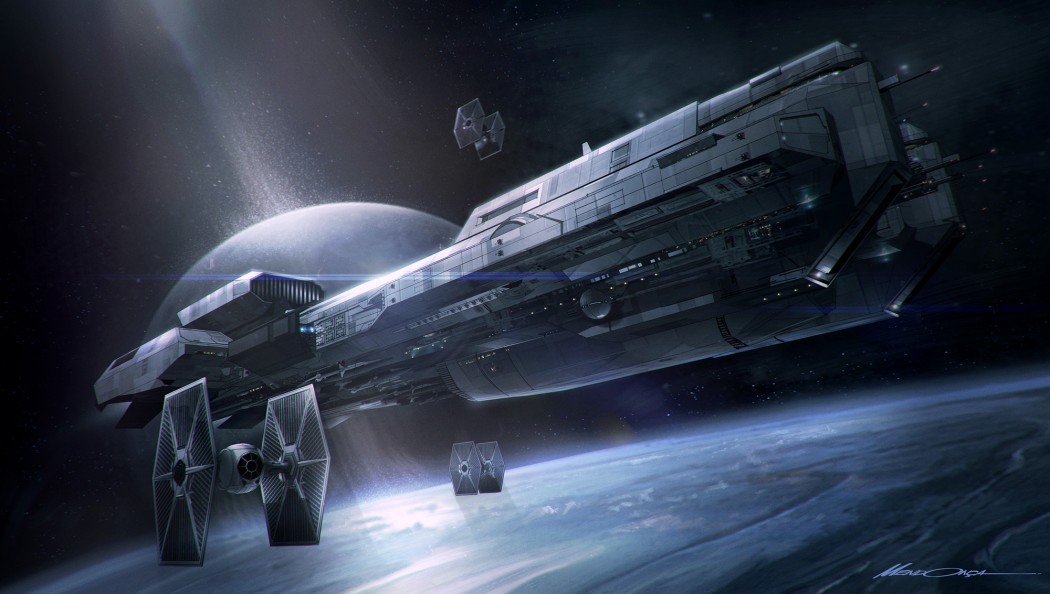
Star_Wars_Concept_Art_01_GM_book_UnlawfulShip-1050x594.jpg
OUT OF CHARACTER INFORMATION
PRODUCTION INFORMATION
TECHNICAL SPECIFICATIONS
STANDARD FEATURES
ADVANCED SYSTEMS
STRENGTHS
  • Stabilized Artillery Platform: The Cerberus' main artillery is its pair of NZ IEPC.4700 Ionized Electromagnetic Plasma Cannons used in a similar capacity to the ancient Aggressor Class Star Destroyer. To deal with the high recoil of the cannons the vessel is not only equipped with the NZ RAS-1 Missile Propulsion system acting as Maneuvring thrusters, but also the FAE/C-01 Multiphase Tensor Field Element. While these systems don't reduce the recoil produced by the cannons, they do allow for quick reacquisition of targets for additional volleys.
  • Highly Automated and Symbiotic Linked: The Cerberus is highly automated thanks to its N&Z systems, but similar to the Castor I/E, Karl opted for less automation in the bridge. Using the FAE/S-07 Symbiotic Ghost Link allows its bridge crew to truly multitask. Due to the "Brain Strain" that this system creates, there are three bridge crews, typically a morning, afternoon, and night crew. This ultimately counts up to a normal bridge crew, but a reduced number on the bridge at one time allows for swapping if one bridge crew member is injured.
  • Quality to match its Quantity: The use of various new and old, well-known materials chosen for their outstanding reputation within their field or the intent to be loaded out with the best materials possible coupled with the N&Z's known build quality promises a ship that can take a heavy beating and still would manage to trudge on.
  • Limited Anti-Interdiction: The Cerberus comes equipped with a Null-Series, allowing it to escape destroyer-level interdiction and below. Anything larger than a star destroyer will require multiple of these ships.
WEAKNESSES
  • Highly Automated and Symbiotic Linked: If the internal AI were to be compromised, the low personnel count would make it hard to counteract this imbalance causing the functionality of the ship to decrease significantly. Additionally, while there are three different bridge crews, if one station were to have all of its members injured, the station would be unfulfilled making the ships overall function decrease.
  • EMP/Ion: While this ship has metallic alloys and compounds that have high EMP/Ion resistance, it is only that, a resistance. Many systems on this ship are technological boons to the crew and AI but with enough EMP/Ion damage, it could begin to take them out and hinder the overall function of the vessel.
  • No Attackcraft: The Cerberus does not have any starfighter squadrons, it instead has two squadrons of support craft for transportation services.
DESCRIPTION
Per the request of Admiral @ Orion Knight, Karl and the Naval Corp of Engineering began working on a slew of ships to combat the everchanging field of battle. The Cerberus is the first in a line of hunting ships. Hunting what? Hunting enemy fleets. The request came about after the Emperor was slain, by the Terrorist TAC and their Shark Classes of battlecruisers. They were unlike anything the Imperial Fleets had seen before, and thus were unprepared to face them. Now, picking up the pieces from the Emperor's death, a new line designed to hunt them and any other future unforeseen hostiles was created.

The Cerberus is first and foremost an Artillery Destroyer, its main armament is a pair of NZ IEPC.4700 Ionized Electromagnetic Plasma Cannons used in a similar capacity to the ancient Aggressor Class Star Destroyer. To deal with the high recoil of the cannons the vessel is not only equipped with the NZ RAS-1 Missile Propulsion system acting as Maneuvring thrusters, but also the FAE/C-01 Multiphase Tensor Field Element. While these systems don't reduce the recoil produced by the cannons, they do allow for quick reacquisition of targets for additional volleys. Additionally, the FAE Tractor Guidance Network allows for the guiding of the blasts to the target, making the Cerberus that much more accurate. The Cerberus also has a comprehensive point defense system, heavy turbolasers, and missiles.

The idea behind this beauty is to deplete shields and deal massive damage, as such for an artillery destroyer. Hopefully, with this and more additions, the Imperial Navy will be able to handle any threats thrown at them.

"Quality. Perfection. Order."
 
Last edited:


eotl-png.861


Securing Peace and Order for YOU!

f6ebd8ef8d69b95d7054d3a559a717ba.jpg

[Faction About Page]
[Faction Discord]

Empire-of-the-Lost-Divider-removebg-preview.png

Join the Empire of the Lost today!

The Empire of the Lost, or simply The Empire, is an Imperial faction made up of a coalition of Imperial Remnants who have come together to restore order, law, and prosperity to the galaxy. They have their capital on Lianna, a large ecumenopolis in the Outer Rim, and are ruled by an Emperor or Empress with a Moff Council.

Empire-of-the-Lost-Divider-removebg-preview.png


Opportunities With the Empire

1770d3144f7b89a2fd9d0eaf53dbe478.jpg

Imperial Navy, Starfighter Corps, and Imperial Paragons
Do you wish to see the stars from the bridge of a ship or in the seat of a cockpit? If so, then the Imperial Navy is right for you! Serve as a Captain on an invulnerable Star Destroyer, or become a Pilot and see the stars with your wingmen and wingwomen. Is serving as a crew member on a ship not your cup of caf? Do you like the idea of boarding disabled vessels and securing victory from the inside? Then join the ranks of the Paragons, an elite marine corps composed of some of the roughest-toughest leathernecks out there.

Imperial Army, and the Stormtrooper Corps
Do you like stepping off a landing craft to feel the ground beneath your boots? If you do, then the Armies of the Empire are right for you! Join the Imperial Army as a vanguard and push through the opposition or join the elite ranks of the Stormtrooper Corps and fight with superior training and tactics. Or do you think you have what it takes to be part of the best of the best and join the Imperial Army "Bullfrog" Company? Enlist today!

New Imperial Security Bureau and The Immortals
Do the flashy ships and weapons of the Army and Navy bore you? Do you wish to have a more clandestine approach to solving the Empire's problems? Then the New Imperial Security Bureau, or NISB, might be for you! Join as a member of the NISB and fight off threats both external and internal to the Empire. Or do you wish to add a little more danger into your life, then you might look to join the Immortals.

Force Wielding Organizations
Are you a force-wielder? Don't worry because we have opportunities for you too. The New Imperial Inquisitorius is a highly trained clandestine group that deals with locating ancient and powerful Sith or Jedi artifacts, and eliminating force-sensitive entities whose actions are deemed hazardous to imperial rule. Not your style? Then the Imperial Crusaders migh be a fit for you. Being the spearhead of the Imperial forces, they fight for the Empire against all enemies who would be an opposing force to the Empire's ideals of peace and order.

Imperial Auxila
Do you want to work for the Empire, but not be a part of its larger military organizations? Then the Imperial Auxila is for you. Working as a force of privateers and mercenaries employed by the Empire, you'll be paid handsomely and it'll be sure to increase your reputation among other mercenary circles.​

Empire-of-the-Lost-Divider-removebg-preview.png


JOIN US TODAY! FOR THE EMPIRE!
 
Last edited:
asd2_27.jpg

Allegiance IV-Class Battlecruiser

New-Eot-L-Divider.png
OUT OF CHARACTER INFORMATION
  • Intent: To create an updated, mass-producible battlecruiser
  • Image Source: Fractalsponge
  • Canon Link: Allegiance-Class Battlecruiser
  • Permissions:
PRODUCTION INFORMATION
TECHNICAL SPECIFICATIONS
STANDARD FEATURES
ADVANCED SYSTEMS
STRENGTHS
  • Highly Automated and Symbiotic Linked: The Allegiance IV is highly automated thanks to its N&Z systems, but similar to the ships before it, Karl opted for less automation in the bridge. Using the FAE/S-07 Symbiotic Ghost Link allows its bridge crews to truly multitask. Due to the "Brain Strain" that this system creates, there are two bridge crews, typically a morning and a night crew. This counts up to just below a normal bridge crew, but a reduced number on the bridge at one time allows for swapping if one bridge crew member is injured.
  • Moderate Placements, but Higher Firepower: While the Allegiance IV does not have an extensive amount of turrets, the amount it does have is bolstered by a larger power supply per turret. This allows each shot or salvo to hit harder despite the lower amount of barrels. Additionally, the exclusion of missile tubes allows for more space to be taken by tibanna gas allowing this ship to be in prolonged combat, longer than some others.
  • Turning Heads: While she is slow, she can turn fast and on a dime better than other battlecruisers in her weight class.
WEAKNESSES
  • Highly Automated and Symbiotic Linked: If the internal AI were to be compromised, the low personnel count would make it hard to counteract this imbalance causing the functionality of the ship to decrease significantly. Additionally, while there are two different bridge crews, if one station were to have both its members injured, the station would be unfulfilled making the ship's overall function decrease.
  • Rear and Ventral Vulnerabilities: The Allegiance IV only has 14 quad laser cannons and 4 turbolasers to its rear and 8 turbolasers and a handful of quad laser cannons on its underbelly.
  • No Complement: The Allegiance IV has no fighter complements at its disposal, additionally, its small hangar is only built to accommodate support craft like dropships or shuttles.
New-Eot-L-Divider.png
DESCRIPTION
 
Last edited:
angelos-karderinis-boat-artstation-0011-bigger-boat-00012-jpg.jpg

angelos-karderinis-boat-artstation-0010-bigger-boat-00011-jpg.jpg

[S-Foils locked into "Attack" position]​
OUT OF CHARACTER INFORMATION
  • Intent: To create an in-house design for an Imperial blastboat
  • Image Source: Here
  • Canon Link: (Please link the canon link if applicable canon item.)
  • Permissions:
  • Primary Source: (Please link and cite the sources which you are modifying for your use in your submission.)
PRODUCTION INFORMATION
  • Manufacturer: Empire of the Lost Naval Corps of Engineering
  • Affiliation: Empire of the Lost, N&Z Umbrella Corporation (Through Contract)
  • Market Status: Closed-Market
  • Model: Naval Corps of Engineering Model-118 Imperial Blastboat, Talon
  • Production: Minor
  • Material:
TECHNICAL SPECIFICATIONS
STANDARD FEATURES
ADVANCED SYSTEMS
  • (Provide all of your submission's advanced systems, including non-combat items and special weapons, here in a list. Please link to all Factory Submissions used. Stealth technology and other advanced systems may require other weaknesses or reduced ratings for balance. Ensure significant capabilities from systems are included in the Strengths and Weaknesses lists. Examples include: Stealth systems, Advanced ECM systems, Crystal gravfield traps, HIMS, Molecular shields. Links: Starship Weapons, Approved Technology, Shields, Engines)
STRENGTHS
  • (Provide, in list format, a minimum of 1 strength of this submission.)
WEAKNESSES
  • (Provide, in list format, a minimum of 1 weaknesses of this submission.)
DESCRIPTION
(Describe some of the history behind the submission. Please provide a detailed account or link of each special feature that is listed in this submission. Give us some idea of how it might perform its function, what it excels against and what some limitations of it are. This is where you talk about your idea, flesh it out over at least a good-sized paragraph, and address some of the ways it might be used or abused. All miscellaneous descriptive elements go here, such as Cargo Capacity, Passengers, Consumables, Crew, etc. For especially powerful or ambitious submissions, a very thorough description is recommended.)
 
Last edited:
NCE-103
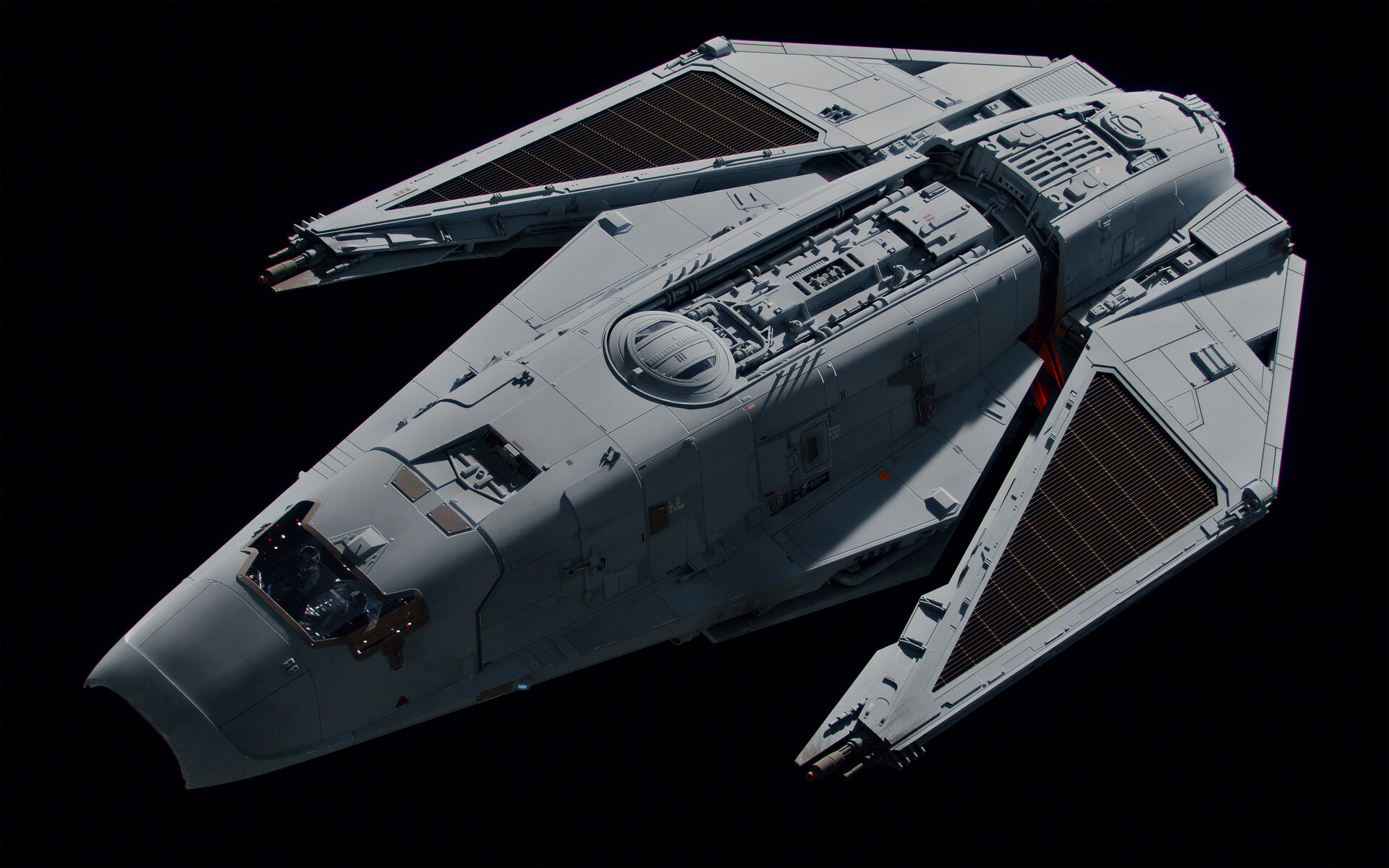
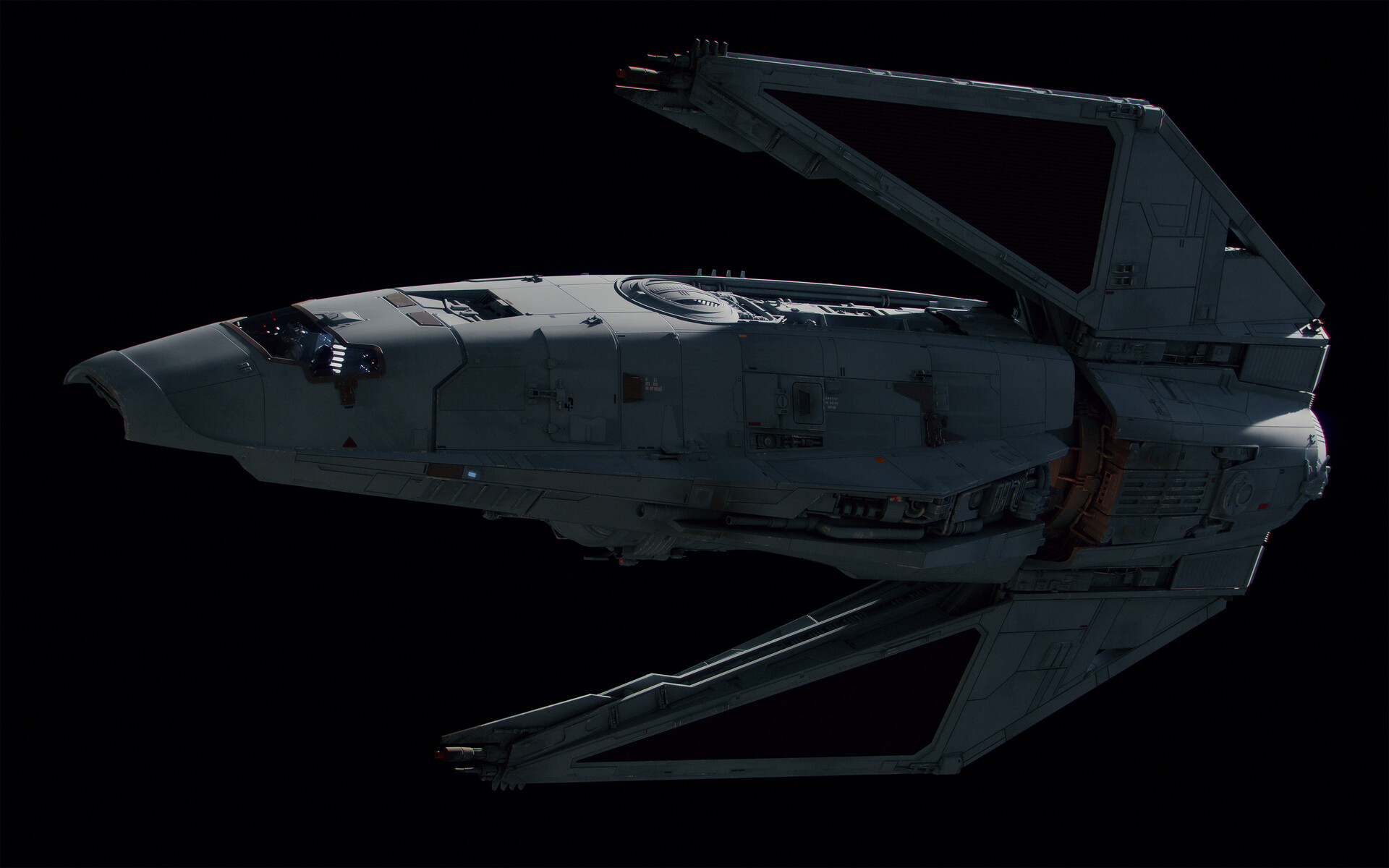
khoi-anh-slicer-ren0000-1.jpg

TIE/dv Devastator​


OUT OF CHARACTER INFORMATION
PRODUCTION INFORMATION
TECHNICAL SPECIFICATIONS
STANDARD FEATURES
ADVANCED SYSTEMS
STRENGTHS
  • Heavy and Variable Weapon Loadout
  • Heavy Defensive Loadout
  • Small Radar Cross-Section
NEUTRALS
  • High Maneuverability at the Cost of Speed
    • OR
  • High Speed at the Cost of Maneuverability
WEAKNESSES
  • Low Squadron Count
  • Limited Ammunition Pool for Missiles and Mass-Drivers
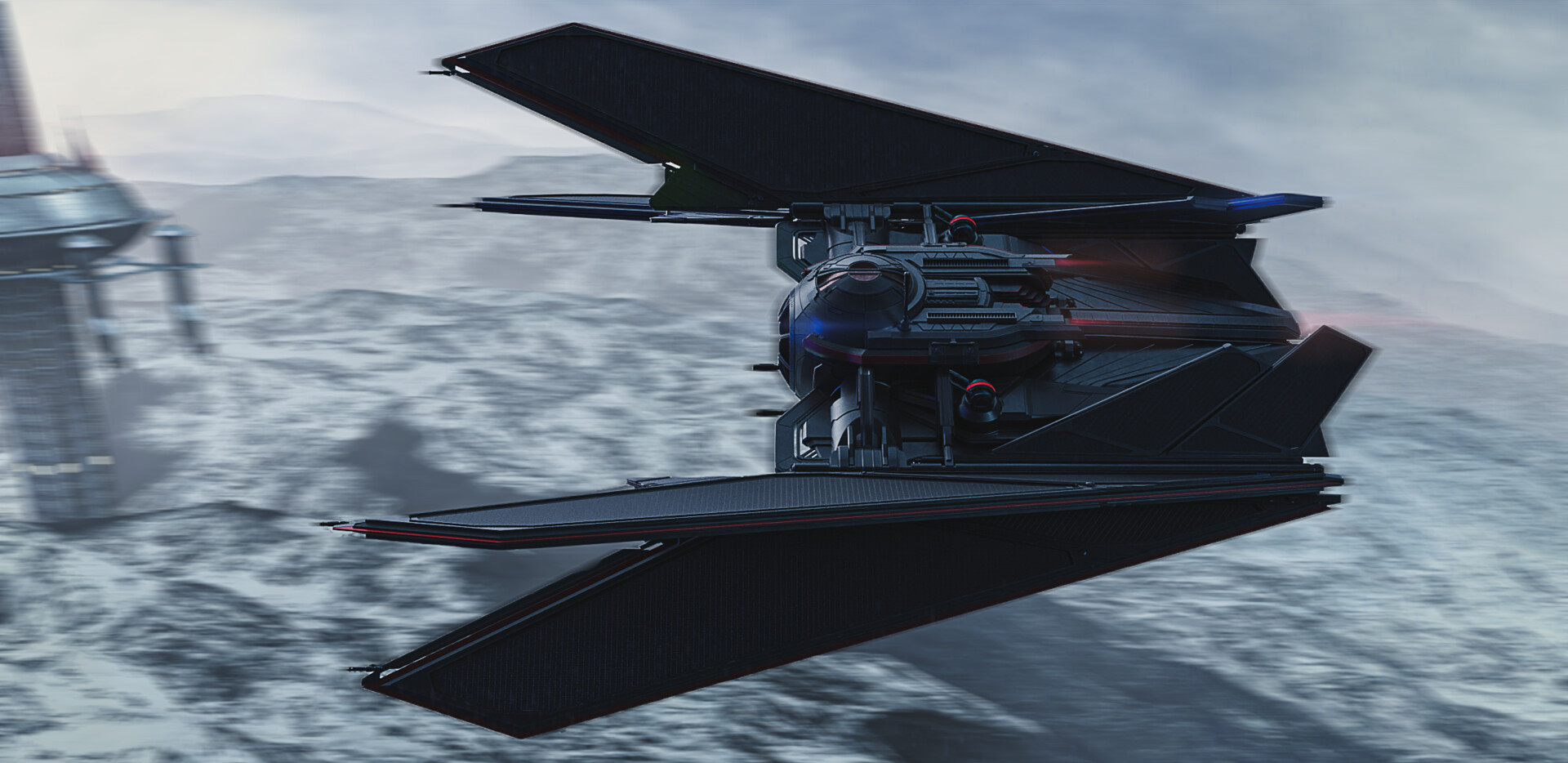
altered_tie_slicer_by_bvnuked_dixdcfl-fullview.jpg

[ TIE/dv firing its beam cannons with s-foils in attack position ]​
DESCRIPTION
The Naval Corps of Engineering Model 103, or the TIE Devastator (TIE/dv), is the second TIE model produced by the NCE, but hopefully the first in a line of specialist TIEs. Designed as a heavy assault starfighter, the Devastator combines impressive firepower and cutting-edge technology into a corvette or frigate captain's worst nightmare.

The Devastator's main armament is its twelve heavy hybrid beam cannons from the minds at First United Astral Engineering (FAE). However, you may look at the promo image and see twenty-four beams coming out of the craft, and you'd be right. This is because the designers wanted this ship to convey the idea of overwhelming firepower. They used advanced optics and beam splitters to "cut" the beams in two while maintaining their overall effectiveness and not adding any diminution. Additionally, the Devastator has a small reserve of missiles and chin-mounted mass-driver cannons that use the venerable DSI rounds from N&Z Umbrella Corporation (N&Z).

Switching gears from offense to defense, the Devastator leaves nothing to be desired. The craft is equipped with primary and secondary shield systems, both being from N&Z. The primary is the six-layer SSP-SIXTUS/A system and the secondary is the SS-1 Primera system, which the engineers have opted for higher EMP/ION damage reduction. It has this twin shield system not to keep you in the fight, but to help you escape from the fight safely. Additionally, the rear of the cockpit has Seigurium Light armor plating to protect the pilot from rear threats. From N&Z, it is equipped with the ARD-1 Mono Type Point Defense System coupled to four twin light ion cannon defense turrets mounted on its ventral and dorsal hulls. These are purely for defense and cannot be used offensively. Last but not least, from FAE, the Devastator comes equipped with its inclusive countermeasure module and ECM array, adding to its overall defenses.

The Devastator is also chock full of impressive technology from HPI Consortium. The Devastator has an outer hull coating of Skuggalegt I-pattern Stealth Polymer which reduces the radar cross-section, uses the Environmental Condition Stabiliser System in conjunction with a life support system (a rarity on TIE models), has a copilot in the form of the "Sérhannaðar" AI, and uses the impressive HAPU to power everything.

The TIE Devastator excels in operations requiring overwhelming firepower and durability, such as spearheading attacks on enemy fleets or breaking through fortified defensive lines. It functions best when deployed in squadrons, coordinated to dismantle larger ships while remaining capable of defending themselves against starfighter counterattacks.

A terrifying addition to the Empire of the Lost's arsenal, the TIE Devastator is a symbol of their commitment to unrelenting dominance in space warfare. It ensures that any fleet bold enough to challenge the Empire will face destruction in the face of superior firepower and technology.

"Quality. Perfection. Order."


Last edited:
Done. Ready to be posted
arnaud-kleindienst-starwarsoutlaws-portfolio-arnaudkleindienst-wide-vehiclesmisc-06.jpg
Lianna II-Class Corvette
OUT OF CHARACTER INFORMATION

PRODUCTION INFORMATION
TECHNICAL SPECIFICATIONS
STANDARD FEATURES
ADVANCED SYSTEMS
STRENGTHS
  • Jack of All Trades, Master of None: The Lianna II Corvette perfectly blends firepower, defense, and speed, while not exceeding in any one category. Exactly what you want from a standardized patrol craft.
  • Battle Buddies: The Lianna II Corvette is improved over the previous model by adding a small hangar bay on the ventral-fore of the craft. This means that it can bring a small contingent of starfighters on patrol with it.
WEAKNESSES
  • Hangar Size: While the Lianna II boasts a hangar, it is comparatively small, only able to house FOUR fighter craft.
DESCRIPTION
The Lianna II-Class Corvette was designed in conjunction with the Lianna-based Santhe/Sienar Technologies as a new updated version of the original picket ship. She has been promoted from the picket line to general use, allowing her to be deployed in many more aspects than the original.

Her weaponry has been upgraded to include the Tampson Consolidated TCT-23 twin turbolaser turrets, the N&Z EnSol's AFT-14.400B flak cannons equipped with DSI rounds from the same company, and two missile tubes coupled to the venerable First United Astral Engineering universal missile platform. Additionally, a request by Karl Von Strauss made the finalized design of the Lianna II have a small hangar bay suitable for four fighter craft. This allows the Lianna II to bring her own backup when patrolling alone.

She is the perfect all-rounder for the Empire's naval forces, and not too complicated like a few of the designs that came before. However, she is among the first vessels equipped with House Mecetti's new breakaway paint system, even furthering the distance between the original picket ship and her newer general-use self.
 
Last edited:
arquitens52_1.jpg
OUT OF CHARACTER INFORMATION
PRODUCTION INFORMATION
TECHNICAL SPECIFICATIONS
STANDARD FEATURES
ADVANCED SYSTEMS
STRENGTHS
  • Lightspeed: The Celox Frigate is fast and maneuverable, making it perfect for patrol or as a support ship.
  • Battle Buddies: The Celox Frigate is capable of carrying two full squadrons of starfighters or support craft. Additionally, the Celox is equipped with an 'Accelerating Launch Tube' fitted between the ship's frontal prongs, allowing fighters to get into the battle quickly.
WEAKNESSES
  • Low Armament: Out of all the similarly-classed frigates at the Empire's disposal, the Celox has very few armaments in comparison. It makes up for this in type of armament, but that doesn't improve the number of weapon hardpoints.
arquitens55.jpg
DESCRIPTION
The Celox-Class frigate is a high-mobility warship designed by the Naval Corps of Engineering, based on Kuat's series of Arquitens-Class "Cruisers." Unlike its Kuati cousin, the Celox is not misclassified; she's a 350-meter pure frigate. But like her cousin, she excels in patrol, escort, and rapid-response roles.

The Celox is armed with a moderate amount of advanced technology. She boasts the majority of her weaponry from the formidable N&Z Umbrella Corporation in the form of turbolasers, laser cannons, flak cannons, and the missile launchers she uses. She also boasts turbolasers and her missile platforms from the venerable First United Astral Engineering. In other words, small package, big bite.

The Celox also houses 2 squadrons despite her 350-meter frame. Connected to the hangar bay, and between its frontal prongs is an additional exit, with an exciting feature: an accelerating launch tube. Using tractor-beam technology in unison with magnetic acceleration, she's able to propel fighters into combat at peak velocity.

A fast-moving enforcer of the Empire of the Lost Navy, the Celox-Class Fast Frigate thrives in roles where speed and agility define victory. Whether serving in a patrol, escort, or rapid-strike capacity, this frigate is a force multiplier in any fleet formation.

"Quality. Perfection. Order."

 
Last edited:
fINsAuj.png

3d766905c14886ee21b98c6e20722882.jpg

Image Correction: The shield domes are even further recessed into the tower. Only about one-fourth of the dome is showing.​
OUT OF CHARACTER INFORMATION
  • Intent: To create the next generation of Imperial Star Destroyers, as well as the mainline destroyer for the ISA.
  • Image Source: Source
  • Canon Link: (Please link the canon link if applicable canon item.)
  • Permissions:
    • N&Z (See Permissions), HPI (See Permissions), FAE (See Special Permissions)
  • Primary Source: Imperial-X MkVI Star Destroyer
PRODUCTION INFORMATION
TECHNICAL SPECIFICATIONS
STANDARD FEATURES
ADVANCED SYSTEMS
STRENGTHS
  • Battleship: The Imperial XI is designed uniquely as a ship-of-the-line that can dish out long-range fire, while also getting down and dirty in close-range knife fights. She doesn't shy away from having her broadsides battered as she punches through enemy shields and armor.
  • Highly Automated and Symbiotic Linked: The Imperial XI is highly automated thanks to its N&Z systems, but similar to the ships before it, Imperial engineers opted for less automation in the bridge. Using the FAE/S-07 Symbiotic Ghost Link allows its bridge crews to truly multitask. Due to the "Brain Strain" that this system creates, there are three bridge crews, typically a morning, night, and backup crew. This counts up to just about a standard bridge crew, but a reduced number on the bridge at one time allows for swapping if one bridge crew member is injured.
  • Limited Self-Repair: Since the hull is made from an alloy that includes fyrirdögun, the hull itself and, by extension, the armor have limited self-repairing capabilities. Allowing the XI to stay out in the field a bit longer after encounters than previous iterations.
WEAKNESSES
  • Highly Automated and Symbiotic Linked: If the internal AI were to be compromised, the low personnel count would make it hard to counteract this imbalance causing the functionality of the ship to decrease significantly. Additionally, while there are three different bridge crews, if one station were to have all its members injured, the station would be unfulfilled, making the ship's overall function decrease.
  • Rear Vulnerability: Just like all Imperial classes before it, including the Ten-Six, the Imperial XI is lacking in aft-facing weaponry. While improving from its direct predecessor by adding a handful of turbolasers to its rear-facing weaponry, if flanked, she'd be at an extreme disadvantage.
  • Slow: Unlike her direct predecessor, the Ten-Six, the XI traded in her speed for maneuverability. As such, her sublight speeds are not favorable.
DESCRIPTION
The Imperial XI-Class Star Destroyer represents the next evolution of Imperial warship design, conceived by Karl Von Strauss to surpass the aging Ten-series. A masterful fusion of overwhelming firepower, subtle agility, and battlefield resilience, the XI-Class is built to dominate engagements across the stars.

Armed with cutting-edge weaponry from N&Z Umbrella Corporation, Vandemarian Techwrights, and First United Astral Engineering, the XI-Class is equipped to face threats ranging from enemy Star Destroyers to nimble bombers and starfighters. Its arsenal includes a formidable array of turbolasers, megamasers, beam cannons, and flak guns, ensuring devastating firepower in both fleet battles and skirmishes.

One significant departure from the Ten-series is the reconfiguration of its concussion cannon loadout. Rather than the previous dorsal spine-mounted twin cannons, the XI-Class features four cannons arranged in a trapezoidal formation along its dorsal side, optimizing firing angles and coverage. Additionally, after the subjugation of Hast, Imperial engineers acquired blueprints from the pirate lord-controlled ISD-II Void's Hunger, which housed a Proton Beam Cannon. Now integrated into the XI-Class, this devastating weapon shreds through hulls and armor with ease, though it remains less effective against shields, its destructive potential against unprotected targets is exceptional.

The XI-Class boasts a dramatically enhanced defensive suite over its predecessors. Its matrix armor plating, an alloy of trimantium and fyrirdögun, offers unparalleled durability, while its advanced shielding system ensures superior resilience in prolonged engagements. At its core is the N&Z SSP-SEPTIMUS Shield System, comprising seven interchangeable shields and two fixed-state defenses: a Xythan shield and a molecular shield, providing layered protection against all kinds of attacks. Augmenting this is the IMPS Cyclonic Variable Deflector Shield, a revolutionary system that deflects incoming kinetic projectiles rather than absorbing their impact, effectively slinging mass drivers and solid slugs away like a cyclone. A host of additional countermeasures further reinforces the XI-Class, allowing it to withstand relentless fire while continuing to deliver punishing retaliation.

Designed as the workhorse of the Authority Navy, the XI-Class serves as both a fleet command vessel and a frontline destroyer. Whether spearheading a sector-wide campaign or engaging in brutal skirmishes, the XI-Class is engineered to secure Imperial dominance across every battlefield.

More than just a warship, the Imperial XI-Class Star Destroyer stands as a testament to the legacy of Imperial engineering, ensuring the iconic dagger-shaped silhouette remains a symbol of power for generations to come.
 
Last edited:

c11ee7f5eed17711e3aba54a59fc010b.jpg
OUT OF CHARACTER INFORMATION
  • Intent: To create a sector command ship for PCs to use
  • Image Source: (Please link to where you found the image, or to the original artist if possible. TinEye or Google Image Search can help.)
  • Canon Link: (Please link the canon link if applicable canon item.)
  • Permissions: (Please link any Marketplace purchase approvals or other permissions to use other Writers’ submissions as part of the submission)
  • Primary Source: (Please link and cite the sources which you are modifying for your use in your submission.)
PRODUCTION INFORMATION
TECHNICAL SPECIFICATIONS
STANDARD FEATURES
ADVANCED SYSTEMS
STRENGTHS
  • Twin Bridges - The Kharon has two command bridges; the dorsal bridge is the primary command center of the ship and sector communications hub, and the ventral bridge is dedicated to starfighter operations and fleet movements.
  • Room for One More? - The Kharon is a battlecarrier and carries an amazing forty squadrons of spacecraft.
  • Sector Command Ship - The Kharon is also a sector command ship, connecting to all fleets within a given sector.
  • Highly Automated and Symbiotic Linked - The Kharon is highly automated thanks to its N&Z systems, but similar to the ships before it, Imperial engineers opted for less automation in the bridge. Using the FAE/S-07 Symbiotic Ghost Link allows its bridge crews to truly multitask. Due to the "Brain Strain" that this system creates, there are three bridge crews per bridge; typically consisting of a morning, night, and backup crew. This counts up to just about a standard bridge crew, but a reduced number on the bridge at one time allows for swapping if one bridge crew member is injured.
WEAKNESSES
  • Rear Vulnerability - Due to the unique construction of the Kharon, there were not many places for weapon emplacements. Only a handful of Light Beam Cannons and Ultra-Beam Cannons are rear-facing.
  • Highly Automated and Symbiotic Linked - If the internal AI were to be compromised, the low personnel count would make it hard to counteract this imbalance causing the functionality of the ship to decrease significantly. Additionally, while there are three different bridge crews, if one station were to have all its members injured, the station would be unfulfilled, making the ship's overall function decrease.
  • EMP/Ion - The Kharon has many systems that are a boon to its crew and overall function. However, with all electronically advanced anything, EMP/Ion-based weaponry can rid this vessel of those boons, with enough damage.
63ddd652cc89c1254915d58dabe6b146.jpg
DESCRIPTION
(Describe some of the history behind the submission. Please provide a detailed account or link of each special feature that is listed in this submission. Give us some idea of how it might perform its function, what it excels against and what some limitations of it are. This is where you talk about your idea, flesh it out over at least a good-sized paragraph, and address some of the ways it might be used or abused. All miscellaneous descriptive elements go here, such as Cargo Capacity, Passengers, Consumables, Crew, etc. For especially powerful or ambitious submissions, a very thorough description is recommended.)
 
Last edited:


or7gtqx.jpeg

OUT OF CHARACTER INFORMATION
PRODUCTION INFORMATION
  • Manufacturer: The Imperial Confederation Corps of Engineers | N&Z Starworks
  • Affiliation: The Imperial Confederation | N&Z Umbrella Corporation
  • Market Status: Closed-Market
  • Model: NZ CSS-DECIMUS [Capital Shield System]
  • Modularity: No
  • Production: Semi-Unique
  • Material:
SPECIAL FEATURES
STRENGTHS
  • Bulwark: The DECIMUS is engineered to rapidly reinforce its shields at the exact point of impact. This is made possible by its molecular shielding overlay, which absorbs the energy from incoming projectiles and channels it into the kyber crystal arrays. These arrays then redirect the stored energy back into the shields at a rate far more efficient than the overlay alone could achieve.
  • Strong Magnetic Field: With a multitude of components utilizing a magnetic field and generating it, the DECIMUS has the advantage of having a perpetual magnetic field active, which in itself already reduces the possible damage from several types of weaponry due to the resistant force it exhibits.
WEAKNESSES
  • Explosive Shielding: Kyber crystals, in all of their uses, are magnificent. However, pushing large amounts of energy through tends to make them volatile. Extremely So. If any of the components housing the crystals are attacked and destroyed, it will make a brilliantly colorful explosion.
  • For a Limited Time Only: The DECIMUS' key advantage (like its inspiration) is its use of kyber crystal arrays, allowing it to channel far more energy into its shields than conventional systems. While this grants superior initial protection, the sustained power load places heavy strain on the emitters and the shield itself. Over time, the shields begin to degrade, reducing effectiveness the longer the engagement lasts.
  • Naval Focused: Due to the extremely heavy weight of this system and the burden it places on power sources (including its own power source), this system is not designed for anything smaller than 2,000 meters in length. Only the largest Star Destroyers, Battlecruisers, Space Stations, and Dreadnoughts can effectively use this system.
DESCRIPTION
"I only ever saw it in action once, above Skor II. It was masterful engineering, and I wished for a system as powerful." -Karl Von Strauss, reminiscing on the DECIMUS' progenitor, the Kyb-X Shield.

While Karl Von Strauss had integrated kyber crystals into many of his rarer and larger warships, primarily to enhance the accuracy and destructive power of turbolasers and megamasers, he had never explored their use for defensive purposes.

That changed with the start of the DECIMUS project. During the early design phase, Karl rediscovered a heavily redacted First Order file on the FIV Pellaeon, a Super Star Destroyer once commanded by Grand Admiral Rausgeber and equipped with a kyber-based shield system. He recalled its peculiar behavior during the Battle of Skor II. Its shields only activated after enemy fire had begun, not before. Intrigued, Karl dug deeper into his old First Order Navy archives and uncovered similarly redacted files on the KYB-42, the very system used aboard the Pellaeon.

It took weeks of decrypting outdated security layers, but once cracked, the data proved valuable. Though the technology was over thirty years old, the recovered schematics provided the foundational blueprint Karl needed to begin crafting a modern interpretation of kyber-enhanced defensive shielding.

The DECIMUS integrates molecular shielding technology with an array of kyber crystal arrays to create a reactive, near-instantaneous defense system. At its core, the DECIMUS functions as a bulwark: when struck, its molecular overlay captures the kinetic and thermal energy from incoming fire and redirects it through a lattice of kyber arrays. These crystals then recycle the energy into targeted shield reinforcement, precisely at the point of impact, offering a dynamic response that hardens as it absorbs. The system also benefits from an active, shipwide magnetic field, a byproduct of its architecture. This field reduces the possible damage from several types of weaponry due to the resistant force it exhibits.

However, such performance does not come without cost. Kyber, while powerful, is also temperamental. The crystals used in the DECIMUS operate under immense stress, and a breach in any component housing them can result in catastrophic detonations; brilliant, devastating, and final. Furthermore, the shield's performance diminishes over extended engagements: prolonged overclocking wears down the emitters and causes the shield's efficiency to decay. What begins as nigh impregnable can gradually falter if pushed too far.

The DECIMUS is not for the cautious. It is a shield for juggernauts, built to hold the line in the first, hardest moments of battle and to deliver a defense as dazzling as it is deadly.
 
OUT OF CHARACTER INFORMATION
PRODUCTION INFORMATION
SPECIAL FEATURES
  • The Voice: The Voice is the spine-mounted command and control system through which the operator directs Voice of God. Spoken Commands or, if enabled, neural input are interpreted by the system as desired outcomes. allowing for the operator to issue specified commands without needing to control each projector individually. The Voice then determines how the available projectors must work together to accomplish the command.
  • The Choir: The Choir is the collective name for the twelve individual projector units that make up Voice of God. Each projector can fly and operate independently, but are designed to work together, combining their gravitational and tractor/pressor capabilities to produce effects beyond what a single projector could achieve. The number of active projectors determines the strength and complexity of what Voice of God can accomplish.
  • Commands:
    • Tier I- Low-Moderate Power Usage
      • PUSH - The Choir establishes a coherent pressure vector behind the target.
      • PULL - The Choir establishes a force vector between themselves and the target.
      • FALL - The Choir establishes a localized gravitational gradient beneath and slightly toward the target. At the same time, tractor/pressor units apply a controlled downward vector.
      • RISE - The Choir establishes an artificial low-gravity region beneath the target while tractor units provide an upward vector.
    • Tier II- Moderate-High Power Usage
      • COME - Rather than simply attaching one tractor beam to the target, several projectors establish a converging force field. The projectors continuously adjust their vectors so that the target's acceleration is directed toward the operator.
      • AWAY - The Choir creates a diverging force field centered on the operator or another designated point. That means it can push someone away even if they're moving toward the operator from an unusual angle. Multiple projectors distribute the force to prevent the target from simply being spun sideways.
      • STOP - The Choir calculates the target's current momentum. Then it applies an opposing vector. Then they immediately transition to a stabilization field so gravity doesn't cause the person to stumble.
      • DEFLECT - The Choir creates a lateral force vector on an incoming object that alters its trajectory just enough for it to miss. Multiple objects require more power.
    • Tier III- High-Very High Power Usage
      • HOLD - The Choir establishes a dynamic equilibrium around the target; if the target moves left, rightward force, if the target moves right, leftward force, and so on. Effectively creating an invisible three-dimensional cage. This doesn't freeze an object or target in absolute space; it's only constantly correcting movement.
      • THROW - The Choir uses multiple projectors to accelerate a target toward a calculated trajectory, then shifts the applied force to redirect them toward a chosen destination. By continuously adjusting these vectors, the system can build momentum and then release the target along the desired path. This allows the operator to effectively throw objects or individuals without physically touching them.
    • Tier IV- Very High-Extreme Power Usage
      • BREAK - The Choir identifies the structural weak points of an object. Then different projectors apply opposing forces. The system doesn't necessarily need to exert enough force to rip the entire object apart. It only needs to exceed the material's structural tolerance. The Choir can't simply "break bones" with a thought unless it can establish reliable force vectors against the body's structure. Armor, flexible clothing, movement, and biological unpredictability all make that harder.
      • CRUSH - The Choir surrounds the target. Then instead of pushing in one direction, the projectors generate converging force vectors from multiple directions. The Choir attempts to compress the target toward its center. But the Choir cannot apply force to the inside of an object; it is applying force to its exterior. So the target's structural strength matters enormously.
  • Autonomous Flight: Each projector can fly independently and precisely position itself, allowing the Choir to continuously arrange itself around the operator or a designated target.
  • Distributed Force Simulation: By coordinating multiple projectors, Voice of God can reproduce many of the observable effects commonly associated with telekinesis without requiring the operator to possess Force sensitivity.
  • Distributed Sensor Network: The projectors possess independent sensors and can share information with one another and the central control system, allowing the Choir to determine target position, movement, and relative mass.
  • Voice and Neural Control: Voice of God can be operated through spoken commands. A compatible neural interface can also allow the system to respond directly to the operator's intended action, allowing substantially greater precision and speed.
  • Reflec Coating and Optical Camo: Each projector is coated in Reflec and has a basic optical camo, increasing its sensor concealment and reducing its visibility.
  • Thermal Management: Each projector contains a thermal reservoir capable of temporarily storing waste heat. Thermal exhaust systems allow accumulated heat to be expelled when necessary.
  • Power Management: Projectors are independently powered by internal energy storage. When depleted or approaching critical reserves, a projector can automatically return to the operator's spine-mounted control and charging unit.
STRENGTHS
  • Technological Telekinesis - Voice of God allows a non-Fiorce-sensitive operator to produce effects resembling telekinesis, including: pushing, pulling, lifting, throwing, stopping, and restraining objects or individuals.
  • Precise Multi-Vector Manipulation - Multiple projectors may operate in concert, applying precisely calculated forces from varying angles and positions simultaneously. The Choir's computerized control system continuously adjusts the position, strength, and direction of individual projectors, allowing it to influence a target's motion, balance, orientation, and momentum in complex ways that go beyond simple pushing or pulling. The system can dynamically redistribute force between projectors as conditions change, allowing significantly more precise manipulation than a conventional tractor or pressor system.
  • Force-Resistant - The Choir is equipped with Taozin amulets, which make them difficult for Force users to seize or manipulate directly through the Force.
  • Distributed System - Destroying or disabling one projector does not disable the entire system. Remaining projectors can redistribute tasks and continue functioning, albeit at a lower level of efficiency.
  • Tactical Flexibility - Different numbers of projectors can be committed to an action depending upon the required force, allowing the operator to conserve power during routine operations and deploy the entire Choir when necessary.
  • Momentum Manipulation - The system can counteract an object's existing momentum rather than merely applying a simple pushing or pulling force, allowing commands such as STOP and DEFLECT.
WEAKNESSES
  • Finite Power - Each projector possesses a finite internal energy reserve. Sustained or high-output gravitational and tractor/pressor manipulation rapidly consumes this reserve.
  • Thermal Saturation - Force manipulation generates substantial waste heat. Projectors can temporarily conceal this heat within their thermal reservoirs, but these reservoirs eventually reach capacity. Continued operation then requires heat to be expelled, potentially compromising the projector's stealth.
  • Limited Projector Availability - Although the Choir consists of up to twelve projectors, the operator is not expected to use all twelve simultaneously during normal operation. Greater numbers of active projectors result in increased energy consumption and thermal buildup. Individual projectors approaching critical energy or thermal limits will automatically withdraw from the engagement and return to the spine-mounted unit to recharge and cool, reducing the number of available projectors during prolonged engagements.
  • Spine Dependency - The spine-mounted unit (The Voice) is the primary power, charging, and command hub for the system. Damage to it can prevent depleted projectors from being recharged and can substantially reduce the system's operational endurance.
  • Force Requirements Scale with Mass - The system must physically overcome inertia, gravity, structural strength, and momentum. Manipulating heavier, faster, or more structurally robust targets requires substantially more energy and more projectors.
  • Taozin is not Armor - The Taozin amulets interfere with Force interaction with the projectors but do not make the projectors physically indestructible. A Force user may still attack a projector through conventional means, such as a lightsaber, weapon, environmental hazard, or other physical attack. This also applies to non-Force users.
DESCRIPTION
Voice of God is an advanced gravitic manipulation system designed with an ambitious premise: if the Force can be observed producing physical effects, then sufficiently advanced technology should be capable of reproducing those effects without a connection to the Force.

The system consists of twelve compact, autonomous flying projectors, referred to as The Choir. Each projector, while small, contains a sophisticated technological package consisting of Reflec coating and optical camouflage, independent power, an ionization buffer, thermal-management systems including a reservoir and exhausts, sensors, communications systems, and a droid brain. Of course, these projectors come equipped with tractor and pressor field generators as well as a gravitational field disruptor to facilitate their reproduction of physical effects. Not only does the Choir come equipped with two stealth technologies, but each one has been painstakingly equipped with a Taozin Amulet. The system would fall apart if any Force-user could sense and rip the projectors out of the sky; as such, the amulets make each projector incredibly difficult to perceive and manipulate through the Force.

Now, these projectors cannot work on their own; they all come from a spine-mounted command and control unit, referred to as The Voice. Spoken Commands or, if enabled, neural input are interpreted by the system as desired outcomes. allowing for the operator to issue specified commands without needing to control each projector individually. The manipulation is then accomplished through the combination of gravitational field disruptors and tractor/pressor units. The operator does not need to specify the precise physical mechanism required to accomplish a command. Instead, Voice of God interprets the desired result and calculates how the available projectors must cooperate to produce it.

For example, the command FALL does not simply increase gravity beneath a target. The system can establish a localized gravitational gradient while simultaneously using tractor/pressor units to apply controlled downward and directional forces. By manipulating the target's center of mass and momentum, the Choir can influence a standing individual to lose their balance and be driven toward the ground. Likewise, RISE reverses the general vector, while COME establishes converging force vectors that draw a target toward a designated location.

More complicated commands require greater coordination. STOP requires the system to calculate a target's existing momentum and apply an opposing force until its movement is neutralized. DEFLECT can alter the trajectory of an incoming projectile without necessarily stopping it. HOLD creates a constantly corrected equilibrium around a target, with the projectors continuously responding to attempts at movement. THROW uses sequential acceleration and directional changes to build momentum before releasing the target along a calculated trajectory.

The system can also produce more violent effects. BREAK directs opposing forces against the structural weak points of an object, potentially bending, tearing, or fracturing it. CRUSH is the most demanding application, surrounding a target with multiple projectors and applying converging forces from several directions. Such applications consume considerable energy and generate significant heat, making them unsuitable for prolonged use.

The Choir's greatest advantage is also its greatest limitation: the number of projectors available. A single projector can produce relatively simple pushing or pulling effects, but increasingly complex or powerful manipulation requires multiple units working together. The system therefore normally keeps some projectors docked, charged, and cooling while only deploying the number necessary for the immediate task. Deploying all twelve simultaneously represents a substantial increase in capability but rapidly consumes the system's energy and thermal reserves.

Each projector contains its own power storage rather than a miniature reactor. When a projector approaches a critical energy or thermal threshold, it can withdraw from the engagement and return to the spine-mounted unit. There it can recharge, transfer accumulated heat into the larger thermal-management system, and undergo diagnostics before being redeployed. This gives Voice of God a natural operational rhythm: projectors are deployed, expended, recalled, recharged, and returned to the Choir as the engagement continues.

The spine-mounted unit therefore serves as the heart of the system. It provides the primary power-generation and storage capacity, houses the central control and processing systems, maintains communications with the projectors, and provides their charging and thermal-management facilities. Damage to the spine does not necessarily disable the projectors immediately, but it can prevent them from replenishing their reserves and dramatically shorten the system's remaining operational endurance.

Voice of God does not grant its operator genuine telekinesis. It cannot simply manipulate matter according to thought without regard for mass, momentum, structural strength, distance, energy consumption, or available projector geometry. Every effect must ultimately be accomplished by physically applying force through the Choir. The system therefore excels at controlled manipulation of relatively discrete targets, but its demands increase dramatically when attempting to affect massive, rapidly moving, heavily reinforced, or numerous targets.

 
Last edited:

Users who are viewing this thread

Top Bottom