


Star Wars Roleplay: Chaos

Register a free account today to become a member! Once signed in, you'll be able to participate on this site by adding your own topics and posts, as well as connect with other members through your own private inbox!

Work In Progress Mage's Laboratory - Factory Workshop XI


CS3FUG8.png

kcr8.png
71yNyUW.png

YsH8NAM.png

Bs3fC05.png

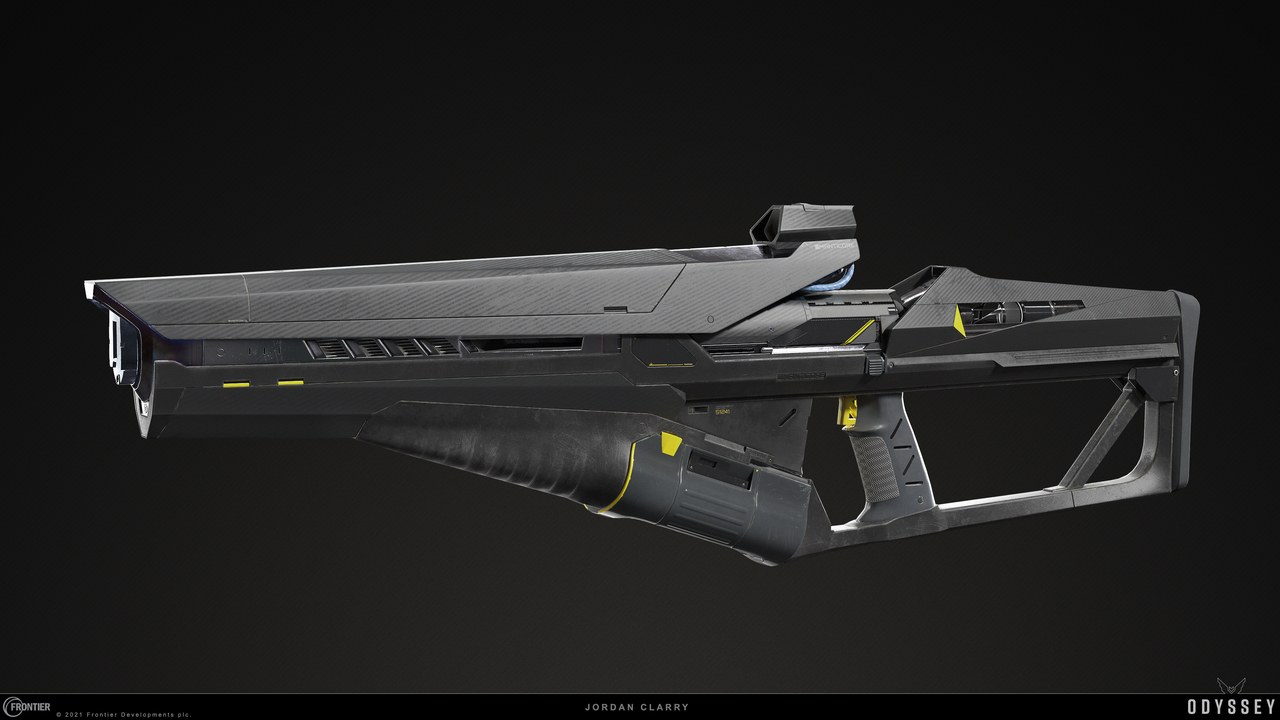
  • Classification: Blaster Rifle - Hybrid Weapon
  • Muzzle Velocity: 1.7 km/s
  • Size: Average
  • Weight: Average
  • Ammunition Type: FAE/AM-01-S3 Energy Weapon Cartridge - Ethaerium Gas and CryoBan Coolant
  • Ammunition Capacity: Average - 100 Shots
  • Effective Range: Average - 1 km
  • Rate of Fire: Semi-Automatic
  • Damage Output: Very High
  • Recoil: Average
jMIf66P.png

  • Data and Information Security
  • Combat Electronics
  • Control Systems
  • Energy Modes
    • Hyper-Ionized Particle Bolt
      • Considered to be the standard energy module, this module manifests a hyper-ionized particle bolt that deals damage via a veritable hammer blow of concussive shock (kinetic energy), the searing release of thermal energy as the plasma particles destabilize matter to produce coronal-discharge temperature heat (~ten thousand degrees centigrade), and finally ionization energy which can disrupt electronics and overload energy shields in the manner of an electromagnetic pulse. Of particular significance, each bolt in the spread has an explosive effect upon connecting with a shield or solid object, including the blade of a lightsaber.
    • Incendiary Plasma Bolt
      • This module manifests an incendiary plasma bolt encased within a magnetic field. The bolt is designed to “splash” in a 1.5-meter radius on impact with any solid object (including energy fields) as the searing plasma adheres itself to objects within its radius. Stuck to the target, the semi-solid plasma “gel” can potentially inflict significant and continuous superheating damage on shields, armor, and flesh, typically burning at temperatures in excess of seven thousand five hundred degrees centigrade for several seconds. This module also has secondary kinetic effects, though not nearly to the degree of the default hyper-ionized particle beam module.
    • Stun Bolt
      • Projects a stun bolt that is designed to leave a target unconscious by overloading their nervous system via charged electrical impulses.
  • Power Systems
  • Utility and Safety Systems
h3KdqR9.png

  • Thermal Endurance: The dallorian alloy-reinforced quadranium-rhenium barrel, overlaid heat sink webbing, and CryoBan coolant flushes from the energy cartridge, allow the KCR-8 to sustain an effective rate of fire far longer than standard blaster rifles. Where conventional energy rifles overheat and require cooldown cycles after multiple shots, the KCR-8 can fire up to fifty shots in rapid succession (at or near the maximum rate of fire) with only negligible performance degradation.
  • Tri-Energy Lethality: The KCR-8’s three energy modes cover virtually any combat scenario. The hyper-ionized bolt delivers concussive, thermal, and ionic damage simultaneously, with a very high potential to overwhelm shields and pulse electronics. The incendiary plasma bolt mode discharges gel that can stick to targets for sustained superheating, ideal against armored opponents or area denial. And the stun bolt provides a non-lethal option. Few other rifles in the KCR-8’s class offer this breadth of terminal effects from a single frame.
  • Surgical: While the KCR-8 is incredibly accurate and precise within its effective firing range, making it quite capable as an auxiliary sniper weapon if pressed in this capacity.
  • Witch Blood: Integrated terentatek hide gives the KCR-8 a stunning resistance to direct applications of the Force, particularly mechu-deru and similar technology manipulating powers. This allows non-Force-sensitive users to engage Force-wielders with confidence and security in the integrity of their weapon.
  • Prismatic Overkill: The KCR-8 compresses anti-materiel rifle power into a blaster rifle-sized frame. Its prismatic crystal array and extended barrel allow the overcharged galven circuitry to drive hyper-ionized bolts at ~10,000°C. Each bolt delivers concussive shock equivalent to a .50 caliber slugthrower, thermal energy that can vaporize durasteel plating at the impact point, and an ionization burst that has a very high chance of overloading heavy personal shields in one hit. Against unprepared opponents, the first shot from the KCR-8 may be all that is needed to decisively end the threat.
  • Symbiotic Fire-by-Thought: The FAE/S-07 enables fire-by-thought actuation, reducing reaction time to the speed of neural transmission rather than mechanical trigger pull. When linked to compatible armor or HUD, the user can acquire targets, switch energy modes, operate the weapon’s functions, and fire with zero perceptible delay. This allows for split-second responses against multiple threats, giving the user a decisive advantage in close-quarters duels.
  • Shapeshifter: The grip, ergonomics, and control layout are not fixed. Programmable matter within the rifle’s frame reshapes itself to the user’s hand upon biometric verification, creating a perfect anatomical fit for any species, cybernetic configuration, or armored glove. Controls can be repositioned or re-mapped via neural, blink, and voice command. A Twi’lek, a Besalisk, and a human wearing thick gauntlets will each experience the KCR-8 as if it were custom-built for them alone.
QF94b2S.png

  • Fortune Teller: While the KCR-8 is drop-safe so that the prismatic crystal does not become misaligned with a simple fall or drop, if the weapon is fired with a misaligned prismatic crystal (which can occur if the weapon sustains damage), the risk of an explosive outcome is somewhat high. This can likely end with the weapon going off in the wielder’s hand to potentially catastrophic effect in the event that they attempt to fire it in spite of the damage.
  • Ion Susceptibility: While the hyper-ionized particle bolt is excellent at disrupting enemy electronics and shields, the KCR-8 itself still remains vulnerable to ion weapons and EMP effects. The reinforced duraplast electronic hardening mitigates this weakness but does not eliminate it. A well-placed ion grenade could disable the Ghost Link, the targeting matrix, or the programmable matter ergonomics mid-fight, transforming a sophisticated weapon into a brick in the user’s grasp.
  • Crystal Calibration Delay: The KCR-8's prismatic crystal array requires roughly a half-second to fully stabilize after switching energy modes—swapping from hyper-ionized to incendiary to stun. This calibration period leaves the weapon incapable of firing while the crystal reconfigures its lattice structure. A skilled opponent could feasibly exploit this window of vulnerability in any number of ways.
  • CryoBan Vent Plume: Each coolant flush vents superchilled CryoBan gas from the weapon's heat radiator shroud. The vent plume is visible as a pale blue-white mist that lingers for roughly a second and can obscure the user's peripheral vision on the ejection side. More critically, the vented gas's location can reveal the shooter's exact position at close ranges. A stealth-oriented KCR-8 user may find it difficult to hide while firing repeatedly.

G6hsfzt.png

Like the Kainate Combat Pistol Model Four, the Kainate Combat Rifle Model Eight is a refinement on blaster rifle-style weapons designed by First United Astral Engineering and manufactured by the Vorrik Armatech subsidiary of Malsheem Hypernautics and Manufacturing. Incorporating First United Astral Engineering’s standard suite of utility features, the weapon is one of the most advanced rifle-style armaments fielded within the Sith Order. Notably, these features include programmable matter ergonomics that make the KCR-8 a custom fit for any wielder, the FAE/S-07 Ghost Link for neural command and fire-by-thought capability, security features to prevent theft, a collapsible frame via molecular disruptor mirror cells, and yet more items that make it one of the most convenient rifle-class weapons to wield in the Sith arsenal.

While the KCR-8 is manufactured exclusively by the Kainate, the weapon was also made available to other, non-Kainate groups in the Sith Order. These groups however are often made to pay a tithe to Malsheem in exchange for access to the weapon.

The KCR-8 is anticipated to be a capable, robust, and ultra-high power primary armament for Kainate soldiers, operatives, and other combatants. The weapon offers convenience and comfort in a singular frame that is capable of inflicting a wide breadth of terminal effects.


xRL6TGI.png
 
Last edited:
OUT OF CHARACTER INFORMATION
PRODUCTION INFORMATION
TECHNICAL SPECIFICATIONS
  • Classification: Medical Ensemble
  • Weight: Very Light
  • Resistances:
    • Energy: Very High
    • Kinetic: High
    • Lightsabers: Low
    • Bacteria / Viruses / Microfungi / Pathogens: Extreme
    • Sonic: Very Low
    • Tensor: Average
    • EMP / Ion / Electronic Disruption: Average
    • Weaponized Cold: Low
    • Weaponized Heat / Fire: Average
    • Acids / Corrosives: Average
SPECIAL FEATURES
STRENGTHS
  • Septic Slayer - The Catholicon Reviver has a high-powered, wide radius healing field generator which can kill pathogens in a 20 meter radius around the user when activated. To say the least, it is invaluable for maintaining a sterile environment, even in otherwise filthy conditions.
WEAKNESSES
  • (Provide, in list format, a minimum of 1 weaknesses of this submission.)(If your armour is vulnerable to specific types of attack (e.g. Ion/EMP/Lightsabers) please list these here)
DESCRIPTION
(Describe some of the histories behind the submission. Give us some idea of how it might perform its function, what it excels against and what some limitations of it are. This is where you talk about your idea, flesh it out over at least a good-sized paragraph, and address some of the ways it might be used or abused. For especially powerful or ambitious submissions, a very thorough description is recommended.)
 
Last edited:
OUT OF CHARACTER INFORMATION
PRODUCTION INFORMATION
  • Manufacturer: Sword Herald Special Purpose Industries
  • Affiliation:
  • Market Status: Closed-Market
  • Model: N/A
  • Modularity: Yes
    • May be Implanted in Bio-Organic Nuetralizers, Biots, and HRDs
    • Compatible with Organic and Cybernetic Modifications
  • Production: Unique
  • Material: Vong Biot Tissue
TECHNICAL SPECIFICATIONS
  • Classification: Drug Synthesis Organ
  • Size: Average
  • Weight: Average
SPECIAL FEATURES
  • Vaccine Synthesis Cells - Capable of producing a vaccine to a given disease upon exposure, including some types of cancers.
  • Healing Agent Synthesis Cells - Capable of producing Aspha Serum, Bacta-H, and Bacta,.
  • Antidote Synthesis Cells - Capable of producing an antidote to a given poison, toxin, or venom upon exposure. Can also produce anti-radiation inoculants.
  • Medication Synthesis Cells - Capable of producing medications which can treat afflictions ranging from parasites, autoimmune disorders, and various chronic conditions. Can also produce painkillers, stimulants, depressants, disinfectants, synthetic hormones, and general anesthetics.
  • Memory Cells - Records diseases, poisons, toxins, or venoms that a Nuetralizer or biot has already been exposed to and generated antidotes for, allowing these to be produced faster with later exposure. In addition, medications and drugs can also be placed ‘on tap’ to allow them to be synthesized faster.
STRENGTHS
  • Synthetic Healer - The organ is capable of producing antidotes, vaccines, and treatments for any number of afflictions. It is also capable of producing utility drugs ranging from disinfectants to anesthetics.
  • Hyper Heal - In many ways, the organ is capable of producing medical miracles. And yet, none so clearly as the powerful healing agents it is capable of synthesizing, especially the likes of Aspha Serum and Bacta-H, which are capable of healing wounds within moments, making for a kind of technological Force healing.
  • Varied Delivery - The organ can produce drugs in gas or liquid form.
  • Drug Shortage - A Nuetralizer or biot equipped with the organ can be walking drug factory. It can help to relieve drug shortages in hard-pressed clinics which are far from established production lines.
WEAKNESSES
  • Alpha Red - Alpha Red toxin can kill the organ, likely causing extreme bleeding, liquefaction, and a host of other deleterious effects.
  • Vong Tissue - The organ is allergic to and unable to produce antidotes for Baffor tree pollen, due to it being constructed out of Vong Biot tissue, much like the crab armor worn by the Yuuzhan Vong. Naturally, exposure to this substance can be fatal or deadly to various degrees, for both the organ itself and the Nuetralizer, as well.
  • Dependent Power - The organ does not include its own source of power. Should it be severed from the host's power plant, it will no longer function.
DESCRIPTION
Derived from the capabilities of the Crisis Nuetralizer, the Bio-Organic Drug Synthesis Organ is a medication, drug, and healing agent synthesis organ. It is capable of synthesizing any number of drugs, vaccines, healing agents, antidotes, and other medications from the host’s body fluids. In this regard, it is ideal for ‘outback’ and battlefield clinics, where drug shortages are common. All in all, the organ is hoped to expand and broaden Calligenia's treatment capabilities, allowing her to treat patients under even the most demanding conditions.
SUBMISSION MODIFICATION RECORD
September 13, 2023:

  • Added Aspha Serum, Bacta-H, and Bacta Synthesis Capability
  • Edited Description
  • Added Hyper Heal Strength
 
Last edited:
zpYPsmY.jpg
cvy01EA.jpg
IouC2i6.jpg
OUT OF CHARACTER INFORMATION
PRODUCTION INFORMATION
TECHNICAL SPECIFICATIONS
  • Classification: Protective Sith Robes
  • Weight: Very Light
  • Resistances:
    • Energy: Very High
    • Kinetic: Very High
    • Lightsabers: Very High
    • Weaponized Cold: Average
    • Weaponized Heat / Fire: Average
    • Tensor: Very Low
    • Sonic: Average
    • Acids / Corrosives: Very Low
    • EMP / Ion / Electronic Disruption: Low
    • Weaponized Radiation: Average
SPECIAL FEATURES
STRENGTHS
  • (Provide, in list format, a minimum of 1 strength of this submission. Any resistance ratings of High, Very High, and Extreme will need to be added as strengths with elaboration.)
  • Utility - The robes are not lacking in utility and offer
WEAKNESSES
  • (Provide, in list format, a minimum of 1 weaknesses of this submission.)(If your armour is vulnerable to specific types of attack (e.g. Ion/EMP/Lightsabers) please list these here)
  • Acerbic Affliction - Unfortunately, acid weapons are very effective at eating through the protective material to harm the wearer directly, potentially inflicting a host of dangerous effects.
  • Neck Piece - The neck piece houses sensitive electronics, defensive projectors, targeting assistance, sensors, and other support systems. While resilient, damage to this part could compromise these functions, leaving the wearer deprived of head protection, sensors, and other utility functions.
  • Mechanical Mutation - While lacking some of the more demanding systems present in many armors produced by First United Astral Engineering, the Kor'ethyr Academy Uniform Ensembles still has a degree of advanced technology and automation. A skilled practitioner of Mechu-deru could feasibly disable these systems and put the wearer at a disadvantage, provided that they have a clear line of sight to their target
DESCRIPTION
(Describe some of the histories behind the submission. Give us some idea of how it might perform its function, what it excels against and what some limitations of it are. This is where you talk about your idea, flesh it out over at least a good-sized paragraph, and address some of the ways it might be used or abused. For especially powerful or ambitious submissions, a very thorough description is recommended.)

Kor'ethyr Academy Uniform Ensemble
 
Last edited:
OUT OF CHARACTER INFORMATION
  • Intent: Create a new kind of electronic warfare system.
  • Image Source: N/A
  • Canon Link: N/A
  • Permissions:
  • Primary Source: N/A
PRODUCTION INFORMATION
SPECIAL FEATURES
  • Oversight and Administration
  • Power Systems
    • Energy Capacitor
      • Draws power from the host.
      • Serves as a dedicated high-capacity energy storage unit that allows the gravity wave emitter array to generate multiple pulses in rapid succession without draining the craft's main reactor.
  • Data and Information Security
  • System Architecture
    • Gravity Wave Emitter Array
      • Gravitic Resonator Cores
        • Specialized chambers that generate controlled gravity waves by manipulating local spacetime through high-energy fields. These are derived from artificial gravity technology but refined for rapid, pulsed operation.
      • Waveguide Projection System
        • Directs the generated gravity pulses in specific vectors. The array is omnidirectional, capable of projecting false masses in any direction simultaneously.
    • Signature Synthesis Computer
      • Functions as a dedicated processing unit that generates false gravitational signature profiles.
      • Signature Library
        • Contains pre-programmed gravitational signatures for thousands of craft types, debris categories, and natural phenomena. The computer can also generate random, unique signatures on the fly.
      • Real-Time Synthesis
        • The computer analyzes the local battlefield environment and generates appropriate false contacts. For example, in an asteroid field, it will create debris-like signatures. In a fleet engagement, it will create signatures of fighter craft or small shuttles.
      • Decoy Coordination
        • The computer ensures that false contacts move and behave in physically plausible ways. They do not simply appear and vanish; they drift, accelerate, or maneuver as real objects would. This makes the deception more convincing.
    • Power Distribution and Thermal Management
      • Dedicated Power Conduits
        • The emitter array can draw power directly from the craft's reactor through reinforced conduits to ensure stable operation.
      • Thermal Conversion Layer
        • The emitter array's cooling loops are lined with tursturin nano-weave. Waste heat generated during gravity pulse emission is absorbed by the tursturin layer, at which point the thermal gradient across the material generates electrical current. This current is fed back into the emitter's energy capacitor, partially offsetting the system's power draw.
  • Operational Modes
    • Contact Flood
      • The default combat mode. The system generates a continuous, staggered stream of false gravitational contacts around the craft.
      • This mode sees enemy and/or gravity sensors flooded with dozens of small, shifting contacts surrounding the craft. Forced to process hundreds of potential targets, tracking algorithms may become overwhelmed. The real craft's signature is likely to be lost in the noise.
    • Phantom Squadron
      • The system generates a specific number of false contacts that mimic friendly or allied craft.
      • Under this mode, a single fighter can appear as a full squadron of fighters or a flight of bombers. The real craft maneuvers undercover within the phantom formation.
    • Debris Storm
      • The system generates hundreds of short-lived, low-mass false contacts that mimic debris or micrometeorites.
      • Enemy sensors may be flooded with low-priority contacts, resulting in important contacts being lost in the noise.
    • Decoy Swarm
      • The system generates a small number of high-fidelity false contacts that mimic the craft itself.
      • Enemy sensors pick up multiple identical copies of the craft. Each copy has matching mass and movement characteristics, making it difficult to determine which is real without additional data.
    • Pulsed Disruption
      • The system generates sudden, intense bursts of false contacts.
      • Sensors may be injected with a massive flood of gravity-mass contacts in a short period. Processors may be temporarily overloaded, potentially causing lag, dropped contacts, or system crashes. The real craft enjoys ample cover during the burst.
  • Utility Systems
    • Gravitic Pulse Containment Shielding
      • The emitter array is shielded to prevent generated gravity pulses from interfering with the craft's own internal systems. Containment fields and directional baffles ensure that the pulses are projected outward into space rather than bleeding into the craft's hull, which could cause structural stress or disrupt onboard equipment.
    • Deactivation and Safe Mode
      • The system includes an emergency deactivation protocol. In the event of catastrophic failure, the SSC can command all emitters to power down and lock in place. This ensures the craft can continue to operate while the FAE/S-20 is non-functional.
    • EMP and Radiation Hardening
      • All of the FAE/S-20's critical electronics are encased in a thin agrinium alloy shielding layer. Agrinium's exceptional radiation resistance provides a highly effective barrier against ion and electromagnetic pulse (EMP) attacks. In addition, redundant circuits and optical data transmission pathways ensure that even if the primary electronics are disrupted, the system can reboot and resume function within seconds.
    • Allied Signature Broadcast Module
      • The FAE/S-20 broadcasts the craft's true gravitational signature and current deception profile to allied battle nets via encrypted datalink. Friendly sensors receive a clean filter, automatically ignoring false contacts generated by the system. This prevents collateral confusion while denying the enemy accurate targeting data.
    • Internal Signature Nullification
      • The FAE/S-20 is integrated with the host's own sensor suite, automatically filtering out its own false contacts from onboard displays and sensor units. The system provides the SSC with real-time positional and gravimetric data filtered to show only genuine contacts, preventing the craft from being blinded by its own deception field.
    • Crew and Maintenance Interface
      • A dedicated control interface and software application allows operators and ground crews to interact with the FAE/S-20 system. Pilots can select pre-programmed deception profiles, override the system for manual operation, or deactivate specific emitter sectors. Maintenance crews can run diagnostics, view detailed emitter health reports, and initiate calibration or repair routines.
    • Signature Pattern Randomization Engine
      • To prevent enemy analysts from learning the system's deception patterns, a randomization engine continuously varies the timing, duration, and signature profiles of the false contacts. This ensures that no two engagements feature the same pattern, making it difficult for enemies to develop countermeasures or filter out the false contacts.
STRENGTHS
  • Gravity Flood: The FAE/S-20 can generate a continuous, staggered stream of false gravitational contacts that has the potential to flood enemy gravitic and mass-based sensors with dozens of shifting targets. Tracking algorithms are forced to process hundreds of potential contacts simultaneously, potentially overwhelming their processing capacity. The real craft's signature becomes lost in the noise, rendering precision targeting via gravitic or mass-based sensors virtually impossible.
  • High Gravity: The Phantom Squadron mode allows a single craft to appear on enemy sensors as a full squadron. This can potentially force enemy commanders to allocate defensive resources to counter a non-existent threat, potentially drawing fire away from allied forces or creating gaps in defensive screens. The real craft can maneuver undetected within the phantom formation, exploiting the confusion to achieve tactical objectives.
WEAKNESSES
  • Strobe Light in the Dark: Like any jamming and electronic warfare system, the FAE/S-20 obfuscates the exact position and gravity-mass signature of the host craft, but it does not conceal its presence. In fact, it magnifies it, as the jamming indicates the presence of a hostile electronic warfare platform in the area. Enemy commanders will likely know that something is wrong, as sensors flooded with false contacts are a clear sign of active deception. This alerts the enemy to the presence of a sophisticated threat and may prompt them to deploy counter-electronic warfare measures or visual confirmation protocols.
  • Thermal Saturation: The tursturin thermal conversion layer has a maximum heat conversion capacity. Sustained high-intensity operation can overwhelm it, causing the system's cooling loops to reach saturation. When this occurs, emergency thermal dump protocols engage, forcing the craft to vent excess heat through visible radiators. This brief but intense thermal signature can be exploited by enemy infrared sensors, potentially revealing the host's location and creating a window of vulnerability.
DESCRIPTION
Designed by First United Astral Engineering, the FAE/S-20 Gravitic Lensing Array was conceived to round out the company’s suite of ECM and electronic warfare systems with a dedicated module created specifically to defeat gravitic and mass-based sensors. The FAE/S-20 achieves by a mirroring of traditional sensor jamming and electronic warfare technologies. However, rather than transmitting radio frequency signals, the FAE/S-20 instead creates a flood of false gravitational signatures that can overwhelm gravity and mass sensors. This is ultimately designed to turn the battlespace into a chaotic storm of gravitational noise where the real craft is virtually indistinguishable from the phantoms.
 
Last edited:

Users who are viewing this thread

Top Bottom