




Star Wars Roleplay: Chaos

Register a free account today to become a member! Once signed in, you'll be able to participate on this site by adding your own topics and posts, as well as connect with other members through your own private inbox!

Work In Progress Credit Worm Workshop


kuat_drive_yards_section_3_by_lotsofwar_dm2pwyu-fullview.jpg

" The new Lodd Masterworks Shipyard will enable us to produce ships twice as fast with its new technology "
-- Master Engineer Gerald Vento, one of the many sub-engineers of Kuat Drive Yards

OUT OF CHARACTER INFORMATION
SETTING INFORMATION
  • Shipyards Name: Lodd Masterworks Shipyard
  • Classification: Orbital Shipyard - Attached to Kuat Drive Yards Orbital Array by replacing Maw Shipyard
  • Location: Planet of Kuat
  • Affiliation: The Trade Federation |:| 900 ABY
  • Population: Heavily Staffed
  • Accessibility:
    • As a core component of the legendary Kuat Drive Yards Orbital Array, Lodd Masterworks is located in one of the most heavily trafficked and defended regions of the Core. It sits directly along the Array's ring structure, making it easily accessible via standard KDY approach vectors and public yet strictly controlled navigation charts for authorized vessels. Security is extremely tight, with all traffic subject to layered scans, escort requirements, and Trade Federation/KDY transponder verification. The facility is not open to the general public and serves primarily military, corporate, and allied clients, though vetted commercial partners may access limited sections under heavy escort.
  • Description:
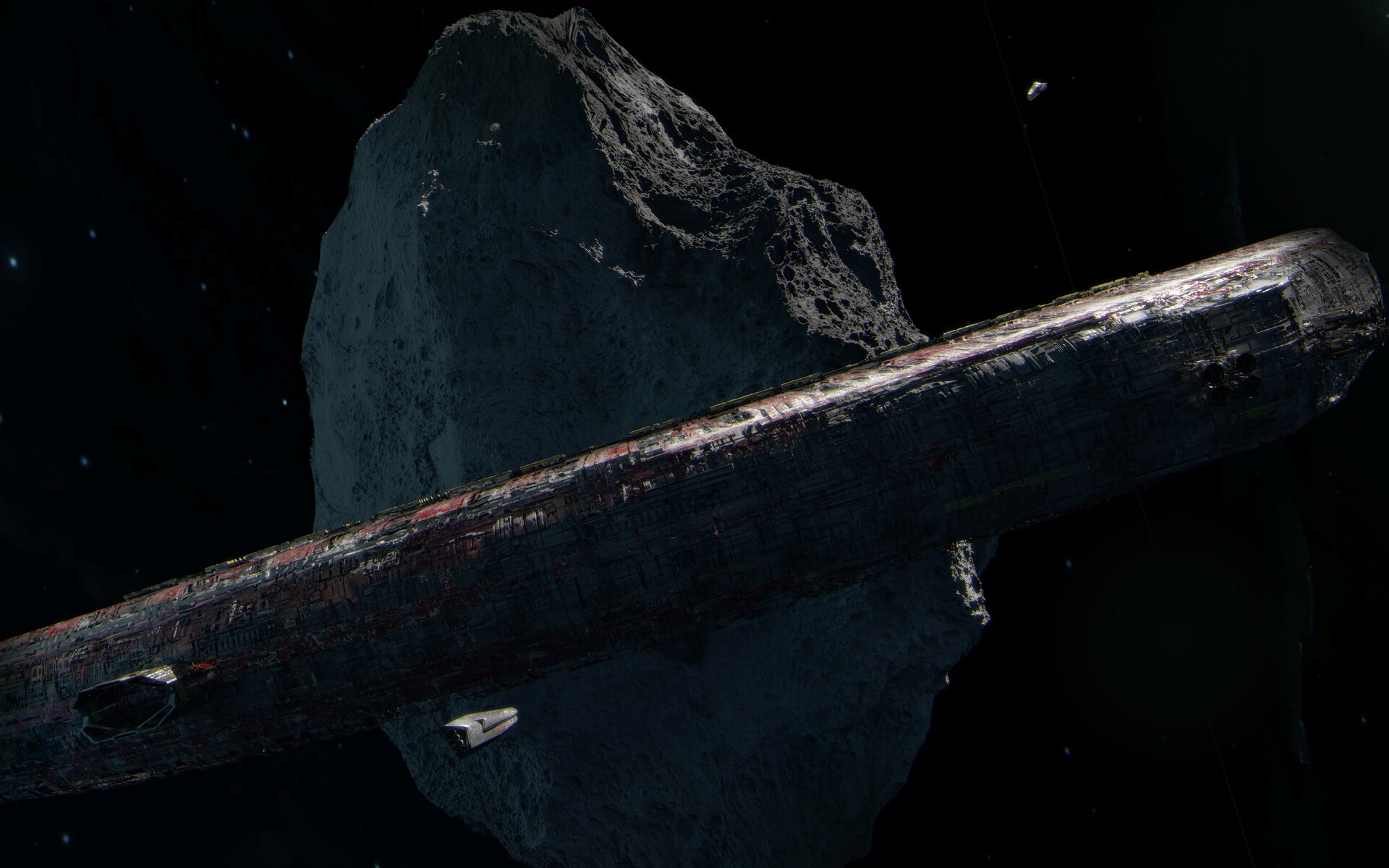
    • Lodd Masterworks Shipyard stands as a gleaming monument of cutting-edge industrial might within the vast Kuat Drive Yards Orbital Array as a replacement for the aging Maw Shipyard. Its massive modular superstructure, adorned with glowing blue accent lighting and the prominent red Trade Federation/KDY crests, bristles with automated construction gantries, colossal drydocks, and sprawling assembly arms.
OPERATIONS INFORMATION
  • Production: Capital warships including frigates, cruisers, and Star Destroyer-class vessels, support craft, and advanced starfighters. The shipyard excels at full-spectrum military vessel construction.
  • Specialty: Ancient Designs from Kuat Drive Yards Catalog
  • Output:
  • Market:
    • Primarily serves the Trade Federation and its allies, with output directed toward bolstering fleets operating in Sith Covenant space and beyond. It also accepts select contracts from approved clients to strengthen political and economic ties.
POINTS OF INTEREST

Primary Assembly Nexus: The heart of the shipyard, featuring multiple colossal internal shipyards and external drydocks capable of simultaneous construction of several capital vessels. Molecular Furnaces and Cryo-Furnaces feed raw and exotic materials directly into automated assembly lines.

Nanoforge Fabrication Halls: Vast automated foundries utilizing Nanoforges, Synthicators, and Impact Sifters for molecular-level material refinement and creation of advanced alloys and components at unprecedented speeds.

Armament Integration Bays: Equipped with Self-Constructing Armament Facilities, these secure sections allow rapid installation and calibration of weapons systems, shields, and electronic warfare suites.

Droid Command & Prototyping Core: Home to Self-Regulating Droid Makers and advanced Prototypers, where legions of specialized droids are produced on-site and new ship designs are tested and iterated.

Chemical Processing & Material Churners: Industrial sectors running Chemical Churners and supporting Various Manufacturing Technology to produce specialized fuels, composites, and consumables required for high-volume warship production.

SECURITY

High


Lodd Masterworks benefits from the formidable defenses inherent to the Kuat Drive Yards Orbital Array, significantly augmented by Trade Federation investment. The shipyard is protected by layered deflector shields, extensive network of Tri-Cycling Imperial Heavy Turbolaser Turrets and even a large array of advanced Tri-Cycling Imperial Ordinance Launchers in order to protect itself against enemy capital ships.

Internal security relies partly on Kuati Security Forces regularly patrolling the shipyard, though they are reinforced with B2-A Series Super Battle Droids and regular Trade Defense Force composed of a variety of different species and skillsets. Advanced automated turrets are strategically placed in the corridors to corral potential intruders away from vital subsystems into confrontation zones.

External patrols by KDY security vessels and privateer escorts provide a buffer zone, while sensor arrays and tractor beam emplacements monitor all approaching traffic. The integration of state-of-the-art surveillance and counter-intrusion systems makes sabotage or unauthorized access exceptionally difficult, ensuring the facility remains a secure hub for sensitive warship production.

HISTORICAL INFORMATION

In 902 ABY, as the Trade Federation sought to expand its influence over the vital shipbuilding world of Kuat, currently under Sith Covenant oversight the corporation orchestrated the donation and construction of Lodd Masterworks Shipyard.

Designed as a direct replacement for the aging Maw Shipyards which had been in continuous service since before the Gulag Plague, the new facility represented a major technological leap forward. Advanced manufacturing technologies including Molecular Furnaces, Nanoforges, Self-Constructing Armament Facilities, were installed to revitalize and dramatically accelerate Kuat's production capacity.

The shipyard was named in honor of a prominent Trade Federation industrialist and serves as both a gesture of goodwill and a strategic foothold. By upgrading KDY's capabilities, the Federation aims to outproduce competitors, demonstrate the tangible benefits of their involvement, and gradually convince local authorities and the Sith Covenant that Kuat's shipbuilding future would be brighter and more profitable under increased Trade Federation stewardship.


constructiontower_by_lotsofwar_dm2mjnu-pre.jpg

"The Federation is paying us a handsome price to keep potential competitors away from Kuat and Humbarine"
-- Captain Ballard Vane, one of the many privateers in Port Sneed​

OUT OF CHARACTER INFORMATION
SETTING INFORMATION
A diverse mix of humans (roughly 45%), near-humans, and various alien species common to fringe operations. Prominent groups include Neimoidians and other Trade Federation-aligned species in administrative and mercantile roles, along with Rodians, Weequay, Nikto, and Trandoshans in security and combat positions. A smattering of droids and more exotic species drawn to privateer life. Many inhabitants are transient spacers, mechanics, and smugglers rather than permanent residents.
  • Accessibility:
Port Sneed is deliberately isolated within the Humbarine System, positioned in a dense asteroid field that provides natural concealment and defensive chokepoints. It is not listed on standard nav charts and relies on encrypted transponder codes and Trade Federation-provided hyperspace coordinates for authorized access.

Approach vectors are heavily monitored; unauthorized vessels are typically intercepted by patrolling privateer squadrons. While not completely hidden from determined scans, its location in a backwater section of a contested Core system makes it difficult for outsiders to locate without insider knowledge.
  • Traffic: Moderate
The station sees steady but controlled flow of privateer raiders, armed freighters, light capital ships, and smuggling vessels. Cargo traffic consists largely of salvaged goods, black-market weapons, spare parts, and luxury items looted from Sith Covenant shipping or rival interests. Passenger traffic is mostly crew rotations, traders, and opportunistic mercenaries. Peak activity occurs during resupply windows or after successful operations against Kuat or Humbarine targets.
  • Description:
From a distance, Port Sneed appears as a hulking, battle-scarred fortress drifting amid swirling asteroid fields and the glowing nebulae of the Humbarine System. The original FireStar-class structure has been heavily modified with scavenged plating, jury-rigged hab-modules, and glowing pink-purple illuminated sections that give it a garish, lived-in pirate aesthetic. Extensive docking arms and external cargo gantries bristle with activity, while smaller craft dart between the station and nearby asteroids.

POINTS OF INTEREST

The Core Bazaar:
The central habitation and commercial deck has been converted into a bustling shadowport market. Stalls and cantinas hawking everything from stolen Kuat hyperdrive components to smuggled spice operate under the watchful eyes of Trade Federation factors. Holographic advertisements flicker alongside neon signs, and private negotiation booths offer privacy for deals.

The Crimson Spire: One of the original FireStar weapon spires, now repurposed as the command and administrative hub. Privateer captains and Trade Federation liaisons meet here to plan raids on Sith Covenant assets. It houses the station's primary comms array and encrypted holonet relay.

Hangar Bays & Repair Docks: The expansive central landing facilities accommodate multiple squadrons of starfighters and corvettes. Extensive repair gantries, droid swarms, and black-market shipyards allow rapid turnaround for damaged vessels. Modified with additional external cradles for larger prizes.

The Underdecks: Lower levels feature barracks, armories, and entertainment dens for the crew. Illicit fight pits and gambling halls provide recreation, while secure vaults store high-value loot awaiting division or shipment to Trade Federation interests.

Asteroid Annexes: Nearby hollowed-out asteroids connected by umbilical tunnels serve as additional storage, fuel depots, and hidden fighter launch bays, expanding the station's effective capacity and providing fallback positions.

SECURITY

High

Port Sneed maintains high security through its retained and upgraded FireStar-class armament, featuring 148 laser cannons and 60 concussion missile launchers many now slaved to advanced targeting computers. The station is protected by layered deflector shields with redundant generators, bolstered by scavenged and modified emitters for better coverage against capital ship fire.

Patrol squadrons of privateer starfighters and gunships operate constantly in the surrounding asteroid field, while internal security consists of armed privateers, and automated turrets in key corridors. Sensor jammers and stealth coatings on external structures reduce detectability, supported by encrypted IFF systems that restrict docking access.

The proximity to dense asteroid fields serves as a natural deterrent, enhanced by pre-placed sensor buoys and automated mine dispensers in select approaches. Overall, the station's defenses are formidable enough to repel most pirate raids or small naval probes but are not intended for prolonged fleet engagements, with emphasis placed on deterrence, hit-and-run support, and rapid evacuation if Sith Covenant forces arrive in strength.

HISTORICAL INFORMATION

Port Sneed began its life as a standard FireStar-class Orbital Defense Station, likely constructed by Rendili StarDrive during an earlier era for planetary defense in the Core. Abandoned or captured during the chaotic shifts of power in the 900 ABY period, it was discovered and claimed by privateers operating on the fringes of Humbarine space.

Under the patronage of the Trade Federation, the station underwent significant modification. Trade Federation engineers and privateer crews stripped outdated systems, reinforced the structure with scavenged armor plating, and added extensive docking and habitat modules to transform it from a pure defense platform into a mobile-forward operating base.

Named Port Sneed after a legendary or perhaps apocryphal privateer captain who first proposed its use, the station now serves as a vital hub for the Federation's indirect campaign to secure economic and territorial rights over the vital shipbuilding world of Kuat and the industrialized Humbarine system both currently under Sith Covenant influence.


VVVDHjr.png

SCIPIO, ALBARRIO SECTOR, OUTER RIM TERRITORIES

qXu9Rp6.png

Meii-Nu briefly glanced at the holo-transmissions appearing on the large viewscreen in the InterGalactic Banking Clan's estate. Maneuvering over to the elegant yet modest desk to have a private conversation with the person in front of her, mind buzzing with various thoughts and schemes to increase her own personal wealth and influence across more sectors.

The InterGalactic Bank - a subsidiary of the InterGalactic Banking Clan until becoming independent had thrived during her tenure as Chief Auditor, as various loans and debts had been repaid in order to make sure that the
financial records were up to date. Despite this success there was always a personal drive for more credits and thus they had chosen to properly align themselves with the Nefarious Dark Empire in order to tap into a new market one in desperate need of resources and war materials.

Such personal thoughts were interrupted by the appearance of Rulonom Laborr - Director of the Trade Federation of Planets whose armored figure materialized. "Auditor Suu, I trust that everything is proceeding as we predicted." Laborr exclaimed glancing down at the Gossam Businesswoman, as the pressure suits mechanisms squealed and hissed with each word. "Yes, Director Laborr. We have integrated ourselves seamlessly into the Dark Empire's ranks without much difficulty which is of no surprise given their desperation for currency." Meii-Nu replied with some semblance of a smile having been tasked by the Skakoan to formulate a powerful economic stronghold within the newly formed Dark Empire. Despite being independent on paper, the InterGalactic Bank had become apart of the Trade Federation of Planets through personal agreements and backdoor discussions, and thus were bound to the shifting whims of the current Director.

The pressure suit hissed in relaxation - "Excellent, The Dark Empire could become a serious parasite to the Trade Federation of Planets in the future. They believe themselves ready to challenge the Galactic Alliance and therefore pose a threat to our most profitable market. We must ensure that the Alliance stays ahead in terms of technological research so when the time comes for them to face each other on the battlefield, there will be no doubt as to who shall remain the galactic hegemony." The Skakoan had not restructured the Trade Federation to see it bow to the whims of another despotic regime, and so Operation Pax Allianca would remain the top priority so long as Laborr ruled the Federation unopposed. From the reports given to him through the Sarada Network; the Dark Empire had already amassed a considerable war chest and had proven as much when they blockaded the system of Onderon. A New Sith Battlecruiser, and a Full Imperial Remnant.

"How do you suppose, My Lord. That we accomplish Operation Pax Allianca on
schedule." The Gossam asked - curious as to how the Director of the Federation would manage to stay one step ahead of the Dark Empire as they sought to establish themselves as a formidable powerhouse in galactic affairs. The formation of the Imperial Economic Council put Meii-Nu near the top of the Empire's Ranks in terms of non-military personnel.

"Operation Pax Allianca has a fluid timeline as of yet, although we can start by industrial
espionage through our third-party agents. Understand the specifications of the war machine and you can find ways to destroy it with an even better machine. Galivanting support within the Federal Assembly is also high on our list through our Minister, Lodd Grimmin who will begin pushing military build up in response to the invasion of Onderon." Rulonom would not boil the Operation's timeline down to a singular point as things could change rapidly; adjusting the operation as it moved forward would be the best outcome. The Federal Assembly's democratic system did prove reliable in declarations of war given the stance of the Mandalorian-Alliance Conflict and the Sith Empire Campaigns.

" I will begin the proper
preparations for the success of Operation Pax Allianca on my end, although I must feign support for the Galactic Emperor until the time comes when the Alliance can overthrow him once more." Meii-Nu explained - bowing her head down as the hologram faded from existence.
[/div]
 
Last edited:


Electronic Warfare Speeders

Suto Electronic Warfare Speeder
Trade-Federation-Factodex

  • Intent: Produce an advanced speeder centered around the concept of Electronic Warfare
  • Image Source: Flow Image Creator
  • Canon Link: Not Applicable
  • Permissions: Not Applicable
  • Primary Source: Countermeasures
Trade-Federation-Factodex

Trade-Federation-Factodex

  • Classification: Electronic Warfare Speeder
  • Role: Electronic Warfare
  • Size: Average
  • Weight: Average
  • Armaments: None
  • Defenses: None
  • Maneuverability Rating: Very High
  • Speed Rating: Very High
  • Propulsion: Advanced Antigrav Generator
  • Minimum Crew: 1. One technician
  • Optimal Crew: 1. One technician
  • Passenger Capacity: None
  • Cargo Capacity: None
Trade-Federation-Factodex

Trade-Federation-Factodex


Electronic Warfare Concentration: The Suto consolidates a wide array of electronic warfare and intelligence systems into a single mobile platform, including signal interception, encryption cracking, holotrace capability, communication scrambling, and battlefield jamming. This allows it to function as a compact but highly capable electronic warfare node.

Rapid Battlefield Mobility: Advanced antigrav propulsion combined with burst thrusters, turbo boosters, and maneuvering repulsor systems allow the Suto to reposition rapidly across the battlefield. This mobility enables it to avoid counter-battery fire, reposition for signal advantage, and remain difficult to track or target for extended periods.

Command and Signal Relay Capability: The integrated holotransceiver systems, VDV-100 holo display, and battlefield communication suites allow the Suto to act as a forward relay node. It can maintain contact between dispersed formations, intercept enemy transmissions in real time, and distribute battlefield data to allied forces with minimal delay.

Electronic Countermeasure Layering: Multiple overlapping ECM systems, including combat jammers, holodisruption systems, IFF confusion emitters, and false energy signature projectors, create a layered electronic deception environment. This makes it significantly harder for enemy forces to maintain reliable targeting solutions or secure communications in the Suto's operational radius.

Trade-Federation-Factodex


Processing Overload Limitation: Despite its advanced systems, the Suto's onboard architecture can only actively support five major electronic systems simultaneously. Attempting to exceed this operational threshold results in severe computational overload, forcing an automatic emergency shutdown of all active systems to prevent catastrophic data corruption or hardware failure.

No Defensive or Offensive Capability: The Suto carries no weapons and no shielding systems. It cannot directly engage hostile targets and must rely entirely on escort forces or stealth through mobility and electronic concealment.

Fragile Structural Design: To maximize speed and electronic capacity, the Suto sacrifices armor protection. Even light weapons fire, shrapnel, or near-miss explosions can disable critical systems or destroy the vehicle.

Electronic Warfare Counterplay Vulnerability: While highly capable in EW operations, the Suto remains vulnerable to dedicated counter-jamming, slicing attacks, and signal saturation tactics designed to overwhelm or misdirect its systems.

Trade-Federation-Factodex


The Suto Electronic Warfare Speeder is a mobile electronic warfare platform designed to replace vulnerable static command and signal bunkers. Built for speed and battlefield mobility, it prioritizes electronic dominance and intelligence gathering over armor or weapons.

It integrates a wide range of systems including signal interception, communications jamming, holotrace tracking, battlefield scanning, encryption disruption, and holographic command interfaces. This allows it to disrupt enemy coordination while simultaneously enhancing allied situational awareness and communication.

Its advanced antigrav propulsion and maneuvering systems allow it to rapidly reposition across the battlefield, avoiding detection and minimizing exposure to enemy counterattacks. In practice, it functions as a forward electronic warfare node and mobile command relay for armored or mechanized formations.

However, its effectiveness is limited by a critical operational constraint: only five major electronic systems may be active at any time. Exceeding this limit triggers an automatic shutdown to prevent system overload, temporarily disabling all functionality until rebooted. The Suto is not designed for direct combat. It survives through speed, escort protection, and electronic concealment, while delivering battlefield-wide disruption and intelligence support when properly managed.


Magenta-class Combat Walker

Magenta-class Combat Walker
Trade-Federation-Factodex

Trade-Federation-Factodex

Trade-Federation-Factodex

Trade-Federation-Factodex

Trade-Federation-Factodex

  • High Speed: Capable of reaching exceptional velocities across flat and semi-rough terrain, allowing rapid response to threats and the ability to quickly overtake or outpace slower cargo convoys.
  • Data Recovery System: Equipped with hardened recording equipment that transmits detailed visual and sensor data back to the owner even if the droid is destroyed, providing valuable intelligence on attackers and incidents.
  • Perimeter Escort Efficiency: Excellent at flanking and screening cargo transports in open environments through coordinated pack tactics and long-range sensor coverage.
Trade-Federation-Factodex

  • Poor Maneuverability: While extremely fast in straight lines, the droid has limited turning capability, making it vulnerable to being outmaneuvered, cornered, or attacked from the rear or flanks.
  • Light Armor Profile: Significant portions of the wheel assembly are dedicated to internal circuitry and mechanics, resulting in thinner overall armor protection than comparable security droids.
  • Predictable Attack Vectors: Once an enemy forces the droid into a turn or gets behind it, the unit becomes an easier target due to its speed-focused design.
Trade-Federation-Factodex


Released by the Trade Federation in 900 ABY, the Asteroidia-class Droid Cargo Protector was developed as an affordable, mass-produced solution for independent merchants and shipping companies operating across the galaxy's many unpoliced frontier worlds. Designed specifically for vast open terrain environments, deserts, badlands, rocky plains, and similar expanses where traditional security patrols are impractical.

In operation, Asteroidia units accelerate to high speeds to establish wide defensive perimeters, using their advanced sensor suites and targeting systems to detect and engage threats at range with their double-barreled laser cannons. Their wheel-based locomotion excels at covering great distances quickly, making them ideal for long-haul protection of valuable but non-military cargoes such as raw materials, spice, or medical supplies.

Should the units be overwhelmed, their sophisticated recording equipment ensures that critical footage and telemetry data is beamed back to the owner, allowing for insurance claims, bounty postings, or retaliation planning.

While highly effective as deterrents against bandits, wildlife, and opportunistic raiders in open terrain, the Asteroidia-class has clear limitations. Its emphasis on speed and internal systems leaves it relatively lightly armored, and its difficulty executing sharp turns means savvy attackers can attempt to force the droids into unfavorable positioning or strike from the rear.


Riftwyrn Heavy Tank

Xerta-class Heavy Battle Tank
f28zABP_d.webp

eogj4IB_d.webp

c2dOm0W_d.webp

EqLWD33_d.webp

lipBCC1_d.webp


Twin Mass-Driver Battery: The Xerta-class mounts a pair of fast-track fire-linked high-velocity mass-driver cannons capable of engaging heavily armored vehicles, fortified positions, walkers, and hardened emplacements. The linked firing system allows the vehicle to deliver devastating strikes capable of threatening even super-heavy targets.

Layered Protection: The combination of Impervium ablative armor, secondary Turadium plating, reinforced structural armor, shield generators, thermal protection systems, and defensive electronic warfare suites makes the Xerta exceptionally difficult to destroy through conventional means.

Shield Dominance: The overlaid ray, particle, and concussion barriers provide protection against a wide variety of battlefield threats. Enemy forces often require sustained concentrated fire before meaningful damage can be inflicted upon the vehicle itself.

Anti-Vehicle Versatility: The integrated missile arrays allow the Xerta to engage multiple target types simultaneously. Ion missiles can disable enemy vehicles, stalker missiles can pursue evasive targets, incendiary missiles can deny terrain, and flame carpet warheads can devastate infantry formations.

g0hzHxZ_d.webp


Massive Power Consumption: The vehicle's shields, sensors, jamming systems, targeting suite, and twin mass-driver cannons place tremendous demands upon its power systems. Prolonged combat operations can strain reserves and reduce system performance if resupply or maintenance is unavailable.

Large Target Profile: Designed as a breakthrough vehicle, the Xerta is difficult to conceal and frequently becomes the primary target of enemy armor, artillery, aircraft, and heavy infantry weapons.

Vulnerable Undercarriage: Like many repulsor vehicles, the antigrav assemblies located beneath the hull are difficult to armor without sacrificing performance. Mines, concealed explosives, or precision strikes against these systems can immobilize the vehicle.

Electronic Saturation: Although heavily protected against ionization and electronic warfare, the sheer number of integrated electronic systems creates many potential failure points. Severe ion damage, dedicated electronic warfare attacks, or catastrophic power fluctuations can degrade sensor and targeting performance.

aXSYaJW_d.webp


The Xerta-class Heavy Battle Tank was developed by the Trade Federation to provide a direct answer to the increasingly powerful armored vehicles appearing throughout the galaxy. Rather than relying on excessive automation or experimental technologies, the Xerta was designed around a straightforward philosophy: survive incoming fire, destroy enemy armor, and continue advancing.

Armed with twin high-velocity mass-driver cannons and a versatile missile array, the Xerta is capable of engaging everything from infantry formations and fortifications to heavy tanks and walkers. Powerful shields, layered Impervium and Turadium armor, electronic warfare systems, and onboard repair drones allow it to remain operational even under intense battlefield conditions.

The Xerta excels as a breakthrough vehicle, leading armored assaults and acting as the centerpiece of Trade Federation ground offensives. While its size, logistical requirements, and heavy reliance on power-intensive systems can become liabilities during prolonged operations, it remains a formidable battlefield asset capable of standing toe-to-toe with many modern heavy armored vehicles.


Asteroidia-class Droid Cargo Protector

Asteroidia-class Droid Cargo Protector
Trade-Federation-Factodex

Trade-Federation-Factodex

Trade-Federation-Factodex

Trade-Federation-Factodex

Trade-Federation-Factodex

  • High Speed: Capable of reaching exceptional velocities across flat and semi-rough terrain, allowing rapid response to threats and the ability to quickly overtake or outpace slower cargo convoys.
  • Data Recovery System: Equipped with hardened recording equipment that transmits detailed visual and sensor data back to the owner even if the droid is destroyed, providing valuable intelligence on attackers and incidents.
  • Perimeter Escort Efficiency: Excellent at flanking and screening cargo transports in open environments through coordinated pack tactics and long-range sensor coverage.
Trade-Federation-Factodex

  • Poor Maneuverability: While extremely fast in straight lines, the droid has limited turning capability, making it vulnerable to being outmaneuvered, cornered, or attacked from the rear or flanks.
  • Light Armor Profile: Significant portions of the wheel assembly are dedicated to internal circuitry and mechanics, resulting in thinner overall armor protection than comparable security droids.
  • Predictable Attack Vectors: Once an enemy forces the droid into a turn or gets behind it, the unit becomes an easier target due to its speed-focused design.
Trade-Federation-Factodex


Released by the Trade Federation in 900 ABY, the Asteroidia-class Droid Cargo Protector was developed as an affordable, mass-produced solution for independent merchants and shipping companies operating across the galaxy's many unpoliced frontier worlds. Designed specifically for vast open terrain environments, deserts, badlands, rocky plains, and similar expanses where traditional security patrols are impractical.

In operation, Asteroidia units accelerate to high speeds to establish wide defensive perimeters, using their advanced sensor suites and targeting systems to detect and engage threats at range with their double-barreled laser cannons. Their wheel-based locomotion excels at covering great distances quickly, making them ideal for long-haul protection of valuable but non-military cargoes such as raw materials, spice, or medical supplies.

Should the units be overwhelmed, their sophisticated recording equipment ensures that critical footage and telemetry data is beamed back to the owner, allowing for insurance claims, bounty postings, or retaliation planning.

While highly effective as deterrents against bandits, wildlife, and opportunistic raiders in open terrain, the Asteroidia-class has clear limitations. Its emphasis on speed and internal systems leaves it relatively lightly armored, and its difficulty executing sharp turns means savvy attackers can attempt to force the droids into unfavorable positioning or strike from the rear.

 
Last edited:


Imperial Carrier Design

Acheron-class Siege Carrier
f28zABP_d.webp

eogj4IB_d.webp

VZWtFBz_d.webp

Technical Specifications

[/slide]

PdkcQ4g_d.webp

Standard Features


SR7ZUkP_d.webp

Advanced Systems


lipBCC1_d.webp

  • Fortress Carrier Profile: The Acheron-class combines a substantial strike wing with layered defenses and heavy self-protection, allowing it to remain on station in contested space without immediately requiring an escort screen to survive.
  • Recessed Hangar Architecture: Its hangars are deeply embedded within the hull rather than exposed along a vulnerable dorsal spine, making launch and recovery operations significantly harder to disrupt under fire.
  • Distributed Combat System: Weapons, shield nodes, power routing, and command facilities are spread throughout the vessel, reducing the chance that a single precision strike can cripple the ship's combat effectiveness.
  • Sustained Operational Endurance: With reinforced plating, automated repair support, redundant generators, and extensive internal systems, the carrier can endure prolonged fleet actions and continue launching strike craft after lesser capital ships would be forced to withdraw.
g0hzHxZ_d.webp

  • Low Tactical Agility: Despite its combat value, the Acheron-class is still a vast carrier and cannot reposition quickly enough to evade concentrated capital ship fire or rapidly changing battle lines.
  • Complex Systems Interdependence: Its many advanced subsystems create a situation where damage control is manageable, but not simple; when internal networks are disrupted, restoring full combat readiness can take time.
  • Dependent on Strike Wing Performance: A large share of the vessel's offensive power comes from its embarked squadrons, meaning attrition to its hangar complement directly reduces the ship's battlefield value.
  • High Strategic Visibility: A carrier of this scale is difficult to conceal, difficult to redeploy unnoticed, and highly attractive as a priority target for enemy fleets, planetary defenses, and boarding operations.
aXSYaJW_d.webp


The Acheron-class Siege Carrier was commissioned by the Mahporeem Imperial Remnant and constructed by the The Trade Federation in 902 ABY to serve as the centerpiece of its expanding naval forces. Drawing inspiration from earlier carrier and battleship designs, the vessel was conceived as a response to the increasingly destructive nature of modern naval warfare, where traditional carriers often lacked the durability necessary to survive prolonged fleet engagements.

Unlike many carriers that rely primarily on escorts for protection, the Acheron-class was designed to remain operational while under heavy attack. Its massive circular hull houses protected hangar complexes, extensive maintenance facilities, and large munitions reserves, allowing it to sustain fighter operations for extended periods. The ship's substantial armament and layered defensive systems ensure it can defend itself against hostile capital ships, starfighters, and missile swarms while continuing to coordinate fleet operations.

The vessel serves as both a fleet command ship and force projection platform. Advanced communications, navigation, and electronic warfare systems allow it to direct large-scale naval actions while supporting its embarked squadrons. Despite its impressive durability and firepower, the Acheron-class remains a carrier first and foremost. Much of its offensive capability depends on the starfighters and support craft it carries, making the preservation of its air wing a critical concern during combat operations.

In Mahporeen service, the Acheron-class is most commonly employed as the centerpiece of expeditionary fleets, blockade groups, and planetary assault forces. While slow and resource-intensive to operate, its combination of survivability, command capabilities, and strike craft capacity makes it one of the most valuable strategic assets available to the Imperial Remnant.


Mining Station

Revelation-class Asteroid Mining Station
Trade-Federation-Factodex

Trade-Federation-Factodex

Trade-Federation-Factodex

Trade-Federation-Factodex

Trade-Federation-Factodex

Trade-Federation-Factodex

  • Efficient Asteroid Processing: Combines advanced drilling, scanning, and refining systems into a single platform capable of high-volume extraction and initial processing of asteroid resources.
  • Robust Civilian Defenses: Features redundant shielding and anti-starfighter emplacements sufficient to deter pirates and small-scale threats while remaining cost-effective for commercial operation.
  • Comprehensive Security & Data Systems: Extensive internal and external sensors, security measures, and recording equipment provide strong operational oversight and incident documentation.
Trade-Federation-Factodex

  • Immobile & Slow: Extremely limited mobility and no hyperdrive make the station vulnerable to being trapped or targeted once located in an asteroid field.
  • No Offensive Capability: Complete lack of weapons leaves it reliant on escorts or defensive emplacements, making it susceptible to determined military or heavily armed pirate attacks.
  • Large Target Profile: Its massive size makes it easy to detect and difficult to hide or quickly reposition in contested regions.
Trade-Federation-Factodex


Developed by the Trade Federation in 900 ABY, the Revelation-class Asteroid Mining Station is a large-scale, self-contained commercial platform designed for resource extraction in asteroid fields. Measuring 3,000 meters in length and width, the station uses tractor beams, docking clamps, and massive retrorockets to anchor itself near rich deposits.

Once positioned, its Zenomach Giant Drill, beamdrills, geoscanners, and mining droids extract ore, which is then processed through molecular sifters and automated refineries before loading onto mining barges and laser skiffs.

The station supports a crew of 400-800 personnel with substantial cargo capacity for refined materials and includes puffer pig holding centers for gas detection. It features average civilian-grade defenses, including redundant shields and anti-starfighter emplacements, making it well-suited for protected frontier operations.

However, its lack of hyperdrive, very low speed and maneuverability, and absence of offensive weapons make it dependent on escorts and vulnerable if defenses are breached. The Revelation-class has proven popular with independent miners and smaller corporations seeking reliable, high-output asteroid mining infrastructure.

 
Last edited:


Expeditionary Armor

Rancisis-class Jedi Expeditionary Armor
Trade-Federation-Factodex

Trade-Federation-Factodex

Trade-Federation-Factodex

  • Classification: Multipurpose Design
  • Weight: Light
  • Resistances:
    • Energy: High Classification
    • Kinetic: High Classification
    • Lightsabers: Very High Classification
    • Elemental: Low Classification
    • EMP/ION: Low Classification
    • Acid/Corrosive: Very Low Classification
Trade-Federation-Factodex

Trade-Federation-Factodex

  • Superior Mobility: The armor's light weight combined with strategic plating allows exceptional flexibility and maneuverability, making it highly effective for long expeditions and dynamic battlefield movement across varied environments.
  • Lightsaber Resistance: Reinforced Durasteel plates provide Very High resistance to lightsaber strikes on all armored sections (chest, shoulders, forearms, thighs, and shins).
  • Energy and Kinetic Protection: High resistance to blaster-type energy weapons and kinetic impacts, further strengthened by the integrated Force Energy Resistance abilities.
  • Extensive Modularity: Designed with high adaptability to fit a wide range of species, from large Wookiees to the smallest Ewoks, ensuring comfort and effectiveness for diverse users.
  • Expedition Utility: Features a full Standard Jedi Utility Belt, Qel-Droma Sash, and vacsuit-capable jumpsuit, enabling sustained operations in hostile or deep-space environments.
Trade-Federation-Factodex

  • Ysalamiri/Force Void Vulnerability: The armor loses the majority of its Force enhancements and protective abilities when subjected to a ysalamiri bubble or voidstone, reducing it to basic light armor performance.
  • Partial Coverage: Only armored where needed to preserve mobility, leaving the tan Molytex bodyglove, joints, and unplated areas significantly less protected and vulnerable to direct attacks.
  • Bodyglove Vulnerability: The tan Molytex bodyglove underneath the plates offers only minimal protection and is highly vulnerable to lightsabers, piercing, and slashing attacks in unarmored areas.
  • Limited Heavy Weapon Resistance: Cannot withstand concentrated heavy weaponry such as repeating blaster turrets or high explosive devices such as thermal detonators
  • Exotic and Elemental Weakness: Very Low resistance to acid/corrosive damage and Low resistance to EMP/ION and most exotic weapons
Trade-Federation-Factodex


Developed in 902 ABY through a groundbreaking collaboration between the Trade Federation and volunteer Jedi artisans and warriors, the Rancisis-class Jedi Expeditionary Armor marks the Trade Federation's first major entry into the advanced personal armor market. Named after the revered but still disputed Jedi Master Oppo Rancisis, this armor was purpose-built for Jedi Knights, explorers, and diplomats conducting long-range expeditions across the Known Galaxy.

The design philosophy focuses on balanced protection through targeted reinforcement rather than bulky plating. Strategic durasteel and mod-armor components cover vital areas while the flexible Molytex bodyglove and reinforced liner maintain excellent mobility. Jedi volunteers infused Force-weave techniques and energy-absorption matrices into the armor during its creation, granting it strong defensive capabilities against both conventional weapons and hostile Force powers.

In practice, the Rancisis-class excels in mobile reconnaissance, skirmishes, and extended operations where agility and Force synergy are paramount. It performs exceptionally well against blaster fire, lightsaber duels, and dark side attacks, while its modularity and utility features make it ideal for prolonged missions in hostile environments.

However, it is intentionally not a heavy combat suit it struggles against sustained heavy weapons fire, acid, disruptors, and exotic threats. Its greatest limitation is its heavy reliance on Force enhancements, which are almost entirely nullified inside a ysalamiri bubble or near voidstone.

 
Last edited:

Karkosuchus

Guest


Lorem ipsum dolor sit amet, consectetur adipiscing elit. Nam imperdiet aliquam blandit. Nam dapibus interdum quam et finibus. Phasellus dictum, erat at suscipit sollicitudin, massa metus placerat odio, sit amet lacinia sapien diam ut metus. Aliquam rhoncus mi eget arcu placerat, ut convallis ex cursus. Aenean fermentum diam sed justo viverra venenatis. Etiam efficitur vehicula massa, sed pretium dui rutrum vel. Proin elit justo, posuere aliquet egestas ac, vestibulum eu ligula. Donec turpis ex, sollicitudin non sapien non, consectetur volutpat lectus. Donec id pretium metus. Integer rutrum risus vel pulvinar fringilla.

Sed convallis, leo et rhoncus ullamcorper, tortor lacus suscipit justo, eu elementum libero ex vel felis. Aenean sit amet arcu a enim porta placerat eget non lacus. Maecenas nunc dui, lobortis vitae pellentesque ac, facilisis eget odio. Vestibulum sed vestibulum purus. Proin nec orci eu orci fringilla finibus id sit amet arcu. Donec finibus orci metus, sit amet laoreet mauris vehicula et. Pellentesque sapien nulla, luctus id tempus id, rutrum et ipsum. Pellentesque nec rhoncus lectus, nec fermentum lacus.

Mauris feugiat, metus quis rhoncus congue, nisi orci malesuada metus, vel fringilla urna sem id nibh. Quisque bibendum nulla at dolor gravida, eleifend mattis quam commodo. Fusce eget aliquam turpis, at mollis quam. Sed sit amet lacus non elit tincidunt auctor nec id purus. Phasellus bibendum eu velit non vestibulum. Nulla malesuada convallis convallis. Quisque nec bibendum ligula. Suspendisse condimentum dapibus eros non porta. Praesent commodo id orci quis posuere. In eleifend leo a velit sagittis porttitor.

Lorem ipsum dolor sit amet, consectetur adipiscing elit. Nam imperdiet aliquam blandit. Nam dapibus interdum quam et finibus. Phasellus dictum, erat at suscipit sollicitudin, massa metus placerat odio, sit amet lacinia sapien diam ut metus. Aliquam rhoncus mi eget arcu placerat, ut convallis ex cursus. Aenean fermentum diam sed justo viverra venenatis. Etiam efficitur vehicula massa, sed pretium dui rutrum vel. Proin elit justo, posuere aliquet egestas ac, vestibulum eu ligula. Donec turpis ex, sollicitudin non sapien non, consectetur volutpat lectus. Donec id pretium metus. Integer rutrum risus vel pulvinar fringilla.

Sed convallis, leo et rhoncus ullamcorper, tortor lacus suscipit justo, eu elementum libero ex vel felis. Aenean sit amet arcu a enim porta placerat eget non lacus. Maecenas nunc dui, lobortis vitae pellentesque ac, facilisis eget odio. Vestibulum sed vestibulum purus. Proin nec orci eu orci fringilla finibus id sit amet arcu. Donec finibus orci metus, sit amet laoreet mauris vehicula et. Pellentesque sapien nulla, luctus id tempus id, rutrum et ipsum. Pellentesque nec rhoncus lectus, nec fermentum lacus.

Mauris feugiat, metus quis rhoncus congue, nisi orci malesuada metus, vel fringilla urna sem id nibh. Quisque bibendum nulla at dolor gravida, eleifend mattis quam commodo. Fusce eget aliquam turpis, at mollis quam. Sed sit amet lacus non elit tincidunt auctor nec id purus. Phasellus bibendum eu velit non vestibulum. Nulla malesuada convallis convallis. Quisque nec bibendum ligula. Suspendisse condimentum dapibus eros non porta. Praesent commodo id orci quis posuere. In eleifend leo a velit sagittis porttitor.


Riftwyrn Coalition Artwork

TestingPirate10144
OUT OF CHARACTER INFORMATION
Aqualish Mercenaries

GENERAL INFORMATION
Trandoshan Poachers
  • Riftwyrn Coalition
    Organization Name
    : Riftwyrn Coalition or the Riftwyrn Pirates
  • Classification: Organized & Militarized Pirates
  • Affiliation: [ Does this organization hold loyalties to any particular character, faction, government, company or establishment? Link any relevant characters, faction pages, or groups. ]
  • Organization Symbol: [ If your organization has a sigil or logo, provide a picture or briefly describe what it looks like. ]
  • Description: [ Give a general description of this organization and the purpose it serves. ]
GEOGRAPHICAL INFORMATION
Riftwyrn Patrol Walker

  • Headquarters: Moon of CZ-198
  • Domain: [ Does your organization lay claim to any particular area? Link the planet(s), Cities, or other types of areas your organization has influence over, if any. Do they keep to themselves, or are they an active part of the community? How is their relationship with the local populace? This is the place to flesh out how your organization interacts with the community around it. ]
  • Notable Assets: Czerka Corporate Labs | Czerka facility
SOCIAL INFORMATION
Riftwyrn Coalition Protection Racket

Hierarchy: [ Most groups have a chain of command. Briefly describe how your group operates or list the levels of hierarchy. ]

Membership: [ Approximately how many people are in your organization? What does it take to become a member of this organization? Is there an initiation or a ritual? Missions they have to carry out? Tasks to perform to prove their skill/worthiness? For families, is it easy to marry into the family or are there certain attributes the family leader looks for/do you need approval? For companies, how does one get hired? Include both IC and OOC if someone were interested in your organization how they would join. ]

Climate: [ Friendly local business? Czerka style intrigue? Are you at risk of expiring just by checking in at work? Describe what kind of feel your organization has from the inside. ]

Reputation: [ How do people see this organization from the outside? Beloved? Distrusted? Wary or neutral? Describe your organization's reputation here. ]

Curios: [ Do the members of your group have any special item, marking or trinket that designates their membership? Something that only those part of this group would have access to or possession of? Examples are tattoos, amulets, rings, books of faith, etc. ]

Rules: [ Most organizations follow some set of rules. Maybe the Resol'nare, the Jedi Code, etc. Does this group have any religious beliefs? Philosophies? ]

Goals: [ What are the goals of this organization? Future plans for expansion? Collection of information? Providing education to those who seek it in certain skills? Supporting charitable works? For all intents and purposes, this is your in-character intent with this organization. ]

MEMBERS
Riftwyrn Troop Transport

[ Mention any notable PCs or NPCs that are part of this organization and their role/title/position within it - alternatively link to a blog post with this information if you would like to keep an active player roster. You may also request a sub mod to add/remove members. Link any relevant characters or NPC submissions. ]

HISTORICAL INFORMATION
11zon_cropped__10__by_lotsofwar_dm70aci-fullview.jpg

[ Include a description of the organization's history. Who started it, how and why it was formed, modus operandi, any events tied into its creation and existence, etc. ]

 
Last edited:
-

Blackscale Stingers

B O S S - H S S A A D A A V
Rank: Captain of the Blackscale Stingers, Captaincy Council
Species: Trandoshan
Age: Adult
Sex: Male
Height: 6'8"
Eyes: Burning Amber
Hair: None
Skin: Brown Scaled
Force Sensitive: No

Profile

Hssaadaav is one of the Coalition's most feared captains and among the most devoted followers of the Scorekeeper. A towering Trandoshan covered in old scars and hunting marks, he views life as a sacred hunt where every worthy captive and defeated enemy contributes to his spiritual standing in the afterlife.

Unlike many of his species, Hssaadaav is not merely a brute. He is a patient predator who studies his prey for days or even weeks before striking. Entire settlements have disappeared after being quietly infiltrated, catalogued, and marked for collection by his Blackscale Stingers.

The captain's battered blue armor is reinforced with heavy tubing and lined with tools of his trade. Shock collars, stun cuffs, restraint cables, and capture nets hang from his body like trophies. His jaws remain permanently stained dark from decades of violence.

Origin and Rise

Born into a traditional Trandoshan hunting clan, Hssaadaav embraced the Scorekeeper's teachings early. While his clutchmates charged into open combat, he learned the value of observation, profiling, and psychological warfare. His reputation grew across the Outer Rim as the hunter who could capture impossible targets, Jedi, senators, skilled engineers, and rival slavers alike.

He eventually formed the Blackscale Stingers, molding them into a professional hunting pack specialized in boarding actions, slave acquisition, and high-value prisoner transport. The Coalition values his reliability and steady supply of captives as they challenge the authority of the Farworlds Alliance.

Personality and Tactics

Hssaadaav speaks in a low, hissing drawl that rarely rises above a whisper, even when ordering executions. He is religiously sadistic, deriving spiritual satisfaction from breaking sentient beings. He treats non-Trandoshans as either future assets or future trophies and possesses dry, ritualistic humor.

Tactically, he is meticulous. Targets are observed, weaknesses catalogued, and traps sprung with precision. Promotion in his crew is based on successful captures, not kills. Those who free slaves are flayed alive as heretics. He personally leads boarding actions and never abandons a worthy Trandoshan.

Strengths

  • Master Hunter: Expert tracker and sniper with extreme patience and precision.
  • Psychological Warfare: Studies prey for days, exploiting mental weaknesses before physical confrontation.
  • Disciplined Command: Runs a highly organized crew that fears and respects him; absolute loyalty during hunts.
  • Spiritual Drive: Unshakable motivation from his faith in the Scorekeeper.

Weaknesses

  • Trophy Obsession: Maintains a secret sanctum of preserved heads and scales; this personal collection can distract him or be used against him.
  • Zero Tolerance for Weakness: Ruthless with his own crew; executions for failure can damage morale or create internal enemies.
  • Profit and Faith Alignment: While loyal to the Coalition for now, a better offer or a hunt that conflicts with his beliefs could strain alliances.
 
Last edited:


Rampage Missile

ACEM-class Vanguard Multi-Functional Missile
Trade-Federation-Factodex

Trade-Federation-Factodex

Trade-Federation-Factodex

  • Two-Stage Propulsion System: Utilizes a powerful booster stage for rapid acceleration followed by a sustainer engine that maintains maneuverability and pursuit capability over extended distances.
  • Multi-Spectrum Guidance Suite: Combines homing sensors, active sensor tracking, and passive infrared sensors, tracking torpedo technologyallowing the missile to continue pursuing targets even when one guidance method is disrupted.
  • Droid-Brain Targeting Computer: A miniaturized autonomous processor capable of evaluating sensor data, filtering electronic interference, and selecting alternate targets should the primary target be destroyed.
  • Tandem Baradium Warhead: Features a focused penetrator charge designed to breach shields and armor before a secondary detonation occurs.
  • Fragmentation-Plasma Dispersal Charge: Releases a cloud of high-velocity fragments and energized plasma particles effective against starfighters, drones, missiles, and exposed subsystems.
  • Electromagnetic Pulse Generator: Emits a localized EMP burst moments before detonation, disrupting sensors, communications equipment, guidance systems, and droid-operated technology.
  • Countermeasure Suite: Equipped with integrated flare and chaff dispensers capable of confusing missile seekers and reducing interception probability.
  • Proximity Detonation Fuse: Allows the missile to detonate at the most effective point during near misses or against highly maneuverable targets.
  • Encrypted Datalink Receiver: Permits mid-flight target updates from friendly vessels and fire-control systems.
Trade-Federation-Factodex

  • Guidance Redundancy: The missile employs multiple independent tracking methods, allowing it to continue pursuing targets even when one sensor system is compromised by jamming, decoys, or battlefield interference.
  • Armor Penetration: Its primary warhead is optimized for breaching shields and hardened armor before delivering the main explosive effect, making it effective against durable targets.
  • Area Denial: The secondary dispersal charge creates a lethal zone around the detonation point, threatening starfighters, drones, missiles, and other lightly protected craft.
  • Electronic Disruption: The localized electromagnetic pulse can interfere with sensors, communications equipment, guidance packages, and droid-operated systems immediately before impact.
  • High-Speed Pursuit: Exceptional acceleration and sustained maneuverability allow the missile to rapidly close distances and remain effective against evasive targets.
Trade-Federation-Factodex

  • Sensor Saturation: Extremely powerful electronic warfare systems, ion disturbances, or dense sensor clutter can degrade the effectiveness of all tracking systems simultaneously.
  • Precision Dependence: The missile achieves its greatest effectiveness through accurate target acquisition and detonation positioning, making near misses significantly less damaging against hardened targets.
  • Limited Capability: While capable of damaging larger vessels, the warhead lacks the raw destructive power of dedicated anti-capital ship torpedoes.
  • Hardened Electronics: Military-grade systems specifically designed to resist ionization and electromagnetic effects can reduce the effectiveness of the EMP component.
  • Thermal Signature: The sustainer engine generates a noticeable heat signature that advanced sensor suites can track during extended engagements.
  • Countermeasure Depletion: The onboard decoy package carries a finite number of flares and chaff bundles, making the missile increasingly vulnerable during prolonged pursuit scenarios.
Trade-Federation-Factodex


The ACEM-class Vanguard Multi-Functional Missile was developed by the Trade Federation as a versatile multirole ordnance platform intended to engage both conventional targets and advanced guided munitions. Utilizing a two-stage propulsion system, the missile rapidly accelerates toward its target before transitioning to a sustainer engine that preserves maneuverability throughout pursuit.

A sophisticated multi-spectrum guidance suite combines radar, infrared, and inertial tracking methods, allowing the missile to continue engagement even when one sensor type is compromised. Its droid-brain targeting package can process battlefield data in real time and adapt to changing conditions during flight.

The missile's offensive capability centers around a tandem baradium warhead supported by a secondary fragmentation-plasma dispersal charge. Combined with a localized electromagnetic pulse generator, the weapon is capable of threatening armored vessels, starfighters, drones, missiles, and electronic systems alike. Integrated flare and chaff dispensers further improve survivability against interception, making the Vanguard a highly adaptable weapon designed for modern combat.

 
Last edited:


Space Station Storage Modules

CCEM-class Multi-Functional Module System
Trade-Federation-Factodex

Trade-Federation-Factodex

Trade-Federation-Factodex

  • Navigation Core: Provides continuous hyperspace calculation support using integrated navicomputer systems
  • Targeting Core: Enhances fire-control accuracy through advanced targeting computation and predictive tracking
  • Universal Interface Matrix: Allows seamless integration with virtually any shipboard or vehicular computer system
  • Battlenet Coordination Relay: Links multiple units into a shared tactical data network for real-time battlefield awareness
  • Sensor Fusion Engine: Combines all incoming sensor data into a unified operational picture.
  • Logistics Processing Suite: Tracks supplies, maintenance cycles, and operational readiness across connected assets
  • Reconnaissance Analysis Unit: Interprets and distributes scouting and sensor intelligence in real time
  • Maintenance Diagnostics Module: Predicts system failures and provides automated repair prioritization data
  • HoloNet / Datanet Transceiver: Enables long-range communication and localized mesh networking across fleets
  • Autonomous Assistance Kernel: Provides limited automated piloting suggestions and emergency response protocols
Trade-Federation-Factodex

  • Unified Command Architecture: Replaces multiple independent support modules with a single coordinated system.
  • Fleetwide Coordination: Enables real-time synchronization of sensor data, targeting solutions, and tactical updates across all linked assets.
  • Operational Efficiency: Reduces crew workload by automating analysis, diagnostics, and battlefield data processing.
  • High Compatibility: Designed around standardized interfaces for rapid integration into existing hardware.
Trade-Federation-Factodex

  • Electronic Warfare Dependency: Performance degrades significantly under heavy jamming or signal disruption.
  • No Direct Combat Power: Does not enhance shields, weapons, or propulsion systems directly.
  • Infrastructure Reliance: Full capability requires connected fleet assets and functioning data networks.
  • Processing Bottlenecks: Performance can degrade in extremely large fleet clusters without dedicated relay vessels.
  • Training Requirement: Operators must be trained to interpret and exploit system outputs effectively.
Trade-Federation-Factodex


The CCEM-class Multi-Functional Module System is a unified systems coordination module designed to replace multiple specialized support units with a single integrated architecture. Built around existing navicomputer, targeting, and communications technologies, it functions as a centralized battlefield processor that fuses navigation, combat data, logistics, and sensor input into a shared operational picture.

The system's greatest advantage lies in its ability to eliminate informational fragmentation. Rather than each vessel operating on isolated data streams, the Module System ensures that every unit contributes to and benefits from a shared understanding of the battlefield. This significantly improves reaction time, coordination efficiency, and tactical coherence across large formations.

However, the module's effectiveness is inherently tied to the integrity of its communications environment. In contested electronic warfare conditions or regions of heavy signal disruption, its capabilities degrade proportionally, forcing individual vessels to revert to localized processing.

 
Last edited:


Missile

ACEM-class Multi-Functional Mortar Round
Trade-Federation-Factodex

Trade-Federation-Factodex

Trade-Federation-Factodex

  • Concussion Warhead: Utilizes a concussion-based explosive package inspired by missile warheads to produce a powerful blast wave capable of damaging personnel, light vehicles, and field fortifications.
  • Fragmentation Jacket: Contains pre-formed durasteel fragments that disperse throughout the blast radius, increasing effectiveness against exposed infantry and lightly armored targets.
  • Plasma Secondary Charge: Releases superheated plasma immediately after detonation, igniting flammable materials and increasing damage against entrenched positions.
  • Proximity Airburst Fuse: Can detonate above a target area to maximize fragmentation coverage and effectiveness against infantry formations.
  • Thermobaric Overpressure Effect: Compresses and rapidly heats surrounding air before detonation, increasing concussive force within enclosed spaces and defensive positions.
  • Universal Launch Compatibility: Designed for use by both vehicle-mounted and infantry-portable mortar systems without modification.
Trade-Federation-Factodex

  • Versatility: A single ammunition type can effectively perform anti-personnel, anti-fortification, and limited anti-vehicle roles
  • Area Denial: The combination of fragmentation, plasma, and overpressure effects makes affected terrain dangerous even after the initial detonation
  • Airburst Capability: Particularly effective against troops in trenches, behind cover, or operating in dense formations
  • Logistical Simplicity: Reduces the need to transport multiple specialized mortar rounds into the field
Trade-Federation-Factodex

  • Limited Armor Penetration: Lacks the dedicated penetrator necessary to reliably defeat heavily armored vehicles.
  • Electronic Reliance: Damage to the proximity fuse may force the round to operate as a standard impact munition.
  • Collateral Risk: Wide-area effects increase the likelihood of friendly casualties if employed too close to allied forces.
  • Countermeasure Susceptibility: Defensive shields and hardened bunkers can reduce the effectiveness of the plasma and fragmentation components.
Trade-Federation-Factodex


The ACEM-class Multi-Functional Mortar Round was developed by the Trade Federation as an answer to the growing proliferation of highly specialized battlefield munitions. Rather than producing separate ammunition for anti-personnel, incendiary, siege, and support roles, Trade Federation engineers sought to combine the most effective characteristics of several proven warhead technologies into a single munition that could be manufactured on a massive scale.

The resulting design employs a concussion-based explosive charge surrounded by a fragmentation jacket and supported by a compact plasma payload. Upon detonation, the round generates a powerful shockwave, disperses high-velocity fragments across the target area, and blankets the impact zone with superheated plasma. A programmable proximity fuse allows commanders to employ the round in either impact or airburst configurations depending on battlefield requirements.

While not capable of replacing dedicated anti-armor ordnance, the ACEM excels as a general-purpose battlefield munition. Its ability to threaten infantry, suppress fortifications, damage light vehicles, and deny terrain with a single ammunition type makes it a valuable asset for military forces seeking operational flexibility and simplified logistics.

 
Last edited:


Botnet of Ares

Cyberzine Multi-Functional Enhancement System
Trade-Federation-Factodex

Trade-Federation-Factodex

Trade-Federation-Factodex

  • Adaptive Threat Analysis: Scans designated targets and calculates the minimum amount of firepower required to neutralize them, preventing unnecessary energy expenditure.
  • Dynamic Power Routing: Redistributes excess energy between weapons, shields, engines, sensors, and other connected systems in real time.
  • Combat Prioritization Matrix: Automatically identifies critical battlefield threats and allocates available power toward the systems most likely to ensure survival.
  • Capacitor Reserve Network: Stores unused energy within dedicated capacitor banks for immediate redistribution when required.
  • Overcharge Protocol: Draws power from non-essential systems to temporarily enhance a selected weapon, shield generator, sensor suite, or propulsion system.
  • Universal Integration Architecture: Designed around standardized connection interfaces allowing installation on personal weapons, armored vehicles, starfighters, walkers, and capital ships.
  • Fail-Safe Governor: Prevents catastrophic overloads by enforcing operating tolerances based on the host platform's power generation capabilities.
  • Battlefield Learning Algorithms: Continuously refines energy allocation priorities based on observed combat conditions and operator preferences.
Trade-Federation-Factodex

  • Power Efficiency: Significantly reduces wasted energy by ensuring weapons only use the level of power necessary to engage a target.
  • Force Multiplication: Allows platforms to effectively gain greater battlefield endurance without increasing reactor size or power-cell capacity.
  • Improved Survivability: Unused weapon energy can be redirected into shields or defensive systems during combat.
  • System Flexibility: Can enhance offensive, defensive, propulsion, or sensor systems depending on battlefield requirements.
  • Scalable Design: Functions equally well on handheld blasters, armored vehicles, starfighters, and capital ships.
Trade-Federation-Factodex

  • Sensor Dependence: Threat assessments are only as accurate as the sensor data available to the system.
  • Reduced Immediate Response: Automatic calculations create a slight delay before optimal power distribution is achieved.
  • Capacitor Saturation: Stored excess energy is limited by capacitor capacity and cannot be accumulated indefinitely.
  • Limited By Available Power: Cannot generate additional energy and remains restricted by the host platform's reactor, power cell, or generator output.
  • Potential Misidentification: Highly unusual targets may be incorrectly classified, resulting in underpowered or excessive responses.
Trade-Federation-Factodex


The Cyberzine Multi-Functional Enhancement System, commonly abbreviated as the MFES, is an advanced combat-management subsystem designed to maximize the efficiency of existing power generation technologies. Drawing inspiration from variable-output blaster systems, power converters, power cyclers, and naval energy-distribution doctrines, the MFES serves as an intelligent intermediary between a platform's power source and its major subsystems.

At its core, the MFES continuously monitors sensor feeds, targeting data, shield integrity, reactor output, and combat conditions. Using these inputs, the system calculates the minimum amount of energy required to achieve a desired effect against a target. Rather than automatically firing every weapon at maximum yield, the MFES adjusts output to match battlefield requirements.

A tank engaging infantry, for example, would not expend enough energy to destroy an armored bunker. The saved power would instead be diverted into capacitor reserves or rerouted toward shields, engines, sensors, or other mission-critical systems. The system is equally capable of operating in reverse. During high-intensity combat situations, operators may activate Overcharge Protocols that temporarily divert power away from non-essential systems and concentrate it into a selected subsystem.

Starfighters may boost engines to escape pursuit, armored vehicles may reinforce shield coverage while advancing, and warships may surge additional power into heavy batteries during critical firing solutions. Internal governors prevent these reallocations from exceeding the safety limits of the host platform.


Holographic HUD element concept design

Aegis-Dadita Pseudonet Transceiver (ADPT) System
Trade-Federation-Factodex

Trade-Federation-Factodex

Trade-Federation-Factodex

  • Silent Multi-Modal Input: Subvocal throat click sensors and haptic tap-code pads capture inputs without producing audible sound or voice patterns.
  • Dadita Binary Transport Layer: Converts inputs into structured long/short binary signals for low-detectability transmission.
  • Dynamic Whiphid Cursive Symbology: Receiving units display randomized, complex cursive Whiphid script visual tokens instead of text for maximum visual obfuscation.
  • Phalanx Decode Matrix: Hardware-locked, rotating in-house translation tables synchronized across units for real-time decoding of symbols into commands.
  • Pseudonet Routing/Counterpart Ciphers: Dynamic digital signature masking and hardware-locked binary code encryption with session specific keys and remote revocation capability.
  • Focused Tight-Beam FTL / Optical Fallback: 45-T InfoCore enables undetectable directional subspace tight-beams up to ~40 ly with military-grade autonomy; seamless switch to modulated UV/IR lasers in jammed conditions.
  • Modular Platform Integration: Compact designs for personal armor, ground vehicles, and starships with standardized modules.
Trade-Federation-Factodex

  • Intercept Resistance: Focused tight-beam transmission, pseudonet routing, silent input, and rotating symbology make the system nearly undetectable and unreadable by standard electronic warfare, slicing, or visual recording.
  • Silent Operation: No voice or omnidirectional emissions; ideal for stealth, covert ops, and maintaining operational security in contested or enemy territory.
  • Robust Fleet Coordination: Real-time tactical synchronization with rotating codes and in-house decoding that prevents enemy pattern analysis or command structure mapping.
  • Versatile Multi-Tier Deployment: Compact and modular enough for infantry, vehicles, and capital ships with reliable performance across environments including jammed or deep-space scenarios
Trade-Federation-Factodex

  • Slower Input Speed: Dadita encoding takes roughly twice as long as standard verbal communication, limiting use in ultra-time-sensitive split-second decisions.
  • Beam Alignment Requirements: Tight-beam and laser fallback modes require precise directional aiming, making them vulnerable during extreme maneuvers or heavy interference if alignment is lost.
  • Hardware Dependency: Relies on synchronized hardware-locked matrices and counterpart keys; physical capture of a unit (before revocation) or desynchronization can temporarily isolate affected nodes.
  • Visual Display Vulnerability: While symbols are obfuscated, active high-density screens could draw attention in extremely low-light or visual surveillance-heavy environments.
Trade-Federation-Factodex


The Aegis-Dadita Pseudonet Transceiver (ADPT) was developed to address the critical vulnerabilities of traditional voice-based subspace communications in galactic warfare. By replacing audible speech with silent laryngeal click inputs, Dadita binary encoding, pseudonet routing obfuscation, and dynamic Whiphid cursive visual symbology decoded only by synchronized local Phalanx matrices, the ADPT creates a highly secure, non-verbal communications paradigm.

Messages are captured silently via collar sensors or haptic pads, encoded into Dadita, encrypted with hardware-locked counterpart ciphers, and transmitted through focused 45-T tight-beams. Receivers display meaningless rotating cursive symbols that are automatically translated in-house into tactical orders. This eliminates voice-pattern analysis, directional triangulation, and real-time slicing threats while preserving fleet-wide coordination.

The system excels in stealth operations, electronic warfare-heavy battlefields, and deep-space or behind-enemy-lines missions due to its autonomous FTL capability and anti-detection countermeasures. It integrates modularly across personal armor, ground vehicles, and starships.

Limitations include slower encoding speed compared to voice comms and the need for precise beam alignment. In practice, ADPT allows forces to operate with near-complete communications security, denying enemies insight into positions, identities, or intentions even if screens are visually observed or individual units are compromised.
 
Last edited:

chatgpt_image_jun_26__2026__12_10_11_am_by_lotsofwar_dmbhuff-414w-2x.jpg
MusicLINK MUSIC HERE
Full nameMeneso Ryevu
Class(es)Martial Arts Instructor
Weapons Master
Anzati Elder
BirthworldAnzat
Current HomeworldNomadic
AgeSeveral Centuries
Rank(s)Master
Elder
Faction(s)Independent
House of Still Waters
SpeciesAnzati
GenderMale
Force SensitiveNo
Character AlignmentLawful Neutral
Height1.82 m - 5'11"
Weight79 kg - 175 Ibs
Template CreditTBD

anzati_masterworks_by_lotsofwar_dmbhtrj-fullview.jpg

MENESO RYEVU
dmbhy9z-2c81fc9e-9223-479f-98fa-3f4bf0bfe27d.png
BACKGROUND


Meneso Ryevu is one of the last surviving masters of an Anzati martial tradition that predates many modern galactic governments. While countless warriors spend their lives perfecting individual weapons, Meneso devoted centuries to understanding the principles that governed combat itself. Distance. Timing. Balance. Fear. Fatigue. Every duel, every battlefield, and every opponent became another lesson.

Unlike many of his species, Meneso rejected the predatory ambitions that often defined the Anzati. He fed only when necessity demanded it and spent much of his long life wandering the Outer Rim and Unknown Regions in search of forgotten combat philosophies. He studied Echani disciplines, observed Mandalorian instructors, watched Teräs Käsi practitioners, and traded techniques with countless mercenaries and duelists. Rather than stealing their traditions, he sought to understand the ideas beneath them.

Over the centuries his reputation quietly spread through criminal syndicates, warrior cults, private academies, and mercenary companies. Those seeking to become stronger occasionally found him. Those seeking shortcuts never did. Meneso accepted very few students, believing that most desired victory more than understanding.

Among the handful he agreed to teach was the young warrior who would eventually become Lord M'dweshuu. Meneso recognized extraordinary discipline within the future Warmaster but also sensed an ambition that bordered on obsession. Their years together forged one of the deadliest martial artists of the age, though not the man Meneso had hoped to shape. While M'dweshuu embraced conquest and bloodshed through the Blood Cult that would bear his name, Meneso remained detached, believing every student ultimately chose their own path.

Today the old master wanders the galaxy with little concern for politics or empires. His presence is rarely announced. A forgotten monastery may suddenly have an elderly instructor correcting stances before disappearing without farewell. A mercenary captain may realize only years later that the quiet traveler who defeated an entire training hall with a walking staff was Meneso Ryevu himself.

PERSONALITY


Meneso speaks softly, moves deliberately, and wastes neither words nor motion. Every action has purpose. He considers unnecessary violence to be evidence of poor discipline rather than strength, and he judges warriors by their restraint long before their victories.

His lessons are notoriously frustrating. Instead of teaching techniques immediately, he forces students to repeat mundane exercises until impatience gives way to understanding. He believes mastery begins the moment pride is abandoned. Those who seek praise rarely receive it. Those willing to fail repeatedly often discover he has been teaching them from the very beginning.

Despite his calm demeanor, Meneso possesses a dry and often unexpected sense of humor. He enjoys watching arrogant duelists unravel when they realize the elderly traveler they dismissed moments earlier has effortlessly disarmed them.

He holds little interest in governments, religions, or ideologies. Republics rise, Sith empires fall, and warlords proclaim themselves eternal. Meneso has witnessed enough history to know none of them endure. Skill, however, can survive generations if passed to worthy hands.

His greatest regret remains Lord M'dweshuu. Meneso never blames himself for the Warmaster's choices, but he quietly wonders whether a different lesson at the right moment might have led his greatest pupil down another path. It is a question he has carried longer than most beings have lived.

To those fortunate enough to train beneath him, Meneso offers neither promises nor destiny. Only opportunity. He insists that every fighter eventually reveals who they truly are the instant they believe they have already won.
SKILLS


* Ability Icons can be found here

Forcevalor.png
MARTIAL ARTIST
Jkforcesensitiveorphan.png
ENDLESS PATIENCE
Movementslowed.png
QUICK MOVEMENTS
Sprint.png
REASONABLE STAMINA
Childoftheempire.png
ANZATI TEACHER
STRENGTHS & WEAKNESSES


dmbhy9z-2c81fc9e-9223-479f-98fa-3f4bf0bfe27d.png

STRENGTHS

+Master Martial Artist — Centuries of refinement have made Meneso one of the galaxy's foremost unarmed combat instructors, capable of adapting to nearly any fighting style.

+Weapon Scholar — Proficient with staffs, blades, polearms, knives, improvised weapons, and countless traditional martial implements.

+Combat Analyst — Reads an opponent's habits quickly, identifying weaknesses through movement rather than relying on superior strength.

+Patient Teacher — Excels at developing talented students by correcting fundamentals others overlook.

+Exceptional Reflexes — Possesses remarkable speed and coordination, enhanced naturally by his Anzati physiology and centuries of experience.

+Emotional Discipline — Rarely loses composure, making intimidation and psychological warfare largely ineffective.

+Living Archive — Has accumulated centuries of knowledge regarding martial traditions, warrior cultures, and forgotten combat techniques.
dmbhy9z-2c81fc9e-9223-479f-98fa-3f4bf0bfe27d.png

WEAKNESSES
-Aging Body — Though Anzati live for centuries, Meneso is no longer in his physical prime. Extended battles gradually wear him down.

-Limited Technology — Prefers traditional equipment and has little interest in advanced firearms, cybernetics, or modern military hardware.

-Not Force Sensitive — He cannot match the supernatural abilities of skilled Jedi or Sith, relying entirely on experience and technique.

-Pacifistic Inclinations — Avoids killing whenever another solution exists, occasionally allowing dangerous opponents opportunities to recover.

-Solitary Wanderer — Possesses few lasting allies and avoids political organizations, leaving him without significant institutional support.

-Selective Teacher — Refuses to train anyone lacking humility or discipline, even if doing so would benefit his own interests.

-Anzati Nature — Though he has mastered his instincts better than most of his species, the ancient hunger can never be completely silenced, forcing him to exercise constant restraint.

ITEMS


  • Link/Describe
  • Link/Describe
  • Link/Describe
RELATIONSHIPS


dmbhy9z-2c81fc9e-9223-479f-98fa-3f4bf0bfe27d.png

FAMILY
Name
Description
Placeholder Placeholder

dmbhy9z-2c81fc9e-9223-479f-98fa-3f4bf0bfe27d.png

FRIENDS
Name
Description
Placeholder Placeholder

dmbhy9z-2c81fc9e-9223-479f-98fa-3f4bf0bfe27d.png

THE GALAXY AT LARGE
Name
Description
Placeholder Placeholder

dmbhy9z-2c81fc9e-9223-479f-98fa-3f4bf0bfe27d.png

OTHER
Name
Description
Placeholder Placeholder


bly_messpiin_by_lotsofwar_dmbyk5f-pre.jpg
MusicLINK MUSIC HERE
Full nameTBD
Class(es)TBD
BirthworldTBD
Current HomeworldTBD
AgeTBD
Rank(s)TBD
Faction(s)TBD
SpeciesTBD
GenderTBD
Force SensitiveTBD
Character AlignmentTBD
HeightTBD
WeightTBD
Template CreditTBD

Trade's Independent Tales

BARON BLY MESSPIIN
BACKGROUND


Ne jugez pas afin de ne pas être jugés, car on vous jugera de la même manière que vous aurez jugé et on utilisera pour vous la mesure dont vous vous serez servis. Pourquoi vois-tu la paille qui est dans l'œil de ton frère et ne remarques-tu pas la poutre qui est dans ton œil? Ou comment peux-tu dire à ton frère: 'Laisse-moi enlever la paille de ton œil', alors que toi, tu as une poutre dans le tien? Hypocrite, enlève d'abord la poutre de ton œil, et alors tu verras clair pour retirer la paille de l'œil de ton frère.

Ne jugez pas afin de ne pas être jugés, car on vous jugera de la même manière que vous aurez jugé et on utilisera pour vous la mesure dont vous vous serez servis. Pourquoi vois-tu la paille qui est dans l'œil de ton frère et ne remarques-tu pas la poutre qui est dans ton œil? Ou comment peux-tu dire à ton frère: 'Laisse-moi enlever la paille de ton œil', alors que toi, tu as une poutre dans le tien? Hypocrite, enlève d'abord la poutre de ton œil, et alors tu verras clair pour retirer la paille de l'œil de ton frère.

Ne jugez pas afin de ne pas être jugés, car on vous jugera de la même manière que vous aurez jugé et on utilisera pour vous la mesure dont vous vous serez servis. Pourquoi vois-tu la paille qui est dans l'œil de ton frère et ne remarques-tu pas la poutre qui est dans ton œil? Ou comment peux-tu dire à ton frère: 'Laisse-moi enlever la paille de ton œil', alors que toi, tu as une poutre dans le tien? Hypocrite, enlève d'abord la poutre de ton œil, et alors tu verras clair pour retirer la paille de l'œil de ton frère.

Ne jugez pas afin de ne pas être jugés, car on vous jugera de la même manière que vous aurez jugé et on utilisera pour vous la mesure dont vous vous serez servis. Pourquoi vois-tu la paille qui est dans l'œil de ton frère et ne remarques-tu pas la poutre qui est dans ton œil? Ou comment peux-tu dire à ton frère: 'Laisse-moi enlever la paille de ton œil', alors que toi, tu as une poutre dans le tien? Hypocrite, enlève d'abord la poutre de ton œil, et alors tu verras clair pour retirer la paille de l'œil de ton frère.

PERSONALITY


Ne jugez pas afin de ne pas être jugés, car on vous jugera de la même manière que vous aurez jugé et on utilisera pour vous la mesure dont vous vous serez servis. Pourquoi vois-tu la paille qui est dans l'œil de ton frère et ne remarques-tu pas la poutre qui est dans ton œil? Ou comment peux-tu dire à ton frère: 'Laisse-moi enlever la paille de ton œil', alors que toi, tu as une poutre dans le tien? Hypocrite, enlève d'abord la poutre de ton œil, et alors tu verras clair pour retirer la paille de l'œil de ton frère.

Ne jugez pas afin de ne pas être jugés, car on vous jugera de la même manière que vous aurez jugé et on utilisera pour vous la mesure dont vous vous serez servis. Pourquoi vois-tu la paille qui est dans l'œil de ton frère et ne remarques-tu pas la poutre qui est dans ton œil? Ou comment peux-tu dire à ton frère: 'Laisse-moi enlever la paille de ton œil', alors que toi, tu as une poutre dans le tien? Hypocrite, enlève d'abord la poutre de ton œil, et alors tu verras clair pour retirer la paille de l'œil de ton frère.

Ne jugez pas afin de ne pas être jugés, car on vous jugera de la même manière que vous aurez jugé et on utilisera pour vous la mesure dont vous vous serez servis. Pourquoi vois-tu la paille qui est dans l'œil de ton frère et ne remarques-tu pas la poutre qui est dans ton œil? Ou comment peux-tu dire à ton frère: 'Laisse-moi enlever la paille de ton œil', alors que toi, tu as une poutre dans le tien? Hypocrite, enlève d'abord la poutre de ton œil, et alors tu verras clair pour retirer la paille de l'œil de ton frère.

Ne jugez pas afin de ne pas être jugés, car on vous jugera de la même manière que vous aurez jugé et on utilisera pour vous la mesure dont vous vous serez servis. Pourquoi vois-tu la paille qui est dans l'œil de ton frère et ne remarques-tu pas la poutre qui est dans ton œil? Ou comment peux-tu dire à ton frère: 'Laisse-moi enlever la paille de ton œil', alors que toi, tu as une poutre dans le tien? Hypocrite, enlève d'abord la poutre de ton œil, et alors tu verras clair pour retirer la paille de l'œil de ton frère.
SKILLS


* Ability Icons can be found here

527437.webp
DUELIST
Rifles.png
GUN ENJOYER
527297.webp
DEMOLITION EXPERT
STRENGTHS & WEAKNESSES


njpdiv.png

STRENGTHS
+Boon- Description
+Boon- Description
+Boon- Description
+Boon- Description
+Boon- Description
+Boon- Description
+Boon- Description

njpdiv.png

WEAKNESSES
-Malus- Description
-Malus - Description
ITEMS


  • Link/Describe
  • Link/Describe
  • Link/Describe
RELATIONSHIPS


njpdiv.png

FAMILY
Name
Description
Placeholder Placeholder

njpdiv.png

FRIENDS
Name
Description
Placeholder Placeholder

njpdiv.png

THE CONFEDERACY
Name
Description
Placeholder Placeholder

njpdiv.png

OTHER
Name
Description
Placeholder Placeholder


Last edited:


The Sularen Slipway

The Sularen Slipway - Hyperspace Route
Trade-Federation-Factodex

Trade-Federation-Factodex

  • Hyperlane Name: The Sularen Slipway
  • Hexes Crossed: 24 Hexes Crossed
  • Starting Hex: Planet of Corellia
  • Ending Hex: Planet of Cholganna
  • Route Points: Corellia --> Nubia --> New Plympto --> Terrijo --> Reytha --> Mimban --> Attahox --> Petrusia --> Ruusan --> Drogheda --> Kirima --> Hylobi --> Durkteel --> Ingo --> Saleucami --> Jomark --> Ossus --> Cholganna
Important Information

Corellia

  • Major gateway into the Slipway.
  • Intersection with both the Corellian Run and Corellian Trade Spine, making it the primary traffic feeder for the route.
  • Extensive shipbuilding infrastructure and customs presence.
  • High Republic patrol headquarters for the Corellia-Attahox section.

Nubia

  • Home of Nubia Star Drives and major droid manufacturing concerns.
  • Contains significant shipyards and engineering industries.
  • Notable locations include Circle Bay, a famous harbor region, and a Droid Museum.
  • Nuba City serves as a major industrial port and financial center with a large spaceport.

New Plympto

  • Former homeworld of the Nosaurians.
  • Excellent place for agricultural exports and local trade.
  • Recovery efforts following historical devastation make it a useful stop for humanitarian and reconstruction traffic.

Terrijo

  • Sparse frontier world.
  • Common waypoint for navigators recalibrating before entering less-developed stretches of the route.

Reytha

  • Limited infrastructure.
  • Primarily used as an emergency exit point and secondary navigation marker.

Mimban

  • Extremely valuable narrative location.
  • Swamp world rich in minerals.
  • Historic battlefield across numerous galactic conflicts.
  • Frequent salvage operations, abandoned military stockpiles, and scavenger activity.
  • Hazardous atmospheric conditions and difficult landing zones.

Attahox

  • Last major world under reliable High Republic oversight.
  • Large customs checkpoints and hyperspace monitoring stations.
  • Common inspection point for cargo traffic entering deeper portions of the route.

Petrusia

  • Known as the "gateway" to the uncontrolled half of the Slipway.
  • Major transition point where Republic patrol density rapidly decreases.
  • Popular meeting point for independent traders and mercenary escorts.

Ruusan

  • Most important world on the entire route after Corellia.
  • Site of the Valley of the Jedi.
  • Historic center of the New Sith Wars.
  • Strong Jedi archaeological interest.
  • Heavy restrictions around certain protected sites.
  • Generates tourism, pilgrimage, academic, and relic-hunting traffic.

Drogheda

  • Frequent stop for independent freighters.
  • Useful resupply point before the more isolated stretches of the Slipway.

Kirima

  • Known primarily as a navigation waypoint.
  • Suitable location for relay beacons and private monitoring stations.

Hylobi

  • Sparse settlements.
  • Common place for covert cargo transfers due to limited oversight.

Durkteel

  • Remote world frequently used as a refueling and repair stop.
  • Good location for pirate lookouts and hidden sensor arrays.

Ingo

  • Little-developed system.
  • Important primarily because it breaks up a long stretch of hyperspace travel.

Saleucami

  • Significant Mid Rim world.
  • Famous for its role during the Clone Wars.
  • Strong commercial value due to established settlements and agriculture.
  • One of the busiest civilian ports on the latter half of the Slipway.

Jomark

  • Historically associated with Jedi and Imperial-era activity.
  • Scholarly expeditions and treasure hunters occasionally transit through the system.
  • Good place for lore-driven encounters.

Ossus

  • Second-most important destination on the route after Ruusan.
  • Ancient Jedi world.
  • Site of immense Jedi ruins, archives, and archaeological expeditions.
  • Draws academics, Force traditions, explorers, and relic hunters.
  • Security often varies depending on who controls access to the ruins.

Cholganna

  • Terminus of the Sularen Slipway.
  • Dangerous jungle world with a reputation for shipwrecks and hidden facilities.
  • Ideal for clandestine meetings, hidden caches, pirate bases, criminal activity, and expedition campaigns.
  • Stronghold of Sularen's Final Dawn

Trade-Federation-Factodex

  • Speed: Average
The Sularen Slipway is not among the galaxy's fastest major corridors, but it is dependable. It lacks the extreme efficiency of grand arteries like the Hydian Way or Corellian Run, yet it remains quicker than most backwater alternatives because of its unusually steady lanes and the number of fixed point transitions Morta Bota identified during his original survey
  • Accessibility:
Moderately accessible and increasingly well-known, though not universally public in the way a major galactic trade artery would be. The route is recognized by navigators, smugglers, private freight captains, and factions with an interest in controlled movement between Corellia and the outer stretches beyond Ossus.

From Corellia to Attahox, the lane is effectively under High Republic oversight, with frequent patrols, sensor sweeps, customs checks, and the occasional traffic quarantine when activity spikes. This makes that half of the route safer, but far more scrutinized.

From Petrusia to Cholganna, the lane becomes much less controlled. It is known, but not heavily administered, which makes it attractive to covert operators, independent traders, and those wishing to avoid notice.
  • Route Hazards:
The primary hazards are not natural disasters so much as jurisdictional pressure and opportunistic predation. The Corellia-to-Attahox corridor carries the risk of inspection, detention, confiscation, and forced rerouting by High Republic forces. Ships with suspicious transponders, unregistered cargo, or false manifests are especially vulnerable.

Beyond Petrusia, the risks change. Patrols thin out, making piracy, ambushes, and hidden boarding actions more likely. The route also runs through older charted regions that can still produce drift errors if a ship's navicomputer is outdated or poorly calibrated.

Several sections are prone to gravitational interference from forgotten mass shadows, old debris lanes, and residual hyperspace turbulence left by the Planeshift. While the lane is stable enough for routine use, it should not be treated as perfectly safe. Fast travel, evasive jumps, and poor piloting can still end in hard exits or vector shear.
  • Rest Stops:
Rest stops are moderately common on the first half of the route, especially near Corellia, Nubia, Saleucami, and Ossus, where legitimate ports, fuel depots, repair yards, and customs stations can be found. These are the best places for licensed freight crews, medical resupply, and legal passenger traffic.

Past Petrusia, rest stops are fewer and more variable. Crews often rely on hidden fuel sites, independent ports, backroom dockmasters, and black-market maintenance shops. This makes the route useful for roleplay involving smugglers, bounty hunters, fugitives, covert agents, and anyone trying to move without drawing attention.

Trade-Federation-Factodex


The Sularen Slipway began life as the Corellian Drift, a curious and initially underestimated hyperspace tendency first recognized by the Besalisk prospector Morta Bota. In the aftermath of the Galactic Planeshift, when formerly fixed hyperspace routes began to shift and new vectors emerged after the Planet of Corellia underwent its seventh rotation, Bota noticed a pattern of unusual navigational activity threading through a chain of worlds that did not previously appear connected in any practical sense.

What began as a prospector's anomaly became a full charted lane after repeated surveys confirmed that the path could be traveled consistently without catastrophic loss. Morta Bota's discovery was eventually sold to Warlord Marlon Sularen, who recognized not only the tactical value of the corridor but also its commercial and clandestine potential.

Under his ownership, the route was renamed the Sularen Slipway, a name that carries both a sense of speed and a sense of quiet slipping movement through the galaxy's more regulated spaces. Since then, the lane has become valuable for a wide range of traffic: legitimate freight moving between Corellian markets and outer holdings, covert couriers exploiting the less monitored stretches, and armed vessels seeking a fast, repeatable passage through contested space.

The route's greatest importance lies in its division. Corellia to Attahox is the controlled half, heavily watched by High Republic patrol craft and navigational authorities. That section is ideal for lawful traders, official envoys, and anyone with the proper paperwork, but it is also a danger zone for smuggling runs or unregistered ships. The authorities there are accustomed to activity and respond quickly to anomalies, making it difficult to linger undetected.

The Petrusia to Cholganna section is the opposite. It is open, quiet, and far less supervised, which makes it appealing to smugglers, raiders, mercenary flotillas, and private operators who prefer the freedom of empty lanes over the safety of sanctioned traffic corridors. This stretch is also where a crew is most likely to encounter trouble without warning, whether from pirates, hidden sensor arrays, unmarked claim jumpers, or desperate locals who know the value of a passing ship.

 
Last edited:
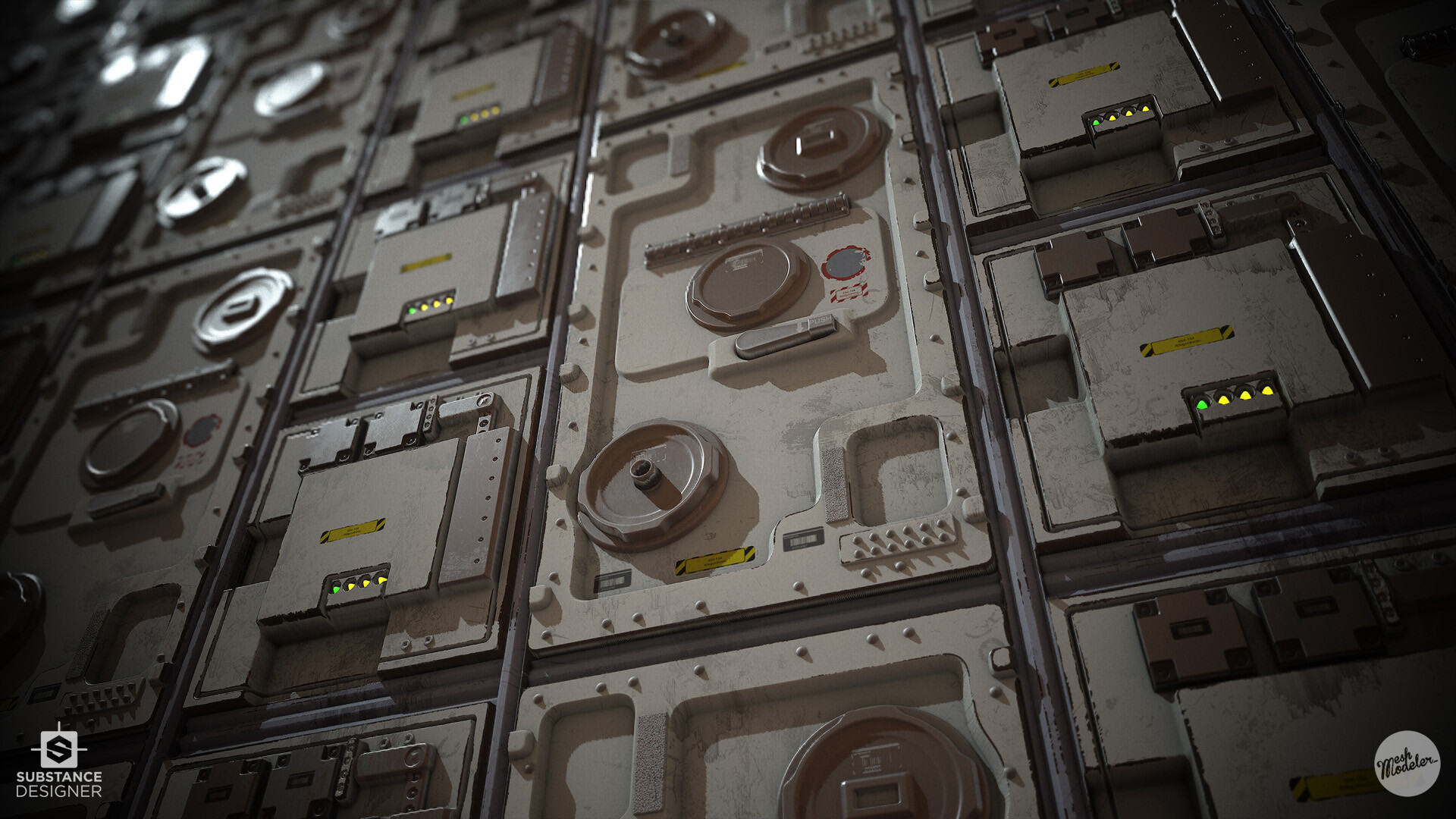

the_great_kammia_run_by_lotsofwar_dmavbcz-pre.jpg

The Great Kammia Run - Hyperspace Route
Trade-Federation-Factodex

Trade-Federation-Factodex

  • Hyperlane Name: The Great Kammia Run
  • Hexes Crossed: 13 Hexes Crossed
  • Starting Hex: Planet of Kammia
  • Ending Hex: Planet of Fondor
  • Route Points: Kammia --> Quethold --> Makatak --> Lequabis --> Donadus --> Bardotta --> Fondor
Important Information

Kammia

The traditional beginning of the route and the first major staging point for vessels traveling toward the Core.

Quethold

A sparsely populated waypoint world used primarily for navigational recalibration. Its system hosts several privately maintained beacon arrays installed after the route's discovery.

Makatak

Known among spacers for its mining concerns and prospecting operations. Many vessels traveling the Run stop here to acquire raw materials, fuel reserves, and replacement components.

Lequabis

An important commercial midpoint where merchants often exchange cargo before entering more politically sensitive territory nearer to Sith Covenant space.

Donadus

A heavily trafficked junction system that became a natural transfer point after the route's commercialization. Independent traders and Alliance-chartered freighters frequently establish temporary depots here.

Bardotta

The first major world under Sith Covenant influence. Customs inspections, military checkpoints, and anti-smuggling patrols are common. Traffic congestion and political scrutiny make this one of the most dangerous administrative bottlenecks on the route.

Fondor

The terminus of the Run and the reason for its creation. Fondor's legendary shipyards provide the galaxy with starships, industrial equipment, construction materials, and replacement parts that would otherwise be nearly impossible to transport efficiently to frontier settlements.


Trade-Federation-Factodex

  • Speed: High
While not comparable to legendary hyperlanes such as the Hydian Way or Corellian Run, the Great Kammia Run was specifically charted to maximize efficiency between Fondor and frontier territories. Its relatively straight course and stable gravitational conditions allow for rapid transit across multiple sectors.
  • Accessibility:
Knowledge of the route has spread considerably since its discovery. Commercial navigational databases now include portions of the Run with access being easiest from Kammia through Donadus, where traffic remains largely unrestricted.

Travel becomes significantly more complicated near Bardotta and Fondor. Sith Covenant authorities maintain customs checkpoints, military patrols, cargo inspections, and transponder verification programs throughout their territory. Unauthorized vessels frequently experience delays, searches, tariffs, or outright denial of passage. Outside Sith-controlled space, the route is generally considered open to all legitimate traffic.
  • Route Hazards:

Sith Covenant Enforcement

The single greatest danger along the route is political rather than environmental. Bardotta and Fondor host aggressive customs authorities, military patrols, interdiction craft, and intelligence operatives seeking smugglers, spies, dissidents, and unauthorized military shipments.

Unknown Regions Navigation Drift

Although Morta Bota's surveys established the route's stability, portions near Kammia remain vulnerable to subtle gravitational shifts originating from the Unknown Regions. Outdated navigational data can result in inaccurate micro-jumps and dangerous course corrections.

Pirate Opportunism

Criminal organizations have begun targeting aid convoys and industrial shipments traveling between Kammia and Donadus. While piracy remains uncommon, the value of cargo moving along the route continues to attract attention.

Frontier Isolation

Several stretches between systems remain sparsely populated. Mechanical failures can leave crews stranded far from meaningful assistance if emergency beacons are unavailable.
  • Rest Stops:
Rest stops along the Great Kammia Run support steady commercial traffic, though oversight tightens near Sith Covenant territory. Kammia serves as the main frontier hub with logistics depots, repair docks, fuel reserves, and convoy staging yards.

Makatak is the key industrial stop, supplying fuel, raw materials, and emergency repairs, while Lequabis and Donadus act as the route's commercial centers, filled with merchants, brokers, and shipping offices.

Past Donadus, Bardotta increases security with strict customs checks despite offering solid docking and repair facilities. The route ends at Fondor, a premier shipyard world capable of full-scale refits and major repairs.

Smaller refueling stations, beacons, and aid platforms fill the gaps between systems. While relatively safe for a frontier route, travelers are still advised to carry extra fuel and updated navigation data, especially toward the Unknown Regions.

Trade-Federation-Factodex


The Great Kammia Run was discovered by the Besalisk prospector Morta Bota in the years following the Galactic Planeshift. While many navigators focused on rediscovering disrupted trade lanes, Bota sought a reliable route connecting the industrial shipyards of Fondor to the growing settlements and expeditions operating near the Unknown Regions.

After months of survey work and repeated validation runs, he successfully charted a stable hyperspace corridor stretching from Kammia to Fondor, creating a direct link between the frontier and the Core Worlds. The route's importance grew rapidly as merchants, explorers, and settlers began using it to transport supplies and personnel between distant regions of the galaxy.

Traffic along the Run varies significantly depending on location. The Kammia-to-Donadus portion remains relatively open and lightly policed, making it popular with traders, prospectors, and exploration fleets. By contrast, Bardotta and Fondor fall under the control of the Sith Covenant, whose warlords maintain customs checkpoints, military patrols, and strict cargo inspections.

Travelers entering Covenant space often experience delays and increased scrutiny, particularly if transporting valuable goods or operating under unfamiliar transponder codes. Despite these challenges, the Great Kammia Run remains one of the most reliable routes connecting the Core Worlds to frontier territories.

 
Last edited:


Dreadnought Retrofit

Monserrat-class Dreadnought Heavy Cruiser Retrofit

OUT OF CHARACTER INFORMATION
  • Intent: To create a cost-effective, highly automated heavy cruiser optimized for fleet operations, electronic warfare resistance, and sustained engagements through advanced automation, shield redundancy, and sensor integration
  • Image Source: Modified Deviant Artwork
  • Canon Link: Not Applicable
  • Permissions: Not Applicable
  • Primary Source:
PRODUCTION INFORMATION
TECHNICAL SPECIFICATIONS
STANDARD FEATURES
ADVANCED SYSTEMS
  • Aegis Automation Architecture: Decentralized triple-redundant droid brain network (Astrogation/Maneuvering, Fire Control/Ballistic, Cryptographic/Cyber-Defense modules) using consensus-voting logic, scaled Savant ship slave rig, and Incom ST-9x.4 interfaces. Enables skeleton crew operation (~15 personnel) with physical mechanical overrides.
  • Hardened Electronic Defenses: Agrinium mesh inner hull liner, duraplast-encased conduits, ultrachrome circuitry, Cap Drains, combat de-ionizers, and isolated Faraday Vaults protecting automated systems from ion/EMP/ECM threats.
  • Com-Scan Integration Suite: Advanced passive/active sensor fusion with Magnetic Signature tracking for detection, Dedicated Energy Receptors for thermal signatures, Full-Spectrum Transceivers, and home-on-jam tracking.
STRENGTHS
  • Superior Automation: Extreme decentralization and triple-redundant droid brains with consensus logic allow effective operation with a minimal crew while maintaining high reliability and resistance to single-point failures.
  • Hardened EW Resistance: Multi-layered physical and active defenses (agranium, duraplast, Cap Drains, de-ionizers, Faraday Vaults) provide exceptional protection against ionization, EMPs, and electronic warfare, ensuring continued functionality in contested environments.
  • Fleet Coordination & Shield Redundancy: Dual-layer shields with rapid cycling and integrated Com-Scan/CGT sensor sharing enable task force "wolfpack" tactics, sustained defensive coverage, and effective attrition warfare through overlapping fields and coordinated targeting.
WEAKNESSES
  • Moderate Individual Firepower: Armament is balanced for fleet support rather than decisive one-on-one capital ship duels against heavily armed opponents.
  • Automation Dependency: While redundancies are extensive, sophisticated cyber or viral attacks that overwhelm the partitioned systems could temporarily degrade performance until manual overrides engage.
  • Limited Independent Operations: Reduced hangar capacity and focus on automation/crew efficiency limit prolonged solo deployments or large-scale support roles without logistical backing.
DESCRIPTION

The Monserrat-class Dreadnought Heavy Cruiser Retrofit is an 800-meter capital ship engineered for modern fleet doctrine, prioritizing cost-effective production, heavy automation, and resilience in electronic warfare-heavy engagements. Drawing from historical precedents such as the Katana Fleet's slave-rigged Dreadnaughts improved with decentralization, the minimal-crewing Carrack-class, and Trade Federation droid networks, it achieves a dramatic reduction in required personnel while preserving combat effectiveness.

The Aegis Automation Architecture features three physically isolated droid brains operating on consensus-voting protocols, housed in Faraday Vaults. This allows a skeleton crew of approximately 15 to manage the vessel from a protected command core, with mechanical overrides for emergency manual control. Critical systems are shielded by agrinium mesh liners, duraplast conduits, and ultrachrome circuitry, supported by Cap Drains and active de-ionizers that neutralize ionic surges and EMP effects.

Advanced sensor capabilities via the Com-Scan Suite, including Crystal Gravfield Traps for detecting mass signatures, Dedicated Energy Receptors for thermal tracking, and full-spectrum analysis, enable robust target acquisition even through jamming, supporting coordinated multi-vector attacks in squadron formations. Dual-layer deflector shields with rapid thermal-purge recharge cycles allow the ship to absorb prolonged fire while maintaining operational integrity.

 
Last edited:

Kuat SystemsConsortium

new-small-bar.png
dmc7eb9-31b5d645-6372-41b8-89fb-cd5efd28c30a.png

dmc7fc6-850739dd-807c-480f-b484-dd24f060b269.png

  • Corporation Name: Kuat Systems Consortium
  • Headquarters: Planet of Rasterous
  • Locations: Planet of Adari | Planet of Feddasyr | Planet of Genon | Planet of Hijarna
  • Operations: Kuat Systems Consortium specializes in a wide range of industries such as high-quality starship components, sublight and hyperdrive systems, advanced weaponry modules, and specialized military-grade hull plating among others. The company excels in modular ship systems that allow for rapid customization and repair, making their parts highly sought after by both Imperial-aligned fleets and independent operators.
  • Parent Corporation: Not Applicable for this Submission
  • Subsidiaries: Not Applicable for this Submission
dmc7fpv-905ce82b-dab4-476b-811c-8b100f93f7e8.png

Founded by disillusioned Kuati engineers fleeing the despotic regime of Queen Arage Bao, Kuat Systems Consortium was envisioned as a quiet guardian of Kuat's legacy. Rather than compete directly with the mighty Kuat Drive Yards, the company focused on producing essential components and systems that would strengthen Kuat's overall resilience against outside manipulation.

For years, KSC quietly supplied critical parts to the Dark Empire and later the Galactic Empire, maintaining ancient supply routes and technical expertise that helped fuel a renewed Imperial cause. The company's fortunes shifted dramatically with the rise of Zis Azetesha. After several short-term owners struggled to maintain direction, Zis steadily rose through the ranks before assuming the role of Chief Executive in a swift and decisive transition.

Under her leadership, KSC relocated its primary headquarters and major production facilities to the Kuat owned system of Rasterous, a planet not included on the Galactic Map following the mysterious Planeshift event. Here, KSC maintains state-of-the-art facilities where engineers blend traditional Kuati craftsmanship with cutting-edge automation. The company now aggressively ramps up full-scale production for the open galactic market while still honoring its roots in precision component manufacturing.

KSC conducts business with cold professionalism. It accepts select private and government contracts, though it maintains a clear preference for clients aligned with Imperial interests or those who can afford premium pricing. Loyal to the idea of a strong, self-sufficient Kuat heritage rather than any single government, the Consortium is pragmatic above all, elegant and refined in its dealings, yet utterly ruthless toward threats to its independence.

dmc7fqd-21fbcd83-98c2-491b-8761-f13b72165734.png

Zis Azetesha Zis Azetesha joined Kuat Systems Consortium in a relatively modest mid-level management position during one of the company's uncertain transitional periods. Possessing an almost supernatural understanding of starship engineering, logistics, and corporate intrigue, she rapidly distinguished herself by resolving long-standing production bottlenecks and negotiating favorable supply deals.

Over several years she methodically worked her way through operations, procurement, and strategic planning divisions, earning a reputation for surgical efficiency and an unflinching willingness to make difficult decisions. When the previous owner suddenly stepped down amid internal power struggles, Zis was the only executive with both the competence and the quiet alliances necessary to assume control.

In what many still describe as an overnight ascension, she secured the position of Chief Executive through a combination of flawless internal maneuvering, key stakeholder support, and her undeniable results. Rather than rest on inherited momentum, Zis immediately enacted sweeping changes, most notably the full relocation of headquarters and primary operations to the forgotten world of Rasterous.

 
Last edited:
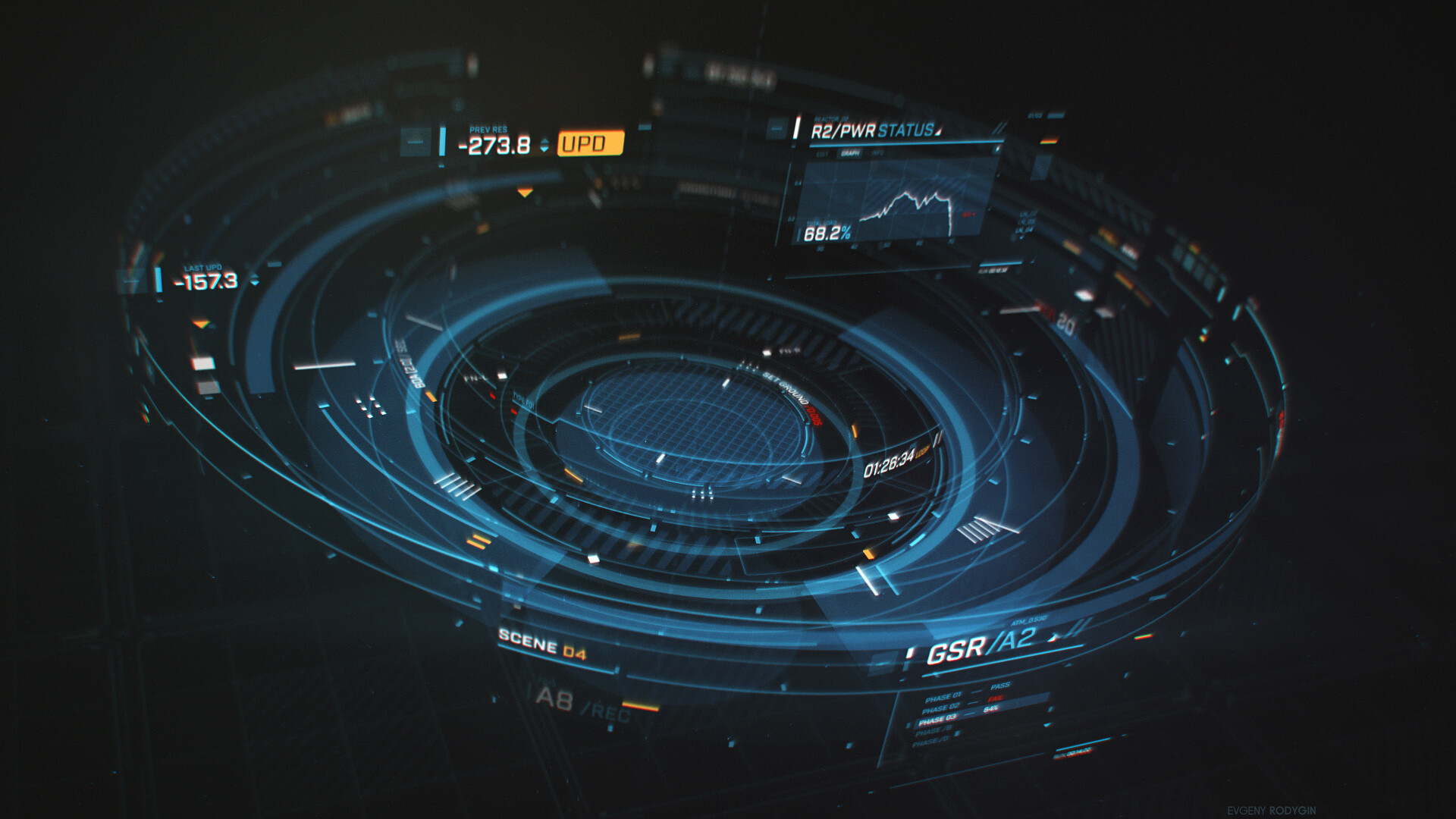
5f706e736be3b9fdb6d5ffbae49ce9d8_by_lotsofwar_dmc72xy-414w-2x.jpg

MusicLINK MUSIC HERE
Full nameZis Asher Azetesha
Class(es)Corporate Executive
Industrial Strategist
Shipbuilding Magnate
BirthworldPlanet of Kuat
Current HomeworldPlanet of Rasterous
Age31 Years Old
Rank(s)Chief Executive
Chairwoman
Imperial Supporter
Kuat Industrial Magnate
Faction(s)Kuat Systems Consortium
Kuat Corporate Bloc
SpeciesHuman (Officially)
GenderFemale
Force SensitiveNo
Character AlignmentLawful Neutral
Height1.72 m - 5'8"
Weight61 kg - 135 lbs
Template Credit


Female character in Kuat office 202606301126

ZIS AZETESHA
new-small-bar.png
BACKGROUND


Zis Azetesha is the enigmatic Chief Executive of Kuat Systems Consortium (KSC), a powerful breakaway faction of the legendary Kuat Drive Yards currently controlled by Arage Bao. Under her leadership, KSC has carved out its own identity in the cutthroat world of galactic shipbuilding and advanced military technology.

From orbital boardrooms overlooking sprawling shipyards to tense negotiations aboard luxurious diplomatic cruisers, Zis steers the company with calculated precision and unyielding ambition.

Her origins remain shrouded in mystery, even to herself. Zis is a clone of a notorious Sith-Imperial woman who rose to prominence within the 10th Sith Empire. How the genetic material was obtained, by whom, and for what purpose is unknown.

From the moment she became self-aware, Zis has grappled with an unsettling disconnect: every reflection reveals the face of another, a ghost from history whose legacy she neither fully knows nor wishes to inherit.

This existential fracture fuels a relentless drive to forge her own path. Rather than succumb to the weight of an unchosen identity, she channels her inner turmoil into an icy, ruthless approach to business, where excellence is the only currency that matters and weakness is exploited without hesitation.

Under her leadership, KSC has pursued aggressive expansion, innovative weapon systems, and strategic alliances that keep rival corporations and galactic powers off-balance. Zis is known for hosting refined galas in zero-gravity observatories, engaging in private holoconferences with warlords and senators alike, and personally overseeing the activation of cutting-edge prototypes. Those who underestimate her refined demeanor quickly learn that her elegance conceals a mind as sharp as any vibroblade.

PERSONALITY


Zis Azetesha projects an aura of refined authority, poised, articulate, and always impeccably composed. She speaks in measured tones, her voice carrying the cultured cadence of high galactic society. Every gesture is deliberate, every decision weighed with the patience of someone who understands that true power is best exercised quietly.

Beneath this polished exterior lies a woman haunted by the face in the mirror. The constant sense that she is living in someone else's shadow breeds a quiet desperation to prove her individuality. This manifests as an icy ruthlessness in corporate dealings: competitors are dismantled with surgical precision, betrayals are never forgotten, and loyalty is rewarded only so long as it serves her vision.

Yet she is not needlessly cruel, elegance and efficiency are her trademarks. She prefers elegant victories that leave her reputation intact over messy spectacles. Zis possesses a dry, cutting wit that surfaces in boardroom banter or private conversations. She finds subtle amusement in watching arrogant negotiators realize they have been outmaneuvered.

While she maintains strict professional boundaries, those who earn her tentative trust may glimpse moments of vulnerability, fleeting admissions of her identity crisis or philosophical musings about legacy and self-creation. These rare openings create rich opportunities for meaningful roleplay, whether exploring her mysterious origins, forging uneasy alliances, or challenging her to confront the ghost she sees in every reflection.
SKILLS


* Ability Icons can be found here

527325.png
KUAT ENGINEERING
527509.png
HIGH DETERMINATION
527596.png
HAUNTED BY REFLECTIONS
Ccredits.png
MERCANTILE EXPERIENCE
Freighterflyby.png
SKILLED PILOT
STRENGTHS & WEAKNESSES


new-small-bar.png

STRENGTHS

+ Visionary Industrialist — Zis possesses an exceptional ability to recognize emerging technologies and market trends years before her competitors. She is constantly positioning the Consortium to dominate industries that others have yet to realize are valuable.


+ Master Corporate Negotiator — Whether speaking to senators, admirals, crime syndicates, or rival corporations, Zis rarely enters negotiations without already understanding what every party truly wants. She excels at structuring agreements where everyone believes they have won.


+ Ruthlessly Pragmatic — Personal feelings never interfere with business. If a profitable partnership must be made with yesterday's enemy or an unprofitable division must be dissolved, she acts without hesitation.


+ Executive Authority — Years spent commanding one of the galaxy's largest industrial organizations have made her an exceptional administrator. Massive production schedules, logistical networks, and thousands of employees remain organized under her careful oversight.


+ Reputation for Reliability — The Consortium's contracts are honored precisely as written. Customers may dislike her prices, but they trust that her promises will be fulfilled. That reputation has become one of her greatest assets.


+ Composed Under Pressure — Financial collapses, political crises, hostile takeovers, or military emergencies rarely shake her demeanor. Her calm often steadies those around her while frustrating opponents hoping for emotional mistakes.


+ Merit Before Lineage — Unlike many executives on Kuat, Zis values talent over aristocratic bloodlines. Brilliant engineers, captains, financiers, and designers often find unexpected opportunities within her organization, creating fierce loyalty among capable employees.
new-small-bar.png

WEAKNESSES
Identity Without Origin — Zis has spent her life trying to prove she is her own person, yet she has no idea why she feels fundamentally disconnected from herself. Questions regarding her past or identity affect her far more than she is willing to admit.

Emotionally Isolated — Trust does not come naturally. Every relationship is filtered through questions of loyalty, utility, and ambition, making genuine friendships exceptionally rare.

Perfectionist Expectations — Zis expects excellence from herself and everyone beneath her. Competent work earns approval; extraordinary work is considered merely acceptable. This creates resentment among subordinates despite her fairness.

Corporate Before Personal — She instinctively views problems through economic and strategic lenses. Human concerns, morale, and sentiment are often secondary considerations, causing her to misjudge situations where compassion matters more than efficiency.

Reputation Precedes Her — As the face of the Kuat Systems Consortium, Zis attracts constant political scrutiny. Rivals assume every charitable act hides ulterior motives, while allies often expect favors simply because of her position.

Cannot Leave Well Enough Alone — Mysteries surrounding forgotten projects, classified research, or buried corporate archives are almost impossible for her to ignore. If she suspects information may explain the strange disconnect she feels with herself, she becomes willing to risk political capital—or even personal safety—to uncover it.

Haunted by Reflections — Mirrors, portraits, and recordings occasionally leave her with an inexplicable feeling that she is looking at someone else. Though she hides it well, prolonged exposure unsettles her concentration and can cause moments of quiet hesitation when she is otherwise decisive.

ITEMS


  • Link/Describe
  • Link/Describe
  • Link/Describe
RELATIONSHIPS


new-small-bar.png

FAMILY
Name
Description
Placeholder Placeholder

new-small-bar.png

FRIENDS
Name
Description
Placeholder Placeholder

new-small-bar.png

THE GALAXY AT LARGE
Name
Description
Placeholder Placeholder

new-small-bar.png

OTHER
Name
Description
Placeholder Placeholder


Last edited:

Imperial Mark VII - Vanguard Pattern

new-small-bar.png
dmc7eb9-31b5d645-6372-41b8-89fb-cd5efd28c30a.png

ProductionInformation

TechnicalInformation

  • Classsification: Multipurpose
  • Weight: Heavy
  • Resistances:
    • Energy: High
    • Kinetic: Average
    • Lightsabers: Average
    • Ion: Average
    • EMP: Average
    • Fire/Heat: Average
    • Cold: Average
    • Chemical/Biological: High
    • Vacuum Exposure: Average
SpecialFeatures

  • Integrated multi-frequency comlink.
  • Improved motion tracker derived from Imperial scout reconnaissance equipment.
  • Helmet-mounted low-light, infrared, and macrobinocular vision package.
  • Encrypted squad tactical network allowing command elements to distribute battlefield telemetry.
  • Integrated Identification Friend or Foe (IFF) transponder.
  • Sealed NBC (Nuclear, Biological, Chemical) environmental protection system with approximately two hours of independent atmosphere.
  • Improved servo-assisted knee and hip assemblies reducing fatigue during prolonged combat.
  • Distributed trauma gel beneath vital armor sections to reduce blunt-force injuries.
  • Modular backpack interface supporting field radios, medical packs, heavy weapon power supplies, or environmental extensions.
  • Magnetic weapon retention points for standardized Imperial rifles and sidearms.
  • Internal emergency bacta injector delivering a single measured stimulant and coagulant dose upon severe trauma.
StrengthsWeaknesses

STRENGTHS

Exceptional Blaster Protection
-
The layered duraplast, laminasteel core, and improved trauma padding provide significantly greater resistance to standard blaster fire than legacy Imperial stormtrooper armor. While repeated direct hits remain dangerous, glancing impacts and lower-powered weapons are far more likely to be survived.

Excellent Environmental Survivability - The fully sealed armor allows operation in toxic industrial zones, contaminated battlefields, ash storms, vacuum exposure, and extreme climates for limited periods without additional equipment.

Modern Battlefield Networking - Every Vanguard suit functions as a battlefield sensor node. Secure squad networking improves command coordination, target sharing, and force identification while reducing friendly fire incidents.

Reduced Operator Fatigue - Servo-assisted joints and an improved weight distribution harness allow soldiers to patrol and fight for extended periods while carrying heavier equipment than earlier generations of stormtroopers.

WEAKNESSES

Limited Protection Against Lightsabers
-
Like nearly every conventional Imperial armor system, the Vanguard Pattern offers virtually no meaningful defense against lightsabers. The armor plating may delay penetration for only an instant before catastrophic failure.

Heavy Construction - Although servo assistance offsets much of its mass, the armor remains noticeably heavier than standard stormtrooper equipment. Users are less agile during climbing, swimming, and rapid acrobatic movement.

Electronic Dependence - Many advanced functions including squad networking, tactical displays, motion tracking, and medical monitoring. depend upon onboard electronics. Sustained ion or electromagnetic attacks can disable these systems even if the armor itself remains intact.

Finite Environmental Systems - The internal atmosphere and filtration systems are designed for battlefield emergencies rather than prolonged deployment. Once depleted, operators require external life-support resupply.

dmc7fpv-905ce82b-dab4-476b-811c-8b100f93f7e8.png

The Stormtrooper Armor MK VII – Vanguard Pattern is a next-generation infantry armor system developed by the Kuat Systems Consortium for the resurgent Imperial factions of 902–904 ABY. Commissioned by a now-deceased Imperial Warlord, the project sought to modernize the iconic stormtrooper armor by improving battlefield survivability, environmental protection, and squad coordination without sacrificing the mass-production efficiency that defined Imperial military doctrine.

Constructed from layered duraplast, plasteel, laminasteel, and armorweave, the MK VII provides significantly improved protection against blaster fire while remaining compatible with existing Imperial logistics and equipment. Its integrated tactical network, enhanced sensor suite, and modular mission components allow commanders to rapidly adapt troops for a variety of combat roles.

Rather than creating an elite suit of powered armor, the Vanguard Pattern represents a practical evolution of Imperial stormtrooper equipment: durable, reliable, and designed to equip entire armies rather than a select few.


exotic handcannon sturm by ksn art dc4jx6w-pre-Pho

new-small-bar.png
dmc7eb9-31b5d645-6372-41b8-89fb-cd5efd28c30a.png

dmccnod-a9df3802-0ceb-41e4-bd6a-81a59eafe694.png

Technical1

  • Classification: Compact Plasma Weapon with Needler Integration
  • Size: Small
  • Weight: Light
  • Ammunition Type: Needler Projectile incased within Plasma Wave
  • Ammunition Capacity: Small
  • Effective Range: Average
  • Rate of Fire: High
  • Damage Output: High
  • Recoil: Low
SpecialFeatures

StrengthsWeaknesses

STRENGTHS

Precision Officer's Sidearm
- The combination of gyro-stabilization, advanced smart optics, and marked-target firing lock allows the 904 Imperial Service Special to achieve exceptional accuracy for a weapon of its size, particularly during movement or in close-quarters engagements.

Armor-Penetrating Ammunition - The weapon's plasma-encased needler projectiles are designed to penetrate light armor and protective equipment more effectively than conventional blaster bolts, making it especially dangerous against armored infantry and hardened targets.

High Rate of Fire - Despite its compact frame, the Service Special can deliver rapid follow-up shots with minimal recoil, allowing skilled users to engage multiple targets quickly.

Electronic Hardening - Ion shielding, ionization buffers, and combat de-ionizers provide increased resistance against ion interference and electronic disruption compared to most sidearms.

Secure Ownership Systems - The biometric locking system prevents unauthorized operation, ensuring the weapon remains functional only for its designated user and approved personnel.

WEAKNESSES

Limited Ammunition Capacity
- The specialized plasma-needler ammunition system occupies more internal space than traditional blaster power packs, reducing overall ammunition reserves.

Maintenance Intensive - The advanced targeting systems, beamsplitter assembly, and needler delivery mechanism require regular calibration and maintenance to remain reliable.

Specialized Ammunition Requirements - The weapon cannot utilize standard blaster gas cartridges and requires dedicated plasma wave and needler darts in order to function correctly, making direct battlefield resupply more difficult.

Average Effective Range - While highly accurate, the Service Special remains a sidearm and is outperformed by carbines, rifles, and dedicated marksman weapons at longer distances.

Description

The 904 Imperial Service Special is a unique officer-grade sidearm commissioned by Warlord Marlon Sularen and produced by Kuat Systems Consortium as a practical combat weapon. Combining features derived from plasma wave blasters and needler technology, the pistol fires specialized plasma-encased projectiles capable of delivering impressive stopping power that can penetrate shields while maintaining exceptional accuracy.

Designed for high-ranking commanders operating near the front lines, the weapon incorporates advanced targeting systems, recoil mitigation technology, biometric security measures, and extensive ion protection. These features allow the Service Special to perform reliably in hostile electronic warfare environments while remaining comfortable to carry as a personal sidearm.

Despite its impressive capabilities, the pistol remains constrained by its limited ammunition capacity and reliance on specialized ammunition and maintenance. It excels as a precision officer's weapon rather than a battlefield primary arm, rewarding disciplined marksmanship and tactical use over prolonged firefights. In the hands of Warlord Sularen, the 904 Imperial Service Special serves as both a prestigious badge of office and a lethal close-combat sidearm.


TN-145 Cyberman Mechanic

new-small-bar.png
dmc7eb9-31b5d645-6372-41b8-89fb-cd5efd28c30a.png

dmccnod-a9df3802-0ceb-41e4-bd6a-81a59eafe694.png

Technical1

  • Classification: Dual-Function Phased Pulse Cannon with Bo-rifle Characteristics
  • Size: Large
  • Weight: Heavy
  • Ammunition Type: Upgraded Bolt of Fusion Plasma
  • Ammunition Capacity: Large
  • Effective Range: Long Range
  • Rate of Fire: High
  • Damage Output: High
  • Recoil: Very Low
SpecialFeatures

StrengthsWeaknesses

STRENGTHS

Exceptional Firepower
- The TN-145 fires upgraded fusion plasma bolts from a phased pulse cannon, delivering devastating stopping power capable of destroying a speeder bike with ease while maintaining a high rate of fire.

Dual-Purpose Weapon - Incorporating a reinforced bo-rifle frame with an integrated electrostaff function, the TN-145 remains an effective melee weapon even when ammunition is depleted or combat closes to hand-to-hand range.

Highly Accurate - A gyro-stabilized firing system, advanced smart optics, and marked-target acquisition suite provide outstanding accuracy at long range while minimizing recoil during sustained fire.

Resilient Electronics - Ion shielding, ionization buffers, combat de-ionizers, and a fiber-alloy synthweave isolation layer protect the weapon's electronics and electrostaff assembly from ion attacks and electrical feedback.

Officer-Grade Security - A biometric locking system ensures the weapon can only be operated by Warlord Ronhar Tane or authorized personnel, preventing battlefield capture from becoming a liability.

WEAKNESSES

Heavy Construction -
The reinforced bo-rifle chassis makes the TN-145 noticeably heavier than a standard service rifle, reducing maneuverability during prolonged engagements.

Heat Build-Up - Continuous rapid fire generates significant heat despite the Myoflex heat sinks, requiring short cooling periods to maintain peak performance.

Large Profile - Its length and integrated melee frame make the TN-145 less practical in confined interiors compared to compact carbines or pistols.

Ammunition System - Optimized for upgraded fusion plasma ammunition, the weapon is difficult to resupply away from established Imperial logistics.

Description

The TN-145 "Cyberman Mechanic" is a unique officer-grade bo-rifle commissioned by Warlord Ronhar Tane and manufactured by Kuat Systems Consortium as a weapon capable of dominating both ranged and close-quarters combat. Built around a phased pulse cannon integrated into a reinforced bo-rifle chassis, it combines long-range plasma firepower with a fully functional electrostaff, allowing seamless transitions between shooting and melee engagements.

Designed to complement Tane's aggressive command style, the weapon features advanced fire-control systems, extensive electronic hardening, and biometric security while remaining durable enough for frontline use. Although its weight and maintenance requirements prevent widespread adoption, the TN-145 excels as a prestigious command weapon, delivering exceptional versatility and firepower in the hands of its intended wielder.

 
Last edited:

Imperial Patrol Tank

new-small-bar.png
OutofCharacterInformation

ProductionInformation

  • Manufacturer: Kuat Systems Consortium
  • Affiliation: Kuat Systems Consortium
  • Market Status: Closed-Market
  • Model: Imperial Assault Tank Model III
  • Modularity: Extensive Modification Program - The primary cannon, mission electronics, communications package, troop compartment fittings, sensor suite, and defensive systems are all modular and designed around standardized Imperial maintenance hardpoints for rapid field replacement.
  • Production: Mass Production Line
  • Material: Reinforced Durasteel - Plasteel Composite Armor | Duramentium internal reinforcement & structural frame | Glasteel alloy vision ports and optics | Armorplast spall lining | Titanium alloy suspension and internal structural components | Ultrachrome circuitry, electronics and tank components
TechnicalInformation

SpecialFeatures

  • Gyro-stabilized primary cannon capable of accurate fire while moving.
  • Fully enclosed troop compartment with powered rear assault ramp.
  • Military encrypted long-range communications suite.
  • Battlefield command uplink capable of coordinating infantry and armored formations.
  • Multi-spectrum targeting sensors including infrared, low-light, motion tracking, and rangefinding.
  • Internal environmental controls allowing operation in hazardous atmospheres.
  • External infantry handholds and magnetic weapon racks.
  • Automatic fire suppression and compartment isolation systems.
  • Modular maintenance architecture allowing rapid replacement of damaged components.
StrengthsWeaknesses

STRENGTHS

Excellent Infantry Support - Designed around combined-arms doctrine, the Model III can transport an entire stormtrooper squad directly into combat while providing continuous heavy fire support.

Reliable Protection - Its layered durasteel and laminasteel armor, backed by military-grade shielding, provides excellent protection against common battlefield threats without relying on prohibitively expensive materials.

Effective Fire Control - The stabilized primary cannon and advanced sensor package allow accurate engagement of moving targets while the vehicle is in motion.

Command Vehicle Capability - Integrated communications and tactical networking allow commanders to coordinate armored assaults without requiring a separate command vehicle.

WEAKNESSES

Large Target - Its size makes it difficult to conceal and an obvious priority target for enemy anti-vehicle weapons and aircraft.

Average Mobility - While capable across most terrain thanks to its repulsorlift propulsion, it lacks the agility of lighter reconnaissance vehicles and cannot maneuver as aggressively in confined urban environments.

Limited Anti-Air Capability - The defensive weapon stations can engage low-flying threats, but the vehicle was not designed as a dedicated anti-aircraft platform.

Shield Saturation - Continuous heavy fire from vehicle-grade weapons can overload the deflector shields, forcing the crew to rely solely on its physical armor until the generator recovers.

Description

The Imperial Assault Tank Model III is a mass-produced frontline armored vehicle developed by the Kuat Systems Consortium for Imperial successor states in 902–904 ABY. Designed to balance firepower, troop transport, and logistical efficiency, it serves as a standardized assault platform built for sustained conventional warfare rather than elite or experimental deployment.

Armed with a heavy cannon, secondary anti-infantry weapons, and ion weaponry, the Model III is capable of engaging both fortified positions and armored threats while advancing with infantry support. Its reinforced durasteel–laminasteel hull and military-grade deflector shields provide reliable protection against common battlefield threats.

Capable of carrying 20 stormtroopers, the tank functions as both a mobile assault platform and infantry deployment vehicle. While not exceptionally fast or heavily specialized, its strength lies in durability, ease of maintenance, and its ability to operate effectively in large-scale combined-arms Imperial warfare.


Imperial Multipurpose Vehicle
ansel-hsiao-hvytank34-Photoroom

ansel-hsiao-hvytank35-Photoroom

ansel-hsiao-hvytank33-Photoroom

ansel-hsiao-hvytank32-Photoroom
new-small-bar.png
OutofCharacterInformation

ProductionInformation

  • Manufacturer: Kuat Systems Consortium
  • Affiliation: Kuat Systems Consortium
  • Market Status: Closed-Market
  • Model: RT-904 Vindicator Multipurpose Repulsortank
  • Modularity: Extensive Modification Program - The turret ring, hull weapon stations, sensor package, communications suite, defensive countermeasures, and rear mission module can be changed if needed. Primary weapons may be exchanged allowing the vehicle to be configured for anti-armor, assault, fire support, or anti-air operations without replacing the chassis.
  • Production: Mass Production Line
  • Material: Reinforced Durasteel - Plasteel Composite Armor | Duramentium internal reinforcement & structural frame | Glasteel alloy vision ports and optics | Armorplast spall lining | Titanium alloy suspension and internal structural components | Ultrachrome circuitry, electronics and tank components | Hiridu based Communication Systems
TechnicalInformation

SpecialFeatures

StrengthsWeaknesses

STRENGTHS

Exceptional Mission Flexibility - The Extensive Modification Program allows the RT-904 to fulfill numerous battlefield roles using a common chassis. Commanders can tailor armored formations to operational requirements without maintaining multiple specialized vehicle fleets.

Powerful Anti-Armor Capability - The heavy turbolaser configuration delivers enough firepower to threaten enemy main battle tanks and fortified defensive positions. Combined with accurate fire-control systems, the RT-904 is capable of engaging heavier opponents through concentrated, well-placed fire rather than relying solely on overwhelming armor.

Durable Battlefield Survivor - Reinforced composite armor, high-power ablative plating, military-grade deflector shields, automated fire suppression, and onboard repair drones allow the vehicle to remain combat effective even after sustaining significant damage.

Combined-Arms Force Multiplier - The rear troop compartment enables the RT-904 to transport and deploy a full Imperial fireteam directly into contested objectives while continuing to provide heavy fire support.

WEAKNESSES

Average Mobility
- While dependable across varied terrain, the RT-904 lacks the speed and agility of lighter repulsor vehicles, making rapid flanking maneuvers more difficult.

Large Battlefield Profile - Its broad hull and elevated modular turret make concealment difficult and increase the likelihood of being targeted by heavy anti-vehicle weapons.

Shield Saturation - The reinforced shield generator is highly effective against sporadic incoming fire but can become overloaded under sustained attacks from heavy turbolasers, missile barrages, or concentrated artillery.

Modular Configuration Limits - Although adaptable, the primary mission module must be selected before deployment. Changing between artillery, missile, assault, or engineering variants requires depot-level maintenance and cannot be accomplished during combat.

Description

The RT-904 Vindicator Multipurpose Repulsortank is a mass-produced armored vehicle developed by the Kuat Systems Consortium for the Imperial successor states of 902–904 ABY. Designed around a modular chassis, it can be rapidly configured for assault, artillery, missile support, engineering, or anti-air operations without requiring a new vehicle platform.

Protected by reinforced composite armor and military-grade deflector shields, the RT-904 combines dependable survivability with a heavy weapons package and a rear compartment capable of transporting ten fully equipped stormtroopers. Built using proven Imperial technologies rather than rare materials, it emphasizes reliability, battlefield adaptability, and ease of maintenance, making it a versatile cornerstone of modern Imperial armored formations.

 
Last edited:

Users who are viewing this thread

Top Bottom