
Active Member
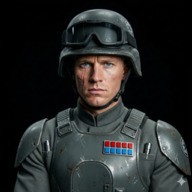

Intent: To create a lost Imperial colony world serving as the future homeworld and base of operations for Captain Charles and expand the Mahporeem Imperial Remnant.
Image Credit: Artwork created using assistance from Google Gemini
Canon: N/A
Permissions: N/A
Links: Castillon DEV Thread , Captain Charles Character Profile , MIN Stryker , Imperial Marines

GENERAL INFORMATION

GEOGRAPHIC INFORMATION

LOCATION INFORMATION

FORCE NEXUS
POPULATION
GOVERNMENT & ECONOMY
MILITARY & TECHNOLOGY
HISTORICAL INFORMATION
Arrival of the Original Garrison:
Over 600 years ago a small Imperial Remnant chanced upon the Castillon system while fleeing from New Republic and Sith expansion elsewhere in the galaxy. By fleeing to the deep Outer Rim and staying away from major hyperspace lanes they hoped to find at least a semi permanent peace and refuge. As the remnant's ships entered the system they found that the dense Ice Belt and Oort Cloud provided excellent natural defense. They spent a few weeks charting the safe passages before entering the system. What they found exceeded all their expectations, a large temperate world beautiful even from orbit. Landing on its surface only reinforced their thoughts: beautiful landscapes, crystal clear freshwater systems and a clear breathable atmosphere, a great find by any metric. The leaders of the remnant instantly recognized the potential of the planet as not only a great place to start a civilization but also as a well defended resupply point for other Imperials operating in the Outer Rim. Because of this the name Castillon was deliberately chosen, a beautiful fortress sustaining life and projecting power. The moons Vigil and Sentinel were named in a similar fashion as they would always watch over them.
The Good Old Days:
The small Imperial Remnant numbered around 100,000 and set about laying the groundwork for a future civilization on the planet. Recognizing the planet's inherent natural beauty and valuable resources they decided to limit industrialization as much as possible to avoid polluting the planet. As such the capital city of Castellum was the only city ever established on the planet with the rest of the settlements being small towns, farming communities and sites for the planetary defense network. With support from other Imperial factions the construction of the colony progressed at a steady pace. Soon the next group of settlers arrived, this time mostly civilian support staff, engineers, administrators and farmers who would cultivate the land and continue the colony's development. Additional settlers would trickle in over time but by this point the colony was firmly established serving Imperial patrols that stopped by for resupply. The planet's community was well knit and self sustaining, children would often grow up to take up their parents' career paths. The garrison was not distant from the population. They would go to local bars, give curious school children tours of defense facilities and their ranks were filled by members of the community. Over generations the population grew to nearly 3 million, military families, farming communities, civil administrators and craftsmen all working together to build something permanent. Eventually a larger Imperial faction siphoned off Castillon's defense fleet as they were needed elsewhere in the galaxy. The Garrison remained content however, their shields were up, the guns in place. It seemed like nothing could touch them on their little gem of an outpost.
The Darkest Hour:
It came without warning. A single infected individual on a resupply ship was all it took. It took merely a few days for the sickness to ravage Castellum and a couple of weeks for the rest of the planet. Frantic distress calls were sent out. The planet's medical facilities were optimized for combat injuries and routine illness not a galaxy wide pandemic. No ships carrying desperately needed aid arrived. The broader Imperial networks were under the same strain. No help of any kind reached the planet. Powerless, the 3 million strong population was reduced to a mere 50,000 scattered across a planet meant for millions. The shields were still up and the guns still aimed, but now there was nearly nobody left to man them. Castillon's civilization was ruined not by a rival faction but by something invisible its defenses were never built to counter. Eventually the distress calls stopped. There was nobody left to keep sending the signals.
The Twilight of Civilization:
With the survivors spread far too thin to maintain civilization across the planet they slowly but surely consolidated themselves in three general areas: Castellum, the Infinitum Plains and the Viridian Hills. Without the necessary manpower to maintain the infrastructure, defense network nodes began failing one by one. The survivors did what they could but could only maintain the most basic infrastructure in the areas they had left.
The 400 Year Darkness only worsened the situation. The entire galaxy was collapsing leaving Castillon with no outside Imperial factions to call on for support. Completely cut off from the wider galaxy it was during this time that the survivors began to develop their own dialect and culture. Although centuries of isolation caused the survivors to deviate from the original Imperial culture, community leaders and elders did what they could to preserve and pass down Imperial customs through oral tradition and surviving records. This period is known to Castillonians as the Long Silence.
The Netherworld Event was another traumatic blow to a people whose perception of the greater galaxy was little more than legend. Another 5,000 people simply vanishing without explanation. Called the Vanishing in local terms, this event triggered another population decline as the survivor settlements struggled to recover from the loss of manpower and expertise. Eventually the population stabilized at approximately 40,000. Forty thousand battered isolated survivors reaching for any string of hope.
Present Day:
The arrival of Captain Charles represents the first outside contact that the Castillonian people have seen in centuries. His honesty and his commitment to helping the survivors restore their planet convinced the community to support him. It represents the greatest hope and opportunity Castillon has seen in centuries. Six hundred years ago a small Imperial Remnant chose this system to preserve peace and Imperial values. Captain Charles now has the chance to fulfill that original promise.
Image Credit: Artwork created using assistance from Google Gemini
Canon: N/A
Permissions: N/A
Links: Castillon DEV Thread , Captain Charles Character Profile , MIN Stryker , Imperial Marines
GENERAL INFORMATION
- Planet Name: Castillon
- Demonym: Castillonian
- Region: Deep Outer Rim
- System Name: Castillon System
- System Features: The Castillon System has a total of 5 planets orbiting the star Fortis, a warm and stable yellow dwarf. The planets in order are: Cinder (a small rocky planet rich in minerals), Forge (a medium rocky planet rich in minerals and metals), Castillon (the large habitable world), Vortex (a large gas giant, purple magenta coloring with a beautiful ring system), and Aegis (a medium gas giant, deep blue in color with a thin ring system). The system features an Inner Asteroid Belt between Castillon and Vortex and an Outer Ice Belt/Oort Cloud beyond Aegis.
- Location: Deep Outer Rim, near the edge of the galaxy itself, far from major hyperlanes. The system was deliberately chosen for its remoteness. The Outer Ice Belt/Oort Cloud surrounding the system makes entering without detailed charts extremely dangerous.
- Major Imports: What supplies the MIN Stryker can carry: basic technology, medical supplies and blueprints for construction and galactic standard technology.
- Major Exports: Currently None
- Unexploited Resources: Cinder - rich surface mineral deposits. Forge - substantial subsurface mineral and metal deposits. Castillon - vast untapped agricultural land, pristine freshwater systems and significant timber resources. Inner Asteroid Belt - raw rocky materials. Outer Ice Belt - frozen volatiles. Vortex - potential gas harvesting. Aegis - additional gas harvesting potential.
GEOGRAPHIC INFORMATION
- Gravity: 1.2 Standard
- Climate: Temperate to mild across most of the planet. Castillon has no true oceans which allows for a more stable and consistent climate than worlds that have them. Alpine regions have true seasons with snowfall occurring at altitude. The polar regions are permanently frozen. The temperate areas, which make up the majority of the planet, feature clean air, abundant freshwater and consistent favorable crop growing seasons year round. Castillon's two moons Vigil and Sentinel exert tidal forces on the lake systems which produces significant seasonal water level variations.
- Terrain: Castillon's extraordinary natural beauty and lack of true oceans are the defining features of the planet. Instead of seas or oceans the planet's water is spread throughout a vast system of large freshwater lakes, crystal clear rivers and mountain streams from glacial snowmelt. There are multiple alpine mountain ranges with permanent snow capped peaks that feed the glaciers and river systems. Large areas of rolling green hills cover the areas between mountain ranges, lush with wildflower meadows and natural grassland. In areas with lower elevation there are huge agricultural plains where visitors can see for miles. Dense forests cover the lower mountain slopes. The north and south poles of Castillon are permanently frozen. Travelers that venture this far north can witness stunning auroras, frozen crystal structures and on clear nights the gas giant Vortex when it is above the horizon.
- Atmosphere: Type I
LOCATION INFORMATION
- Capital City: Castellum
- Planetary Features:
Castellum: The capital city of Castillon and the only major settlement on the planet. Built on the shores of the Great Lake it was the former seat of power of the planet. It has long since fallen into ruin. The majority of the survivors live here amongst the overgrown structures. Due to Imperial construction quality many of the structures still stand with the survivors scavenging and making repairs as needed.
The Great Lake: The Great Lake is by far the largest lake on Castillon. It sits at the heart of the temperate zone and is fed by the Diamond Rivers. Its water is extraordinarily clear. On calm days it is possible to see the bottom from its shores. At night the lake hosts perhaps one of the most extraordinary natural sights on the planet. The reflections of Vigil, Sentinel and Vortex are perfectly mirrored on calm nights. The tidal variations from Vigil and Sentinel have been tracked and are used for the survivors' agricultural calendar.
Farming Communities: Although Castellum hosts the majority of the survivors there are plenty of smaller farming communities scattered around the planet along the old Imperial road networks. These communities typically consist of a few families who raise animals and grow crops on the surrounding land.
Decaying Planetary Defenses: Due to the isolation of Castillon the former Imperial Garrison built a powerful planetary defense network to allow themselves to hold out for long periods of time. Knowing that support was often a long way out this was a necessity and the defense grid punched well above its weight class. All that remains of this grid are ruined fortifications and decaying planetary defense guns some of which have been occupied by the survivors. There are also a few generators for the planetary shield scattered around but these are also inoperable.
The Infinitum Plains: Although there are plenty of plains on Castillon the Infinitum Plains are the largest of these. Here it is so flat and vast that one cannot see beyond the curvature of the planet. The former colonists used this area to produce most of their food but due to years of disuse the soil has become extraordinarily fertile. Irrigation here is natural as streams from the larger river network naturally section the plains and irrigate the soil. The second highest concentration of survivors can be found here scattered amongst this vast expanse of land.
Mount Maximus: Mount Maximus is the tallest mountain of Castillon with its snow covered peak rising high above the clouds and reflecting Fortis's light long after the rest of the planet falls into darkness. The views from the mountain are legendary amongst the survivors who often try to climb it at least once during their lifetimes. Mount Maximus is quite accessible to climbers up to about 70% of the way up, after that specialized breathing equipment and climbing tools are required. This point features a flat area known as The Checkpoint. Generations of climbers have rested here before turning back or pressing on to the summit after equipping themselves properly, although it has been generations since someone has made it to the summit and doing so is considered more legend than achievable goal. A little higher above The Checkpoint sits the main communication relay of Castillon which has long since fallen into ruin but whose structure still survives.
The Diamond Rivers: The Diamond Rivers are the largest rivers of Castillon. These rivers and their countless tributaries are considered the arteries of the planet feeding water to every corner. Their name comes from the extraordinary clarity and purity of the water which requires no treatment before drinking. No settlement on Castillon, current or past, was built more than a short walk away from a Diamond River or one of their tributaries and the old Imperial water infrastructure was designed around these rivers. The rivers originate from Castillon's mountain ranges.
The Viridian Hills: Although there are beautiful rolling hills surrounding the various mountain ranges the largest of these surround the mountain range of Mount Maximus. These hills extend for miles around the mountain range and are covered in a wide range of wildflowers and wildlife with rivers and streams cutting through their valleys. Survivors travel here to experience the natural beauty of Castillon.
FORCE NEXUS
- N/A — Castillon has no Force Nexus.
POPULATION
- Native Species: None
- Immigrated Species: Human
- Population: Insignificant : approximately 40,000 survivors
- Demographics: Entirely Human. Descendants of the original Imperial Garrison, civilian administrators and support staff, and farming communities. Centuries of isolation have created a distinct Castillonian cultural identity blending Imperial military tradition with frontier survival pragmatism.
- Primary Languages: Galactic Basic: however decades of isolation mean the dialect is an older version with some words and slang only known to the Castillonian people. It has been preserved through oral tradition and surviving physical records.
- Culture: Castillonian culture is defined by survival and memory. Old Imperial military tradition (forms of address, customs and courtesies, a sense of duty and order) was preserved through oral tradition, surviving documents and deliberate efforts by community elders throughout generations. The survivors are highly pragmatic and suspicious of outsiders. Their daily life consists of farm work, salvaging and improvisational engineering, activities in which they have become remarkably skilled. The two moons Vigil and Sentinel along with the gas giant Vortex are sources of myth and timekeeping. The Diamond Rivers hold deep cultural significance as the lifeblood of the planet while climbing Mount Maximus is considered a rite of passage.
GOVERNMENT & ECONOMY
- Government: No formal government. Leadership is informal and entirely community based.
- Affiliation: Formerly the Castillon Garrison. Now under the guidance of Captain Charles as he works to restore the planet in coordination with the Mahporeem Imperial Remnant
- Wealth: Low : Very poor by galactic standards. The survivors produce enough to survive, maintain functioning shelters and salvage what they can. The planet has significant potential as a future food supplier for the Mahporeem Imperial Remnant.
- Stability: Low : Scattered communities across a large planet with no formal government or unified leadership. The arrival of Captain Charles and the MIN Stryker offer the first opportunity for organized stability in generations.
- Freedom & Oppression: Amongst the survivor communities there is a high degree of personal freedom as there are no formal legal codes to restrict anyone. Decisions are often made by leaders only after they have spoken with their communities. Dissent is allowed and sometimes even encouraged.
MILITARY & TECHNOLOGY
- Military: No organized military force exists beyond the local defense forces of the various communities. These are armed with nothing more than improvised weapons, hunting tools and the determination of a people who have survived generations of isolation. The MIN Stryker (an Arquitens Class Command Cruiser) carrying two TIE Defenders and 100 Imperial Marines represents the only real military capability currently present on the planet. The original colony's defenses were among the strongest in the Outer Rim for a garrison of its size. This powerful network consisted of orbital sensor arrays for early detection, a large network of surface planetary defense guns and several planetary shield generators providing overlapping coverage. All of these are now in decay with electronics unusable or salvaged for other purposes and many structures now repurposed as homes for survivors.
- Technology: Pre-spaceflight in practical terms. The survivors maintain basic technology salvaged from the original colony (lighting systems, basic communications and rudimentary agricultural equipment). The arrival of Captain Charles and the MIN Stryker represents the first significant technological influx in generations.
HISTORICAL INFORMATION
Arrival of the Original Garrison:
Over 600 years ago a small Imperial Remnant chanced upon the Castillon system while fleeing from New Republic and Sith expansion elsewhere in the galaxy. By fleeing to the deep Outer Rim and staying away from major hyperspace lanes they hoped to find at least a semi permanent peace and refuge. As the remnant's ships entered the system they found that the dense Ice Belt and Oort Cloud provided excellent natural defense. They spent a few weeks charting the safe passages before entering the system. What they found exceeded all their expectations, a large temperate world beautiful even from orbit. Landing on its surface only reinforced their thoughts: beautiful landscapes, crystal clear freshwater systems and a clear breathable atmosphere, a great find by any metric. The leaders of the remnant instantly recognized the potential of the planet as not only a great place to start a civilization but also as a well defended resupply point for other Imperials operating in the Outer Rim. Because of this the name Castillon was deliberately chosen, a beautiful fortress sustaining life and projecting power. The moons Vigil and Sentinel were named in a similar fashion as they would always watch over them.
The Good Old Days:
The small Imperial Remnant numbered around 100,000 and set about laying the groundwork for a future civilization on the planet. Recognizing the planet's inherent natural beauty and valuable resources they decided to limit industrialization as much as possible to avoid polluting the planet. As such the capital city of Castellum was the only city ever established on the planet with the rest of the settlements being small towns, farming communities and sites for the planetary defense network. With support from other Imperial factions the construction of the colony progressed at a steady pace. Soon the next group of settlers arrived, this time mostly civilian support staff, engineers, administrators and farmers who would cultivate the land and continue the colony's development. Additional settlers would trickle in over time but by this point the colony was firmly established serving Imperial patrols that stopped by for resupply. The planet's community was well knit and self sustaining, children would often grow up to take up their parents' career paths. The garrison was not distant from the population. They would go to local bars, give curious school children tours of defense facilities and their ranks were filled by members of the community. Over generations the population grew to nearly 3 million, military families, farming communities, civil administrators and craftsmen all working together to build something permanent. Eventually a larger Imperial faction siphoned off Castillon's defense fleet as they were needed elsewhere in the galaxy. The Garrison remained content however, their shields were up, the guns in place. It seemed like nothing could touch them on their little gem of an outpost.
The Darkest Hour:
It came without warning. A single infected individual on a resupply ship was all it took. It took merely a few days for the sickness to ravage Castellum and a couple of weeks for the rest of the planet. Frantic distress calls were sent out. The planet's medical facilities were optimized for combat injuries and routine illness not a galaxy wide pandemic. No ships carrying desperately needed aid arrived. The broader Imperial networks were under the same strain. No help of any kind reached the planet. Powerless, the 3 million strong population was reduced to a mere 50,000 scattered across a planet meant for millions. The shields were still up and the guns still aimed, but now there was nearly nobody left to man them. Castillon's civilization was ruined not by a rival faction but by something invisible its defenses were never built to counter. Eventually the distress calls stopped. There was nobody left to keep sending the signals.
The Twilight of Civilization:
With the survivors spread far too thin to maintain civilization across the planet they slowly but surely consolidated themselves in three general areas: Castellum, the Infinitum Plains and the Viridian Hills. Without the necessary manpower to maintain the infrastructure, defense network nodes began failing one by one. The survivors did what they could but could only maintain the most basic infrastructure in the areas they had left.
The 400 Year Darkness only worsened the situation. The entire galaxy was collapsing leaving Castillon with no outside Imperial factions to call on for support. Completely cut off from the wider galaxy it was during this time that the survivors began to develop their own dialect and culture. Although centuries of isolation caused the survivors to deviate from the original Imperial culture, community leaders and elders did what they could to preserve and pass down Imperial customs through oral tradition and surviving records. This period is known to Castillonians as the Long Silence.
The Netherworld Event was another traumatic blow to a people whose perception of the greater galaxy was little more than legend. Another 5,000 people simply vanishing without explanation. Called the Vanishing in local terms, this event triggered another population decline as the survivor settlements struggled to recover from the loss of manpower and expertise. Eventually the population stabilized at approximately 40,000. Forty thousand battered isolated survivors reaching for any string of hope.
Present Day:
The arrival of Captain Charles represents the first outside contact that the Castillonian people have seen in centuries. His honesty and his commitment to helping the survivors restore their planet convinced the community to support him. It represents the greatest hope and opportunity Castillon has seen in centuries. Six hundred years ago a small Imperial Remnant chose this system to preserve peace and Imperial values. Captain Charles now has the chance to fulfill that original promise.
Last edited: