
Shuklaar Kyrdol
CEO of Breshig War Forge Consolidated

- IMAGE
-
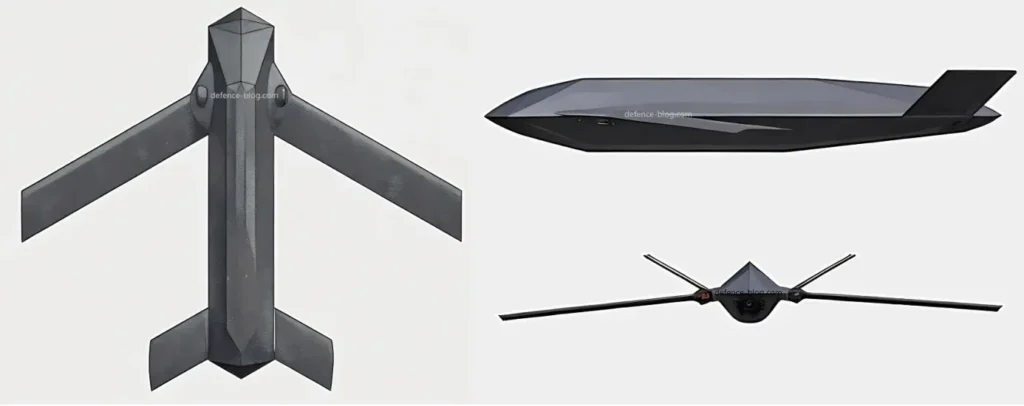
- OUT OF CHARACTER INFORMATION
-
- Image Source: Here.
- PRODUCTION INFORMATION
-
- Manufacturer: Breshig War Forge Consolidated.
- Affiliation: Breshig War Forge Consolidated and Strill Securities.
- Material: Molecularly bonded Duranium Ultramesh frame, Molecularly bonded Duranium-reinforced Duraplast composite plating, Condensed-matter composite reinforcements, Duravlex and Agrinium mesh lining, Fiberplast and Reflec coating, Thermal gel lining, Anti-corr coating, Combat De-ionizer,, and Ultrachrome wiring, circuitry and electronics.
- Modularity: Memory Modules and new software designed for its droid brain can be installed. The droid's exterior surface can be coated or electroplated in different materials. Tools, weapons, sensors, scanners, targeting and tracking equipment can be changed out for equivalent systems.
- TECHNICAL SPECIFICATIONS
-
- Classification: Electronic Warfare Droid.
- Length: 4 meters.
- Width: 3.43 meters.
- Height: 0.55 meters.
- Squadron Count: None (1)
- Hyperdrive: None.
- Defenses
-
- Maneuverability Rating
-
-
Very High.
- S-Foils:
- Folded: Allows the craft to reach higher velocities but negatively affects its maneuverability.
- Open: Grants the craft better maneuverability but prevents the fighter from attaining the upper edge of its rate of acceleration.
-
'Redalur' Maneuvering Thruster Array and Inertial Compensator System
- Half Power: Redirects half power from the engines to the maneuvering system from main drives.
- Full Power: Fully redirects power to the maneuvering system from the main drives, leaving bare-minimum power for the main drives.
- S-Foils:
-
Very High.
- Speed Rating
-
-
Very High.
-
'Haal'miit' Ion-Atmospheric Hybrid Drive:
- SLAM: Greatly increases engine output but using power from maneuvering systems rather than from weapons, lowering maneuvering system output.
- With 'Caritr' Shield Generator on 'Fortress' mode: When the shield is set to 'Fortress' mode all power from engines is redirected toward shields, shutting off the main drives.
-
'Haal'miit' Ion-Atmospheric Hybrid Drive:
-
Very High.
- STANDARD FEATURES
-
- Data Sharing
-
The droid can share all data via the 'Manda' battlenet or any other battlenet patched to function with the 'Manda' style data-sharing and processing.
- Feed Sharing: The composite fused sensor feed can be shared via or to any of the sources mentioned above.
- Navigational Data: Navigational data including but not limited to multiple versions of planned routes, points of interest, targets, objectives and the like can be shared by the droid.
- Detection and Tracking
-
The system compares and correlates the data coming in from the myriad systems, showing the operator the combined picture from the various systems to reduce errors and outliers as much as is possible. This also allows accurate tracking, target identification and for clear vision through thick cloud cover, storms and heavy rain, fog, as well as other conditions that might otherwise impair targeting, tracking and vision to a severe degree. This also means the effect of ion storms, nebulae and similar phenomenon on the system is greatly reduced, though still notably present.
-
- Audio Sensor Array with Aural Amplifier and Sonic Dampener.
-
- 360-degree FOV Coverage Wide-angle Electro Photo Receptor with Electrobinocular (1x - 250x magnification) functions: The Electro Photo Receptors used here have been modified with a number of additional sensor, scanner and imaging systems listed below. They are all built with the same magnification level as the listed Electrobinocular zoom. The view displayed is a composite image created from all the connected systems parsed and processed by advanced data processing algorithms and a secondary advanced Droid Brain with Gabonna memory crystal memory.
- Automatic Anti-Flash functions.
- Feed Recording: The composite sensor feed can be recorded to data cards or other storage mediums connected either wired or wirelessly.
- Long-range Starship-grade Infrared Motion Sensor with supplemental Long-range Starship-grade Motion Sensors and Long-range Starship-grade Heat Detector
- Light Amplification functions.
- Long-range Starship-grade Ultrasonic Imaging System: A number of ultrasonic beam emitters are used to create a composite sonic image which allows the operator to see through most kinds of cover and concealment.
- 360-degree FOV Coverage Wide-angle Electro Photo Receptor with Electrobinocular (1x - 250x magnification) functions: The Electro Photo Receptors used here have been modified with a number of additional sensor, scanner and imaging systems listed below. They are all built with the same magnification level as the listed Electrobinocular zoom. The view displayed is a composite image created from all the connected systems parsed and processed by advanced data processing algorithms and a secondary advanced Droid Brain with Gabonna memory crystal memory.
-
- AutoMapping: Planetary and space based maps are automatically generated and updated by the system as it processes sensor data from relevant systems. If there is existing data, the system checks it first and only stores any notable discrepancies.
- Navigational Sensor
-
- Full-spectrum transceiver Array(s)
- Dedicated Energy Receptor Array(s)
- LIDAR
- Long-range Mass-detector
- Aural Sensor Array
- Magnaband Scope Array(s) (Combined Output)
- Proximity Indicator
- Rear Warning Sensor (small craft model)
-
- Long-range Energy Scanner
- Long-range Starship-grade EMS Scanner: The EMS Scanner can be used for targeting and tracking purposes of specific EM signatures or can store specific EM signatures for later use.
-
- Life form indicator
- Early Warning: If the system detects active sensor or scanner pings or targeting lasers coming from a bearing and range or position that doesn't have any friendly IFFs the system will indicate the direction with either a yellow or red arrow to warn the crew depending on whether neutral or hostile signatures are detected.
- Positional Mapping: The system tracks the positions of friendly, hostile and neutral contacts on the map generated by the navigational suite and is constantly updated based on local and networked data.
-
-
- Collision Avoidance System
- Reprogrammable Signal Receiver
- Sensors:
- Atmosphere Sensor
- Gravitic Sensor
- Terrain-following Sensor Array(s) (singular sensor on smaller craft such as starfighters)
- Mutisensor Airflow Analyzer Array(s)
-
- Droid Brain
-
-
'Gar'mirshe'ika'-R Droid Brain
- Gar'mirshe'ika Piloting Memory Module
- Personality: The 'Ori'kaab' does not have extensive personality programming, being one of the more 'droid'-like of the droids produced by the company in behavior. The droid processes orders, confirms it has recceived them and carries them out. No fuss, no variation in the pattern, even in extreme scenarios, or rather, specially in extreme scenarios.
-
'Gar'mirshe'ika'-R Droid Brain
- Guidance Mode
-
- Active Guidance:
- Pre-launch: The droid downloads sensor and scanner data, targeting and tracking information of the target as well as the IFF codes of all friendly assets in the area from the launch platform before launch.
- Midcourse: The droid scans the area using its own systems for the target and determines detonation mode. It then chooses to make one of the following decisions:
- Loiter: The droid will 'loiter' in the area, flying a pseudo-random pattern to avoid ground fire until it can ascertain which if any of the targets are equivalent to its previous target. This only happenbs if it can not acquire a positive lock on its original target. It will stay in the air till it can do this, only picking a new valid target if it is under imment risk of destruction or if it is low on fuel. At this stage it can still be ordered to engage a different target.
- Engage: The droid will move to the terminal phase of its engagement if it can locate its original target. If non-combatants are in the engagement area it will switch back to the Loiter phase.
- Terminal: The droid will then execute a high energy sustained acceleration toward the target, engaging in terminal phase maneuvering and will expend the remainder of its countermeasures in an effort to throw off and/or neutralize incoming fire.
- Active Guidance:
- Launch Method
-
- The droids are affixed to weapon mount hardpoints and launched by the craft they're mounted on. They can also be launched by MLRS systems.
- Misc
-
- 2x Gima-mounted 'Ori'drala Sur'haai' Targeting Laser/Illuminator
- Life Support and Environmental Systems
-
- Payload
-
- Variable Baradium Charge:
- Shaped Charge: When facing armored targets, the droid will alter the geometry of the charge to create a shaped charge.
- High Explosive: When dealing with infantry or other soft targets the payload is detonateds asd
- Variable Baradium Charge:
- Power
-
- Targeting Modes(s
-
- Ship-to-ship: Ship-to-ship targeting mode covers engaging of targets in space by a launch platforms against other starfighter and larger aerial targets.
- Air-to-Surface: Air-to-ground targeting mode covers engaging of targets on the ground by airborne launch platforms.
- Surface-to-Surface: Surface-to-Surface targeting mode covers engaging of surface-based targests by surface-based launch plastforms such as MLRS systems and emplaced launchers.
- Surface-to-Air: Surface-to-Air targeting mode covers engaging of aerial targets by surface-based launch platforms such as MLRS systems and emplaced launchers.
- STRENGTHS
-
- Stealthy: The low-profile engines combined with the reflec coated compsite armor plating ensures that the droid has a very low sensor profile at medium and long ranges.
- Jammed?: Optical systems cannot be jammed, allowing the droid to very easily pick targets that are not visually obscured. Additionally, due to their use of data fusion, the droids are difficult to jam.
- Loiter: Unlike traditional ordnance, the droid can loiter to engage a more suitable target and can be ordered to engage a different target, giving troops alternative tactical options.
- Excellent Sensors, Scanners and Tracking: The droid possesses a wide variety of sensors, scanners and tracking systems, giving it a fantastic ability to detect and track targets.
- Fast, Nimble and Deadly: The droid is extremely fast and nimble, easily able to keep up with, track and engage the fastest and most agile airspeeders, repulsorcraft, starfighters, freighters, transports and gunships.
- WEAKNESSES
-
- Unarmed: The droid is completely unarmed and unable to fight back, though it has numerous means of defense.
- Tightly Packed: The droid's systems are so tightly packed, a single penetrating shot is usually enough to completely disable the droid.
- Not Enough Boom: Unless fired at subcomponents, these missiles lack the sufficient energy to cause damage to larger capital ships.
- Volatile: If it takes enough damage to sympathetically detonate the warhead the droid is likely not only detonate spectacularly, but likely set off ordnance as well if not cripple or outright destroy its launch platform.
- DESCRIPTION
-
Battlefield data has proven that occasionally ordnance is wasted on targets that have already been engaged or on the odd occasion that no targets present themselves at the moment. It was for this reason that the company began development and eventual production of loitering munitions, to provide ordnance that could be put on 'hold' to give troops more tactical options on the battlefield. Traditional ordnanace was going nowhere, but loutering munitions such as the Ash'amur or violent death in basic werwe definitely perfectly slated to supplement them, especially when enemy force composition was largely unknown.
The droid is based off the same platform as the SEWD-01 'Ori'kaab' and is made to be launched primarily by starfighter and MLRS launch platforms. The deoids are stealty, fast, nimble and pack a hefty and lethal payload that is able to switch between detonation modes to either engage armored targets or infantry and other soft targets. The droid's detection, targeting and tracking suite's use of optical systems of varying spectrums and data fusion makes it very difficult to jam and gives it considerable abilitty to dertect, track and target targets on its own. Finally, the droid's main party piece is that unlike traditional ordnance, the droid can loiter to engage a more suitable target and can be ordered to engage a different target, giving troops alternative tactical options.
Unfortunately it was beleived to be far too cost ineffecieint to arm the droid nor was there room, leaving it entirely unable to fight back beyond detonations of its payload though it has numerous, layered means of defense. To that end, the droid's internals are tightly packed, a single penetrating shot is usually enough to completely disable the droid. While large enough to deal with most vehicles and infantry targets, the droid lacks enough explosive payload to dea lwith capital ships unless fired at subcompoennts. Its variable Baradium charge payload is volatile and could sympathetically detonate if the droid takes enough damage.
Out Of Character Info
Intent:
To create a Starfighter-deployable loitering munition for use and salve by Breshig War Forge Consolidated and for use by Strill Securites.
Image Source(s):
https://defensefeeds.com/news/aerospace-news/russian-su-57-tests-new-ai-guided-air-launched-drone/
Canon Link:
N/A.
Permissions:
N/A.
Primary Source(s):
N/A.
Technical Information
Affiliation:
Breshig War Forge Consolidated and Strill Securities.
Model:
SLM-01 'Ash'amur' Starfighter-launched Loitering Munition
Starship Class:
Small Craft (1-50m)
Starship Role:
Drone
Modular:
Yes
Material:
See description.
Armaments:
See description.
Defense Rating:
High
Speed Rating:
Very High
Maneuverability Rating::
Very High
Energy Resist:
High
Kinetic Resist:
High
Radiation Resist:
High
Other Resistance(s):
EMP/Ion: High.
Lightsabers: High
Acid: High
Minimum Crew:
0
Optimal Crew:
0
Passenger Capacity:
0
Cargo Capacity:
None