
tea time
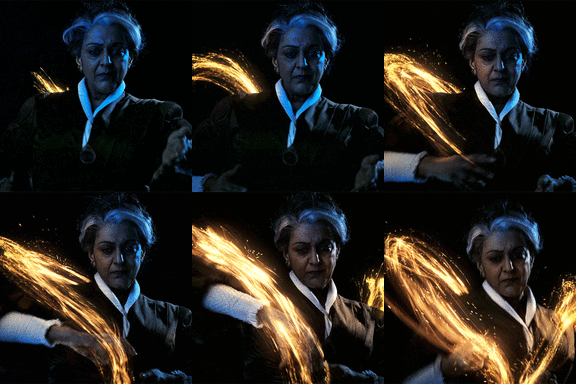



The locals spoke of the area as a dead zone -- a place where people go and don't return. Electromagnetic pulses confuse even the most reliable navigational equipment, and a constant low-grade sandstorm often obstructs one's view of the sun, making navigation by sun and stars difficult. People went into the zone and came out other than where they thought.
Or they didn't.
The Jedi expedition had a plan. They were in no hurry, and their path across the desert allowed them to stop and place beacons -- legible at short range by scanners and at long range by the Force -- at close enough intervals as to allow them to find their way back, even in a storm, even in electromagnetic interference, even in the dark. Like breadcrumbs in a fairytale.
Jedi Master Sela Basran stood at the front of the skiff that sailed across the sand, up the edge of a dune and down, almost like cresting a wave. Her face was serene, though she made a concession to the slightly unsteady ride by holding the railing carefully as the skiff went along its route. They had learned the location from a local contact in a nearby settlement, so downtrodden and out of the way that it wasn't even named. Everything they learned seemed to fit into what Sela expected, and the location was the final piece.
The local had called it 'the Amaxine base,' for the structure had been occupied by the Amaxine mercenary group centuries ago before its final disappearance. The sandstorms on Daxam IV had buried the facility, likely due to a failure of the power core that had kept the discharge shields online. But the Amaxine hadn't built it. They had merely squatted. The facility was older than that -- dating to the final century of the Old Republic at least -- and Sela Basran's research had turned up its original name.
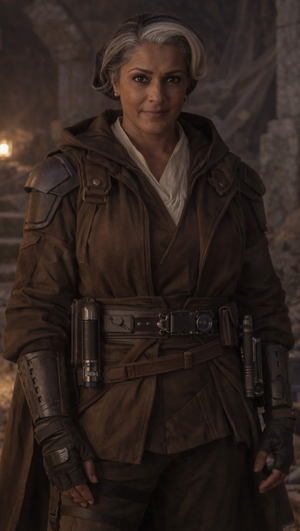 The Jedi Master had been explaining this to the Jedi gathered before her on the skiff. "We now know this is the location of the Meridian Vault," Sela declared, a note of quiet triumph in her voice as she turned. Over the swell of the next dune, silhouetted against a sandstorm in the distance, was a mound of sand. It looked like nothing. Another dune. But if she was correct -- if the intelligence paid off -- this was the place. "Sometime during the Gulag Plague years, a warlord secluded himself here, in hopes of avoiding the plague. With him he brought all he held dear: two wives (that we know of), a collection of some sort of bloodhound native to his homeworld, an enormous cache of coins and chits made from precious metals, an extensive collection of books described by literary historians as the proto-Lady Velvet but with much purpler prose -- whatever that means -- and, crucially, a collection of curiosities I now believe includes something called the Nightfall Register. It is... well, I am not entirely certain what it is in terms of the physicality of it. A book, maybe, or a holocron. A database, essentially, of artefacts that were spirited away from Jedi enclaves in the wake of Order 66."
She paused a moment as the skiff began to slow, lowering her voice now that she didn't have to speak over the whine of the engines. "While I cannot share all the salient details, I cannot overstate the importance of locating this Register. This is no idle treasure hunt, no search for riches. Locating it and finding the artefacts it describes could well mean the difference between life and death for members of our Order."
The skiff eased to a halt at what was, essentially, the base of a dune, and the engine cycled down and off. "There are three main means of ingress, that I know of, according to the -- " Sela's voice fell silent when a low hum sounded from deep beneath them. The hairs on the back of her neck stood on end and she repressed a shudder. And then the hum -- moved. Not far, but a distinct shift. She could almost feel it moving beneath the sand, the vibrations getting less and less. "Fascinating," she murmured before turning back to the Jedi, her face looking slightly absent-minded. "Where was I? Oh, yes. My local contact says there are three means of getting inside, two of which he suggested could be cleared relatively easily. He has been inside, but only enough to confirm. He thought the security systems were up and running and decided it was not worth his life to proceed further. Now, the entrances. The first is a service hatch, which should put us on a grid of overhead gantries, catwalks, ledges, and so forth. The second is the main entry, a ramp down to the entry vestibule. There is a third, more dangerous entry point, which may or may not still be viable: a half-collapsed vent that he thinks connects to the maintenance level."
Sela turned toward the dune and then, with a grace and ease that belied her apparent age, she dropped down onto the sand easily and lightly. "The catch is they'll most likely be buried, so -- good thing we're Jedi, hm? Now, come down and let's spread out. We ought to be able to sense something to be getting on with."

Or they didn't.
The Jedi expedition had a plan. They were in no hurry, and their path across the desert allowed them to stop and place beacons -- legible at short range by scanners and at long range by the Force -- at close enough intervals as to allow them to find their way back, even in a storm, even in electromagnetic interference, even in the dark. Like breadcrumbs in a fairytale.
Jedi Master Sela Basran stood at the front of the skiff that sailed across the sand, up the edge of a dune and down, almost like cresting a wave. Her face was serene, though she made a concession to the slightly unsteady ride by holding the railing carefully as the skiff went along its route. They had learned the location from a local contact in a nearby settlement, so downtrodden and out of the way that it wasn't even named. Everything they learned seemed to fit into what Sela expected, and the location was the final piece.
The local had called it 'the Amaxine base,' for the structure had been occupied by the Amaxine mercenary group centuries ago before its final disappearance. The sandstorms on Daxam IV had buried the facility, likely due to a failure of the power core that had kept the discharge shields online. But the Amaxine hadn't built it. They had merely squatted. The facility was older than that -- dating to the final century of the Old Republic at least -- and Sela Basran's research had turned up its original name.
She paused a moment as the skiff began to slow, lowering her voice now that she didn't have to speak over the whine of the engines. "While I cannot share all the salient details, I cannot overstate the importance of locating this Register. This is no idle treasure hunt, no search for riches. Locating it and finding the artefacts it describes could well mean the difference between life and death for members of our Order."
The skiff eased to a halt at what was, essentially, the base of a dune, and the engine cycled down and off. "There are three main means of ingress, that I know of, according to the -- " Sela's voice fell silent when a low hum sounded from deep beneath them. The hairs on the back of her neck stood on end and she repressed a shudder. And then the hum -- moved. Not far, but a distinct shift. She could almost feel it moving beneath the sand, the vibrations getting less and less. "Fascinating," she murmured before turning back to the Jedi, her face looking slightly absent-minded. "Where was I? Oh, yes. My local contact says there are three means of getting inside, two of which he suggested could be cleared relatively easily. He has been inside, but only enough to confirm. He thought the security systems were up and running and decided it was not worth his life to proceed further. Now, the entrances. The first is a service hatch, which should put us on a grid of overhead gantries, catwalks, ledges, and so forth. The second is the main entry, a ramp down to the entry vestibule. There is a third, more dangerous entry point, which may or may not still be viable: a half-collapsed vent that he thinks connects to the maintenance level."
Sela turned toward the dune and then, with a grace and ease that belied her apparent age, she dropped down onto the sand easily and lightly. "The catch is they'll most likely be buried, so -- good thing we're Jedi, hm? Now, come down and let's spread out. We ought to be able to sense something to be getting on with."
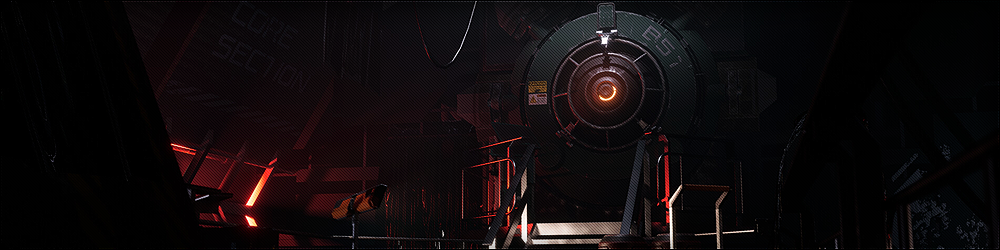
The Amaxine Vault (or the Meridian Vault) is an underground complex buried beneath the sands of Daxam IV's cool desert. Internally, it feels like a place built to run without the aid of people. It has its own pressure management system, its own internal routing, and its own automated security system. The interference, caused by a damaged power core, begins before one can even see the mound of sand it is under, scrambling compasses and other navigational aids, and it only grows stronger the nearer to the Vault one gets.
Entry is located at the base of the dune that hides the facility. It's an area more than a single door. The main entry is a broad ramp filled with sand, leading to the Mid Works portion of the facility (see below). There is a service hatch, also obscured by sand, which would place entrants onto the High Gallery, a maze of overhead ledges, gantries, and catwalks above the Mid Works (see below). A third entrance, more dangerous still, is a pressure vent that is -- you guessed it -- caved in with sand and other debris. It places entrants in Maintenance, a warren of low, cramped tunnels that are unpleasant to be in at the best of times, and during certain phases of the power cycle, can be absolutely lethal. Multiple groups can reach the threshold and enter without having to squeeze through a single choke point. The entrance places the parties in the northern-most part of the facility.
Once inside, there are old wall lights that work intermittently, metal decking dulled by grit, and walls carved into the stone under the desert. And, once inside, it becomes clear that the facility is not dead: the low hum of the power system that rises and falls with a steady rhythm. The Vault is running on a repeating pulse cycle, and though it could easily be mistaken for security if one doesn't recognize the pattern, it is merely a means of staying partially functional with a broken power core. The system does what it can to keep itself operational, even if only parts at a time. Parties inside should be aware that doors and panels are magnetically sealed; shooting or attempting to cut them open with lightsabers would be... inadvisable.
Those inside the facility will feel an increase in vibrations through the floor, a change in the airflow, and the sound of heavy actuators engaging deep within the walls. Lights shift in bands, not all at once. Some doors will click and re-seat, while other will go rigid. There won't be an exact timer, but a consistent rhythm is observed: each change of phase is a real, predictable environmental event that the parties can either wait for or race against. At any given time, each of these phases is taking place somewhere in the vault, moving in a south-to-north fashion in a kind of wave pattern.
The phases are as follows:
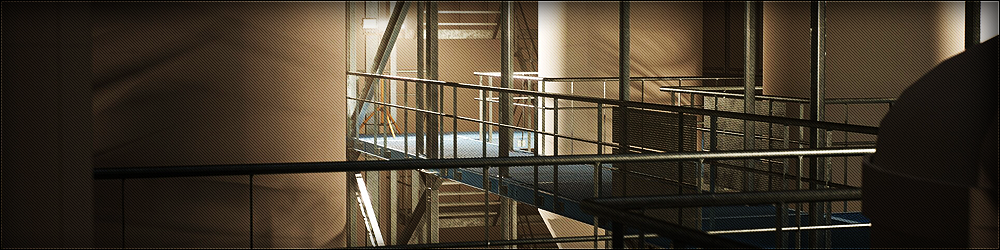
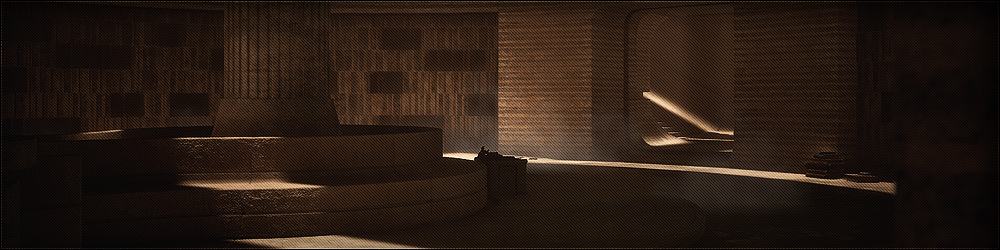
The High Gallery is the catwalks layer, above the broader open spaces of the Mid Works below. It offers speed at the cost of visibility, and the ability to see other movement across atriums and long corridors at the cost of exposure. During Phase Besh, bridge segments and shutter plates can segment the gallery and if the security system is awake, this is where suppressive security turrets are most likely to have clean firing lines.
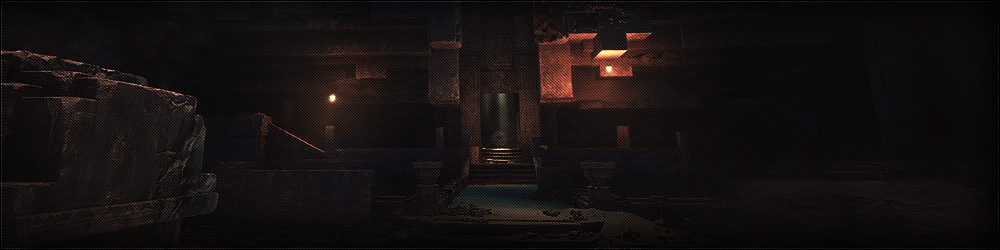
The Mid Works is the main interior: doors, corridors, and rooms making up the bulk of the facility. It includes common areas, workshops, gathering rooms, kitchens, mess halls, armories, barracks, treasure stores, etc. These areas can easily isolate people if they get caught during Phase Besh, separating teams. If the security system is awake, ancient -- but deadly -- droids will be patrolling, and no matter who triggered it they will target anything that doesn't belong, which is: everyone.
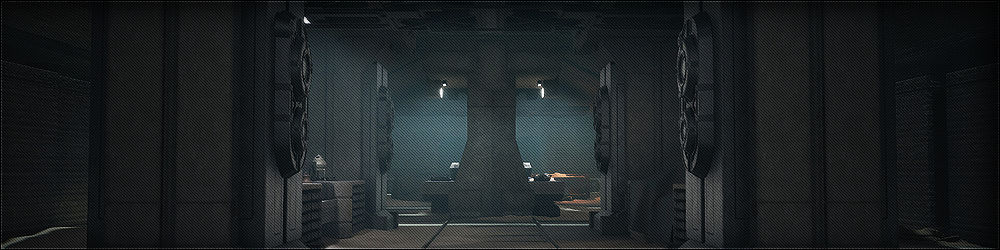
The Maintenance area is a warren of tunnels beneath the Mid Works. Cramped, winding, dark, and low, it will not be pleasant to be here at the best of times. The tunnels are home to conduits, ventilation shafts, and coolant and water pipes, all of which have suffered damage, causing leakages. But the Maintenance area also hides access to the power core itself. In theory, the power core could be repaired, which could stop the power cycle. But without the cycle, could the parties still proceed through the vault as easily?
Decisions, decisions...
Intersections between the three layers are constant, though not guaranteed to be open. A cross-link might be a catwalk stair from the High Gallery down into a corridor in the Mid Works, or a ladder into a lower layer, or a bridge segment between two atriums. Sometimes the power cycle seals those intersections, and sometimes it opens them, and if it changes status while someone is using it, they'd better think fast!
Overlaying the power cycle is the security response. The facility's droids -- including multiple types of lethal reinforced battle-type droids and combat drones -- and other defenses escalate when there are breaches, violence, or tampering with restricted systems. The vault security system views these actions and similar ones to be escalations, resulting in security response: jamming open a door, explosions, blaster fire, damage to droids or control panels, overriding archive terminals, or tripping hidden sensors.
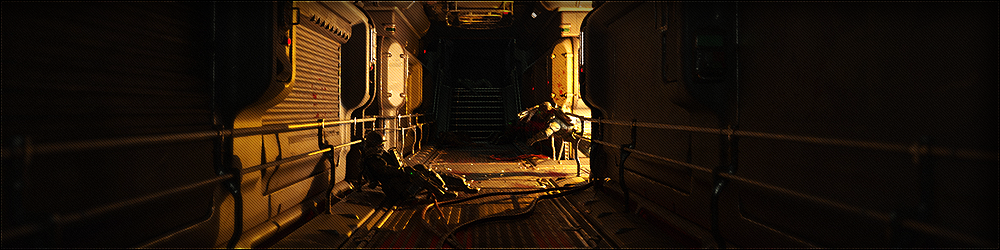
The paths converge in the south at a reinforced door to the Archives, wherein lies the Nightfall Register -- the prize. But will it be as simple as sticking a book or datapad in one's backpack and head for the exit? Spoiler alert: NO.
This is not a DM'd or GM'd thread. The power cycle and security are set dressing to inspire a sense of tension and danger, so have fun with it. The vibe is Indiana Jones meets Tomb Raider/Uncharted meets Hitman meets Star Wars.
Here are some post headers for this thread, made by the beautiful and talented Mercy
-- thank you Mercy!
Mercy
-- thank you Mercy!
The High Gallery:

The Mid Works:
Maintenance:
The Archive:
The Power Core:
Entry is located at the base of the dune that hides the facility. It's an area more than a single door. The main entry is a broad ramp filled with sand, leading to the Mid Works portion of the facility (see below). There is a service hatch, also obscured by sand, which would place entrants onto the High Gallery, a maze of overhead ledges, gantries, and catwalks above the Mid Works (see below). A third entrance, more dangerous still, is a pressure vent that is -- you guessed it -- caved in with sand and other debris. It places entrants in Maintenance, a warren of low, cramped tunnels that are unpleasant to be in at the best of times, and during certain phases of the power cycle, can be absolutely lethal. Multiple groups can reach the threshold and enter without having to squeeze through a single choke point. The entrance places the parties in the northern-most part of the facility.
Once inside, there are old wall lights that work intermittently, metal decking dulled by grit, and walls carved into the stone under the desert. And, once inside, it becomes clear that the facility is not dead: the low hum of the power system that rises and falls with a steady rhythm. The Vault is running on a repeating pulse cycle, and though it could easily be mistaken for security if one doesn't recognize the pattern, it is merely a means of staying partially functional with a broken power core. The system does what it can to keep itself operational, even if only parts at a time. Parties inside should be aware that doors and panels are magnetically sealed; shooting or attempting to cut them open with lightsabers would be... inadvisable.
Those inside the facility will feel an increase in vibrations through the floor, a change in the airflow, and the sound of heavy actuators engaging deep within the walls. Lights shift in bands, not all at once. Some doors will click and re-seat, while other will go rigid. There won't be an exact timer, but a consistent rhythm is observed: each change of phase is a real, predictable environmental event that the parties can either wait for or race against. At any given time, each of these phases is taking place somewhere in the vault, moving in a south-to-north fashion in a kind of wave pattern.
The phases are as follows:
- Aurek: Ventilation spins up and pressure equalizes. The sections of the vault in Aurek phase become more permissive for movement. Some powered door seals relax as power feeds into the local electrics, and some computer screens and other electronics power up. Links between the three distinct levels (High Gallery, Mid Works, and Maintenance) are generally accessible during Aurek Phase, allowing the parties to reposition to get around obstacles.
- Besh: The vault compartmentalizes, and security doors, links between the levels, and other barriers either seal (if already closed) or slam shut and seal (if open) in the sections of the vault in this phase. These pose serious hazards to people within the vault, as the force is enough to risk life and limb. It feels like the vault is hardening, like a security measure, but it is merely a function of the power cycle. In this phase, power is prioritized to compartmentalizing, so power goes out of certain other things. For instance, a catwalk bridge that extended during Aurek Phase is deemed non-essential by the power prioritization protocol, and retracts.
- Cresh: The vault sheds excess heat and pressure, discharges static, and cycles coolant. This is the phase that could be described as 'death trap' -- particularly for anyone in the maintenance tunnels, but with impacts felt across all levels. Sections of the vault in Cresh phase will experience coolant fog in lower levels, low-level toxin in air being pushed through vents, and electricity discharges arcing between exposed conduits. Some emergency panels fail during this pressure differential, which means this phase can create shortcuts with temporary passage into adjacent corridors, a maintenance door that pops open, an access panel that disengages to reveal a ladder. Meanwhile, floors can become slick with the residue of coolant fog, visibility can drop, and in damaged areas, floors and walls can fail and collapse. The maintenance tunnels are at their most hazardous during the Cresh phase, when flooding can rise, vents can asphyxiate, and electricity arcs can punish anyone who touches anything metal.
The High Gallery is the catwalks layer, above the broader open spaces of the Mid Works below. It offers speed at the cost of visibility, and the ability to see other movement across atriums and long corridors at the cost of exposure. During Phase Besh, bridge segments and shutter plates can segment the gallery and if the security system is awake, this is where suppressive security turrets are most likely to have clean firing lines.
The Mid Works is the main interior: doors, corridors, and rooms making up the bulk of the facility. It includes common areas, workshops, gathering rooms, kitchens, mess halls, armories, barracks, treasure stores, etc. These areas can easily isolate people if they get caught during Phase Besh, separating teams. If the security system is awake, ancient -- but deadly -- droids will be patrolling, and no matter who triggered it they will target anything that doesn't belong, which is: everyone.
The Maintenance area is a warren of tunnels beneath the Mid Works. Cramped, winding, dark, and low, it will not be pleasant to be here at the best of times. The tunnels are home to conduits, ventilation shafts, and coolant and water pipes, all of which have suffered damage, causing leakages. But the Maintenance area also hides access to the power core itself. In theory, the power core could be repaired, which could stop the power cycle. But without the cycle, could the parties still proceed through the vault as easily?
Decisions, decisions...
Intersections between the three layers are constant, though not guaranteed to be open. A cross-link might be a catwalk stair from the High Gallery down into a corridor in the Mid Works, or a ladder into a lower layer, or a bridge segment between two atriums. Sometimes the power cycle seals those intersections, and sometimes it opens them, and if it changes status while someone is using it, they'd better think fast!
Overlaying the power cycle is the security response. The facility's droids -- including multiple types of lethal reinforced battle-type droids and combat drones -- and other defenses escalate when there are breaches, violence, or tampering with restricted systems. The vault security system views these actions and similar ones to be escalations, resulting in security response: jamming open a door, explosions, blaster fire, damage to droids or control panels, overriding archive terminals, or tripping hidden sensors.
The paths converge in the south at a reinforced door to the Archives, wherein lies the Nightfall Register -- the prize. But will it be as simple as sticking a book or datapad in one's backpack and head for the exit? Spoiler alert: NO.
This is not a DM'd or GM'd thread. The power cycle and security are set dressing to inspire a sense of tension and danger, so have fun with it. The vibe is Indiana Jones meets Tomb Raider/Uncharted meets Hitman meets Star Wars.
Here are some post headers for this thread, made by the beautiful and talented
Mercy
-- thank you Mercy! The High Gallery:
The Mid Works:
Maintenance:
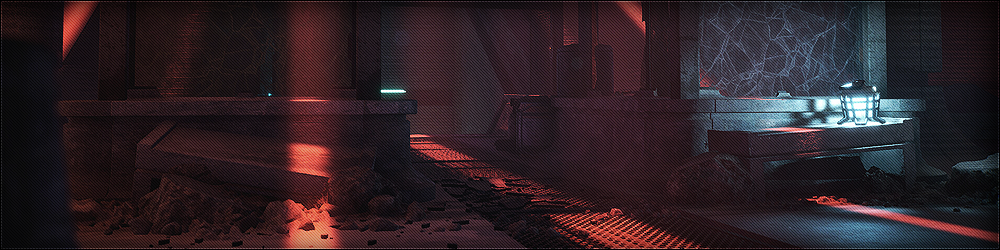
The Archive:
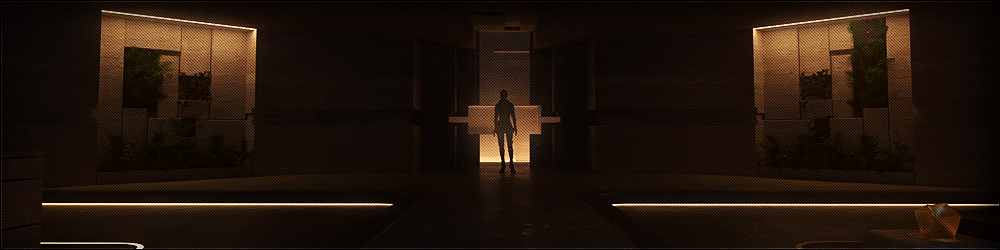
The Power Core: