
Valarauko




OUT OF CHARACTER INFORMATION
- Intent: To create an in-universe play/story beloved by Neryn Ka
- Image Credit: N/A
- Canon: N/A
- Permissions: N/A
- Links: N/A
- Media Name: The Ashen Crown
- Format: Play/Written Manuscript
- Distribution: Rare (Between eight and twelve copies believed extant).
- Length: Medium
- Description: A highly-surrealist story about the supposed dangers of power and the nature of impermanence.
- Author: Ancient Sephi in origin. Exact author unknown.
- Publisher: All extant copies are self-published.
- Reception: N/A
- Structure: The Ashen Crown consists of five acts, and lacks such modern niceties as a table of contents, page numbers, or any other identifying markers. The first page typically launches right into the play, and from there follows a standard recitation of lines and characters.
- Primary Language: The Ashen Crown is written entirely in an archaic, nigh-unintelligible dialect of the Sephi language. Extremely few individuals remain alive who are fluent in this tongue, and almost all of them are Sephi themselves.
- Media Condition: All current known copies of The Ashen Crown are damaged. Some are merely missing words or lines due to mold or decay, while in others, entire acts have been lost to time. Nonetheless, anyone in possession of multiple copies can usually reassemble the text of the entire play.
CONTENT INFORMATION
CHARACTERS
The Ashen Crown is (in effect) a morality play, centering around themes of impermanence, the corruptive nature of power, and whether one's locus of control is truly internal or external.
The principle characters of the play are:
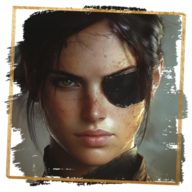
The Prince: Unnamed throughout the manuscript, The Prince is the protagonist and central character of The Ashen Crown. Scholarly interpretations of his character, nature, and behavior vary widely. Some note that the exact characterization of the Prince varies between extant manuscripts. In some, he is portrayed sympathetically. In these, he is naive but generally well-intentioned, desiring only to help his subjects and his nation. In others, he is arrogant, brash, and willing to do anything to avoid his inevitable slide into the pages of history.
Thus, his motivation for the events of the play lies on a spectrum between foolish yet noble altruism, and selfish avoidance of the doom set for him.
In either case, however, it should be noted that his actions remain the same, regardless of the motivation behind them. The Prince's defining trait is his rejection of metaphysical impermanence. He always takes the Demon's deal, and always pays for it. Thus, the message is consistent across narrative versions: intentions matter little, while actions matter a lot.
Most, however, agree that he represents the efforts of intelligent beings to impose order and meaning on a meaningless universe. Most of the play centers around his efforts to fight single-handed against the slow death of his culture and civilization.
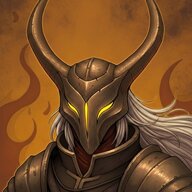
The Demon: Also unnamed, The Demon is both the deuteragonist and antagonist of the play. Neither wholly malicious nor wholly benevolent, The Demon's lines are riddled with double-meanings, poetic language, and contradiction. Much of these subtle entendres are lost when one translates from the original ancient Sephi language.
Like the Prince, the portrayal of the Demon is subtly different across versions. In some, he is more clearly antagonistic, with lines and costuming designed to make clear to the audience that he is not to be trusted.
In others, he leans more into moral and ethical ambivalence, serving more as a harsh teacher than a villain. As with the Prince, however, his role remains the same. He always hands the Prince the key to his own doom, and always reappears to let the Prince know that the horrors of the final acts were simply what he'd asked for. The Demon is believed to represent the consumptive influence of power on the soul, and the poisonous dangers of truth absent morality.
The Kingdom: Interestingly, The Kingdom (yet again unnamed) is often referred to as though it were a singular person, rather than a collective abstraction. Arguably the most heavily-debated "character" in the play, and certainly the least-understood. The Kingdom serves as a moral foil for The Prince, as his slow decline into madness and depravity is mirrored by the wider society around him.
The Chorus: Much of the play's story is narrated by these (at this point, all-too-predictably anonymous) witnesses. Each of the play's five acts are related by a different Chorus-member, and each of the five contradict the other in various minor and major particulars. This is believed to reflect the wider meta-narrative of The Ashen Crown, that being the supposed instability and ephemerality of truth.
ACTS
Act I: The Dying Kingdom
After the sudden death of his father, The Prince inherits a kingdom in decline. Its crops fail, its allies veer often into unreliability, and its culture is plagued by the extremes of social decay. Throughout this act, the writing is steeped in highly-surreal and artistic language, intended to create an atmosphere of dream-like unreality. The narrative timeline itself seems to flow in curiously non-linear directions, enforcing the idea of uncontrolled change.
This act primarily centers on the Prince's (largely futile) efforts to remedy the problems plaguing the Kingdom, and chronicles his increasing obsession with imposing stasis on a changing world.
Act II: The Bargain of Fire
The Demon is introduced in this act, wherein much of the following narrative deals with his attempts to draw the Prince into a pact.
Sensing the Prince's fear of change and impermanence, the Demon visits and offers him "a flame that will not die". Power is compared to fire numerous times in the play, but the first and most direct of these instances is here. The Demon warns the Prince (albeit in the flowery, obstructive verbiage found everywhere in the Demon's lines) that fire is a mighty tool, but one whose hunger eventually turns toward everything, including him.
Desperate to save the Kingdom, the Prince accepts, believing himself to be strong enough of will to control the Demon's gift.
Act III: The Golden Ascendancy
This act primarily deals with the Kingdom's startling renaissance under influence of the Prince's new power.
Disease is all but eradicated, the economy booms, and the people of the Kingdom experience a sudden and glorious golden age. For his part, the Prince is soon revered as a god by his people, and his blessings are handed out generously.
Of course, this state of resolution doesn't last. Distortions begin to appear in the narrative, relating a clear picture of a culture reduced to stasis by its sudden explosion of affluence and ease. References are made to halted aging, increased philosophical and religious decadence, and disturbingly wasteful behavior on the part of the Kingdom's people.
One particularly startling passage relates how the Kingdom's crops grow tall and beautiful, but curiously lose their nutritious value. Soon, this property spreads to the entirety of the Kingdom's food supply, but the citizens find they no longer require it. They are now incapable of starving to death, yet remain paradoxically hungry.
Act IV: The World Aflame
Slowly but surely, the Prince's grip on his gift and his sanity begins to weaken. True to form, this is mirrored in a quiet, inexorable change in the civilization he rules. The Prince's "fire" begins to spread and change in ways he never envisioned, let alone intended.
It isn't long before the Kingdom is unrecognizeable, peopled by madmen from border to border. Even nature is not immune to the Fire; ecological collapse is alluded to multiple times in the narrative. In some places, the Kingdom exists in perfect stasis. In others, total anarchy reigns.
The horrified Prince frantically attempts to contact the Demon again, who appears in suitably dramatic fashion. In response to the Prince's lament over his loss of control, the Demon insists that this is what control looks like, when applied to chaos.
Act V: The Ashen Crown
Strangely, the exact text and narrative of the final act is inconsistent across surviving examples of the manuscript. Nonetheless, all of these endings share the same symbolic and darkly meaningful conclusion.
In all versions, the Prince is left the last survivor of a dying and petrified world, still clutching his fire. Belatedly, he comes to understand that fire is not meant to preserve, but to transform.
It is this point that the story diverges in different versions. In some tellings, the Prince attempts to cast the Demon's fire away, only to find that it cannot be discarded. In others, he embraces the ruinous flux in its totality, becoming indistinguishable from the Demon.
This latter ending implies a cyclical nature of decay and rebirth to reality, particularly as one or two surviving manuscripts end with the Prince (now the Demon) introducing himself to a young monarch as civilization rebuilds, and the tale begins over.
HISTORICAL INFORMATION
An ancient, quasi-apocryphal Sephi play, The Ashen Crown is estimated to be many millennia old.
Despite no small amount of scholarly effort to uncover their identity, the original author of the play remains a mystery. The language, tone, and apparent knowledge of historical events indicates that the writer was probably of high social status and possessed of an excellent education. Aside from this, little else about them can be gleaned at this time.
Surprisingly, relatively few know of the play at all. Knowledge of its existence is relegated to a very few scholars of Sephi art and culture. In part, this is due to the fragmentary nature of remaining examples. Copies of the play are exceptionally scarce; it is estimated that as few as a dozen may be in existence, and most of these are missing portions of the script.
The remaining obstacle comes in the form of the curious regularity with which would-be translators/publishers meet bad ends. Several high-profile historians and archaeologists have announced their intent to recover a complete copy of The Ashen Crown, only to die in bizarre accidents, fade from the scene due to personal disgrace, or simply vanish entirely.
Likewise, the last major publishing company that attempted to print The Ashen Crown was hammered by a series of increasingly-unlikely misfortunes, resulting in its swift bankruptcy and dissolution. Their copy was only a fragmentary one, yet it appeared that even this was enough to invoke the ill luck that comes to any who dabble with the play.
Academics are typically not prone to superstition, but these events have led many to believe that the play is cursed. More likely, these events have entirely normal and natural explanations. In either case, the result is the same: The Ashen Crown ranks among the rarest written works in the galaxy.
Last edited: