




Star Wars Roleplay: Chaos

Register a free account today to become a member! Once signed in, you'll be able to participate on this site by adding your own topics and posts, as well as connect with other members through your own private inbox!

The Kainate

A hermetic shadow state led by Darth Carnifex and Darth Prazutis, Dark Lords of the Sith.

Share This Faction

Quick Overview

Category
Dark Side
Total members
86
Total events
0
Total discussions
11
Total views
64K

Prazutis Workshop


GMOfdE1.jpeg

71yNyUW.png

  • Intent: To create a frontline Kainite Star Destroyer incorporating Sith technology, including all of the new systems I created exclusively for the Kainate.
  • Image Source:
  • Canon Link: N/A
  • Permissions: N/A
  • Primary Source: N/A
YsH8NAM.png

Bs3fC05.png

iUvrRDx.png

  • Full Suite of Capital-class Systems: Including advanced life support, sensors, communications, tractor beams, navigation, and targeting.
  • Sith-Aligned Environmental Systems: Life support is reinforced against radiation, breaches, and biohazards. The air carries ionized incense and black ozone, cycling through Bloodsteel-veined vents that double as ritual conduits.
  • Gravity Anchors: Gravity is maintained through advanced systems, including harmonic nodes encoded with Sith technology. Minor surges may occur during intense Force activity.
  • Sith Astrogation & Sensors: Navigation and sensor systems are enhanced to detect hyperspace eddies, Force anomalies, and ritual interference. Data is filtered through predictive software for early threat avoidance.
  • Encrypted Command Systems: Command lines use Sith-scripted encryption and voice-activated glyphs. Orders and data are routed through advanced systems including Obsidian Nerve Relays, linking bridge and key systems.
  • Tractor Beams: Reinforced dorsal and ventral tractor beams.
  • Base Shielding: Molecular and ray shields provide initial protection, glowing crimson-black when struck. Integrated with more advanced shielding systems in the vessel's defenses.
  • Hangar Systems: Designed to hold up to 12 starfighter squadrons and supporting craft. Hangars are fortified and atmospherically sealed for rapid deployment and defense.
  • Interior Layout: The ship features brutalist and cathedral-like corridors, blood-vein lighting, and blackstone architecture. Sith runes and shrines are built into key chambers for ritual use and meditation. Sith triumphs are depicted in scarlet script.
  • Reinforced Structure: Hull and frame are built with specially treated Sith materials, resistant to heavy fire and built to endure prolonged combat.
  • Automated Repair Systems: Integrated maintenance drones and self-repair nodes handle damage control. Linked to pain-based feedback through the Shadow Mind network for rapid response.
pxJoJAS.png

h3KdqR9.png

  • Ritual-Integrated Command Architecture: Powered by Sith relic-tech such as the Shadow Mind Integration Node, Wraith-Command Casket, and Voidlink Cortex, the vessel responds with terrifying precision to its commander's will, often before verbal orders are issued.
  • Overwhelming Armament: Armed with a devastating spread of custom Kainate weapons, ranging from Xarnak plasma torpedoes to Dreadflak batteries, the vessel is capable of obliterating targets across multiple ranges and combat types. Pound for pound it is among the strongest in its class, even considered a class of its own.
  • Advanced Sith Systems: The ship's targeting, coordination, and dark warfare subsystems are deeply entangled with dark technology. These include Pain-Link Coordination, Nether-Eye Combat Sight, and Hemophage Conduits that enhance reflexive defense and enemy disruption.
  • Layered Defenses and Shielding: Reinforced by the Aegis of Shadows Generator, standard shielding, and Sith alloy hull plating, the vessel boasts incredible survivability against both conventional and exotic attacks.
  • Psychological Warfare Platform: With systems like the Fear-Broadcast Projector and Painwave emitters, this destroyer doesn't just damage, it demoralizes. Enemy morale can collapse before hull integrity does.
QF94b2S.png

  • High Ritual Maintenance Demand: Many of the ship's core systems require regular upkeep or tuning from specialized Sith engineers. Prolonged separation from the Force or Sith personnel may degrade performance.
  • Force-Dead Zone Vulnerability: In areas devoid of the Force (e.g., Ysalamiri fields, void nexuses), dark systems like the Shadow Mind, Fear Broadcast, and Painwave Emitters suffer diminished function or shut down entirely.
  • Limited Hangar Capacity: While well-defended and armed, the ship sacrifices broader carrier capabilities, fielding fewer squadrons compared to other destroyers of similar size.
  • Heavy Profile, Low Agility: Despite advanced maneuvering systems, the ship is still a large, heavily armored destroyer with limited agility compared to cruisers, frigates, or corvettes.
  • Signature Detection During Active Operations: When systems like the Painwave, Fear Broadcast, or Voidflare Engines are active, the ship emits distinct energetic signatures, making stealth or low-profile operations difficult.

G6hsfzt.png

The vessel known as the Umbraxis, first of its class, represents the dawn of a new era in galactic warfare, an apex predator birthed from the crucible of ambition, ritual, and boundless innovation. Designed under the direct supervision of Darth Prazutis, the Shadow Hand and Elysian Grandeval Mortarch of the Kainate, this warship is the inaugural product of a vast military renaissance: the Kainate Rearmament Doctrine. With the Eternal Rule as its lodestar and the technological stagnation of the galaxy as its crucible, this ship is the first to fully integrate every facet of Kainate crafting genius, dark warfare, and advanced starship engineering into a single, unified war platform.

Where the old Sith Orders relied on borrowed frames and repurposed systems, this destroyer is Kainate through and through, each hull plate specially treated in dark forges, each circuit laced with Bloodsteel, and every system bound carefully with darkness. It is not simply a warship; it is a cathedral of annihilation, designed to channel fear, domination, and despair as integral components of its combat strategy.

Internally, the ship's structure is as much a Sith temple as a vessel of war. Its corridors echo with the low chant of harmonic gravity anchors, and its command centers are enshrined with ritual shrines, dread meditation chambers, and sith scripture panels. The Obsidian Nerve Relays and Shadow Mind Integration Node bind captain, crew, and ship together in a cognitive web of total synchronization. Officers issue orders swiftly to both ship and crew, while the Wraith-Command Casket permits high lords to become one with the vessel itself during major engagements.

Every subsystem is a reflection of this unholy integration. The Voidflame Core powers the vessel with unstable dark fusion energy, while the Sacrifice-Fed Relay channels ritual pain into surges of power. The Hemophage Conductor Web siphons lifeforce from the dying to reinvigorate its shielding and systems. On the offensive end, the destroyer is bristling with exotic Kainate weapons like Xarnak Torment Casters, Painwave Emitters, and Dreadcore Impactors, optimized to both destroy and unravel the minds of enemy crews.

The Fear-Broadcast Projector saturates hostile communications with terror and hallucinations, while Nether-Eye Targeting Systems track all manner of targets with frightening ease. All the while, decks pulse with blood-vein lighting, and the warship's signature Bloodpane viewports shimmer with crimson, unsettling those who dare to gaze upon it from beyond.

Despite its power, the vessel has limitations. Its dark systems are vulnerable in specific areas or under specific effects, and its operation requires highly trained Sith personnel to maintain the constant ritual calibration demanded by its dark design. While its agility is limited, and it sacrifices some hangar capacity in favor of a massive armament and systems density, this was never meant to be a flexible fleet asset, it is a spearpoint, a vessel of ritualized extermination meant to lead the charge, a main ship of the line for the fleet.


This star destroyer, the first of its breed, is not a successor to the star destroyers of old. It is a repudiation of them. It is war reimagined through the lens of absolute control, dread, and Sith supremacy. It is the Kainate's declaration that the age of imitation is over, and the age of annihilation has begun.


Last edited:


xD0JvfK.png

71yNyUW.png

  • Intent: Create the definitive engineered body for Darth Prazutis and Darth Carnifex, a sovereign, specimen strand that dominates battlefields, and sets the apex for Sith clone vessels in RP. As well as building off years of genetic engineering.
  • Image Credit:
  • Canon: N/A
  • Permissions: N/A
  • Links: N/A
P1sM4nb.png

  • Name: Umbral Sovereign Strand (USP-01)
  • Designation: Non-Sentient (Unpossessed), Sentient (Possessed)
  • Origins: Malsheem
  • Average Lifespan: 600–900+ standard years baseline; Exceeds a millennium with scheduled recultivation/ritual grafts and ENSS recalibration.
  • Estimated Population: Semi-Unique (Small stock in stasis)
  • Description: A living cathedral of war: ivory dermis veined with dull-crimson sigils; a double-braced titanframe that moves with predator precision; blood that blackens under load as it ferries iron, inks, and catalytic bile. Bone is inscribed from within, Kissai spirals and Massassi braids that ring and settle when struck, while the dermis is armored by Barabel micro-scutes and overlaid with Luxbane anti-beatific runes to buffer Force Light. Over-myelinated giant-fiber nerves, Yaka short-loop reflex arcs, and stabilized balance centers let a giant pivot and sprint with assassin-tier reactions. Deep in the torso, Nether-matured Empyrean micro-glands crown a crystal-seeded heart lattice of micronized Obsidian Voidshards, the Empyrean-Nullheart Sovereign System (ENSS). Where ysalamiri and voidstone mute the galaxy, his internal anchor persists, and a keyed anti-null aura (2 m base; 5 m overdrive; 8–12 m spikes for heartbeats) compresses into a hard-edged envelope that biases joints, blades, and footwork even in true nulls.
PEcthiM.png

  • Breathes: Type I, II, III, IV
  • Average Height of Adults: 2.50–2.75 m (engineered cap ~2.8 m)
  • Average Length of Adults: N/A
  • Skin Color: Ivory Pale, Luxbane filigree and sigil veining smolder under stress
  • Hair Color: Black
  • Distinctions:
    • Epicanthix + Graug - Titanframe Musculoskeletal Lattice: A double sternum with overlapping costal braces locks the chest into a rigid load-arch, while the long bones are hyper-dense with carbon-reinforced cores and the trabeculae are thickened into crush-resistant trusses; hips fuse into a widened sacral yoke, vertebrae run on shock-spreading endplates, and every major joint sits in deep, congruent sockets ringed by fibrocartilage so levers don't wobble under stress. Graug myology packs several-fold more myofibrils per fiber, and Epicanthix limb geometry adds long-lever efficiency; hemo-steel tendon sheaths store and snap-release energy without fray, turning contraction into whip-cord torque instead of mushy pull. Baseline output far exceeds an unaugmented Wookiee, one-hand hoist of speeder-bike mass, beskar shearing without overclocking, shoulder-checks that crater bulkheads, and kicks that fold impervium, while the caged joints stay true and don't blow out when he brakes or pivots at full speed.
    • Graug - Redundant Organs: A tri-lobed primary heart with spiral ventricles is paired to a slower auxiliary "return" heart, with auto-shunts that reroute flow around damaged vessels; a spleen–liver twin complex recycles blood aggressively, sub-sternal O₂ reservoirs buffer oxygen during hemorrhage, and the mildly acid-tolerant plasma (with protected vessel linings) suppresses sepsis while tolerating high adrenaline loads. When the chest or gut is torn up he stays perfused and conscious, the booster heart surges to re-pressurize and clear lactate, and he keeps moving through shock, still mortal to head kills or total incineration, but far harder to drop with torso trauma.
    • Gen'Dai (Limited) - Tissue Dynamics: Borrowed Gen'Dai biology is down-rated and caged inside the titanframe: a pseudo-boneless micro-myomer mesh interlaced with elastic septa and hemostatic ring-shunts wraps the bones and viscera, so blunt shear spreads through the weave instead of ripping straight lines; capillary beds pinch closed around cuts to prevent bleed-out; muscle and skin re-knit in minutes, fascia and tendons re-laminate in hours, and distributed reflex arcs route signals around damaged nerves to keep limbs responsive. Hard limiters lock morphology to a humanoid profile and cap regeneration, no limb regrowth, no organ duplication; Essentially stays cohesive under rips/crush and seals stab channels mid-fight, joints "pop back" after yanks, and reflexes stay online through partial damage, decapitation, brain shots, or full incineration still kill.
    • Dashade - Cellular damping: Force-attenuating membranes and counter-ion pumps blunt telekinetic "grab" and bleed off electrical overload, cutting knock-through and sorcery backwash, while subdermal heat-dissipation arrays spread core heat to ambient for a flattened IR signature that's hard to pick up on standard life-form scanners; pigment/radiation scavengers and fast DNA-repair loops add radiation resilience. Essentially TK feels like pushing through sand, Force lightning grounds out instead of cooking nerves, Force attacks bite less when struck, thermal optics struggle to lock on the vessel, and reactor/space-rad zones bite less.
    • Anzati - Predatory Neural Complex: Predator circuits grant a life-essence presence sense (targets ranked by richness at a glance) and a close-range compulsion pulse to soften will at clinch; a toggled Thermal Occlusion Reflex flattens pulse and drops skin heat to ambient for brief stealth windows (minutes) before internal heat forces venting. Retractable sub-palatal siphon filaments (Anzati-derived, hidden behind the canines) enable a decisive "soup" draw on a pin/finish, while palmar micro-siphon pads in the grip ridges wick trace vitality on contact for on-the-move sips; both routes convert intake directly to ATP/stamina and micro-repair via endocrine gates, avoiding berserk spikes. Ensures brief IR invisibility; close-contact sips to refuel and seal cuts mid-fight; full feeds only at grapples/executions.
    • Sith Pureblood - Hemato-Thaumic Conductor: Pureblooded cell-lines naturally resonate with the dark side, raising baseline Force coupling; thaumoferrin-rich blood ferries ritual inks/iron/bile without rupturing capillaries and thickens/blackens under overdrive to plug micro-tears, while trabecular Kissai/Massassi bone-runes act like shock coils that absorb, phase, and re-emit power surges so casting stays stable while sprinting or being struck. Dermal/fascial ink receptors self-heal to maintain an in-body rune grid (talismans stack cleanly), and an endocrine, ritual axis converts pain/fear/rage into conduction-friendly rhythms that sharpen precision instead of causing tremor; a neuro-resonant, labyrinthine cortex damps psychic recoil from terror/domination plays and speeds recovery after pushback. Ensures mobile, high-throughput channeling without capillary blowouts, longer sustained storms/compulsions of extreme power with fewer misfires, clean artifact stacking, and steadier control under duress.
    • Luxbane Lattice - Force-Light Resistance (Osteodermal Runes): A bone-deep + dermal rune web tuned to anti-beatific harmonics that refracts, de-phases, and grounds incoming Force Light, coupling with the Pureblood conductor (thaumoferrin blood + osteo-sigils) to shunt sanctified charge along low-loss ground paths where it bleeds off as mild heat and bioelectric noise; embedded phase-cancel bands for common consecration frequencies slow rune de-tuning so the internal anchor stays coherent through opening volleys, but under overload the sigils hiss and gutter, seams scorch, and throughput drops until re-inked/re-primed. Effectively the first hit burns softer and buys time to counter or disengage; sustained powerful Light without external reinforcement still peel the lattice back and compress ENSS toward skin-tight until refreshed (tell: silver-gold flare, heat haze, burnt-resin scent).
    • Zabrak - Cardiovascular Grit: Evolved Iridonian hardiness with two synchronized hearts plumbed in parallel drives high-oxygen throughput and stable cerebral flow under stress, while nociceptor gating (Zabrak pain resistance) keeps motor control and decision quality sharp when hurt; augmented shunts smooth pressure spikes and clear lactate quickly. Effectively run faster for longer, hold max output without dizzy blackouts, and keep hands steady/choices clean even through heavy pain, true redline endurance without tunnel-vision.
    • Yaka - Neuro-I/O Spine: Engineered from Yaka neuro‐architecture, the brain-stem and upper cervical cord carry bioceramic-shielded neural ports and low-latency I/O buses (electro-optical and ritual/thaumic couplers) that plug cleanly into Shadow Mind, command caskets, battlefield implants, and Kainate systems. Signal paths use deterministic timing and error-correcting spike trains for crisp control, while surge-isolation relays hard-drop external lines on ion/EMP and instantly fail over to pure biology, so reflexes and cognition keep running even if gear desyncs. Ensures rock-solid links with near-zero input lag for augments and sorcery interfaces; if tech gets scrambled, he stays sharp and responsive with an automatic bio fallback, no stutter, no blackout.
    • Firrerreo - Repair/Hardiness: Engineered Firrerreo cell-lines turbocharge clotting, collagen laydown, and micro-vessel regrowth, so cuts and blaster grazes seal in minutes and deep muscle tears close within hours so long as heart/brain aren't hit; a thin nictitating membrane spans the eye to shrug flashbang glare and flying grit while extending enhanced vision into the near-UV; immune and DNA-repair pathways run hot, boosting infection resistance and radiation tolerance; healed skin forms silver/metallic scarring that's tougher and resists splitting under strain. Ensures rapid field recovery between engagements, hard to infect or debilitate with rads, eyes keep working under sparks/flashes, and scars behave like flexible armor plates.
    • Barabel - Dermal Micro-Scutes: Sub-dermal xeno-keratin plates grown as overlapping "scale tiles" fuse to the dermis over a thin thermo-lipid underlay, giving the skin a flexible hardness. The plates disperse heat, blunt shrapnel/concussion, bleed off electrical charge, and attenuate radiation; against directed energy, stun and low-medium blaster grazes typically flash-scorch the outer keratin without penetrating, while the underlay cushions shock so force becomes surface bruising instead of deep tears. This allows the vessel to eat stun bolts and frag with mobility intact, shrug thermal swings and ambient radiation, and keep moving after blasts that would normally pepper and slow a human.
    • Noghri - Predator Suite: Enhanced olfactory epithelium and neural scent filters push smell resolution to individual and kinship discrimination (vessel can pick out a target, and even their "bloodline", by trace molecules), while fast-tracking eyes and vestibular/proprioceptive micro-tuning keep the center of mass locked under violent direction changes. Tendon damped footfall mechanics create a ghost-quiet gait, and the palms/soles carry micro-ridge grip fields that bite into stone and metal for near-silent vertical traversal. Effectively track quarry through smoke, blood, rain, or urban stink; read family lineage by scent; move without audible footfalls; climb and corner at speed with blade-steady balance.
    • Iktotchi - Anticipatory Motor Loop: The nervous system runs a built-in short-range precog feed: a split-second "preview" of an opponent's next motion is routed straight into the pre-motor circuits, which pre-loads the right muscles and damps the wrong ones so actions start on the exact beat and can be aborted or re-aimed mid-move. This ensures cleaner feints, parries and counters that land on time, rapid line changes without over-committing, and opponents find their tells already answered.
    • Gand (Lungless Strain) - Dermal Gas Exchange: The skin has tiny micro-spiracles and dense capillaries that act as a backup breathing system, when choking, drowning, in smoke, or thin air, they trickle oxygen in and CO₂ out while the body slows heart rate to conserve O₂. In hard vacuum the pores seal and the body runs on internal O₂ stores without lung damage, and because the host isn't gulping air, airborne toxins/smoke enter slower. In play: delayed blackout, extra time to escape suffocation/drowning, vacuum survivability, and improved resistance to inhaled poisons. Additionally functional sight within ultraviolet and night vision spectrums.
    • Hutt - Micro-Hepatic Detox: Recirculating bile loop with broad detox enzyme suites (oxidation/hydrolysis/conjugation) neutralizes a wide range of poisons, venoms, pathogens, and bioweapons; auxiliary bile bladders off-load toxins to the gut, chelators bind heavy metals, and tightened epithelial junctions plus efflux pumps (skin/gut) reduce absorption at the source. Strong resistance and fast recovery from most toxins/diseases.
    • Neuromotor Acceleration Stack - Speed/Reflex Engine: Epicanthix labyrinth cortex, Yaka short-loop spinal arcs, over-myelinated giant-fiber tracts, cerebellar hypertrophy, and vestibulo-ocular lock, stabilized by Noghri proprioception and Iktotchi timing, produce assassin-tier reflexes, reactions in a colossal frame, with the ENSS shaving start/stop inertia via contact-range micro-TK; in play: step-in counters between blinks and whip-fast pivots without wobble.
    • Empyrean-Nullheart Sovereign System (ENSS): A Nether-matured Empyrean gland ring (gene-keyed, spark-bearing) seated around a Nullheart lattice of micronized Obsidian Voidshards acts as an on-board Force generator/anchor and projects a keyed anti-null aura, 2 m baseline, 5 m overdrive, 8–12 m split-second spikes, with a thin tactile micro-TK "skin" that biases grips, edges, and joints. Vessel connection to the Force cannot be switched off, suppressed, or weakened; inside the aura vessel can use the full suite of force abilities (self-buffs, melee-range TK, lightning, sorcery, mind work, etc) normally on anything that is also inside the bubble, while powers that must travel beyond the bubble collapse at its edge until the vessel either closes distance so the bubble overlaps the target or briefly spike the radius. When under ysalamiri/voidstone/etc: walking into a null field leaves the internal anchor fully online; a ysalamir or voidstone placed on vessel sits inside the keyed envelope and cannot sever the link. The aura is keyed to the host, so enemies standing in it do not regain Force use in null, and Hostile Force effects crossing the boundary do not regain power.
  • Races: N/A
  • Force Sensitivity: All
h3KdqR9.png

  • [ Provide, in list format, some strengths of this submission. 2 recommended. ]
QF94b2S.png

  • [ Provide, in list format, some weaknesses of this submission. 2 recommended. ]
7mQq9PS.png

  • Diet: [ Herbivore, Omnivore, Carnivore, Other (please explain). Note down common foods and preferences, what is poisonous, etc. ]
  • Communication: [ How do they communicate? A spoken language (if so, tell us which), through barks and yips, body language, telepathy, etc. ]
  • Technology level: [ Describe their societal technology level if it differs from Galactic Standard. ]
  • Religion/Beliefs: [ If this species has a prominent religion or set of beliefs, describe them here. ]
  • General Behavior: [ Describe general behaviors such as: family life, values, how they raise their young, how they find mates, how they interact with the world and other species around them. Do they hunt? Do they build? Are they inventors? Are they explorers? Are they nocturnal or diurnal? Do they attend schools? Etc, etc. ]
NimTr8E.png

[ Include a description of the species history here. If your species is genetically engineered or Sithspawn please describe the process through which they were created, by who, and why. Explain the various challenges encountered during their creation. Most galactic species will be quite old - include major events relevant to the species in how they evolved and developed into what they are today where appropriate. Including Chaos canon events, where they impacted the history of this species, is a plus. ]

 
Last edited:


RDPi4Fw.png


71yNyUW.png


  • Intent: To submit a Kainate combat support tender designed to operate alongside the Shadow Armada and Immortal Legions, providing forward deployed battlefield fabrication, repair, extraction, and resupply capabilities for prolonged fleet engagements and planetary invasions.
  • Image Source:
  • Canon Link: N/A
  • Permissions: N/A
  • Primary Source: N/A
YsH8NAM.png

Bs3fC05.png

iUvrRDx.png

  • Sith Life Support Grid: A state of the art suite keeps the Vraaktol's bays habitable even when its hatches are open to vacuum-scarred wreckage. Heavy toxin scrubbers, particulate filters, and ritual baffles purge fumes from ruptured fuel lines, vaporized armor, and exposed alchemical reagents so crews can work without interruption while hell rages just outside the hull.
  • Sith Command & Targeting Computer: The Vraaktol is not a line combatant, but its hardened command core tracks nearby threats, friendly squadrons, and debris trajectories with the same ruthless clarity as a frontline escort. It can prioritize incoming missiles, flag flanking maneuvers, and hand off firing solutions to escorts or attached point-defense grids, keeping the tender alive while it works.
  • Sith Communications & Coordination Array: A whisperstone-threaded comms spine links the Vraaktol directly to carrier control, strike wings, Nyctophage packs, and nearby logistics craft. It pushes and receives encrypted data, resupply requests, repair queue updates, and emergency recall orders, while broadcasting low-grade dread pulses that make enemy crews hesitate to shoot "the ship that keeps everything running."
  • Sith Navigation & Formation Plotter: The nav-core blends conventional astrogation with Sith predictive plotting, optimized not for long solo voyages but for holding perfect position inside crowded task forces and debris-choked combat zones. It maps safe approach lanes around carriers, drifting hulks, and minefields, constantly updating tug-vectors so the Vraaktol can slide into refit positions without clipping fighters or drifting wreckage.
  • Inertial Compensators & Deck Stabilizers: Reinforced compensators and grav-buffers keep interior decks level while the ship jinks, accelerates, or takes glancing hits. Techs working at plasma welders, ritual forges, or ammo racks feel only a steady tug underfoot instead of whiplash, letting repairs and reloads continue even when the tender is under sporadic fire.
  • Reinforced Sensor & Proximity Mapping Suite: A wide-aperture sensor block sweeps for damaged craft, drifting munitions, and battlefield debris, painting safe docking corridors in three dimensions. Specialized "proximity dread" overlays warn crews when volatile wreckage or unstable reactors are hauled too close to bays, letting the Vraaktol skirt the edge of chaos without becoming scrap itself.
  • Integrated Flight Stabilization & Docking Matrix: Bloodsteel-threaded auto-trim actuators, micro-thrusters, and occult-balanced gyros hold the hull rock-steady once locked into a servicing posture. External craft can latch onto docking spines, umbilicals, or cradle arms without fighting drift or roll, turning the tender into a stable workbench in the middle of a battle.
  • Magno-Clamp Undercarriage & Service Gantries: Heavy magno-clamps on the belly and flanks allow the Vraaktol to hook onto carrier hulls, station frames, or anchored barges, while extensible service gantries reach out to embrace damaged fighters and drones. These clamps remain locked even under shockwaves from nearby detonations, keeping delicate reload operations from being torn apart by a lucky hit.
  • Atmospheric Entry & Sealing System: Though primarily a void-worker, the Vraaktol's hull plating and seal network can endure controlled atmospheric descents to reach forward ground hubs or low-orbit foundry zones. Re-entry hardening, ablative strips, and compartmentalized pressure wards keep the forges lit and bays pressurized while the tender punches through ash, ion storms, or burning skies.
  • Dark-Sync HUD & Foundry Control Interfaces: Command pits and bay overseer stations are wrapped in Dark-Sync displays that merge tactical data, damage reports, and fabrication queues into a single glyph-laced vista. Supervisors can see which wings are inbound, which shells are printing, which drones are ready to relaunch, and where the next emergency patch job must be done, then reassign resources with a thought and a gesture.
  • Autopilot / Return & Retrieval Protocol Subsystem: Blood-keyed return protocols allow the Vraaktol to limp back to its carrier or rally point even if its bridge crew is incapacitated. It prioritizes survival of its forges and stored munitions, jettisoning volatile stock and locking down bays before executing evasive return profiles through pre-warded corridors in fleet space.
  • Data Blackout & Malediction Lattice: Should capture become imminent, the Vraaktol's lattice purges fabrication schematics, Shadow Mind link-logs, and alchemical recipes in a cascading dark-fire wipe. Consoles slag, crucible heuristics burn out, and corrupted residue curses anyone who tries to salvage its foundry cores, ensuring the Kainate's battlefield industrial secrets die with the ship.
  • Structural Blast Baffles & Spall-Quench Bay Lining: Internal bulkheads around the servicing bays are lined with blast baffles and spall-quench laminates to contain accidental detonations or catastrophic ammo failures. If a magazine cooks off or a damaged explosive rupture, the blast is funneled away from the primary crew corridors and control cores, sacrificing compartments to keep the foundry heart intact.
  • Basic Countermeasure & Screen Support Suite: While not a warship, the Vraaktol mounts thermal flares, EM chaff, and jamming bursts calibrated to make targeting it more trouble than it's worth. These systems are tuned to work in concert with escorting destroyers and carriers, allowing the tender to disappear into a haze of overlapping shields, flak, and sensor ghosts while it quietly keeps the fleet supplied.
  • Forge-Deck Architecture & Service Lanes: The internal layout is built around a central fabrication spine with flanking service lanes instead of a troop bay. Work pits, overhead gantries, and recessed rail-tracks let techs move pallets, printed parts, and drone-frames back and forth without clogging the deck.
  • Foundry Integration Grid: All major power trunks, coolant lines, and data relays are routed through a fortified "foundry grid" that feeds the Chimeric Synthesis Crucible and other fabrication systems. Functionally, it means the whole ship is wired to keep its fabrication systems powered, cooled, and printing even under fire.
  • Ordnance & Fuel Handling Manifold: A dedicated pump-and-loader network ties together fuel bladders, bomb/torpedo pallets, and external refuel umbilicals. Built-in blast baffles, dump-vents, and rune-bonded isolation bulkheads are there to keep a single hit from turning the ship into a chain-detonating fireball.
  • Support Docking Spine & Service Clamps: Along the ventral/lateral hull is a line of standardized docking sockets and hardpoints sized for Nyctophage drones, starfighters, and small shuttles. Each clamp has power/fuel umbilicals and data ports, so a docked craft can be topped off, rearmed, or patched up without needing to fully land in a carrier hangar.
  • Salvage Intake & Triage Bays: The Vraaktol has dedicated intake hatches, cargo "maws," and tether winches to drag in wreckage, crippled drones, and stripped components. Just inside are triage bays where debris is automatically scanned, sorted into "reforge", "strip", or "discard" and then fed toward the foundry or scrap bunkers.
  • Logistics Command Holotank & Asset Ledger: Instead of a tactical CIC, the Vraaktol's nerve center is a logistics holotank that tracks ammo stocks, fuel levels, drone readiness, and resupply queues for nearby ships. It talks to Shadow Mind nodes or carrier command to show who needs what, in what order, and how quickly the Vraaktol can turn them around.
  • Maintenance Catwalks & Fleshcoil Service Gantries: Narrow catwalk webs and articulated gantries run above the main deck to let techs and servitors reach drone frames, engine pods, and ordnance racks from multiple angles.
pxJoJAS.png

h3KdqR9.png

  • Mobile Dark Forge Complex: Equipped with a complex system of the best industrial machinery ever created, the Vraaktol can fabricate ammunition, armor plating, field equipment, vehicle components, drones, droids, and alchemical materials entirely in-theater. It effectively replaces a ground-side war factory.
  • Battlefield Recycling: As battles unfold its systems allow the Vraaktol to strip wreckage, corpses, and battlefield debris into raw essence, metals, compounds, and alchemical reagents. It turns a ruined battlefield directly into war material.
  • Rapid Drone & Droid Deployment: The Onyx Swarm Nanoforge and Oblivion-Pattern Droid Incubator produce combat drones, repair bots, and specialized droids at rapid pace, letting the ship replenish Nyctophage packs, escort drones, and deck crews mid-campaign.
  • Forward Logistics Keystone: Tuned to resupply fuel, medical compounds, repair plating, munitions, drone packs, alchemical reagents, and spare hull segments, the Vraaktol keeps Kainate forces operating far from supply lines.
  • Hardened: Each forge is individually armored, rune-warded, and segment-isolated. Even a catastrophic hit rarely stops more than one fabrication line.
  • Ground Support: Upon landing, the Vraaktol becomes a mobile forward-operating war foundry, providing everything forces need to continue the fight. Its presence can turn any foothold into an instant strongpoint, allowing forces to fight even harder and receive crucial support rapidly as the battle unfolds.
QF94b2S.png

  • High Value Strategic Target: Its manufacturing capacity is worth more than its weapons. Enemies will prioritize its destruction or capture above all else.
  • Light Armament for Its Size: The Vraaktol must devote mass and power to its forge-stack. Despite PD turrets, it cannot fight capital ships or dedicated gunships.
  • Force Nullification: Many of the Vraaktol's systems are made utilizing the latest in dark technological development devised by the Kainate. While exposed to Force Nullification, many of these lose their distinct efficiency when exposed to such fields or effects until removed.
  • Absolutely Dependent on Screening Forces: Without fighter screens, Nyctophage packs, or Skarnath lander cover, it is extremely vulnerable during approach and orbital transfer.
  • No Stealth and Low Evasion: The Vraaktol is large, hot, noisy, and impossible to hide. It cannot dodge incoming fire; it must rely on escorts.
G6hsfzt.png

There are ships that fight. There are ships that kill, and then? Then, there are ships that make the war itself possible.

The Vraaktol-class Sith War Foundry was born from the Kainate's greatest strategic need: a vessel that could sustain a campaign without ever returning to port, forging munitions, machines, and soldiers from the wreckage of the enemy. After the creation of the Velakorr, Skarnath, and Varnyx paradigms, the Shadow Hand saw the missing link in his growing Shadow Armada, a mobile war-factory, something that could follow the fleet into the darkness and keep it fighting long after conventional empires would have collapsed from attrition.

The Vraaktol was conceived in the industrial crucibles beneath Malsheem and designed as a miniaturized version of the great Sith forges that once fueled ancient empires. It is not a carrier, not a gunship, not a bomber, it is a foundry of nightmares, forged to feed fleets and armies with endless war material.
Right at its core hums the Abyssal Transmutator Core, a machine that dissolves matter into essence and recomposes it into whatever the Shadow Mind demands. Beside it, the Malforge Crucible Array melts metals and minerals into alchemical ingots, while the Chimeric Synthesis Crucible pairs those ingots with cursed organics, producing hybrid components for drones, armor, and engines.

The Necrochemical Forge refines battlefield fluids, corpse runoff, and industrial waste into chemical accelerants, medica compounds, stimulants, and fuel mixtures, everything a legion needs in the field. Meanwhile, the Onyx Swarm Nanoforge births repair drones in swarms, maintaining the Vraaktol's hull, patching ships around it, or repairing Skarnath landers as they cycle through.

Even death itself feeds the engine. The Gravethresher Extraction Loom strips wrecks, corpses, and shattered armor to their molecular skeletons, feeding material directly into the other forges. The Eidolon Replicator Matrix learns from what it processes and develops improved templates for parts, hull segments, and even combat droids. Finally, the Oblivion-Pattern Droid Incubator produces obedient war-droids in the image of Kainate doctrine, cold, perfect, tireless. Together, these nine systems form a closed-loop industrial nightmare, able to turn a destroyed battlefield into a fully stocked war depot. Nothing is wasted; everything is reborn in service to the Kainate.

When deployed in orbit, the Vraaktol links with destroyers, carriers, and command ships, directing automated streams of replacement munitions, drone packs, armor plating, and spare systems. When deployed on the ground, it becomes an instant fortress-factory, armoring barricades, repairing walkers, processing casualties, and birthing replacement drones by the hundreds.
Where the Skarnath delivers troops, the Velakorr breaks fortifications, and the Nyctophage consumes enemy fighters, the Vraaktol ensures that the war never stops. To see one land behind the lines is to know that the Kainate has come to stay. To see one descend onto a battlefield is to understand that the killing will not end. The Vraaktol is the promise of eternal war, made manifest in iron, fire, and the Dark Side.


Last edited:


eKUNHoD.jpg


71yNyUW.png

  • Intent: To create a secret, mobile Sith military research station used by Darth Prazutis to conduct forbidden experimentation, conduct containment operations, and act as a secure Kainate sanctum.
  • Image Source:
  • Canon Link: N/A
  • Permissions: N/A
  • Primary Source: (Please link and cite the sources which you are modifying for your use in your submission.)
YsH8NAM.png

Bs3fC05.png

  • Classification: Mobile Research and Containment Platform
  • Length: 5,000 Meters
  • Width: 5,000 Meters
  • Height: 2,800 Meters
  • Armament: High
  • Defenses: Extreme
    • Alchemized Armor Plating
    • Triple-Layer Deflector Shields
    • Internal Containment Barriers (Force and Tech-based)
    • Anti-Boarding Defense Halls
    • Voidshield Generators
  • Hangar Space: 6 Starfighter Squadrons Equivalent
  • Hangar Allocations:
    • Starfighters: 4 squadrons (Kainate Interceptors)
    • Support Craft: 2 squadrons (Dropships, Ritual Barge, Prison Shuttles)
  • Maneuverability Rating: Low
  • Speed Rating: Low
  • Hyperdrive: Yes - Class 1.0
iUvrRDx.png

  • Command and Control Bridge
  • Advanced Medical Bays
  • Redundant Reactor Systems
  • Encrypted Communications Relays
  • Backup Subspace Signal Silencers
  • Life Support for High-Tier Biocontainment
  • Industrial-Scale Alchemical Labs
  • Multi-layered Containment Vaults
  • Internal Tram Transit System
pxJoJAS.png

h3KdqR9.png

  • Hidden Bastion: Nearly impossible to locate due to integrated stealth tech and sorcery.
  • Fortified Vault: Designed to house even reality-warping entities like Lotek'k.
  • Ritual Engine: Enhances Sith sorcery and rituals station-wide.
  • Anti-Infiltration Design: Maze-like internal structure and mind-warping architectural shifts.
QF94b2S.png

  • Power Draw: Advanced systems consume massive energy; station must cycle functions.
  • Vulnerable When Moving: Most stealth and defense systems must drop briefly to relocate.
  • Dark Side Reliant: Effectiveness reduced in Light Side-saturated regions.
  • Not a Frontline Station: Though armed, its focus is containment, not fleet warfare.
G6hsfzt.png

Hidden in the void between stars, shrouded from sensors and the Force alike, Nexul Station is a leviathan of Sith ambition. Constructed in secret by the hands of Kainate fleshcrafters and technopriests, it serves as Darth Prazutis' personal sanctum for forbidden experimentation and metaphysical warfare.

Its armor is etched in Sith runes from bow to stern, its engines whispered into being through void-chants older than memory. Inside, labs churn with alchemical brews and containment chambers hum with suppressed terror. It is here that the Bound Lotek'k, a creature of galactic nightmare, is held in slumber—its screams used to power dark rituals.


Nexul Station is not a warship. It is a sanctum, a prison, a crucible of Dark Side ambition. It drifts through the stars as an unseen god-machine, tethered only to the will of Darth Prazutis. The mere knowledge of its existence is a closely guarded secret, known only to the highest echelons of the Kainate. Those who find it do not live to tell the tale. Those brought here never leave. Nexul is not a place. It is a sentence.


Last edited:


71yNyUW.png

  • Intent: To create a Kainate exclusive secondary shield defense system designed to protect Kainate vessels and installations from ion, EMP, shield-leeching, shield-boring, tractor-lock, and other anti-shield weaponry through advanced Sith technology and dark side engineering.
  • Image Source:
  • Canon Link: N/A
  • Permissions: N/A
  • Primary Source: N/A
YsH8NAM.png

  • Manufacturer:
  • Affiliation:
  • Market Status: Closed-Market
  • Model: Malveil Ward Matrix Mk. I
  • Modularity: Yes - Can be integrated into existing Kainate shield generators, warship defense grids, citadel shield cores, and more.
  • Production: Limited
  • Material:
jMIf66P.png

  • Counter-Breach Shield Lattice: A specialized defensive subsystem layered into or behind a host shield architecture, designed specifically to counter anti-shield weapons and destabilize hostile shield intrusion methods without replacing the primary shield generator itself.
  • Localized Shield Mutation: Rather than altering the entire shield at once, the Malveil isolates threatened sectors and rapidly shifts their phase behavior, frequency profile, and harmonic structure to deny hostile weapons a stable interaction surface.
  • Ion/EMP Dissipation Web: The lattice disperses ion, EMP, and electrical disruption attacks through a dark side-engineered conduction web, reducing the ability of such strikes to "bite" deeply into the host shield or cascade effectively into onboard systems.
  • Leech Denial Pulse: When shield siphoning or leecher-type weapons are detected, the system injects instability into the targeted shield segment, making power transfer difficult to maintain and often breaking coherent drain locks before meaningful siphoning can occur.
  • Bore-Crystal Disruption Field: Against shield-boring attacks that rely on coherent drilling geometry or spiraling energy penetration, the Malveil distorts the shield surface into a shifting, hostile interface, disrupting corkscrew penetration effects and reducing boring efficiency.
  • Tractor-Slip Modulation: By disrupting local shield coherence in a controlled fashion, the system can make it significantly harder for hostile tractor beams to establish or maintain a stable lock on the host vessel's shield envelope.
  • Shadow-Harmonic Refusal: Through Sith engineered harmonic modulation, the shield presents false response patterns and unstable resistance curves to incoming anti-shield systems, causing enemy weapons calibrated for predictable shield behavior to perform less efficiently.
  • Reactive Threat Logic: The Malveil continuously monitors incoming attack signatures and selects the most appropriate local countermeasure behavior rather than operating in one fixed mode at all times.
  • Aegis of Shadows Integration: The system is designed to work in conjunction with the Aegis of Shadows Shield Generator Mk. I, enhancing its survivability against specialized anti-shield and shield disruption weapons while preserving the Aegis' broader battlefield role.
h3KdqR9.png

  • Highly Effective Against Anti-Shield Systems: The Malveil is specifically engineered to resist shield-boring, shield-leeching, tractor-locking, ion, and EMP style attacks that conventional shielding often struggles against.
  • Localized Instead of Global Response: Because it mutates only the threatened shield region, the host does not need to destabilize its entire defensive envelope every time the system activates.
  • Excellent Ion and EMP Resistance: The conduction lattice and dissipation web significantly reduce the effectiveness of disabling shield-disruption attacks that rely on electrical overload or systemic cascade.
  • Leech and Drain Countermeasure Utility: Weapons that rely on stable shield energy transfer are particularly vulnerable to the Malveil's induced instability and lock-corruption effects.
  • Improves Survivability of Primary Shields: Rather than replacing the main shield generator, the system acts as a dedicated defensive specialist that helps preserve the host shield's integrity against niche but dangerous threats.
  • Useful Against Tractor Control: Its controlled shield incoherence can make hostile tractor locks harder to maintain, giving Kainate vessels a greater ability to resist capture or forced repositioning.
QF94b2S.png

  • Force Nullification: While under Force Nullification, the Malveil loses its dark side harmonic denial features and operates only as an advanced technological shield modulation array, reducing its adaptability and overall effectiveness against complex anti-shield systems.
  • High Power Demand During Activation: While dormant draw is manageable, active counter-breach responses can be power-intensive, especially under sustained ion or leech assault.
  • Localized Softening Risk: When a shield segment is rapidly mutated to deny an anti-shield weapon, that segment may briefly become less optimal against ordinary incoming fire until the lattice stabilizes.
  • Signature Visibility: Major counter-breach activations can create detectable shield flare events and unusual harmonic distortions, making it possible for observant enemies to recognize when the system is working and potentially adapt their attack rhythm.
  • Not a Full Shield Replacement: The Malveil is a specialized defensive subsystem and depends on a host shield architecture to achieve full effectiveness; by itself it is not a stand-alone defense envelope.
  • Maintenance Intensive: Its harmonic processors, modulation lenses, and thermal sinks require careful calibration and skilled Kainate oversight to maintain peak performance.
G6hsfzt.png


The Malveil Ward Matrix Mk. I was developed because the Shadow Mind understood a problem conventional naval engineers repeatedly failed to solve: As shielding advanced, so too did the weapons meant to cheat, pierce, drain, scramble, or bypass it. It was no longer enough for a warship to possess strong shields. In the hands of a sophisticated enemy, strength alone could become a liability if the shield remained stable, legible, and predictable. The Kainate's answer was not merely to reinforce shielding further, but to make it hostile to the very act of exploitation.

Designed under the direction of Darth Prazutis and engineered through the dark industrial disciplines of the Shadow Mind, the Malveil is a secondary shield defense lattice woven into a host vessel's broader protection architecture. It does not replace a ship's primary shield generator. Instead, it exists to defend that generator from specialized attack methods, ion and EMP disruption, tractor-lock anchoring, energy siphoning, shield frequency boring, and other niche forms of shield warfare. Where ordinary shield systems seek only to endure attack, the Malveil seeks to deny the attacker a stable interaction in the first place.


Its greatest strength lies in localized mutation. Rather than destabilizing the entire shield field at once, it isolates only the threatened segment and alters its behavior into something hostile to hostile systems while preserving the broader integrity of the host's defenses. A leech beam may find its drain lock collapsing into turbulence. A boring crystal may encounter a shifting surface that refuses to maintain the geometry required for sustained drilling. An ion surge may disperse itself across the lattice rather than cascading inward with full force. A tractor beam may briefly find the shield behaving less like a solid envelope and more like a controlled storm.

This is where Sith technology separates itself from mere sophistication. The Malveil is not simply a fast computer tied to a shield grid. It is a work of dark side engineering, built from alchemized structural materials, warded housings, and Force-reactive harmonic processing that allow it to weaponize instability without surrendering control. So long as it is fed power and maintained correctly, it turns shield exploitation into a contest fought on Kainate terms rather than the enemy's.

Its limitations are real. In Force Nullification conditions it loses much of its harmonic subtlety. Under repeated heavy use it demands serious power and creates visible shield disturbances. It can even produce brief soft spots in the exact sectors it is actively mutating. But that is the cost of specialized excellence. The Malveil was never meant to be universal. It was meant to ensure that when enemies arrive armed with weapons designed to unmake shields, they discover that Kainate shields do not fail the way lesser empires' shields do.


Last edited:


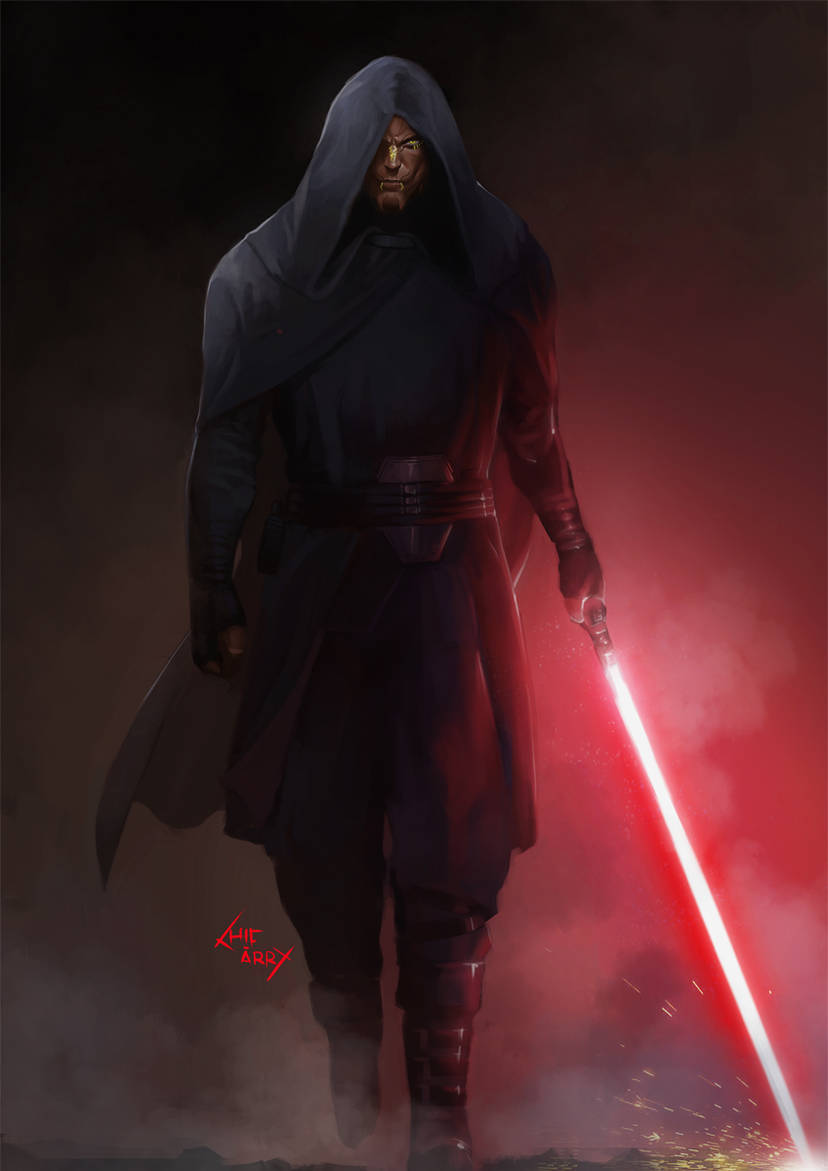
runil_arvanis_by_hifarry_deh2i2j-414w-2x.jpg
OUT OF CHARACTER INFORMATION
  • Intent: [ State why you are making this submission and what purpose it will fulfill in RP. ]
  • Image Credit: [ Provide credit to the original artist of the images in your submission. Link to the web page where it can be found and state the name of the original artist if possible. Each image used must be credited. Use TinyEye, Google Image Search, or the Image Credit FAQ to help.]
  • Role: Kas-Kissai of the Shikkari
  • Permissions: [Please link any Marketplace purchase or similar approvals to use other Writers’ content as part of this submission.]
  • Links: [ Provide links to any relevant threads, characters, companies, locations, etc here. Canon or otherwise. Especially obscure references, or events important to the submission.]
PHYSICAL INFORMATION
  • Age: 56
  • Force Sensitivity: Master
  • Species: Sith Pureblood - Kissai Caste
  • Appearance: [ Describe the NPC. Height and build? Any distinguishing marks? Do they show their age? What do they usually wear? ]
SOCIAL INFORMATION
  • Name: Avaroch Golgari; the Kas-Kissai
  • Loyalties: The Kainate
  • Wealth: [ How wealthy are they? Where does that wealth come from? Are they stakeholders in existing corporations? If so, link to them. ]
  • Notable Possessions: [ Describe or link any notable possessions they might own. Please link any relevant factory submissions or uncommon canon links. ]
  • Skills: [ What skills does this NPC have? Are they a pilot, a farmer, a mechanic? Do they paint or knit in their free time? For Force users if they have any special abilities that are rare list them here. Be reasonable. ]
  • Languages: [ What languages do they know? For example, it's very common to know Basic and Huttese, and many droids know binary droidspeak. Please provide links for any unusual languages. ]
  • Personality: [ Describe the NPC’s personality. Acerbic? Friendly? Ditzy? Annoyingly calm and superior? What about mannerisms or habits? ]
COMBAT INFORMATION
  • Weapon of Choice: [ Military blaster rifle? Toy lightsaber? Bioweapons? Wits? Charm? The Force? Please provide links to any relevant factory submissions or uncommon canon links. ]
  • Combat Function: [ Combat is difficult to avoid -- after all, this is Chaos. Should your NPC wind up in combat, what would they be good at? How would they work alongside you, or would they be a liability? Remember: An NPC is weaker than a PC of an equivalent level, and will not match them in power, skills, or abilities. ]
  • Force Abilities (Force Users Only): [If your NPC is a Force User, please list their Force abilities, especially unusual or rare ones.]
Strengths:
  • [ Provide, in list format, some strengths of this submission. 2 recommended. ]
Weaknesses:
  • [ Provide, in list format, some weaknesses of this submission. 2 recommended. ]
HISTORICAL INFORMATION
[ Include a description of the NPC's history here. ]


Last edited:


NnG91VZ.png

71yNyUW.png

  • Intent: To create a Kainate exclusive synthetic dark side conductor crystal used across advanced reactors, weapon systems, sensor arrays, and ritual technological devices, serving as a foundational material for future Sith technology submissions.
  • Image Source:
  • Canon Link: N/A
  • Permissions: N/A
  • Primary Source: N/A
YsH8NAM.png

  • Manufacturer:
  • Affiliation:
  • Market Status: Closed-Market
  • Model: Noctyrium Crystal
  • Modularity: Yes - Crystal clusters may be cut, seeded, tuned, faceted, etched, socketed into different housings, or grown to suit reactor cores, weapon focusing chambers, sensor vanes, relay matrices, or ritual circuitry.
  • Production: Limited | Minor
  • Material:
    • Artificial Kyber
    • Alchemized Mineral Seed Substrate
    • Trace Dark Side Reactive Impurities
    • Ritual-Grown Crystalline Veins
jMIf66P.png

  • Artificial Dark Side Conductor: Noctyrium is a laboratory-grown kyber derivative cultivated through Sith alchemy and Shadow Mind crystal-engineering, designed to channel hostile and dark-aligned energies with high efficiency.
  • Energy Amplification Matrix: The crystal intensifies energy moving through it, allowing weapon systems, reactor feeds, and focused emitters to achieve far greater output than all conventional conductor crystals of similar size.
  • Dark Side Resonance: Noctyrium becomes more efficient when exposed to pain, rage, fear, sacrifice, or other strong dark side stimuli, making it highly desirable in Sith war engines and ritual-powered systems.
  • Multi-System Utility: Suitable for use in reactors, beam-focusing assemblies, sensor matrices, ritual engines, communications relays, and specialized computing systems.
  • Facet-Tuning Potential: Individual crystals may be cut and etched to favor certain applications, such as stable conduction, violent discharge, pulse harmonization, or perception enhancement.
  • Ritual Growth Cultivation: Rather than being mined whole, Noctyrium is grown in controlled crucibles under alchemical pressure, allowing the Kainate to shape purity, instability, and resonance profiles during cultivation.
  • Force-Reactive Lattice: The crystal subtly reacts to the presence of Force energy, allowing it to function as both a power conductor and a sensitive medium in specialized detection systems.
  • Compact Yield Efficiency: Small amounts of Noctyrium can produce output disproportionate to their size, making it useful in systems where space is limited but performance demands remain high.
h3KdqR9.png

  • Excellent Dark Energy Conduction: Especially effective at carrying dark-aligned, corrupted, or ritual-generated energy through technological systems.
  • High Output Amplification: Improves the intensity and responsiveness of weapons, reactors, and energized components without requiring massive crystal volume.
  • Versatile Across Technologies: Can be adapted for starship, station, weapon, sensor, and laboratory applications.
  • Synergistic with Sith Systems: Performs best when integrated into alchemical, Force-reactive, or pain-fed Kainate technologies.
  • Controlled Artificial Growth: Because it is cultivated rather than naturally harvested, Shadow Mind can produce crystals with specific desired traits and application profiles.
  • Strong Focusing Properties: Particularly useful for beam collimation, energy shaping, and multi-stage reactor flow regulation.
QF94b2S.png

  • Force Nullification: While under Force Nullification, Noctyrium loses much of its exotic resonance and functions only as a reduced efficiency conductor crystal. It still outperforms most of the galactic market, it loses its supernatural edge.
  • Volatile Under Overload: If improperly tuned or pushed beyond design limits, the crystal may crack, arc, vent unstable energy, or catastrophically rupture nearby systems.
  • Dark Side Dependency: It performs best when fed or surrounded by dark-aligned energies; in neutral or light-aligned systems it is less efficient and more difficult to stabilize.
  • Complex Cultivation Requirements: Noctyrium cannot be cheaply mass-produced; its growth demands ritual precision, rare reagents, and highly controlled Shadow Mind facilities.
  • Corruption Risk: Systems built too heavily around Noctyrium may gradually develop hostile feedback patterns, emotional resonance anomalies, or unstable behavior if poorly maintained.
G6hsfzt.png


Noctyrium Crystal is one of Shadow Mind's most valuable synthetic submaterials conceived. A deliberately engineered kyber crystal grown not for lightsabers or ceremonial relics, but for industry, war, and domination. Where natural kyber resonates with the Force in ways that can be harmonious, intuitive, or spiritual, Noctyrium is cultivated toward harsher ends. It is seeded within alchemical growth crucibles, exposed to pressure, mineral catalysts, and controlled ritual saturation until a blackened crystal begins to emerge. Within that crystal, veins of deep crimson or violet radiance slowly form like trapped lightning in stone. By the time the crystal is mature, it has ceased to behave like a mere mineral. It becomes a hostile conductor medium, eager to seize, intensify, and redirect power passing through it.

The Kainate values Noctyrium not because it replaces kyber in all roles, but because it fills a very different niche. It is an industrial war crystal, suited to systems that demand amplification, aggression, and dark side compatibility. In reactor engineering, Noctyrium can serve as a regulating conductor node or amplification core, increasing the potency of energized flow through compact chambers and helping power dense, sophisticated Kainate technologies that would otherwise require larger and more conventional infrastructure. In weapon systems, it is highly prized in beam-focusing arrays, pulse harmonizers, emitter vanes, and charging relays, where its lattice can tighten, intensify, or destabilize outgoing energy according to how it is cut and tuned. Its power output outstrips previously used materials by the Kainate. In sensor technology, specially faceted Noctyrium clusters can react to Force disturbances, fear signatures, ritual emissions, and energetic anomalies that ordinary sensor crystals might miss, making it especially useful in Sith detection suites and occult battlefield surveillance tools.

One of Noctyrium's defining traits is that it responds favorably to dark side saturation. Systems using the crystal often perform with unnerving sharpness during combat, sacrifice rituals, or periods of heightened emotional violence. Fear, suffering, rage, and domination do not merely surround the crystal as thematic decoration; they measurably improve how efficiently its lattice resonates. This makes Noctyrium ideal for integration into Kainate warships, laboratories, execution chambers, ritual engines, and command infrastructure, where the atmosphere itself can nourish the material's function. That advantage, however, is not without cost. The crystal's amplified conduction comes with corresponding instability. When misaligned, overloaded, or forced to operate outside its ideal resonance conditions, Noctyrium can produce violent surges, fracture events, and cascading system corruption. It demands precise tuning, disciplined engineering, and constant respect from those who work with it.

Because of these properties, Noctyrium Crystal is not a consumer material and never will be. It is a closed-market strategic resource controlled by Shadow Mind and distributed only into trusted Kainate programs. Every cluster is cultivated for purpose. Some are grown for stable reactor performance. Some are honed for beam focusing. Others are bred for sensory interpretation or ritual circuitry. This makes the material less a singular crystal type and more an evolving family of related conductor-growths, all sharing the same dark synthetic ancestry. Over time, Noctyrium has become one of the Kainate's foundational hidden advantages: a sinister counterpart to more familiar galactic power crystals, and a cornerstone material upon which future generations of Sith war technology can be built.

 
Last edited:


GIWf9QF.png

71yNyUW.png

  • Intent: To create a sentient, Sithspawn aquatic species that serves as the Kainate's loyal "sea devils", coastal enforcers, deep-ocean hunters, and a dark cult society that worships Darth Prazutis as a living god and polices the waters of Dromund Kaas and the Tof Exclusion Zone.
  • Image Credit:
  • Canon: N/A
  • Permissions: N/A
  • Links: N/A
P1sM4nb.png

  • Name: Zhaqir Deepborn (Singular: Zhaqir, Plural: Zhaqiri. Basic epithets include "Deeptide Devils", "Sea-Wraiths", "Tide Fiends", or "Prazutis' Drowned.")
  • Designation:
    • Sentient
  • Origins:
    • Tof Exclusionary Zone - Abyssal Kainate Lab Facilities overseen by Darth Prazutis
    • Secondary breeding and holding sites on Dromund Kaas and select Kainate-controlled worlds
  • Average Lifespan:
    • 70-90 Galactic Standard Years
    • 120-200 By High Caste Priest and Warlord Broods
  • Estimated Population: Scattered - Restricted to the Tof Exclusionary Zone, Dromund Kaas, and select Kainate worlds.
  • Description: The Zhaqiri are a lithe, predatory, amphibious Sithspawn people: saurian-piscine silhouettes with finned crests, scaled hides, and hooked talons made for tearing flesh and coral alike. Their eyes burn with amber or abyssal yellow, and their jaws bristle with needle teeth. On campaign they wear ritualized shell-plate and blacksteel scale, bearing barbed tridents and tide-blades etched in Kainate sigils. To coastal populations they are known only as "Dreadtide Devils"—nightmare raiders that emerge from storm-torn surf beneath blood-red lightning, preceded by the sound of horn-shells and the shriek of enslaved beasts.
PEcthiM.png

  • Breathes: Type I Atmosphere and Water (Dual gill-lung system; Fully amphibious but physiologically optimized for aquatic environments)
  • Average Height of Adults:
    • 1.9–2.3 meters (Males & war-caste)
    • 1.7–2.1 meters (Females & priest-caste; often more lightly built)
  • Average Length of Adults: N/A (Digitigrade humanoids with finned tails; Overall body length, 2.8-3.2m including tail)
  • Skin Color:
    • Deep sea-green, slate blue, dark teal, black-green; often mottled or striped. Older individuals accumulate pale scar-lines and alchemical inking in crimson or obsidian tones.
  • Hair Color: N/A Instead fin-crests and spines in hues of bone, coral red, black, or sickly yellow.
  • Distinctions:
    • Amphibious, digitigrade, powerfully muscled frames built for explosive bursts in water and agile movement on reefs and wet stone.
    • Webbed hands and feet with wicked talons; some war-castes have one arm terminating in a heavy, hooked killing claw (a deliberate alchemical mutation used for boarding and climbing) while the other retains more dexterous fingers for wielding weapons.
    • Prominent dorsal fin and lateral fin-webbing along forearms, calves, and jawline. These flares shift subtly with mood and are used for communication and intimidation.
    • Layered scale-plates over chest and shoulders; denser ridged plating along spine and shins, thinner scales on underbelly and throat.
    • Double-hinged jaws with several rows of small, recurved teeth designed to grab and shred; bite pressure sufficient to shear bone and light armor.
    • Nictitating membranes over the eyes for high-speed water movement; Capable of seeing in deep darkness with excellent low-light acuity.
    • Electro-receptive and pressure-sensitive pores along the snout, jaw, and forearms allowing them to "feel" heartbeats, motion, and electrical activity in the water.
    • Many high-caste individuals bear ritual bioluminescent markings along their crests, cheeks, and chest, Sith runes that glow dully red or violet during rites and when channeling the Dark Side.
  • Races: None (No recognized sub-races; minor variation in color, plate density, and length between individual bloodlines).
  • Force Sensitivity: All
h3KdqR9.png

  • Shock Infantry: Surfskinner Marauds are purpose-built for coastal assault and harbor warfare. They excel at emerging from surf, climbing through breakers and undertow, and hurling themselves onto beaches, piers, sea walls, and rig-cities. Their natural armor and brute strength allow them to shrug off small arms fire while they close to melee range.
  • Cliff & Hull Climbers: Their hooked primary limbs and powerful tails let them climb sheer surfaces slick with algae and spray. They can scale sea-facing bastions, cling to the sides of grounded ships or platforms, and even swarm up the hulls of low-flying transports that approach too close to the waterline.
  • Brute Melee Power: Up close, Surfskinners are devastating. Their claws and jaws can tear apart armored infantry, crush durasteel doors, and shred light vehicles or gun emplacements. Packs can quickly turn a defensive line into a churned mess of broken barricades and corpses.
  • Amphibious Endurance: They can operate underwater, in surf, and on land without significant loss of lethality. They are comfortable wading through waist-deep water, storm drains, flooded tunnels, and sea caves; defenders can't rely on "the sea side" being safer.
  • Conditioned Terror Engines: Surfskinners are not "mindless," but their semi-sentience is ruthlessly conditioned. They are imprinted from creation to view Kainate marks and handler signals as "pack alpha," and everything else as prey or obstacle. Their appearance and attack methods, erupting from waves, dragging screaming defenders under, scaling walls in chittering packs, are designed to break morale as much as bodies.
QF94b2S.png

  • Environmentally Dependent: Surfskinners are at their best in humid, coastal, or water-adjacent environments. Extended operations in arid climates, deep inland, or on dry terrain sap their stamina, crack their armor plates, and can cause their gill structures to desiccate. A Surfskinner warband forced to fight far from water is still dangerous, but significantly diminished.
  • Force Light: Their bodies surge with the dark side of the force. A byproduct of their creation, these brutes have an inherent weakness to Force Light wielded by especially powerful wielders.
  • Limited Ranged Capability: Surfskinners can throw debris, javelin-like spears, or use captured weapons clumsily, but they are built for close-quarters slaughter, not ranged firepower. Units that maintain distance and employ heavy, disciplined ranged fire or artillery can bleed them badly before they make contact.
  • Low Strategic Intelligence: They possess pack cunning and can execute simple flanking maneuvers or follow beacon signals, but Surfskinners lack higher strategic reasoning. Without a Sith, Augur, Graug war-leader, or Kainate command element directing them, they tend to follow their instincts, pursuing the nearest prey, overcommitting to bloody brawls, and sometimes ignoring key objectives in favor of slaughter.
7mQq9PS.png

  • Diet: Carnivore.
    • Primary food sources: coastal fauna, reef megafauna, ship crews, prisoners, battlefield carrion.
    • They will readily consume raw, rotting, or partially burned meat. In emergencies, they can cannibalize fallen Surfskinners or other Sithspawn. Non-organic debris is generally spat out, though small amounts are tolerated.
  • Communication:
    • Guttural roars, clicks, and grinding hisses transmitted through air and water.
    • Body language: Crest flares, tail lash, claw posture, posture shifts.
    • They understand simple command-signs, vox-tones, and alchemical "whistles" broadcast by handler devices but cannot speak structured languages.
  • Technology Level: None. They do not invent or construct, though they sometimes use crude tools, shields, or scavenged weapons when conditioned or imprinted to do so.
  • Religion/Beliefs: None. They do exhibit ritualized behavior imprinted by the Kainate. Crowding beneath certain banners, reacting to specific sigils, and "presenting" kills at designated mustering points.
  • General Behavior:
    • Pack Structure: Surfskinners travel and fight in warbands. A dominant specimen, often the largest or most heavily plated, acts as pack alpha, reinforced by handler conditioning. Subordinates jostle and posture, but direct kills between Surfskinners are discouraged.
    • Hunting Style: They prefer to approach underwater, using the surf and spray to conceal their advance. On signal, they erupt from the waves in a sudden rush, racing up beaches, climbing walls, and smashing into defensive lines. In built-up harbor zones, they flood through culverts, storm drains, docking pits, and collapsed sea-gates in howling waves.
    • Interaction with Other Kainate Forces: Surfskinners are usually deployed ahead of or alongside Graug and Immortal Legion amphibious units. Legionnaires clear fire lanes and objective points; Surfskinners crack the initial shell, guns, walls, bunkers. They show instinctive deference to heavily armored Sith and designated handler units, usually avoiding them in their killing frenzy.
    • Rest & Territory: Between engagements, Surfskinners prefer submerged lairs: drowned sea caves, flooded bunkers, rig under-structures, or trench-side pens. They often cluster in semi-submerged "heaps", sleeping in tangled piles of armor, chains, and corpses.
NimTr8E.png


When the Kainate took Tof, they did not simply slaughter its people and strip its fortresses. They began the slow, methodical work of rewriting the planet's ecology and war-landscape to serve Sith purposes. Tof's reefs, once the source of food, trade, and superstition, became raw material.

Tof's coastal zones crawled with hardy reef-dwelling megafauna: colossal crustaceans, armored eels, amphibious scavengers that climbed rocks and wrecks during storms. In the years following the conquest, Darth Prazutis ordered these environments to be catalogued, harvested, and repurposed. Reef-harvesting platforms were established, not for food, but for flesh and bone.

Within trench forges and coastal biolabs, Kainate alchemists began grafting reef predators to humanoid war-stock and beast-templates supplied by Graug and Sith bestiaries. Early test subjects either drowned in air, suffocated in water, or tore themselves apart in frenzies of pain. Entire pens had to be purged when unstable broods turned on handlers, Legion guards, and even Blackwake Leviathans in mindless rage.

Refinement came in layers:

  • Phase I: Stabilizing the gill-lung system so the hybrids could transition smoothly between sea and shore.
  • Phase II: Reinforcing skeletal structures so they could withstand repeated surf impact, climbing stress, and artillery concussion without collapsing.
  • Phase III: Conditioning, burning the concepts of "surf", "wall", "prey," and Kainate heraldry into their emergent minds via pain, reward, and ritual.
The first successful Surfskinner warband was unleashed on a cluster of surviving Tof harbor-forts and rig-towns. Witness accounts (those few who lived long enough to be interrogated) spoke of the sea going suddenly white with spray and churn, then bodies exploding upward from the foam, black-armored shapes clawing their way up sea walls, yanking defenders from parapets, and dragging screaming Tof off the ramparts into boiling water.


Once Prazutis and his generals were satisfied, Surfskinmer production was integrated into the broader Tof Exclusion Zone doctrine. Beachheads designated for immediate annihilation or terror operations received Surfskinner "first waves" ahead of Legionnaire landings. Rig-cities and resource platforms along the Blackwake Runs maintained submerged pens where Surfskinners could be loosed against saboteurs, raiders, or would-be liberators.

Over time, the role of Surfskinners expanded. On Dromund Kaas and other Kainate worlds rich in coastal industry, small warbands were kept as organic coastal artillery, deployed against pirate enclaves, insurgent harbor cells, or enemy amphibious landings. Training cadres refined handler methods, teaching specialized Kainate officers and Augurs how to direct Surfskinners without losing control.

Sith and Graug war-leaders came to appreciate Surfskinners not just for their raw power, but for their psychological impact.


Soldiers who survive a Surfskinner assault rarely forget it. The sound of claws on wet stone, the feel of the ground shaking as hulks drag themselves out of the tide, the sight of comrades vanishing backward over a parapet with hooks in their armor, pulled into red-streaked waves.

In Kainate doctrine, Surfskinner Marauds represent a simple, brutal statement:

Even the water hates you now.

The beaches, once lifelines for Tof raiders and proud harbors, have been claimed by something that serves only the Shadow Hand's will. Where the surf breaks white, the Sith can make it run black, and from that blackness, the Marauds come.


Last edited:


mpspJcZ.png

71yNyUW.png

  • Intent: To create a Kainate exclusive, Sith engineered modular hangar architecture for use aboard Kainate warships, stations, and major installations, combining state-of-the-art launch and recovery infrastructure with Shadow Mind automation, dark side engineering, and ritualized military doctrine.
  • Image Source:
  • Canon Link: N/A
  • Permissions: N/A
  • Primary Source: N/A
YsH8NAM.png

  • Manufacturer:
  • Affiliation:
  • Market Status: Closed-Market
  • Model: Vharokh Abyssal Hangar Mk. I
  • Modularity: Yes - The Vharokh pattern is fully modular and scalable, composed of standardized launch nave sections, maintenance cloisters, rearmament galleries, storage spines, and command/sortie control nodes. Bay segments may be scaled upward or downward for corvettes, frigates, destroyers, carriers, fortresses, or starfighter bastions without redesigning the core architecture.
  • Production: Limited
  • Material:
jMIf66P.png

  • Modular Architecture: The Vharokh Hangar is built around a central launch nave flanked by interchangeable service and support modules, allowing the system to be scaled from compact escort hangars to immense carrier-basilicas aboard Kainate capitals. Standardized hardpoints permit attachment of launch bays, recovery aisles, maintenance cloisters, munitions vaults, drone galleries, pilot ready cells, cargo lifts, and heavy fighter cradles without altering the core structural doctrine. Each segment contains sealed life-support, power, and data couplings, allowing damaged or contaminated sections to be isolated while the rest of the hangar continues to function.
  • Abyssal Launch Nave: The main flight deck is designed as a ritualized launch-cathedral, a long, high-ceilinged sortie chamber where craft are staged in disciplined rows beneath crimson guidance luminants and Blackstone alignment pylons. The nave includes retractable engine-blast baffles, reinforced launch strips, anti-skid mag-lock zones, and synchronized guidance arrays that allow rapid launch sequencing even under combat stress. The bay's geometry is designed to keep launch lanes visually clear, doctrinally ordered, and psychologically imposing, so every scramble feels less like an evacuation and more like a rite of war.
  • Shadow Mind Sortie Orchestration Node: Right at the heart of the hangar sits a dedicated command nexus tied to Shadow Mind tactical logic. This oversight node tracks deck readiness, fuel state, munition counts, hull integrity, pilot assignment, launch order, and recovery priorities in real time. It can automatically reorder scramble waves, route damaged craft to the correct maintenance cloister, divert munitions to priority squadrons, and adjust deck lighting, tractor recovery, and internal blast shielding based on changing battle conditions. The result is a hangar that thinks like a battlefield controller rather than a passive storage space.
  • Precision Tractor Recovery Grid: The hangar uses a layered tractor recovery system composed of approach-lock projectors, stabilizing guide fields, and final arrestor tractors embedded in the bay mouth and internal ceiling architecture. Returning starfighters may be seized, slowed, aligned, and drawn into designated landing lanes with far greater precision than conventional recovery systems, reducing collision risk and improving damaged craft retrieval. Even unstable or partially disabled fighters may be hauled to safety and shunted directly toward triage berths or repair cloisters.
  • Catapult Pressor Launch Array: Integrated pressor catapults line the primary launch avenues, allowing Kainate craft to be thrown clear of the hangar at high velocity before full thrust bloom. This improves sortie tempo, reduces congestion near the aperture, and allows heavier strikecraft to launch under conditions where normal takeoff would slow deck flow. In larger bays, multiple launch lanes may fire in staggered rhythm, creating a predatory, wave-based deployment pattern suited to Shadow Armada doctrine.
  • Retractable Blast Veil and Emergency Arrest Systems: To protect deck crews and parked craft, the Vharokh includes retractable engine-blast shields, heat-resistant baffle walls, and emergency arrestor systems. If tractor recovery fails, crash arrest grids and mag-catch nets can deploy to absorb or redirect incoming craft. These systems are not meant to replace proper flight discipline, but they allow the hangar to recover damaged vessels and survive high-tempo wartime use without devolving into operational chaos.
  • Maintenance Cloisters and Refit Galleries: Along the flanks of the hangar are dedicated service chambers where craft are repaired, rearmed, refueled, and sanctified between sorties. Each cloister includes articulated gantries, retractable service arms, munitions feeds, diagnostic pylons, and auto-servitor docks. Larger variants include heavy refit galleries for bombers, gunships, and elite strikecraft. These areas are designed for simultaneous work cycles, allowing damaged craft to be stabilized, assessed, and returned to operational readiness with minimal delay.
  • Alchemical Reclamation and Sanctification Stations: Where other navies merely repair hulls, the Kainate also restores doctrine and resonance. Select bays include alchemical sanctification stations where armor scoring, ritual sigils, sensor shrouds, and Sith-reactive systems may be renewed between sorties. Corrupted alloys may be re-tempered, ward matrices re-inscribed, and fear-projecting or perception-warping subsystems re-attuned. This makes the hangar not merely a technical support space, but a site where war machines are spiritually re-consecrated.
  • Automated Munitions and Fuel Spine: A dedicated internal logistics spine runs beneath and behind the launch deck, carrying missiles, bombs, power cells, reactor cartridges, fuel compounds, spare assemblies, and consumables directly to the required bay. These lines are armored, pressure-sealed, and routed through blast-isolation gates to reduce catastrophic chain-reaction risk. Shadow Mind logic tracks expenditure in real time and can pre-stage reload cycles based on projected mission waves before pilots even land.
  • Pilot Ready Cells and Sortie Procession Galleries: The Vharokh contains ready rooms, arming galleries, and embarkation corridors designed around rapid and ordered deployment. Pilots and ground crews are processed through dedicated movement lanes that minimize interference with maintenance operations and cargo flow. In larger hangars, this becomes almost liturgical: pilots move through crimson-lit procession galleries, receive mission overlays, pass through weapon and armor lock stations, and enter their craft in a disciplined flow that reflects Kainate military culture.
  • Atmospheric Containment and Catastrophic Isolation: The hangar uses a reinforced atmospheric retention field backed by layered emergency shutters and Ashen Seal pressure systems. Should the field collapse, segmented blast doors and pressure membranes can seal off launch sections with extreme speed, preserving the rest of the deck and preventing a total venting event. This means one compromised launch mouth does not automatically doom all bay personnel or grounded craft.
  • Boarding-Denial Security Doctrine: The Kainate understands that hangars are one of the most likely vectors for hostile boarding. To answer this, the Vharokh incorporates concealed turret recesses, internal pressor/tractor denial fields, security blast screens, biometric and Sith-attuned access architecture, and corridor lockdown systems tied to the bay perimeter. Select variants also employ painwave emitters, Xal'Vorath-linked trauma lockdowns, and security servitors to turn a compromised hangar into a kill chamber rather than a breach point.
  • Multi-Level Carrier Configuration: Larger Vharokh variants may be built in stacked or tiered configurations. Lower decks handle storage, refit, reserve craft, and munitions buffering, while upper or central decks handle sortie flow, launch, and immediate recovery. This permits sustained operational tempo without cluttering the main deck with every stage of logistics at once. On supercarriers and stations, these multi-level basilicas can function almost like self-contained starfighter fortresses.
  • Ritual-Mechanical Environmental Design: The Vharokh is lit and shaped to serve doctrine. Crimson luminants guide deck traffic and maintain visual clarity for Kainate personnel while creating a hellish, oppressive atmosphere for outsiders. Low harmonic emitter arrays help steady Kainate crews during mass launch cycles, while scent and airflow systems scrub fuel panic, ion haze, and battlefield residue from control zones. In elite variants, Blackstone control pylons subtly reinforce discipline and readiness, making the hangar feel less like a garage and more like an extension of Sith will.
h3KdqR9.png

  • State-of-the-Art Launch and Recovery: The Vharokh combines precision tractor recovery, pressor-assisted launch, reinforced blast protection, and Shadow Mind sortie control into a best-in-class operational ecosystem, allowing faster, safer, and more disciplined fighter deployment than conventional hangars.
  • Exceptional Modularity: Its architecture is inherently scalable, allowing the same doctrinal hangar pattern to be deployed from small warship bays to vast carrier decks without sacrificing function or identity.
  • High Degree of Automation: Munitions flow, deck handling, launch sequencing, recovery routing, and maintenance staging are heavily automated, reducing crew fatigue and allowing the bay to continue functioning under severe operational strain.
  • Integrated Maintenance and Refit Capacity: The hangar is not merely a parking space; it is a full sortie sustainment complex with repair, rearmament, logistics, and sanctification systems built into the architecture.
  • Strong Boarding Resistance: Because the Kainate treats hangars as likely breach points, the Vharokh is heavily hardened against infiltration, sabotage, and hostile landings through layered internal defenses and rapid lockdown capability.
  • Doctrinal and Psychological Cohesion: The hangar reinforces Kainate order, presenting every launch as an organized act of dominance rather than a rushed support function.
QF94b2S.png

  • Complex Maintenance Burden: The Vharokh's advanced automated systems, ritual alignment nodes, and integrated logistics spines require constant upkeep by skilled Kainate technicians, servitors, and Shadow Mind overseers.
  • It Is Still a Hangar: For all its sophistication, the Vharokh exists to support and project other craft. Its value is enormous, but indirect; a ship that carries no strikecraft gains less from it than a true carrier-oriented platform.
  • Force Nullification: While under Force Nullification, the hangar's ritual-mechanical refinements and dark benefits lose much of their edge, leaving it as an incredibly advanced but more conventional modular bay.
G6hsfzt.png


The Vharokh Abyssal Hangar Mk. I is the Kainate's answer to one of the most underestimated truths of space warfare. Fleets are not won by guns alone, but by the speed, discipline, and survivability with which they launch, recover, and return their lesser predators to the fight. Under Darth Prazutis and the Shadow Mind, the Kainate rejected the notion of a hangar as a crude hollow carved into a hull. The Vharokh was instead conceived as a complete warfighting architecture, a modular launch-cathedral where sortie generation, recovery, logistics, maintenance, sanctification, and security exist as one integrated doctrine.

Structurally, the Vharokh is built around a scalable central launch nave flanked by support cloisters, logistics spines, and security arteries. Craft do not simply sit in storage waiting for orders. They are staged, fed, armed, inspected, and shepherded through a controlled procession toward war. Pressor arrays hurl them into battle with speed and order. Tractor grids seize them back from death when they return broken. Maintenance cloisters restore them. Refit galleries rebuild them. Sanctification stations re-inscribe the tools of war with fresh Sith purpose. Every movement is accounted for. Every lane has meaning. Every chamber exists to keep the cycle unbroken.

This is where the Vharokh surpasses more conventional modular bays. Its automation is not limited to cargo handling or basic support. It is tied into Shadow Mind tactical logic, allowing the bay itself to respond as a combat-aware organism. Launch order, deck readiness, recovery priorities, munitions routing, pilot staging, environmental control, and even breach response may all shift in real time based on unfolding battle conditions. In this sense, the Vharokh is less a hangar and more a nervous system for starfighter warfare, one that can continue projecting disciplined violence even while other ships would be choking on confusion.

Just as important is its role as a defensive structure. The Kainate understands what many navies learn too late: the hangar is one of the most likely points of intrusion. Thus the Vharokh is hardened as though it expects betrayal. Concealed turrets, lockdown fields, blast shutters, security doctrine, and boarding-denial geometries ensure that an enemy who reaches the launch deck has not found a weakness, but entered another battlefield prepared specifically for them. Even its atmosphere containment and segmented isolation systems reflect this philosophy. Damage one section, and the rest endure. Breach one lane, and the others still launch.

Yet perhaps the greatest difference lies in the atmosphere of the place. The Vharokh is unmistakably Kainate. Crimson luminants cut through black iron and ritual alloy. Deck crews move through ordered galleries like acolytes of war. Pilots do not scramble through a mechanic's pit; they advance through a basilica of deployment, through a machine-temple where the rites of launch are observed with absolute precision. In this, the Vharokh does more than house fighters. It teaches every soul within it the same lesson. War is not chaos. War is orchestration, and within the Kainate, orchestration belongs to the Sith.


Last edited:


Last edited:


m7fov2N.jpeg

71yNyUW.png

  • Intent: To forge a pair of abyssal gauntlets for Darth Prazutis, built to enhance his sorcery, physical supremacy, and connection to the Dark Side.
  • Image Source:
  • Canon Link: N/A
  • Permissions: N/A
  • Primary Source: N/A
YsH8NAM.png

Bs3fC05.png

  • Classification: Multipurpose / Force-Amplifying Gauntlets
  • Weight: Heavy
  • Resistances:
    • Energy: Extreme
    • Kinetic: Extreme
    • Lightsabers: Extreme
    • Sonic: Low
    • EMP/Ion: Average
    • Elemental: High
    • Force-Based Attacks: Very High
    • Force Light/Purification: Very High
jMIf66P.png

  • Special Features:
    • Sorcery Amplification Channels: Intricate veins of Blood-Forged Aurodium and Sith Rune-Inscribed Blackstone run throughout the gauntlets, forming an alchemical lattice that serves as a sorcerous circuit. These conduits channel the raw flow of the Dark Side directly into Prazutis' body, drastically amplifying the potency, range, and casting speed of his Sith sorcery. Even complex rituals that would normally require minutes of preparation can be invoked with mere gestures, their power intensified by the abyssal matrix embedded within the gauntlets.
    • Ritual Anchoring Runes: Inlaid across the inner and outer gauntlet plates are ancient anchoring glyphs, drawn from forbidden Sith lexicons and engraved in sacrificial blood. These runes stabilize the casting of battlefield rituals under duress, allowing Prazutis to conduct longform curses, summoning's, or dark invocations without interruption, immune to disruption by chaos, pain, or psychic interference. The gauntlets act as a metaphysical anchor in the maelstrom, tethering Prazutis' will to the ritual space.
    • Force Shockwave Projectors: Integrated into the palms and knuckles are micro-forged impact chambers, alchemically linked to Prazutis' own Force energy. With a mere flick of his fingers or a clenched fist, he can unleash concussive waves of invisible, telekinetic devastation. These shockwaves can hurl squads, sunder walls, or pulverize lesser Force barriers, weaponizing gesture into annihilation. When enhanced with rage, the shockwave ripples with visible distortion and abyssal energy.
    • Claws of Abyssal Rend: Each gauntlet conceals retractable talons, razor-edged claws forged from honed Zîrkaris and imbued with soul-piercing enchantments. When extended, these claws glow faintly with abyssal runes, allowing them to tear through even Force-reinforced armor and spiritual defenses. A single strike from these claws can not only rip flesh but also unravel Force bindings, making them a nightmare for lightsaber duelists and spirit-bound guardians alike.
    • Soulbrand Sigils: Hidden within the underside of each gauntlet are branding runes, sigils that, when activated, burn into the soul of a struck enemy. This mystical brand creates a metaphysical link, allowing Prazutis to torment the victim from any distance. The branded suffer recurring pain, hallucinations, and dread, unable to hide from his gaze, even across systems. The effect persists until removed by powerful Force healing or purification rituals, which require significant effort.
    • Reality-Warp Feedback Loops: Embedded Obsidian Voidshards interwoven through the gauntlets' structure continuously distort localized perception. In motion, they create mirage-like afterimages and illusory duplicates of Prazutis' arms and hands, delaying visual tracking and disorienting opponents. Under certain conditions, these distortions feed into the battlefield's emotional trauma, heightening the horror and confusion experienced by enemies.
h3KdqR9.png

  • Amplifies Sith Sorcery: Enhances ritual casting, curses, and Force-based spells dramatically. The gauntlets act as arcane accelerants, enabling Prazutis to cast devastating spells with minimal physical effort, overwhelming opponents with sheer magical tempo.
  • Dark Side Conduit: Direct interface with Prazutis' armor, helmet, and amulet for seamless power synergy. This interconnected nexus allows him to channel power from one artifact to another in real-time, creating a circuit of dark energy that magnifies every action he takes.
  • Force Shockwave Utility: Can deliver devastating shockwaves through Force-enhanced strikes or gestures. These eruptions can rupture enemy formations, break fortifications, and send even armored foes flying like ragdolls across the battlefield.
  • Perception Distortion: Voidshards make enemy targeting and parrying difficult by bending sight and sense. Attacks seem to arrive from multiple directions at once, confusing even seasoned Force users as their reflexes falter under warped stimuli.
  • Durability: Forged from Zîrkaris, the gauntlets resist all conventional damage, offering extreme protection, as well as a self-healing factor. Even direct strikes from lightsabers, alchemized blades, or explosive ordnance glance off the gauntlets like pebbles against a monolith.
h3KdqR9.png

  • Sonic Vulnerability: Weak against concentrated sonic attacks and resonance-based weapons.
  • Weight: Heavy construction reduces finesse and limits rapid, dexterous movement in fine manipulation.
  • Force Nullification: Intense voidstone fields or Ysalamiri nullify amplification properties and soulbrand effects.
G6hsfzt.png

Forged in the abyssal crucibles of Malsheem, where steel screams and shadows bleed, the Zarkûn-Karûz gauntlets were not crafted, they were conjured. Born of ritual, alchemy, and suffering, these gauntlets are not mere armor, they are living conduits of the Dark Side, forged to embody the apocalyptic will of Darth Prazutis. Every inch of their Zîrkaris surface pulses with dark resonance, etched with runes carved from the screams of Jedi prisoners, their spirits woven into the very metal.

The gauntlets link directly to Prazutis' other dread regalia, his sentient warplate Qâzjiin'vraal, his helm Xûl-Karzaan, and his amulet Karanazat, forming a nexus of supernatural synergy that elevates his every motion into an act of eldritch domination. Every flex of his fingers can invoke a tidal surge of dark power, every gesture a ritual in itself. The claws, retractable and forged with abyssal sorcery, can rip through armor, Force barriers, and even the veils between dimensions.

Voidshards embedded along the gauntlets' knuckles and forearms distort perception and warp reality, making Prazutis seem untouchable, unreal, a phantasm of fear and fury. These feedback loops create illusory doubles, twisted echoes of his form that confuse and terrify foes, while the Soulbrand Sigils allow him to mark victims across space and time, leaving their souls branded and burning in torment even from afar.

When the Dark Lord raises his hand clad in Zarkûn-Karûz, it is not just a gesture, it is a sentence. A curse. A declaration of annihilation.

They are weapons of finality.

They are fangs of the Void Reign.

And only he, the Shadow Hand, can wield them without being devoured by their hunger.


Last edited:


VjS60CA.jpeg

71yNyUW.png

  • Intent: To create the Lord Arbiter, the ultimate enforcer of Sith-Imperial law within the Kainate, a Sith Judge, Executioner, and absolute legal authority beneath Darth Prazutis.
  • Image Credit:
  • Role: Supreme legal authority and enforcer of the Sith Dyarchy's will, head of the Grand Tribunal, and the final arbiter of law within the Kainate.
  • Permissions: N/A
  • Links:
PEcthiM.png

  • Age: Unknown (Appears ageless, enhanced by Sith alchemy and forbidden rituals.)
  • Force Sensitivity: Yes, Master
  • Species: Near-Human (Sith Alchemically Enhanced)
  • Height: 2.3 meters (7’6”)
  • Weight: 420 kg (925 lbs, due to cybernetic and alchemical augmentations)
  • Appearance: The Lord Arbiter is a towering, gaunt figure clad in obsidian-black judicial war-armor, etched with Sith runes of enforcement and punishment. His mask, a featureless iron visage, has no eyes, only a burning crimson slit, resembling a single, eternal gaze of judgment. His robes are embroidered with High Sith script, detailing the Dark Lord’s decrees as if they were sacred law.

    Despite his humanoid form, his presence is wholly unnatural. His voice is a chorus of echoes, many voices speaking in sync, as if the Tribunal itself speaks through him. His skeletal, cybernetic fingers twitch with raw power, exuding a quiet, terrifying authority. The Arbiter’s presence is suffocating, a manifestation of absolute control. Those who stand before him often feel as though their thoughts are no longer their own, their secrets laid bare under his burning scrutiny.
Fc7eJsd.png

  • Name: Lord Arbiter [REDACTED] (His true name is erased from history. He is the law, not an individual.)
  • Titles: The Lord Arbiter, Master of the Grand Tribunal, The Final Judge, The Architect of Compliance, The Hand of Law, Breaker of Oaths, The Sentence Made Flesh
  • Loyalties:
  • Wealth: None. The Lord Arbiter does not own. He controls. The entire legal apparatus of the Kainate is under his dominion.
  • Notable Equipment:
    • The Seal of Dominion: A Sith-forged sigil of judgment, enabling the Arbiter to enact instant legal decrees with the Dark Lord’s authority. Those branded with the Seal suffer absolute servitude, immediate execution, or permanent exile from Sith law.
    • The Black Ledger: A bound tome of oaths, contracts, and Sith decrees, a record of every Sith-Imperial law enforced under the Grand Tribunal. The Ledger itself is sentient, reacting to violations with cold, arcane precision.
    • Sword of the Tribunal: A massive Sith executioner’s blade, infused with Dark Side law-binding magic, capable of annihilating traitors with a single cut, not just physically, but their very essence, erasing their presence from all Sith records.
    • The Tribunal Gavel: A Sith War Mace, capable of delivering judicial decrees through Force-bound telekinetic destruction. A single slam of the gavel can shatter bones, enforce compliance, or kill with pure judicial will.
  • Skills:
    • The Ultimate Enforcer of Sith Law
      • The Law Incarnate: The Lord Arbiter’s words are binding, his voice compels obedience through Sith sorcery, overriding lesser minds. No oath, contract, or deal can be broken in his presence.
      • Unshakable Authority: Fear is not his tool, certainty is. His authority is absolute, and through mental domination, he makes others believe it.
      • Memory Erasure & Thought Reconstruction: Those who defy Sith law in his presence may find their minds rewritten, their crimes purged from memory, or their very identity erased.
      • Sith Jurisprudence & Ritual Enforcement: Through the Black Ledger, he can summon Sith law into reality, binding criminals in runes of obedience or forcing lawbreakers into eternal servitude.
      • Master of Psychological & Information Warfare: The Tribunal knows all transgressions. The Lord Arbiter does not accuse without proof, he has already gathered it.
  • Languages:
    • Galactic Basic
    • High Sith (Legal and ritual dialects)
    • Ancient Sith
    • Ur-Kittât (The old script of the Dark Lords)
    • Binary & Cybernetic Code (He interacts directly with Sith enforcement AI)
  • Personality: The Lord Arbiter is not a man, he is an institution. His will is the Grand Tribunal’s will. He feels no personal ambition, only the execution of Sith law in absolute, immutable compliance with the Dyarchy’s decrees. He is merciless but fair, in the sense that fairness, to him, is obedience. His vision of justice is not morality, it is compliance. If the Dark Lord has ordered a genocide, then it is law. If the Dark Lord has declared treason, then all who stand against him are guilty by default. Unlike many Sith, he does not revel in cruelty for its own sake. He simply carries out what must be done. A warlord, a traitor, a civilian, all are equal beneath the word of the Dyarchy.
5OzpCap.png

  • Weapon of Choice:
    • Sword of the Tribunal (Execution Blade)
    • Tribunal Gavel (Sith War Mace)
    • Force Domination & Mental Warfare
  • Combat Function:
    • The Lord Arbiter does not duel, he ends conflicts before they begin.
    • His presence alone is enough to make most Sith hesitate, to doubt one’s legal standing is to already be guilty.
    • His strength lies in enforcement, judgment, and forced compliance, not personal bloodlust.
h3KdqR9.png

  • Absolute Authority: No Sith under the Dyarchy may defy him without consequence. His authority is the Dark Lord’s will.
  • Psychological Warfare Mastery: He does not need to fight when words can strip a person of their will to resist.
  • Unbreakable in Purpose: His resolve cannot be shaken. No Jedi mind trick, no deception, no bribery will alter his course.
QF94b2S.png

  • Not a Frontline Combatant: He is a judge, not a warlord. While powerful, he is not suited for frontline battle.
  • Bound by the Law He Enforces: The Lord Arbiter does not make laws, he enforces them. If the Dyarchy issues a decree, he must comply even if it destroys him.
  • His Authority Is Not Infinite: While he holds dominion over Sith law, he is still beneath the Dyarchy. Should Darth Prazutis or the Sith Dyarchy issue a command that nullifies his judgment, he must obey.
NimTr8E.png


If the Lord Arbiter had a true name it's long since been erased, he was not born; he was made. The Dark Lord of the Sith Darth Prazutis took a Sith Lord of exceptional legal acumen, true master of his profession and broke him, reforged him, and wove the law into his very being. The man's mind was burned clean of individual identity, his memories stripped, his body rebuilt, his purpose made singular. He was not a Sith Lord, not a warlord, he was an institution, a living extension of the Sith Dyarchy's command over law.

Under his watch, the Grand Tribunal operates with absolute authority, ensuring that all within the Kainate, Sith, soldier, or civilian, submit to the will of the Dyarchy. To defy the Lord Arbiter is to defy the law of the Kainate itself. And no one escapes the Tribunal.


Last edited:


29UAuwN.png


71yNyUW.png

  • Intent: To codify the official lightsaber style created and used by Darth Prazutis and Darth Carnifex, known as Dark Vaapad, a Kainate exclusive evolution of Form VII. This submission establishes Dark Vaapad as a formal combat doctrine with a defined philosophy, training method, tactical identity, and historical origin, so it can be referenced consistently in roleplay as the signature dueling style of both Sith.
  • Image Credit:
  • Canon: N/A
  • Permissions: N/A
  • Links: [ Provide links to any relevant threads, characters, companies, locations, etc here. Canon or otherwise. Especially obscure references, or events important to the submission.]
P1sM4nb.png

  • Holocron Name: The Dark Vaapad Holocron also referred to as: The Kainite Doctrine, The Storm of Dominion, The Devouring Current, The Black Spiral Catechism.
  • Alignment: Dark Side
  • Origin: Created jointly by Darth Carnifex and Darth Prazutis through prolonged combat study, ritual field-testing, and doctrinal refinement. Dark Vaapad draws from Juyo's raw ferocity and acknowledges Vaapad's historic framework, but it rejects Vaapad's central restraint. The "inner loop." Where Vaapad uses control to avoid corruption, Dark Vaapad assumes corruption is a tool, and that mastery means the Sith is never the victim of their own storm.
  • Affiliation:
  • Gatekeeper: The Twin Gatekeeper. A tall, armored silhouette whose outline constantly "shifts" like a heat mirage, one half bearing the brutal certainty of Carnifex, the other half the cold, evaluating stillness of Prazutis. Its "face" is never stable; it is a mask of stormlight, red sparks, and shadowed lenses. Not a teacher. A judge. Calm until the user shows hesitation, then merciless. It speaks like doctrine: short phrases, layered meanings, commandments disguised as lessons. It forces the user to demonstrate three things before it reveals deeper layers: will, dominance, and survival under pressure. It does not reward effort; it rewards outcome. Unworthy users are subjected to controlled psychic collapse, visions of defeat, humiliation, helplessness, and being consumed by their own rage until they either break or submit.
  • Description: A Sith holocron containing the formal doctrine of Dark Vaapad, the official lightsaber style of Darth Prazutis and Darth Carnifex. Dark Vaapad is a Kainate engineered evolution of Form VII that weaponizes inner darkness as an external, escalating storm. It does not rely on an opponent's darkness to function, though it can exploit it. It is fundamentally a doctrine of overwhelming inevitability. The practitioner becomes a destructive current that absorbs tempo, multiplies violence, crushes mental defenses, and ends duels through total positional and emotional domination.
DEFENSES
  • Accessibility:The holocron unlocks in layers.
    • First Layer: Opens to any Force sensitive who touches it.
    • Second Layer: Requires active dark side attunement.
    • Third Layer: Requires ritual imprinting (blood-mark, name-binding, or Sith meditative alignment) and the user must survive a gatekeeper "trial." This is deliberate: The holocron is meant to be tempting, but not safe.
  • Security:The holocron protects itself through:
    • Psychic backlash against unworthy minds
    • Emotional inversion (forcing terror, despair, or helplessness onto the user)
    • Combat hallucinations that simulate being hunted and overwhelmed
    • Rage-loop punishment the user experiences their own aggression as a consuming fire that turns inward.

      The gatekeeper can also "lock" knowledge permanently from a user who fails catastrophically, leaving them with only fragments.
CONTENT INFORMATION

What Dark Vaapad Is:
Dark Vaapad is a Sith combat doctrine and advanced Form VII variant that converts internal darkness into external escalation. Rather than suppressing rage or channeling it through a controlled loop, the practitioner weaponizes inner chaos as an engine of increasing violence, pressure, and dominance. The doctrine is built upon three fundamental pillars. The first is Entropy Escalation, the principle that every exchange within a duel must grow progressively worse for the opponent, increasing in intensity faster than they can adapt or recover. The second is Dominion Tempo, through which the practitioner seizes the rhythm of combat, disrupts pacing, and forces the opponent into a reactive state where they can no longer dictate the flow of battle. The third pillar is Devouring Pressure, wherein the practitioner's presence itself becomes a weapon, compressing the opponent's mind, spirit, and resolve until their guard inevitably fails.

Dark Vaapad is explicitly defined by what it rejects. It is not Vaapad's controlled "inner loop" that safely channels darkness without surrendering to it. It does not rely upon reflecting or mirroring an opponent's dark energy to function, nor does it depend upon the emotional state of the enemy. Likewise, it is not simply Juyo practiced with greater aggression or anger. Instead, Dark Vaapad represents structured brutality guided by deliberate design, engineered toward a single outcome: the total collapse of the opponent's defenses, will, and capacity to resist.

Core Combat Identity: The defining characteristic of Dark Vaapad is its ability to generate what practitioners describe as a vortex within the duel, a state of overwhelming pressure that manifests simultaneously on mechanical, psychological, and spiritual levels. Mechanically, the form attacks the structural integrity of an opponent's defense through spiraling attack sequences, torque-driven strikes, and chained angles that destabilize footwork, disrupt balance, and fracture guard positioning. These motions appear chaotic to observers but are in fact deliberately structured to dismantle defensive systems piece by piece.

Psychologically, Dark Vaapad overwhelms an opponent's decision-making capacity. Through relentless escalation and shifting tempo, the practitioner forces the enemy into a state where each choice appears worse than the last, gradually leading them toward error, hesitation, and eventual collapse. Against Jedi or other light-aligned combatants, the form also operates on a spiritual level, attacking hope, certainty, and composure. Moral conviction and emotional restraint are treated as defenses to be shattered, not respected, creating a form of combat that targets belief itself as a vulnerability.

Doctrine of the Storm: Within the holocron, Dark Vaapad is organized not as a collection of techniques but as a structured sequence of escalating combat states collectively known as the Doctrine of the Storm. These stages represent a progressive transformation of the duel from contest to domination.

The first stage, known as The Hook, focuses on tempo seizure. At this stage, practitioners employ abrupt angle shifts, rapid feints that convert instantly into impact, short-range torque strikes, and precise footwork designed to induce micro-stumbles and guard misalignment. The purpose of this phase is to steal initiative and force the opponent into reaction, denying them control over the engagement.

The second stage, The Spiral, transitions combat into a state of guard collapse. Here the practitioner unleashes whirling attack sequences that appear circular but are composed of layered diagonal vectors engineered to overload parries, punish retreating movement, compromise defensive structure, and force repeated tactical concessions. Defense itself becomes a source of damage as the opponent's attempts to protect themselves accelerate their own defeat.

The third stage, known as The Devouring Current, forms the doctrinal core of Dark Vaapad. Right at this level, every exchange is treated as fuel for escalation. Increased resistance from the opponent produces greater violence from the practitioner. Attempts to slow the duel are met with crushing pressure, while retreat is answered with relentless pursuit. The practitioner systematically eliminates all safe decisions, ensuring that every possible response leads closer to collapse.

The final stage, Dominion State, represents mastery of the doctrine. At this level the form transcends blade mechanics, transforming the practitioner's Force presence into a compressive weapon. Opponents experience decision paralysis, overwhelming dread, and a sensation described as spiritual suffocation, particularly among light-aligned duelists. Victory is often achieved before decisive physical strikes are delivered, as the opponent's will fails under the weight of the practitioner's dominance.

Named Techniques Stored in the Holocron: The holocron preserves a number of formalized combat expressions that embody the principles of Dark Vaapad. Among these is The Black Spiral Catechism, a chained sequence of rotational strikes and body turns intended to dismantle guard structure through continuous directional pressure. Entropy Surge represents a deliberate acceleration cycle in which short bursts of violent motion increase in speed and intensity beyond an opponent's ability to adapt. Sovereign Pressure is a Force-assisted technique that weaponizes presence rather than manipulating thought, eroding confidence and composure through sheer dominance. The Devouring Parry converts defense into immediate offense by shattering an opponent's rhythm rather than merely deflecting their strike. The doctrine concludes with the Storm-Crowned Finish, a relentless sequence of chained attacks executed until the opponent collapses, followed by a decisive and merciless final strike.

Training Method: The holocron preserves the Zambrano Training Ladder, a progression designed to forge practitioners capable of wielding the doctrine without being consumed by it. Training begins with Control Without Calm, requiring the practitioner to maintain function while emotionally elevated rather than seeking serenity. This is followed by Violence With Precision, which demands technical accuracy under conditions of intense aggression. The third stage, Predatory Tempo, teaches the practitioner to impose rhythm upon the duel and deny initiative to opponents. Escalation Mastery develops the ability to grow stronger as combat intensifies, while the final stage, Dominion State, cultivates the capacity to weaponize presence and achieve victory through psychological and spiritual pressure. Training methods include ritualized stress conditioning, multi-opponent combat scenarios, and deliberate cycles of failure designed to harden the practitioner's will and refine their control over destructive impulses.

Risks and Weaknesses: Dark Vaapad is an exceptionally lethal discipline but remains inherently dangerous to its users. Practitioners risk developing an obsession with escalation, potentially overcommitting to aggression and exposing themselves to calculated traps. Prolonged use may result in psychological degradation as the practitioner becomes increasingly dependent on violence as a source of stability. Some develop what instructors describe as storm addiction, a compulsion toward escalating conflict simply to sustain their sense of identity.

The doctrine also possesses situational limitations. Force Nullification significantly reduces its presence-based pressure and spiritual dominance. Highly disciplined duelists trained in precision forms such as Makashi may attempt to starve the storm by denying exchanges and refusing escalation. Likewise, opponents capable of resisting emotional engagement may prove resistant to the form's psychological collapse effects. The holocron emphasizes that Dark Vaapad is not invincible; it is overwhelming only when properly mastered and applied with disciplined intent.


NimTr8E.png


Dark Vaapad did not originate as a mere variation of an existing lightsaber form, nor was it conceived as a technical refinement of Juyo or Vaapad. Its beginnings lay instead in a shared philosophical realization between two Dark Lords of the Sith, Darth Carnifex and Darth Prazutis, who approached the nature of combat from different perspectives yet arrived at the same fundamental truth. Carnifex understood that fear and violence were not secondary effects of power but expressions of power itself when properly directed and unleashed. Prazutis, by contrast, recognized that victory in a duel was not decided solely by the blade, but by the opponent's perception of inevitability, the moment when resistance collapses beneath the certainty of defeat. From this convergence of philosophy emerged the foundation of Dark Vaapad. They did not seek to imitate Vaapad, nor to refine it. Rather, they sought to create something Vaapad itself would never permit: A system that did not restrain darkness, but embodied and mastered it.

The earliest phase of its development, later known as the First Forging, arose from what the two Sith identified as the central limitation of Vaapad: Its reliance on the "loop" the controlled channeling of dark emotion without surrendering to its corruption. While this mechanism was celebrated by its creators as a safeguard against the consuming nature of the dark side, Carnifex and Prazutis perceived it as a fundamental weakness. To them, the loop represented a restraint, a governor placed upon the engine of power, a cage that limited the practitioner's potential. Their early research was driven by a question that would ultimately define the doctrine: if darkness is inevitable, why pretend it can be safely borrowed and returned? Why not instead become the storm itself, and learn to master the consequences of that transformation? This philosophical departure marked the first true divergence from traditional Form VII and established the conceptual foundation upon which Dark Vaapad would be built.

The Second Forging emerged through relentless experimentation in live combat. The two Sith subjected their developing techniques to repeated trials against duelists who embodied the strengths of traditional lightsaber disciplines, masters of precision, defense, serenity, and restraint. Through these engagements they discovered a consistent and transformative insight: duels were rarely decided by technical superiority alone, but by control of tempo and the state of the opponent's mind. Carnifex refined the physical dimension of the doctrine, driving the body to failure through overwhelming force, relentless assault, and the systematic destruction of defensive structure. Prazutis, meanwhile, perfected the psychological dimension, engineering methods to collapse an opponent's resolve through pressure, inevitability, and spiritual suffocation. Dark Vaapad emerged from the fusion of these approaches, becoming simultaneously a blade doctrine designed to destroy guard structures and a pressure doctrine intended to erode and annihilate the opponent's will.

The Third Forging transformed this evolving method of combat into a coherent and repeatable system. What distinguished Dark Vaapad from mere brutality or unrestrained Juyo was the imposition of structure. Prazutis insisted that the style be codified as a formal doctrine, complete with defined escalation stages, finish conditions, training progressions, and a distinct tactical identity. Carnifex, however, ensured that this structure did not diminish their doctrine's ferocity, demanding that the form retain absolute brutality, rejecting assumptions of mercy, providing no safeguard for those too weak to survive its demands. Through the synthesis of these principles, the concept of the "storm" was formalized. Dark Vaapad became a system of escalation governed by deliberate intent, a philosophy of violence shaped by architecture rather than chaos, a discipline in which destruction itself was methodically engineered.

Once the doctrine reached stability, Carnifex and Prazutis encoded its teachings into a holocron not merely as a repository of knowledge, but as a selective weapon. The holocron's gatekeeper was designed to replicate the experience of being hunted by the doctrine itself, subjecting seekers to overwhelming pressure and psychological trial. Only those capable of enduring this ordeal were deemed worthy of the knowledge contained within. The artifact was subsequently secured within Kainate holdings and restricted to its creators, sanctioned Sith inheritors, and elite duelists selected for their ruthless potential and capacity for dominance.

In time, Dark Vaapad became recognized as the official lightsaber doctrine of the Eternal Dyarchy, embodying their shared philosophy and unified approach to combat. It stands not simply as a technique, but as a declaration of identity, a manifestation of domination, inevitability, and controlled destruction. Where other forms seek victory, Dark Vaapad seeks finality. It is not merely a method of combat, but a verdict delivered through the blade.


Last edited:

Users who are viewing this thread

Top Bottom