Well-Known Member



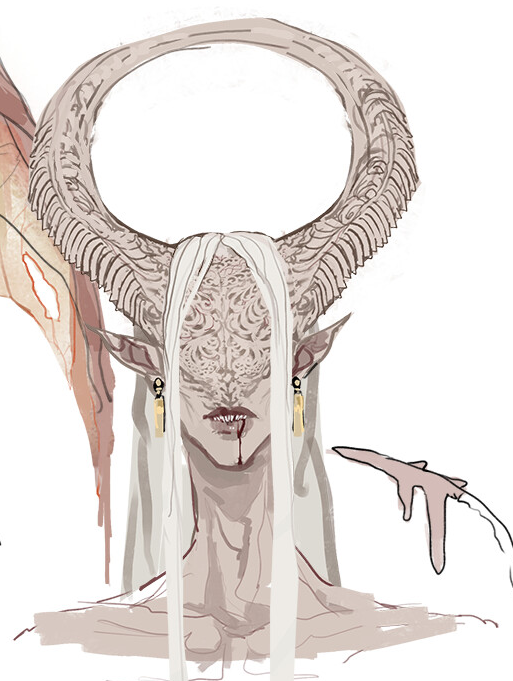
- Intent: To create a Sithspawn species for storytelling and roleplay.
- Image Credit: tzimisce
- Canon: N/A
- Permissions: Neuromesh (OM)
- Links: N/A
- Name: Loimisa Seseli - “Lesser Shadows”
- Designation: Sentient
- Origins: Dromund Kaas - Kainate Lab Facilities
- Average Lifespan: Variable
- Healthy Life Expectancy: ~500 GSY
- Healthy life expectancy assumes reasonably average health and few significant injuries or trauma.
- Estimated Population: Planetary
- Description: The Loimisa Seseli, translated to “Lesser Shadow” in Basic, are small-statured humanoid Sithspawn, typically standing three to four feet tall. Distinguished by their halo-shaped cranial horn, the Seseli are defined by their powerful senses, innate elemental affinities, tireless physical endurance, and semi-disposable nature. They serve the Kainate as alchemy-augmented killers, engineered for violence, sensory acuity, and expendability.
- Breathes: Type I
- Average Height of Adults:
- Male - 1.21 Meters
- Female - 1.01 Meters
- Average Length of Adults: N/A
- Skin Color:
- Common
- Red
- Purple
- Blue
- Green
- Orange
- Yellow
- Uncommon
- White
- Pink
- Orange
- Yellow
- Gray
- Black
- Rare
- Most Natural Human Skin Shades
- Common
- Hair Color:
- Common
- White
- Red
- Black
- Uncommon
- Blue
- Pink
- Green
- Orange
- Yellow
- Gray
- Rare
- Brown
- Blonde
- Brunette
- Common
- Distinctions: The Loimisa Seseli are small-statured humanoids, typically possessing red, light purple, green, or blue skin, with natural human skin and hair colors being almost unheard of among the species (with the exception of black and vibrant red hair shades). Of all the Seseli’s physical features, the halo-shaped cranial horn rooted toward the front of the parietal ridges and situated around and above their crowns is arguably their most distinct. These projections vary in size, texture, and curvature though are nevertheless present in virtually all individuals. In both males and females, a well-formed crown is considered to be a mark of beauty, with larger, more prominent crowns sometimes regarded as more attractive in spite of their impracticality within certain contexts. Naturally, individuals tend to take great care of their cranial horn and are generally quite conscious of it. Thus, body modifications frequently utilize the cranial horn as a canvas, typically encompassing rings, veils, jewelry, engraved patterns, and tattoos.
Seseli eyes are generally human-proportioned, but may be slightly larger depending on the individual. They exhibit a dark sclera, a brightly colored iris, and a dark pupil.
The differences between male and female Seseli mirror that of those found in human and most near-human species. Females are almost universally smaller than males, typically possessing broad hips and diminished muscle mass, in addition to having a curvilinear fat distribution and a more delicate bone structure. Body hair is extremely sparse, if not entirely nonexistent, and beards are almost unheard of across both sexes.
While virtually nonexistent, aged specimens can exist among the Seseli. Mirroring the marks exhibited by aged human and near-human individuals, aged Seseli may exhibit wrinkled skin, graying hair, along with the typical maladies of advanced age.
Seseli are capable of limited regeneration and can independently regrow lost digits (fingers, toes, etc.) and heal superficial and partial-thickness injuries. As a result, they generally do not scar. In addition, they are able to remain moderately capable even after sustaining a traumatic injury, albeit for only a very limited time. Of particular note, their bodies have the ability to inhibit blood loss during severe injury, where blood vessels at the affected area will twist, compress, and choke in on themselves.
Seseli have a hyper-efficient, ultra-engineered metabolism, which results in minimal waste products, significantly less than baseline humanoid norms. In addition, their body heat remains within normative humanoid ranges even with their circulatory system’s catalytic properties.
The Seseli generally require ~2 hours of deep sleep per 24-hour cycle. This may be taken in a single short period or broken into two shorter sessions. They may also require ~4 hours of low-sensory, waking rest, which is often spent in low-light environments to prevent neural fatigue.
Due to the mechanics of their reproduction, the Seseli have a sex ratio of 1 male for every 20-30 females.
Finally, Force-sensitive Seseli typically (but may not always) manifest a single elemental affinity. This is usually derived from Alter Environment. In this, a Seseli may exhibit a powerful, innate affinity, the most common of which are pyrokinesis, aerokinesis, cryokinesis, or electrokinesis. Individuals with elemental affinities may struggle with wielding others.
- Morphological and Physical Traits
- Five Digits on Hands and Feet
- Small Stature
- Dark Sclera Eyes
- Dark Indigo Blood
- Halo-Shaped Cranial Horn
- Elongated Pointed Ears
- Human Normative Nose
- Two Hearts
- Chronoceptive Corona
- The chronoceptive corona is a toroidal (halo-shaped) organ encircling the crown, composed of a dense, crystalline cartilaginous matrix interlaced with hyper-sensitive neural ganglia. A biological resonator attuned to the local fabric of spacetime, its function is to perceive two related phenomena: the lingering chronometric resonance of immediate past events (echoes), and the probabilistic tension of imminent future actions (shimmers).
- Structural Composition and Mechanism
- Resonant Matrix
- The core of the horn is a ring of piezoelectric organic crystal grown within a cartilage scaffold. This crystal naturally vibrates at a frequency that interacts with weak chrono-static fields manifested from the subtle imprints left on spacetime by kinetic energy and conscious intent.
- Temporal Filter Buffer
- Surrounding the crystal matrix is a viscous, active gel composed of piezoelectric polymers and suspended neuromesh filaments. Its primary function is to filter, queue, and temporally align the raw chronometric signals. The gel’s resonant properties dampens “static” (minor spacetime perturbations from ambient energy or distant events) before it reaches the neural interface. It also holds and prioritizes signals based on intensity and proximity, ensuring that the most immediate and relevant echoes/shimmers are processed first. However, the buffer’s most critical role is to deliver echo and shimmer data in perfect sync with the processed data from the other senses. This ensures that the Seseli knows exactly what to react to by keeping their perception of time coherent.
- Neural Interface - Oracular Ganglia
- The base of the corona connects directly to a dedicated brain region via the temporalis nerve complex. This neural pathway is optimized for ultra-rapid, subconscious processing, bypassing higher reasoning to deliver instinctual data. This pathway is heavily augmented by myelin-neuromesh sheathing, ensuring the lag between perceiving a shimmer and initiating a motor response is virtually zero.
- Resonant Matrix
- Sensory Modalities and Perceptual Output
- The Corona provides two distinct but intertwined data streams, perceived as overlays on the Seseli's standard sight and proprioception.
- Echo Perception (Retrospective)
- Trigger
- Any significant kinetic event (a footstep, a door closing, a thrown punch) or discharge of energy (a blaster bolt) creates a localized perturbation in spacetime.
- Perception
- This perturbation decays over 3-5 seconds. During this decay, the corona perceives it as a faint, semi-transparent after-image or "ghost" of the action. A person who just rounded a corner leaves a fading, translucent silhouette of their path. A recently fired blaster leaves a brief, shimmering line tracing its bolt's trajectory.
- Utility
- Allows for perfect tracking of recent movement, even through visual obstructions, by following the fading echo trail. It reveals what just happened out of direct sight.
- Trigger
- Shimmer Perception (Predictive-Probabilistic)
- Trigger
- In a tense, dynamic situation, the conscious or subconscious intent of a sentient being to act (to shoot, to swing, to dodge) creates a probability gradient in the immediate future.
- Perception
- The corona registers the building "tension" of the most likely imminent action. This is perceived as a flickering, faint pre-image or "shimmer" that typicallymanifests 0.5 to 1.5 seconds before the action physically begins. This is not a guaranteed future, but rather, the most statistically probable one based on current momentum, intent, and physiology.
- An opponent deciding to throw a right cross may manifest a faint, ghostly fist shimmer extending from their shoulder along the most likely path.
- A finger tightening on a trigger may produce a shimmer line along the barrel toward the most likely aiming point.
- The corona registers the building "tension" of the most likely imminent action. This is perceived as a flickering, faint pre-image or "shimmer" that typicallymanifests 0.5 to 1.5 seconds before the action physically begins. This is not a guaranteed future, but rather, the most statistically probable one based on current momentum, intent, and physiology.
- Utility
- Grants a seemingly preternatural ability to react to attacks. The Seseli can dodge the shimmer of an incoming action or attack, moving before their opponent's muscles have fully contracted. This makes them exceptionally difficult to hit in combat and allows for fluid, uninterrupted motion in dense traffic or hazardous environments.
- Trigger
- Tri-Spectral Faceted Ocular Array (TSFOA)
- The TSFOA is a passive system for full-spectrum perception. It is an ultra-efficient anatomical lattice that perpetually samples three distinct electromagnetic bands.
- Macro-Anatomy and Corneal Hive
- Facted Cornea
- The clear, domed cornea is composed of a honeycomb matrix of millions of hexagonal, translucent chitin-protein facets at the microscopic level. Each facet is a prism-lens hybrid, its precise curvature and refractive index subtly tuned by trace mineral deposits.
- UV-Favorable Facets (~33%)
- Facets with a slightly steeper curvature and lower refractive index, optimized to bend and focus near-ultraviolet wavelengths (300-400 nm).
- VIS-Favorable Facets (~34%)
- Facets with a standard curvature, transmitting and focusing the visible light spectrum (400-700 nm).
- IR-Favorable Facets (~33%)
- Flatter facets with a higher refractive index, designed to capture and focus longer-wavelength infrared light (700-1000 nm, into near-IR).
- UV-Favorable Facets (~33%)
- This mosaic is precisely regimented, ensuring an even distribution of each facet type across the entire visual field. The facets are fused seamlessly, presenting a smooth macroscopic surface.
- The clear, domed cornea is composed of a honeycomb matrix of millions of hexagonal, translucent chitin-protein facets at the microscopic level. Each facet is a prism-lens hybrid, its precise curvature and refractive index subtly tuned by trace mineral deposits.
- Facted Cornea
- Internal Structure and Photoreceptor Integration
- Behind the faceted cornea lies a unified, yet spectrally partitioned receptor system.
- The Unified Retina (Tri-Chromatic Lamina)
- The retina is a single layer containing three intermingled, specialized photoreceptor cell types. Their distribution mirrors the corneal facet map above them.
- Cyanocytes
- Cone-type cells packed with cyanopsin, sensitive to near-UV light.
- Erythro/Glauco/Chlorocytes
- Standard red, green, and blue cone cells for visible light.
- Thermocytes
- Rod-type cells containing thermopsin, a photopigment using organic semiconductors that react to infrared photons, translating them into neural signals as "thermal brightness."
- Cyanocytes
- The retina is a single layer containing three intermingled, specialized photoreceptor cell types. Their distribution mirrors the corneal facet map above them.
- The Pigment Layer and Dark Sclera
- Beneath the retina lies a non-reflective, light-absorbing melanin layer. Combined with the dark sclera, this eliminates internal light scatter and reflection. This is critical to prevent "spectral noise.” A UV photon focused toward a cyanocyte must not bounce and accidentally stimulate a thermocyte. This creates the eye's characteristic deep black appearance.
- Visual Processing and Perceptual Output
- The TSFOA creates one unified sensory stream from the moment light strikes the cornea.
- Mechanism
- A single point of light in the environment (e.g., a glowing coal) emits energy across multiple spectra (IR heat, VIS red light, perhaps faint UV from combustion). Each wavelength band is focused by its corresponding corneal facets onto its dedicated photoreceptor cells at the exact same spatial location on the retina.
- Neural Fusion
- The signals from the cyanocyte, trichromatic cone, and thermocyte detecting that point are combined in the optic nerve's initial ganglia. The brain receives a pre-fused data packet for each point in space: [UV-Intensity, VIS-Color (RGB), IR-Intensity].
- Perceptual Experience
- The Seseli sees a single, enriched reality encompassing the infrared, ultraviolet, and visual spectrums all at once. A warm-blooded creature moving through cool bushes is perceived as a single entity with a distinct "thermal-brightness" component to its form, its visible color and and UV sheen all unified into one intuitive visual object. The heat signature is an inherent property of the object in their vision, just as color is for unaugmented humanoids.
- Inferometric Pinnae
- The interferometric pinnae are a paired, active measurement system that treats sound and atmospheric pressure as waveforms to be processed through hyper-precise differential analysis. Their elongated, pointed form and exceptional mobility are critical to this function.
- Macro-Anatomy and Dynamic Structure
- Pinna Structure
- The external ear is a large, rigid, pointed funnel of reinforced cartilage, capable of independent, rapid articulation through a complex of subcutaneous muscles. The inner concha is a deep, spiraled basin leading to the auditory canal.
- Asymmetrical Micro-Texture
- The inner surfaces of each pinna are covered in a unique pattern of microscopic ridges and pits. This pattern is a deliberate, chaotic diffuser (akin to the walls of an anechoic chamber), designed to scatter sound in a controlled, unique way for each ear. This ensures that any sound wave entering the two ears encounters slightly different acoustic environments, amplifying detectable phase differences.
- Tympanic Array
- The eardrum is a tripartite tympanic array. It is composed of three small, tension-adjustable membranes arranged in a triangle, each independently monitored by nerve clusters. This allows the detection of gross vibration and the complex modal pattern of the eardrum's movement.
- Pinna Structure
- Sensory Mechanism: Waveform Inferometry
- The core principle is the comparison of the phase, amplitude, and spectral makeup of the waveforms received at each ear with picosecond-level neural timing.
- Hyper-Acute 3D Auditory Mapping
- Process
- A sound originates from a point in space. The distance to the left and right ears differs by a minuscule amount, meaning the sound wave reaches each ear at a slightly different point in its oscillation cycle (a phase shift). The Seseli brain, using the binaural phase-discrimination array (BPDA), calculates this shift with extreme precision.
- Output
- This allows for trilateration of the sound source in three dimensions with astonishing accuracy. The origin of a blaster shot is perceived as a precise point in space: "2.3 meters distant, 30 degrees azimuth, 15 degrees elevation." Reverberations and echoes are instinctively filtered out as the brain solves the complex auditory field, isolating the original source.
- Process
- Silent Air Displacement Mapping (SADAR)
- Process
- Any object moving through air displaces air, generating silent, low-frequency pressure waves. These waves are physical compressions of the air medium.
- The BPDA detects the minute differences in atmospheric pressure at each ear via the same phase-comparison technique used in auditory mapping. A person walking silently generates a repeating, subtle pressure differential between the ears, which is processed as a signature waveform.
- Output
- By analyzing these differential pressure waveforms, the Seseli brain constructs a real-time hydrodynamic map of the surrounding air. Movement is perceived as "ripples" or "currents" in the spatial awareness. A cloaked droid moving through a corridor is "seen" as a silent, slow-moving pressure bulge displacing the air. A door opening down the hall is perceived as a sudden pressure equalization wave.
- Process
- Functional Synthesis: Acoustic-Pressure Gestalt
- The two data streams (auditory interferometry and SADAR) are fused into a single perceptual model. Myelin-neuromesh sheathing ensures these two high-bandwidth data streams can be fused in real-time without overloading the central nervous system.
- In a pitch-black, ventilated room, auditory interferometry registers the hum of the air circulator located at the ceiling vent. The SADAR function simultaneously detects the distinct, rhythmic pressure distortions of two humanoid shapes moving silently against the background hum and the laminar flow of the vents.
- Sensory output is fused. The Seseli perceives a composite spatial map where the sonic and pressure data are overlaid. The location, size, and movement vector of the two humanoids are perceived as clearly as if they were outlined in light. At the same time, awareness is retained of the room's fixed acoustic features.
- Catalytic Circulatory Duplex (CCD)
- The Loimisa Seseli circulatory system is a continuous, closed-loop bio-alchemical refinement process where the blood is leveraged both as a transport medium and a reactive fuel that is constantly purified and re-energized.
- Systemic Architecture: Two-Heart Loop
- The CCD consists of two distinct but interconnected muscular organs operating in a synchronous, figure-eight circuit.
- Somatic Heart
- Location & Structure
- Positioned centrally in the thoracic cavity, analogous to a standard humanoid heart but with thicker, more elastic walls. It is a powerful, four-chambered pump.
- Function
- Bulk Transport. Its sole purpose is to generate the pressure required for systemic and pulmonary circulation. It moves volume efficiently but does not alter the blood's chemical state. It handles the "physics" of circulation.
- Location & Structure
- Catalytic Heart / Alchemical Crucible
- Location and Structure
- Nestled posterior to the liver and diaphragm, in a protected abdominal niche. It is a smaller, denser organ with three helical chambers composed of conductive myo-alchemical tissue. Its interior is lined with a labyrinthine network of catalytic nodes. These structures resemble black coral and are rich in alchemized metallic catalysts and organic semiconductors.
- Function – Blood Reconditioning
- Primarily a biological reactor. While the catalytic heart provides some auxiliary circulatory pressure, its primary role is biochemical.
- Location and Structure
- Circulatory Pathway and Alchemical Process
- Blood flows in a continuous loop that always passes through the alchemical crucible for "recharging" between cycles
- Blood Flow Circuit
- Body (Deoxygenated/Spent) → Somatic Heart (Right Side) → Lungs (Oxygen Pickup) → Catalytic Heart (Crucible) → Somatic Heart (Left Side) → Body (Oxygenated/Re-Energized).
- Three-Stage Reconditioning Process
- Stage 1: Electro-Catalytic Cleansing (Helix Chamber Aurek)
- As spent, dark indigo blood enters, it passes through a weak but constant bio-electric field generated by polarized tissues. This field causes ionized fatigue metabolites (lactic acid, potassium ions, reactive oxygen species) to precipitate onto the catalytic nodes, where they are broken down into inert components.
- Stage 2: Molecular Re-Charging (Helix Chamber Besh)
- The freshly "cleaned" blood now passes over catalysts that re-activate the oxygen-binding sites on the alchemical metalloproteins. Here, the Crucible performs a deep reset, using trace elements and catalyzed reactions to ensure every binding site is in a maximal affinity state, before the blood even reaches the lungs.
- Stage 3: Exogenous Catalyst Infusion (Helix Chamber Nen)
- The final chamber secretes minute, controlled amounts of fresh alchemized catalysts into the blood plasma. These are complex organometallic compounds that stabilize the blood, enhance cellular uptake, and provide a secondary, non-oxygen-based energy buffer for extreme cellular demand.
- Stage 1: Electro-Catalytic Cleansing (Helix Chamber Aurek)
- Extreme Cardiovascular Endurance
- Lactic Acid and Metabolite Neutralization
- Fatigue toxins are scavenged and broken down in transit. As a result, muscles never experience the “burn” and pH drop associated with lactic acid buildup that forces shutdown in other species.
- Oxygen-Binding Superiority
- The blood carries hyper-reactive, perfectly primed oxygen. Cellular gas exchange is nearly instantaneous and complete, even in fast-twitch muscle fibers.
- Dual-Energy Buffer
- The exogenous catalysts in the blood provide a secondary pathway for ATP regeneration in mitochondria, acting as a chemical "capacitor" during moments of peak demand.
- Lactic Acid and Metabolite Neutralization
- Tidal-Exchange Respiratory System
- Macro-Anatomy
- Ribcage and Sternum
- The costovertebral and costosternal joints are hypermobile, allowing for a greater degree of anterior-posterior and lateral expansion than is visually apparent. The sternum itself has a slight, flexible keel internally, but it does not protrude.
- Diaphragmatic Complex and Accessory Chambers
- The primary diaphragm is thicker and domed higher into the thoracic cavity, granting a powerful downward stroke.
- Below the primary diaphragm, separating the abdominal cavity from a new space, is a secondary muscular sheet. This creates a sub-diaphragmatic pressure chamber.
- The abdominal wall muscles (transversus abdominis, obliques) are highly developed and integrate with the respiratory cycle. During inhalation, they relax in a controlled manner to allow visceral displacement downward, facilitated by the secondary diaphragm's contraction.
- Ribcage and Sternum
- Lung Structure: Fractal Lung Complex
- The Seseli lung is a dual-phase, fractal diffusion sponge.
- Conducting Arborization
- The initial bronchi branch rapidly and completely within the first third of the lung volume.
- Spongiform Parenchyma
- The remaining lung volume is a homogeneous, ultra-porous tissue resembling aerogel or a dense, damp sea sponge. It is permeated by micro-trabeculae. These are billions of fine, connective tissue strands that provide structural integrity.
- Capillary Integration
- Within this spongiform tissue, pulmonary capillaries are fully integrated, forming a vast, three-dimensional web so dense that the blood-air barrier exists in all three dimensions. Gas exchange occurs throughout the entire volume of the parenchyma, not just at a surface layer.
- Anti-Contaminant Countermeasures
- The lungs have several engineered countermeasures to keep the spongiform parenchyma clear of inhaled fine particulates, spores, chemical gases, dust, smoke, pathogens, and other common respiratory contaminants.
- Electrostatic Tracheobronchial Lining
- The upper airways are lined with ciliated epithelium charged with a mild bio-electric field. This field aggressively binds and neutralizes charged particulates and aerosols before they reach the spongiform parenchyma, forming them into mucus-bound "boluses" for expulsion.
- The mucus itself is saturated with low-grade, alchemized compounds. It actively breaks down organic spores, complex chemical vapors, and toxic organics into inert, soluble waste upon contact, before inhalation is complete.
- Macrophage Cells
- Specialized immune cells (phagocytic sentinels) patrol the spongiform matrix. They are hyper-aggressive, capable of engulfing and digesting any particle that penetrates the electrostatic tracheobronchial lining and the catalyzed mucus. They then undergo programmed apoptosis and are themselves cleared via the lymphatic system, removing the contaminant entirely.
- Respiratory Purge
- During sleep or rest, the system can initiate a deep, rhythmic "cough cascade". This is a series of controlled, forceful exhalations orchestrated by the diaphragm and abdominal muscles to physically flush and re-settle the deepest structures, clearing any residual debris.
- Respiratory Cycle: Volumetric Displacement Breathing
- The breathing mechanism utilizes all available internal space dynamically.
- Inhalation
- The primary diaphragm contracts downward.
- The secondary diaphragm contracts upward slightly, pressurizing the lower chamber.
- The hypermobile ribs swing upward and outward.
- The combined action dramatically increases intra-thoracic volume, but the abdominal viscera are displaced downward and inward (compressed slightly by the abdominal wall's controlled give), preventing external protrusion.
- Gas Exchange in the Fractal Lung
- Air is pulled deep into the spongiform parenchyma. Due to the material's properties, diffusion of oxygen into the ultra-dense capillary web is almost instantaneous across the entire lung volume.
- Exhalation
- Primarily passive and elastic. The spongiform parenchyma has innate spring-like elasticity.
- The abdominal muscles engage gently in a coordinated "hugging" contraction, assisting the diaphragm's return and pushing the viscera back up, which helps expel air.
- Inhalation
- The breathing mechanism utilizes all available internal space dynamically.
- Macro-Anatomy
- Myelin-Neuromesh Sheath (MNS)
- The Seseli nervous system is supplemented by advanced biocomputing material. A symbiotic layer of neuromesh forms a living conductive network of optogenetic and radiogenic cells around key nerve bundles and synaptic junctions throughout the body, functioning as a super-myelin sheath and synaptic bridge.
- Mechanism and Function
- Axonal Superconduction
- The MNS wraps major motor and sensory nerve axons. It uses embedded optogenetic cells to fire precise pulses of light alongside the electrical action potential, creating a dual-channel data stream that dramatically accelerates signal transmission.
- Synaptic Laser Bridges
- At critical synapses (e.g., in the spinal cord and sensory processing centers), fine neuromesh filaments span the gap. These filaments use controlled chemical releases and direct photonic signaling to facilitate near-instantaneous neurotransmitter transfer, slashing synaptic delay.
- Axonal Superconduction
- Reproductive Biology
- Loimisa Seseli reproduction is designed for the rapid generation of expendable Sithspawn killers. It transforms a single reproductive event into a factory-like production cycle.
- Imprinting Conjugation
- Reproduction is initiated by a fertilization trigger. A female's system remains in a state of indefinite reproductive dormancy until activated by a specific event: conjugation with a male.
- The male's seminal fluid contains a complex genetic-enzymatic imprint (GEI). This alchemized cocktail serves a dual purpose:
- Genetic Contribution
- It provides paternal DNA, which is used to create the initial, "true" offspring.
- Systemic Catalyst
- Its primary function is to chemically and alchemically "imprint" the female's entire reproductive system. The GEI rewrites the hormonal command structure of her ovaries and a linked parthenogenic node, forcing them into a hyper-accelerated state.
- Genetic Contribution
- Spawning Cascade
- Once imprinted, the female undergoes a spawning cascade, a period of intense, autonomous reproduction lasting approximately six standard months.
- Oogenesis and Cloning Development
- The activated parthenogenic node drives the ovaries into a state of continuous, rapid oogenesis. Eggs are produced, matured, and developed parthenogenetically without further fertilization.
- Synchronous Spawning
- Development is synchronized into discrete batches. Every 16-20 standard days, the female enters a brief labor period and delivers a clutch of 3-5 offspring, which are known as Nexlings.
- Nexlings
- Neonatal State
- Nexlings are extremely precocial but physically diminutive, approximately 20-25cm in length and 0.5-0.9kg in mass. Their sensory organs are functional at birth; their eyes are dark and reflective, and a soft cartilaginous nub denotes the future halo-shaped cranial horn. They are mobile, aware, and insatiably hungry, but physically fragile.
- Accelerated Maturation
- Fueled by a hyper-metabolism and residual alchemical catalysts, maturation is frighteningly rapid. Within 4-6 months after being born, a Seseli will achieve their full adult stature (0.9-1.2 meters) and functional physical maturity. Neural and sensory refinement continues for another year, a process dominated by the progressive integration and 'wiring-in' of the myelin-neuromesh sheath, which is laid down as a foundational template during gestation and completes its optimization post-birth. Even so, Seseli attain maturity far sooner than virtually any humanoid species.
- Neonatal State
- Genetic Outcome
- The reproductive system produces a swarm of near-identical progeny with minor variances.
- Approximately 85% of all Nexlings in a given spawning cascade are maternal genetic clones, born from the parthenogenic process. They share the mother's core phenotypic template. However, the alchemical drive of the process is inherently mutagenic. It introduces minor somatic mutations during rapid cell division, leading to variances in skin tone shade, horn curvature, and subtle sensory organ sensitivity between clutch-mates.
- The first clutch of a spawning cascade typically contains 4-5 primogenitors. These are the offspring that are true genetic hybrids, resulting from the initial fertilization event. These individuals may exhibit paternal traits and are often markedly larger and develop marginally faster.
- Morphological and Physical Traits
- Races: N/A
- Force Sensitivity: High
- ~85% Possess > 8,000 Midi-Chlorians Per Cell
- Super Cardio: The Seseli possess a two-heart cardiac system that continuously re-energizes their dark indigo blood. As a result, they are virtually immune to lactic acid buildup and fatigue, allowing for sustained peak physical performance far beyond other humanoids.
- Hyper-Kinetic Neural Transmission: Myelin-neuromesh sheathing augments key nerve pathways with optogenetic and radiogenic cells. This grants the Seseli hyperfast reflexes, flawless motor control, and rapid sensory data processing with near-zero neural lag. In particular, this lends their neuromuscular control tremor-free stability and allows the brain to process the immense, multi-spectral sensory data from their eyes and ears without bottlenecking.
- Sensory Dominance: Seseli senses are incredibly powerful. Their tri-spectral vision allows for passive, constant perception across ultraviolet, visible, and infrared spectra. Their ears are capable of three-dimension auditory mapping, allowing for millimeter-precise sound source localization. These same structures are also capable of detecting minute differences in atmospheric pressure. Through this, the brain can construct a live hydrodynamic map of air movement, facilitating the detection of silent objects and motion through pressure disturbances alone.
- Clock: Through their chronoceptive cranial horn, Seseli can perceive echoes (~3-5 second after-images of past kinetic/energy events) and shimmers (~0.5-3 second pre-images of the most probable immediate future actions). This allows for perfect tracking of recent activity and pre-emptive reaction to attacks, the latter of which has an effect akin to precognition.
- Focused Elemental Affinity: Force-sensitive Seseli may manifest a potent, innate affinity for a single element, derived from Alter Environment. This is most often pyrokinesis, electrokinesis, cryokinesis, or aerokinesis. These affinities provide a powerful, instinctual offensive, defensive, or environmental manipulation tool that can make individual Seseli dangerous and versatile combatants.
- Composite Sensorium: The Seseli’s most potent senses are neurologically fused into a single, holistic environmental model, providing unsurpassed situational awareness. This makes them nearly impossible to ambush and provides near-flawless tracking capability of virtually all entities within their vicinity.
- Rapid Skill Assimilation: Myelin-neuromesh sheathing in the Seseli nervous system facilitates faster learning and motor program crystallization, allowing for swift mastery of tools, skills, weapons, and environments.
- Traumatic Resilience: The Seseli possess a gruesome ability to endure injury. Their bodies react to traumatic wounds with a swift biological discipline: blood vessels at the site actively twist and choke themselves shut within seconds, preventing catastrophic hemorrhage. Coupled with a nervous system wired to buffer shock, this allows them to remain lucid and capable for a critical window after sustaining even grievous damage. Furthermore, they exhibit efficient localized regeneration which is capable of regrowing lost digits and healing surface wounds with scarless results.
- Searing Light: Steeped in darkness far beyond what even some of the most merciful Jedi would consider to be salvageable, the Loimisa Seseli are unmistakably Sithspawn. However, most significantly, due to their engineering via the Dark Side, they are almost universally susceptible to Force Light, even among those who are not sensitive to the Force. The effects of this power against them can range from disintegration or outright death, severe burning, maiming, or simply overwhelming, unexploitable pain. Considering the proliferation of Force Light among the Jedi of the galaxy, this power is not an uncommon threat.
- Biorhythm Inflexibility: The Seseli physiology is tuned to maintain a high-operational tempo. Forced inactivity or sedation beyond their daily needs is physiologically stressful. As a result, prolonged confinement can lead to atrophy, metabolic dysfunction, and psychological deterioration faster than in other species.
- Thoracic Integrity: The hyper-mobile Seseli ribcage is designed for increased range of motion at the cost of structural integrity. Thus, it is highly susceptible to crushing trauma or precise impacts, which can cause respiratory collapse or a punctured lung.
- Electromagnetic Vulnerability: The myelin-neuromesh sheathing and their second heart’s bio-electric fields are highly susceptible to focused EMP/Ion weaponry, potentially causing system-wide neural disruption, spasms, or paralysis. In the event that the second heart is disrupted, a Seseli may find their extreme cardiac endurance compromised.
- Small Stature: While agile, the Seseli lack physical reach and raw strength in direct contests against beings of larger stature, of which most species are. As a result, Seseli tend to be less effective in roles requiring brute force.
- Diet: Omnivore
- Communication: A guttural, often harsh-sounding form of Common Kainate Dialect is the most common language spoken by the Loimisa Seseli.
- Technology Level: The Seseli have access to virtually all forms of technology in the Kainate, which is especially notable for the advanced character of its Sith alchemy-augmented technologies.
- Religion/Beliefs: Fully integrated into the Kainate, the Loimisa Seseli are wholly dedicated to the Eclipsing Faith, the Sith Dyarchy of Darth Prazutis and Darth Carnifex, and the doctrine of Eternal Rule.
- General Behavior: Family life among the Seseli is built around the clutch-unit, which is a collective of Seseli born to the same mother during a spawning cascade. It is this group that most Seseli will spend their entire lives with: eating, fighting, training, and resting. The clutch-bonds is first established in the spawning creche, built up in communal sensory creches where Nexlings train their senses, and then honed into a weapon in the proving grounds where young Seseli fight against each other and simulated foes.
Seseli undergo a brutal, accelerated curriculum of sensory training, weapon drill, and unit tactics from the moment they can walk, preparing them for a lifetime of service to the Kainate. However, it is in the proving grounds that the final, ruthless form of their socialization is made manifest. Here, their Dark Side-infused instincts are honed for equal parts brutality and cunning as dysfunctional or weak individuals or even entire clutch-units are weeded out.
In Kainate space, Seseli live in various tribes and clans. In terms of leadership, tribes are organized with matriarchs and elders at the top of the hierarchy. They vary vastly in size, from small, single-settlement clans, to massive, multi-settlement tribes which serve powerful Kainate Sith Lords and have large capital cities.
The creation of the Loimisa Seseli came about through the work of Vestara VII. Experimenting with genetic material from the Asa’nyx, a species chosen for their ability to reproduce with frightening speed, Vestara soon focused her efforts beyond experimentation, with the aim of creating a Sithspawn breed with powerful and hyper-acute organic senses.
Her early experiments were grotesque failures, little more than twitching masses of overgrown sensory organs and misfiring nerves. Nevertheless, persistence, cruelty, and a deep well of Dark Side knowledge soon bore fruit. This breakthrough manifested in a blind proto-Seseli.
This creature, although devoid of conventional sight, had developed the first stable chronoceptive corona. It perceived the ghostly afterimages of movement and the faint, probabilistic tensions of actions yet to occur.
Using this stable subject as her template, Vestara refined her work. The Asa’nyx reproductive frenzy was harnessed and channeled into the triggered spawning cascade, transforming a species trait of mindless propagation into a controlled, tactical breeding engine. The species’ rapid maturation was locked in, ensuring a swift return on her investment.
Every other system was built around supporting and exploiting the corona's gift. The tri-spectral faceted ocular array granted them multi-spectral sight to complement their perception of time. The interferometric pinnae allowed them to map their environment through sound and pressure, creating a perfect spatial model. The catalytic circulatory duplex and fractal lung provided the hyper-efficient metabolism needed to fuel this constant sensory torrent and the rapid growth of new generations. The myelin-neuromesh sheath was the final piece, establishing a neural infrastructure that could process this flood of data and translate premonition into instantaneous action.
In all, the Loimisa Seseli are engineered, living perceptual engines. Refined through alchemical agony into beings for whom the past whispers, the future shimmers, and the present is a data-rich tapestry to be mastered and exploited, the Seseli are designed as the ultimate scouts, seers, sentinels, and hunters, a reflection of the omnipotent gaze of the Qoritdras and the desire of the Dark Dyad to perceive every secret that the galaxy might seek to hide.
SUBMISSION MODIFICATION RECORD
January 11, 2021:
- Lowered Force Sensitivity Rates - Removed Corresponding Force of Nature Strength and Demon Slayers Weakness
- Added Heat Vision Strength
- Added The Aroma of Death Strength
- Various Rewordings and Formatting Adjustments
- Removed mentions of summoning and “variant spell of Dwomutsiqsa”. Seseli contract themselves to serve powerful dark side masters as minions by instinct, rather than via summoning.
- Edited Regeneration Strength
- Various Grammar Fixes
- Minor edits to Distinctions
- Full species rework.
Last edited: