
Emberlene's Daughter, The Jedi Generalist





- Intent: To continue to expand Silver Jedi Lore
- Image Credit: Generated with AI
- Canon: N/A
- Permissions: N/A
- Links: N/A
- Name: Lepi auriel
- Designation: Sentient
- Origins: Coachelle Prime
- Average Lifespan: 85–110 standard years
- Estimated Population: Planetary approximately 8–10 million, with most living on or near the Auriel Plateau.
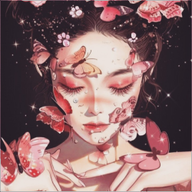
Small expatriate communities exist on trade hubs where performance arts and luxury textiles are valued. - Description: The Auriel Lepi are an arresting, unmistakably alien offshoot of the Lepi species, evolved (or selectively bred) in the high, bioluminescent cloud-forests of Coachelle Prime's Auriel Plateau. Standing 1.95–2.35 m tall, they possess an elongated, dancer-graceful humanoid silhouette that feels simultaneously familiar and impossibly exotic. Their bodies are covered in an ultra-short, satin-smooth velvet pelt ranging from warm bronze, deep cacao, rose-gold champagne, or rare obsidian with subtle iridescent undertones that shift teal-to-violet in certain lights. Where fur meets the extremities, it dramatically lengthens into luxurious, natural "gloves" and "leggings" of plush, cream-to-caramel fluff that begins mid-forearm and mid-calf, thickening into dramatic cuffs around wrists and ankles, but organic and grown rather than worn. These furred cuffs are so dense they resemble living lace or feathered ruffs, and they ripple with every motion. From the crown emerge the auriel signature: twin auroral ears, 70–100 cm long, that behave like animated silk scarves. The inner ear is a delicate, translucent membrane veined with faint bioluminescent lines that pulse softly with emotion; the outer surface is cloaked in a waterfall of thick, lustrous "hair-fur" that can be braided, threaded with tiny golden rings, or left to cascade like liquid midnight or molten copper. The ears are fully articulate, capable of fanning wide for threat display or coiling protectively around the shoulders like living jewelry. A short, expressive tail (30–40 cm) ends in a plush pom that sways just above the backs of the knees, often dyed or tipped in contrasting metallic pigments. Faces are elegant with high cheekbones, large upturned eyes with glowing, slit-pupiled irises (amber, violet, or pale turquoise), small dark noses, and full, sculpted lips. Subtle bioluminescent freckles dust the bridge of the nose and collarbones, flaring brighter when aroused or using Force-like focus disciplines many auriel practice. Traditional auriel attire is deliberately minimal and engineered for absolute freedom: translucent saris of spider-silk and void-moth wing membrane, hip-wraps of living vine-leather that tighten or loosen with body heat, chest harnesses of delicate gold chain that frame rather than cover, and anklets of chiming bells that double as sonic weapons in skilled hands. The natural furred "gloves" and "leggings" are never covered; they are the centerpiece, often oiled to a high sheen or dusted with micronized starlight powder that makes them sparkle like living jewelry.
- Breathes: Type 1
- Average Height of Adults: 1.95–2.35 meters
- Average Length of Adults: N/A
- Skin color:
- Short pelt: bronze, cacao, champagne, obsidian
- Long cuffs: cream, caramel, pale gold, soft silver
- Light‑reflective undertones: teal, violet, copper (structural coloration)
- Hair color: Midnight black, molten copper, pearl‑white, rose‑gold, sapphire‑tinted black, or rare sunset gradients.
- Distinctions:
- Extremely long, expressive ears with translucent inner membranes
- Dense, decorative forearm and calf cuffs
- Tall, dancer‑lean build with digitigrade legs
- Short expressive tail with a pom tip
- Large, luminous eyes with slit pupils
- Freckles that reflect ambient light
- Sexual dimorphism:
- Females: longer ear‑mantles, more pronounced facial freckles
- Males: thicker cuffs, deeper pelt tones
- Aging:
- Ear‑mantle loses sheen
- Freckles fade
- Cuffs soften and thi
- Races: They are a subspecies of the Lepi a Lagomorph species from coachella but there are differing based on colors.
- Saffron Auriel– warm bronze pelts, desert‑adapted
- Moon‑Veil Auriel – pale champagne pelts, cloud‑forest dwellers
- Obsidian Auriel – dark pelts with strong structural iridescence, cliff‑runners and glider‑riders
- Force Sensitivity: Standard some are sensitive, some are not.
- Exceptional Agility & Balance
Their long limbs, digitigrade stance, and sensitive ears give them remarkable acrobatic ability and spatial awareness. - Social Grace & Adaptability
Their expressive communication style and cultural emphasis on poise make them natural performers, diplomats, and negotiators.
- Fragile Physiology
Lightweight bones and lean frames make them vulnerable to blunt trauma and high‑gravity environments. - Sensory Overload
Their large ears and sensitive facial whisker‑freckles can be overwhelmed by loud noise, chaotic crowds, or harsh winds.
- Diet: Omnivore, leaning toward fruit, nectar, grains, and insects.
Common foods:- Cloud‑fruit
- Honey‑sap
- Spiced grains
- Roasted insects
- Floral teas and pollen‑milk
- Poisonous to them:
- High‑fat meats
- Strong alcohol
- Certain plateau fungi
- Communication: Lepese
- Technology level: Comparable to Galactic Standard, with specialization in:
- Lightweight glider‑craft
- Reflective textiles and desert‑silk fabrics
- Organic architecture grown from vine‑trees
- Religion/Beliefs: THE PATH OF THE SEVEN WINDS
- A Cultural Philosophy of the Lepi Auriel
- The Lepi Auriel do not worship gods, spirits, or cosmic entities. Their belief system is a philosophical tradition, shaped by the plateau's shifting winds, seasonal currents, and the nomadic sky‑dancer cultures that once roamed the high forests. The Seven Winds are metaphors, not deities a way of understanding life's challenges, virtues, and emotional landscapes. Every Auriel grows up learning to "read the winds," meaning to interpret situations with grace, adaptability, and awareness.
- The Winds are invoked in poetry, diplomacy, personal reflection, and the teaching of young kits. They are not supernatural; they are cultural anchors, a shared language of meaning.
- THE DAWN WIND Curiosity, First Steps, Openness
- The Dawn Wind is the breeze that rises with the first light over the plateau, warm and gentle. It symbolizes beginnings the courage to try, to explore, to ask questions. Auriel parents encourage their kits to "follow the Dawn Wind" when learning new skills or meeting new people. It is associated with youth, optimism, and the belief that every path starts with a single, intentional movement. In diplomacy, invoking the Dawn Wind signals a desire for peaceful introductions or fresh negotiations.
- THE SAFFRON WIND Passion, Artistry, Expression
- Named for the warm, spice‑laden winds that sweep across the plateau during the flowering season, the Saffron Wind represents creativity, emotion, and the fire of personal expression. Dancers, artisans, and performers often dedicate their work to this Wind, believing that passion must be cultivated and shared. It teaches that beauty is not frivolous it is a form of communication, a way of shaping the world. The Saffron Wind encourages boldness, color, and the courage to be seen.
- THE HIGH WIND Ambition, Ascent, Discipline
- The High Wind is the powerful current that roars across the cliff peaks, strong enough to lift gliders and dangerous enough to dash them. It symbolizes ambition tempered by discipline. To "ride the High Wind" means to pursue excellence without arrogance. The Auriel believe that ambition is natural and healthy, but only when balanced with awareness of one's limits. This Wind is often invoked by apprentices striving to master a craft or by leaders making difficult decisions.
- THE WHISPER WIND Subtlety, Discretion, Listening
- In the dense cloud‑forests, soft breezes weave through the canopy, carrying scents and secrets. This is the Whisper Wind the Wind of quiet understanding. It teaches the value of listening before speaking, observing before acting, and recognizing truths that others overlook. It is not about deception; it is about perception. Diplomats, scouts, and negotiators often reference the Whisper Wind when discussing strategy or delicate matters. It reminds Auriel that silence can be as powerful as speech.
- THE STORM WIND Conflict, Resilience, Necessary Hardship
- The Storm Wind is the fierce, sand‑laden gust that sweeps across the plateau during seasonal tempests. It represents conflict, struggle, and the trials that shape character. The Auriel do not glorify violence, but they acknowledge that hardship is inevitable. The Storm Wind teaches resilience the ability to bend without breaking, to endure without losing oneself. When an Auriel faces personal loss, political tension, or physical danger, they say they are "walking through the Storm Wind," trusting that endurance will carry them through.
- THE NIGHT WIND Reflection, Rest, Inner Balance
- When the plateau cools and the world quiets, a gentle night breeze drifts through the canopy. This is the Night Wind, symbolizing introspection, rest, and emotional clarity. It teaches that stillness is necessary for growth, and that one must understand their own heart before they can understand others. The Night Wind is associated with meditation, storytelling, and the private moments where Auriel examine their choices. It is not mystical simply a reminder that rest is part of the cycle of life.
- THE RETURNING WIND Renewal, Forgiveness, Continuity
- The Returning Wind is the seasonal current that circles back across the plateau after months away, bringing familiar scents and cooler air. It symbolizes renewal, reconciliation, and the idea that life moves in cycles. The Auriel believe that mistakes can be corrected, relationships mended, and paths re‑walked with new understanding. The Returning Wind is invoked during reunions, apologies, and moments of personal reinvention. It teaches that no one is defined solely by their past only by what they choose to become.
- THE DAWN WIND Curiosity, First Steps, Openness
- General behavior:
- Family Life & Social Structure
- Auriel families are small, affectionate, and highly expressive. Kits are raised by their parents for the first few years, but the broader community plays an active role in their development. Extended kin, neighbors, and craft‑masters all contribute to a kit's upbringing, creating a social environment that feels warm, communal, and deeply interconnected. Auriel households often share open‑air terraces, communal kitchens, and rooftop gardens where families gather at twilight to talk, groom one another's ear‑mantles, and share stories of the day.
- Despite their elegance, Auriel are not aloof. They are tactile, warm, and socially intuitive. A gentle ear‑tilt, a soft brush of forearm fur, or a shared cup of spiced nectar communicates affection more clearly than words. Elders are treated with reverence, not because of authority, but because they are seen as "Wind‑Keepers" individuals who have lived through many seasons and can interpret life's challenges through the lens of the Seven Winds. Their advice is sought in matters of partnership, craft, and personal growth.
- Values & Social Expectations
- Auriel society prizes grace, cleverness, hospitality, and emotional awareness. To them, elegance is not vanity it is a form of discipline. Moving with intention, speaking with clarity, and presenting oneself with care are seen as signs of respect for others. Even their combat arts emphasize fluidity and misdirection over brute force.
- Cleverness is equally valued. A witty remark, a well‑timed gesture, or a subtle negotiation tactic is admired as much as physical skill. Auriel children are taught early that "a sharp mind rides the High Wind better than a sharp blade." They are not pacifists, but they prefer solutions that avoid unnecessary harm. When conflict is unavoidable, they favor agility, evasion, and precision over direct confrontation.
- Hospitality is a cornerstone of their culture. Offering a guest tea, fruit, or a shaded seat is considered basic courtesy. Refusing hospitality without cause is seen as a social misstep. Their homes and public spaces are designed to welcome conversation, performance, and communal gatherings.
- Courtship, Partnership & Social Bonds
- Auriel courtship is a blend of athleticism, flirtation, and playful competition. Dance duels part performance, part challenge allow potential partners to display agility, humor, and compatibility. These duels are not about dominance; they are about harmony. A well‑matched pair moves like two currents of the same wind.
- Partnerships can be monogamous or fluid depending on personal preference. What matters most is mutual respect and emotional honesty. Ear‑mantle braiding is the most intimate gesture an Auriel can offer a sign of trust, vulnerability, and shared life. Some pairs braid only a few strands; others weave intricate patterns that change with seasons or personal milestones.
- Friendships are equally important. Auriel maintain wide social circles, and platonic bonds can be as deep as romantic ones. Loyalty is expected, but not blind; honesty and communication are valued above silent obedience.
- Education & Apprenticeship
- Auriel children begin formal learning early, but their education is not rigid. Instead, it emphasizes exploration, creativity, and self‑discovery. Kits rotate through different disciplines dance, gliding, textile arts, diplomacy, navigation, and environmental stewardship until they find a path that resonates with them.
- By age 10–12, most Auriel enter an apprenticeship under a master craftsperson, performer, diplomat, or scout. Apprenticeships are immersive and hands‑on, blending practical skill with philosophical grounding in the Seven Winds. A glider apprentice learns not only aerodynamics but also the patience and awareness required to read the plateau's shifting currents.
- Education is lifelong. Adults frequently take short sabbaticals to study new crafts, travel, or refine their skills. The Auriel believe that stagnation is a form of spiritual drought one must always be learning, moving, or creating.
- Interaction with Other Species
- Auriel are naturally curious and socially adaptable, making them excellent diplomats, performers, and cultural liaisons. They approach new species with warmth and open interest, though they maintain a subtle caution until trust is established. Their expressive ears and body language make them easy to read, which many species find disarming.
- They dislike environments that feel oppressive, overly militaristic, or emotionally cold. Auriel thrive in places where conversation, art, and trade flourish. They are often found on trade worlds, performance circuits, or diplomatic missions, where their charm and perceptiveness are assets.
- Despite their elegance, they are not naïve. Auriel are skilled at reading intentions and navigating complex social dynamics. They can be evasive when threatened, using agility, misdirection, and sonic jewelry to escape danger rather than confront it head‑on.
- Daily Life & Lifestyle
- Auriel daily life is shaped by the rhythms of the plateau. They rise with the Dawn Wind, beginning the day with stretching, grooming, and light meals of fruit or nectar. Work is interspersed with communal breaks, storytelling, and music. Twilight is the most active time a period for dance, trade, socializing, and glider flights across the glowing canopy.
- Their architecture reflects their values: open terraces, flowing fabrics, hanging lanterns, and vine‑grown structures that sway gently in the wind. Homes are designed for airflow, comfort, and beauty, with spaces dedicated to craftwork, performance, and communal gatherings.
- Auriel are diurnal but thrive in long twilight hours, when the plateau's colors shift and the air cools. Nighttime is reserved for reflection, quiet conversation, and personal creativity.
- Work, Craft & Professions
- Auriel professions reflect their environment and cultural priorities. Common roles include:
- Sky‑dancers and performers
- Diplomats and cultural envoys
- Glider‑riders and scouts
- Textile artisans and jewelry makers
- Environmental stewards and canopy gardeners
- Storytellers, poets, and historians
- Lightweight engineers specializing in gliders and organic architecture
- They avoid heavy industry, preferring craftsmanship, artistry, and sustainable technologies.
The earliest ancestors of the Lepi Auriel emerged long before the galaxy took notice of Coachelle Prime. The Auriel Plateau, with its high cloud‑forests and warm mineral winds, shaped them into a tall, graceful variant of the baseline Lepi. While the lowland Lepi multiplied rapidly and spread across Coachelle Prime's plains and warrens, the Auriel developed in relative isolation. Their plateau was difficult to reach, and its narrow cliff paths discouraged the rapid expansion that defined their cousins. As the Lepi population exploded across the planet, the Auriel maintained a slower, more deliberate growth. They valued space, artistry, and the freedom of the open canopy, and their culture evolved around gliding, dance, and the reading of seasonal winds. When the lowland Lepi began their first off‑world colonization efforts, the Auriel watched with curiosity but little desire to join. Their plateau was enough, and their traditions were deeply tied to its unique environment. Yet even in these early centuries, the seeds of future change were already present, carried on the winds that shaped their worldview.
As the Lepi colonization era accelerated, the Auriel Plateau became a cultural curiosity to off‑worlders. Traders, explorers, and diplomats occasionally made the arduous journey to the high forests, fascinated by the Auriel's elegance and unusual height. Some Auriel ventured down from the plateau to learn about the wider galaxy, but they remained a minority. Their society prized balance and continuity, and the rapid expansion of the baseline Lepi felt chaotic and overwhelming to them. Still, the Auriel were not isolationists. They traded textiles, glider‑craft, and vine‑grown architecture in exchange for tools, star charts, and rare spices. A few Auriel families even joined Lepi colonists on distant worlds, bringing their artistry and wind‑philosophy with them. Yet the plateau remained their heart, and most who left eventually returned. Their history during this era is marked by gentle curiosity rather than upheaval, a time when the Seven Winds guided them toward exploration without ever pulling them fully away from home.
The Gulag Plague and the Four Hundred Year Darkness shattered that stability. When the plague swept across the galaxy around 400 ABY, Coachelle Prime was not spared. The disease spread rapidly through the densely populated lowlands, devastating the baseline Lepi communities that had once seemed unstoppable in their growth. The Auriel Plateau, with its isolation and natural barriers, fared better at first. The narrow passes and high winds slowed the spread, and their smaller population density reduced transmission. But no world escaped entirely. Traders fleeing the lowlands brought the plague with them, and soon the Auriel found themselves fighting a silent, relentless enemy. Their communal lifestyle, once a strength, became a vulnerability. Families sealed themselves in vine‑grown homes, apprenticeships halted, and the once‑vibrant twilight gatherings fell silent. The Auriel lost nearly half their population in the first century of the Darkness, and the cultural trauma reshaped them profoundly. They became more cautious, more deliberate in their interactions with outsiders, and more protective of their plateau. The Seven Winds philosophy took on new weight, especially the Storm Wind and the Returning Wind, which came to symbolize endurance and renewal in the face of overwhelming loss.
As the Four Hundred Year Darkness dragged on, the Auriel Plateau became a refuge for surviving Lepi from the lowlands. Many arrived sick, starving, or grieving, and the Auriel faced a difficult choice. Their instinct for hospitality urged them to help, but their memories of the plague's early devastation made them wary. They created quarantine terraces along the lower cliffs, offering food, shelter, and medical care while limiting direct contact. Over generations, these terraces grew into permanent settlements, blending lowland Lepi practicality with Auriel aesthetics. This period marked the first major cultural blending between the two groups, though tensions occasionally flared. The Auriel valued grace and restraint, while the lowlanders brought a more energetic, improvisational spirit. Yet necessity forged cooperation, and the plateau slowly recovered. By the end of the Darkness, the Auriel had regained much of their population, though the memory of loss remained etched into their collective identity. Their society emerged more resilient, more unified, and more aware of the fragility of peace.
The Planeshift event of 902 ABY was the next great upheaval. When entire worlds were displaced across the galaxy, Coachelle Prime found itself in a new region of space, surrounded by unfamiliar neighbors and altered hyperspace routes. The Auriel Plateau, once remote but stable, suddenly became a strategic location for traders and explorers navigating the reshaped galactic map. New species arrived seeking alliances, resources, or simply safe passage, and the Auriel were thrust into a level of interstellar interaction they had never experienced. Their natural diplomacy and social grace served them well, but the sudden influx of outsiders challenged their traditions. Some Auriel embraced the change, seeing it as the High Wind calling them to new heights. Others feared cultural dilution and pushed for stricter boundaries. The plateau adapted by establishing formal envoy circles groups trained in negotiation, cultural exchange, and the careful balancing of hospitality with caution. The Planeshift also brought new opportunities for trade, allowing Auriel textiles, gliders, and vine‑architecture to spread across nearby systems. Though the event was disorienting, the Auriel ultimately viewed it as a turning point that expanded their horizons without severing their roots.
By the time the Silver Jedi Order rose to prominence in the 870s ABY, the Auriel had become known as skilled diplomats, performers, and scouts. Their plateau was still remote, but no longer isolated. When Silver Jedi explorers first visited Coachelle Prime, they were immediately intrigued by the Auriel's agility, perceptiveness, and philosophical traditions. The Auriel, in turn, found the Silver Jedi's emphasis on balance and service compatible with their own values. This mutual respect led to a period of cultural exchange between 870 and 902 ABY, during which several Auriel traveled to Silver Jedi enclaves to train in the Force. Among the Jedi who worked most closely with them was Grandmaster Matsu Ike, whose calm presence and deep curiosity resonated with the Auriel. She trained several Auriel in foundational Force disciplines, focusing on awareness, emotional clarity, and non‑aggressive techniques that aligned with their natural inclinations. In return, the Auriel shared their wind‑philosophy, glider arts, and methods of reading subtle environmental cues. Matsu Ike was particularly fascinated by their ability to interpret wind patterns and body language with near‑instinctive precision, a skill she believed could enhance Jedi sensory training.
The Auriel who trained with the Silver Jedi returned home with new perspectives but without abandoning their cultural identity. They integrated their Jedi lessons into the Seven Winds philosophy, emphasizing the importance of inner balance, restraint, and mindful action. The Auriel never became a heavily Force‑aligned society their sensitivity remained average but those who did train became respected advisors, scouts, and mediators. Their presence strengthened ties between the plateau and the Silver Jedi, leading to decades of peaceful cooperation. Auriel glider‑riders occasionally assisted Silver Jedi patrols, using their agility and environmental awareness to navigate difficult terrain. In turn, the Silver Jedi helped the Auriel establish better medical facilities, archives, and communication networks, ensuring the plateau would never again be as vulnerable as it had been during the Gulag Plague.
By 902 ABY, the Auriel Plateau had transformed into a thriving cultural center, known for its artistry, diplomacy, and unique blend of tradition and adaptation. The Seven Winds philosophy remained the heart of their identity, guiding them through centuries of upheaval from overpopulation pressures and colonization waves to plague, darkness, displacement, and interstellar alliances. Their history is one of resilience shaped by elegance, a people who survived by bending like the canopy trees of their homeland rather than breaking. The Auriel continue to walk the winds with grace, carrying their past lightly but never forgetting the lessons it taught them. Their plateau remains a place of beauty and quiet strength, a reminder that even in a galaxy defined by conflict and change, there are cultures that endure through harmony, adaptability, and the simple, profound art of living with intention.
Last edited: