

Nothing's Like Before




KILAADO
OUT OF CHARACTER INFORMATION
- Intent: To modernize the previously approved Kilaado submission to current Commonwealth.
- Image Credit: Finnian MacManus // ArtStation ("Aurora Rising") | ChatGPT
- Canon: N/A
- Permissions: N/A
- Links: [Original Kilaado Submission (2017)] | [Arrival of the Drosselmeyer]
- City Name: Kilaado
- Classification: Urban Center
- Location: Lanteeb
- Affiliation: Imperial Commonwealth of Dosuun
- Population: Heavy
- Demographics:
- Age: 14% [0 to 15] | 46% [16 to 64] | 32% [65 to 100] | 8% [100+]
- Gender: 44% Female | 39% Male | 17% Non Binary
- Species:
- 48% Human
- 10% Keshiri
- 10% Kiffar
- 7% Gamorrean
- 7% Near-Human variants
- 6% Twi'lek
- 4% Gand
- 4% Echani
- 3% Other
- Wealth: Medium — Historically a fabricator's city, Kilaado built engines, frames, and finished components for worlds it would never see, and its working-class economy has always rested on industry rather than capital. The Commonwealth's post-906 reconstruction has injected significant investment — the Green Zone, the Crownward Expansion, the Trade League's regional presence — but prosperity remains uneven, concentrated in the newer districts and the emerging middle class of the Arcology Ridge while the Smelter Wards and the Damotite Belt remain poorer and harder-worn.
- Stability: Medium–High — The city is in a stable but watchful convalescence. Janissary contingents maintain a visible ceremonial and security presence, the joint Commonwealth–Lanteeban administration governs through the Parallax Forum, and the population is broadly grateful for the post-906 rebuild. Tensions persist around rising rents and displacement at the Crownward construction perimeter, smuggling through the old haul tunnels of the Damotite Belt, and unexplained signal traffic beneath the Smelter Wards that the Akıncı quietly investigate. Travelers are generally safe; the Smelter Wards pose industrial rather than criminal hazards.
- Freedom & Oppression: Kilaado is a relatively open city by Commonwealth standards. The Towerfall Stallholders' Council and the Lantern Basin shrine-keepers govern their own affairs with minimal interference, the Copper Crossings' protest and street-music cultures are deliberately left unmolested as a pressure release, and the Commonwealth's reconstruction posture favors visible benefit over imposition. Beneath this, the Imperial Guard maintains a quiet investigative posture — Janissaries above ground, Akıncı in the tunnels — and the population, having seen empires come and go, regards the new administration with a mixture of pride, gratitude, and conditional caution.
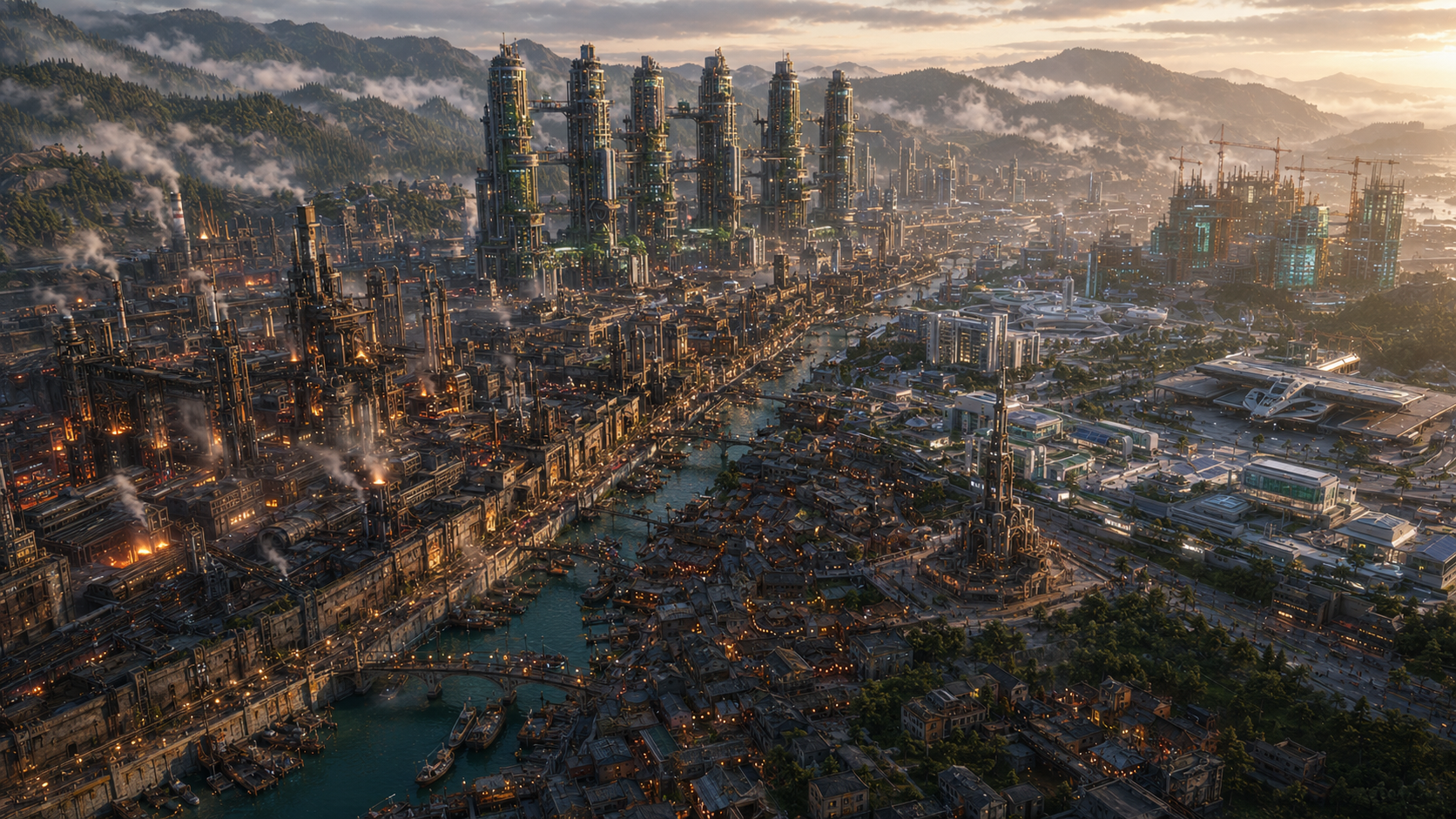
- Description: Kilaado is an industrial city in a long, complicated convalescence. For most of its history it was a fabricator's city — a place that made things for other worlds, that smelted other people's ore, that built engines and frames and finished components for armies and tycoons it would never meet. The First Order's tenure deepened this character without changing it; the Galactic Alliance's tenure mostly ignored it; and by the time the Commonwealth arrived on Life Day 906 ABY, the city was tired, smog-choked, water-stressed, and held together largely by the stubborn cooperation of the people who had refused to leave.
What the city has become in the year since is harder to summarize. The smog is thinner. The water in roughly half the districts is now drinkable from the tap, which it was not before. New buildings stand in the Green Zone and on the rooftops of the Arcology Ridge. Cranes rise along the eastern margin where the Crownward Expansion Zone is being built around the clock, a city-within-the-city still half-scaffolded and already inhabited. Janissaries walk the Margrave Landing plaza. Akıncı operatives — though no one is supposed to know this — move through the abandoned subfurnace tunnels beneath the Smelter Wards on errands the Commonwealth does not publicly discuss. The Hammer's Strike is still open. The Anvil and Forge has not closed in four hundred years. Children play in the alleyways of the Old Quarter under lanterns strung from balcony to balcony, and old men in the Damotite Belt still mutter, when they are not being listened to, that they have seen empires come and go and that they will see this one go as well.
Kilaado has not become beautiful. It has become legible — a city that can be read, district by district, by someone who cares to. That is more than the city had a year ago, and the people who live here know it. Beyond the city walls the highlands begin, and beyond the highlands the Greyfen, where the lanterns thin out and the older stories take over.
Core Districts
- The Smelter Wards: The oldest industrial spine of the city, stretching along the southwestern flank in a long arc of refineries, slag yards, and stacked tenement housing built directly into the support frames of the furnace halls. Rust-stained durasteel and the constant low percussion of foundry work define the district.
- The Smelter's Yard: A sprawling reclamation operation where scrapped vehicle chassis and rejected components are melted down into recycled stock, and where a select few apprentices are trained each season in smelting and welding trades unchanged in three centuries.
- The Subfurnace Tunnels: Abandoned First-Order-era tunnels, sealed off after the Commonwealth's arrival pending structural survey, which have drawn unofficial Akıncı attention since irregular signal traffic was first tracked from beneath the ward floor on Life Day 906. The Wards remain dangerous — heat, particulates, the occasional unmaintained pressure vessel — but a profound, almost defiant pride runs through the people who live and work here.
- Riverwalk District: The cultural and emotional heart of working-class Kilaado, following the city's principal irrigation canal — a waterway predating the First Order by centuries, maintained by hand since the founding generation. Stepped stone embankments flank the canal, lined with cafés, weaving stalls, dye-houses, and boat-builders' workshops.
- The Riverwalk Market: Where produce from the agricultural belt converges with imported Commonwealth goods in a chaotic, lantern-lit arrangement running seven days a week.
- The Iskendyr Water Purification Initiative: A Commonwealth engineering project to restore canal-fed potability to the surrounding tower-housing blocks, now a symbolic centerpiece of the post-906 rebuild. The district survived the Ssi-Ruuvi incursion largely intact, a fact locals invoke often and with quiet feeling.
- High Kilaado (The Arcology Ridge): The skyline-defining cluster of fourteen primary arcology megatowers connected by skybridges, transit lines, and shared utility cores, running north-to-south across the city's central spine. Each tower functions as a vertical village, with individual floors maintaining their own communal kitchens, weaving halls, prayer alcoves, and informal councils — floor-identity is often more meaningful than tower-identity. Commonwealth engineers have begun installing rooftop hydroponic terraces and bioluminescent vine cultivation along the south-facing faces. The Ridge houses the largest concentration of the city's emerging middle class and is the demographic the Commonwealth has invested in most directly.
- Commonwealth Green Zone: The newest district, occupying a wedge of formerly derelict industrial land east of High Kilaado, cleared and rebuilt over the first year of Commonwealth presence. Solar pylons, water reclamation domes, atmospheric-scrubbing towers, the temporary administrative compound of the Grand Vizier's reconstruction delegation, and a forward office of the Commonwealth Trade League are all situated here. Consciously modeled and sleek, it is the only district where one can reliably get a hot meal at any hour and where the water is verified clean at the tap. Port Knapford, Kilaado's principal passenger starport, sits at its northern edge.
- The Old Quarter (Stonekeep Rows): Despite its formal name, no museum district — a working neighborhood of small smithies, family-owned bakeries, weaving shops, water-purification cooperatives, and trade guild offices, its basalt-paved streets and ancestral stones genuinely ancient.
- The Anvil and Forge: A smithy with a long-established downstairs cantina, its forge operating without interruption for over four hundred years and its tap a known meeting place for guild masters and union representatives across half the city. The Quarter is poorer than the Ridge but warmer than the Green Zone, and most Lanteebans, asked where their heart lies, name the Old Quarter without hesitation.
- Towerfall Market District: The commercial pulse of the city — a chaotic, layered, multi-level bazaar operating on six elevations from street level to the lower skybridges, where the foot-traffic of High Kilaado's arcology base meets the cargo flow of the rail and skybridge networks. Textile stalls, food vendors, used-droid resellers, fortune-tellers, instrument-makers, and Trade League brokerages coexist in tight, noisy proximity. Governed informally by the Towerfall Stallholders' Council, which mediates disputes with a pragmatism the formal administration has learned not to interfere with. Dent-N-Droid, a droid-parts warehouse with a sister location on Lotho Minor, anchors the mid-level commercial floor.
- Bercey Heights Aerodrome: The city's principal aerospace and atmospheric-research district, on an elevated terrace at the eastern margin and named in honor of the Bercey-class corvette program. Houses the Commonwealth's regional meteorological institute, storm-monitoring arrays, atmospheric-scrubbing pilot facilities, and the manufacturing halls of Kilaado Commonwealth Shipworks — the rebranded successor to the former Kilaado Imperial Shipworks, now producing small-craft hulls and modular components for the Commonwealth Navy under Trade League contract. Technocratic, quiet, and clean; the city's primary recruitment pipeline for engineering apprentices.
- Lanteeb Academy of Civic Arts & Engineering: The Commonwealth's flagship educational investment, occupying restored First-Order-era civic buildings on the northern face of the Arcology Ridge. Its curriculum splits between practical engineering disciplines and civic-arts coursework intended to seed a generation of Lanteeb-born administrators capable of running their own world. The Sons of the White Wolves maintain a youth mentorship program here. Enrollment has tripled since opening.
- The Lantern Basin: A network of widened canal junctions on the southern flank of the Riverwalk District, restored and ceremonially designated after the Commonwealth's arrival. Its stepped stone shorelines, lantern-pole arcades, and small island shrines make it the focal point of the city's restored festival calendar — Life Day, the Festival of Thanks, and several older Lanteeban lantern customs converge here in winter. Administered by an informal guild of shrine-keepers and lantern-makers who predate the Commonwealth.
- The Margrave Landing Spire: The Commonwealth's principal ceremonial landing platform, situated between the Green Zone and the base of the Arcology Ridge — a tiered durasteel-and-stone tower with a public plaza at its base. The platform at which the DCV Margrave descended on Life Day 906, treated as quasi-sacred ground ever since. Janissary contingents maintain a ceremonial presence at all hours, and the plaza is the city's de facto civic square, where Grand Vizier Yvarro is greeted on her visits.
- The Damotite Belt: The frontier-character outer band of the city, where Kilaado's footprint dissolves into the surrounding hills and the active damotite mining operations that have historically anchored Lanteeb's offworld economy. A hard, weathered string of mining villages, processing depots, and worker hostels along the ridge roads. Communities here are proud, insular, and slow to trust outsiders; the Commonwealth has invested cautiously, prioritizing medical access and ore-transport modernization. Smuggling through the older haul tunnels remains a known problem.
- The Bronzewire Quarter (the Wire): The cultural and artistic heart of the city — a dense knot of canal-facing blocks between the Riverwalk District and Towerfall Market that grew from a warehouse corridor into Kilaado's music district. Music drifts more or less continuously from late morning until past midnight.
- The Ember Conservatory: A converted warehouse housing the city's principal music school, theater, and civic arts academy.
- The Copper Kettle Breweries: A network of old industrial brewing halls producing dark winter ales, smoked lagers, honey-spiced beers, and the spiced cider inseparable from Life Day in the city.
- The Lantern Cafés: A constellation of small, late-night cafés serving as unofficial neutral ground for poets, off-duty Commonwealth officers, Trade League brokers, and — locals quietly assume — Akıncı observers.
- The Glass Stage: A freight-depot-turned-theater famed for its annual Life Day production of The Lantern Prince and the Iron Rat King, a Lanteeban folk opera adapted into a holiday ballet.
- Luthier's Row: A narrow cluster of streets where handcrafted string instruments, brass horns, hammered dulcimers, and mechanical music devices are built, tuned, and repaired beneath family apartments. A House of the Velvet League has reportedly been scouting locations along the Quarter's upper tier.
- The Crownward Expansion Zone (Crownward): The largest urban redevelopment project in modern Lanteeban history — a sprawling, half-completed corridor along the eastern margin where the Commonwealth is constructing what it intends Kilaado to become. Cranes dominate the skyline; construction continues around the clock. Organized into seven development sectors:
- The Lantern Grounds: The planned stadium and entertainment complex at the southern edge — grav-ball arenas, concert venues, parade grounds, festival amphitheaters, and youth sports academies, intended to host Life Day festivals, military parades, choir competitions, and the Commonwealth Games.
- The Hall of the First Horizon: The district's heritage museum complex and most politically delicate structure — a curated archive that does not erase the First Order but reframes it, tracing the colonization of Lanteeb, the industrialization of Kilaado, the labor history of the smelter wards, the Ssi-Ruuvi incursion, the Galactic Alliance neglect, and Commonwealth reunification, with a hall devoted to Grand Moff Fortan. The vanished Supreme Leader of the First Order is referenced only obliquely; the framing throughout emphasizes endurance, sacrifice, unity, and rebuilding.
- The Emerald Exchange: The planned financial core, rising in polished green-glass towers along the central axis, with the Trade League's regional headquarters moving in floor by floor; rooftop gardens installed before the trading floors are operational, per Green Standard sequencing.
- The Verdancy Initiative Sector: The Commonwealth's environmental demonstration zone — algae-reactor canals, vertical agriculture, atmospheric regulation towers, self-cleaning transit corridors, solar membrane installations, and public hydroponic gardens, frequently used as training sites by Genevieve Technical College students.
- The Margrave Crescent: The planned diplomatic and luxury district — hotels, embassies, performer residences, and Trade League private clubs along a crescent of completed avenues already in use.
- Foundry Row: The temporary-but-expanding artisan support belt servicing construction itself — smiths, sculptors, tileworkers, stonemasons, and industrial fabricators producing decorative architectural elements, ceremonial stonework, military fittings, and public art. Distinct from the regional Ironroot Corridor in that its work is project-driven and Commonwealth-commissioned.
- The Crownward Interchange: The district's transit nexus, connecting Crownward to Genevieve Junction, central Kilaado, Fort Cairnwatch, the Bercey Heights Aerodrome, and the outer river settlements through a tiered interchange of rail, magrail, and skybridge lines. Locally, Crownward is a source of debate — proof of Commonwealth seriousness to the young, a source of rising rents and displacement to older residents of the Old Quarter and Smelter Wards.
- Steambreaker Row: The mechanic guild's home street — three city blocks of converted First-Order-era factory floors now occupied by independent workshops, vehicle restorers, robotics refurbishers, and parts brokers. Kilaado Engineering Corporation (KEC) maintains its principal headquarters at the western terminus and remains the single largest civilian employer in the city. Also hosts Duros Bro. Motors and Big Folkers Wheel, two long-rival custom-vehicle shops — Duros-owned and Gamorrean-owned respectively — whose feud has been a fixture of Kilaado culture for over a century.
- Brinegate: A small, distinct quarter where the city's freshwater canals meet older treatment basins, home for generations to a riverfolk community of boat-dwellers, fishers, and canal-maintenance specialists. Tight, intermarried, and resistant to outside attention, but essential to keeping the water infrastructure functional; the Iskendyr project relies heavily on Brinegate cooperation.
- Little Rocantor: The diaspora quarter of the original Rocantorian colonist families who founded the planet, preserving an older dialect, a distinctive cuisine, and festival traditions no longer found on the homeworld. Politically sensitive — Rocantorian xenophobia is a historical legacy the Commonwealth works carefully around — but culturally rich and increasingly fashionable among younger Lanteebans.
- The Copper Crossings: Kilaado's principal transit junction, where railway terminus, magrail hub, and inter-district skytram lines converge in a multi-level interchange. Loud, fast, perpetually crowded, and host to the city's most active graffiti and street-music cultures. Protest gatherings happen here; the Commonwealth has left the Crossings unmolested as a useful pressure release.
- The Aureline Promenade: The entertainment district, running along an elevated terrace above the lower river bend. Cafés, music halls, repurposed industrial amphitheaters, balcony restaurants, and the city's most prominent cantinas cluster here. The Hammer's Strike — a three-story cantina persistently rumored (though never confirmed) to be Hutt-owned — remains the anchor establishment and a favored evening destination for Commonwealth personnel.
- The Vassara Health Commons: The medical district, centered on the Vassara General Infirmary, a multi-tower hospital complex expanded from a First-Order-era barracks. Includes medical-evacuation landing pads, a jointly staffed pediatric ward, agricultural-disease research labs working on the persistent blights affecting Lanteeb's farmland, and rehabilitation facilities configured for smelter-ward injuries and mining-related lung conditions. Calm, ordered, and chronically overcrowded.
- The Parallax Forum: The civic and historical core — government chambers, archive halls, public plazas, and museum spaces forming the seat of Commonwealth–Lanteeban shared governance. The central rotunda hosts the joint administrative council; the Museum of Lanteeban Heritage preserves the city's artifacts; and the Glass-Lantern Atrium is a permanent exhibit hall dedicated to Commonwealth–Lanteeb unity. The site of the formal Life Day session between Grand Vizier Yvarro and Lanteeb's provisional leadership.
- Brendham Docks: The principal freight starport, adjacent to the Smelter Wards and the industrial rail terminus. Handles bulk cargo, ore shipments, and finished goods; restricted to commercial vessels, with passenger traffic routed to Port Knapford. Hosts one of the Commonwealth's larger regional customs offices.
- Port Knapford: The civilian passenger starport at the Green Zone's northern margin — the city's modern face, processing diplomatic, administrative, and commercial passenger traffic across the Commonwealth and beyond.
The following lie outside Kilaado's urban footprint but are administratively, economically, and culturally inseparable from it. Future Codex submissions may develop them as standalone locations.
- Fort Cairnwatch: The joint Commonwealth–Lanteeban defense complex several kilometers upriver in the lower highlands, rebuilt over the first year of Commonwealth presence under Green Standard specifications. Houses local Lanteeban Defense Force units alongside Janissary detachments, army advisors, logistics and medical corps, weather operations support, and a permanent Sons of the White Wolves liaison team. Its cooperative-stewardship model has become quietly influential within the Imperial Guard's doctrine on reclaimed worlds.
- Camp Blackwater: The marine and expeditionary training installation deeper into the Greyfen Highlands, hosting joint rotations for Commonwealth Marines, Lanteeban Rangers, atmospheric scouts, and survival instructors. Known within the Imperial Guard for muddy boots, lantern-lit rifle cleaning, and a rough-edged practicality contrasting with the ceremonial culture of the Margrave Landing Spire.
- The Ironroot Corridor: The semi-rural artisan-industrial belt between Fort Cairnwatch and Camp Blackwater, populated by family-run workshops, smithies, tileworks, boatyards, and armor artisans whose trades have been continuous for generations. Produces ceremonial blades, Janissary armor detailing, ranger field equipment, parade sabers, decorative tile, river craft, and the distinctive White Wolves' cloaks — and the preserved meat-and-pastry hand-food colloquially called a ridgeroll, left at trail markers "for the cold ones" by people who insist they do not believe in any such thing.
- The Greyfen Highlands: The vast upland wilderness beyond the Ironroot Corridor, classified by the Commonwealth as Protected Ecological Land — misted pine forests, deep ravines, river canyons, cold lakes, and fog-heavy valleys. The planet's principal wilderness destination and emotional counterweight to the city's industrial density, protected by strict pollution laws and regulated mining. Its folklore is dense and persistent: the Lantern Stag said to appear before storms; the Hollow Choir of distant unsourced singing near the old mining tunnels; the Greyfen Watcher the White Wolves are known not to discuss in mixed company; and the Stone Sleepers, ancient carved figures near which, by long custom, no one sleeps. Akıncı units quietly monitor the region. The Commonwealth's official position is that all of the above is folklore.
- Genevieve Junction: The principal transit interchange between Kilaado and the surrounding region, at the edge of the Greyfen Highlands, known for hot-food stalls, platform musicians, and a layered ecosystem of hikers, mining-belt workers, rangers, marines, and Commonwealth personnel. Cryptid-warning posters of indeterminate official status are a fixture of the older platform walls and a regional in-joke.
- Genevieve Technical College: Adjacent to the Junction, the planet's principal vocational and environmental sciences institution — forestry, river management, atmospheric sciences, mechanics, artisan trades, and ranger certification. Functions as a commuter campus, ranger coordination center, and outfitter district for Greyfen expeditions; its graduates staff much of the planet's reconstruction workforce.
Security Rating: Medium (relative to a primarily civilian industrial urban center) — Kilaado balances visible Commonwealth security with a deliberately light governing touch, reflecting the city's Medium–High stability and relatively open atmosphere. Security is concentrated in the ceremonial and administrative districts, the starports, and the contested margins, while the city's self-governing markets and expressive districts are left largely to police themselves.
Perimeter & Approach:
- Port Knapford & Brendham Docks Customs: Commonwealth regional customs offices screen passenger and freight traffic respectively, with Brendham handling bulk-cargo and ore-shipment inspection adjacent to the Smelter Wards.
- Bercey Heights Sensor & Storm-Monitoring Arrays: Dual-purpose meteorological and atmospheric-monitoring arrays provide secondary coverage of the city's eastern airspace.
- Damotite Belt Haul-Route Monitoring: Cautious Commonwealth oversight of the older haulage tunnels and ridge roads, a known smuggling corridor.
- Janissary Ceremonial & Security Contingents: Maintain a permanent presence at the Margrave Landing Spire and the Parallax Forum, and a visible posture across the Green Zone.
- Lanteeban Civil Authority: Local law enforcement and civil-defense units handle day-to-day policing across the working districts, coordinating with Commonwealth forces as needed.
- Akıncı Investigative Presence: A quiet, non-public posture tracking irregular signal traffic from the sealed subfurnace tunnels beneath the Smelter Wards and monitoring the Greyfen Highlands.
- Informal District Governance: The Towerfall Stallholders' Council and Lantern Basin shrine-keepers maintain order within their own domains; the Copper Crossings' expressive culture is deliberately left as a pressure release.
- Fort Cairnwatch: The joint Commonwealth–Lanteeban defense complex anchoring the planet's military posture upriver.
- Camp Blackwater: Marine and expeditionary training installation in the Greyfen Highlands.
Kilaado was founded sometime after the Four Hundred Years of Darkness as a single-factory settlement surrounded by housing for its workers, anchored to the only stretch of the regional river system that could be reliably tapped for industrial water. Within two generations it had grown into Lanteeb's primary fabrication town; within four, it had absorbed neighboring villages along the canal and become the planet's de facto industrial capital, despite never being designated as such. Its production focus shifted across centuries — agricultural vehicles, then mining equipment, then military hulls, then back to civilian craft, as galactic markets dictated — but the underlying competence remained: Kilaado built things, and it built them well.
The city fell under First Order administration during the consolidation of Lanteeb into the Order's broader Outer Rim holdings. The Order's tenure was characterized less by transformation than by overlay: existing factories were assigned new production quotas, new districts were added for component refinement and raw-material processing, and Kilaado Imperial Shipworks was established as a satellite of the Cloud City complex, producing small-craft hulls for the Order's auxiliary fleets. The city's character — working-class, communal, suspicious of distant authority — did not change.
The Ssi-Ruuvi incursion struck Lanteeb in the latter years of First Order rule, in the same broader campaign of subterfuge and infiltration that culminated in the chemical-weapons assault on Avalonia. Kilaado was a secondary target — the Imperium sought to disrupt component production rather than seize the city — but the damage was real, and the Riverwalk District in particular suffered weeks of street-level combat before being recovered. The canal system held. The Old Quarter held. The Arcology Ridge sheltered tens of thousands of displaced residents from the outer districts. The city's collective memory of the incursion is one of survival through cooperation, and it has shaped local political identity ever since.
The collapse of First Order administration and the subsequent Galactic Alliance period were, for Kilaado, an era of slow neglect. The city was too small to matter to Alliance central planners, too industrial to attract Alliance cultural investment, and too far from the Core to interest Alliance commercial brokers. Infrastructure aged. Water quality declined. The smog returned. The damotite mines continued to operate, but at reduced margins. Young Lanteebans left for offworld work in numbers the city could not afford to lose. By the time of the Commonwealth's expansion occurred, Kilaado had become precisely the kind of overlooked industrial world the Commonwealth's reconstruction doctrine had been designed to address.
The DCV Margrave descended through clearing skies on Life Day 906 ABY, carrying Grand Vizier Ivalyn Yvarro and a humanitarian delegation drawn from across the Commonwealth's administrative branches. The arrival was unusually well-received: families across the city had already lit lanterns for the holiday, and the visual coincidence of Commonwealth illumination pylons activating alongside Lanteeban household lanterns produced a moment of shared symbolism that local writers and shrine-keepers have since worked into more or less every formal account of the event. The formal Life Day session between Commonwealth and Lanteeban leadership convened in the Parallax Forum within hours of landing.
Reconstruction has proceeded across the year since at the pace the Commonwealth typically operates at — methodical, infrastructure-first, deliberately visible. Water purification was prioritized over cosmetic restoration. The Vassara Health Commons was modernized before the Green Zone was completed. The Lanteeb Academy of Civic Arts & Engineering opened its doors within nine months of the Margrave's landing. Beneath the official reconstruction, the Imperial Guard — Janissaries above ground, Akıncı in the tunnels — has maintained a quiet posture of investigation and security, tracking irregular signals from the old subfurnace network that no one has publicly explained.
The city watches. It is grateful, and it is cautious. It has seen empires before.
Last edited: