
Sʜᴀᴅᴏᴡ Lᴏʀᴅ




VHYRKAI
(Pronounced: Veer-kai)
Near-Human Lupine People of Setron
(Pronounced: Veer-kai)
Near-Human Lupine People of Setron


OUT OF CHARACTER INFORMATION |
| Intent: | To create a near-human lupine species native to Setron, designed for use as very fast hunters, scouts, warriors, as Commissioned by Mellifluous Magenta |
| Image Credit: | PalaDad-of-Light |
| Canon: | N/A |
| Permissions: | N/A |
| Links: | Setron |
GENERAL INFORMATION |
| Name: | Vhyrkai |
| Designation: | Sentient |
| Origins: | Setron |
| Average Lifespan: | 80-100 standard years |
| Estimated Population: | Scattered |
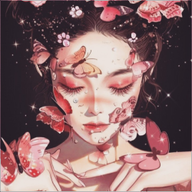
| Description: | The Vhyrkai are a near-human lupine species native to the deep jungles and swamp-fed highlands of Setron. At a glance, they resemble humans with wolf-like ears, long expressive tails, sharp canines, powerful senses, elongated torsos, and slightly extended semi-digitigrade feet. They can walk and fight upright with ease, but are best known for dropping onto all fours during pursuit, crossing open ground in sudden predatory bursts before springing back to a bipedal stance. Their bodies are built for speed, scent-tracking, climbing, and short, violent chases through difficult terrain. |
PHYSICAL INFORMATION |
| Breathes: | Type I |
| Average Height of Adults: | 1 - 2.5 meters |
| Average Length of Adults: | N/A while standing upright; 1.4 - 2.1 meters from shoulder to hip when moving quadrupedally. |
| Skin color: | Usually wheat and earth colors such as tan, brown, copper, umber, pale, or golden undertones, other rare colors available like pale tones gray white sandy ash and black ect. Can be patterned or multi colored. |
| Hair color: | Black, brown, gray, white, auburn, blond, silver, or mixed natural shades. Usually wheat and earth colors such as tan, brown, copper, umber, pale, or golden undertones, other rare colors available like pale tones gray white sandy ash and black ect. Can be patterned or multi colored. |
| Distinctions: | Vhyrkai possess wolf-like ears, long tails, sharp canines, pronounced nails, strong jaw muscles, flexible spines, powerful shoulders, and semi-digitigrade feet. Their feet are longer than those of baseline humans, allowing them to stand flat-footed when needed or rise onto the balls of their feet for speed and balance. Their ears and tails are highly expressive, often revealing mood, attention, social rank, or aggression before words are spoken. Their senses of smell and hearing are far stronger than those of most near-human species. |
| Races: | No true subspecies. Regional clan-lines may show differences in height, fur color, tail length, ear shape, and scent-marking customs. |
| Force Sensitivity: | Standard |
STRENGTHS |
| Fleet of Limb: | Vhyrkai are built for explosive pursuit. When running on all fours across open ground, healthy adults can reach extreme burst speeds of roughly 60-80 mph / 97-129 km/h for short distances. Their bipedal sprint is much slower, usually peaking around 30 mph / 48 km/h, though this still makes them notably fast compared to many humanoid species. |
| Wolf-Keen Senses: | Vhyrkai possess powerful hearing and a strong sense of smell. They can track fresh trails, identify familiar people by scent, notice blood, smoke, rot, sweat, fear, rain-soaked foliage, or chemical traces, and hear movement through dense jungle cover. |
| Jungle-Born Physiology: | Their flexible spines, strong shoulders, long torsos, tails, and semi-digitigrade stance allow them to scramble through roots, mud, branches, stone, and broken terrain with impressive agility. |
| Predatory Reflexes: | Vhyrkai are quick to react to sudden motion, changes in breath, shifting weight, and fleeing prey. This makes them dangerous skirmishers, ambushers, hunters, and close-range combatants. |
WEAKNESSES |
| Overwhelmed Senses: | Their enhanced hearing and scent can become a liability around sonic weapons, flash-bangs, chemical irritants, smoke, industrial fumes, blood-heavy battlefields, crowded cities, or machinery-heavy environments. Sensory clutter can disorient them, cause pain, or make tracking unreliable. |
| Built for Bursts, Not Marathons: | Their greatest speed comes in short, explosive charges. Extended sprinting quickly burns through stamina, and prolonged pursuit can leave them overheated, hungry, shaking, and vulnerable. Lactic acid build up hurts! |
| Open-Ground Hunters: | Their quadrupedal sprint works best in forests, wide corridors, open ground, and natural terrain. Tight starship passages, slick floors, ladders, vents, dense urban clutter, heavy mud, and cramped interiors can rob them of their best advantage. |
| Awkward in Standard Gear: | Awkward in Unfitted Gear: Heavy boots, rigid leg armor, sealed suits, and standard humanoid equipment can interfere with a Vhyrkai's semi-digitigrade stance, tail movement, and quadrupedal gait if the gear is not properly fitted for their physiology. Poorly fitted armor may slow them down, restrict their movement, or strain their feet, hips, spine, and lower back. Custom-made or species-adapted equipment can reduce these issues, but standard off-the-rack gear is often uncomfortable or limiting. |
| Tail and Ear Vulnerability: | Their ears and tails are sensitive. Damage, restraint, or painful pressure to either can affect balance, mood, communication, and spatial awareness. |
CULTURE |
| Diet: | Omnivorous, with a strong preference for meat, fish, eggs, fruits, tubers, river plants, insects, and preserved foods. Vhyrkai settlements often smoke, dry, salt, or ferment meat and fruit for lean seasons. |
| Communication: | Vhyrkai speak their own native language, usually called Vhyrka by outsiders, though many off-world Vhyrkai learn Basic. Their communication also relies heavily on ear posture, tail motion, scent, body angle, throat sounds, whistles, hand signs, and short hunting calls. Across open jungle, river valleys, and high ridges, they also use long-distance howling songs: layered calls that can carry warnings, grief, triumph, summons, hunting signals, territorial claims, or kinship greetings over great distances. These patterns can vary between tribes, with each clan keeping its own cadence, pitch, pauses, and answering phrases, making some calls clear to all Vhyrkai while others remain private to a specific bloodline, village, or hunting band. |
| Technology level: | Traditionally primitive to early civilization, with vine-bound architecture, carved tools, stonework, bone ornaments, plant-fiber textiles, pottery, hunting weapons, river craft, herbal medicine, and metalwork obtained through trade or scavenging. Off-world Vhyrkai can adapt to galactic technology, but isolated clans often preserve older ways. |
| Religion/Beliefs: | Vhyrkai beliefs center around ancestry, bloodline memory, river spirits, hunting oaths, the breath of the jungle, and the idea that every living trail leaves an echo behind it. The dead are remembered through scent-marked charms, carved bone tokens, painted masks, and songs performed at dusk. |
| General Behavior: | Vhyrkai society is traditionally organized into matriarchal chiefdoms built around kinship, adoption, hunting packs, and martial reputation. Leadership usually passes through a respected female bloodline, but inheritance alone is not enough. A chief must prove she can defend the young, feed the clan, settle disputes, remember the dead, and stand first when danger comes near the hearths. Strength matters, but strength without restraint is treated as a danger to the whole settlement. Vhyrkai settlements are often hidden in jungle hollows, raised root-houses, cliff shelters, riverside platforms, and canopy villages. Their homes are built to breathe with the forest: open to rain, smoke, scent, birdsong, and warning calls. Children learn to climb before they learn formal hunting, and young adults often prove themselves through pursuit trials, river crossings, night watches, and controlled combat before the clan elders. A Vhyrkai does not merely remember a person by face. They remember the salt of their skin, the smoke in their hair, the oils on their weapons, the soil beneath their feet, and the fear or courage carried in their breath. To them, scent is history. Touching foreheads, brushing tails, sharing food, and exchanging scent-marked cords are signs of trust. To conceal one's scent without reason is often treated as suspicious, while forcing another Vhyrkai's tail, ears, or throat low is considered a grave insult. Although many clans remain wary of outsiders, Setron's violent history, abandoned Imperial ruins, and dangerous wilds have driven some Vhyrkai into contact with smugglers, explorers, soldiers, slavers, scientists, and off-world powers. Some leave Setron as scouts, mercenaries, trackers, gladiators, servants, hunters, or bodyguards. Others are taken, traded, recruited, or displaced. Away from their homeworld, Vhyrkai often struggle with city noise, artificial scents, enclosed ships, and social customs that ignore the language of posture, scent, and space. Even when well-fed, safe, and settled, they carry a restless physical energy that does not sit easily in still rooms. Long confinement can leave them irritable, noisy, anxious, or destructive, with tails lashing, claws worrying at floors, and throats filling with low complaint-songs until they are allowed open ground, hard exercise, or the simple mercy of a long run beneath sky and leaf. |
HISTORICAL INFORMATION |
| The Vhyrkai claim they were born beneath Setron's old green canopy long before the Empire scarred the world with hidden laboratories and broken medical stations. Their oldest stories say the first clans followed the river-mist through the roots of colossal trees, learning the names of prey, poison, rain, and safe water by scent before they ever carved those names into wood or bone. For most of their history, the Vhyrkai lived in scattered jungle chiefdoms. They were never a unified planetary civilization, but a loose web of clan territories, river paths, sacred groves, marriage ties, feuds, seasonal gatherings, and old debts carried through songs. Some clans lived in the high ridges where the mist gathered cold in the morning. Others settled in swamp-fed forests, building platforms above black water and teaching their young to listen for the difference between ordinary vines, hunting beasts, and the quiet drag of something worse. Their isolation protected them for centuries. Outsiders who landed on Setron rarely reached the deeper settlements, and those who did often found only abandoned hearths, hidden eyes, and warning arrows buried in the soil. The Vhyrkai learned caution early. A stranger's face could lie, but scent, sound, and movement were harder to disguise. The rise of the Galactic Empire changed Setron. Imperial activity, abandoned facilities, bombardment, escaped experiments, and predatory flora altered parts of the jungle and made entire territories unsafe. Some Vhyrkai clans vanished into deeper forest. Others migrated, merged, or broke apart under the pressure of ruined lands and dangerous new growth. The slither vines became the subject of fearful taboos, warning songs, and coming-of-age tales. Young hunters were taught never to mistake stillness for safety. In later eras, off-world contact increased. Explorers, scavengers, pirates, scientists, and military powers occasionally crossed Vhyrkai territory in search of ruins, salvage, specimens, or hidden routes. A small number of Vhyrkai left Setron willingly, drawn by curiosity, debt, exile, hunger, or ambition. Others were stolen from the jungle and carried into the wider galaxy as curiosities, scouts, arena fighters, servants, trackers, or living trophies. Modern Vhyrkai remain rare beyond Setron. Those raised among their own people often carry the old customs with them: the lowered ear of respect, the tail-still posture of grief, the scent cord of kinship, the dusk-song for the dead, and the belief that speed is not merely a gift, but a promise. A Vhyrkai who runs does not run without purpose. They run to hunt, to flee, to warn, to prove, to return, or to survive. |