✠ Nihilus Indomitus ✠



- Intent: To fill the world of Vandemar with interesting and diverse life that is intriguing to roleplay with.
- Image Credit:
- Canon: N/A
- Permissions: N/A
- Links: Vandemar
GENERAL INFORMATION
- Name: Thalrak
- Designation: Non-sentient
- Origins: Vandemar; rivers, lakes, flooded forests and temperate wetlands
- Average Lifespan: 35–50 standard years
- Estimated Population: Planetary; concentrated around major freshwater systems
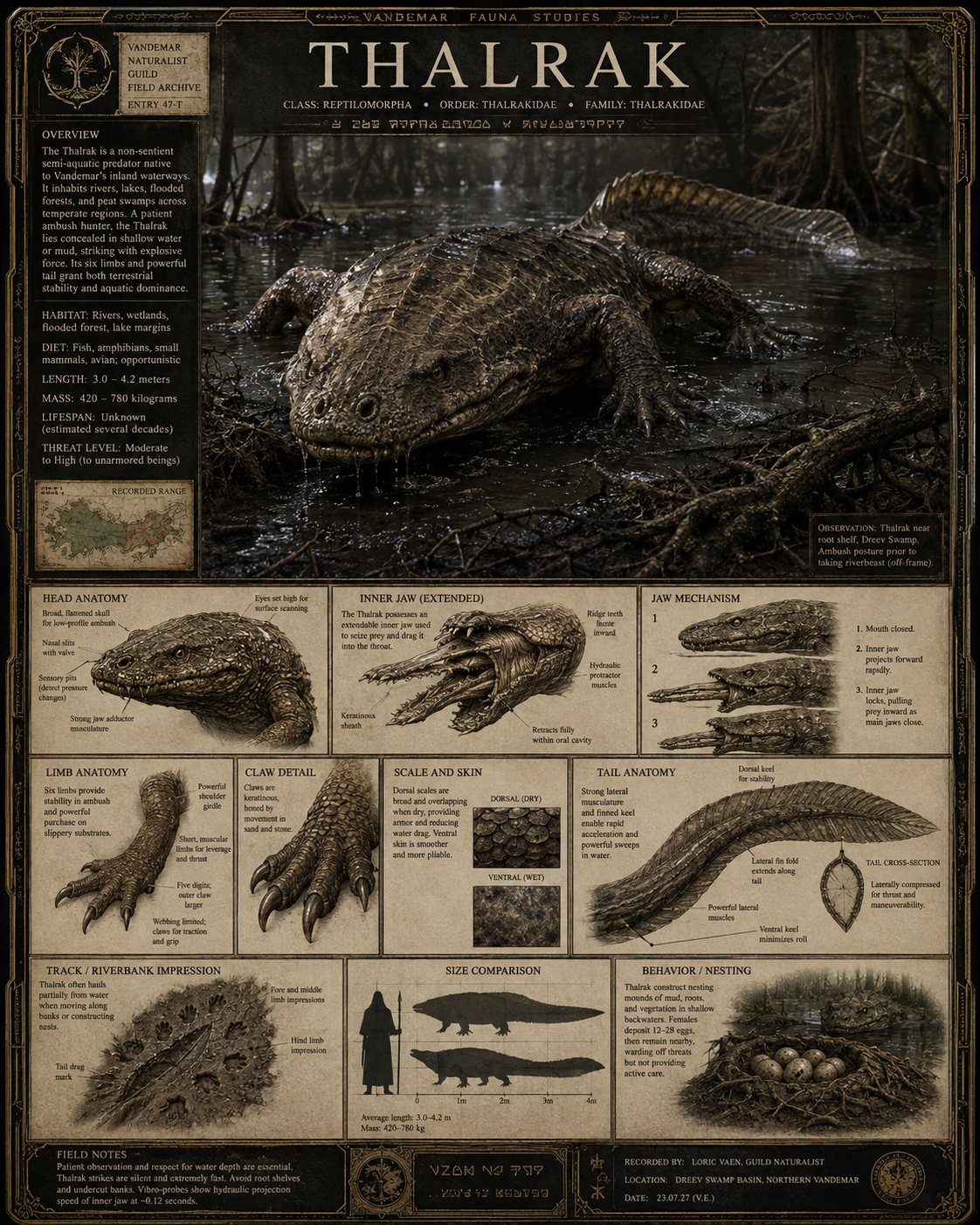
- Description: The thalrak is a broad, six-limbed river predator that waits beneath mud, roots and dark water for prey to approach the bank. Its flattened body and bark-patterned hide make it almost indistinguishable from submerged debris. When it strikes, the water seems to open around a ring of teeth.
PHYSICAL INFORMATION
- Breathes: Type I atmosphere; capable of remaining submerged for up to four standard hours
- Average Height of Adults: 0.8–1.2 metres at the back
- Average Length of Adults: 4–6 metres
- Skin color: Mud-brown, grey, dark green or mottled black
- Hair color: None
- Distinctions: Thalraks possess six short, muscular limbs, a flattened torso and a long laterally compressed tail used for propulsion. Their outer skin becomes smooth and flexible when submerged but dries into overlapping defensive scales on land. The broad skull contains an extendable inner jaw capable of seizing prey and dragging it deeper into the mouth. Sensory pits along the snout detect heat, water pressure and movement. Males grow heavier cranial ridges, while females are generally larger and more aggressive near nesting banks. Old specimens develop algae-stained armour, broken teeth and pale scars across the muzzle.
- Races: None formally recognised. River thalraks are leaner and faster, while lake populations grow larger and more heavily armoured.
- Force Sensitivity: Non-Sensitive
- Exceptional aquatic camouflage and ambush capability
- Powerful jaws, tail and six-limbed grip
- Can remain motionless underwater for several hours
- Slow and awkward over extended distances on land
- Sensitive respiratory vents behind the skull
- Vulnerable to electrical and concentrated sonic weapons underwater
CULTURE
- Diet: Carnivore. Thalraks consume fish, amphibious animals, waterfowl, herd beasts and carrion. Large specimens occasionally attack boats, livestock and sentients approaching the water.
- Communication: Low underwater pulses, jaw clacking, scent deposits and tail strikes against riverbeds.
- Technology level: None.
- Religion/Beliefs: None.
- General behavior: Thalraks are solitary outside the breeding season and defend stretches of water against others of their kind. They rarely pursue prey far from the shoreline, preferring to wait near drinking sites, crossings and constricted channels. Females bury clutches in warm riverbanks and guard the area until the young hatch. Juveniles remain in shallow water, feeding on fish and smaller animals before dispersing. Mature thalraks often return to the same ambush sites for decades and can learn the schedules of ferries, livestock routes and patrols.
HISTORICAL INFORMATION
Thalrak fossils are common throughout Vandemar's freshwater basins, marking the species as one of the planet's oldest surviving predators. Its ancestors were smaller amphibious hunters, but competition with land predators drove them toward increasingly specialised ambush behaviour.
Early settlements frequently built bridges and docks directly over thalrak nesting grounds. The resulting attacks gave rise to some of Vandemar's oldest river-monster legends. Later surveys established that the beasts were neither supernatural nor indiscriminately aggressive; they were territorial animals exploiting predictable concentrations of prey.
Modern waterways use submerged sensors, elevated drinking stations and sonic deterrents to keep thalraks away from populated crossings. Individuals that begin hunting sentients are marked for removal, often by river wardens or knightly hunters.
Along remote rivers, travellers are taught to distrust still water. Ripples indicate movement. Silence may indicate that the thalrak is already beneath them.