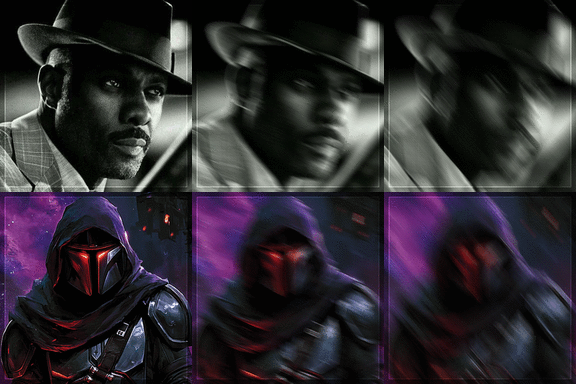
Isley the Younger had listened in silence, his presence composed and deliberate among the gathered nobility, eyes attentive without ever drifting into spectacle. He had heard the reports long before this evening, fragments of devastation carried through secure channels and whispered across diplomatic corridors, and he had already stripped them of their poetry. Tragedy, yes, but tragedy alone had never been enough to move the machinery of survival. Around him, sympathy flowed easily, nobles recognizing the pain of nobles, mirrors reflecting mirrors, but Isley’s mind remained anchored elsewhere, in consequence, preparation, and the cost of assuming protection would always come from beyond one’s own borders.
Tapani had once stood comfortably close to the Galactic Alliance, basking in the assurance that proximity to power was protection enough. When that Alliance fractured, there should have been urgency. Fleets expanded. Garrisons hardened. Warriors trained not for ceremony but for war. Then the Galactic Empire rose, brazen enough to unveil a weapon that could erase worlds, and still
Tapani did not act with the ruthlessness the age demanded. Comfort had lingered where vigilance should have taken root, and now the Sith Covenant ruled the aftermath of that complacency. Isley did not deny the cruelty of it, nor the pain etched into Lord Wenelle’s voice, but he could not ignore the lesson written in fire.
This was not a time for romantic heroics or grand gestures meant to soothe the conscience. It was a reminder, sharp and unforgiving, that the High Republic survived only so long as its Houses chose endurance over indulgence. There was a season for banners raised in righteous fury, and another for walls thickened, supply lines secured, and children taught to live beyond the reach of mercy. Isley’s thoughts rested firmly in that latter season.
After
House Abrantes offered their words, heartfelt and sincere, Isley stepped forward, the movement unhurried and assured. He inclined his head in courtesy, acknowledging both host and speaker, before allowing his voice to carry across the space.
“House Verd offers its sincere condolences.” Isley said, his tone measured, resonant, and unmistakably earnest.
“The loss of family and the loss of a home are grievous wounds to the heart and soul, and no House that endures through history is untouched by such scars.”
He let the words settle without haste, neither pressing forward nor retreating from their implication.
“We mourn with those who have suffered, and we will remember them.” he concluded, eyes steady, unflinching.
With that, Isley inclined his head once more and stepped back from where he had stood, offering respect without promise, sympathy without silver. House Verd did not open its coffers for distant absolution. It fortified its own walls, so that its people would never need to beg beneath another’s roof.



 Tokki Utixo
to give a speech and, if he was up to it, give a small question and answer period during dinner. Oriana had chosen a less formal method for this, eager to put Lord Wenelle at ease and to get the real story of what had occurred. Every piece of news had their own spin, she found it better to go straight to the source.
Tokki Utixo
to give a speech and, if he was up to it, give a small question and answer period during dinner. Oriana had chosen a less formal method for this, eager to put Lord Wenelle at ease and to get the real story of what had occurred. Every piece of news had their own spin, she found it better to go straight to the source.