

✠ Nihilus Indomitus ✠




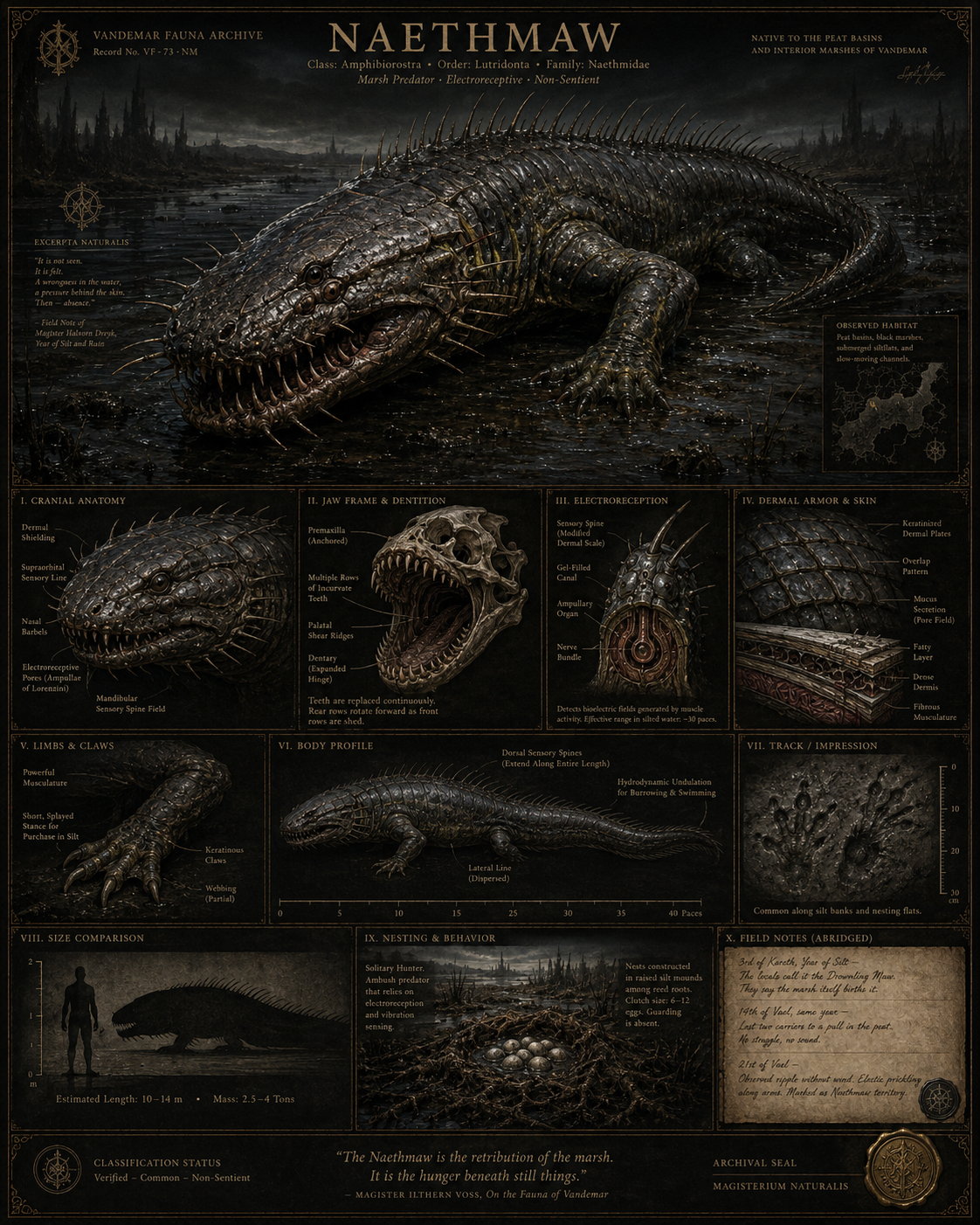
- Intent: To fill the world of Vandemar with interesting and diverse life that is intriguing to roleplay with.
- Image Credit:
- Canon: N/A
- Permissions: N/A
- Links: Vandemar
GENERAL INFORMATION
- Name: Naethmaw
- Designation: Non-sentient
- Origins: Vandemar; marshlands, flooded caverns, peat basins and slow river systems
- Average Lifespan: 32–48 standard years
- Estimated Population: Planetary; concentrated within Vandemar's major wetland regions
- Description: The naethmaw is an immense amphibious predator that swims through mud as readily as water. Usually concealed beneath marsh sediment, it detects the electrical impulses of living bodies and active machinery before erupting upward in a mass of teeth, armour and black water. In the wetlands, a failing power cell can summon one as surely as spilled blood.
PHYSICAL INFORMATION
- Breathes: Type I atmosphere and dissolved oxygen in water through secondary respiratory membranes
- Average Height of Adults: 0.9–1.4 metres at the back
- Average Length of Adults: 5–7.5 metres
- Skin color: Black, mud-brown, dark green or mottled grey
- Hair color: None
- Distinctions: Naethmaws possess long eel-like bodies, four short limbs and broad heads protected by overlapping dermal plates. Sensory spines along the back and jaw detect electrical fields produced by muscle activity, cybernetics and powered equipment. Their mouths contain several rows of inward-curving teeth, while muscular throat structures allow them to swallow large prey whole. Females are generally larger and possess broader abdomens; males develop longer dorsal spines during the breeding season. Older specimens accumulate pale scars, mineral deposits and broken sensory spines.
- Races: None formally recognised. Deep-marsh populations are darker and larger, while river naethmaws are leaner and more active swimmers.
- Force Sensitivity: Non-Sensitive
- Exceptional electroreception and ability to detect concealed prey
- Powerful ambush attacks from mud, water or flooded ground
- Thick armour and high tolerance for contaminated environments
- Easily confused by powerful electromagnetic interference
- Slow and vulnerable on dry, hard terrain
- Soft respiratory membranes beneath the jaw are poorly protected
CULTURE
- Diet: Carnivore. Naethmaws consume fish, amphibious animals, carrion, marsh herbivores and sentients. They are strongly attracted to electrical activity and frequently attack damaged vehicles, droids and individuals with active cybernetics.
- Communication: Low underwater pulses, electrical discharges, body vibrations and scent deposits within mud.
- Technology level: None.
- Religion/Beliefs: None.
- General behavior: Naethmaws are solitary ambush predators outside the breeding season. They bury themselves beneath mud near waterways, animal trails and sources of electrical activity. Unlike thalraks, they often pursue prey through submerged soil, producing little visible disturbance until the final strike. Females lay clutches inside flooded caverns and remain nearby until the young disperse. Juveniles feed on fish and insects before developing the size and strength to hunt larger animals. Mature specimens may claim abandoned industrial sites where leaking power systems provide both warmth and a constant lure for prey.
HISTORICAL INFORMATION
The naethmaw evolved within Vandemar's mineral-rich wetlands, where poor visibility favoured electrical sensing over conventional sight. Fossil evidence suggests that its ancestors were smaller cave-dwelling amphibians that gradually expanded into open marsh systems.
The spread of modern technology unintentionally increased the species' danger. Power conduits, repulsor engines and cybernetic implants produce signals that naethmaws interpret as injured or struggling prey. Early wetland colonies lost entire work crews after assuming that powered floodlights and perimeter droids would deter local predators.
Modern marsh settlements use insulated infrastructure, decoy emitters and elevated transit routes. Specialist wardens carry devices that project false electrical signatures away from patrols. Damaged vehicles are recovered quickly or abandoned entirely.
Among Vandemarian soldiers, the warning "go dark in the mire" is literal. When the water begins to move, shutting down may be the only reason the naethmaw chooses something else.