

Father of Titans




|| THE BASICS ||
- Full name: No true name
- Preferred Name: Garza, Given name by Mother
- Alias: Inari - Godly name given by cultists.
- Titles:
- Designation: Titanfall
- Father of Titans
- Lord of Girth
- Species: Sithspawn
- Race: Altered Levithan/Sea Leviathan
- Birthworld: Spaceborn
- Homeworld: Supposed Zeltros
- Faction(s):
- Independent (Mostly)
- The Sith Order
- The Sith Covenant
- Rank(s):
- Master Force User
- Class:
- Sithspawn
- Monster
- Master(s):
- Padawan(s): N/A
- Force Sensitive: Yes
- Force Alignment: Neutral
- Gender: Male
- Age: Unknown true age
- Height:
- Leviathan Form - 350 Meters
- Human Form - 5 Foot 2 Inches / 1.57 Meters
- Weight:
- Leviathan Form - 147,549 tons
- Human Form - 61 Kgs / 135 Lbs
- Complexion:
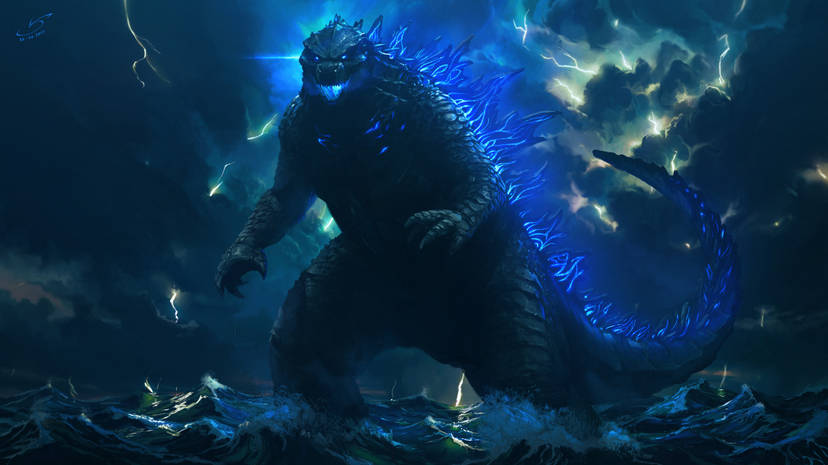
- Leviathan Form - Scales are a gradient of black, grey, and blue.
- Human Form - Pale/Fair Skin Tone
- Eye Color:
- Leviathan Form - Piercing Blues
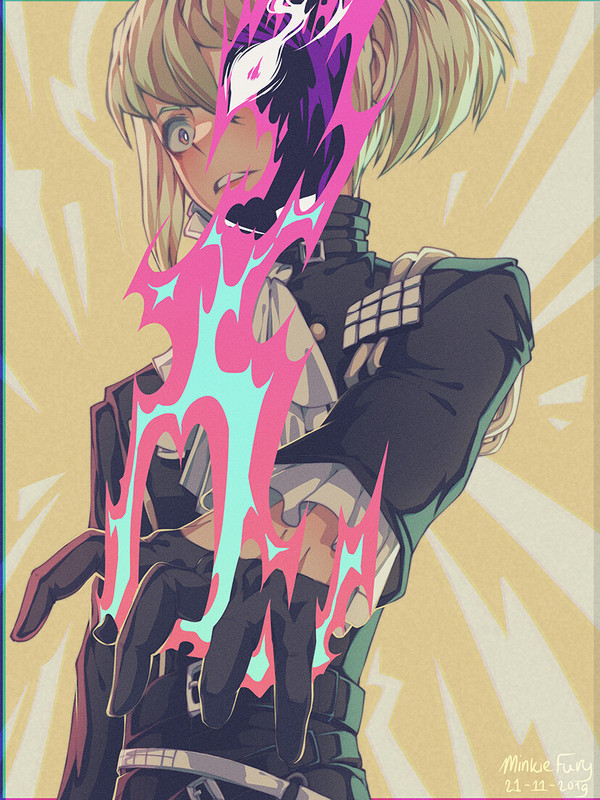
- Human Form - Magenta
- Hair Color:
- Leviathan Form - None
- Human Form - Green-blonde
- Voice Sample: Kingly Roar
- Marital Status: Single
- Sexual Conduct: Undetermined
- Languages:
- Knows and Understands Many.
- Occupation: None
- Residence: None
- Family:
-
 Srina Talon
- Mother
Srina Talon
- Mother
-
|| OVERVIEW ||
Garza is an ancient Leviathan and a living archive of civilizations long forgotten by history. Across an existence spanning ages beyond the memory of most species, he has witnessed the rise and fall of empires, the birth and extinction of cultures, and the gradual erosion of countless peoples whose names no longer exist within the galaxy's collective memory. Where others see the passage of time as inevitable, Garza sees loss. Every forgotten language, every destroyed archive, every civilization reduced to myth represents a wound upon history itself.
Unlike historians, archivists, or scholars who preserve knowledge through records and stories, Garza preserves memory directly. Through consumption, he absorbs not only information but experiences, emotions, perspectives, beliefs, traditions, and histories. Those lives do not vanish entirely. Instead, they become part of an ever-expanding Archive carried within him. Every civilization he preserves continues to exist in some form, remembered through his endless collection of voices and experiences.
To many, Garza is a monster. To others, he is a force of nature. Some have mistaken him for a god. Garza rejects all such titles. He views himself as something far simpler. A witness. A keeper of memory. A being tasked with remembering what the galaxy would otherwise allow itself to forget.
Yet despite possessing knowledge accumulated across countless lifetimes, Garza remains strangely disconnected from the societies he studies. He understands customs, traditions, politics, religions, relationships, and cultures through observation rather than participation. He knows what people do and often understands why they do it, yet struggles to grasp the instinctive emotional foundations that make those behaviors feel natural. Recently gaining the ability to assume a humanoid form, Garza has begun walking amongst civilizations rather than merely observing them from afar. For perhaps the first time in his existence, he is attempting to understand people not as records within an archive, but as individuals.
|| APPERANCE ||

Leviathan Form
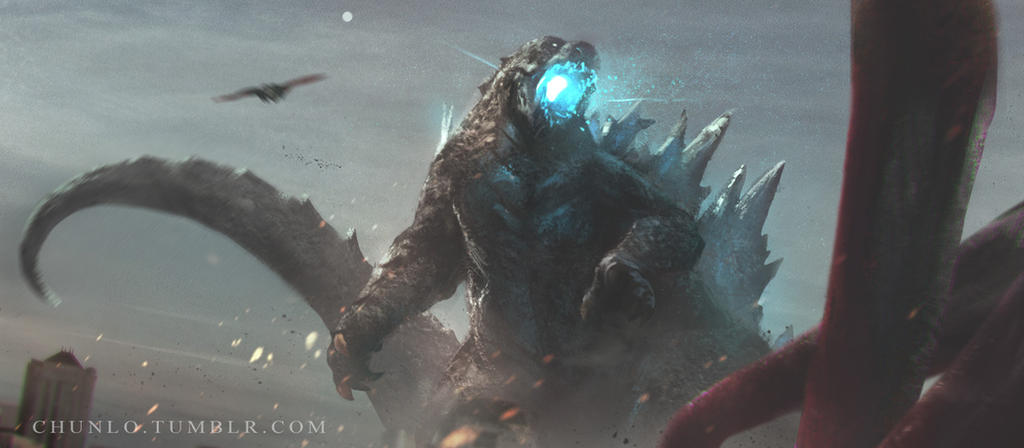
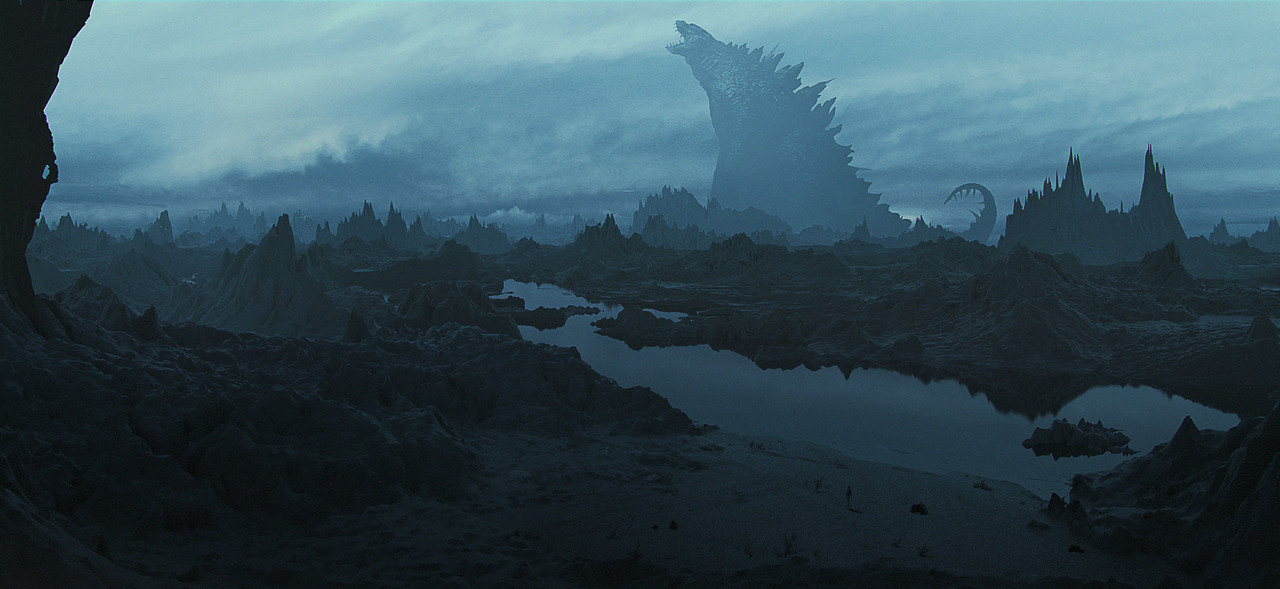
Garza's true form is that of an immense Leviathan whose size eclipses most conventional lifeforms. Ancient beyond measure and carrying the scars of countless ages, his body bears the weight of a being that has existed long enough to watch civilizations emerge, flourish, and vanish. Massive scales layered like living armor cover his form, each marked by time and conflict. To stand before Garza is not merely to witness a creature of immense power, but to confront something that feels fundamentally older than modern civilization itself.
Many who encounter Garza describe an overwhelming sense of insignificance. His presence carries the weight of deep history, as though the observer stands before a living monument that remembers events long before their species first walked beneath the stars. Some perceive him as a monster. Others as a god. Still others as a natural disaster given thought and purpose. Garza sees himself as none of these things.
To him, this form is simply what he is.
Archivist Form
Through Metamorphosis, Garza possesses the ability to assume a humanoid appearance. Unlike many shapeshifters, this form was not chosen to inspire fear, command authority, or conceal his identity. Instead, it reflects something far more personal.
The Archivist Form represents what Garza believes he would have been had he not been born a Leviathan.
Pale hair frames soft and androgynous features that resist easy categorization. Neither distinctly masculine nor feminine, the appearance reflects Garza's complete indifference toward societal expectations surrounding identity and presentation. Having never grown up within civilization, concepts of masculinity and femininity hold little meaning to him beyond their historical and cultural significance.
His clothing is practical but refined, favoring long coats, layered fabrics, gloves, and garments more appropriate for a scholar or historian than a warrior. There is an intentional absence of intimidation. Nothing about the form seeks to project power.
Only the eyes betray the truth.
Though youthful in appearance, they carry an impossible age. Behind them rests the accumulated memory of civilizations, cultures, and lives stretching back through ages most beings can scarcely comprehend. Those who spend enough time speaking with Garza eventually recognize something unsettling. The person standing before them appears young, yet speaks with the perspective of someone who has witnessed entire histories unfold.
This form is not a disguise.
It is an aspiration.
A reflection of the person Garza believes he might have become had his existence been one of preservation rather than consumption.
|| PERSONALITY & MENTALITY ||
Garza is patient, observant, and deeply curious. Unlike many ancient beings who grow detached from the lives around them, his fascination with people has only deepened over time. Civilizations, cultures, traditions, and relationships captivate him because they are the very things he fears losing. Every society represents a unique expression of existence. Every individual contributes to a story larger than themselves.
This fascination often leads others to mistake Garza for compassionate. While he is capable of kindness, his interest in others stems less from empathy and more from understanding. He wishes to know how people think, why they believe what they believe, and how civilizations shape themselves across generations. To Garza, every conversation is an opportunity to learn something that did not previously exist within the Archive.
His mind naturally organizes information through connections. Rarely does he view an event as isolated. Every action becomes part of a larger pattern. Every decision exists within historical context. Every individual carries influences inherited from generations before them. The Archive constantly reinforces this perspective, causing Garza to view history as an interconnected web rather than a collection of separate events.
Despite possessing immense knowledge, Garza frequently struggles with social intuition. He understands etiquette, customs, traditions, humor, romance, grief, and countless other aspects of civilization through observation and memory, yet lacks the instinctive understanding most people develop naturally through life. He knows what a handshake means. He may not understand why it matters. He understands mourning rituals. He does not always understand why individuals require them. He recognizes social expectations, but often finds their emotional foundations confusing.
This disconnect occasionally makes Garza unsettling. He is extraordinarily honest and rarely sees value in deception. Questions receive direct answers. Observations are often stated without consideration for how others might perceive them. He may compare a stranger to someone who died centuries ago or reference memories that are not his own without realizing why such statements disturb those around him.
The Archivist Form has only amplified these difficulties. For the first time in his existence, Garza can participate in the societies he once observed from afar. Yet participation has revealed how much he still does not understand. He has spent ages studying civilization as an observer. Living within it has proven far more complicated.
Above all else, Garza remains an outsider. Not because he wishes to be, but because he was never born into the world he now seeks to understand.
|| PHILOSOPHY ||
Garza's view of existence has been shaped by a perspective few beings could ever possess. He has lived long enough to watch civilizations emerge from obscurity, grow into great powers, fragment, and eventually disappear. Entire species have risen beneath the stars only to leave behind ruins and stories that would themselves eventually fade. Through those experiences, Garza came to a realization that would define much of his existence. Death is not what truly concerns him. Death is natural. Every living thing eventually reaches its end. What troubles him is oblivion.
Throughout his life he has witnessed countless peoples survive wars, disasters, invasions, and extinctions only to lose something far more important in the centuries that followed. Languages disappeared. Traditions changed beyond recognition. Histories were forgotten. Descendants continued living while the cultures that shaped them slowly dissolved into memory. The more Garza observed this pattern, the more he began viewing survival and preservation as entirely separate concepts. A civilization could survive physically while losing the very things that once defined it. To many, that transformation was simply part of history. To Garza, it represented a quieter form of extinction.
Because of this, he places tremendous value upon memory. Not merely personal memory, but collective memory. Stories, traditions, languages, beliefs, customs, and histories all matter because they form the foundation upon which civilizations understand themselves. Every culture represents a unique attempt to answer the same questions. Who are we? Where did we come from? What do we value? What should be remembered? Garza sees worth in those answers regardless of whether they originated from conquerors, refugees, kingdoms, empires, republics, or forgotten tribes. Existence itself grants significance. A civilization does not need to be righteous or powerful to deserve remembrance. It only needs to have existed.
This belief naturally shaped the way Garza views knowledge. To him, knowledge possesses value independent of usefulness. A forgotten language matters. An obscure tradition matters. The personal journals of an otherwise insignificant individual matter. Most beings pursue knowledge because it grants power, security, or advantage. Garza preserves it because he believes the act of remembering carries responsibility. The more one learns, the more accountable they become for ensuring that knowledge is not lost. In many ways, this responsibility is the burden Garza has chosen to carry throughout his existence.
His understanding of the Force follows a similar path. Garza does not view the Force as a weapon, a religion, or even a power to be mastered. Having existed long enough to witness countless Force traditions rise and disappear, he sees every philosophy as another attempt to describe something fundamentally larger than itself. Jedi, Sith, shamans, priests, mystics, and scholars all approach the Force differently, yet Garza believes each possesses only a fragment of the greater whole. Entire civilizations have devoted themselves to understanding it. Entire orders have claimed mastery over it. All eventually passed into history while the Force remained unchanged.
As one of the oldest living beings in existence and potentially the first Leviathan ever born, Garza's connection to the Force predates most recorded history. He does not remember discovering it because there was never a time when it was absent from his life. The Force has always existed around him and within him. To Garza, interacting with the Force feels no more unusual than breathing. This perspective is one of the reasons he rarely separates abilities into categories of light and dark, natural and unnatural, sacred and profane. Every expression of the Force is simply another aspect of the same greater reality. Some uses may be wiser than others. Some may be more destructive. Yet they all originate from the same source.
The Archive only deepened this understanding. Every life preserved within him contributes another perspective. Every culture offers another interpretation. Every Force tradition reveals another piece of a puzzle so vast that no single being could ever hope to complete it. Despite the immense knowledge he possesses, Garza does not consider himself wise. If anything, the opposite is true. The longer he exists and the more he learns, the more aware he becomes of how little can truly be understood. The Force, like history itself, is too vast for any one perspective to contain. Garza's purpose is not to master it. His purpose is to observe, preserve, and continue learning from it for as long as he exists.
|| HISTORY ||
Garza's origins reach back so far into the past that much of his earliest existence has become impossible to place within any surviving historical framework. Whether he was truly the first Leviathan remains unknown, but few living beings possess a connection to the Force as ancient as his. He emerged into a galaxy vastly different from the one known today, a galaxy whose civilizations, species, and cultures have long since vanished. Entire epochs passed during his lifetime. Worlds changed. Stars acquired new names. Histories were written, forgotten, and rewritten again. Through it all, Garza endured.
Much of his early existence was defined by instinct rather than reflection. Like many ancient creatures, he lived according to needs and impulses that required little self-examination. Survival, growth, and adaptation governed his understanding of the universe. Yet as the centuries accumulated, something changed. Whether through age, his extraordinary connection to the Force, or simply the weight of accumulated experience, Garza gradually became more than a creature acting upon instinct. He became aware of himself as an individual existing within history rather than merely passing through it.
That awareness transformed the course of his existence. For the first time, Garza began paying attention to the civilizations growing around him. At first they were curiosities. Brief sparks of life that appeared and disappeared with surprising speed. Yet as he watched them rise and fall, he became increasingly fascinated by the things they left behind. Ruins endured long after their builders died. Stories survived long after kingdoms collapsed. Traditions persisted through generations even when their origins had been forgotten. Garza began to realize that memory itself possessed a kind of permanence that physical existence lacked.
Over time, this fascination evolved into obsession. The first preserved memories altered his understanding of life entirely. What began as isolated experiences gradually expanded into something far greater. Knowledge became perspective. Perspective became understanding. Understanding became the foundation of what would eventually become the Archive. With every passing century, Garza accumulated more memories, more histories, and more fragments of civilizations that otherwise would have disappeared completely. Eventually preservation ceased being something he practiced and became the defining purpose of his existence.
The modern era has challenged many of the assumptions Garza carried for ages. Civilizations became increasingly interconnected. Information moved faster than ever before. The galaxy grew both larger and smaller simultaneously. Encounters with scholars, explorers, Force users, and ordinary individuals gradually shifted Garza away from being a passive observer of history. He began participating in it. Recent events only accelerated that change. The development of his Archivist Form granted him something he had never truly possessed before: the ability to walk amongst the civilizations he once studied from a distance.
For perhaps the first time in his existence, Garza found himself experiencing society rather than merely recording it. The transition has not been simple. He understands cultures far better than he understands people. He comprehends traditions more easily than emotions. Yet each interaction reveals something the Archive cannot teach him. There are aspects of existence that cannot be inherited through memory. They must be lived.
It is a realization Garza continues to grapple with. For all the civilizations he carries within him, for all the histories he has preserved, and for all the knowledge accumulated across countless lifetimes, he has begun to suspect that understanding life may require more than remembrance alone. It may require participation. And so, after ages spent observing history from afar, Garza has finally begun stepping into it himself.
|| THE ARCHIVE ||

The Archive is the defining aspect of Garza's existence and the foundation upon which much of his identity has been built. While many assume it to be a collection of memories or some form of living database, the reality is considerably more complex. The Archive is not simply information stored within Garza's mind. It is an accumulation of lives.
Every memory preserved within the Archive carries more than knowledge. Experiences, emotions, beliefs, perspectives, traditions, languages, customs, and histories all remain embedded within the lives that contributed them. A soldier's memory contains not only the events of a battle but the fear, conviction, uncertainty, and understanding that accompanied it. A historian contributes not only facts but the context through which those facts were understood. Entire civilizations exist within the Archive not as records, but as perspectives.
Contrary to what many might expect, Garza does not constantly hear voices. The Archive does not function as a chorus of the dead speaking within his thoughts. Instead, it resembles an endless library whose contents naturally surface when needed. Memories connect themselves to one another. Patterns emerge. Similar experiences align across centuries and civilizations. A question asked in the present may draw understanding from lives separated by thousands of years and countless worlds.
This grants Garza an extraordinary ability to recognize connections others might overlook. Historical events rarely appear isolated to him. Cultural traditions reveal common origins. Languages expose influences hidden beneath generations of change. Behaviors often make sense when viewed through the accumulated experiences of those who came before. The Archive allows Garza to view history as an interconnected whole rather than a collection of separate stories.
Yet the Archive is not merely a source of understanding. It is also a burden. Every tragedy remains. Every extinction remains. Every failure remains. Most people are protected by forgetfulness. Time softens grief, dulls memories, and allows wounds to heal. Garza possesses no such luxury. The civilizations preserved within him remain as vivid as the day they were lost. Their victories endure alongside their failures. Their joys endure alongside their suffering.
There are moments when Garza questions whether remembering everything is truly a gift. Yet each time the thought emerges, he inevitably reaches the same conclusion. Whatever burden memory creates, it is preferable to oblivion. If someone must remember what has been lost, then that responsibility belongs to him.
|| THE FAITH OF INARI ||
Throughout most of his existence, Garza existed outside of civilization. He observed cultures, preserved histories, and witnessed the rise and fall of countless peoples, but rarely participated in their lives directly. Even as his understanding of civilization expanded, he remained fundamentally separate from it. He was too large, too ancient, and too different to truly belong amongst those he studied.
The Faith of Inari became one of the few exceptions.
Over time, individuals began gathering around Garza not out of fear or obligation, but belief. Some viewed him as a guardian of memory. Others saw him as a divine figure. Many simply believed that the histories and cultures he sought to preserve deserved protection. Whatever their reasons, these individuals gradually formed a community dedicated to preserving knowledge, history, tradition, and remembrance.
Within the Faith, Garza is often referred to as Inari, a name that has become inseparable from his identity despite never originating from him. While many followers associate the title with divinity, Garza himself has never claimed such status. He does not consider himself a god, nor does he actively encourage worship. If anything, the attention often leaves him uncertain. He understands the historical role religion has played throughout countless civilizations, yet struggles to fully comprehend why individuals would choose to place their faith in him specifically.
Despite this discomfort, Garza has gradually come to value the Faith in ways he rarely admits. They are among the few people who interact with him as something more than a monster, weapon, disaster, or historical curiosity. They accompany him during travels, maintain archives, preserve records, recover lost histories, and assist with the practical difficulties that accompany a creature of his size. In many ways, they have become the hands through which Garza is able to interact with the wider galaxy while in his Leviathan form.
The relationship remains unusual. Many members of the Faith revere Garza in ways he neither expects nor entirely understands, while Garza views most of them through the lens of responsibility rather than authority. He remembers their names. He remembers their stories. He remembers their fears, hopes, triumphs, and failures. To the Faith, Garza may be Inari. To Garza, they are individuals whose lives have become part of his own history.
As Garza has begun spending more time within civilization through his Archivist Form, the nature of the relationship has slowly evolved. The Faith no longer serves merely as caretakers, attendants, or followers. Increasingly, they have become companions. Some serve as guides through social customs he struggles to understand. Others challenge perspectives he has held for centuries. A few have even become friends, a concept Garza understands far less than he understands history.
For a being who has spent most of his existence watching civilizations from a distance, the Faith of Inari represents something unfamiliar.
Not worship.
Not obedience.
Belonging.
|| STRENGTHS ||
Garza's greatest strength is neither his size nor his connection to the Force. It is perspective. Few beings in existence possess the breadth of understanding accumulated through ages of observation and preservation. The Archive grants him access to countless viewpoints, allowing him to examine problems through lenses most individuals could never imagine. Histories, cultures, philosophies, and experiences all contribute toward a level of contextual understanding that often borders on prophetic insight.
His connection to the Force is similarly extraordinary. As one of the oldest known living beings and potentially the first of his kind, Garza's relationship with the Force predates most modern traditions. While many Force users learn specific techniques through training and discipline, Garza's understanding has developed through exposure to countless interpretations gathered across ages. This breadth of knowledge allows him to approach the Force with a flexibility uncommon among practitioners bound to a single philosophy or doctrine.
Physically, Garza remains one of the most formidable creatures in existence. His Leviathan form possesses immense strength, resilience, and longevity, allowing him to survive conditions that would destroy most living beings. Entire civilizations have risen and fallen during his lifetime, yet he continues to endure. Time itself has become one of his greatest advantages. The simple fact that Garza has existed long enough to witness so much grants him a depth of understanding that cannot be replicated through training alone.
Despite his immense power, Garza's patience may be one of his most dangerous qualities. He rarely acts impulsively. Situations that might provoke anger, fear, or panic in others are often viewed through the lens of centuries. This allows him to remain calm during circumstances that would overwhelm most individuals and often enables him to recognize solutions that others miss entirely.
|| WEAKNESSES ||
For all the knowledge preserved within the Archive, Garza remains profoundly limited by his own perspective. The memories he carries provide understanding, but understanding is not the same as experience. He knows how people grieve, yet that knowledge does not necessarily allow him to comfort them. He understands friendship, love, loyalty, and belonging, but often struggles to navigate those concepts in practice. Much of civilization remains something he has studied rather than truly lived.
This disconnect frequently manifests through social misunderstandings. Garza often recognizes what people are doing without understanding why they are doing it. Unwritten social rules can confuse him. Emotional nuance may escape him. Statements that seem perfectly reasonable from his perspective can appear unsettling or inappropriate to others. While the Archivist Form allows him to participate in society more directly than ever before, it has also exposed just how much he still does not understand about ordinary life.
His attachment to memory creates additional vulnerabilities. Garza finds it difficult to accept loss, particularly when that loss involves culture, history, or identity. He understands intellectually that change is inevitable, yet emotionally struggles with the idea that some things must eventually disappear. This can lead him toward decisions that prioritize preservation over the wishes of the living. In extreme cases, his desire to prevent oblivion may cause him to overlook the value of allowing history to move forward naturally.
The Archive itself is both a strength and a burden. While it grants immense knowledge, it also ensures that Garza carries the weight of countless tragedies. Extinctions, wars, betrayals, disasters, and the collapse of civilizations remain present within him. He cannot simply forget painful memories. Every loss remains accessible. Every grief remains preserved. Over time, this accumulation has fostered a quiet melancholy that rarely leaves him.
Perhaps most importantly, Garza's immense age can become a weakness in itself. Having witnessed civilizations rise and fall countless times, he occasionally struggles to appreciate the urgency with which others experience their lives. What appears temporary to him may represent an entire lifetime to someone else. While he values individual lives deeply, his perspective can sometimes become so broad that he loses sight of the smaller moments that give those lives meaning.
|| POSSESSIONS ||
- G4R5A Series Drop Pods - Drop pods used to transport Garza from a ship to planetary bodies.
- Leviathan Class Siege Cannon - Personal weapon used in open warfare.
- The Faith of Inarai - Personal cult/religion that follows and aids in transportation of Garza.
Last edited: