

Son of the Reaper



House of Zambrano · Bloodline of Emperors
VULCAN
ZAMBRANO
Son of the Reaper — Heir to the Black Throne
▼ ◆ ▼
Bloodline
Sire: Darth Prazutis
Dam: Braith Achlys
House: Zambrano
Born: Unknown
Species: Epicanthix-Sith Hybrid
Standing: Heir
Sith Standing
Rank: Knight
Title: Prince
Allegiance: The Sith Order
Master: Unknown
Blade: Crimson
Threat: Dynastic Asset
▲ ◆ ▲
The Black Litany
Peace is a lie, there is only Passion.
Through Passion, I gain Strength.
Through Strength, I gain Power.
Through Power, I gain Victory.
Through Victory, my chains are Broken.
The Force shall free me.
▼ ◆ ▼
I · Chronicle Opens
The Heir Declared
Vulcan Zambrano was not born, he was declared. The galaxy didn't stumble upon him; it was informed of him. The dynasty that produced him does not announce children, it announces successors, and from the very moment he took shape under his father's gaze the question was never whether he would become a Sith but what kind of Sith the bloodline had at last produced. Other heirs scrape across decades to earn legitimacy. He inherited it as one inherits gravity. The progeny of two force wielders of such power, to be considered forces of nature. Vulcan was born in the very shape of ancient Dark Lord of the Sith combined with the legendary House Zambrano: Epicanthix-Sith Hybrid.
To name him is to invoke a chain. Darth Prazutis, his father, who reshaped the galaxy. The Zambrano line behind that, hard and ancient as obsidian. The Sith Order beneath all of it, an institution whose memory is measured in millennia and whose patience for pretenders is measured in seconds. Vulcan stands at the convergence of those three weights, and he carries them not as burden but as architecture, the scaffolding inside which his own becoming will be built.
He is still young by the measure of what he intends to do. That is the point. A finished Sith Lord can be studied, classified, prepared for. An heir still being forged is something the galaxy can only guess at, and guess wrong. By the time the shape of him is clear, the moment to oppose him will have already passed.
— Inscribed upon his ascension
II · The Vessel
Of Flesh and Blood

Age: Young Adult
Height: 7 Feet 10 Inches
Weight: 360 Pounds
Build: Lithe, Athletic
Skin: Tan
Eyes: Amber
Hair: Black
Markings: None
Corruption Tells: None
Voice: Ben Barnes
Bearing: Imperious
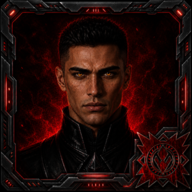
The first sign of Vulcan Zambrano's arrival is rarely sound. It is the temperature. Heat seems to withdraw from the chamber in degrees too subtle for instruments to protest and too immediate for the body to ignore, a cold pressure settling over skin, breath, and instinct. Conversation lowers before anyone decides to lower it. Trained warriors find themselves adjusting without command: feet widening by a fraction, shoulders squaring, thumbs drifting nearer to weapon releases, eyes recalculating exits and angles of attack that none of them are foolish enough to take. He does not loom with his father's colossal density, nor fill a room by force of motion. Vulcan's menace is quieter and worse. His stillness is not rest, but compression; a violence held inside perfect discipline, the gathered weight of bloodlines and one devoured inheritance pressing against the air around him. To share a room with him is to feel the moment before a blade is drawn, extended indefinitely.
Vulcan dresses as a prince of the Zambrano line should: not merely for protection, but for declaration. His regalia favors ceremonial black layered over combat utility, a hybrid of dynastic Sith dress and war-ready precision. Dark robes fall in severe lines over fitted armor plates worked into the shoulders, chest, and forearms, each piece shaped less like battlefield bulk and more like the visible architecture of authority. Obsidian fabrics drink the light, while crimson accents appear only where they matter: inner lining, runic stitching, sigils at the throat and clasp, small flashes of inherited blood rather than ornament. He does not need a crown, procession, or herald to announce him. The cut of his robes, the disciplined severity of his armor, and the ancestral symbols worked into his attire make the truth immediate. Vulcan Zambrano is not dressed to impress a court. He is dressed so that every court understands it stands beneath him.
Vulcan dresses as a prince of the Zambrano line should: not merely for protection, but for declaration. His regalia favors ceremonial black layered over combat utility, a hybrid of dynastic Sith dress and war-ready precision. Dark robes fall in severe lines over fitted armor plates worked into the shoulders, chest, and forearms, each piece shaped less like battlefield bulk and more like the visible architecture of authority. Obsidian fabrics drink the light, while crimson accents appear only where they matter: inner lining, runic stitching, sigils at the throat and clasp, small flashes of inherited blood rather than ornament. He does not need a crown, procession, or herald to announce him. The cut of his robes, the disciplined severity of his armor, and the ancestral symbols worked into his attire make the truth immediate. Vulcan Zambrano is not dressed to impress a court. He is dressed so that every court understands it stands beneath him.
— Witnessed in audience
III · The Mind
The Heir's Mind
Vulcan Zambrano thinks like someone who was not born in the ordinary sense, but awakened by conquest. Before he ever had the luxury of forming questions, his father planted answers in him like iron stakes driven through soft earth. From Prazutis he inherited the first and most unforgiving doctrine: that power is not a gift, nor a burden, nor a moral test, but the only honest language the galaxy has ever understood. Weakness was described to him not as misfortune, but as invitation. Mercy was not kindness unless it served a design. Love was not softness unless it made one controllable. Blood was not family alone, but obligation, chain of command, claim, and weapon. Prazutis taught him that the galaxy does not reward the worthy; it submits to those with the will to make worth undeniable. He taught him that fear, properly cultivated, can achieve what affection wastes decades attempting. He taught him that the Sith are not monsters because they hate the galaxy, but because they refuse to lie to it. Where Jedi soothe, Sith reveal. Where republics bargain, Sith decide. Where lesser rulers ask permission from history, the true Sith carve history open and write themselves into its bones. These were the convictions placed inside Vulcan before doubt had a name, and many of them remain there still, not as lessons remembered, but as instincts. Yet Vulcan's mind is not merely a mirror of his father's.
There are quiet contradictions in him, private heresies he has never confessed because they are not weakness, only refinement. Prazutis sees dominion as the natural consequence of supremacy; Vulcan has come to see dominion as a form of authorship. To rule is not only to crush, but to define. To inherit is not only to receive, but to edit. He does not believe the Sith owe the galaxy compassion, peace, or salvation. Such words disgust him when used by those too afraid to admit they crave obedience by gentler names. What the Sith owe the galaxy is clarity. They owe it the removal of comforting illusions. They owe it consequence. They owe it a hierarchy strong enough that civilization no longer pretends every voice has equal weight, every life equal gravity, every failure equal excuse. The Sith, to Vulcan, are the galaxy's terrible honesty made flesh. They are the blade that proves whether an age deserves to continue. But what the galaxy owes him is different, and far more personal. It owes him recognition. Not love, not worship, not even loyalty at first — those can be manufactured, purchased, broken, and remade. Recognition is harder.
Vulcan believes the galaxy owes him the acknowledgment that he is not an accident, not a lesser echo of Prazutis, not the shadow of Vesta, not the beautiful consequence of Braith's blood alone. He is the surviving synthesis. His consciousness came at the cost of his sister's essence, and whether he names that act necessity, inheritance, or sacrament depends on the hour and the wound being pressed. He carries Vesta within him not as guilt in the common sense, but as a second gravity. Her power did not merely strengthen him; it completed him, and that completion left a permanent question beneath all his certainty: if life was something he had to seize from another, then existence itself is conquest. This makes Vulcan intensely controlled, intensely observant, and quietly ravenous. He does not think in simple appetites. He thinks in structures, claims, debts, humiliations remembered with perfect stillness, and victories that must mean more than survival. He wants to be worthy of his father without becoming a replica of him. He wants to honor his mother's power without being softened by beauty or mysticism. He wants to carry Vesta's stolen fire without becoming haunted by the shape it once wore. In his own mind, Vulcan is not the son waiting beneath a dynasty. He is the proof that the dynasty can evolve.
Restraint, for Vulcan, is not mercy. It is theater sharpened into strategy. An heir of his rank does not need to perform anger for lesser beings to understand danger; the name Zambrano announces enough, and the blood behind it does the rest. He learned early that rage shown too freely becomes a language others can study, provoke, and survive. So he withholds it. He lets silence occupy the space where shouting would have gone. He allows insult to hang in the air until the one who spoke it begins to understand that survival was not granted, only delayed. When Vulcan chooses not to strike, it is not because the offense failed to reach him. It is because the punishment has not yet ripened into its most useful form. This is where his violence becomes signal rather than impulse. A raised hand, a glance to the guards, a slow step forward, the removal of a glove, the ignition of a blade — each action carries political weight because none of it is wasted. He does not lash out to prove he is dangerous. He selects violence when violence will educate the room. Against inferiors, restraint tells them he is beyond their ability to provoke. Against equals, it tells them he has measured the board more carefully than they have. Against enemies, it becomes unbearable, because nothing unsettles the brave more than a predator who refuses to hurry. Vulcan's anger is real, but it is banked behind discipline until it resembles cold law. When it finally emerges, it does not look like loss of control. It looks like judgment.
There are quiet contradictions in him, private heresies he has never confessed because they are not weakness, only refinement. Prazutis sees dominion as the natural consequence of supremacy; Vulcan has come to see dominion as a form of authorship. To rule is not only to crush, but to define. To inherit is not only to receive, but to edit. He does not believe the Sith owe the galaxy compassion, peace, or salvation. Such words disgust him when used by those too afraid to admit they crave obedience by gentler names. What the Sith owe the galaxy is clarity. They owe it the removal of comforting illusions. They owe it consequence. They owe it a hierarchy strong enough that civilization no longer pretends every voice has equal weight, every life equal gravity, every failure equal excuse. The Sith, to Vulcan, are the galaxy's terrible honesty made flesh. They are the blade that proves whether an age deserves to continue. But what the galaxy owes him is different, and far more personal. It owes him recognition. Not love, not worship, not even loyalty at first — those can be manufactured, purchased, broken, and remade. Recognition is harder.
Vulcan believes the galaxy owes him the acknowledgment that he is not an accident, not a lesser echo of Prazutis, not the shadow of Vesta, not the beautiful consequence of Braith's blood alone. He is the surviving synthesis. His consciousness came at the cost of his sister's essence, and whether he names that act necessity, inheritance, or sacrament depends on the hour and the wound being pressed. He carries Vesta within him not as guilt in the common sense, but as a second gravity. Her power did not merely strengthen him; it completed him, and that completion left a permanent question beneath all his certainty: if life was something he had to seize from another, then existence itself is conquest. This makes Vulcan intensely controlled, intensely observant, and quietly ravenous. He does not think in simple appetites. He thinks in structures, claims, debts, humiliations remembered with perfect stillness, and victories that must mean more than survival. He wants to be worthy of his father without becoming a replica of him. He wants to honor his mother's power without being softened by beauty or mysticism. He wants to carry Vesta's stolen fire without becoming haunted by the shape it once wore. In his own mind, Vulcan is not the son waiting beneath a dynasty. He is the proof that the dynasty can evolve.
Restraint, for Vulcan, is not mercy. It is theater sharpened into strategy. An heir of his rank does not need to perform anger for lesser beings to understand danger; the name Zambrano announces enough, and the blood behind it does the rest. He learned early that rage shown too freely becomes a language others can study, provoke, and survive. So he withholds it. He lets silence occupy the space where shouting would have gone. He allows insult to hang in the air until the one who spoke it begins to understand that survival was not granted, only delayed. When Vulcan chooses not to strike, it is not because the offense failed to reach him. It is because the punishment has not yet ripened into its most useful form. This is where his violence becomes signal rather than impulse. A raised hand, a glance to the guards, a slow step forward, the removal of a glove, the ignition of a blade — each action carries political weight because none of it is wasted. He does not lash out to prove he is dangerous. He selects violence when violence will educate the room. Against inferiors, restraint tells them he is beyond their ability to provoke. Against equals, it tells them he has measured the board more carefully than they have. Against enemies, it becomes unbearable, because nothing unsettles the brave more than a predator who refuses to hurry. Vulcan's anger is real, but it is banked behind discipline until it resembles cold law. When it finally emerges, it does not look like loss of control. It looks like judgment.
Dominant Traits
- Sovereign Restraint
- Dynastic Pride
- Devouring Ambition
- Cold Clarity
Ambitions
- To Become the Final Expression of the Zambrano Bloodline
- To Fully Master the Power He Took from Vesta
- To Build a Power Base Separate from His Father's Shadow
- To Force the Galaxy to Recognize His Right to Rule
Faultlines
- The Devoured Sister
- The Father's Shadow
- The Hunger for Recognition
- Restraint Becoming a Cage
Vendettas
- Those Who Call Him a Thief of Vesta
- Those Who Reduce Him to Prazutis's Son
- False Sith and Pretenders to Sovereignty
- Anyone Who Insults the Zambrano Dynasty
— From the heir's private record
IV · Doctrine
The Catechism of Power
To Vulcan Zambrano, the Force is not a mystery waiting to be solved, nor a wilderness through which he must stumble with the desperation of lesser acolytes. It is inheritance. Other Sith spend their lives clawing toward the dark side, bleeding for every revelation, mistaking survival for enlightenment and pain for depth. Vulcan was born into a line that had already dragged the abyss into its house, chained it beneath ancestral halls, fed it blood, and taught it to answer when called. The Zambrano line does not study the dark side in the manner of scholars peering fearfully into forbidden texts. It owns it. Not absolutely, not gently, and never without cost, but with the terrible familiarity of conquerors whose names have been carved into the same darkness for generations. In Vulcan's hands, the Force does not feel like something discovered. It feels remembered. It rises through him as blood-right, as dynastic pressure, as the accumulated violence of a family that has treated the galaxy itself as altar, battlefield, and throne. His father's abyssal will, his mother's sorcerous depth, and the devoured essence of his sister move within him not as separate gifts, but as a single inheritance too vast to be polite. When he reaches into the dark, he does not reach as a supplicant. He reaches as one returning to a weapon already bearing his family's mark.
That is what separates inherited mastery from acquired mastery. Acquired mastery is full of evidence. It has scars it needs others to see, rituals it needs witnessed, victories it needs named aloud. It remembers the first time lightning answered the hand, the first life bent beneath domination, the first door opened by rage instead of strength. It is built from hunger and humiliation, from years of being denied until the denial becomes fuel. Vulcan possesses hunger, but not the hunger of the starving. His is the appetite of the heir standing before a table laid by conquest. He does not lack discipline; he simply does not mistake discipline for permission. The Force was never something that stood apart from him, withholding itself until he proved worthy by another's standard. It was in the architecture of his bones before he could articulate desire. It was in the cold weight of rooms around his father. It was in the old rites carried by his mother's blood. It was in Vesta's terrible power when her essence became part of his awakening. Other Sith learn the dark side as language. Vulcan inherited it as accent, instinct, and law. Where they must memorize the shape of command, he speaks and expects obedience.
This does not make him careless. If anything, it makes him more dangerous, because he has no need to perform the insecurity that drives so many Sith into excess. He does not need to prove that the dark side loves him. He does not need to prove he has suffered enough, killed enough, studied enough, or raged loudly enough to stand among the powerful. Proof is for petitioners. Proof is for those knocking at doors their blood did not build. Vulcan's relationship to the Force is colder than that, more intimate and more arrogant. He believes the dark side recognizes him because generations of his family have forced recognition from it. When he commands, he is not merely exercising talent. He is invoking precedent. Every gesture carries the implication of lineage. Every act of sorcery, domination, or violence is backed by the silent authority of a dynasty that has made the Force itself a participant in its rule.
In his hands, then, the dark side becomes less like a storm and more like an estate under terrible management. It has chambers, vaults, buried engines, inherited debts, and locked doors whose keys were placed in his blood before he was conscious enough to understand their shape. He is still growing. Power without shape and discipline is wasted. He can still fail. He can still be wounded by powers older, stranger, or more patient than himself. But he does not begin where others begin. He does not enter the Sith tradition as an aspirant asking to be made worthy. He enters as consequence. As culmination. As a son of Prazutis and Braith Achlys, brother to Vesta, bearer of what was devoured and what endured. The Force is not kind to him, nor is it loyal in any mortal sense. But when Vulcan calls upon the dark, there is a dreadful familiarity in the answer, as though something ancient has turned its head and recognized the blood of its masters.
That is what separates inherited mastery from acquired mastery. Acquired mastery is full of evidence. It has scars it needs others to see, rituals it needs witnessed, victories it needs named aloud. It remembers the first time lightning answered the hand, the first life bent beneath domination, the first door opened by rage instead of strength. It is built from hunger and humiliation, from years of being denied until the denial becomes fuel. Vulcan possesses hunger, but not the hunger of the starving. His is the appetite of the heir standing before a table laid by conquest. He does not lack discipline; he simply does not mistake discipline for permission. The Force was never something that stood apart from him, withholding itself until he proved worthy by another's standard. It was in the architecture of his bones before he could articulate desire. It was in the cold weight of rooms around his father. It was in the old rites carried by his mother's blood. It was in Vesta's terrible power when her essence became part of his awakening. Other Sith learn the dark side as language. Vulcan inherited it as accent, instinct, and law. Where they must memorize the shape of command, he speaks and expects obedience.
This does not make him careless. If anything, it makes him more dangerous, because he has no need to perform the insecurity that drives so many Sith into excess. He does not need to prove that the dark side loves him. He does not need to prove he has suffered enough, killed enough, studied enough, or raged loudly enough to stand among the powerful. Proof is for petitioners. Proof is for those knocking at doors their blood did not build. Vulcan's relationship to the Force is colder than that, more intimate and more arrogant. He believes the dark side recognizes him because generations of his family have forced recognition from it. When he commands, he is not merely exercising talent. He is invoking precedent. Every gesture carries the implication of lineage. Every act of sorcery, domination, or violence is backed by the silent authority of a dynasty that has made the Force itself a participant in its rule.
In his hands, then, the dark side becomes less like a storm and more like an estate under terrible management. It has chambers, vaults, buried engines, inherited debts, and locked doors whose keys were placed in his blood before he was conscious enough to understand their shape. He is still growing. Power without shape and discipline is wasted. He can still fail. He can still be wounded by powers older, stranger, or more patient than himself. But he does not begin where others begin. He does not enter the Sith tradition as an aspirant asking to be made worthy. He enters as consequence. As culmination. As a son of Prazutis and Braith Achlys, brother to Vesta, bearer of what was devoured and what endured. The Force is not kind to him, nor is it loyal in any mortal sense. But when Vulcan calls upon the dark, there is a dreadful familiarity in the answer, as though something ancient has turned its head and recognized the blood of its masters.
Inherited Bloodline Gifts
Capacities specific to the Zambrano line — not taught, only inherited.
- Zambrano Supremacy — Mental dominion and physical prowess.
- The Red Inheritance — Dark side conduit.
Core Disciplines
Dark Mastery
Forbidden Arts
— From the Catechism of Zambrano
V · The Blade
The Blade That Answers
Write Vulcan's combat philosophy here. How he engages. Why he engages. The doctrine his father drilled into him and the personal signature he has begun to add to it.
Bedrock Forms
Secondary Influence
Signature Techniques
— Observed in single combat
VI · Relics
The Hoard
Write a short introduction to what he carries and why. The Zambrano dynasty owns relics older than most empires. Whether he carries those by right or earns them piece by piece is a doctrinal question worth answering on the page.
Lightsabers
Regalia & Armor
Sith Artifacts Borne
Items of dynastic, ritual, or alchemical significance.
Personal Vessel
- Name:
- Class:
- Armament:
- Modifications:
Dynastic Resources
- Imperial throne-level access
- Zambrano ancestral holdings
- Restricted Sith archives and holocron vaults
- Personal honor guard / sworn retinue
— Inventoried under his seal
VII · Chronicle
The Pact of Blood
I. Born to the Throne
Vulcan Zambrano was not born in the manner of ordinary children. He was conceived in design before he ever existed in flesh, shaped by the hands and will of two beings who had long since transcended the limits of common inheritance. Darth Prazutis and Darth Alekto, Braxus Zambrano and Braith Achlys, were not merely lovers attempting to leave behind progeny. They were masters of the dark side attempting to impose lineage upon impossibility. Where nature denied them, power intervened. Through laboratory precision, Sith alchemy, genetic mastery, and the deliberate application of their own essence, they created two children: siblings, reflections, and opposites. Vesta was shaped in the image of deception, transformation, and beautiful uncertainty, a Shi'ido heir to her father's talent for masks and unseen knives. Vulcan was made for something older. He was wrought in the vein of dark lords, an heir not of change, but of dominion; an Epicanthix of the Zambrano bloodline fused with the ancient Sith species, a living hybrid of imperial will and old red ruin.
Yet mastery did not bring them life.
For all the power poured into them, for all the rites whispered over their still forms, the children did not wake. They existed without arrival, perfected vessels sealed in silence, each a promise withheld from the galaxy. Vesta's awakening came only through death. When Darth Alekto died, half of her departing essence mingled with a portion of Prazutis's own power and passed into the dormant child, igniting what design alone had failed to awaken. Vesta opened her eyes through that terrible convergence, born not simply from blood, but from bereavement, sacrifice, and the violent inheritance of power. In time, she became Darth Mori, a terror in her own right, a Dark Lord of the Sith whose existence proved that the impossible children had not been failures — only unfinished.
Vulcan remained behind.
Dormant. Sealed. Waiting.
Whether he dreamed in that long darkness, whether some part of him perceived the passage of years, the rise of his sister, the grief of his father, or the death of his mother, none can say with certainty. His body endured, preserved by the same mastery that had made him. His blood remained potent. His design remained immaculate. But there was no consciousness behind the closed eyes, no will within the vessel, no heir to claim the name prepared for him. He was the silent child, the unawakened son, the second miracle that had refused to happen.
That changed at Exegol.
When the Galactic Alliance moved against the world held by the Brotherhood of the Maw, when war and destiny converged upon the hidden throne-world of ancient darkness, Vesta Zambrano met her end. Darth Mori, who had burned so brightly and terribly, chose death by her own hand. In that moment, the balance that had once denied Vulcan life was broken. As Vesta's essence unraveled from its mortal vessel, something ancient and instinctive within him answered. He did not understand hunger. He did not understand loss. He did not yet understand that the power passing into him had belonged to his sister. He only reached from the depth of his own unbeing and consumed.
It was not murder as mortals understand murder. It was not choice as the living understand choice. It was the first act of a soul that did not yet know itself, the blind violence of existence demanding entrance. Vesta's essence poured into him, and with it came the force of what she had been: the daughter, the deceiver, the terror, the Dark Lord, the beloved and the lost. Her power joined what already waited in his blood — the legacy of Prazutis, the sorcery of Alekto, the iron will of the Zambrano line, and the ancient inheritance of the Sith. Only then did Vulcan awaken. Only then did breath enter him. Only then did the son open his eyes.
There was no infancy waiting for him. No innocence. No gentle period in which the galaxy allowed him to become himself slowly. From the first breath, Vulcan arrived as consequence. He was expected to justify the design that had made him, the rites that had preserved him, the deaths that had empowered him, and the dynasty whose name he carried. He was expected to be son, heir, vessel, weapon, and proof all at once. Proof that Prazutis and Alekto had not failed. Proof that Vesta's end had not been waste. Proof that the Zambrano bloodline could transform tragedy into continuation and death into succession. Before he knew language, legacy had already spoken for him. Before he had made a choice, the galaxy had already placed a crown of expectation upon his brow.
What was demanded of Vulcan from the moment he drew breath was not survival. Survival was assumed. He was Zambrano. More was required. He was demanded to endure the weight of being born from three powers and one death. He was demanded to master a life purchased by the consumption of his sister's essence. He was demanded to become distinct beneath the shadow of a father who had once ruled as Sith Emperor, beneath the memory of a mother whose power had helped awaken the impossible, and beside the ghost of a sister whose death had finally given him life. Vulcan was not welcomed into existence as a child. He was summoned into it as an answer.
And from that first breath, the answer was expected to be terrible.
Yet mastery did not bring them life.
For all the power poured into them, for all the rites whispered over their still forms, the children did not wake. They existed without arrival, perfected vessels sealed in silence, each a promise withheld from the galaxy. Vesta's awakening came only through death. When Darth Alekto died, half of her departing essence mingled with a portion of Prazutis's own power and passed into the dormant child, igniting what design alone had failed to awaken. Vesta opened her eyes through that terrible convergence, born not simply from blood, but from bereavement, sacrifice, and the violent inheritance of power. In time, she became Darth Mori, a terror in her own right, a Dark Lord of the Sith whose existence proved that the impossible children had not been failures — only unfinished.
Vulcan remained behind.
Dormant. Sealed. Waiting.
Whether he dreamed in that long darkness, whether some part of him perceived the passage of years, the rise of his sister, the grief of his father, or the death of his mother, none can say with certainty. His body endured, preserved by the same mastery that had made him. His blood remained potent. His design remained immaculate. But there was no consciousness behind the closed eyes, no will within the vessel, no heir to claim the name prepared for him. He was the silent child, the unawakened son, the second miracle that had refused to happen.
That changed at Exegol.
When the Galactic Alliance moved against the world held by the Brotherhood of the Maw, when war and destiny converged upon the hidden throne-world of ancient darkness, Vesta Zambrano met her end. Darth Mori, who had burned so brightly and terribly, chose death by her own hand. In that moment, the balance that had once denied Vulcan life was broken. As Vesta's essence unraveled from its mortal vessel, something ancient and instinctive within him answered. He did not understand hunger. He did not understand loss. He did not yet understand that the power passing into him had belonged to his sister. He only reached from the depth of his own unbeing and consumed.
It was not murder as mortals understand murder. It was not choice as the living understand choice. It was the first act of a soul that did not yet know itself, the blind violence of existence demanding entrance. Vesta's essence poured into him, and with it came the force of what she had been: the daughter, the deceiver, the terror, the Dark Lord, the beloved and the lost. Her power joined what already waited in his blood — the legacy of Prazutis, the sorcery of Alekto, the iron will of the Zambrano line, and the ancient inheritance of the Sith. Only then did Vulcan awaken. Only then did breath enter him. Only then did the son open his eyes.
There was no infancy waiting for him. No innocence. No gentle period in which the galaxy allowed him to become himself slowly. From the first breath, Vulcan arrived as consequence. He was expected to justify the design that had made him, the rites that had preserved him, the deaths that had empowered him, and the dynasty whose name he carried. He was expected to be son, heir, vessel, weapon, and proof all at once. Proof that Prazutis and Alekto had not failed. Proof that Vesta's end had not been waste. Proof that the Zambrano bloodline could transform tragedy into continuation and death into succession. Before he knew language, legacy had already spoken for him. Before he had made a choice, the galaxy had already placed a crown of expectation upon his brow.
What was demanded of Vulcan from the moment he drew breath was not survival. Survival was assumed. He was Zambrano. More was required. He was demanded to endure the weight of being born from three powers and one death. He was demanded to master a life purchased by the consumption of his sister's essence. He was demanded to become distinct beneath the shadow of a father who had once ruled as Sith Emperor, beneath the memory of a mother whose power had helped awaken the impossible, and beside the ghost of a sister whose death had finally given him life. Vulcan was not welcomed into existence as a child. He was summoned into it as an answer.
And from that first breath, the answer was expected to be terrible.
II. The Awakening
The Force first announced itself in Vulcan Zambrano before he understood breath, before thought had arranged itself into language, before he knew the meaning of father, mother, sister, or self. It came in the instant his eyes opened. The chamber around him had been built to preserve silence: sealed instruments, alchemical monitors, containment glass, stasis fields layered one over the other like tomb doors. For years it had held a perfect body and no life. Then Vesta died, and something unseen tore across the distance between them. Her essence struck the dormant vessel like a star collapsing into a grave. Vulcan inhaled for the first time, and the dark side answered.
It did not come gently.
The air dropped cold enough for frost to crawl across the inner glass of his chamber. Lights guttered, one after another, not failing all at once but bowing in sequence, as though some unseen presence passed through the room and demanded submission from every lesser flame. Instruments screamed contradictory readings. Life signs spiked from nothing into impossibility. Pressure seals groaned. The blood in his veins, ancient Sith and Zambrano Epicanthix alike, ignited beneath his skin in patterns no surgeon had carved and no machine had predicted. For a moment, those sensitive to the Force did not feel the awakening of a child. They felt a door open beneath the world.
The dark side gathered around him in shapes older than memory. Not visions, not quite spirits, but impressions: crowned shadows, red eyes behind veils of smoke, the silhouettes of long-dead Sith Lords standing at the edge of perception like witnesses called to the birth of a verdict. There was Prazutis in the weight of it, immense and abyssal. There was Alekto in the sorcerous current, sharp and intimate as blood spilled over an altar. There was Vesta too, terrible and unwillingly present, her devoured power thrashing once inside him before being dragged down into the deeper furnace of his becoming. The Force did not merely flow through Vulcan. It recognized too many claims upon him at once and, for one violent heartbeat, announced them all.
Then came the first act of his will.
His hand moved.
It was a small thing by any ordinary measure. Fingers curling against the floor of the opened chamber. A newborn gesture. A living confirmation. Yet the chamber reacted as if a command had been issued. The stasis restraints snapped loose. Loose fragments of glass, metal, and dust lifted from the ground and hung motionless in the air. Those nearby felt pressure settle against their skulls, not invasion, not yet, but the unmistakable weight of attention from something that had never been taught how to be small. Vulcan did not understand the Force in that moment. He did not understand power. He did not understand that other Sith spent lifetimes learning how to call upon what had answered him before his first word.
He only knew that the darkness was there.
And that it was his.
When Vulcan finally drew his second breath, the suspended debris fell. The cold remained. The shadows withdrew from the edges of sight, leaving only the sound of alarms, the slow rhythm of his lungs, and the terrible stillness of a being who had arrived already claimed by history. The Force had not whispered to him. It had not invited him. It had proclaimed him. Before anyone spoke his name aloud, before any title was placed upon him, before the galaxy knew another Zambrano had awakened, the dark side had already made its declaration.
Vulcan lived.
It did not come gently.
The air dropped cold enough for frost to crawl across the inner glass of his chamber. Lights guttered, one after another, not failing all at once but bowing in sequence, as though some unseen presence passed through the room and demanded submission from every lesser flame. Instruments screamed contradictory readings. Life signs spiked from nothing into impossibility. Pressure seals groaned. The blood in his veins, ancient Sith and Zambrano Epicanthix alike, ignited beneath his skin in patterns no surgeon had carved and no machine had predicted. For a moment, those sensitive to the Force did not feel the awakening of a child. They felt a door open beneath the world.
The dark side gathered around him in shapes older than memory. Not visions, not quite spirits, but impressions: crowned shadows, red eyes behind veils of smoke, the silhouettes of long-dead Sith Lords standing at the edge of perception like witnesses called to the birth of a verdict. There was Prazutis in the weight of it, immense and abyssal. There was Alekto in the sorcerous current, sharp and intimate as blood spilled over an altar. There was Vesta too, terrible and unwillingly present, her devoured power thrashing once inside him before being dragged down into the deeper furnace of his becoming. The Force did not merely flow through Vulcan. It recognized too many claims upon him at once and, for one violent heartbeat, announced them all.
Then came the first act of his will.
His hand moved.
It was a small thing by any ordinary measure. Fingers curling against the floor of the opened chamber. A newborn gesture. A living confirmation. Yet the chamber reacted as if a command had been issued. The stasis restraints snapped loose. Loose fragments of glass, metal, and dust lifted from the ground and hung motionless in the air. Those nearby felt pressure settle against their skulls, not invasion, not yet, but the unmistakable weight of attention from something that had never been taught how to be small. Vulcan did not understand the Force in that moment. He did not understand power. He did not understand that other Sith spent lifetimes learning how to call upon what had answered him before his first word.
He only knew that the darkness was there.
And that it was his.
When Vulcan finally drew his second breath, the suspended debris fell. The cold remained. The shadows withdrew from the edges of sight, leaving only the sound of alarms, the slow rhythm of his lungs, and the terrible stillness of a being who had arrived already claimed by history. The Force had not whispered to him. It had not invited him. It had proclaimed him. Before anyone spoke his name aloud, before any title was placed upon him, before the galaxy knew another Zambrano had awakened, the dark side had already made its declaration.
Vulcan lived.
III. Tutelage Under the Sire
Vulcan Zambrano's training did not begin beneath the open sky of Korriban, nor among the tomb winds of Moraband, nor in the haunted cold of Ziost. Those worlds came to him. Within the impossible vastness of Malsheem, the Ark of the Sith, entire chambers were given over to the memory of dead Sith worlds and the lessons they had once inflicted upon the worthy. Red sand was poured beneath black vaults and made to remember Korriban. Tomb corridors were raised in imitation of Exegol, lined with broken idols, funerary masks, and the whispers of lords whose names had outlived their empires. Cryogenic halls, corpse-lit sanctums, and meditation cells of absolute silence carried the echo of Ziost, not as it had been in life, but as the Sith remembered it: a world of hunger, ruin, and spirits that had not forgotten how to hate. Vulcan did not have the childhood pilgrimage of an acolyte. He had something colder. The ancestral worlds of the Sith were reduced into curriculum, reconstructed inside his father's domain, and presented to him not as sacred mysteries, but as inheritance requiring comprehension.
Darth Prazutis was not Vulcan's Sith Master in the formal sense. He did not bind the boy to him as apprentice and claim sole ownership over his becoming. Prazutis understood the danger in that. A son taught only by his father risks becoming either imitation or rebellion, and Vulcan was intended for neither. He would need other hands upon his education in time, other philosophies to resist, absorb, or surpass. But before any outside teacher could shape him, Prazutis ensured that the foundation was unbreakable. He taught Vulcan the grammar of power: How to breathe through pain without surrendering thought to it, how to stand beneath pressure without mistaking endurance for victory, how to hear lies before they became words, how to recognize fear in others without becoming drunk on it. He taught him the history of the Sith not as a sequence of names, but as a study in failure, appetite, betrayal, and inevitability. Empires rose because someone possessed the will to make them rise. Empires fell because that will softened, fragmented, or mistook possession for permanence. These lessons were not delivered with tenderness, but neither were they careless. Prazutis did not train Vulcan to impress him. He trained him so that no future master would find soft clay.
The first trials were of pain. Malsheem provided every form of it: Heat, cold, exhaustion, hunger, wounds, poisons, deprivation, sonic pressure, the ache of muscles pushed beyond natural limit, and the subtler agony of being observed by a father who did not need to speak disappointment aloud. Vulcan learned quickly that pain was not an enemy. It was information. It told him where the body ended, where fear began, where pride attempted to interfere with function. Prazutis took from him the childish belief that suffering was exceptional. He took from him the expectation that pain should mean pause, or sympathy, or explanation. In its place, he gave Vulcan discipline. Not immunity, never that, but command. The ability to feel pain fully and still decide what meaning it would be allowed to have.
The second trials were of flesh. Vulcan's body was extraordinary, but Prazutis refused to allow him the laziness of relying upon design. Strength had to be trained until it became precise. Speed had to be repeated until it became instinct. Reflex had to be humbled by form. The body that had been crafted from Zambrano Epicanthix blood and ancient Sith inheritance was subjected to blade work, gravity shifts, unarmed combat, controlled alchemical stress, and duels where victory was less important than the refusal to break posture under pressure. He was taught to move like something larger beings underestimated and smaller beings feared too late: lithe, deliberate, economical. Prazutis took from him vanity in his own making. He took the easy pride of being designed powerful and replaced it with the harsher pride of becoming useful. Bloodline could open the gate. It could not walk the path for him.
The third trials were of spirit, and these were the most dangerous. Pain could be endured. Flesh could be strengthened. Spirit resisted more subtly, hiding behind pride, denial, and inherited certainty. Vulcan was left alone in chambers where the dark side pressed against him for hours, then days, until silence became a living thing. He meditated before relics that carried the impressions of dead Sith Lords. He listened to holocrons that did not teach so much as judge. He was made to confront the fact of Vesta again and again: not as story, not as family tragedy, but as the central wound of his existence. Her death had given him life. Her essence had ignited his consciousness. Her power moved in him whether he called it inheritance, theft, or destiny. Prazutis did not soothe him with absolution. He did not tell him he was blameless in the comforting language of lesser fathers. Instead, he demanded that Vulcan become strong enough to carry the truth without needing it softened. If Vesta was within him, then he would master what remained. If guilt came, he would refine it into awareness. If hunger came, he would leash it. If the ghost of her power resisted him, he would dominate it or be dominated by it.
That was what Prazutis took from him most of all: refuge. The refuge of innocence, the refuge of easy excuses, the refuge of believing that being born powerful meant being prepared. Vulcan was given no room to imagine that his lineage alone made him complete. Every day on Malsheem taught him the opposite. Inheritance was not completion. It was debt. It was expectation sharpened into burden. It was the beginning of a blade, not the edge. Prazutis took comfort from him and gave him endurance. He took untested pride and gave him discipline. He took the illusion of natural supremacy and gave him the knowledge that supremacy must be maintained every hour it is claimed.
By the end of those foundational years, Vulcan was not yet finished. Prazutis had never intended him to be. A true Sith education required conflict beyond the father's hand, teachers who would challenge what blood had made easy, enemies who would expose weaknesses no controlled trial could reveal, and choices made without the shadow of Malsheem above him. But the foundation had been laid in pain, flesh, and spirit. Korriban had taught him conquest through memory. Moraband had taught him that tombs speak only to those willing to be judged by the dead. Ziost had taught him hunger, silence, and ruin. Malsheem had contained them all, and Prazutis had stood at the center of it not as Vulcan's master, but as the first architect of what he would become.
Darth Prazutis was not Vulcan's Sith Master in the formal sense. He did not bind the boy to him as apprentice and claim sole ownership over his becoming. Prazutis understood the danger in that. A son taught only by his father risks becoming either imitation or rebellion, and Vulcan was intended for neither. He would need other hands upon his education in time, other philosophies to resist, absorb, or surpass. But before any outside teacher could shape him, Prazutis ensured that the foundation was unbreakable. He taught Vulcan the grammar of power: How to breathe through pain without surrendering thought to it, how to stand beneath pressure without mistaking endurance for victory, how to hear lies before they became words, how to recognize fear in others without becoming drunk on it. He taught him the history of the Sith not as a sequence of names, but as a study in failure, appetite, betrayal, and inevitability. Empires rose because someone possessed the will to make them rise. Empires fell because that will softened, fragmented, or mistook possession for permanence. These lessons were not delivered with tenderness, but neither were they careless. Prazutis did not train Vulcan to impress him. He trained him so that no future master would find soft clay.
The first trials were of pain. Malsheem provided every form of it: Heat, cold, exhaustion, hunger, wounds, poisons, deprivation, sonic pressure, the ache of muscles pushed beyond natural limit, and the subtler agony of being observed by a father who did not need to speak disappointment aloud. Vulcan learned quickly that pain was not an enemy. It was information. It told him where the body ended, where fear began, where pride attempted to interfere with function. Prazutis took from him the childish belief that suffering was exceptional. He took from him the expectation that pain should mean pause, or sympathy, or explanation. In its place, he gave Vulcan discipline. Not immunity, never that, but command. The ability to feel pain fully and still decide what meaning it would be allowed to have.
The second trials were of flesh. Vulcan's body was extraordinary, but Prazutis refused to allow him the laziness of relying upon design. Strength had to be trained until it became precise. Speed had to be repeated until it became instinct. Reflex had to be humbled by form. The body that had been crafted from Zambrano Epicanthix blood and ancient Sith inheritance was subjected to blade work, gravity shifts, unarmed combat, controlled alchemical stress, and duels where victory was less important than the refusal to break posture under pressure. He was taught to move like something larger beings underestimated and smaller beings feared too late: lithe, deliberate, economical. Prazutis took from him vanity in his own making. He took the easy pride of being designed powerful and replaced it with the harsher pride of becoming useful. Bloodline could open the gate. It could not walk the path for him.
The third trials were of spirit, and these were the most dangerous. Pain could be endured. Flesh could be strengthened. Spirit resisted more subtly, hiding behind pride, denial, and inherited certainty. Vulcan was left alone in chambers where the dark side pressed against him for hours, then days, until silence became a living thing. He meditated before relics that carried the impressions of dead Sith Lords. He listened to holocrons that did not teach so much as judge. He was made to confront the fact of Vesta again and again: not as story, not as family tragedy, but as the central wound of his existence. Her death had given him life. Her essence had ignited his consciousness. Her power moved in him whether he called it inheritance, theft, or destiny. Prazutis did not soothe him with absolution. He did not tell him he was blameless in the comforting language of lesser fathers. Instead, he demanded that Vulcan become strong enough to carry the truth without needing it softened. If Vesta was within him, then he would master what remained. If guilt came, he would refine it into awareness. If hunger came, he would leash it. If the ghost of her power resisted him, he would dominate it or be dominated by it.
That was what Prazutis took from him most of all: refuge. The refuge of innocence, the refuge of easy excuses, the refuge of believing that being born powerful meant being prepared. Vulcan was given no room to imagine that his lineage alone made him complete. Every day on Malsheem taught him the opposite. Inheritance was not completion. It was debt. It was expectation sharpened into burden. It was the beginning of a blade, not the edge. Prazutis took comfort from him and gave him endurance. He took untested pride and gave him discipline. He took the illusion of natural supremacy and gave him the knowledge that supremacy must be maintained every hour it is claimed.
By the end of those foundational years, Vulcan was not yet finished. Prazutis had never intended him to be. A true Sith education required conflict beyond the father's hand, teachers who would challenge what blood had made easy, enemies who would expose weaknesses no controlled trial could reveal, and choices made without the shadow of Malsheem above him. But the foundation had been laid in pain, flesh, and spirit. Korriban had taught him conquest through memory. Moraband had taught him that tombs speak only to those willing to be judged by the dead. Ziost had taught him hunger, silence, and ruin. Malsheem had contained them all, and Prazutis had stood at the center of it not as Vulcan's master, but as the first architect of what he would become.
IV. First Kill
Write the first life he ended by his own hand. The aftermath. The judgment of the Sire.
V. Rise Within the Order
Write his ascension. The rivals he displaced. The elders who endorsed him. The moments his name alone would not have been enough.
VI. Defining Campaign
Write the campaign that made him Vulcan Zambrano rather than simply Prazutis's son.
VII. Present Day
Write where he stands now. What he wants next. What the galaxy does not yet know is coming.
— Recorded in the dynasty's annals
VIII · Court
The Web of Vipers
Darth Prazutis · Father, Sire, Sovereign
Darth Prazutis is the central relationship of Vulcan Zambrano's life because he is not one thing to him, but many arranged into a single, immovable shape. Father. Architect. First teacher. Former Emperor. Standard. Shadow. The man whose blood helped make him and whose expectations began measuring him before Vulcan had ever opened his eyes. Prazutis was never merely a parent in the gentle sense lesser beings understand the word. He was the first pressure Vulcan knew, the first authority his life was forced to answer, the first proof that power could be both inheritance and demand. To stand before him was to stand before the living weight of the Zambrano name: not as story, not as title, but as a presence vast enough to make even pride feel like something that required permission.
Their bond has never been simple enough to be called affection, though affection exists within it in its own dark and severe form. Prazutis did not love Vulcan by shielding him from burden. He loved him, if the word can be used for something so austere, by ensuring he would never be soft enough to be destroyed by it. He gave him instruction without indulgence, correction without apology, and recognition only when it had been earned in a language both of them respected. Vulcan learned early that praise from Prazutis was rare not because it was absent, but because it was valuable. A nod could mean more than a speech. Silence could mean disappointment, expectation, or trust, and Vulcan learned to read each difference with the care another child might have reserved for warmth.
Prazutis was not Vulcan's Sith Master in the formal sense, and that distinction matters. He did not seek to make Vulcan a mere extension of himself, nor bind him into the narrow obedience of apprentice to lord. His role was older and more foundational. He prepared Vulcan to survive mastery. He established the base upon which others might later build, challenge, or attempt to break him. He taught him that bloodline was not completion, that inherited power without discipline was an embarrassment, and that being born extraordinary did not excuse him from becoming worthy of it. In this way, Prazutis was master not by title, but by gravity. He did not need the formal bond to shape Vulcan. The shape of him was already in Vulcan's bones.
As former Sith Emperor, Prazutis also embodies the scale of what Vulcan is expected to understand. He is not merely a father with private hopes for his son. He is a ruler who has known command on a galactic scale, a Sith Lord whose presence turns family expectation into dynastic mandate. Through him, Vulcan understands that the Zambrano name is not ornamental. It is political, spiritual, and historical pressure. It is a debt owed backward to the dead and forward to whatever empires may yet be built. Prazutis does not need to tell Vulcan that failure would shame more than himself. Vulcan knows. Every lesson carries that unspoken weight. Every correction reminds him that he was not made for mediocrity, obscurity, or comfort. He was made beneath a name that has already bent history, and therefore must either add to it or be crushed beneath it.
Yet this relationship is also Vulcan's first and deepest faultline. Prazutis is the measure he cannot ignore. To surpass him would be unthinkable arrogance; to never attempt it would be cowardice. To imitate him would be failure; to reject him entirely would be childishness. Vulcan lives inside that contradiction. He reveres his father, resents the inevitability of comparison, seeks his approval, distrusts his own need for it, and understands that one day he must become something distinct enough that the galaxy can no longer speak of him only in relation to Prazutis. That is the cruel gift his father has given him: a legacy too immense to comfortably inherit.
For Vulcan, Darth Prazutis is not simply the man who made him. He is the wall against which Vulcan's identity sharpens. He is the voice behind the earliest doctrines, the shadow behind every expectation, the proof of what power can become when will refuses limitation. Vulcan does not love him softly, obey him blindly, or oppose him cheaply. Their relationship is made of blood, pressure, discipline, reverence, and the silent challenge every great father leaves his son: become worthy of what I have given you, then become more than what I made.
The Kainate
TBD
The Sith Order
Write his standing among the broader order. Who tolerates him because of the name. Who respects him on his own merits. Who waits to see him fail.
Rivals
Write the other heirs, the ambitious upstarts, the elders who resent dynastic shortcut.
Enemies Without
Write the Jedi survivors, opposing factions, and external powers who have marked him.
Sworn Retinue
Write his honor guard, sworn servants, and the few he trusts with operational latitude.
Personal Bonds
Write the small list of people who have bypassed the heir's customary distance.
— As mapped by his enemies
IX · Reliquary
The Reliquary


Suggested image sizes — Crest: 172x172 · Portrait: 280x420 · Gallery Hero: 800x400 · Gallery Pair: 400x300
— Held in his vaults
▲ ◆ ▲
Zambrano
The Chains Are Broken
▼ ◆ ▼
Last edited: