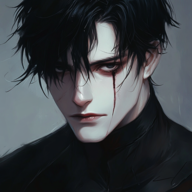
Koa Ahina
The Lone Soldier






- Intent: To create a new Artillery Ordnance based unit for the Mahporeem Imperial Remnant
- Image Credit: Chat GPT Prompted By Me | Cooltext for Fonts | Divider at bottom by A Phoenix
- Role: Fire Support, Ordnance, Salvage, Field Fabrication, and Demolitions
- Permissions: Mahporeem Imperial Remnant | Weapons, Artillery and Vehicles with permission from Aurelian Sigismund
- Links: Mahporeem Imperial Remnant

- Unit Name: Thunder Corps | Imperial Ordnance Artillery Troopers | Thunder Troopers
- Secondary Name of Specialist: “Thunderbolts” Thunder Corps Technicians and Mechanics
- Affiliation: Mahporeem Imperial Remnant
- Classification: Infantry & Artillery
- Description:
Thunder Corps personnel are immediately recognizable by their heavily modified equipment. Like much of the rest of Mahporeem Imperial Army, their armor is a mismatch of plates, field repairs, welding marks, painted over insignias and salvaged components. Their artillery vehicles and tows are similar in their distinction. With a rough looking appearance from improvised exterior armor, exposed cabling, replacement parts and equipment from many other sources. Despite the mashup the Thunder Corps take considerable pride in everything they have, fully knowing that each piece of scrap was only possible by their own efforts. This allows the artillery unit to become obsessively familiar with their weapons.
The donned emblem is that of the Imperial Cog being split by a descending bolt of lightning, signifying the combination of Imperial military discipline, industrial ingenuity, and overwhelming power that this unit brings to each and every battlefield.
Conventional is not the best way to describe those that serve under the banner of the Imperial Remnant’s Army unit of the Thunder Corps. Instead, many tend to be resourceful, pragmatic and irreverent. To them everything is about how useful something can be, whether it’s a piece off an enemy soldier or an enemy vehicle. With little patience for waste everything in the heat of battle is and can be useful with the right tools. Even their own losses can be used to their advantage over time.


- Unit Size: Medium
- Unit Availability: Uncommon
- Unit Experience: Veteran
- Equipment:
- Thunder Corps Weapons:
- Ion Slicer Vibroknife
- Sonic Strike Hatchet
- Model 216 “Big Game Hunter”
- HE-61Blaster Carbine
- G-22 Imperial Standard Blaster Rifle
- NZ/BP-25 Light Blaster Pistol
- GHE 85x2
- NZ M7-350MM/OM
- Thermal Detonator
- C-25 Fragmentation Grenade
- Thunder Corps Armor:
- Junktrooper Armor
- Alien Stormtrooper Armor
- Other Mish Mosh parts for sustainable survival.
- Artillery Weapons:
- TH-1 "Rumble" Field Cannon
- Ordnance 105 Field Artillery Piece
- Ballistarius Heavy Assault Mortar
- 40/T Planetary Defense Carriage
- AV-90
- Vehicles:
- Tragus Self-Propelled Heavy Artillery
- All Terrain Modular Artillery Platform
- NZ MAW-1, Mobile Artillery Walker

The Thunder Corps is a mobile heavy ordnance, artillery, and battlefield recovery formation attached to larger Imperial Army forces. This company is solely responsible for providing heavy fire support against armored formations, defensive structures, fortified positions, enemy artillery emplacements, and high value targets from afar.
These troopers live and breathe by a hit and salvage doctrine:
Hit: Thunder Corps designate threats from large distances and establish firing positions to engage those targets with rockets, missiles, artillery, or other heavy ordnance.
Secure: Once the target is destroyed or successfully suppressed, a dedicated team creates a security perimeter around the battlefield.
Salvage: With a locked down perimeter, recovery teams are cleared to recover useful weapons, ammunition, power systems, actuators, armor and other components from both enemy and Imperial wreckage.
Reforge: Retrieved materials are then transported to a mobile workshop nearby, where ordnance technicians or as Thunder Corps call them “Thunder-bolts”, begin to repair, modify or dismantle to make useful parts.
Rearm: Once the Thunderbolts are done being reforged they are incorporated back into the Corps’ existing arsenal. This reduces dependency on the already over-used Imperial resupply.
Redeploy: Once the rearmament is completed, keeping the enemy guessing by moving and providing new emplacements is vital to the Thunder Corps mission success.
Due to this perfected style of warfare tactic from the Thunder Corps, they function as both the hammer and quartermaster of an Imperial advance. This has made them exceptional at two things; fire support and reducing logistical dependency on conventional supply lines.
These troops operate as a Forward Observer team working alongside Imperial Infantry and specialized ground units that the Mahporeem Imperial Remnant has to offer. Identifying targets and directing artillery fire means the Thunder Corps relies heavily upon infantry, scouts, reconnaissance assets and communication personnel to provide them with accurate battlefield information.
Considered the “workhorse” of the Mahporeem Imperial Army, the Thunder Corps can last through prolonged campaigns, where typical supply lines for the war effort may be affected. This goes hand in hand with their salvage aspect, allowing them an advantage the longer the company stays in active combat to acquire new parts and equipment.
While effective in many ways, the intention of this unit is not to operate as an independent frontline military force. Its demand for strategic placement requires adequate protection against enemy infantry, reconnaissance, and fast moving assault forces. Thunder Corps commanders therefore generally seek to operate behind advancing Imperial lines while deploying forward observers ahead of the main formation.
- Force Abilities (Force User Units Only): N/A

- H.S.R. (Hit, Salvage, Reforge): The code of hit, salvage, and reforge is a lifestyle for the Thunder Corps. It’s not just something to live by for these soldiers. Instead, it has garnered them the intuition to recover and repurpose battlefield material. This has allowed them to replace damaged equipment and reduce dependency on conventional supply chains avoiding political mistreatment.
- Any Target, Any Time: Built around long-range heavy fire support, the Thunder Corps specializes in bringing overwhelming ordnance to the battlefield. Their arsenal consists of a wide variety of conventional and improvised weapons, ranging from artillery and missile systems to demolition equipment and other heavy ordnance. This versatility allows Thunder Corps batteries to adapt their fire support to the battlefield at hand, engaging everything from fortified positions and armored vehicles to enemy emplacements and defensive structures.

- Inconsistent Equipment: Because Thunder Corps material is frequently salvaged and modified, equipment can be unreliable, difficult to maintain, and incompatible with standardized Imperial logistics.
- Emplacement Dependency: Due to the core functionality of artillery based weapons, the unit is typically forced to remain in the same spot. This makes them incredibly vulnerable to air bombardments, enemy artillery fire-power and fast moving infantry vehicles.
- Reliant on Battlefield Conditions: This Corps was designed with the battlefield in mind where a sufficient amount of enemies becomes one of their greatest advantages. However, extended operations without access to salvageable resources can put a heavy strain on their ammunition, replacement parts, and maintenance capabilities.

The Thunder Corps originated during a prolonged Imperial campaign in which an isolated Army formation suffered catastrophic losses to its logistical infrastructure. Imperial supply convoys were repeatedly destroyed, replacement equipment became increasingly scarce, and several artillery batteries were rendered combat ineffective.
Rather than abandon the damaged equipment, a group of Imperial ordnance technicians began recovering usable components from destroyed vehicles, artillery pieces, transports, and local industrial machinery. Under the direction of their commanding ordnance officer, the technicians began rebuilding weapons from whatever material remained available.
The first improvised artillery battery was assembled from damaged Imperial weapons, industrial power systems, and components recovered from destroyed enemy equipment. Though the resulting weapon was crude by Imperial standards, it successfully provided fire support during a desperate counterattack.
The soldiers operating the battery reportedly referred to the weapon as Thunder, after the sound it produced when fired.
The name spread.
What began as an emergency field-expedient measure eventually became an established doctrine. Imperial command recognized that a formation capable of recovering its own replacement equipment could remain operational in environments where traditional logistics were vulnerable.
The Thunder Corps was subsequently formalized as a specialized Imperial Army ordnance formation.
Its founding doctrine became known simply as Hit and Salvage.

Last edited: