
Architect




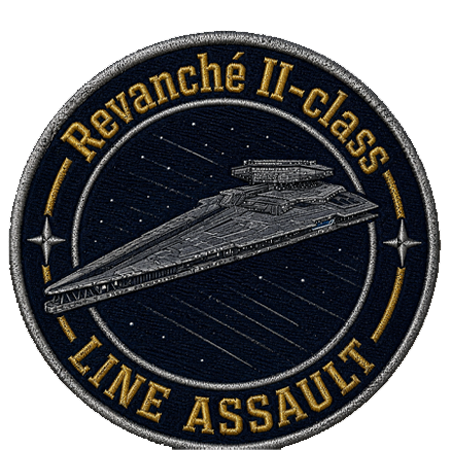
Revanché II-class
"Gunship"
Line Assault Destroyer
"Gunship"
Line Assault Destroyer
OUT OF CHARACTER INFORMATION
- Intent: To create a modern Revanché-class for the Commonwealth
- Image Source: Artstation, Jayson Duria | ChatGPT
- Canon Link: N/A
- Permissions: Solarium Glasteel
- Primary Source: Revanche
- Manufacturer: Primo Victorian Enterprises
- Affiliation: Imperial Commonwealth of Dosuun
- Market Status: Closed-Market
- Model: CNC-RSD2-M1 "Revanché"
- Production: Limited
- Material:
- Durasteel Reinforced Crystalamnium Hull
- Reinforced Duraplast with Latticed Crystaplast Liner
- Gravmire Gel x2 Liner Reinforcement
- Alusteel Reinforced Durasteel Hull [Interior]
- Tunqstoid Blast Doors, Turadium Blast Shields [Interior]
- Solarium Glasteel Viewports [Overlay]
- Glasteel Viewports [Underlay], Turadium Blast Shutters
- Agrinium, Dallorian Alloy [Key Areas/Critical Components]
- AR-0B Damage Reduction Plating [Key Areas/Critical Components]
- Doonium Infused Impervium [Munitions Control]
- Hekakles-type [Composite Hull System]
- Reactive Polyfoam Buffer [High Internal Shock Absorption]
- Classification: Line Assault, Star Destroyer
- Length: 1800m
- Width: 720m
- Height: 360m
- Armament: High
- Primary Broadside Battery
- 24x Blackmaw-type Turbolaser Cannons [Broadside port/starboard turreted mounts; primary heavy energy armament for line engagement and broadside-pass exploitation. Fast-track mount capable.]
- 18x Hawkthorne II-type Ion Cannons [Broadside port/starboard mounts; shield-stripping fire integrated into broadside passes, opening bare hull for follow-on kinetic and specialty fire.]
- 12x Nike II-type Mass Driver Cannons [Broadside midline port/starboard mounts; quad-barrel mass drivers with full Primo Victorian shell drawer. SAP rounds doctrinally favored for broadside-pass engagement against angled enemy plating.]
- Signature Specialty Battery
- 8x Scourgechain-type Close Combat System [Broadside repeater configuration, 4 port / 4 starboard. Shredspread mode for clustered enemy lines, Ripper Loop for single-target wrap engagement, Deadspin for post-anchor structural grinding.]
- Forward Pursuit Battery
- 10x Belenus-type Hypervelocity Cannons [Forward dorsal and ventral arcs; rapid-response kinetic finishing fire against targets attempting to disengage in the wake of a broadside pass.]
- 4x Keres-type Mass Driver Cannons [Forward spinal arcs beneath the prow; armor-piercing enforcement against targets attempting brute-force escape.]
- Anti-Corvette / Sub-Capital Defense Layer
- 12x Tasha III-type Plasma Disruptor Cannons [Quad-barbette mounts in dorsal/ventral arcs; Disruptor Lance Mode against corvettes and sub-capital harassers exploiting the Revanché II's blind spots during forward commitment. Secondary anti-bomber and anti-missile coverage.]
- Anti-Fighter Defense Grid
- 32x Thunderbolt II-type Rotary HVCs [Layered dorsal, ventral, and aft arcs; primary anti-fighter, anti-bomber, and close-in missile suppression grid. Carries forward the Revanche-class anti-starfighter heritage in modern form.]
- Counter-Ordnance / Missile Defense
- 24x Vulcan Advanced Autocannon Systems [Hull-edge and engine-block mounts; missile and bomber interception layer.]
- 10x Hedgehog-Type Counter-Ordnance Systems [Recessed VLS cells amidships; layered interception bubbles against torpedo and heavy missile salvos directed at the ship during forward commitment.]
- Primary Broadside Battery
- Defenses: High
- Rampart Shield Matrix [Primary All-Angle Shield]
- Phalanx Adaptive Shield Matrix [Attack-Adaptive Layer]
- Ballista Shield Array [Kinetic/Projectile Interception]
- Sentinel Defense System [Close-In Interceptor Grid]
- Vitralis Reflex Shield Generator [Reflexive Shield Layer; critical during broadside-pass commitment when burst damage spikes]
- Crystalamnium Mesh + Crystaplast Shell [Radiant + Kinetic Dispersal]
- Leyte-type Ablative Defense System [Modular, zonal ablative overplates with liquid-to-solid regeneration. Emergency full-hull hardening mode (30 seconds) reserved for the commitment window of a broadside-pass exploitation.]
- Hekakles Composite Hull [Core Durability Layer]
- Anti-Ion Mesh [Hull-integrated EMP/Ion resistance layer; carried forward from the original Revanche-class as the Commonwealth's preferred ion-defense lineage for the Revanché line]
- Ariadne ECM Assistant [Electronic Countermeasure Control]
- Arbalest Capacitor System [Emergency Power Surge Buffer; absorbs the simultaneous high-draw events of broadside ion fire, Scourgechain repeater discharge, and shield reflex surges.]
- Russ Shield Suite(Emergency Redundancy Layer)
- Deflector Shield Generators (x2): Particle & Ray Overlay w/ Integrated Shield Boost
- Regenerative Reinforced Shield Generator: Self-healing layer + Shield Boost
- Ion Shield Generator: Specialized ion disruption protection [Doctrinal continuity from the original Revanche-class ion defense package]
- Emergency Capacitor Boost System: Temporarily doubles absorption threshold on critical areas
- Tauros Defensive Suite
- Capacitor Drains, Socket Guards, and De-Ionizer Rigs
- Anti-Tractor Beam Shroud (Field Disruptor Pattern) [Critical defensive layer for a ship that breaks formation and becomes a prime tractor-grappling target]
- Stingnet Dispersal System [Modern chaff/flares replacement with IFF spoofing, gravitic pulse emitters, sensor-mirror fibers, and thermal decoy flares. Deployed during the formation-break crossing when the Revanché II is most vulnerable to guided munitions.]
- Anti-Ordnance EM Probe (Localized detonation field on missile proximity)
- Missile Deactivation Transmitter (Pulse jammer for active munitions)
- Hangar Space: Very Low - 2 Squadrons
- 2x Scryver Repair Drones
- Single Hangar Craft:Yes
- Remora Utility Shuttle
- Maneuverability Rating: Average
- Speed Rating: High
- Hyperdrive:Yes
- Primary: 1.0
- Backup: 10.0
- Auxiliary Systems
- Power Conversion and Control Networks
- Systems Control Center & Supplemental Control Hub
- Auxiliary Reactor & Core Coolant Management
- Supplemental Power Control Center
- Reserve and Emergency Back-up Power Systems
- Auxiliary Reactor Control Center
- Auxiliary Shield & Core Coolant Management
- Emergency Shield Operations and Power Management System
- Emergency Command Operations Center
- Emergency Intrepid Hull Deployment Systems
- Emergency Life Support & Power Capacitor Systems
- Escape Pod Control Systems Management
- Automatic Failsafe and Containment Management
- Flight Systems
- Flight Control & Navigation Suite
- Primary and Secondary Flight Controller Management
- Sublight & Hyperdrive Power Management
- Propulsion Systems Control Suite
- Hyperlane & Jump Point Navigation Systems
- Galactic Hyperspace Holosite Integration
- Flight Control Navigational Systems Suite
- Flight Control Power Conversion Systems
- Hyperdrive Power Control Systems
- Impulse and Vector Thrust Control Systems
- Engineering Systems
- Primary & Secondary Power Management Control Suites
- Power Conversion Systems Control
- Reactor Core Control System
- Core Coolant Management Suite
- Shield Generator Power Management Suite
- Weapons Power Generator Management Suite
- Life Support Systems Management
- Hazard and Damage Control Management Systems
- Dedicated Weapons Power Generator Systems
- Holosuite Power Systems Management
- Capacitor Control Systems Suite
- Engineering Control Suite
- Safety Management Suite
- Core Coolant & Safety Containment Suites
- Engineering Control Hub & Secondary Redundancy Systems
- Weapons, Shields, and Holosite Power Distribution Suites
- Hazard & Damage Control Management Suite
- Tractor / Pressor Beam Control Systems
- Repulsor Generator Systems & Waste Management Control
- Dedicated and Emergency Weapons Generator Suites
- Safety Management for Escape Pod Reroute Systems
- Communication Systems
- Coordinated Command Integration Encryption Suite
- Encrypted Short-Range & Long-Range Communications Suites
- Fleet Control Data Exchange Network
- Hyperwave Communications & Encryption Network
- Interfleet and Intrafleet Communications Systems
- Standard Communications Management Suite
- FleetNet Node + AI Systems Hubs
- Encrypted AI Channels + Projection Suite
- Tactical and Security Systems
- Swarm Targeting and Tracking Sensor Systems
- Tactical Analysis and Lock-On System Management
- Multi-Shield Management Defensive Systems
- Redundant Shield Management Systems
- Shield Booster Management, Tertiary Shield Generator
- Automated Reload and Internal Temperature Check Systems
- Weapons Control and Munitions Management Systems
- Weapons Waste Containment & Disposal Systems
- Regenerative Shield Management Systems
- Shield Monitor, Conversion, and Containment Systems
- Shield Management and Tertiary Generator Suite
- Sensor Systems
- Multi-Directional Long-Range Sensor Arrays
- Navigational & Hyper-Navigational Sensor Suites
- Short-Range Tachyon Sensor Network
- Long-Range Gravitational Mass Sensor Suite
- Full Range Planetary & Lifesigns Identifier System
- Cargo Sweep & Starship Signature Identifier Systems
- Drone & Damage Control Operations
- Scryver Drone Deployment & Recovery Systems
- Drone Command, Coordination, and Swarm Management Suite
- Drone Diagnostic, Repair, and Refit Systems
- Remora-class Utility Shuttle Docking, Deployment, and Mission Control Bay
- Damage Control Feedstock Storage [Hull plate stockpiles, patch material reserves, drone refit components]
- Drone Foundry & Maintenance Decks
- Emergency Hangar Damage Control Suite
- Drone Traffic Control & Launch Sequencing Systems
- Pilot & Drone Operator Ready Room, Debriefing Suites
- Medical Systems
- Overflow Triage Ward
- Med-Droid Interface & Support Network
- Damage-Stabilization Support Cradles
- Cryogenic Stasis Pods (Limited)
- Isolation & Quarantine Chambers (Compact)
- Automated Diagnostic & Imaging Systems
- Battlefield Stabilization Station
- Emergency Medivac Support Bay (Shuttle / Droid Interface)
- Internal Defense Management
- Retractable Auto Blasters
- Retractable Turadium Bulkheads
- Retractable Turadium Ventilation Spikes
- Retractable Turadium Blast Barriers, Crystalamnium Coated
- Automated War Droid Emergency Deployment
- Automated Anti-Concussion Field Emergency Deployment
- Advanced Biometric Security Systems
- Advanced Laser Grid, Emergency Deployment Only
- Advanced Mass Sensor Plating and Grid System
- Extensive Security Camera and Motion Detection System
- Extensive Thermal Energy Sensors and Biometric Detection Systems
- Emergency Lock-Down Tram & Lift Systems
- Emergency Pressure Plate and Compact Disposal Systems
- Propulsion & Power
- Twin, Destron-XR Ion Engine [Heavy-output capital ion engines; tuned to preserve the Revanché II's High Speed rating despite the hull-length increase from the original Revanche-class.]
- Trinity Core Reactor [Primary reactor + ElectroFrost regulation system]
- Single Blackwake Core [Dedicated high-draw event power for broadside specialty weapon discharge, simultaneous primary battery fire, and shield reflex surges during forward-commitment operations.]
- Supplemental, Kestrel Core [Redundant power and isolation buffering; ensures sustained combat capability if primary reactor systems take damage during forward operations beyond fleet support range.]
- Icarus Maneuvering Array [Micro-thrust and counter-gravity agility system. Doctrinally critical to broadside-pass exploitation: enables station-keeping at consistent broadside range alongside a moving enemy line while absorbing return-fire vector deflection, and permits mid-passage vector adjustment to optimize target geometry.]
- Crystal-Integrated Harmonic Regulator [Force-resonance and energy destabilization protection. Synchronization hub for harmonic-stabilized systems including Helion Data Core.]
- Aether-IX Modular Suite [System integration and modulation overlay]
- Fries-IV Modular Suite [Thermal regulation and emergency power reroute. Specialty role on the Revanché II: managing the combined thermal load of sustained broadside ion fire, Scourgechain repeater discharge, and Nike II mass driver sustained operation during the broadside-pass commitment window.]
- Resonance & Field Control
- Yeager-type Resonance Flux Suite
- Resonance dampeners
- Graviton flux stabilizers
- Field harmonics equalizers
- Yeager-type Resonance Flux Suite
- Command, Datacore & AI Systems
- Helion Data Core Matrix [Central data handling and analysis nexus. Integrates sensor inputs, targeting data, astrogation, and fleet relay processing.]
- Resonance Lattice Chip [Baseline Commonwealth crystal-lattice processing standard, deployed throughout shipboard computing infrastructure.]
- ERALAM [FleetNet coordination, navigation, encryption, and targeting solutions analysis.]
- NATASI [Strategic systems oversight, broadside-pass commitment analysis, and security verification. Tasked with helping the bridge identify when an enemy line has cracked sufficiently to warrant the captain's commitment forward.]
- Encrypted AI Isolation Frameworks [Prevents AI corruption, hijacking, or external signal bleed during ECM-heavy battles.]
- Countermeasures
- Ion Encumbrance System [Drive-disrupting signature cloud]
- Phantom Short-Range Tactical Jammers (x2)
- SIG-220 Tactical Jammer [Broadband Disruption Layer]
- IFF Confuser / Screamer Sensor Jammer / Hail Comm Jammer [The IFF Confuser layer is doctrinally weighted on the Revanché II: it buys precious seconds during the formation-break crossing before enemy return fire focuses.]
- Lucent Shield Disruptor [Enemy shield harmonic destabilization. Fired ahead of broadside-pass commitment to soften target shields before the Hawkthorne II ion strip arrives — the Lucent firing is the doctrinal signal that the exploitation phase has begun.]
- Ghost Array [Quantum signature spoofing layer]
- Advanced Sensor Systems
- SPX Aetherveil Sensor Suite
- Long-range passive + active scanning
- High-resolution mapping + gravitational anomaly detection
- Doctrinal role: battlefield event recognition at range, feeding the captain's recognition phase
- ECMX Ghostspike Sensor Suite
- Anti-spoofing and distortion filtering
- Ghost-signal retasking for passive detection
- Doctrinal role: maintaining firing solutions through the Revanché II's own Stingnet dispersal cloud
- Bluford Sensor Suite [Trimmed]:
- Savić Tracking Sensor Suite [Bolt Spec]:
- Targeting
- Vanguard-GTS Targeting Suite
- Active Matrix Targeting, Targeting Computer + Combat Multi-View Display
- Target-Aggressor Attack Resolution Software
- Sureshot Targeting Array
- Short Range Target Acquiring Sensor [Doctrinal role: rapid target acquisition during broadside-pass when targets are close/standard range and engagement windows are brief]
- Integrated with Icarus, Trinity, and Ariadne systems for seamless lock acquisition and coordination
- Vanguard-GTS Targeting Suite
- SPX Aetherveil Sensor Suite
- Signal Intelligence Suite
- Black Vigil Protocol Stack [Embedded cyberdefense and counter-signal routines, reinforcing internal systems from signal hijacking or malicious intrusion.]
- Zagraeus Comm Uplink System [Secure comms relay with FleetNet linkage and passive signal siphoning from enemy battlenets. Doctrinal role: enemy formation chatter siphoning during the recognition phase helps the bridge time forward commitment.]
- Advanced Communications Suite
- Electronic Interference Mast
- Dudley Communication Suite
- Exploitation Doctrine, Hardened in Hull: The Revanché II is the only Commonwealth capital purpose-built for the transition phase between a line cracking and a line failing. Its primary broadside (Blackmaw turbolasers, Hawkthorne II ion strip, Nike II mass drivers), signature specialty (Scourgechain repeaters), forward pursuit battery (Belenus, Keres), Stingnet dispersal, Lucent shield disruption, and recognition-tuned cognition stack are integrated around one tactical moment: the broadside pass along a broken enemy line. No other ship in the fleet owns that phase. Where the Tempest IV anchors and the Resurgent II breaks, the Revanché II makes sure the line stays broken.
- Forward Beyond the Envelope: A line-assault ship that commits past the formation's mutual support has to keep itself alive without help. The Revanché II carries its own damage-control air wing — two squadrons of Scryver repair drones supported by a Remora-class utility shuttle for breach-level damage — plus drone foundry infrastructure, Kestrel Core power redundancy, and Leyte ablative defense with emergency hardening mode. It can fight, take damage, patch, and continue without expecting the fleet to come to it.
- Sequenced Specialty Layers: The Revanché II's signature weapons (Scourgechain, Lucent, Hawkthorne II ion, Nike II SAP) are designed to fire in sequence across a single broadside pass: Lucent softens enemy shields, Hawkthorne II strips them, Nike II punches the bared hull with SAP rounds tuned for angled plating, and Scourgechain whips the flanks of the broken line as the ship sweeps past. Each layer compounds the effect of the last. The doctrinal moment of the broadside pass is the moment all five fire in coordinated cascade.
- Recognition Cognition: NATASI's broadside-pass commitment analysis, ERALAM's fleet coordination, Helion Data Core's integrated processing, the SPX Aetherveil's gravitational anomaly detection, and Zagraeus's enemy battlenet siphoning are tuned together to identify when an enemy line has cracked sufficiently to warrant the captain's commitment forward. The doctrine that "the Revanché recognized the moment" is supported by an integrated cognition stack that helps the bridge see the moment as it forms.
- Mobile Survival: The Revanché II survives by not being where return fire focuses. High Speed, Moderate Maneuverability, Stingnet dispersal during formation-break crossing, Anti-Tractor Shroud, Vitralis Reflex Shield surging into burst-damage events, and Leyte's 30-second emergency hardening mode reserved for the commitment window combine into a mobility-first survival profile distinct from anchor-doctrine tankiness.
- Purpose-Built for One Phase: The Revanché II is doctrinally specialized for the exploitation phase. In sustained line engagements where no breach forms, in duels against single capital opponents, or in formation-screening duty, the ship is underemployed — it can contribute conventional broadside fire alongside the Tempest IV, but it does not excel at any of these roles. A doctrinally rigid ship that depends on the enemy line cracking to justify its presence.
- No Fighter Complement: The Revanché II carries no starfighters. Its two-squadron hangar is allocated entirely to Scryver repair drones and the Remora utility shuttle, with no anti-fighter air wing. Anti-fighter defense is carried entirely by the Thunderbolt II rotary HVC grid, the Vulcan autocannon layer, and the Tasha III plasma disruptor anti-sub-capital screen. A coordinated bomber and starfighter swarm attack from multiple vectors during forward commitment can saturate the point-defense grid before fleet fighter screens arrive — and the Revanché II's broken-formation position is exactly when it cannot expect that screening.
- Doctrinal Dependence on Enemy Cooperation: The Revanché II's cognition stack and engagement profile assume the enemy line will eventually crack. Against superior formation discipline, against fleets that successfully screen their line-breakers, or against single capital opponents who cannot be broken, the Revanché II has no exploitable moment to commit to. It can hold formation and pour conventional fire indefinitely, but holding formation is not what the ship was built for — and a Revanché II that never commits is a hull whose doctrinal value is never realized.
- Mobility-Based Survival Has a Pin Point: Defense rating High, not Very High. The Revanché II survives by not being where return fire focuses; if pinned — by tractor lock, by gravimetric well projection, by formation containment denying withdrawal vectors — its mobility-first survival fails and the High defense rating proves insufficient against concentrated capital fire. The Sondheimer IV-class Heavy Interdictor's hyperdisruptor well projection, in hostile hands, is the ship most directly capable of imposing this failure mode on a Revanché II.
The Revanché II-class Star Destroyer is the Commonwealth's instrument for the moment a line begins to fail. Where the Tempest IV anchors a formation and the Resurgent II breaks an opposing one, the Revanché II inhabits the brief and decisive interval between the two — the phase in which a tactical breach must be widened, exploited, and converted into operational collapse before the enemy formation reconstitutes. It is a ship designed not to win battles in isolation, but to make sure won battles stay won.
The Scourgechain is the ship's signature. Eight broadside repeater mounts — four port, four starboard — carry the chainshot weapon system in dedicated capital-scale emplacements: each chainshot a flailing, anchored, thermally-cycling kinetic mass that wraps, anchors, grinds, or sweeps along the targets the Revanché II passes during exploitation. The munition is limited; the launcher drums carry only one to three chainshots each, and the rate of fire is deliberately low. This is not a sustained-fire weapon. This is the weapon a captain chooses to deploy when the moment is right — and it is the weapon by which a Revanché II's broadside pass becomes recognizable to anyone who sees one executed. The Commonwealth Navy does not name its line-assault ships after victories or virtues. It names them after the return blow.
The Revanché II carries both Line and Assault in its doctrinal tag stack, and the contradiction between the two is the ship's identity, not a flaw in its classification. The hull is capable of holding station alongside the Tempest IV and contributing conventional broadside fire to a line engagement for as long as the engagement demands it. It does so in every fleet battle it joins. What separates it from a pure line ship is what it does the moment the enemy formation begins to fail: the captain, supported by NATASI's commitment analysis and ERALAM's fleet coordination, identifies the breach, and the ship breaks formation. The decision to commit forward is the ship's doctrinal identity. The Revanché was never ordered forward. It recognized the moment.
Deck Layout
Decks 1–6: Command & Battlespace Control
- Primary bridge
- Secondary CIC
- Forward Commitment Analysis Suite (NATASI core integration)
- Helion / ERALAM / NATASI core chambers
- Strategic comms & FleetNet hubs
- Captain's Ready Room
- Senior Officer's Conference Room
- Bridge Tactical Plot, broadside-pass timing visualization
- Battlefield recognition processing
- SPX Aetherveil sensor integration
- ECMX Ghostspike anti-spoofing operations
- Zagraeus signal siphoning operations
- Long-range sensor relay control
- Targeting Coordination Center
Decks 15–22: Weapons & Defensive Control
- Primary broadside fire control (Blackmaw, Hawkthorne II, Nike II coordination)
- Scourgechain broadside repeater control bay
- Forward pursuit battery coordination
- Anti-corvette defense layer (Tasha III) control
- Counter-ordnance VLS control (Hedgehog)
- Shield modulation and reflex coordination (Vitralis prioritization)
- Lucent shield disruptor targeting bay
- Tactical Systems Control Suite
Decks 23–30: Drone Air Wing, Foundry & Damage Control
- Scryver drone bays (port/starboard)
- Drone command, coordination, and swarm management
- Drone diagnostic, repair, and refit decks
- Drone foundry & fabrication feedstock storage
- Remora-class utility shuttle docking and mission control bay
- Damage control feedstock storage (hull plate stockpiles, patch material reserves)
- Rapid hull-access transit corridors for emergency drone deployment
- Drone Operator Ready Room, Debriefing Suites
- Cargo Hold A + B (supplies, recovery modules)
- Logistics Command and Routing Center
Decks 31–38: Engineering & Power
- Trinity Core Reactor
- Single Blackwake Core (specialty weapon high-draw event power)
- Kestrel Core supplemental power
- Destron-XR twin ion engine integration
- Icarus Maneuvering Array control
- Fries-IV thermal regulation suite
- Aether-IX modular suite control
- Emergency isolation bulkheads
- Reactor coolant management
Decks 39–44: Crew, Medical & Sustainment
- Tiered Crew Quarters: Enlisted berthing blocks, NCO cabins, and officer staterooms arranged in modular habitation zones to support extended forward operations beyond fleet support.
- Distributed Mess Halls & Nutrition Centers
- Recreation & Decompression Spaces: Gyms, zero-g exercise chambers, holosuite simulation rooms, and communal lounges supporting morale through the psychological strain of forward-commitment doctrine.
- Medical & Psychological Support Facilities: Expanded medical wards, counseling suites, and trauma stabilization recognizing the burst-damage profile typical of broadside-pass exploitation engagements.
- Environmental & Circadian Regulation: Adaptive lighting, simulated day/night cycles, and climate zoning.
Decks 45–48: Hull, Redundancy & Survival
- Backup control hubs
- Escape pod systems
- Redundant life support
- Structural reinforcement
- Damage control reserves
- Anti-Ion Mesh integration layer
- Leyte ablative defense system distribution
Out Of Character Info
Intent:
To create a modern Revanché-class for the Commonwealth
Image Source(s):
https://chatgpt.com
Canon Link:
N/A
Permissions:
Solarium Glasteel
Primary Source(s):
https://www.starwarsrp.net/threads/revanche-class-star-destroyer.113247/
Technical Information
Affiliation:
Imperial Commonwealth of Dosuun
Model:
CNC-RSD2-M1 "Revanché"
Starship Class:
Star Destroyer (1000m-2000m)
Starship Role:
Gunship
Modular:
No
Material:
Durasteel Reinforced Crystalamnium Hull Reinforced Duraplast with Latticed Crystaplast Liner Gravmire Gel x2 Liner Reinforcement Alusteel Reinforced Durasteel Hull [Interior] Tunqstoid Blast Doors, Turadium Blast Shields [Interior] Solarium Glasteel Viewports [Overlay] Glasteel Viewports [Underlay], Turadium Blast Shutters Agrinium, Dallorian Alloy [Key Areas/Critical Components] AR-0B Damage Reduction Plating [Key Areas/Critical Components] Doonium Infused Impervium [Munitions Control] Hekakles-type [Composite Hull System] Reactive Polyfoam Buffer [High Internal Shock Absorption]
Armaments:
Primary Broadside Battery
24x Blackmaw-type Turbolaser Cannons [Broadside port/starboard turreted mounts; primary heavy energy armament for line engagement and broadside-pass exploitation. Fast-track mount capable.]
18x Hawkthorne II-type Ion Cannons [Broadside port/starboard mounts; shield-stripping fire integrated into broadside passes, opening bare hull for follow-on kinetic and specialty fire.]
12x Nike II-type Mass Driver Cannons [Broadside midline port/starboard mounts; quad-barrel mass drivers with full Primo Victorian shell drawer. SAP rounds doctrinally favored for broadside-pass engagement against angled enemy plating.]
Signature Specialty Battery
8x Scourgechain-type Close Combat System [Broadside repeater configuration, 4 port / 4 starboard. Shredspread mode for clustered enemy lines, Ripper Loop for single-target wrap engagement, Deadspin for post-anchor structural grinding.]
Forward Pursuit Battery
10x Belenus-type Hypervelocity Cannons [Forward dorsal and ventral arcs; rapid-response kinetic finishing fire against targets attempting to disengage in the wake of a broadside pass.]
4x Keres-type Mass Driver Cannons [Forward spinal arcs beneath the prow; armor-piercing enforcement against targets attempting brute-force escape.]
Anti-Corvette / Sub-Capital Defense Layer
12x Tasha III-type Plasma Disruptor Cannons [Quad-barbette mounts in dorsal/ventral arcs; Disruptor Lance Mode against corvettes and sub-capital harassers exploiting the Revanché II's blind spots during forward commitment. Secondary anti-bomber and anti-missile coverage.]
Anti-Fighter Defense Grid
32x Thunderbolt II-type Rotary HVCs [Layered dorsal, ventral, and aft arcs; primary anti-fighter, anti-bomber, and close-in missile suppression grid. Carries forward the Revanche-class anti-starfighter heritage in modern form.]
Counter-Ordnance / Missile Defense
24x Vulcan Advanced Autocannon Systems [Hull-edge and engine-block mounts; missile and bomber interception layer.]
10x Hedgehog-Type Counter-Ordnance Systems [Recessed VLS cells amidships; layered interception bubbles against torpedo and heavy missile salvos directed at the ship during forward commitment.]
24x Blackmaw-type Turbolaser Cannons [Broadside port/starboard turreted mounts; primary heavy energy armament for line engagement and broadside-pass exploitation. Fast-track mount capable.]
18x Hawkthorne II-type Ion Cannons [Broadside port/starboard mounts; shield-stripping fire integrated into broadside passes, opening bare hull for follow-on kinetic and specialty fire.]
12x Nike II-type Mass Driver Cannons [Broadside midline port/starboard mounts; quad-barrel mass drivers with full Primo Victorian shell drawer. SAP rounds doctrinally favored for broadside-pass engagement against angled enemy plating.]
Signature Specialty Battery
8x Scourgechain-type Close Combat System [Broadside repeater configuration, 4 port / 4 starboard. Shredspread mode for clustered enemy lines, Ripper Loop for single-target wrap engagement, Deadspin for post-anchor structural grinding.]
Forward Pursuit Battery
10x Belenus-type Hypervelocity Cannons [Forward dorsal and ventral arcs; rapid-response kinetic finishing fire against targets attempting to disengage in the wake of a broadside pass.]
4x Keres-type Mass Driver Cannons [Forward spinal arcs beneath the prow; armor-piercing enforcement against targets attempting brute-force escape.]
Anti-Corvette / Sub-Capital Defense Layer
12x Tasha III-type Plasma Disruptor Cannons [Quad-barbette mounts in dorsal/ventral arcs; Disruptor Lance Mode against corvettes and sub-capital harassers exploiting the Revanché II's blind spots during forward commitment. Secondary anti-bomber and anti-missile coverage.]
Anti-Fighter Defense Grid
32x Thunderbolt II-type Rotary HVCs [Layered dorsal, ventral, and aft arcs; primary anti-fighter, anti-bomber, and close-in missile suppression grid. Carries forward the Revanche-class anti-starfighter heritage in modern form.]
Counter-Ordnance / Missile Defense
24x Vulcan Advanced Autocannon Systems [Hull-edge and engine-block mounts; missile and bomber interception layer.]
10x Hedgehog-Type Counter-Ordnance Systems [Recessed VLS cells amidships; layered interception bubbles against torpedo and heavy missile salvos directed at the ship during forward commitment.]
Defense Rating:
High
Speed Rating:
High
Maneuverability Rating::
Average
Energy Resist:
High
Kinetic Resist:
High
Radiation Resist:
High
Other Resistance(s):
EMP/ION: High
Sonic: Average
Force Disruption/Harmonics: Low
Elemental (Fire/Cold/Corrosive): Low
Minimum Crew:
4500
Optimal Crew:
12000
Passenger Capacity:
1500
Cargo Capacity:
Very Large