

Well-Known Viceroy
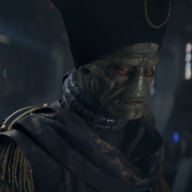




R A Q U O R - S H R I K A R A I

- Intent: To introduce a rare engineered Raquor-daan to the galaxy with sufficient ability to hunt Force Sensitives.
- Image Credit: Flow Image Creator, using Raquor-daan image
- Canon: Not Applicable
- Permissions: Not Applicable
- Links: SyntheTek Institute | The Trade Federation |:| 900 ABY | Raquor-daan | Shrikarai

- Name: Raqour-Shrikarai
- Designation: Non-Sentient
- Origins: SyntheTek Laboratory
- Average Lifespan: 20–35 standard years (maturity reached at 3–4 years)
- Estimated Population: Rare (Very small numbers found in scattered, isolated locations around the galaxy)
- Description: Raquor Shrikarai are rare genetically engineered hybrids that merge the venomous nocturnal predation of Raquor-daan dark wolves with the Force-devouring hunger of Shrikarai. Large, quadrupedal wolf-like predators with purple-black fur over scaled hides, crystalline spinal spikes, glowing eyes, and a long segmented scorpion-like tail ending in a stinger laced with Rhak-skuri toxins, they are lethal hunters that induce hallucinations and Force disconnection in sensitive individuals while delivering paralytic venom through claws and tail.

- Breathes: Type I and Type II Atmosphere
- Average Height of Adults: 1.1–1.4 meters at the shoulder
- Average Length of Adults: 2.5–3.2 meters (nose to tail tip)
- Skin color: Dark purple-gray scaled underbelly and limbs with bioluminescent accents
- Hair color: Thick, shaggy purple-black fur with crimson highlights along the mane and spine
- Distinctions:
The most striking feature is a long, segmented, scorpion-like tail ending in a bulbous stinger capable of delivering potent paralytic venom. Claws on broad paws also carry a weakening toxin. Thick leathery armor protects the shoulders and upper back. Males are larger with more pronounced spikes and thicker manes; females are slightly sleeker with longer tendrils.
Juveniles have softer fur and shorter tails that harden with age. Older specimens show faded bioluminescence, scarred hides, and dulled spikes. Regional variants are minimal, though those in arid environments trend darker while volcanic populations display stronger crimson tones.
- Races: None
- Force Sensitivity: Non-Sensitive (no members of the species are FS)

Strengths:
- Force-Blanketing Terror:
- The Shrikarai lineage gives the hybrid an innate ability to overwhelm Force-sensitives through proximity, causing dread, hallucinations, and a collapse in the victim's connection to the Force. In practical terms, it is exceptionally dangerous to Jedi, Sith, and other Force users.
- Venomous Pursuit:
- From the Raquor'daan side, the hybrid inherits poison-inflicting claws and a stinger-tipped tail. This makes it dangerous even when it misses a killing blow, since a single wound can slow, cripple, or panic prey long enough for a finishing strike.
- Night-Hunter Adaptation:
- The creature is naturally suited to low light, ambush terrain, and long pursuit across hostile ground, reflecting the Raquor'daan's nocturnal predator profile.
- Off-World Instability:
- The Shrikarai are known to become maddened and monstrous when taken away from Sophros, so the hybrid requires strict environmental control and conditioning when taken away from their claimed territory. Without it, aggression, feeding fixation, and behavioral collapse can become severe.
- Tail Liability:
- The Raquor'daan's thick hide exists specifically to protect it from its own venomous tail, which means damage to the tail base, shoulders, or upper back can leave the creature exposed to self-injury and reduce its combat effectiveness.
- Anti-Force Hunger:
- Because the Shrikarai feed on the Living Force, a specimen deprived of appropriate targets may become increasingly erratic, fixated, and difficult to restrain over time.

- Diet: Carnivore.
- They primarily hunt warm-blooded prey but show an overwhelming hunger for Force-sensitive beings, draining their Living Force connection. Fresh kills are preferred; scavenging is rare. Poisonous to them: certain synthetic sedatives and light-side aligned flora that interfere with their venom metabolism.
- Communication:
- Low growls, menacing howls, tail rattling, and body posturing (spike raising, tendril waving, ear positioning). No spoken language or telepathy.
- Technology level: None (non-sentient animals)
- Religion/Beliefs: None
- General behavior:
They show no interest in building or inventing but excel at tracking and ambush tactics. Once bonded through strength or early imprinting, they can serve as fiercely loyal yet volatile companions to powerful handlers, making them rare and highly sought-after living weapons for crime lords, bounty hunters, and dark-side factions.

The Raquor Shrikarai was developed by the SyntheTek Institute as a deliberate hybrid weapon for the 900 ABY era, with funding supplied by the Trade Federation of Planets. Its design merged two proven predatory archetypes: the Raquor'daan, a nocturnal Sriluurian canid known for poison claws, a stinger-tipped tail, and hard protective hide, and the Shrikarai, also known as the Nameless, a force-feeding predator from Sophros whose presence can induce madness, hallucinations, and eventual petrification or death in Force-sensitive victims.
The Raquor'daan were historically used by Weequay beastmasters and warbands, while the Shrikarai became infamous in the High Republic era as weapons against Force-users. SyntheTek's intent was to create a controllable, deniable anti-Force predator that could operate in hostile environments, break enemy morale, and survive close-quarters combat.
Early trials reportedly required extensive environmental restraint, because the Shrikarai component became dangerously unstable when deprived of a proper feeding-and-containment cycle, while the Raquor'daan anatomy had to be preserved well enough to retain its venom delivery and armored back-line protection.
The result was a hybrid that is less a domesticated beast and more a managed catastrophe, suitable for use only by organizations willing to accept a creature that can terrify allies almost as effectively as enemies.