

U N B R O K E N



|| THE BASICS ||
- Full name: Perseus
- Preferred Name: Perseus
- Alias: N/A
- Titles: Cursed Son of Nórrmen
- Species: Nórrmen
- Birthworld: Space-Born
- Homeworld: None
- Faction(s): Mandalorian Empire
- Rank(s): Mandalorian Foundling
- Class:
- Gloomstalker Ranger
- Path of the Zealot Barbarian
- Battlemaster Fighter
- Master(s): N/A
- Padawan(s): N/A
- Force Sensitive: No, Force Void
- Force Alignment: True Neutral
- Face Claim: N/A
- Voice Claim: N/A
- Gender: Male
- Age: Eighteen Galactic Standard Years
- Height: Seven Foot One Inches
- Weight: Two Hundred Seventy-two Pounds
- Complexion: Fair, Slight olive tint
- Eye Color: Blue
- Hair Color: Black
- Distinguishing Marks: Many scars over his body.
- Voice Sample: N/A
- Marital Status: Single
- Sexual Conduct: Undetermined
- Languages:
- Spoken: Galactic Basic Standard, Ur-Kittat, Nor, Mandoa (Learning)
- Written: Galactic Basic Standard, Ur-Kittat, Nor Futhork, Mandoa (Learning)
- Occupations: Mandalorian Foundling
- Residence: Mandalorian Space
|| APPERANCE ||
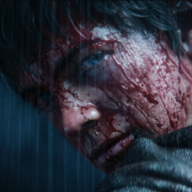
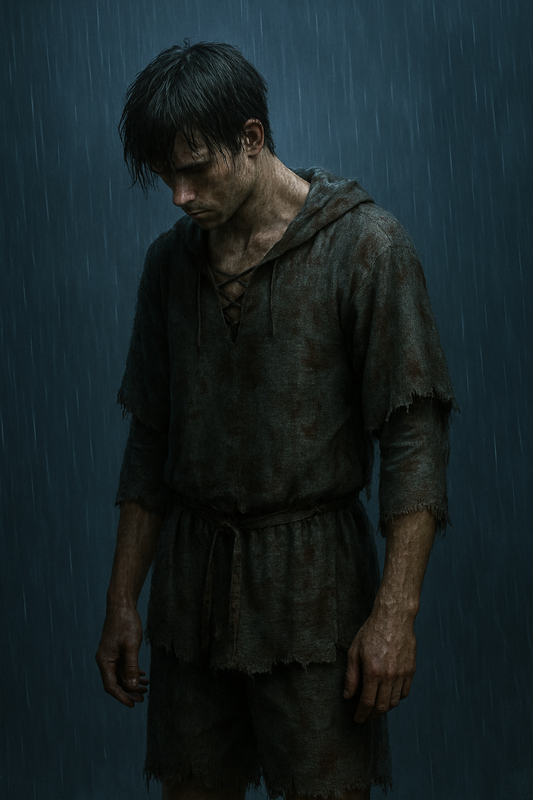
Perseus is lean and athletic, built for endurance, agility, and sustained movement rather than overwhelming physical strength. Years of survival and constant travel have left him wiry and hardened, with defined muscle earned through practical labor and combat rather than deliberate training alone. His frame carries the tension of someone accustomed to sleeping lightly and reacting quickly, rarely allowing himself to appear fully vulnerable.
He stands with a naturally guarded posture, usually keeping his shoulders slightly angled rather than squared directly toward people. Even when relaxed, he carries an underlying readiness in the way he shifts his weight, watches movement around him, and unconsciously positions himself near exits or defensible spaces. His movements are economical and controlled, rarely wasted or exaggerated.
His eyes are a muted gray-blue, sharp and constantly attentive, often giving the impression that he notices more than he says aloud. They can appear cold or distant at first glance, though moments of genuine emotion tend to show there before anywhere else. Faint shadows beneath them hint at inconsistent sleep and years spent living under stress.
His hair is dark, unevenly cut, and usually left somewhat unkempt from travel and neglect rather than style. Scars mark his body in scattered places — some thin and faded with age, others more noticeable from blade wounds, burns, and rough survival. None are displayed proudly, but neither does he attempt to hide them.
At present, Perseus wears a set of standard Protector-Type Armor from the Mandalorian Empire. It has been repaired and modified repeatedly over time. The armor is practical rather than impressive, carrying visible wear from previous owners, battlefield damage, and improvised maintenance. Beneath it he favors dark, durable clothing suited for mobility, concealment, and harsh environments.
Taken as a whole, Perseus gives the impression of someone shaped by survival before anything else: quiet, watchful, and difficult to fully relax, as though part of him is always expecting the next fight.
|| PERSONALITY ||
Perseus is a deeply guarded individual shaped by years of instability, survival, and emotional isolation. At first impression, he often comes across as distant, reserved, and difficult to approach. He is not naturally expressive, nor does he easily volunteer information about himself, preferring instead to listen, observe, and understand the people around him before allowing himself to become known in return. Silence is comfortable to him. He rarely feels the need to fill space with words, and much of his communication comes through body language, small actions, and careful attention rather than open conversation.
Beneath that restraint, however, is someone constantly thinking, analyzing, and assessing the world around him. Perseus has developed a habit of caution so ingrained that it influences nearly every aspect of his behavior. He notices exits when entering unfamiliar rooms, pays attention to changes in tone and movement during conversations, and instinctively prepares for situations to go wrong long before others would consider the possibility. Even in moments of relative peace, part of him remains alert, unable to fully abandon the mindset that survival may depend on anticipating danger before it arrives.
This vigilance is not rooted in paranoia so much as experience. Perseus has spent much of his life learning that safety is temporary and that trust, when misplaced, can become a vulnerability. As a result, he struggles to open himself emotionally to others, often keeping people at arm's length even when he genuinely cares for them. Vulnerability does not come naturally to him. He is far more comfortable protecting others than allowing others to protect him in return.
Despite his reserved nature, Perseus is not cold-hearted. In truth, he feels things deeply — often more deeply than he allows himself to show. He forms attachments carefully, but once someone earns his trust, his loyalty becomes unwavering. He is the type of person who remembers small details about the people he cares for, quietly notices when something is wrong, and places himself in harm's way without hesitation if it means keeping others safe. Much of his affection is expressed indirectly through acts of reliability, presence, and protection rather than overt emotional openness.
One of Perseus's defining traits is the way he measures his own worth through usefulness. Years spent surviving harsh conditions and unstable environments taught him to associate value with what he can provide rather than who he is as a person. He often feels most comfortable when he has a task to complete, a role to fill, or a responsibility to carry. Idleness leaves him restless, while failure — especially failure that harms others — weighs heavily on him long after the moment has passed. He tends to internalize blame easily, carrying guilt quietly instead of speaking openly about it.
Though capable of violence, Perseus does not enjoy cruelty. He sees combat as a necessity rather than a source of pride, and he tends to view unnecessary brutality with disgust. He respects competence and discipline but has little patience for arrogance, domination, or those who use power solely to intimidate weaker people. Having spent much of his life feeling powerless himself, he reacts strongly to exploitation and abuse, particularly toward people unable to defend themselves.
Emotionally, Perseus operates with a great deal of restraint. Anger is usually controlled and buried beneath composure, surfacing more as cold focus than explosive rage. Fear often manifests as withdrawal rather than panic. Grief tends to linger quietly beneath the surface, rarely spoken aloud but visible in moments when his guard slips. Because he struggles to articulate emotional pain directly, many of his feelings emerge through behavior instead: overworking himself, isolating when stressed, becoming hypervigilant, or throwing himself into dangerous situations with little regard for his own wellbeing.
At his core, Perseus is someone caught between conflicting instincts. Part of him has spent years learning that attachment leads to loss and that survival depends on remaining emotionally detached. Another part of him desperately wants connection, belonging, and the ability to trust in something lasting. This tension defines much of who he is. He often pushes people away out of fear of becoming dependent on them, only to quietly crave the sense of stability and acceptance they offer.
Because of this, Perseus tends to gravitate toward individuals who demonstrate patience, consistency, and sincerity. Grand speeches and dramatic promises mean little to him compared to quiet reliability. Trust is built slowly through repeated actions, honesty, and shared hardship. Once established, however, that trust becomes incredibly difficult to break.
There is also a quiet stubbornness to Perseus that can make him difficult to sway once his mind is made up. He is willing to endure extreme hardship if he believes it is necessary, sometimes to an unhealthy degree. He has a tendency to carry burdens alone rather than ask for help, partly out of pride, partly out of fear that relying on others will eventually leave him vulnerable to abandonment. This self-reliance can make him appear emotionally distant even when he genuinely cares deeply about the people around him.
For all his caution and restraint, there are still traces of warmth beneath the hardened exterior. In calmer moments, Perseus possesses a dry, understated sense of humor and a quiet patience that surfaces most clearly around people he trusts. He is capable of gentleness that contrasts sharply with his otherwise intimidating composure, particularly toward those who are frightened, vulnerable, or hurting. These moments are rarely dramatic, but they reveal the person hidden beneath years of defensive walls and survival instincts.
Ultimately, Perseus is not driven by glory, recognition, or ideology. More than anything, he wants a reason to stop surviving and finally start living. Much of his personal journey revolves around learning that his value is not solely tied to endurance, usefulness, or sacrifice, but that he deserves connection and belonging simply because he is human.
|| INNER THOUGHTS ||
Thoughts of Perseus being a Foundling in the Mandalorian Empire.
Thoughts of Perseus being a Foundling in the Mandalorian Empire.
I understand violence better than I understand people.
That realization stopped bothering me a long time ago.
Violence is simple. Someone survives. Someone doesn't. Your body moves or it freezes. You act or you die. There is comfort in that simplicity. No confusion. No wondering what people mean when they look at you a certain way. No trying to understand where you belong in a room full of others who already seem to know.
Combat makes sense to me because survival always made sense to me. Everything else feels harder.
The Mandalorians move through life with a kind of certainty I still don't understand. Even the younger ones carry themselves like they belong somewhere. Like there is an invisible structure beneath them holding them upright no matter where they stand. Clan. Tradition. Identity. They wear those things as naturally as armor.
I still feel like I'm borrowing all of it.
Sometimes I catch myself watching them when they don't realize it. The casual conversations. The arguments around fires. The way they trust each other enough to turn their backs without thinking about it. Small things. Normal things. Things I still don't know how to do without feeling out of place.
And the worst part is that I want to.
I want the structure. The certainty. I want to understand why they stay beside each other instead of scattering when things become difficult. Part of me still expects all of it to disappear the moment I stop being useful enough to justify my place among them.
That thought never really leaves.
So I train harder.
I push harder than I should. I stay awake longer. I volunteer first when something dangerous needs doing because if I can make myself useful enough, maybe the feeling quiets down for a while. Maybe I stop feeling like the half-feral thing they pulled from the edge of the galaxy and taught to wear armor.
But then combat starts. And sometimes I feel it happen.
That shift.
The part of me that survived alone for so long rises too quickly. My breathing changes. My thoughts narrow. Everything becomes movement and momentum and violence. The world simplifies itself into targets, angles, distance, survival. In those moments, I stop feeling like a person and start feeling like something built only to keep moving forward no matter what gets in the way.
That part of me scares me more than I let anyone see.
Not because it's unfamiliar.
Because it isn't. Because it feels natural.
The Mandalorians fight with discipline. Purpose. Trust in the warriors beside them.
I fight like something trying not to die.
Even now, after everything, I still don't know if those things are truly the same. Sometimes I wonder if the others can see it too. The way I hold myself too tightly. The way I sleep lightly. The way my hand always drifts toward a weapon before my mind fully catches up. I wonder if they look at me and see a foundling trying to become Mandalorian or just a survivor pretending long enough to pass among them.
Maybe both are true.
Still... they gave me a place anyway.
I don't think they understand what that means to someone like me.
Or maybe they do.
Maybe that's the part I'm still learning.
That realization stopped bothering me a long time ago.
Violence is simple. Someone survives. Someone doesn't. Your body moves or it freezes. You act or you die. There is comfort in that simplicity. No confusion. No wondering what people mean when they look at you a certain way. No trying to understand where you belong in a room full of others who already seem to know.
Combat makes sense to me because survival always made sense to me. Everything else feels harder.
The Mandalorians move through life with a kind of certainty I still don't understand. Even the younger ones carry themselves like they belong somewhere. Like there is an invisible structure beneath them holding them upright no matter where they stand. Clan. Tradition. Identity. They wear those things as naturally as armor.
I still feel like I'm borrowing all of it.
Sometimes I catch myself watching them when they don't realize it. The casual conversations. The arguments around fires. The way they trust each other enough to turn their backs without thinking about it. Small things. Normal things. Things I still don't know how to do without feeling out of place.
And the worst part is that I want to.
I want the structure. The certainty. I want to understand why they stay beside each other instead of scattering when things become difficult. Part of me still expects all of it to disappear the moment I stop being useful enough to justify my place among them.
That thought never really leaves.
So I train harder.
I push harder than I should. I stay awake longer. I volunteer first when something dangerous needs doing because if I can make myself useful enough, maybe the feeling quiets down for a while. Maybe I stop feeling like the half-feral thing they pulled from the edge of the galaxy and taught to wear armor.
But then combat starts. And sometimes I feel it happen.
That shift.
The part of me that survived alone for so long rises too quickly. My breathing changes. My thoughts narrow. Everything becomes movement and momentum and violence. The world simplifies itself into targets, angles, distance, survival. In those moments, I stop feeling like a person and start feeling like something built only to keep moving forward no matter what gets in the way.
That part of me scares me more than I let anyone see.
Not because it's unfamiliar.
Because it isn't. Because it feels natural.
The Mandalorians fight with discipline. Purpose. Trust in the warriors beside them.
I fight like something trying not to die.
Even now, after everything, I still don't know if those things are truly the same. Sometimes I wonder if the others can see it too. The way I hold myself too tightly. The way I sleep lightly. The way my hand always drifts toward a weapon before my mind fully catches up. I wonder if they look at me and see a foundling trying to become Mandalorian or just a survivor pretending long enough to pass among them.
Maybe both are true.
Still... they gave me a place anyway.
I don't think they understand what that means to someone like me.
Or maybe they do.
Maybe that's the part I'm still learning.
|| COMBAT SKILLS ||
Despite the way he fights, Perseus is an imposing figure on the battlefield. As a Nórrmen, he stands noticeably taller and broader than most humans, possessing the dense musculature and natural physical power common to his people. Even out of armor, he carries the presence of someone built for heavy combat — broad shoulders, powerful arms, and the kind of raw strength capable of overwhelming many opponents in direct confrontation. At first glance, most people expect him to fight like a brute-force warrior: aggressive, overpowering, and difficult to stop once in motion.
Instead, Perseus fights almost the opposite way.
Years spent surviving while outnumbered, undersupplied, and alone shaped his instincts long before he ever received formal Mandalorian training. Rather than relying on size or intimidation, he learned to move carefully, conserve energy, and avoid unnecessary risks. Even now, despite his physical advantages, he fights with the caution and efficiency of someone smaller and easier to kill. He rarely throws his weight around unless absolutely necessary, preferring precision, timing, and positioning over direct dominance.
This contrast often catches opponents off guard. Many expect straightforward aggression from someone his size, only to find a combatant who moves with restraint and patience instead. Perseus tends to stay light on his feet, reposition constantly, and exploit openings rather than forcing confrontations head-on. His movements are controlled and economical, emphasizing survival and adaptability over spectacle. Even in close combat, where his strength could allow him to overpower others more directly, he often favors leverage, angles, and quick disabling strikes rather than raw force.
Since becoming a Mandalorian foundling, Perseus has undergone structured combat training that refined his natural instincts into disciplined battlefield skill. The Mandalorians gave him experience with squad tactics, weapons handling, armor operation, and coordinated combat, teaching him how to function as part of a unit rather than a lone survivor. He understands formations, suppressive fire, communication, and battlefield movement well enough to operate reliably beside trained warriors.
Still, Perseus is not an elite Mandalorian warrior.
He is competent, dependable, and dangerous in practical situations, but lacks the polish, experience, and mastery of veteran clan fighters who have trained their entire lives for war. His skillset reflects someone still learning his place within Mandalorian culture rather than someone already legendary within it. He makes mistakes under pressure, can be overwhelmed by more experienced combatants, and occasionally falls back on old survival habits that conflict with disciplined group tactics.
His preferred combat range remains close quarters. Knives feel natural in his hands, both because of familiarity and because they suit his mindset. He uses blades as practical tools of efficiency rather than ceremonial weapons, relying on fast strikes, close positioning, and quick reactions to end fights before they become prolonged contests of endurance. In confined spaces especially, Perseus becomes significantly more dangerous, using terrain and movement to offset disadvantages while pressuring opponents who expect slower, heavier attacks from someone of his size.
Unlike duelists who seek dramatic confrontations, Perseus approaches violence pragmatically. He avoids fair fights whenever possible and has little interest in proving himself through displays of dominance. If stealth, ambushes, environmental advantages, or tactical retreats improve his chances of survival, he will use them without hesitation. He understands that surviving the fight matters more than looking impressive during it.
At range, Perseus is competent but unspectacular. He can effectively use blaster rifles, carbines, and sidearms, and his Mandalorian training gave him solid weapons discipline and battlefield fundamentals. However, he lacks the refined precision of dedicated marksmen or the overwhelming aggression of heavy assault fighters. His ranged combat abilities are reliable rather than exceptional, mainly serving to support movement, suppress enemies, or create openings for repositioning.
Where Perseus truly excels is adaptability. Survival across hostile worlds forced him to become resourceful under pressure, and he is highly skilled in tracking, navigation, scouting, and operating in difficult terrain. He notices environmental details quickly, moves quietly for someone his size, and has a strong instinct for recognizing danger before it escalates. These traits make him particularly effective during reconnaissance missions, hunts, pursuits, or extended operations in unstable environments.
Physically, Perseus possesses tremendous endurance and striking power, though he often underutilizes both because of habit. In moments where restraint falls away, usually when protecting someone he cares about, glimpses of his full physicality become far more apparent. His blows become heavier, his aggression sharper, and the sheer force behind his movements reminds others that beneath the cautious fighter is still a Nórrmen built for war.
Even then, Perseus does not see himself as exceptional.
Much of his self-perception is still rooted in survival rather than confidence. He compares himself unfavorably to more experienced Mandalorians, often overlooking how capable he already is because he focuses more on his failures than his successes. To him, being a warrior is less about glory or reputation and more about reliability — being someone others can trust to stand beside them when things become dangerous.
|| STRENGTHS ||
- Survivor's Willpower - Perseus' greatest strength is neither his physical power nor his combat skill, but his refusal to surrender. Pain, exhaustion, fear, and despair have followed him for most of his life, yet he continues forward through sheer force of will. Where others eventually collapse beneath hardship, Perseus endures through stubborn persistence alone. He pushes himself beyond reasonable limits, often continuing to fight, move, or survive long after his body should have failed him. This determination is not born from optimism or confidence, but from the belief that stopping means disappearing entirely. Perseus survives because he feels he must. That mindset gives him remarkable endurance under pressure, though it also drives him to ignore his own limits in unhealthy and self-destructive ways.
- Dauntless Defiance - Perseus has spent his entire life being told he is cursed, incomplete, or unwanted, and much of his identity has been shaped by resisting those expectations. Though he experiences fear and doubt as strongly as anyone else, he refuses to allow either to control him. Even when overwhelmed, isolated, or outmatched, there remains a stubborn part of him that refuses to bow completely to fate, authority, or despair. This defiance defines the way he approaches both life and combat. Perseus does not endure because he believes victory is guaranteed, but because refusing to yield has become central to who he is. The more the galaxy insists he should break, the more determined he becomes to keep standing.
- Force Void Immunity - As a Force Void, Perseus exists as a blind spot within the Force itself. Force-sensitive individuals struggle to sense, track, or anticipate him in the way they normally would others. Precognitive instincts often fail around him, and many Force-based abilities become unreliable or ineffective when directed toward him. This makes Perseus uniquely dangerous against Jedi, Sith, and other Force users who rely heavily on supernatural awareness or manipulation during combat. He moves through the galaxy as something fundamentally absent from the current they depend upon, forcing them to rely on instinct, training, and conventional senses rather than the Force itself. To Perseus, however, this ability has always been inseparable from the isolation and fear attached to his curse. What makes him dangerous is the same thing that convinced his people he was spiritually hollow.
- Raw Physical Resilience - Years of hardship have hardened Perseus physically as much as emotionally. Hunger, exposure, untreated injuries, and exhaustion are conditions he learned to function through rather than avoid. His tolerance for pain is unusually high, and he possesses an ability to continue operating through injuries that would incapacitate most people. Even outside his species' natural advantages, Perseus has developed a survivor's endurance. He adapts quickly to difficult environments, conserves energy effectively, and remains functional under prolonged stress. This resilience often allows him to outlast opponents who are more technically skilled or better equipped but less accustomed to suffering.
- Fierce Loyalty (Once Earned) - Though deeply cautious around others, Perseus forms powerful attachments once trust has been established. Loyalty, to him, is not given lightly, but when it is earned, it becomes unwavering. He protects the people he considers his own with quiet intensity, often placing their wellbeing above his own without hesitation. Perseus does not express care through grand speeches or emotional openness. Instead, his loyalty reveals itself through reliability, sacrifice, and presence. He remains beside others when situations become dangerous, difficult, or painful, believing abandonment to be one of the cruelest things a person can inflict on another
- Pragmatic Morality - Perseus approaches morality through survival and consequence rather than idealism. He is willing to make harsh decisions if he believes they will protect others or prevent greater harm, even if those choices damage his reputation or weigh heavily on his conscience afterward. He does not romanticize violence, but neither does he hesitate when action becomes necessary. Ambushes, deception, intimidation, and lethal force are all tools he will use if they achieve the desired outcome. To Perseus, survival rarely allows for clean or honorable solutions, and he has long since accepted that doing the right thing may still leave blood on his hands.
- Symbol of Resistance - Though Perseus does not see himself this way, his existence carries symbolic weight to those who understand his story. He is someone rejected by his own people, denied spiritual belonging, and burdened by isolation, yet he continues forward regardless. His refusal to disappear in spite of everything stacked against him becomes quietly inspiring to others who feel forgotten, unwanted, or broken themselves. Perseus does not lead through charisma or grand ideals. Instead, he inspires through endurance alone. Simply surviving, continuing to stand when the galaxy expected him to vanish, becomes proof that even those cast aside still possess worth.
- MSTN Deviation (Myostatin Deficiency) - As a Nórrman, Perseus possesses a physiology designed for extraordinary physical performance. His musculature is naturally denser and stronger than that of a baseline human, allowing him to generate immense force even without specialized enhancement or excessive training. His strikes carry tremendous impact, and his overall strength far exceeds what most opponents initially expect. Despite this, Perseus rarely fights like someone with overwhelming physical dominance. Years spent surviving cautiously conditioned him to rely more on precision and efficiency than brute force. As a result, many underestimate how dangerous he truly becomes once forced into direct physical confrontation.
- PAX-Gene Structure (Enhanced Vision) - Perseus possesses exceptionally advanced eyesight common among the Nórrmen. His visual acuity allows him to perceive detail at distances far beyond normal human capability, while subtle movements, tension shifts, and environmental changes stand out to him with unusual clarity. In low-light conditions, his vision becomes especially formidable due to the reflective structure within his eyes, allowing him to operate effectively in darkness where many others struggle. Combined with his observational habits, this gives Perseus a strong advantage in tracking, reconnaissance, and close combat awareness. The faint reflective quality in his eyes, however, also contributes to the unsettling impression many people experience around him, reinforcing the sense that he is something slightly removed from ordinary humanity.
- Osteo-Augmentation (Reinforced Skeleton) - Perseus' skeletal structure is significantly reinforced compared to a baseline human. Dense, highly resilient bone composition allows him to withstand levels of blunt force and physical punishment that would seriously injure or cripple most opponents. His body is naturally suited to absorbing impact and continuing to function through trauma. This durability complements his already stubborn endurance, making Perseus deceptively difficult to put down in combat. Injuries that would end fights for others often become obstacles he simply forces himself through.
- Super-Myelinated Nervous System (Reflexes & Grace) - Perseus possesses an unusually advanced nervous system that dramatically enhances his reaction speed and physical coordination. His reflexes are significantly faster than those of a normal human, allowing him to respond to threats with remarkable speed and fluidity. In combat, this gives his movements an almost unnatural grace. He reacts quickly to openings, adjusts to changing situations with little hesitation, and often appears to anticipate attacks moments before they occur. To outsiders, this can seem eerily similar to Force-guided instinct despite originating entirely from biology rather than supernatural ability.
- Telomere Chain Resilience (Longevity & Endurance) - The Nórrmen possess extraordinarily resilient cellular structures that grant them extended longevity, efficient healing, and exceptional resistance to environmental stress. Perseus recovers from injury more effectively than most species and can endure prolonged hardship that would gradually wear others down physically over time. His lifespan may eventually stretch far beyond that of most humans, allowing him to remain physically capable for centuries. While this grants him tremendous endurance, Perseus himself views it with mixed feelings. To someone already haunted by isolation and loss, the possibility of outliving nearly everyone around him often feels less like a blessing and more like another burden to carry.
|| FAULTS ||
- Deep Isolation - Perseus has spent most of his life existing outside the sense of belonging that others take for granted. His status as a Force Void separated him spiritually from his people, while the absence of a sire-name left him disconnected from the family structures central to Nórrmen identity. Even after becoming a Mandalorian foundling, that isolation never fully disappeared. As a result, Perseus struggles to truly believe he has a place anywhere. He keeps emotional distance from others out of instinct, often expecting rejection, abandonment, or betrayal long before trust has a chance to form. While solitude protects him from disappointment, it also leaves him emotionally starved. In quieter moments, the loneliness beneath his composure becomes overwhelming, driving him toward reckless behavior simply to prove that his existence still matters to someone.
- Lack of Formal Training - Although Perseus is dangerous in combat, much of his skill was forged through survival rather than disciplined instruction. Before becoming a foundling, he fought like someone forced to adapt quickly or die — practical, brutal, and often improvised. Mandalorian training refined those instincts, but he still lacks the polish and mastery of seasoned warriors who spent their entire lives training for war. Against inexperienced opponents, his unpredictability can be difficult to counter. Against highly disciplined fighters, however, his weaknesses become more apparent. Veteran soldiers, Jedi Masters, Sith Lords, and elite duelists can exploit flaws in his technique, overcommitments in his aggression, or his reliance on instinct over refined strategy. Perseus survives through determination and adaptability more than technical excellence, and there are enemies for whom that simply is not enough.
- Trauma & Survivor's Guilt - The destruction of his people left wounds far deeper than physical scars. Perseus knows he survived because the Force could not perceive him the way it did everyone else around him. While others died beneath the attention of Force-sensitive killers, he was overlooked simply because he was Void. That truth haunts him constantly. Part of him believes his survival was not mercy, but punishment. He struggles with the idea that stronger, better people died while he remained behind to carry their memory alone. This guilt drives much of his behavior, pushing him to overextend himself, throw himself into danger, and constantly seek ways to justify his continued existence. Even moments of happiness or belonging are often tainted by the lingering belief that he should have died alongside his kin.
- Force Void Limitations - While Perseus' Void nature grants immunity to many Force-based abilities, it also denies him any benefit from the Force itself. He cannot rely on precognitive instincts, supernatural awareness, accelerated healing, or enhanced physical augmentation the way many Jedi and Sith can. In practical terms, this leaves him at a disadvantage in a galaxy where powerful Force users often operate beyond normal physical limitations. Perseus must depend entirely on his own body, instincts, and training. Every injury remains real. Every mistake carries lasting consequences. Where others are elevated by the Force, Perseus remains bound by mortality alone.
- Mistrust & Guardedness - Years of rejection and isolation conditioned Perseus to expect disappointment from others. Trust does not come naturally to him, and kindness often makes him suspicious rather than comforted. He instinctively prepares for relationships to fail, assuming that people will eventually abandon him once they see the parts of himself he views as broken or cursed. Because of this, Perseus struggles to form meaningful connections even when he desperately wants them. He keeps walls around his emotions, avoids vulnerability, and often pushes people away before they have the chance to hurt him. While this self-protection helps him survive emotionally, it also prevents him from fully relying on others or accepting support when he genuinely needs it.
- Destructive Rage - Though normally restrained, Perseus carries an enormous amount of anger beneath the surface. Much of it comes from grief, helplessness, self-hatred, and years spent feeling unwanted by both his people and the wider galaxy. In battle, that anger can make him frighteningly aggressive, allowing him to push through fear and hesitation with overwhelming intensity. The problem is that his rage often overrides caution and judgment. When emotionally compromised, Perseus becomes reckless, abandoning strategy in favor of direct violence. He overcommits to attacks, ignores injuries, and places himself in dangerous situations without fully considering the consequences. Outside of combat, these bursts of anger can alienate others who see only the brutality of his reactions rather than the pain beneath them.
- Fragility of Youth - Despite everything he has endured, Perseus is still young. Much of his identity is built around survival rather than genuine emotional maturity, and beneath his hardened exterior is someone still struggling to understand who he is meant to become. His determination often causes others to overestimate how emotionally stable he truly is. Perseus carries enormous grief, confusion, and insecurity that he rarely expresses openly. He can be impulsive, stubborn, and emotionally reactive in ways that reveal his lack of life experience. Physically, his body also has limits no amount of willpower can erase. He pushes himself beyond safe boundaries regularly, accumulating injuries and exhaustion faster than he fully acknowledges.
- Cardio-Pulmonary Resuscitation (CPR Vulnerability) - The reinforced structure of Perseus' skeleton grants tremendous durability, but it also creates unusual medical vulnerabilities. His ribcage is so heavily reinforced that conventional resuscitation techniques are largely ineffective. If his heart stops or severe cardiac trauma occurs, ordinary emergency treatment may not be capable of reviving him. This creates a dangerous contradiction within his physiology: Perseus is extraordinarily difficult to injure conventionally, yet certain forms of catastrophic failure become far more lethal because standard intervention methods cannot function properly on his body.
- Cross-Breeding Incompatibility - The Nórrmen possess severe biological incompatibilities with humans and many near-human species. Without extreme medical intervention, children conceived outside their species rarely survive. For Perseus, this knowledge carries deep emotional weight. Having grown up without lineage, family, or a sire-name, he is painfully aware that his bloodline may end entirely with him. The possibility of one day building a family only to face the certainty of loss reinforces many of his fears surrounding attachment, loneliness, and legacy. To him, it feels like yet another reminder that he exists apart from the rest of the galaxy.
- Exotic Diet (High Caloric & Titanium Need) - Perseus' physiology requires enormous caloric intake alongside specialized mineral supplementation to maintain his enhanced musculature and reinforced skeletal structure. In stable environments this is manageable, but during prolonged campaigns, isolation, or resource shortages, his body deteriorates rapidly without proper intake. This makes survival logistically more difficult for him than it is for most species. He consumes more supplies, dehydrates faster under strain, and can become physically weakened if deprived for too long. Perseus is deeply conscious of this burden, often feeling guilty about requiring more resources than those around him simply to remain functional.
- Flash Blindness (Visual Weakness) - Perseus' enhanced vision comes with extreme sensitivity to sudden bursts of intense light. Flash-based attacks, explosions, or abrupt visual overload can temporarily blind and disorient him far more severely than they would an ordinary human. Because he relies heavily on visual awareness in combat, this weakness can become crippling in the wrong circumstances. Losing his sight, even briefly, strips away much of the environmental awareness and reaction timing he depends upon to fight effectively. Few things leave him feeling more vulnerable than sudden blindness.
- Genetic Mutation (Aging Disease) - Though the Nórrmen are long-lived, their biology carries a terrifying eventual consequence. As they age, many suffer catastrophic genetic instability — cancers, mutation, psychological degradation, and the horrific "flesh change" that transforms once-great warriors into unstable monsters. Perseus is painfully aware that if he survives long enough, the same fate may await him. The possibility that his future could end not in honorable death but in madness and physical corruption terrifies him more than he openly admits. Part of his fixation on combat and sacrifice stems from a desire to die meaningfully before that future can ever reach him.
- Gravitational Atrophy (Environment Dependency) - The Nórrmen evolved under intense gravitational conditions that shaped their powerful physiology. In lower-gravity environments, their bodies gradually weaken without constant physical strain and conditioning. For Perseus, this means he cannot afford complacency. He drives himself relentlessly through training, movement, and exertion partly because inactivity causes his physical condition to deteriorate over time. Restlessness has become inseparable from survival, reinforcing his tendency to overwork himself physically and mentally.
- Hypoxia (Atmospheric Sensitivity) - Perseus' respiratory system performs best in oxygen-rich environments similar to those of Nórrmen worlds. Thin atmospheres or prolonged combat without supplemental oxygen can exhaust him far faster than his strength would otherwise suggest. This weakness frustrates him deeply because it feels fundamentally at odds with the resilience the rest of his body possesses. In situations where oxygen becomes limited, his endurance drops sharply, leaving him vulnerable despite his otherwise formidable physicality.
- Repugnant Culture (Outcast Stigma) - The reputation of the Nórrmen follows Perseus wherever he goes. Across much of the galaxy, their people are associated with brutality, blood rituals, and violent survivalist traditions that many view with fear or disgust. Even when Perseus personally rejects aspects of that culture, others often judge him before truly knowing him. This stigma reinforces his isolation. He is distrusted not only because of what he is personally, but because of what people assume his species represents. For someone already burdened by feelings of alienation and unbelonging, carrying the weight of an infamous culture only deepens the divide between himself and the galaxy around him.
|| POSSESSIONS ||
Mandalorian Gear:
Protector-Type Beskar'gam - Entry level Beskar Armor, Gifted as a foundling to be protective of him.
Ori Sidaki - Battle Rifle, Modern day Mandalorian Ripper.
Dral Gaan - Heavy Pulse Hand Cannon, A good weapon when everything else fails.
Perseus's Survival Knife - A scavanged combat knife that has been with him through thick and thin.
Perseus's Whetstone - The Whetstone gifted to him by a Mandalorian, to maintain his gear.
Euk Siha Service Knives - Carries multiple of them. Basic combat Knives
RIDDS - Quick Healing Injection
Smoke Grenades - Creates a field of smoke to obscure.
Concussion Grenades - Used to disorient enemies, or outright remove them from combat.
Flash Grenades - A tool to disorient enemies and close distances for breaching and the like.
Other Items:
Peregrine Falcon Stuffy - A small toy gifted to him as an emotional attachment.
KX-9 "Argu'a" Tactical Pursuit Droid - Named "Percival"
Starships:
Fang-Class Starfighter - "Lost"
BRG-350 Aran-Class Tactical Gunship - "Falcon"
|| RELATIONS ||
- N/A
- N/A
|| BIOGRAPHY ||
Perseus was born beneath the weight of a curse.
Among the Nórrmen, the Force is not simply power. It is woven into every part of life and death alike. They believe it carries the voices of ancestors, binds kindred together across generations, and guides the honored dead into the Deep — the eternal place where their people are welcomed after death. To the Nórrmen, the Deep is certainty. Every warrior grows up believing that no matter how harsh life becomes, they will one day return to their kin.
Perseus was denied that promise from birth.
He was born Force Void, untouched by the current his people revered as sacred. The Force could not properly sense him, guide him, or reach him the way it did others. To the Nórrmen, this was not merely strange. It was deeply unsettling. Some believed he had been cursed. Others saw him as spiritually incomplete, a living absence where something essential should have been.
Children avoided him when they were young. Elders lowered their voices when he passed nearby. Even warriors treated him differently, speaking to him less like a boy growing into adulthood and more like a problem no one quite understood how to solve.
As difficult as the Void made his life, another absence hurt even more.
Among the Nórrmen, lineage defines identity. Every warrior carries a sire-name tied to family, bloodline, and generations of history. Kin fight beside kin, and those names are carried proudly into the Deep. Perseus had none of that. No sire-name. No family standing behind him. No legacy waiting for him after death. Only Perseus.
As a child, he learned quickly what that meant. Other youths trained beside brothers, cousins, parents, and clanmates while Perseus stood alone. He watched people draw confidence from the simple certainty that they belonged somewhere. He envied that more than he ever envied strength. So he tried to earn his place instead. He worked harder than the others. Fought longer during training. Took punishments without complaint. If something needed carrying, he carried it. If something dangerous needed doing, he volunteered first. Perseus convinced himself that usefulness could make up for what he lacked.
It never truly did.
No matter how hard he pushed himself, there was always distance between him and the people around him. Accomplishments were met with skepticism. Mistakes lingered longer than they should have. Some looked at him with pity, others with discomfort, but very few looked at him like he truly belonged beside them.
Then came the night his world ended. Raiders descended upon his people without warning. Sith marauders, pirates, warlords — Perseus never learned exactly who they were. He remembered fire spreading through the dark, smoke choking the air, and the sound of steel striking steel somewhere beyond the confusion. The Nórrmen fought fiercely, as they always had, but the attack was relentless. And through it all, Perseus realized something horrifying. The Force-sensitive attackers struggled to notice him. Their awareness slipped around him during the chaos of battle. Their instincts tracked others more easily than they tracked him. While his people became targets beneath the gaze of Force users, Perseus remained strangely difficult for them to fully perceive. He survived because he was Void.
That truth followed him long after the fires died.
When the fighting ended, Perseus wandered through the remains of his home in silence. Bodies lay among the ruins. Buildings still smoldered beneath the night air. The voices that once surrounded him — the whispers, the criticism, even the people he had spent years trying to impress — were simply gone. For the first time in his life, there was no one left to reject him.
The realization felt worse than he expected.
Without his people, Perseus no longer knew what he was supposed to become. He had spent so much of his life trying to prove he deserved a place among the Nórrmen that he had never considered who he would be without them. At first, it was instinct more than purpose. He scavenged what little he could carry and left the ruins behind him. One world became another. Ruins, wastelands, overcrowded ports, forgotten settlements at the edges of space. Perseus drifted through them all quietly, surviving however he could.
Life alone turned survival into routine.
He learned which markets tolerated drifters and which ones would report them. Which alleys stayed warm enough to sleep through the night. Which cargo crews paid in food instead of credits. Some days he scavenged abandoned buildings for scraps worth trading. Other days he stole because hunger outweighed pride. He learned to sleep lightly and wake quickly, always aware of footsteps nearby or unfamiliar voices outside whatever shelter he had managed to find. Despite his size, Perseus became skilled at avoiding attention. He kept his head down in crowded places, stayed quiet when possible, and left before people could begin asking questions about where he came from. Most nights were spent alone in abandoned factories, maintenance tunnels, empty cargo holds, or caves just warm enough to escape the cold.
There were stretches of time where survival stopped feeling dramatic and simply became exhausting.
Some mornings he woke sore from sleeping against metal floors. Some nights he stayed awake because he was afraid someone would find him vulnerable in his sleep. He learned how to patch tears in his clothing, clean wounds with limited supplies, and ration food carefully enough to make it through another few days. He stopped thinking much beyond immediate needs: food, water, warmth, movement. For the first time in his life, Perseus was not fighting for a clan or a people. He was simply trying to survive long enough to see another morning.
The loneliness settled in slowly.
Without the expectations of his people surrounding him, Perseus realized how much of his identity had been built around trying to earn acceptance. Some nights he wondered whether his Void had truly saved him or simply condemned him to outlive everyone else. Other nights he pushed those thoughts aside entirely by walking until exhaustion silenced them. Stopping meant thinking. Thinking meant remembering. So he kept moving.
Everything changed the day he met the Mandalorian.
Perseus first saw him standing in the rain outside the ruins of an abandoned settlement. The man's armor looked old and heavily worn, marked by years of repairs and damage that had never been polished away. Mud clung to his boots, and one shoulder plate sat slightly uneven as though it had been replaced more than once.
At first, the Mandalorian simply watched him. Most people tended to avoid Perseus entirely. This man didn't. Perseus must have looked miserable at the time — soaked by rain, exhausted, clothes worn thin from travel. He expected the armored stranger to move on like everyone else usually did.
Instead, the Mandalorian stepped closer.
"You should be dead."
The words were blunt, spoken through the rough crackle of a helmet vocoder. Perseus didn't answer. He wasn't entirely sure the man was wrong. A strip of dried meat landed near his feet a moment later. Perseus hesitated before picking it up, suspicion fighting with hunger. He half expected it to be a trick.
It wasn't.
The Mandalorian stayed.
Not out of softness. If anything, the man treated Perseus like a half-wild animal testing whether it could survive on its own. He pushed him through long marches, harsh drills, hunts, and exhausting physical labor. Perseus learned how to maintain weapons properly, clean armor, move with a unit, and follow discipline harsher than anything he had known before. The adjustment was difficult. He was unused to being around people consistently again. Unused to shared fires, shared meals, and overhearing casual conversations between people who trusted one another. Sometimes he sat quietly at the edges of camp listening to Mandalorians argue, joke, or tell stories to one another without fully understanding how to insert himself into any of it. Even kindness felt unfamiliar.
Still, he endured.
The Mandalorian noticed that quickly. Perseus was stubborn, difficult, and slow to trust, but he kept getting back up no matter how hard he was pushed. Over time, the way the warrior looked at him began to change. Less like a scavenged stray and more like someone being measured for potential. The truth of Perseus' nature revealed itself during a raid on their camp. Force-sensitive attackers descended upon them during the night, and in the chaos of the fight, the Mandalorian saw what others had always feared. The Sith leading the assault struggled to properly track Perseus in combat, their awareness slipping around him while his own strikes landed with brutal consistency.
Afterward, beside the firelight and rain, the Mandalorian finally spoke the realization aloud.
"You're a void."
Perseus braced for disgust. It never came. Instead, the warrior laughed quietly through the helmet. Where others had seen a curse, he saw usefulness. Advantage. Survival. That night, the Mandalorian made him an offer.
"You want a place? Earn one. I'll sponsor you as a foundling. You'll fight, you'll bleed, and if you endure, you'll have a clan."
The words hit harder than Perseus expected. Not because they promised comfort. They didn't. But because for the first time in his life, someone was offering him the possibility of belonging without asking him to become something else first. Perseus lowered his head slightly before answering.
"I am Perseus."
No sire-name followed it. No bloodline. No legacy. Just Perseus.
And for the first time, that felt like enough.
Last edited: