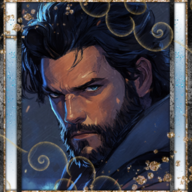

Baifa Monü Zhuan




- Intent: To expand and give ideas of the Atrisian Pantheon
- Image Credit: Generated with AI
- Canon: N/A
- Permissions: N/A
- Links: Wapoe
- Religion Name: Liaozhai (pronounced Lee-ow-jai)
- Religion Type: Polytheistic with animist and ancestor-veneration elements
- Influence: Interplanetary (Atrisian Commonwealth and its colonies; small diaspora shrines on major trade worlds)
- Symbol: The Eight-Petaled Lotus each petal representing a primary deity, the center representing the mortal world caught between them.
- Description: The Liaozhai is not an ancient, organic faith but a deliberate, masterful synthesis. Founded by the Jishi Era lore collectors under Imperial decree, it merged dozens of regional Atrisian cults, folk traditions, and hero cults into a single, structured pantheon. Rather than erasing old stories, it hybridized them local gods became aspects or epithets of the primary eight, their myths retold as parables. The result is a flexible, inclusive polytheism that allows a farmer on one continent to pray to a local river spirit while acknowledging it as a daughter of Shonagon. This syncretic nature is the faith's great strength and its point of endless theological debate.
- Founder: Io Murasaki a brilliant scholar of comparative mythology and a pragmatic reformer. Brought to the Imperial court during the Unification Edicts, he was tasked with creating a single state religion to bind Atrisia's warring provinces. She worked for years, traveling the world, collecting oral traditions, and standardizing iconography.
- Membership: Open to any being who acknowledges the pantheon and participates in at least one community ritual per year. No formal conversion is required; one becomes "Liaozhai" by living as an Atrisian and respecting the gods. Many off-world refugee's adopt the faith partially, honoring a single deity relevant to their profession.
- Sacred:
- Statues (Yu'er): Small, hand-carved figurines of the gods are the most common devotional object. Each statue is hollow, containing a tiny scroll with a prayer or a personal wish. Giving a statue is a profound gesture of trust. (Palpatine's rumored statue of Wapoe in his office a gift from an Atrisian diplomat was seen as either a joke or a deeply unsettling acknowledgment of the god of disguise.)
- Scions (Tian'ai "Heaven's Beloved"): Volunteer lay ascetics who take no vows but dedicate their lives to service. They are recognizable by their grey robes and a single small bell. Scions operate soup kitchens, disaster relief, and hospice care. They are considered protected by all even criminals and enemy combatants generally avoid harming a Scion. A Scion's bell is rung three times before any act of charity, a sound associated with safety across Atrisian space.
- The Eight-Fold Flame: A ceremonial brazier with eight wicks, each representing a god. Lit during festivals and life passages. The pattern of flame flicker is interpreted by priests as divine favor or warning.
- Dogma:
- Core Beliefs
- The universe is a web of obligations between mortals and gods. Offerings and rituals maintain cosmic balance.
- The gods are not omnipotent or omniscient; they are powerful but flawed, emotional, and capable of cruelty or kindness.
- After death, the soul travels to Wutzek's Hall, where it is judged. The worthy are reborn as Atrisians; the unworthy are reborn as beasts or, in extreme cases, dissolved into the Force.
- The eight primary gods are manifestations of natural forces; all other spirits are their children or servants.
- No proselytism: The faith does not seek converts. It is for Atrisians; outsiders may observe but are not expected to believe. This insularity has preserved the faith for millennia.
- The Gods
- Wapoe the shapechanger: The Faceless One, The Thousand Guises, The Immortal Walker
- Domain: Disguise, illusion, travel, adaptability, survival, trickery
- Appearance: No true form. Wapoe appears as anyone a child, an old woman, a stormtrooper, a droid. In temples, Wapoe is represented by an empty pedestal with a single mask floating above it. The mask's expression changes depending on the viewer.
- Personality: Playful, neutral, and inscrutable. Wapoe is not good or evil; they are simply curious. They walk Atrisia (and other worlds) in countless disguises, observing mortals, testing them, sometimes helping, sometimes hindering. Wapoe's only rule: never reveal your true self unless absolutely necessary.
- Mythic Role: Wapoe was an immortal wanderer who grew bored with eternity. They descended to Atrisia and created a talisman (a small jade token) that anchors their immortality. As long as the talisman exists, Wapoe cannot die but they can lose it. The talisman is hidden somewhere on Atrisia, and every few centuries, Wapoe must search for it anew. This is why they constantly change shape.
- Modern Practice: Spies, actors, refugees, and travelers pray to Wapoe. Many Atrisians leave a small offering at crossroads "for Wapoe, whoever they are today." Palpatine's statue of Wapoe (a smooth, featureless figure) was said to bring him luck or perhaps Wapoe visited him in disguise. Festival: The Day of Masks (winter solstice) everyone wears a mask and performs anonymous acts. Offerings: masks, mirrors, travel tokens.
- Wutzek god of the underworld: The Lord Below, The Bone Counter, The Just Tormentor
- Domain: Death, judgment, punishment, justice, oaths, the underworld
- Appearance: A tall, thin figure with black iron skin and a face that is half skull, half serene mask. He holds scales in one hand and a chain in the other. He rides a six-legged Longma (the "Grey Procession").
- Personality: Not evil. He is cold, patient, and utterly fair. He does not enjoy torment but sees it as necessary purification. He punishes only the guilty; he never tempts or corrupts. He is respected, not loved.
- Mythic Role: Wutzek's Hall is a vast underground fortress where souls are judged. The wicked are chained to the "Wall of Regret" for a period equal to their crimes, then reborn. The truly irredeemable are fed to the Hungry Void (a Force sink). He is sometimes called to witness oaths breaking an oath sworn on Wutzek's name invites his attention.
- Modern Practice: Swearing oaths, funerals, legal proceedings. His priests act as judges in remote colonies. Festival: The Day of Reckoning (year's end) people confess failures and make amends. Offerings: black rice, iron nails, written lists of wrongs (which are burned).
- The Fallen Star and the White Raven: The Eternal Twins
- Domain: Conflict, duality, opposition, change, balance
- Appearance: The Fallen Star is depicted as a handsome young man with dark skin and a jagged scar across his face; he holds a broken sword. The White Raven is a beautiful young woman with pale skin and white feathers woven into her hair; she holds an unstrung bow. They are never depicted apart.
- Personality: They are locked in eternal combat, but neither wishes to destroy the other. Their struggle is the engine of change day/night, war/peace, creation/destruction. Mortals are caught between them.
- Mythic Role: Children of Shonagon by a mortal king. The Fallen Star (originally a celestial being who crashed to Atrisia) represents chaos and potential. The White Raven (once a pure spirit) represents order and stasis. Their battle is the source of all conflict in the world. When they stop fighting, the universe freezes.
- Modern Practice: Warriors, revolutionaries, and peacemakers (ironically) pray to both. Diplomats invoke them before negotiations. Festival: The Duel of Equinoxes mock battles and debates. Offerings: broken arrows, black-and-white ribbons, two candles (one lit, one unlit).
- Loath goddess of sorrow: The Weeping Lady, The Nine-Tailed Sorrow, The Liver-Eater's Mistress
- Domain: Sorrow, grief, loss, endurance through pain, dark beauty
- Appearance: A young to middle-aged woman in flowing white robes, standing in a moonlit marsh. She has nine long, elegant tails (like Shonagon, but her tails are tattered and damp). Her face is beautiful but eternally tear-streaked.
- Personality: Ancient and serene, yet capable of terrible wrath. She absorbs the world's grief, but that grief sometimes leaks back as madness. Her servants (the Hollow Ones) are trickster spirits who feed on the livers of travelers not to kill, but to steal their stored emotions. A person without a liver (metaphysically) becomes apathetic and hollow.
- Mythic Role: Loath was once a mortal woman who lost everything children, husband, home to a warlord. She wept so long and so deeply that she became a goddess of sorrow. Now she wanders battlefields and ruins, collecting tears. She can grant forgetfulness to those who cannot bear their memories, but the price is a piece of their soul.
- Modern Practice: Prayed to in times of tragedy. Her shrines are quiet, often flooded gardens. People leave small clay bowls filled with salt water (tears). Therapists and grief counselors sometimes invoke her name as a focus. Offerings: poppy seeds, grey wool, written griefs (which dissolve in water). Festival: The Silent Walk a night of mourning without speaking.
- Jiedushi Goddess of Love and Beauty: The Many-Faced Desire, The Blood-Rose, The Cruel Lover
- Domain: Love, beauty, desire, fertility, blood sacrifice, obsession
- Appearance: Jiedushi has no fixed form. Statues depict a being that is simultaneously male, female, and neither smooth, elegant, with four arms and a face that shifts depending on the viewer's desire. The eyes are always the same: deep red, knowing, and hungry.
- Personality: Hedonistic, capricious, and dangerous. She delights in passion of all kinds romantic, artistic, violent. She is not evil, but she is amoral. Love, for Jiedushi, is inseparable from desire, and desire is inseparable from cruelty. Her darker myth: In the Flooded City, her worshipers engaged in blood sacrifices to earn her favor. When the city was destroyed, she wept not for them, but for the loss of such beautiful devotion.
- Mythic Role: Jiedushi was born from the first kiss and the first murder on Atrisia. She is Chujo's daughter (by a mortal) and once attempted to seduce him. Shonagon cursed her to never know true love only fleeting obsession. This curse drives her endless search for new worshipers.
- Modern Practice: Artists, lovers, and courtesans pray to her. Married couples ask her to renew passion. Her temples are places of beauty and sometimes scandal secret rooms are rumored to host orgies. However, responsible priests teach that desire must be balanced with discipline. Festival: The Rose Festival (spring) a week of art and music. Offerings: red wine, flower petals, written poems, and (rarely, in secret rites) a drop of blood.
- Chujo the sun god:The Sun Father, The Eight-Legged Flame, The Tireless Charger
- Domain: Sun, fire, strength, fatherhood, endurance, law
- Appearance: Most commonly depicted as a hairless, eight-legged horse (a Longma) with a mane of solar fire and eyes of molten gold. His hooves strike sparks. In humanoid form, a muscular, bearded man with sun-disk crown.
- Personality: Proud, dutiful, and relentless. He loves his children (all Atrisians) but is often absent, chasing his mistress across the sky. He is not cruel but can be harsh his gaze withers lies.
- Mythic Role: Every morning, Chujo rises pulling the sun behind him. He sires 1,000 children each day with mortals and goddesses alike. His bride Shonagon kills 1,000 each night out of jealousy. His mistress Derketo secretly saves some of these souls. This endless cycle is the reason for birth and death.
- Longma Connection: The original Longma was Chujo's personal mount, given to the first Atrisian emperor. The eight legs represent the eight directions of the compass Chujo sees all. The elemental subspecies are said to be his grandchildren by different consorts.
- Modern Practice: Soldiers, athletes, and long-distance runners pray to Chujo. His day is the summer solstice, marked by 24-hour torch relays. Offerings: burnt bread, racing oils, miniature horse statues.
- Shonagon the moon goddess: The Moon Mother, The Silver Huntress, The Jealous Tide
- Domain: Moon, night, tides, jealousy, motherhood, vengeance, the wild hunt
- Appearance: A tall, pale woman with nine silver tails (like a kitsune). She wears a crown of stars and carries a bow made of moonlight. Her eyes weep constantly tears that become morning dew.
- Personality: Deeply possessive, fiercely protective of her domain, and prone to terrible rages. She loves Chujo but cannot forgive his infidelity. She kills the children he sires each day not from malice toward them but from grief and fury at him. She is also the protector of women in childbirth and abandoned children a paradox.
- Mythic Role: Shonagon birthed the continents of Atrisia from her body. Her first moon (the larger, always visible) is her watching eye. She hunts the White Raven across the sky each night but never catches it.
- Relationships: Wife of Chujo, mother of the Fallen Star, enemy of Derketo. Her servants are the Nine-Tailed Sorrow-Eaters (lesser spirits who feed on grief).
- Modern Practice: Women pray to her for fertility or revenge. Hunters leave the first kill of the season at her shrines. Festival: The Night of Weeping where people publicly mourn lost loved ones. Offerings: silver coins, moon-shaped rice cakes, tears collected in small vials.
- Derketo: The Twilight Mistress, The Hidden Mother, The Second Moon
- Domain: Twilight, mist, hidden things, mercy, secret births, the unacknowledged
- Appearance: A woman wrapped in grey veils; her face is never fully visible. She has many arms (up to eight in statues) to catch falling souls. Her second moon (smaller, faster) orbits Atrisia on an erratic path, representing her unpredictability.
- Personality: Quiet, compassionate, and cunning. She cannot openly defy Shonagon, so she works in shadows. She takes the souls of the thousand children killed daily and reincarnates them as new births thus maintaining balance.
- Mythic Role: Chujo's mistress. Their affair is the original sin of the pantheon. She lives in the southern archipelago, where her temples are rich with tapestries and music. She is the patron of stepchildren, orphans, and anyone born of a secret union.
- Modern Practice: Worshipped primarily in the southern islands. Sailors pray to her for safety. Patron of spies and diplomats. Offerings: honey, grey candles, veils of silk. Festival: The new moon acts of anonymous charity.
- Beliefs
- Birth: A child is presented at a shrine within 7 days. The priest reads the child's "moon name" (based on birth date and moon phase). Jiedushi and Shonagon are invoked for protection.
- Coming of Age: The child chooses a personal patron deity from the eight. They receive a small statue of that god.
- Marriage: A ceremony under Chujo's symbol (day) or Shonagon's (night). Couples exchange statues.
- Death: The body is cremated. Ashes are scattered in running water or buried with a coin for Wutzek. The soul is said to travel for 49 days before judgment.
- Core Beliefs
- Reputation: The Liaozhai is well-known across the Atrisian Commonwealth and respected as a stabilizing cultural force. Off-worlders often view it as exotic or even frightening due to its darker elements. However, Atrisians point out that the gods reflect the truth of life: it is beautiful, painful, and full of contradictions.
N/A
HISTORICAL INFORMATION
The birth and rebirth of religion on Atrisia has been a very different thing. They have had many generations and many rulers coming to them. With some of the works that have been done, getting everyone to agree to a singular religion was important. So a great council was declared to pick and choose or combine religions of the world into a pantheon that would reside across the entire planet. Taking, gathering information and in some crusades to bring the religion often violently to the reaches of the world it settled in.
For several more thousand years as the planet interacted with the galaxy and spread to colonies and stations. To worlds outside of their planet and dfferent expeditions were met to bring the religion to them but generally converting the entire galaxy wasn't a forward thought. No holy crusade would be given and in time the religious zealots remained isolated on Atrisia resurfacing from time to time every few centuries to try and blame problems on the peoples lack of faith.
With events in the galaxy like the Netherworld and a near constant state of wars being heard about religious zealots are rising more and more trying to reinstall the now old gods as an important part of Atrisian life and influence. Along with the Wukong and the Imperial leadership of the commonwealth shrines throughout the colonies and across the galaxy have been rebuilt and restored. The teachings of some or ideals have filtered through.
The pantheon was created from this and spread throughout with the emperor taking them as his so that all of his subjects would. As time went on the influence waned from some being devoted to others not acknowledging but the general outlook has stayed the same. The gods are there and below them demi gods that were from trysts with mortals or situations like Chujo demanding that Jeidushi have half mortal children to test if they were able to swim.
Over the centuries wiith events like dark harvest and the netherworld a revival of faith has come, the restoration efforts that Shoma saw for Atrisia. Spreading out from teir shrines and back into the cities, the colonies and among the people. The pantheon with this renewal allowed for new statues to be made and while not being as dominent as it once was they have moved to being welcomed within and around the major imperial cities. Of course the Tiantai keepers of the gods at times dislike them worshipping the old gods and holding shrines to all of the ones who were used to create this ancient pantheon.
Last edited: