

cuckoo bananas




LEGIONS OF THE CORE
OUT OF CHARACTER INFORMATION
LEGIONS OF THE CORE
Intent: To create the Legions that Mercy loans out to the Lords and Knights of the Sith Covenant.
Image Credit:
Logo: Created with ChatGPT.
Permissions: N/A
Links: Sith Covenant | System Shock | Mercy | Centax-1
GENERAL INFORMATION

Army Name: Legions of the Core
Classification: Imperial Expeditionary Army / Legionary Corps
Affiliation:
Mercy
The Sith Covenant
Army Symbol: The boroughs of Coruscant overlaid into a single sigil.
Description:
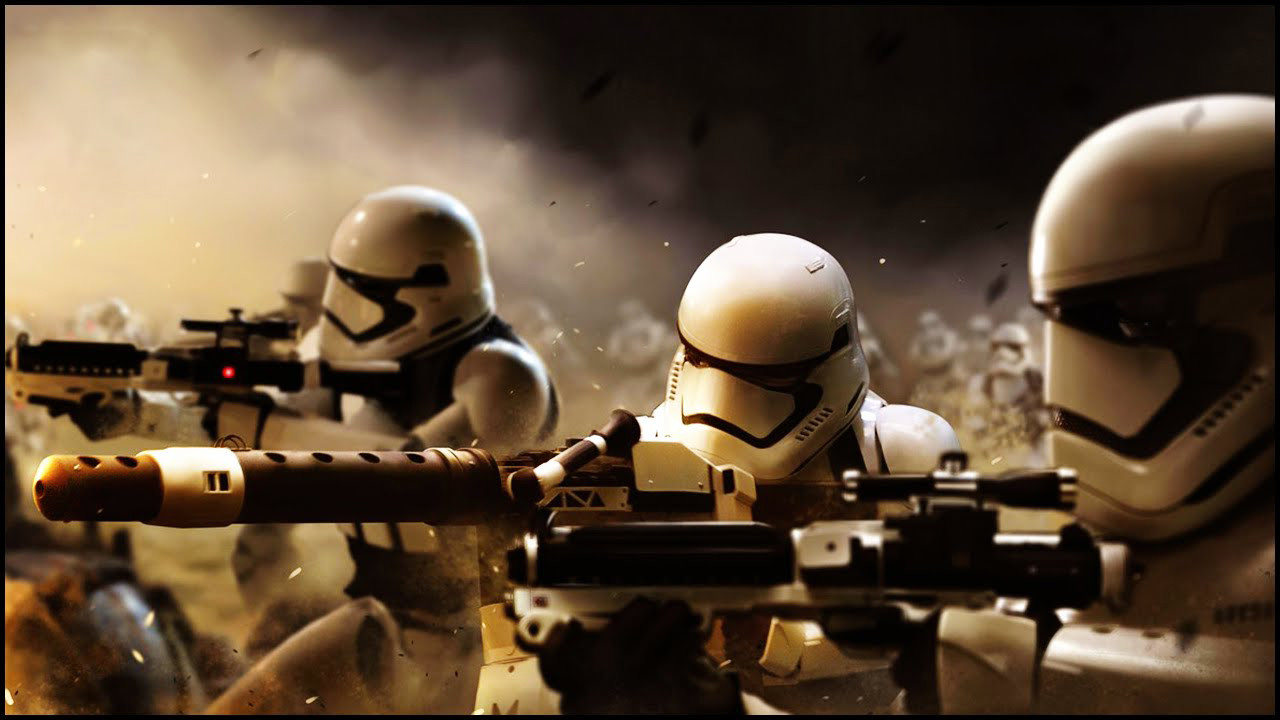
The Legions of the Core are a newly organized military formation raised from former Imperial personnel, Core-world recruitment, and selected conscription programs within Covenant-held territory. They were created to provide the Sith Covenant with a disciplined field army capable of sustained campaigns, occupation duties, and coordinated deployments beyond the reach of individual Sith retinues.
Their structure draws heavily from the old Imperial military model, though several reforms have been introduced to account for Covenant politics. Legion formations may be attached to Sith Lords, Knights, governors, or campaign commands, but these assignments are treated as deployments rather than transfers of ownership. Pay, replacement personnel, equipment standards, officer commissions, and strategic recall remain handled through the central Legionary administration on Centax-1.
In appearance, the Legions retain elements of ancient stormtrooper iconography, updated through newer armor patterns and Covenant markings. This was partly practical, as many recruits and instructors came from Imperial formations, but it also gave the new army an immediate visual language: familiar enough to absorb old soldiers, distinct enough to mark a different regime.
Unlike many Sith-aligned forces, the Legions are not organized around personal glory, religious fervor, or battlefield spectacle. Their value lies in consistency. They can be moved, supplied, reinforced, and redeployed. They are meant to hold ground after it has been taken, protect infrastructure after it has been seized, and give Covenant commanders access to a military arm that does not need to be built from nothing for every campaign.
SOCIAL INFORMATION
Headquarters: Centax-1, one of the moons of Coruscant.
Goals:
Obey lawful orders issued through the Legionary chain of command.
Support Covenant campaigns and territorial expansion.
Secure and stabilize conquered territory.
Protect military infrastructure, supply routes, and strategic holdings.
Provide a reliable field army for Covenant commanders when assigned.
Reputation:
The Legions of the Core are too new to have earned a settled reputation across the wider Galaxy. Most reports describe them as disciplined, conventional, and unusually consistent compared to many Sith-aligned forces. They lack the theatrical brutality of cult armies or personal warbands, but that has made them more useful in campaigns where territory must be held after the first assault.
Among Covenant commanders, their value is practical. A Lord who receives Legion support gains infantry, logistics, armor, engineers, and occupation troops without having to raise those assets personally. Among civilians and enemy forces, reactions vary. Some see them as another Imperial remnant in new colors. Others consider them more dangerous precisely because they behave like soldiers rather than raiders.
Former Imperial personnel have a more complicated relationship with the Legions. Some view them as a continuation of the order they once served, stripped of old loyalties but preserving familiar discipline. Others consider them an opportunistic reassembly of a defeated military machine. In practice, the distinction often matters less than pay, rations, rank, and the chance to remain useful in a galaxy that rarely leaves defeated soldiers many good options.
Within the Covenant, there is occasional friction over the limits of command. Sith commanders often expect direct obedience from any force placed under their authority, while Legion officers are trained to preserve their own reporting standards, operational discipline, and internal chain of command. The compromise holds because it works, though it remains one of the quiet tensions built into the system.
COMPOSITION INFORMATION
Army Size: Huge.
Composition:
The exact structure of the Legions varies depending on deployment, patron, theater, and strategic purpose. Smaller detachments may be attached to local operations or individual Sith Knights, while larger battlegroups and full expeditionary commands may be assigned to senior Covenant leadership.
Typical formations may include:
Line infantry and legionary stormtroopers
Heavy infantry and assault companies
Urban pacification units
Shock troops for breach operations
Armored vehicle detachments
Walker detachments
Artillery and siege batteries
Combat engineers
Reconnaissance and scout units
Military police and occupation forces
Orbital insertion troops
Anti-armor and anti-air detachments
Field medics and casualty evacuation teams
Logistics, supply, signal, and maintenance units
Staff officers and field command personnel
Attached Sith officers, advisers, or battlefield commanders
Naval transports and support craft where required
Legion deployments are usually built around the needs of a specific campaign. A formation assigned to a frontier conquest may be weighted toward scouts, armor, and mobile logistics. A formation assigned to a conquered urban world may include more military police, engineers, and occupation troops. Siege operations tend to draw heavier artillery, walkers, combat engineers, and assault companies.
Because the Legions are intended to operate beyond the Core when required, their composition emphasizes endurance as much as firepower. A unit that cannot feed itself, repair its own vehicles, secure its own lines, or maintain order after a battle is considered incomplete by Legionary standards.
MEMBERS
Mercy
Empress of the Core and the highest political authority associated with the Legions. While she does not personally command every deployment, the Legions were formed under her authority and remain tied to the administrative and military structures of her Core holdings.
Covenant Lords and Knights
Select Sith Lords and Knights may be granted command authority over Legion formations for specific campaigns or theaters. The size and quality of the force assigned depends on strategic need, political standing, and the availability of troops at the time of request.
Legion Commanders
Professional military officers drawn largely from former Imperial structures, later supplemented by newly trained personnel from within Covenant territory. Their role is to translate campaign objectives into functioning military operations while preserving the discipline, supply standards, and cohesion of the formations under their command.
Political and Administrative Officers
Personnel responsible for recruitment standards, discipline, logistical reporting, personnel rotation, and the political education of troops. Their authority varies by formation, but they are a regular presence within larger deployments.
HISTORICAL INFORMATION
The Legions were formed after the collapse of the Core-based Galactic Empire during the events surrounding System Shock. The fall of that state left behind large numbers of displaced soldiers, officers, instructors, depots, contracts, local collaborators, and half-functioning military institutions. Rather than allow those assets to scatter completely, they were reorganized into a new force under Covenant authority.
Centax-1 became the center of this effort. Its proximity to Coruscant, existing strategic value, and separation from the surface made it suitable as a mustering ground, training hub, and administrative center. Former Imperial personnel were screened, retained, promoted, dismissed, or reassigned depending on usefulness and reliability. Recruitment drives were opened across several Core holdings, while certain worlds were required to provide manpower, materiel, or training facilities as part of their new obligations.
The early process was uneven. Some formations transferred almost intact, bringing their own officers, habits, rivalries, and grudges with them. Others had to be rebuilt from scattered survivors and fresh recruits. Equipment stocks varied from well-maintained Imperial reserves to whatever could be recovered, repaired, or purchased through new Covenant channels. The first generation of Legion officers spent as much time standardizing doctrine and logistics as they did preparing for combat.
At first, the Legions were intended to secure newly claimed territory and relieve more irregular Covenant forces from garrison duty. Their usefulness became clear quickly. Sith commanders could win battles, but holding supply routes, enforcing curfews, guarding infrastructure, and maintaining pressure across multiple fronts required a more stable military structure. The Legions were not always the most dramatic tool available, but they were often the one still functioning when the first violence had passed.
Over time, Legion formations began to be attached to Covenant campaigns beyond the Core. These deployments varied in size, from small detachments assigned to local operations to full expeditionary commands placed under senior Sith leadership. The arrangement gave the Covenant a more reliable military arm without requiring every Lord or Knight to build an army from nothing.
This system also created a new kind of dependency within the Covenant. Access to Legion support could decide whether a campaign remained a raid or became an occupation. It could determine whether a Sith commander held territory after victory or watched it slip back into disorder. For ambitious Lords, the Legions became a valuable resource. For the Legionary administration, every deployment became another test of how far the new military structure could be stretched without losing cohesion.
To prevent individual commanders from turning assigned formations into private armies, several practices became standard. Officers are rotated between deployments. Replacement troops are issued through central channels. Heavy equipment remains logged through Legionary supply offices. Long-term assignments are reviewed periodically. In theory, these are ordinary safeguards for any large military force operating across multiple theaters. In practice, they also ensure that the Legions remain a coherent institution rather than a collection of personal warbands in matching armor.
For now, the arrangement holds. The Covenant gains soldiers. Its commanders gain the ability to wage larger and more sustained campaigns. The Legions gain experience, territory, and institutional weight with every deployment.
What that will mean in the long run remains unsettled.