The Masked Butcher
strangers & freaks




KYR’AMULIIK

OUT OF CHARACTER INFORMATION
STRENGTHS & WEAKNESSES
- Intent: To establish the Kyr’amuliik as a heavy shock assault unit for the Iron Covenant, providing a deployable war beast capability in high-intensity engagements.
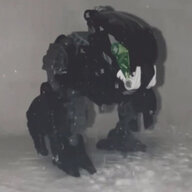
- Image Credit: Avelion | chatgpt
- Role: A heavy shock assault unit attached to the Iron Covenant’s standing military forces. The Kyr’amuliik are deployed to break enemy lines, create panic in defensive formations, and pin hardened positions ahead of conventional Mandalorian infantry. Individual handler-rancor pairs can also operate independently at a field commander’s discretion.
- Permissions: Rancor Art, Sirla'gam Rancor War-Barding
- Links: The Iron Covenant, Coverts of the Iron Covenant, Rancor, Kaysh-Borar, Bes Hukaat
- Unit Name: Kyr’amuliik
- Affiliation: The Iron Covenant
- Classification: Heavy Shock Cavalry / War Beast Unit.
- Description: The Kyr’amuliik are war-conditioned rancors sourced from Felucia, Koboh, and Ottethan wild population through Borar-Node coverts and selectively bred at the Arumorut facility on Vlemoth Port. Varying in base coloration, depending on the planet of origin, the greater part of each animal’s hide is obscured beneath iron-dark armored plating fitted across the chest, brow, shoulder blades, and forelimbs: the surfaces most exposed in a forward charge. A reinforced saddle is mounted behind the neck ridge, carrying a single Mandalorian handler in full beskar’gam. The unit bears no faction markings. The Covenant’s preference for operational discretion extends even to its war beasts.
- Unit Size: Medium — twenty rancor-handler pairs at full deployment strength.
- Unit Availability: Rare — the breeding program at Arumorut is less than a decade old. Each animal requires years of conditioning before it can be safely armored, saddled, and paired to a handler. Losses are difficult to replace on any short timeline.
- Unit Experience: Trained — the Kyr’amuliik are broken, armored, and handler-paired, but have not seen actual battlefield deployment. Their conditioning is solid; their combat record is not yet deep.
- Equipment:
- Standard Mandalorian beskar’gam for all handlers.
- Sirla'gam Rancor War-Barding; fitted plate armor covering the chest, brow, shoulder blades, and forelimbs of each rancor.
- Vibro-lance (handler-carried); a heavy polearm suited to combat from the saddle, used to engage targets beyond the rancor’s immediate reach.
- Reinforced saddle and handler harness with emergency release mechanism.
- Combat Function: The Kyr’amuliik are a breaking weapon instead of a sustained line unit. Deployed at the moment an enemy formation has been worn down or is caught in the open, a coordinated charge of even half a dozen armored rancors can collapse a defensive perimeter through sheer mass and psychological shock before the first blow lands. The handler directs the animal via pressure cues and voice commands; the vibro-lance extends the handler’s reach against targets that survive the initial impact. Against fortified positions, armored vehicles, or entrenched infantry with anti-armor capability, the unit is pulled back and held for a second wave rather than fed into prepared fire. Handler-rancor pairs can also be detached individually for close-quarters support, area denial, or terror operations at a commander’s discretion.
STRENGTHS & WEAKNESSES
Strengths:
- Living Siege Engine: A charging armored rancor absorbs damage that would stop conventional infantry and delivers kinetic force that light vehicles and fixed emplacements are not designed to resist. The psychological effect on unbroken enemy formations frequently does more damage than the physical impact.
- Handler Flexibility: Maximum of twenty rancor-handler pairs rather than a single mass deployment means the unit’s strength can be divided across a battlefield. A Mandalorian commander can commit two pairs to a flanking action, four to a breach, and hold the rest in reserve, making the Baar’ur Kaysh adaptable in a way that most heavy assets are not.
- Handler Dependency: Each rancor is conditioned to its specific rider. If the handler is killed, incapacitated, or separated during combat, the animal ceases to be a weapon and becomes an indiscriminate hazard, as dangerous to Iron Covenant forces as to the enemy. Loss of multiple handlers in a single engagement can turn a tactical asset into a catastrophe.
- Logistical Headache: Feeding, transporting, and maintaining twenty war rancors at operational readiness demands significant resources and specialized support that cannot be improvised in the field. The Kyr’amuliik cannot be rapidly deployed from Vlemoth Port to an arbitrary front, and every animal lost to injury or poor maintenance requires years to replace through the Borar-Nodes pipeline.
HISTORICAL INFORMATION
The Kyr’amuliik did not begin as a military program. They began as a supply problem.When the breeding facility at Arumorut was first established on Vlemoth Port, its stated purpose was the conservation of rancor genetic stock; a cultural argument, rooted in the Mandalorian tradition of beast-kinship. The operational logic came later, once the first generation of Ottethan stock had been brought through Bes Hukaat and the handlers at Arumorut had spent years learning what the animals could and could not be conditioned to do.
The decision to arm and armor them was made quietly, between the Arumorut Hearth-Warden and a small circle of the Mythos Fleet’s senior commanders. The animals were too large, too valuable, and too difficult to replace to risk in unarmored engagements, and the plating, once fitted, changed the calculus entirely. A rancor that could absorb a sustained blaster barrage and keep moving was no longer just a large animal. It was a statement.
The first armored pair was handler-tested in a closed exercise on Vlemoth Port’s outskirts. The second and third were deployed in a limited operation that has not been entered into the public record. By the time the unit reached its current strength of twenty pairs, the name Kyr’amuliik had already passed into informal use among the handlers themselves; a joke, at first, about never speaking the unit’s true nature aloud, and then something closer to doctrine.
They are stationed at Arumorut. They do not travel unless ordered to. And they are not discussed outside the Covenant’s senior military structure. The Storyfire has always known that the most dangerous things are the ones no one sees coming.