
Priest Alor




OUT OF CHARACTER INFORMATION
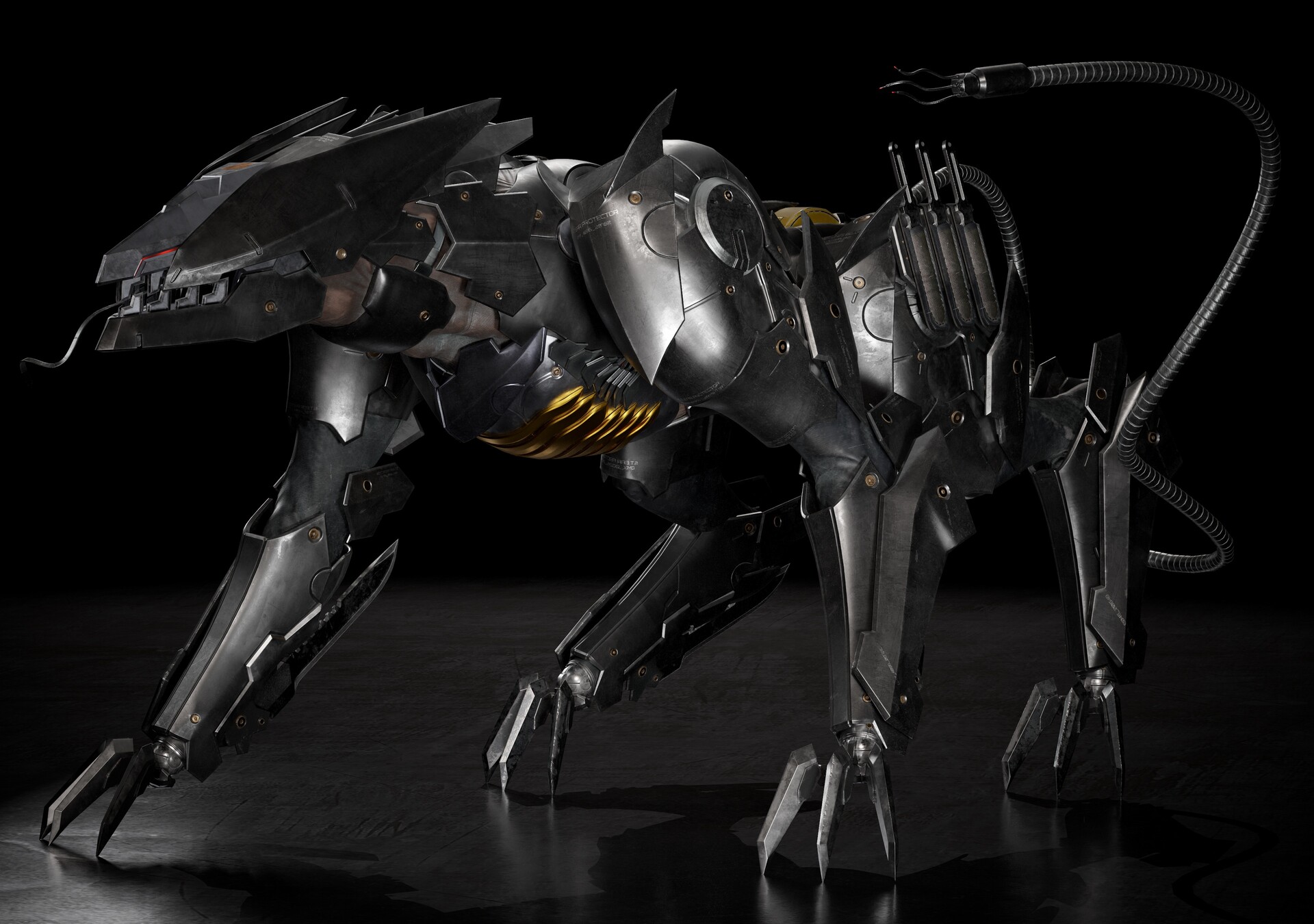
Intent: To create a premium, limited-production tactical pursuit droid inspired by military working dogs, designed for Mandalorian clans, bounty hunters, elite security forces, and military organizations. The KX-9 Argu'a is intended to function as a force multiplier through pursuit, reconnaissance, battlefield awareness, and non-lethal apprehension rather than replacing conventional combat droids.
Image Source: Artstation - BLADEWOLF, Metal Gear Revengence
Canon Link: N/A
Permissions: N/A
Primary Source: N/A
PRODUCTION INFORMATION
Manufacturer: Priesthood Forgeworks
Affiliation:
- Priesthood Forgeworks
- Mandalorian Clans
- Licensed Security Organizations
- Licensed Bounty Hunters
Model: KX-9 "Argu'a" Tactical Pursuit Droid
Modularity: Yes - The Argu'a was designed around a modular maintenance philosophy. Armor packages, restraint cartridges, sensor arrays, tactical software, communications equipment, mission-specific accessories, and power systems may all be replaced or upgraded without reconstructing the entire platform.
Production: Limited
Material:
- Beskar/Mandalorian Iron - Protected areas include:
- Cranial Processor
- Primary CPU
- Power Core
- Neck Assembly
- Upper Spine
- Primary Servo Housings
- Duranium Chassis - Protected areas include:
- Primary skeletal frame
- Load-bearing supports
- Tail articulation mount
- Shoulder assemblies
- Joint anchor points
- Agrinium Assemblies - Protected areas include:
- Servo bearings
- Joint collars
- Leg actuators
- Tail articulation
- Shoulder pivots
- Jaw hinges
- Laminanium
- Integrated into high-stress joints where microscopic fractures may develop over time.
- Its limited regenerative properties reduce long-term maintenance requirements.
- Reinforced Duraplast Plating - Most external armor panels utilize reinforced Duraplast. Advantages include:
- Reduced weight
- Easier maintenance
- Improved resistance to ionization compared with conventional metallic armor
- Replaceable modular panels
- Excellent environmental durability
- Hardened Electronics
- Military-grade shielded circuitry reduces the likelihood of electrical damage from harsh environments or electromagnetic interference.
Classification: Fourth Degree
Weight: Heavy
Height: Average (Large Dog Size)
Movement: Quadrupedal
ARMAMENTS
Hydraulic Bite Assembly: The Argu'a's jaws utilize servo-amplified hydraulic actuators capable of generating immense clamping pressure. Unlike conventional attack droids, the bite is designed primarily for restraint rather than dismemberment. Once a secure hold is established, integrated locking mechanisms maintain grip even during temporary power fluctuations.
Vibro-Assisted Jaw System: The system is intentionally calibrated below dedicated breaching equipment to avoid excessive lethality. Microscopic vibration generators increase cutting efficiency against:
- Armor joints
- Utility belts
- Weapon slings
- Restraints
- Equipment
- Climbing traction
- Ship hull traversal
- Increased grip
- Equipment damage
- Enhanced stability during tackles
- Disorientation
- Balance disruption
- Temporary hearing impairment
- Concentration interruption
- Creating distance
- Breaching light barriers
- Knocking opponents off balance
- Disrupting ambushes
- Pain compliance
- Muscular disruption
- Temporary incapacitation
Bindcaster Restraint Tail: The articulated tail houses an integrated restraint launcher. After securing a suspect, the Argu'a immediately releases the target and resumes pursuit, allowing it to apprehend multiple hostiles during a single engagement. Available restraint modules include the following.
- Electro-bind cables
- Magnetic bolas
- Flex-cuff restraints
- Tracking tethers
- Adhesive foam cartridges
- Thermal Imaging
- Infrared
- Ultraviolet
- Low-Light Vision
- Atmospheric Analysis
- Chemical Detection
- Blood Tracking
- Motion Prediction
- Room layouts
- Hallways
- Obstacles
- Elevation
- Cover
- Structural hazards
Target Pinning: These markers remain visible to authorized personnel until manually cleared or the restraints fail. Once a suspect is successfully restrained, the droid automatically creates a tactical marker showing:
- Capture location
- Restraint integrity
- Time since capture
- Vital signs
- Threat assessment
- Maximum Duration: 10 seconds
- Recharge: Approximately 60–90 seconds as internal capacitors replenish.
Repulsor Mobility: The Argu'a cannot fly. However, Micro-repulsor thrusters assist with:
- High jumps
- Obstacle traversal
- Rapid acceleration
- Terrain negotiation
- Starship hulls
- Metallic walls
- Zero-gravity environments
- Vacuum
- Underwater
- Toxic atmospheres
- Sandstorms
- Extreme temperatures
Adaptive Command & Authentication Suite: The Argu'a's command architecture is highly configurable. Owners may define their own operational language—whether Mando'a, Galactic Basic, Huttese, Binary, or entirely custom phrases, and map any spoken word or phrase to a specific command. Voice instructions are authenticated through encrypted voiceprint analysis, and owners may require additional verification through helmet transponders, HUD interfaces, wrist computers, or other biometric methods. Silent control through eye tracking and helmet-linked HUDs is also supported for covert operations. This design ensures that simply overhearing or imitating a command is insufficient to seize control of the droid.
Tactical Network Integration: Rather than acting independently, connected units dynamically divide responsibilities—such as Hunter, Interceptor, Guardian, Custodian, or Scout—based on the evolving tactical situation. Multiple Argu'a units and allied systems can share:
- Live terrain maps
- Threat classifications
- Damage reports
- Battery status
- Active pursuits
- Captured targets
- Sensor tracks

RESISTANCES
- Energy: High
- Kinetic: High
- Lightsabers: Average
- Ion: Average
- EMP: Average
- Sonic: Average
- Heat: High
- Cryogenic: Average
- Hydraulic Bite Assembly
- Vibro-Assisted Jaw System
- Monomolecular Claws
- Directional Sonic Projector
- Concussive Pulse Projector
- Contact Shock Emitters
- Bindcaster Restraint Tail
- Hunter's Mark Predictive Tracking
- Automatic Target Pinning
- Live Battlefield Mapping
- Tactical HUD Integration
- Adaptive Assault Shield Projectors
- Guardian Advance Protocol
- Adaptive Command & Authentication Suite
- Multi-Language Command Support
- Encrypted Voiceprint Recognition
- Silent HUD Control
- Dynamic Pack Coordination
- Repulsor-Assisted Mobility
- Magnetic Climbing Paws
- Environmental Sealing
- Self-Righting Gyroscope
DESCRIPTION
Among the Mandalorians, the relationship between warrior and beast has always occupied a place of honor. Long before the development of advanced military technologies, Mandalorian clans earned their survival by taming, hunting, and fighting alongside creatures capable of enduring the harshest worlds in the galaxy. Strength was never admired simply because it existed; it was respected because it could be understood, mastered, and fought beside. Throughout their history, creatures that proved themselves worthy through resilience, ferocity, or unwavering loyalty often became symbols of Mandalorian identity. This philosophy eventually extended beyond living animals and into their engineering, where machines were no longer viewed as mere tools, but as reflections of the qualities Mandalorians valued most.
No machine embodies this philosophy more clearly than the Bes'uliik, better known to the wider galaxy as the Basilisk War Droid. Inspired by the legendary basilisks once hunted, conquered, and eventually ridden by ancient Mandalorians, the Bes'uliik became more than a weapon of war. It represented the continuation of an old tradition: transforming the image of a formidable beast into a trusted companion that fought beside its master rather than beneath them. Even after the living basilisks disappeared from history, their spirit endured through the war droids that carried their name, preserving a cultural belief that machines could inherit the purpose and symbolism of the creatures that inspired them. The KX-9 Argu'a was conceived according to that same philosophy.
Its name is equally deliberate. In Mando'a, Argu'a translates to "Hellhound," a title chosen not to evoke fear for its own sake, but because it captures the qualities Mandalorians have long associated with the ideal hunting companion. A hellhound does not abandon the trail once it has begun the hunt. It relentlessly pursues its quarry regardless of terrain, weather, darkness, or distance. It protects its pack with absolute devotion, places itself between danger and those under its care without hesitation, and remains loyal even when surrounded by overwhelming odds. Those characteristics define the purpose of the Argu'a far more accurately than any technical designation ever could. It is neither a simple security droid nor a battle droid. It is a hunting companion engineered to embody the same unwavering persistence that once made living war beasts indispensable to Mandalorian warriors.
Unlike the Bes'uliik, however, the Argu'a was never intended to dominate open battlefields through overwhelming force. Priesthood Forgeworks recognized that modern warfare increasingly unfolds within environments where massive war droids are constrained by their own size. Dense urban centers, industrial complexes, subterranean tunnel systems, forests, cave networks, derelict starships, and civilian infrastructure all present challenges that demand a smaller, more agile companion. Rather than attempting to create a reduced-scale Basilisk, the designers instead asked a different question: What creature has served warriors across countless civilizations as tracker, guardian, hunter, rescuer, and companion? The answer was almost universal—the dog.
Dogs possess a combination of qualities rarely found together in nature. They pursue tirelessly, defend instinctively, adapt rapidly, cooperate within a pack, and remain fiercely loyal to those they serve. Modern military organizations throughout history have relied upon working dogs not because they replace soldiers, but because they excel at tasks soldiers cannot perform as efficiently. Tracking hidden enemies, locating survivors, guarding vulnerable positions, detecting threats before they become visible, and apprehending dangerous individuals alive have long been the domain of trained canine companions. Priesthood Forgeworks sought to translate those instincts into a mechanical platform while preserving the cultural identity expected of Mandalorian craftsmanship.
The result was the KX-9 Argu'a Tactical Pursuit Droid, a machine whose every subsystem was designed around four operational principles: Locate. Pursue. Restrain. Protect. Rather than measuring success through enemy casualties, the Argu'a measures success through battlefield control. It exists to extend the awareness of the warriors around it, to ensure no quarry escapes the hunt, and to safeguard allies who would otherwise be exposed to unnecessary danger. Every sensor, every actuator, every restraint system, and every defensive mechanism ultimately serves those principles.
The KX-9 Argu'a Tactical Pursuit Droid was never intended to replace the Bes'uliik. Instead, Priesthood Forgeworks approached the problem from the opposite direction. While a Basilisk dominates battlefields through overwhelming force and mobility, modern conflicts increasingly unfold within crowded cities, industrial complexes, dense forests, cave systems, ship interiors, and civilian infrastructure where such a war machine cannot effectively maneuver. Mandalorian warriors still needed a mechanical companion capable of hunting, protecting, and supporting them in these environments. The Argu'a was conceived to fill that role—not as a miniature Basilisk, but as its natural counterpart.
The design philosophy behind the Argu'a is built around a simple principle: control the battlefield rather than overpower it. Every system aboard the platform serves one of four operational pillars: Locate. Pursue. Restrain. Protect. Unlike conventional battle droids whose purpose is simply to eliminate hostile forces, the Argu'a is designed to preserve tactical momentum by continuously gathering information, apprehending dangerous individuals, and sharing that intelligence with the warriors around it. It is a force multiplier first and a combatant second.
The droid's quadrupedal configuration reflects this philosophy. Four independently articulated legs, reinforced with Agrinium bearings and mounted to a Duranium skeletal frame, provide exceptional stability across terrain that would challenge wheeled or tracked platforms. Rubble, collapsed structures, dense forests, rocky hillsides, snowfields, and starship maintenance shafts all become navigable without sacrificing speed or agility. Repulsor-assisted jumps allow the Argu'a to vault obstacles, breach windows, or rapidly traverse elevation changes, while magnetic climbing paws permit movement across starship hulls, metallic walls, and zero-gravity environments. Where larger walkers may struggle to enter a building or pursue a suspect through confined spaces, the Argu'a continues without hesitation.
The platform's sensor suite functions as its primary weapon long before any physical confrontation occurs. Thermal, infrared, ultraviolet, low-light, atmospheric, chemical, and biological sensors operate simultaneously, allowing the Argu'a to detect heat signatures, blood traces, disturbed soil, chemical residues, or environmental anomalies that indicate recent movement. These systems are continuously fused into a live three-dimensional battlefield map generated through lidar and terrain analysis. Every corridor, doorway, ventilation shaft, stairwell, and piece of available cover is catalogued in real time and transmitted through encrypted tactical uplinks to compatible helmet HUDs, command consoles, vehicles, and allied droids. Rather than requiring warriors to manually report every observation over comm channels, the battlefield itself becomes visible to everyone connected to the network.
This mapping capability becomes increasingly valuable as additional Argu'a units join an operation. Each platform contributes its own sensor data to the shared tactical picture, allowing multiple droids approaching from different directions to construct a complete representation of a structure in moments. One unit clearing the western entrance of a building, another traversing the roof, and a third entering through underground maintenance tunnels collectively produce a unified operational map without exposing Mandalorian personnel unnecessarily.
Information alone, however, is not enough. Once a target has been identified, the Argu'a transitions seamlessly into pursuit. Advanced behavioral algorithms analyze terrain, movement patterns, available exits, and observed speed to produce Hunter's Mark, a predictive pursuit model. Rather than claiming impossible omniscience, Hunter's Mark displays probability corridors indicating the routes a fleeing suspect is most likely to take. As additional sensor data becomes available, these predictions continuously refine themselves, allowing pursuing warriors to intercept rather than merely chase.
Should visual contact be regained, the Argu'a shifts from reconnaissance to interdiction. The droid's engagement doctrine intentionally emphasizes controlled escalation. Directional sonic projectors may be employed first to disorient and interrupt hostile movement. Compact concussive pulse emitters create brief kinetic impacts capable of knocking an opponent off balance or forcing them from cover without relying upon lethal explosives. If resistance continues, hydraulic bite assemblies, monomolecular traction claws, and integrated contact shock emitters allow the droid to physically dominate opponents while minimizing unnecessary fatalities. Even the vibro-assisted jaw system is calibrated primarily to compromise armor joints, equipment, and restraints rather than inflict catastrophic injury.
The defining feature of the Argu'a remains its articulated Bindcaster restraint tail. Traditional attack animals or combat droids often become tactically occupied once they successfully engage a target, requiring them to maintain physical control of the suspect. Priesthood Forgeworks considered this an unacceptable limitation. Once the Argu'a has secured an opponent, the tail deploys a restraint cartridge selected for the mission profile—electro-bind cables, magnetic bolas, flex restraints, tracking tethers, or adhesive foam systems. These restraints anchor and secure the captive independently, allowing the droid to release its hold immediately and continue pursuing additional threats. A single Argu'a can therefore subdue multiple hostile individuals during a prolonged engagement instead of becoming fixed to the first opponent it encounters.
Every successful restraint automatically activates the Target Pinning protocol. The droid records the exact capture location and transmits a persistent marker to all authorized users. Each tactical marker includes the prisoner's position, restraint integrity, elapsed capture time, vital signs, and threat classification. During extended operations this prevents confusion, ensuring warriors always know where restrained individuals have been left and whether those restraints remain intact. In conjunction with Hunter's Mark, the battlefield evolves into a living tactical display rather than a collection of isolated reports.
Although the Argu'a was never intended to stand in prolonged firefights, survivability remained a central concern. Critical systems—including the processor core, power distribution assembly, upper spinal column, neck assembly, and primary actuator housings—are protected by Beskar plating. The remainder of the chassis employs reinforced Duraplast armor mounted over a Duranium structural frame, balancing durability with maintainability. Agrinium bearings reduce wear across the platform's numerous articulation points, while Laminanium components within high-stress joints gradually recover from minor stress fractures between deployments. This layered construction allows damaged armor panels to be replaced quickly without sacrificing protection for the droid's most essential systems.
Complementing this armor is the Adaptive Assault Shield Projector system. Compact emitters concealed beneath the forward shoulder assemblies project a directional energy barrier covering the frontal arc and portions of each flank. Unlike the continuous shield systems found on dedicated combat vehicles, these projectors are powered by high-discharge capacitors intended solely for brief tactical bursts. The barrier may be sustained for approximately ten seconds before requiring a lengthy recharge period, preventing the Argu'a from becoming an armored assault platform while still providing sufficient protection to cross exposed terrain or survive the final approach toward a hostile position. The rear of the droid remains entirely vulnerable, rewarding proper positioning and coordinated maneuver.
This same shield technology enables one of the Argu'a's most respected operational behaviors: Guardian Advance. If an allied Mandalorian, security officer, or civilian under protection is critically wounded, the droid immediately reprioritizes its mission. Deploying its assault shield, it rapidly advances toward the casualty, deliberately placing its own armored body between incoming fire and the injured individual. Lowering its profile upon arrival, the Argu'a expands the effective coverage of the frontal shield while transmitting medical alerts and the casualty's location to allied HUDs. The system is not intended to indefinitely absorb concentrated fire; instead, it creates a precious window in which medics may stabilize the wounded or squad members may execute an extraction. In Mandalorian culture, where bringing one's people home carries profound significance, Guardian Advance reflects a philosophy as much as an engineering solution.
Communication between operator and machine receives equal attention. The Adaptive Command and Authentication Suite allows each owner to define entirely custom command vocabularies. Commands may be spoken in Galactic Basic, Mando'a, Binary, Huttese, or virtually any supported language, while user-defined phrases permit clans to establish entirely unique operational lexicons. Voiceprint authentication, encrypted helmet transponders, wrist computers, HUD interfaces, and biometric verification may all be layered together, ensuring hostile forces cannot simply shout commands to seize control of the platform. Silent command interfaces through eye tracking and helmet displays permit the Argu'a to operate alongside Mandalorian warriors without revealing intentions through spoken communication.
Perhaps the Argu'a's greatest contribution emerges when operating alongside other Mandalorian assets. The Bes'uliik remains the embodiment of overwhelming force—an airborne war mount capable of orbital insertion, heavy assault, and battlefield domination. The Argu'a complements rather than competes with this role. During planetary assaults, Basilisks may establish breaches, destroy hardened defenses, and deliver warriors into contested zones while Argu'a units immediately disperse into surrounding urban districts, subterranean tunnels, industrial complexes, or wilderness escape routes. Where the Basilisk secures the battlefield, the Argu'a secures the people upon it. Escaping officers, fleeing command personnel, hidden insurgents, and valuable prisoners become the responsibility of the pursuit droids while the larger war machines continue engaging strategic objectives.
This relationship extends beyond Basilisks. Linked to astromechs, reconnaissance drones, vehicles, and command centers, Argu'a units exchange mapping data, damage reports, threat assessments, and pursuit information in real time. Multiple units dynamically assign operational roles such as Hunter, Interceptor, Guardian, Custodian, or Scout according to battlefield conditions, reducing redundant actions without removing the need for a living commander. The droids remain disciplined extensions of Mandalorian doctrine rather than autonomous replacements for it.
Ultimately, the KX-9 Argu'a exists because not every battle is won by the largest weapon. Wars are often decided by the enemy commander who escapes, the civilian rescued from crossfire, the prisoner captured alive for questioning, or the wounded warrior successfully brought home. The Argu'a was engineered to excel in those moments. It does not seek glory through overwhelming destruction; it earns its place beside Mandalorian warriors through relentless pursuit, disciplined restraint, unwavering loyalty, and an uncompromising commitment to ensuring that no hunt ends unfinished and no ally is left behind.
Out Of Character Info
Intent:
Dogo Droid
Permissions:
N/A
Technical Information
Affiliation:
Priesthood Forgeworks, Mandalorian Clans, Licensed Security Organizations, Licensed Bounty Hunters
Modular:
Yes
Material:
Listed in Sub
Movement:
Quadrupedal
Armaments:
Listed
Droid Classification:
Fourth Degree
Defense Rating:
High
Energy Resist:
High
Kinetic Resist:
High
Sonic Resist:
None
Thermal Resist:
High
Radiation Resist:
None
Other Resistance(s):
Listed