

Nothing's Like Before




KOTAHOVEN
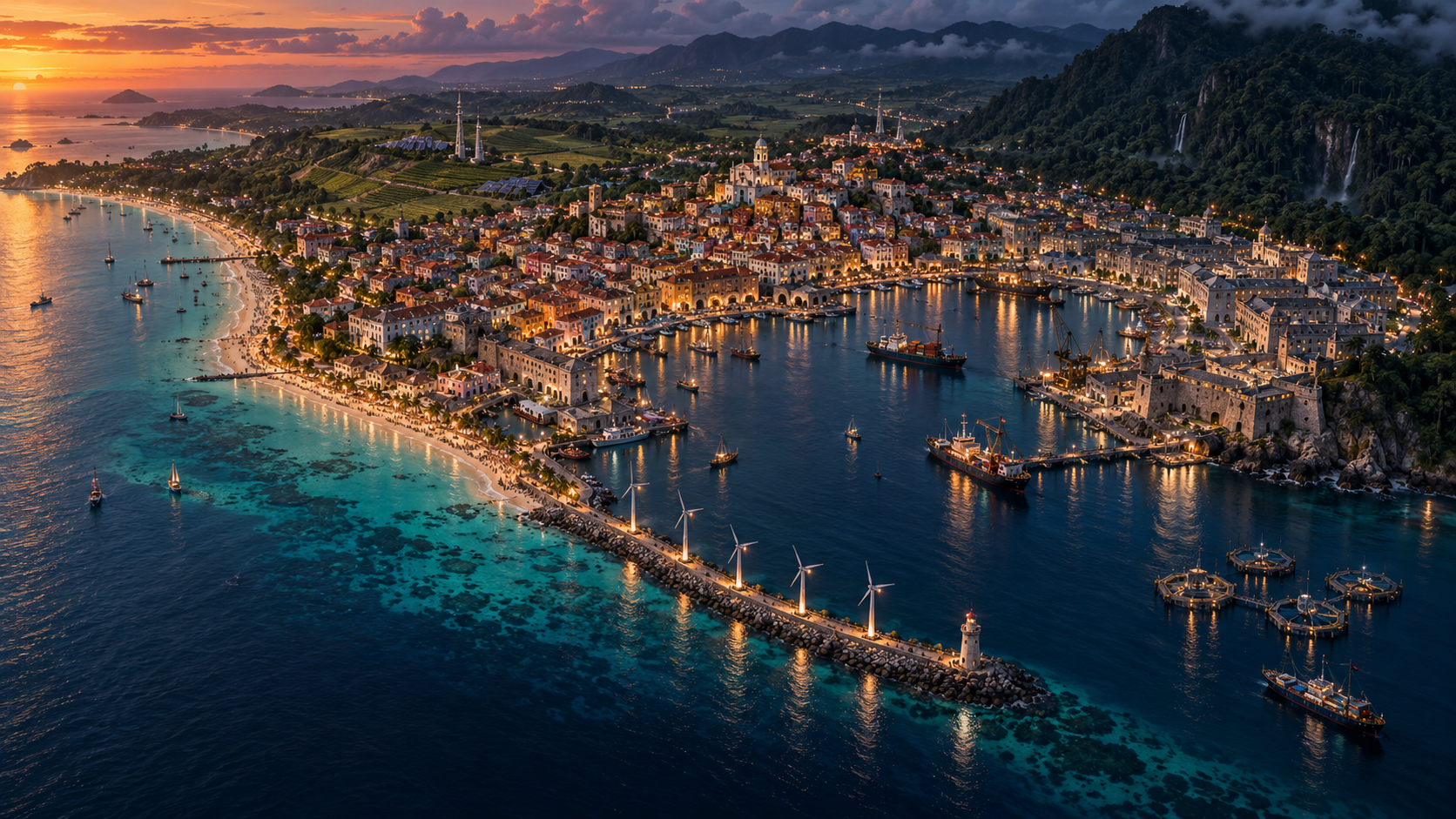
OUT OF CHARACTER INFORMATION
- Intent: To establish Kotahoven, planetary capital of Verkuyl, as a Commonwealth Metropolis with a distinct founding-era culture predating the First Order's arrival.
- Image Credit: ChatGPT
- Canon: Verkuyl
- Permissions: N/A
- Links: Commonwealth Renewable Energy Platform | Energy Stabilization Redistribution System | Commonwealth Adaptive Infrastructure Network | Commonwealth Micro Refinery Platform | Water Reclamation Module | Atmospheric Carbon Purification and Filtration System | Verdant Reclamation Engine
SETTING INFORMATION
- City Name: Kotahoven
- Classification: Metropolis
- Location: Verkuyl
- Affiliation: The Imperial Commonwealth of Dosuun
- Population: Heavy
- Demographics:
- Age:
- 18% 0-15
- 57% 16-64
- 20% 65-100
- 5% 100+
- Gender:
- 47% Female
- 41% Male
- 12% Non-Binary
- Species:
- 51% Human
- 11% Chiss
- 9% Zelosian
- 8% Echani
- 7% Chalactan
- 6% Korunni
- 4% Keshiri
- 4% Other
- Age:
- Wealth: High
- Kotahoven's fortune was built on alazhi and refined bacta stock, and the Commonwealth's investment since incorporation has only deepened it. What was once a company's private ledger is now a planetary treasury, and the old refining families still sit on considerable inherited capital even as the industry itself has been folded into civic-service administration.
- Stability: High
- The city that didn't fall carries that fact in its bones. Kotahoven's institutions never had to be rebuilt from rubble the way Avalonia's were, and that unbroken continuity shows in a populace that trusts its own civic machinery more readily than most Commonwealth cities do.
- Freedom & Oppression:
- Kotahoven runs on the same loyalty-through-provision compact as the rest of the Commonwealth, but with a folk memory underneath it that's centuries older than the Commonwealth itself: the old indenture contracts are gone, but the cultural instinct that duty and provision are owed to one another in both directions predates any government that's ever governed here. Dissent is tolerated more readily than fear-based systems would allow, so long as it doesn't threaten the shipping lanes or the refineries that the rest of the sector depends on.
- Description:
- Kotahoven rises along a wide tidal harbor on Verkuyl's hot coastal belt, sandwiched between rainforest to the north and the terraced alazhi fields stretching inland to the south. It is a city built in layers the way a reef is built: company stone at the foundation, creole color painted over it, trade-hall arches threaded through both, and a garrison's clean grey lines laid across the top of it all. The harbor never fully quiets. Trade barges idle at anchor waiting for berths, guild choirs can be heard some mornings drifting out of Kambrayo before the markets open, and out past the breakwater, Commonwealth Navy pickets hold their slow patrol lines against the horizon. Along the open coast, the water of the Glasswater Reach runs so clear it seems to hold the sky in it by day and the city's own lights by night. Kotahoven is not the Commonwealth's oldest city, nor its most storied, but it is the one that never had to be rebuilt, and after dark, wrapped in lamplight and reflected water, it may be the most beautiful.
POINTS OF INTEREST
Kotahoven wraps a wide tidal harbor on Verkuyl's hot, low-latitude coast, sandwiched between rainforest to the north and the alazhi fields stretching inland to the south. Company stone, creole color, trade-hall tile, and garrison grey are laid over one another in overlapping layers, and after dark the city becomes something else entirely. The coloured row-housing keeps its glow through strings of warm lamplight, the harbor throws back the light of the trade-hall lanterns, the beachfront runs bright and late into the night along water so clear it holds the reflection whole, and the entertainment quarter simply never quiets down at all: a city that reads, by night, like two very different capitals folded into one skyline.
I. Kadewerf (the landing-yard): the city's threshold, where every arrival first sets foot on Verkuyl.
- Kadewerf Intergalactic Port: The planet's primary starport, built to handle both alazhi-stock freight and the cosmopolitan passenger traffic of a Commonwealth world in equal volume. Cargo lifts and passenger concourses run on separate levels, so a diplomat's shuttle and a bulk hauler never have to share a landing queue.
- The Concourse Markets: Duty-free trade halls just off the port floor, catering to the wide mix of species and worlds now stationed or trading through the city. A traveler can get a decent meal in six different registers of cuisine without leaving the building.
- Het Wachthuis (the waiting-house): A cluster of transit hotels and short-stay lodging for crews on turnaround; unglamorous but reliable, and the first hot meal most new arrivals actually eat is here.
II. Bestierhof (the governing-court): the civic and administrative seat.
- The Halcyon Chambers: Seat of Kotahoven's planetary administration and the Commonwealth's sectoral liaison offices for New Kaldwin. Built atop the original First Order garrison-administration block, its façade still bears that era's clean, unornamented lines beneath a newer Commonwealth stonework skin.
- The Ledgerhouse: Civic registry and magistrate's courts; every indenture contract Verkuyl ever recorded, going back to before the First Order's arrival, is archived here, a research destination for historians and a quiet monument to how the planet's labor economy was actually run.
- Founders' Reach: A long harborside promenade lined with statuary honoring both the original company-era founders and the First Order administrators who elevated the city after the Sundering.
III. Deldkade (the founder's quay): the old company heritage quarter.
- The Deldhuis Exchange: The original trading house of the planet's founding mercantile concern, now a preserved commodities exchange where alazhi-futures brokers still work the floor daily.
- Oudhandel Row: A street of centuries-old counting-houses and guild offices, austere whitewashed stone with dark-timbered gables, the oldest continuously occupied buildings in the city.
- The Thrift Hall: A civic institution descended from the old company mutual-aid fund; today it administers local supplements to Commonwealth UBI and runs financial literacy courses for young adults entering civic service.
IV. Kambrayo (the bright row): the coloured-house market quarter, the cultural heart of the deep Verkuylian population.
- The Coloured Row: Blocks of brightly painted row-housing, each façade a family's own palette, a tradition said to have begun as a way for indentured families to mark their homes as their own against the grey company architecture that surrounded them.
- The Kambrayo Concourse: A sprawling covered market of culinary stalls, textile vendors, and produce-sellers; the smell of it, citrus, seared meat, warm dough, reaches two streets over on market mornings.
- The Choir Hall: Home to Kotahoven's call-and-response choral tradition, performed at civic occasions, funerals, and the annual Reckoning alike.
- Tante Rosa's: A worn, beloved communal eating-house serving selapot, a spiced, slow-cooked preserved-meat stew eaten from shared pots, alongside sweet fried dough dusted with crystallized emberfruit rind. There is always a line, and no one who grew up in Kambrayo will tell you it isn't worth it.
- The Flarepod Table: A newer, sharper restaurant built around the district's namesake spice crop, doing tasting menus that walk diners through the full range of the pepper's heat, from mild market-stall fare to dishes meant to be respected rather than merely eaten.
V. Doceira (the trade-tide): the maritime merchant harbor, carrying the Goan-trade layer of the city's founding culture most visibly of any district.
- The Trade Halls: Tile-worked warehouses and arched trade-halls lining the water, their façades laid in the same hand-painted azulejo-style tilework the founding traders brought with them, geometric blues and whites weathered soft by the harbor air, still the address of choice for the city's shipping agents and cargo factors.
- The Petitioner's Steps: A shrine-lined stairway descending to the water, where sailors and traders leave small tokens for safe passage. Once a year, on the district's patron feast day, the shrine's procession carries down to the harbor's edge and small boats set out at dusk carrying candlelight offerings, devotional practice folded quietly into daily commerce the rest of the year.
- Vinha Row: A row of vinegar-cure smokehouses and seafood markets supplying half the city's signature cuisine: cured fish, pickled shellfish, and pimenta escura, a dark, slow-marinated vinegar-and-chile pork the district is quietly famous for.
- A Mesa do Cais (the quayside table): A harborfront restaurant built around vinegar-cured seafood, coconut-based fish curry, and tidevine wine, unpretentious but consistently full. The dessert menu is short and doesn't need to be longer: camada doce, a layered coconut-and-egg custard, and little else.
- Casa do Caju: A small, well-loved distillery and tasting room producing caju branco, a clear cashew-fruit spirit distilled in the old harbor tradition, served neat, or cut with tidevine wine in a cocktail every dockhand in Doceira has an opinion about.
VI. Saelgard (the ward-hold): the garrison district.
- Fort Sael: Commonwealth Navy and Marine base securing the alazhi shipping lanes and planetary defense grid; descended directly from the original First Order garrison.
- Highwater Yards: Ship maintenance and light refit facility serving Commonwealth vessels rotating through New Kaldwin.
- The Reckoning Wall: A memorial wall inside the garrison listing every soldier who died holding the line during the Sundering years. Kotahoven never fell, but it came close, and the wall does not let anyone forget how close.
VII. Velderij (the field-works): the agricultural belt stretching inland, where the culture blend shows up on the plate as much as anywhere in the city.
- The Alazhi Terraces: Vast terraced fields growing the crop that built the planet's fortune and still anchors its economy, now Commonwealth civic-service land rather than indenture-contract acreage.
- The Duskgrain Rows: Hardy grain fields feeding the city's bread ovens and preserve-houses, the thrifty, keep-through-the-season staple at the base of most Verkuylian cooking.
- The Tidevine Slopes: Coastal-facing vineyards producing the region's signature wine, a dry, faintly saline vintage that pairs with Vinha Row's cured seafood almost by design.
- The Flarepod Groves and Emberfruit Orchards: The spice-pepper and citrus-quince crops that give Kambrayo's cooking its heat and its sweetness in equal measure.
- Guildhall Row: Union and craft-guild offices for the agricultural and refinery workforce, descendants of the original company guilds.
- The Reclamation Works: A Verdant Reclamation Engine installation processing crop waste, refinery byproduct, and old contaminated ground from the indenture era alike back into mineral-rich soil amendment, quietly undoing generations of company-era overuse one field at a time.
- The Contract Memorial: A modest but deeply visited monument to the generations who labored under the old ten-year indenture system before its abolition; Verkuylians of every district visit it on the Reckoning.
- The Long Table: A farm-to-table restaurant collective run directly out of the terraces, changing its menu with the harvest and serving the closest thing Kotahoven has to a single unified expression of its cuisine: duskgrain bread, tidevine wine, emberfruit preserve, and whatever the alazhi crews are eating that season, all at one table.
- The Tidal Array: A row of CREP-01 tidal-flow turbine installations anchored into the harbor's outer breakwater, paired with a floating sea-platform variant further out that hosts both turbines and solar collectors in a single hybrid rig; Verkuyl's strong lunar tides make this the quarter's most reliable output.
- The Solar Terraces: CREP-01 solar field arrays stepped up the inland slope behind Velderij, angled to catch Verkuyl's long, hot daylight hours; shares acreage informally with the agricultural belt it borders.
- The Grid Exchange: Administrative and engineering hub built around an ESRS "Aether Spine" installation. Its Underground Auxiliary Battery System, buried beneath the district, takes in surplus from the Tidal Array and Solar Terraces and redistributes it citywide, with a CAIN-01 adaptive network node layered on top coordinating load across every other zone in Kotahoven, civilian and Saelgard's military grid alike, kept cleanly partitioned.
- The Bioreactor Ponds: A cooperative-run CMRP-01 micro-refinery installation in its coastal configuration, growing algae in open ponds along the marsh edge of Velderij to produce biofuel for agricultural machinery and irrigation pumps. The byproduct fertilizer feeds straight back into the Alazhi Terraces and Duskgrain Rows next door, closing the loop the old company guilds would have recognized as thrift by another name.
- The Purity Works: A HYDRALUX-PURE installation processing Kotahoven's harbor and runoff water into potable and agricultural-grade supply, the same technology deployed after ecological disasters elsewhere in the Commonwealth, here running quietly as everyday civic infrastructure for a coastal city that never stopped needing fresh water.
- The Scrubbing Stacks: A bank of Atmospheric Carbon Purification and Filtration units cleaning the alazhi-refining exhaust before it ever reaches the sky. What used to vent as pale vapor over the refinery skyline now comes out closer to clean air, with the captured carbon compressed into fuel rods sold back into the local grid.
IX. Heilwyk (the mending-ward): the medical district, where bacta-industry expertise and older folk-healing traditions sit side by side.
- Kotahoven General Infirmary: The city's flagship hospital, bacta-forward and trauma-capable, drawing on the planet's own refining industry for supply.
- The Herbalists' Court: A guild-run hall of traditional healing, descended from Malay and Goan folk-medicine practice: poultices, tinctures, and birth-and-recovery care that predates any hospital on the planet.
- The Verkuylian Institute for Bacta Research: A research arm tied directly to the alazhi industry, working on refinement techniques and medical applications in partnership with Velderij's growers.
- The Civic Health Corps Center: Training and posting hub for citizens serving the medical track of their mandatory civic service; wards staffed as often by first-year civic-service medics as by career physicians.
X. Leerhof (the learning-court): the university and research district.
- Kotahoven University: The planet's flagship institution, strongest in maritime engineering, agricultural science, and bacta chemistry, the natural academic partner to both Velderij and the Krachtwerf energy works.
- The Heritage & Language Institute: A research body dedicated to studying and preserving Verkuylian creole culture itself: the choir tradition, the old indenture-era records, the fused language register, treating the city's own history as a live field of study.
- The Naval Officers' College: Training academy feeding directly into Fort Sael and the wider Commonwealth Navy, sharing campus space and, informally, a great deal of rivalry with the main university.
- Scholar's Row: The student quarter proper: dense, affordable housing, late-night study cafes, and the kind of bookshops that stay open far past when they should.
XI. Vuurspel (the fire-games): the sports and entertainment district, and the loudest, most alive part of the city after dark. Where Kambrayo is warm and communal and Marlumina is quiet luxury, Vuurspel is spectacle: stadium lights, packed music halls, and a nightlife scene that never fully closes.
- Vuurspel Arena: The city's premier stadium, home to Kotahoven's limmie and grav-ball clubs and the site of the planet's biggest civic gatherings outside the Reckoning itself.
- The Fado Rooms: A cluster of small, dim, achingly sincere music venues carrying the melancholic, ballad-driven register of the Goan-trade heritage, the kind of place where a single voice and a stringed instrument can hold a whole room silent.
- The Copperline: A stretch of louder, brasher clubs and open-air music venues doing the opposite work: horn-driven, percussion-heavy, built for dancing rather than listening, and busiest well past midnight.
- Tamarisha House: The district's best-known late-night bar, built around the local diaspora drink of the same name, a spiced tamarind-and-rum cooler, alongside vokovai, a coconut-and-spice custard dessert that the neighborhood's Malagasy and East African-descended trading families brought with them generations ago and never let go of. Both have become Vuurspel specialties in their own right, distinct from the deeper Kambrayo/Doceira culinary layer.
- The Wager Halls: A row of card and dice dens tucked behind the main entertainment strip, loud, informal, and popular with off-duty Saelgard soldiers and dockhands alike.
XII. Aguazul (the blue-water quarter): the aquatic district, distinct from Marlumina's leisure beachfront and built instead around the water itself as a working and scientific space.
- The Verkuylian Marine Institute: A research body studying the reef systems that keep the Glasswater Reach so famously clear, and the native aquatic life that depends on them.
- The Deep Court: A diving school and licensing body serving both recreational visitors and the commercial divers who service the harbor's underwater infrastructure.
- The Tide Ring: An aquatic sports arena built around a semi-enclosed lagoon, hosting swimming, diving, and Kotahoven's own competitive aquatic-ball league.
- The Public Aquarium: A popular attraction showcasing Verkuylian reef life, and a frequent school-trip destination for children from every district in the city.
XIII. Iraveira (the green-quarter): where the rainforest closes in against the city's northern flank, and where the Provenance keeps its home.
- The Provident Hall: The city's central devotional site, where the old Reformed duty-ethic, Malay charitable practice, and Goan patron-veneration have fused over centuries into a single shared civic faith: provision and duty owed in both directions, between citizen and city alike.
- The Reckoning Square: Site of Kotahoven's largest annual festival, the Reckoning: part harvest festival, part patron-feast, part communal "settling of accounts," held on a lunar-linked calendar the old company never managed to stamp out.
- The Canopy Walk: An elevated boardwalk threading into the rainforest edge, used for quiet reflection, courting couples, and the odd botanist cataloguing Verkuylian flora.
- Herberg Groenrand (the greenside inn): A handful of small eco-lodges built into the canopy edge, popular with visitors who want the city's comforts and the rainforest's quiet in the same evening.
XIV. Marlumina (the sea-light): the beachfront leisure quarter, and the district that makes Kotahoven's skyline worth seeing after dark.
- The Glasswater Reach: A long stretch of coastline famous across New Kaldwin for water so clear the seabed is visible from the shore at almost any depth swimmers reach; a genuine point of civic pride, and the postcard image most off-worlders carry home.
- The Lantern Promenade: A beachfront walkway strung with warm hanging lights that comes fully alive after sunset: restaurants spill onto the sand, music drifts between the open-air bars, and the water itself catches and holds the light long after the sun is down.
- Hotel Maré Alta (high-tide hotel): The district's signature resort, tiled in the Goan style and built to catch the sea breeze through every room; the rooftop bar is widely considered the best view of the Glasswater Reach at night.
- The Salt Table: An open-air seafood restaurant built right at the sand's edge, serving the day's catch grilled simply and dressed with tidevine wine and emberfruit, the kind of meal meant to be eaten slowly, with your feet still damp from the water.
- Café Marlume: A small beachfront café known for strong coffee, duskgrain pastries, and being the first thing open in the morning and the last thing to close at night.
XV. Oudwyk (the old ward): the deep creole residential quarter.
- The Long Blocks: Generations-deep residential neighborhoods where the oldest Verkuylian families, "old blood," in local parlance, have lived continuously since before the First Order arrived.
- The Story Porches: A neighborhood custom rather than a single site: long communal porches where oral history is still passed down in the evenings, unofficial but well known to every local.
XVI. Dalos Peninsula (legacy site): outside the city proper.
- The Old Concern: The preserved ruins of the original BactaCo headquarters, maintained as a heritage site; school groups and historians visit regularly.
- The Founders' Cairn: A weathered marker at the peninsula's point, the oldest datable structure on the planet.
SECURITY
High. Kotahoven's security posture reflects a city that has never had to rebuild its institutions from nothing, and treats that continuity as worth protecting.
Perimeter Defenses:
- Sensor Arrays: orbital and atmospheric monitoring covering the harbor approach and shipping lanes.
- Saelgard Garrison Presence: visible Commonwealth Navy and Marine patrols along the harbor and the Velderij field perimeter.
- Automated Defense Turrets: non-lethal stun-capable emplacements integrated into Bestierhof, Velderij, and Krachtwerf architecture.
- Checkpoint Protocols: rapid-deployment barricades for Velderij, Krachtwerf, and Saelgard during elevated alert.
- Citywide Surveillance Network: concentrated most heavily around Velderij, Krachtwerf, and Bestierhof.
- Rapid Response Teams: stationed across all zones, with dedicated harbor-response units for Doceira and Aguazul, and dedicated crowd-management units for Vuurspel on event nights.
- Cybersecurity Protocols: protecting alazhi production data, power-grid systems, and shipping manifests, a priority given the industry's galactic importance.
- Kotahoven Civic Constabulary: standard law enforcement, blaster and stun-cuff equipped.
- Commonwealth Security Droids: patrol support in Kambrayo, Kadewerf, and Vuurspel.
- Harbor Patrol Craft: small fast vessels monitoring Doceira, Aguazul, and the shipping approach.
- Civic Health Corps Rapid Response: Heilwyk-based medical units on standing call for both civic emergencies and Vuurspel's late-night crowds.
HISTORICAL INFORMATION
- Pre-First Order: The Company Centuries
- Long before the First Order ever reached the Unknown Regions, Verkuyl was already old money and older labor. Corlin Quarle Deld's bacta concern grew the alazhi crop and refined it for the galaxy for centuries, staffing its operations through ten-year labor contracts that drew workers from across a scattering of worlds and left, generations later, a population that had fused into something distinct, no longer the separate peoples who'd first signed those contracts, but Verkuylian, full stop. The company passed through nationalization under the Empire, and later years of neglect and diminished galactic attention, but the culture that had grown up around the refineries, the harbor trade, and the company's own austere administrative habits, only deepened with time.
- 847 ABY, The First Order Arrives
- First Order expansion into the Unknown Regions reaches Verkuyl a few years after the settlement of Dosuun. Where Avalonia had been founded on comparatively open ground, Kotahoven is founded into an already centuries-deep society; the Order does not settle empty land here so much as take administrative control of one. Framed at the time, and taught since, as a modernizing hand, the worst abuses of the old indenture system are formally ended, contracts are standardized, and a combined refinery, garrison, and administrative hub is raised on a new site, leaving the old company headquarters on Dalos Peninsula preserved rather than demolished.
- 855-856 ABY, The Sundering
- The Ssi-Ruuvi Imperium's onslaught devastates the First Order's core holdings; Avalonia is reduced to rubble and Grand Moff Natasi Fortan is lost buying time for the evacuation. Kotahoven, distant from the main assault's focus, survives largely intact. Its refineries and shipyards, uninterrupted, become one of the only functioning supply lines the fractured Order has left, and its harbor takes in refugee traffic redirected from worlds that did not survive.
- 857-859 ABY, The Quiet City
- While Order remnants scatter to Lwhekk and Pa'Desh and Avalonia lies in ruin, Kotahoven simply keeps working. It is not glorious; there is no single battle or sacrifice to name it by. But its continuity becomes, in hindsight, one of the few things the Order can point to as proof that not everything was lost.
- 863 ABY, Elevation
- Under Ariel Yvarro's Resurgent administration, Kotahoven's unbroken record is formally recognized: full planetary-capital status, direct investment, and infrastructure expansion transform what had been a functional but modest hub into a genuine metropolis. It becomes, deliberately, a showcase, proof that something had endured the Sundering whole.
- 879-882 ABY, Commonwealth Incorporation
- As the Dosuunian Commonwealth of Nations forms and expands, New Kaldwin and Verkuyl fold into it. Kotahoven's transition is seamless; its institutions, its refinery administration, and its garrison continue under the new government with barely a change in address. The old company guild structures are absorbed into the Commonwealth's civic-service framework, and many young Verkuylians now serve their mandatory civic terms in the very refineries their ancestors once worked under ten-year contracts.
- 907 ABY, Present Day
- Kotahoven stands as a full Commonwealth metropolis: cosmopolitan, wealthy, stable, and quietly proud of a history its neighbors don't share, the city that was never rebuilt, because it never had to be.
- Kotahoven stands as a full Commonwealth metropolis: cosmopolitan, wealthy, stable, and quietly proud of a history its neighbors don't share, the city that was never rebuilt, because it never had to be.