

Well-Known Member



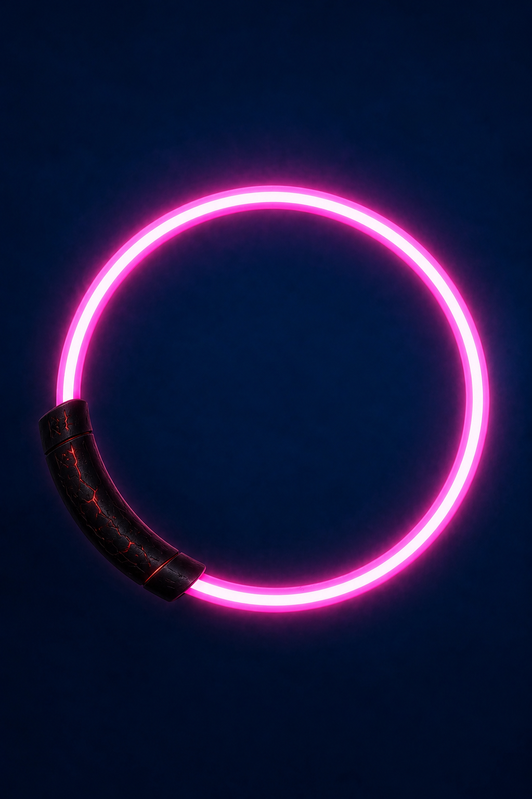
- Intent: Create a lightsaber for Silara IX.
- Image Source: ChatGPT
- Canon Link: N/A
- Permissions:
- FAE/G-02 “Glimmerweave” Q-Vacuum Entrainment Cell (N/A)
- Non-Dimetris Circuits (OM)
- Bloodsteel (The Kainate) - See: Silara IX - Groups
- Noxium (The Kainate) - See: Silara IX - Groups
- Primary Source: N/A
- Manufacturer:
- Silara IX - Creation
- First United Astral Engineering - Schematics
- Affiliation: Silara IX
- Market Status: N/A - Closed-Market
- Model: N/A
- Modularity: Yes
- Production: Semi-Unique
- Three in existence.
- Material:
- Various Lightsaber Components
- High-Resolution Projection System
- Trapped Grip - Biometric Wielder Verification System
- Disarmed via data link verification.
- Concealed Activation Stud
- Blade Power Adjustment System
- Electronically controlled via data link. No manual knob.
- Synthetic Lightsaber Crystal (2)
- Magenta
- Total Waterproof Construction
- Non-Dimetris and Redundant Circuitry
- Bloodsteel - Hilt Casing
- Anti-Corr 113 Treatment
- Noxium Coating
- Agrinium Mesh Liner - Sensitive Components and Electronics
- Terentatek Hide Sleeve
- Integrated Combat De-Ionizer
- Pyronium - Capacitor
- Various Lightsaber Components
- Classification: Lightsaber - Lightsaber Chakram
- Blade Color: Magenta
- Size: Large
- Diameter: 36 cm
- Weight: Average
- Diagnostic System
- Diagnostic system runs automatic maintenance checks and is able to identify parts, systems, and components in need of repair or replacement.
- Non-Dimetris and Redundant Circuitry
- Utilizes non-dimetris and redundant circuitry in the activation loops that renders the blade highly-resistant to the deleterious effects of cortosis.
- Submersion Capability
- The Blood Ring includes a bifurcating cyclical-ignition pulse and is designed with a waterproof casing that allows for underwater operation.
- Blade Power Adjustment System
- Power adjustment system allows the wielder to adjust the power of the blade.
- Trapped Grip
- Tied to the biometric wielder verification systems, the trapped grip allows only the designated wielder and anyone she permits (in which the system can be calibrated to allow access) to activate and wield the lightsaber. The hilt will discharge a potent electrical energy field in the event that the weapon is handled by an unauthorized agent, with the potential to cause severe burn injuries to the victim.
- Ossus Dueling Lens
- Produces a very narrow, focused blade optimized for exploiting weak points in armor.
- Gyroscopic Stabilizer
- Integrated gyroscopic stabilizer stability in flight, ensuring that the blade stays balanced and aligned with the target when thrown, launched, or propelled.
- Hybrid Link System
- Data Link
- The Blood Ring can be controlled by Silara IX via a miniaturized comm link, allowing her to interface with it remotely. This typically takes the form of a neural link so that she can control its functions through thought, but interfacing can also be executed via other means.
- Data Link
- Sonic Damper
- Utilized to silence the lightsaber, eliminating activation and running noises.
- Kinetic Rebounding System
- Allows the blade to deflect/bounce harmlessly off of select surfaces and unintended targets while maintaining lethal cutting power against intended targets. The lightsaber has a variable plasma containment field which alters the phase state of the containment field around the blade to be more or less cohesive on demand. This is controlled by the wielder via the data link.
- Bounce Mode
- Just before striking a surface/unintended target, the variable plasma containment field overcharges for a split second, making the blade act more like a solid, blunt ring. Thus, the blade deflects harmlessly off the object, owing to the overcharged containment field functioning as a brief "bounce shield".
- This prevents the blade from cutting through the surface, instead ricocheting at an angle (like skipping a stone on water).
- The angle of deflection can be pre-set or adjusted mid-flight via remote control.
- Cutting Mode
- When striking an intended target, the plasma containment field remains in its default state, enabling full cutting power.
- The lack of containment field reinforcement facilitates full penetration.
- Inertial Directional Surge Core
- An internal directional energy capacitor stores kinetic impact force from a bounce and releases it as an impulse surge on the next vector. This allows the lightsaber chakram to maintain its velocity and kinetic energy regardless of prior momentum loss from the previous bounce. It also compensates for velocity and kinetic energy decay on multibounce throws/trajectories.
- Attunement Lock
- The Blood Ring is attuned to Silara IX, making it extremely difficult—but not technically impossible—for hostile Force-Sensitives to maintain active control over the weapon via Force powers, nearly eliminating the risk of it being turned against her. This ensures that the weapon is metaphysically locked to all but Silara. Other Force-users who attempt to interact with the lightsaber may experience feedback in the form of mental resistance or confusion.
- Electromagnetic Hardening
- Agrinium is woven into the lightsaber's internal casing and emitter housing, forming a radiation-hardened sub-layer that absorbs and dissipates electromagnetic energy, nearly immunizing the weapon's circuitry against EMP and ion-based disruption without adding bulk. The Bloodsteel hilt’s alchemical lattice is also highly resistant to electromagnetic pulses and ion weaponry, adding an additional layer of EMP and ion resistance. Finally, an integrated de-ionizer allows the weapon to purge excess electromagnetism.
- Anti-Mechu-deru Hardening
- A thin inner sleeve of terentatek hide is fitted within the hilt's chassis, enveloping the primary circuitry and crystal chamber to form a Force-resistant barrier that disrupts mechu-deru intrusion and similar corruption. This organic insulation isolates the weapon's internal systems from external Force-based manipulation, preventing hostile Force adepts from technologically disabling the blade through metaphysical means.
- Hyperspatial Energy Stealth Capacitor
- The Blood Ring incorporates a pyronium-based hyperspatial capacitor. The system stores power, but also emissions which are shunted from the plasma blade itself, including electromagnetic discharge, radiation, heat/IR, sonic vibrations, and magnetic signature. This ensures that the lightsaber and its ignited blade are effectively invisible to most sensors.
- Phase Shift Infusion
- The saber is semi-permanently imbued with a selective phase-shift field derived from Force Phase. The field allows the weapon to pass through low-density matter—gases, smoke, vapor, and suspended liquids such as fog, mist, and rain—without resistance or disturbance. The saber does not displace air molecules or water droplets, eliminating turbulence, pressure waves, and sonic booms during flight. The sheath is density-discriminate: the saber phases through gases and suspended droplets, but remains tangible to liquids, solids, living tissue, and lightsaber-resistant materials.
- Bound: Silara IX has attuned herself to the Blood Ring by effectively synchronizing her will with that of the weapon. As such, any Force-sensitives attempting to exert control over it may encounter mental resistance or even experience minor confusion, preventing them from being hijacked.
- Resilience: The use of redundant non-dimetris circuitry and hardened electronics makes the Blood Ring highly resistant to the deleterious effects of cortosis, Ion/EMP discharges, and other effects which might otherwise short out or overload the weapon. A bifurcating cyclical-ignition ensures that the lightsaber is also capable of operating underwater and in heavy rain. From here, a Bloodsteel casing imparts the hilt with an incredible resistance to direct strikes. Finally, the lightsaber is hardened against mechu-deru and metaphysically-derived technological corruption via an integrated terentatek hide sleeve lining.
- Surgical Slice: The Blood Ring’s blade is narrow and ultra-precise owing to its dueling lens, allowing Silara to easily strike at weak points in armor.
- Phantom Blade: The Blood Ring is extremely stealthy. Not only is the weapon totally silent owing to the sonic damper and the phase shift infusion, it is also effectively invisible on sensors and scanners. The hilt itself is coated in Noxium, sensor-absorbing stealth alloy that also makes the weapon significantly more difficult to detect through the Force for those who are not explicitly attuned with it (anyone but Silara IX). A hyperspatial energy stealth system shunts emissions from the blade—EM, radiation, heat/IR, sonic vibrations, and magnetics signature—into a pyronium-based capacitor, ensuring that lightsaber remains sensor and scanner-invisible even when ignited.
- Slip Air: Owing to the phase shift infusion, the Blood Ring phases through gases and suspended liquids (air, smoke, fog, mist, and rain) without resistance or disturbance. This eliminates drag, turbulence, pressure waves, and sonic booms during flight. As a result, the weapon flies faster, quieter, and with no aerodynamic signature. It leaves no wake in the atmosphere and cannot be detected by Force-users who sense air displacement. As the sheath is density-discriminate, the saber phases through low-density matter but remains fully tangible to liquids, solids, and living tissue.
- Explosive Ablative Cutting: Where standard lightsaber blades produce clean, cauterized wounds via stable thermal dissociation, the Blood Ring generates a violent ablative outgassing effect. The plasma front sublimates target material on contact, ejecting ionized vapor at supersonic velocity. The resulting wound channel is a rough, irregular cavity rather than a smooth laceration, measuring 1.5 to 1.9 times the blade's diameter. Organic targets suffer explosive steam expansion, aerosolized tissue spray, and vessel rupture before cauterization can occur. Metallic targets produce slag-lined kerfs, conductive dust clouds, and radiant heat feedback. The blade encounters zero mechanical resistance regardless of density. Bone and air feel identical. This makes the weapon potentially spectacularly lethal against unprotected targets.
- Hazardous Secondary Effects: The same violent cutting mechanism that makes the Blood Ring so lethal also imposes severe operational constraints. The explosive outgassing and steam blast generate significant collateral hazards. These manifest as radiant heat blooms, aerosolized tissue clouds, conductive metallic dust, and high-velocity shrapnel from thick-section metals. These effects are not confined to the target; they affect Silara IX's immediate environment (if she is wielding the weapon in direct hand-to-hand combat). The blade's zero-resistance cutting also provides minimal tactile feedback, making fine control difficult. She cannot feel her way through a cut in the way a traditional swordsman can. Additionally, the violent cutting action is poorly suited for precision work, hostage situations, or any context requiring minimal collateral damage.
- Collateral Damage: While the Blood Ring is incredibly precise, it is not elegant. The explosive outgassing, steam expansion, and aerosolized debris do not respect her aim. A slash to the chest ruptures the diaphragm and sprays the surrounding area with vaporized tissue. A cut to a lock mechanism showers the interior with molten spatter and conductive dust. The blade can hit its mark, but the secondary effects make collateral damage virtually unavoidable.
- Elegant Weapon for a More Civilized Age: Standard lightsabers are elegant, graceful weapons that can be safely wielded while dressed in civilian attire. Unfortunately, the Blood Ring does not allow for this. The weapon's ablative outgassing generates directed steam jets, radiant heat blooms, and pressurized aerosols with every cut. Unprotected skin sustains first-degree burns within 0.5 meters, while unprotected airways can suffer thermal injury when inhaling superheated vapors. Without thermal protection and a sealed respirator, Silara cannot strike a target in hand-to-hand combat without risking injury. This dependency limits her operational flexibility and makes her vulnerable if caught off-guard without her gear.
- Material Challenges: While the Blood Ring is terrifyingly violent, lightsaber-resistant materials the likes of beskar, phrik, and ultrachrome will naturally present challenges of varying degrees to the weapon, depending on the material in question, its thickness, and a host of other factors. In general, these materials will still prove difficult to cut through.
- Unconventional Weaponry: Like most lightsabers, the Blood Ring generally struggles to defend against sonic blasts, shockwaves, particle beams, paddle beams, or slugs.
Silara IX’s first lightsaber, the Blood Ring is a lightsaber chakram designed with a circular plasma blade fired by twin synthetic lightsaber crystals that emit from both ends of the hilt. The hilt, which is coated in Noxium, is minimalist in design, belying the weapon’s advanced integrated systems.
The Blood Ring is silent. A sonic damper eliminates activation and running noise and the hum of its running plasma, rendering it eerily quiet in contrast to the loud, horrific violence of the death it is capable of inflicting. The Phase shift infusion allows the weapon to pass through air, smoke, fog, and rain without disturbance, leaving no wake, turbulence, or sonic boom to betray its flight. A hyperspatial energy stealth capacitor shunts its electromagnetic, thermal, and radiation emissions into a pyronium-based reservoir, rendering the ignited blade invisible to sensors and scanners. When Silara IX throws the Blood Ring, it flies faster and quieter, leaving little behind but the swift termination of its target.
The weapon's design is a reflection of its wielder. It is elegant, precise, and lethal in ways that are not immediately apparent. The dueling lens projects a narrow, focused blade optimized for exploiting weak points in armor, while the kinetic rebounding system allows the lightsaber to bounce harmlessly off unintended surfaces, maintaining its velocity through an inertial directional surge core. The trapped grip ensures that only Silara (or those she permits) can activate the weapon, discharging a potent electrical field into any unauthorized hand. The Blood Ring is attuned to her metaphysically as well, featuring an strong attunement lock that resists hostile Force-users who attempt to seize control over it. Finally, terentatek hide anti-mechu-deru hardening shields its inner technological workings from metaphysical corruption.
Unlike typical lightsabers which cut cleanly via thermal molecular dissociation along a clean, narrow plane, the Blood Ring cuts violently and horrifically in an explosive gas event. The blade’s plasma front converts a thin layer of target material directly from solid to gas (sublimation) at the leading edge. This vaporized material is then ionized and ejected outward by the blade's own magnetic confinement field at supersonic velocity. The effective cut is the wake of this explosive gas jet. The resulting wound channel is therefore not a smooth laceration. Instead, it forms a rough, irregular cavity ~1.5 to 1.9 times the blade's diameter, carved by rapid ablation and steam expansion.
Of particular note, the blade encounters zero mechanical resistance regardless of target density (with the exception of lightsaber-resistant objects or materials). Bone, cartilage, muscle, and air are indistinguishable to the wielder's hands. The only sensory feedback is a micro-pressure pulse transmitted through the hilt from the expanding gas against the magnetic sheath. While it is possible to read this signature to identify tissue type, the sensation is one of rhythmic thumps, rather than drag or friction.
Given the extreme violence of the cutting event, flash-boiling of intracellular and extracellular fluids generates superheated steam at 100–150°C, which expands at 1,600× volume and explodes outward through the path of least resistance. This typically comes through entry/exit wounds, but it can also burst through natural fascial planes, old scars, or the thoracic diaphragm. Aerosolized blood, vaporized fat, and pulverized tissue debris surge through the steam blast, producing a visible pink-gray cloud and extensive splash contamination. In addition, major vessels can rupture from internal pressure before thermal sealing can occur, as they do not cauterize in time. This can lead to combined hemorrhagic and thermal injury in targets.
When the blade encounters ferrous or non-ferrous metals, the cutting mechanism remains one of ablative sublimation rather than mechanical shearing, but the secondary effects diverge significantly from organic tissue. The plasma front vaporizes a thin surface layer of the metal, creating a high-velocity jet of ionized metal vapor. This jet, constrained by the blade's magnetic field, produces a brilliant magenta-white flash and a sharp, high-frequency screech. The vaporized metal rapidly recondenses into microscopic spherical particulates (spherules), which form a fine metallic dust cloud around the cut zone. This dust is both visually obscuring and electrically conductive, posing a short-circuit risk to exposed electronics in the immediate vicinity. Unlike organic targets, metal does not produce a steam-expansion blast. Instead, the primary hazard to the wielder is radiant heat feedback from molten spatter and recondensed metal droplets ejected at high velocity, which can cause localized thermal burns and embed in soft materials. The wound channel in metal is also distinct. Rather than a rough cavity, the blade leaves a narrow, slag-lined kerf with a recast layer of resolidified metal along the edges, typically 1.2 to 1.4 times the blade's diameter, with microscopic stress fractures radiating outward from the rapid thermal gradient. Thick-section metals (exceeding 4–5 cm) may not be fully penetrated in a single pass; the blade's energy transfer is so rapid that the metal's thermal conductivity cannot disperse the heat quickly enough, potentially causing localized melting and spalling on the far face before the blade exits. This spalling effect can produce a secondary fragmentation hazard with high-velocity metal shrapnel ejected from the exit face that is dangerous to anyone within 2–3 meters of the cut zone. For Silara, cutting through structural elements, armor plating, or weaponry requires not only precision but also awareness of the molten spray, conductive dust cloud, and potential shrapnel. The protection afforded by her Ghost Silk combat suit is as essential against metallic targets as it is against organic ones.
In general, since the blade's cutting action is a rapid ablative outgassing rather than a clean thermal slice, Silara has to contend with directed steam jets, radiant heat blooms (150–300°C at 1–2 meters), and pressurized aerosols. By operational necessity, she must wear her Ghost Silk combat suit since the weapon's lethality extends to her immediate environment if she is wielding it directly in hand-to-hand combat. Unprotected skin sustains first-degree burns within 0.5 meters of the impact point, while unprotected airways may suffer thermal injury with the first inhalation of the superheated vapor plume. The cumulative effects of multiple strikes from rising ambient temperature, oxygen displacement, dehydration, and chemical pneumonitis from breathing in aerosolized tissue can quickly reach fatal thresholds the more targets the blade cuts through within a given area in an engagement.
While precise, the Blood Ring is not built for restraint. It is a weapon of overwhelming, horrifying finality. Every cut is a small explosion, every strike a missive rendered in steam and spray. It is elegant in form, devastating in function, and as inseparable from Silara as her own shadow. When the magenta ring leaves her hand, it is meant to return sated. With the steaming blood of the Faithless. The cries of the Lightblind. And the boiled entrails of heretics and demons!
Out Of Character Info
Intent:
Create a lightsaber for Silara IX.
Permissions:
See Body
Technical Information
Affiliation:
Silara IX
Model:
N/A
Modular:
Yes
Material:
See Body
Last edited: