

H E G E M O N



- Intent: To fill the world of Vandemar with interesting and diverse life that is intriguing to roleplay with.
- Image Credit:
- Canon: N/A
- Permissions: N/A
- Links: Vandemar
GENERAL INFORMATION
- Name: Zharrok
- Designation: Non-sentient
- Origins: Vandemar; plains, forest margins and mountain foothills
- Average Lifespan: 30–45 standard years
- Estimated Population: Planetary; common across Vandemar's temperate continental regions
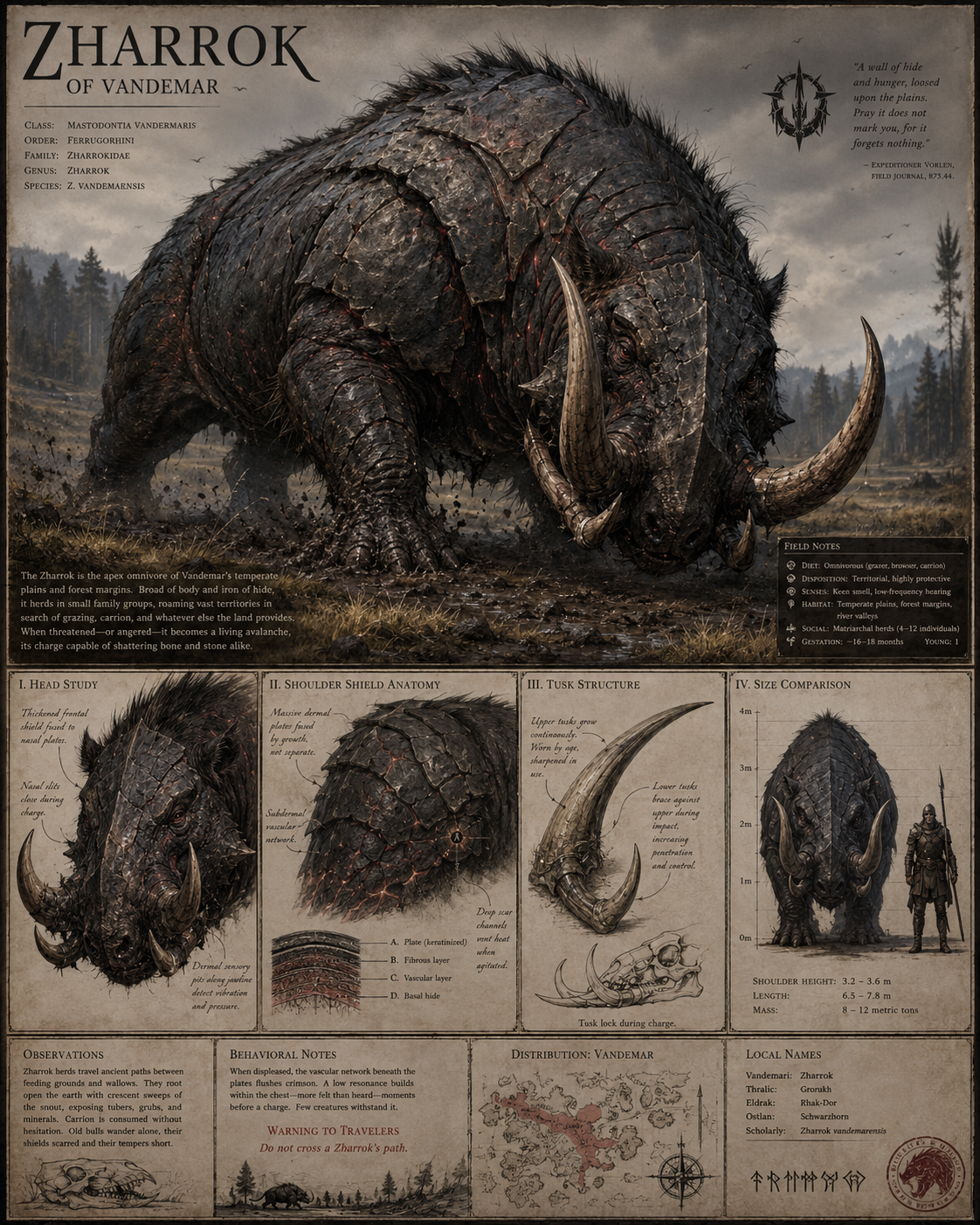
- Description: The zharrok is a broad-bodied, plated omnivore built to survive predators, winter and war alike. Its shoulder shield, hooked tusks and furnace-red threat display make it appear almost mechanical when it charges. Most encounters end before the animal reaches its target. Those that do not tend to end beneath several tonnes of muscle and bone.
PHYSICAL INFORMATION
- Breathes: Type I atmosphere
- Average Height of Adults: 1.4–1.8 metres at the shoulder
- Average Length of Adults: 2.8–4 metres
- Skin color: Dark grey, brown, black or muted red beneath the plating
- Hair color:Sparse black, rust-brown or grey bristles
- Distinctions: Zharroks possess dense bodies, short powerful legs and a reinforced shoulder shield composed of fused dermal plates. Two forward-curving tusks grow from the upper jaw, while smaller lower tusks lock against them during impact. Heat-retaining vascular channels run beneath thinner sections of the hide; when threatened, these flush dark crimson and give the impression of embers burning beneath the armour. Males are generally heavier and carry longer tusks. Females have broader shoulder shields and are markedly more aggressive when protecting young. Older specimens develop chipped armour, asymmetrical tusks and pale mineral deposits around plate seams.
- Races: None formally recognised. Highland zharroks possess denser plating and darker coats, while plains populations are larger and longer-legged.
- Force Sensitivity: Non-Sensitive
- Heavy natural armour and exceptional impact resistance
- Powerful charge capable of overturning light vehicles
- High tolerance for cold, injury and poor forage
- Limited turning ability at full speed
- Vulnerable eyes, throat and rear legs
- Poor depth perception and tendency to react aggressively to sudden movement
CULTURE
- Diet: Omnivore. Zharroks consume roots, tubers, fungi, carrion, insects, grain and small animals. They are especially attracted to mineral-rich soil and fermented fruit.
- Communication: Deep grunts, tusk scraping, hoof stamping, scent marking and visible flushing of the vascular threat display.
- Technology level: None.
- Religion/Beliefs: None.
- General behavior: Zharroks live in matriarchal family groups of six to twenty animals. Herds travel between feeding grounds along old routes and will trample obstacles rather than divert unless repeatedly discouraged. When threatened, adults form a rough wall around the young before one or more individuals charge. They rarely pursue beyond the immediate territory, but wounded animals may attack anything nearby. Mating contests between males involve shoulder impacts and tusk locking rather than prolonged combat.
HISTORICAL INFORMATION
Zharroks are native to Vandemar's open woodland and plains, where their armour evolved against large pack predators and harsh seasonal weather. Their ability to consume almost any available food allowed them to spread widely as forests retreated and returned across successive climatic cycles.
Early Vandemarian settlements hunted them for meat, hide and plate material. Attempts at full domestication repeatedly failed; captive herds remained destructive, difficult to breed and prone to violent panic around machinery. Some provincial armies later experimented with armoured war-zharroks, but the animals proved more dangerous to their handlers than to disciplined enemies.
Modern authorities manage their migration routes and use low barriers to redirect herds away from farms and roads. Limited hunting remains legal and culturally significant in many provinces. Zharrok hunts are traditionally conducted on foot or from low speeders, as killing one from the air is considered proof of marksmanship rather than courage.
Among frontier soldiers, the phrase "red beneath the plates" refers to a danger that appears slow or passive until the moment it commits.