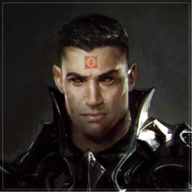
Senec Ahn-Dross
Character





Affiliation: Mandalorians
Manufacturer: Senec ahn-Dross; Choruk Shipwrights Consolidated
SPECIAL FEATURES
- Reactive Resonance Illumination
Veins brighten and pulse dynamically during combat, engine acceleration, hyperspace transitions, and power surges. - Passive Structural Diagnostics
Distortion or flickering within the network can visually indicate hull stress, coolant imbalance, overloaded conduits, or shield instability. - Ambient Crew Stabilization
Rhythmic illumination patterns reduce sensory fatigue and improve morale during extended deployments. - Thermal Equalization Layer
Conductive filaments lightly redistribute ambient heat through nearby structural surfaces. - Modular Integration
Can be installed within corridors, bridges, engineering decks, armories, crew quarters, and command spaces. - Ultra-Low Power Demand
Operates continuously with negligible reactor strain.
- Extremely low energy consumption.
- Minimal maintenance requirements.
- Enhances ship atmosphere and visual identity.
- Provides passive visual structural diagnostics.
- Improves long-duration crew comfort and morale.
- Slightly reduces localized heat buildup.
- Compatible with most vessel architectures.
- Difficult to externally detect under standard operation.
WEAKNESSES
- Primarily aesthetic in practical use.
- Offers no direct combat protection.
- Conductive veins are vulnerable to ion or EMP damage.
- Severe hull breaches may permanently disrupt vein networks.
- Excessive customization can reduce diagnostic readability.
- Large vessels require extensive installation infrastructure.
The VRA-L "Rau Halo" Resonance Veins are an atmospheric structural subsystem developed by Senec ahn-Dross. Integrated directly into a vessel's internal architecture, the system uses ion-reactive conductive filaments woven beneath deck plating, corridor walls, support struts, and subsystem housings to create flowing luminescent energy patterns synchronized with the operational state of the ship.
The resonance veins respond dynamically to fluctuations in reactor output, shield activity, engine load, thermal stress, and power routing, causing the vessel's interior to appear subtly alive. During combat or heightened system strain, the glow intensifies naturally across surrounding structures, while quieter sectors dim and stabilize.
Though primarily aesthetic, the Rau Halo also provides limited passive thermal equalization and visual stress indication, allowing experienced crews to recognize structural or subsystem irregularities through changes in luminosity and flow behavior.
Out Of Character Info
Intent:
to create an aesthetic technology with some general practical application
Canon Link:
N/A
Permissions:
N/A; image by Chatgpt with my input
Primary Source(s):
https://en.wikipedia.org/wiki/Electroluminescence
https://en.wikipedia.org/wiki/Optical_fiber
https://en.wikipedia.org/wiki/Thermal_management_(electronics)
Technical Information
Affiliation:
Senec Ahn-Dross; Choruk Shipwrights Consolidated
Model:
N/A
Modular:
No
Material:
Electronic components, fiber optics
Last edited: