

shield




THERON ALDE
Age: Late 20s
Species: Human
Gender: Male
Build: Athletic
Force Sensitive: Yes, but this is a well-kept secret within House Alde. The only other person who is aware of this is Jocelyn Panteer
.
Jocelyn Panteer
.
Species: Human
Gender: Male
Build: Athletic
Force Sensitive: Yes, but this is a well-kept secret within House Alde. The only other person who is aware of this is
Jocelyn Panteer
. PHYSICAL DESCRIPTION
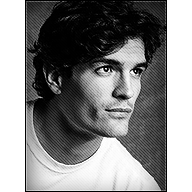
Lord Theron Alde is a handsome young nobleman with the composed bearing expected from one of Alderaan's oldest houses. He has dark hair, sharp features, and an expressive face that moves easily between courtly warmth and private seriousness. His appearance is polished without being delicate. He looks at home in a formal hall, at a family table, or standing at the edge of a fencing piste with his sleeves rolled up and his patience worn thin.
He dresses well because he was raised to understand that presentation is part of language. In public, he favors tailored court attire, traditional Alderaanian cuts, and the colors and devices of House Alde worn with careful restraint. He rarely dresses to dominate a room. He dresses to belong in it.
There is an ease to him that softens the old pride of his name. Theron smiles readily, listens well, and carries himself with the confidence of someone who has never had to demand recognition. It was given to him at birth, then disciplined into something more useful.
INVENTORY
- House Alde signet ring: A formal ring bearing the crest of House Alde. Used for sealed correspondence, court documents, and family business.
- Ceremonial court sword:A finely made dress weapon worn during formal occasions. More symbol than battlefield tool, though Theron does know how to use it.
- Personal fencing sabre: A well-balanced dueling blade used for practice and friendly bouts. Maintained with more care than most of his formal possessions.
- Alderaanian court wardrobe: Tailored formalwear suited to noble receptions, parliamentary sessions, family ceremonies, and public appearances beside Jocelyn.
- Leather folio of legal and political notes: Contains copied precedents, succession arguments, old charters, correspondence drafts, and annotations on noble claims.
- Family chronicle volume: A compact inherited copy of selected House Alde history, including records of Darrus Alde and the founding of Alderaan's first royal line.
- Personal commlink: Encrypted for communication with House Alde, Jocelyn, household staff, and political contacts.
- Host's case: A small travel case containing social essentials: calling cards, invitation seals, cufflinks, scent, gloves, and other things useful when moving between court functions.
- A bottle from the Alde cellars: Usually brought as a gift when visiting another noble house. Theron knows exactly which vintage flatters which host.
PERSONALITY AND BELIEFS
Theron Alde is traditionalist by upbringing, conviction, and instinct. He believes in the old houses, the old forms, and the continuity of Alderaan's institutions. He was raised in a family that remembered itself as part of the planet's foundation rather than merely one noble clan among many, and that history left its mark on him. House Alde had been there at the beginning. To Theron, that is not merely a claim to honor. It is a duty.
That duty does not make him rigid. Theron is charming, socially adept, and more pragmatic than his lineage might suggest. He respects tradition because he believes it keeps Alderaan whole, not because he thinks every old custom is sacred by default. When flexibility serves his house, his wife, and Alderaan, he is capable of it. He can bend without thinking he has broken.
He is a social creature by nature. Theron enjoys gatherings, dinners, receptions, music, drinks before dinner, and the delicate little games of inclusion and omission that make courtly life both exhausting and useful. He will be the first one on the floor and the last one present when the lights go out, still laughing with some minor cousin or making sure an offended baroness leaves feeling seen. This is not frivolity, though he is not above frivolity. It is labor he happens to enjoy.
That quality has made him invaluable to his wife, Lady Jocelyn Panteer, whom he calls Joy. Where Jocelyn is guarded, measured, and less comfortable with public spectacle, Theron carries much of the social burden gladly. He hosts, smooths, entertains, remembers names, manages seating, and turns obligation into something almost pleasant. He is entirely comfortable playing the supporting role to her, and he does not resent that. He loves her too much to mistake proximity to her claim for diminishment.
His love for Jocelyn is genuine, deep, and uncomplicated in its foundation. The complications come from everything around it. Theron believes she would be good for Alderaan precisely because she does not hunger for the throne. He sees her restraint, sense of propriety, and reluctance as marks of fitness rather than weakness. The crown should not belong to the loudest claimant or the most eager hand.
After the departure of the Organas and the collapse of their claim, Theron pressed Jocelyn to stake hers. That decision weighs on him more than he admits. He knows what he asked of her. He knows this path has taken something from her peace. At times he wonders whether Alderaan's need can justify the cost to his wife's happiness. His upbringing gives him one answer. His heart gives him another.
The dice have been cast. Theron does not see a way back now.
He could accept House Organa. He had been raised to support them, and House Alde's loyalty to the Organas was a matter of principle as much as politics. But House Thul is another matter. To see the throne fall into their hands, especially with the support of Sith malcontents and the Sith Covenant, is unthinkable to him. Theron does not believe Jocelyn must rule because power is owed to them. He believes she must rule because the alternative would be a wound Alderaan might not recover from cleanly.
For all his warmth, Theron has a hard line beneath it. He wants what is best for Alderaan. Being House Alde, he was raised to believe that what is good for Alderaan is what is good for Alde, not the other way around. His family was first because it helped make the kingdom possible. That memory obligates them to shepherd the world when it falters, not simply dominate it when opportunity appears.
STRENGTHS
Beloved Second Son: Theron is not the heir to House Alde, but he is far from discarded. He is universally loved within his family and has a strong relationship with his elder brother, the future Lord Alde. This gives him access, trust, and influence without the full burden of succession.
Social Operator: Theron understands the court as a living room before he understands it as a battlefield. He hosts well, listens closely, flatters without groveling, and knows how to make people feel important. He can turn a dinner into an alliance and a dance into an apology.
Educated Nobleman: He was given a classical education in history, politics, law, rhetoric, and courtly conduct. His degree in politics and law gave structure to instincts that had already been formed at home. He knows how institutions work, how claims are argued, and how precedent can be made useful.
Pragmatic Traditionalist: Theron respects old forms, but he is not a museum piece. He can compromise when compromise protects what matters. His traditionalism is flexible enough to function in the real world, which makes it more dangerous than mere nostalgia.
Fencer: Theron is an avid and disciplined fencer. He enjoys the sport, the ritual, the exercise, and the precision of it. It is one of the few areas where he allows himself to be openly competitive without turning the matter political.
Force Training: Theron has secretly been trained in the ways of the Force by a secluded Force Sect. His strength in the Force was hidden from a young age, so he would not be taken away to the Jedi Order and instead would be kept home. He rarely uses his strength, since it has the risk of causing a scandal, even in a new age where Jedi on thrones is not the strangest thing.
WEAKNESSES
Burdened by Duty: Theron was raised to put Alderaan above personal comfort. That sounds noble until it requires asking the same of the woman he loves. He can convince himself of hard necessities, but the cost does not simply disappear.
Too Certain of the Stakes: Once Theron believes Alderaan itself is in danger, he becomes much harder to move. He may listen, compromise, and soften the route, but not the destination. His conviction can become a cage.
Old Blood, Old Enemies: Being House Alde gives Theron prestige, but it also gives him inherited assumptions and inherited enemies. His contempt for House Thul is not baseless, but it is not neutral either. He may see their rise as corruption before considering any other interpretation.
Supporting Role: Theron is comfortable standing behind Jocelyn, perhaps too comfortable. His influence is often indirect, social, and private, which leaves him vulnerable to accusations that he is guiding matters from behind her shoulder even when his loyalty is sincere.
Not the Heir: Theron's position as a second son gives him freedom, but it also limits his formal authority within House Alde. He is trusted and beloved, but final power will rest with his elder brother. When family policy and personal conviction diverge, Theron may have less room to act than outsiders assume.
HISTORY
Theron Alde was born the second son of House Alde, one of Alderaan's most ancient noble families and the house remembered for its descent from the planet's first royal line. He grew up surrounded by family history, old banners, older arguments, and the quiet understanding that Alde blood carried obligation even when it no longer carried the crown.
As a child, Theron was not raised to inherit the title of Lord Alde. That role belonged to his older brother, whom Theron loved and admired rather than resented. The two brothers remained close into adulthood, aided by the fact that Theron's place within the family was secure without being competitive. He was the spare, but he was never treated as disposable. His parents expected much from him because he was an Alde, not because he would one day rule the house.
His education reflected that balance. Theron was trained in the classics, in Alderaanian history, in rhetoric, law, politics, diplomacy, music, courtly etiquette, and the careful reading of rooms. It was not quite a ruler's education, but it was close enough to teach him what rulers were for. He later pursued formal studies in politics and law, giving him the language of institutions to match the instincts of an old house.
Theron's strength in the Force was discovered young and hidden almost immediately. House Alde did not consider this a matter for the Jedi. He was their son before he was anyone else's prodigy, and so he remained on Alderaan under the discreet instruction of a secluded Force sect whose teachings emphasized restraint, secrecy, and discipline. Theron rarely uses the Force openly. Even now, when Jedi princes and stranger rulers sit on thrones across the galaxy, the scandal would be immense. Worse, it would give his enemies another story to tell about ambition, bloodlines, and unnatural influence.
In his youth, Theron also spent several years with the defense forces attached to House Alde. His parents considered it necessary. A second son with charm, money, and no hard lesson in responsibility could become useless very quickly. Military service did not turn him into a soldier by vocation, but it taught him discipline, patience, chain of command, and the difference between ceremonial duty and actual duty. He came back steadier than he had left.
Theron grew into a popular figure within Alderaanian society. He was handsome, polished, well-spoken, and socially generous, with enough old blood to be taken seriously and enough good humor not to be unbearable about it. He fenced, hosted, danced, drank, debated, and made friends across the acceptable breadth of courtly life. He had the reputation of a glamorous young aristocrat, though beneath it sat a more sober sense of family purpose.
His marriage to Lady Jocelyn Panteer was both dynastic and personal. The match made sense on paper. House Panteer carried a powerful royal claim, House Alde carried ancient prestige, and both were tied to the old fabric of Alderaan. But the marriage endured because Theron and Jocelyn suited one another. He admired her restraint, her intelligence, her manners, and the careful moral seriousness that made her hesitate where others might grasp. She was Joy to him, and he was content to support her publicly and privately.
For a time, that support did not require any great rupture. House Alde had long made peace with supporting House Organa, and Theron accepted that settlement. The Organas had legitimacy, history, and a place within Alderaan's proper order. Supporting them did not feel like surrender. It felt like continuity.
Then the Organas departed and abandoned their claim to the Alderaanian throne.
What had once been dormant became immediate. Jocelyn's Panteer blood, previously a fact of history and etiquette, became a political reality. Rival houses began to move. House Thul's ambitions became impossible to ignore, made worse by the shadow of Sith-aligned backing and the wider instability surrounding Alderaan's future. To Theron, this was not ordinary competition. It was a threat to the meaning of the throne itself.
He pressed Jocelyn to stake her claim.
Theron has never been able to decide whether that was the most faithful thing he ever did or the first real betrayal of his wife's peace. He did not push her because he wanted a crown beside his name. He pushed because he believed Alderaan needed her, and because he could not accept a future where the throne passed to those he considered unworthy of it. Still, love does not erase consequence. He sees the burden now resting on Jocelyn and knows his hand helped place it there.
Since then, Theron has committed himself fully to her cause. He hosts for her, argues for her, softens rooms before she enters them, and carries what burdens he can without taking the choice from her hands. He is her husband, her advocate, her shield in society, and perhaps the person most responsible for convincing her that refusal was no longer enough.
Whether history will thank him for that remains to be seen.