

Well-Known Viceroy




T H E - M A N G D E E N

- Intent: To introduce a dark side-corrupted offshoot of the Temerurians for use in Sith-aligned factions
- Image Credit: Star Wars (2015) 32 | Knight Errant 0 | Knight Errant Escape 4 | Gloom Walkers
- Canon: Not Applicable
- Permissions: Not Applicable
- Links: The Trade Federation |:| 900 ABY | Ailon Nova Guard | Mandalorians | Sun Guard | Temeurians | Tarkin Initiative

- Name: The Mangdeen
- Designation: Sentients
- Origins: Laboratory owned by the The Trade Federation |:| 900 ABY
- Average Lifespan: 70–90 standard years biologically
- Estimated Population: Inter-Planetary
- Description:
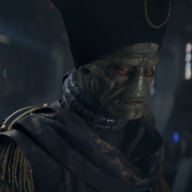
The Mangdeen are a dark side-corrupted offshoot of the Temerurians, outwardly Human in origin but marked by the long-term influence of Sith worlds, ritual exposure, and generational adaptation. Where Temerurians were shaped for loyalty, restraint, and battlefield reliability, the Mangdeen became something colder and more ominous: disciplined, fanatically obedient to power, and instinctively drawn to the trappings of Sith rule.
They are not mindless monsters, but they are deeply conditioned by fear, hierarchy, and reverence for the Dark Side, making them valued servants, guards, acolytes, and enforcers in Sith-controlled spaces. Their history traces back to an accidental transfer of Temerurian stock mixed with prisoners bound for the Kainate Branch of the Sith Order, after which the corruption took root in the shadow of the Sith Holy Worlds.

- Breathes: Type I to Type II Atmosphere
- Average Height of Adults: Usually between 1.8 and 2.1 meters
- Average Length of Adults: Not Applicable
- Skin color: Ashen white, dusky gray, bloodless tan, muted bronze, and other faded Human tones; older specimens often show mottling or darkened veining
- Hair color: Black, dark brown, rust-red, ash blond, and occasionally pale white; darker shades are most common
- Distinctions:
Mangdeen remain recognizably Human, but prolonged proximity to Sith worlds and dark side traditions has left them with an unmistakable severity. Their skin often appears unnaturally pale or drained of warmth, their eyes may develop darkened sclera or a faintly shadowed cast, and many display sharper facial contours than their Temerurian forebears.
The most devoted often bear ritual scarring, tattoos, or ceremonial brands associated with temple service and Sith hierarchy.Physically, they retain the Temerurian tendency toward controlled movement, endurance, and efficient body mechanics, but their posture and expression are typically more rigid and intimidating.
Male and female Mangdeen differ little beyond ordinary Human variation, though some regional temple-bred lines emphasize heavier builds for enforcers and leaner frames for attendants, scribes, and ritual specialists. Older specimens tend to become gaunter, more angular, and increasingly marked by visible stress lines or ritual scarring.
- Races: Because Mangdeen were engineered rather than naturally evolved, they do not possess traditional biological races like baseline Humans. Instead, internal divisions emerged through laboratory generation programs and later cultural development.
- Force Sensitivity: Non-Sensitive (no members of the species are FS)
- Unshakable Discipline: Mangdeen retain the Temerurian instinct for order, control, and obedience, making them highly reliable under command and difficult to panic.
- Dark Side Adaptation: Long exposure to Sith environments makes them unusually comfortable around corruption, ritual spaces, and oppressive Force presence.
- Hierarchical Loyalty: They excel in systems built on rank, obedience, and punishment, often becoming ideal guards, cult servants, and temple personnel.
- Low Flexibility: They struggle when forced to improvise outside established command structures or ritual expectations.
- Emotional Hardening: Their culture and corruption can make empathy, trust, and long-term cooperation with outsiders difficult.
- Dependence on Structure: Many Mangdeen function best in strict environments and can become unstable, listless, or self-destructive when cut off from authority.

- Diet:
- Communication:
- Technology level:
- Religion/Beliefs:
- General behavior:
They are nocturnal or crepuscular by preference, drawn to shadowed ruins. Highly territorial and expansionist, they hunt Force sensitives or light siders for sport/ritual and build monolithic dark temples. Interactions with outsiders are domineering or manipulative unless serving a greater Sith purpose.

HISTORICAL INFORMATION
A shipment of early-generation Temerurians subjects, embryos, clones, or developing batches destined for the Tarkin Initiative was rerouted or lost in transit during chaotic Imperial/Sith operations around 900 ABY or later. The transport inadvertently was sent to the Kainate Branch of the Sith Order through a shipping error on the manifest.
Upon entering the turbulent space of the Sith Holy Worlds, the vessel was exposed to overwhelming dark side energies, possibly exacerbated by a storm, ritual, or ancient Sith device. The corruption process was violent and imperfect. Many subjects perished or mutated horrifically; survivors underwent rapid physiological and neurological changes.
The Temerurian engineered stability, intended to resist mental influence, instead channeled the dark side into their very genetics, binding them in loyalty to Sith philosophy. Survivors emerged as the first Mangdeen, interpreting their transformation as ascension.
They were adopted or enslaved by Sith factions, proving their worth through fanatical service. Over time, their population stabilized through breeding and further alchemical enhancement. They spread as elite enforcers, temple guards, and shock troops for dark side powers.
Challenges included unstable mutations, internal power struggles, and conflicts with baseline Temerurians, viewed as pale imitations or traitors. Major events include participation in Sith crusades, defense of holy sites, and occasional purges of weak members. In the current era, Mangdeen remain a feared presence, ever hungry to expand the dominion of the Dark Side.
Last edited: