
C U S T O D I A N




Flugplatz Naval Academy
Imperial Military and Civilian Flight Academy | Mon Cala Wing Command
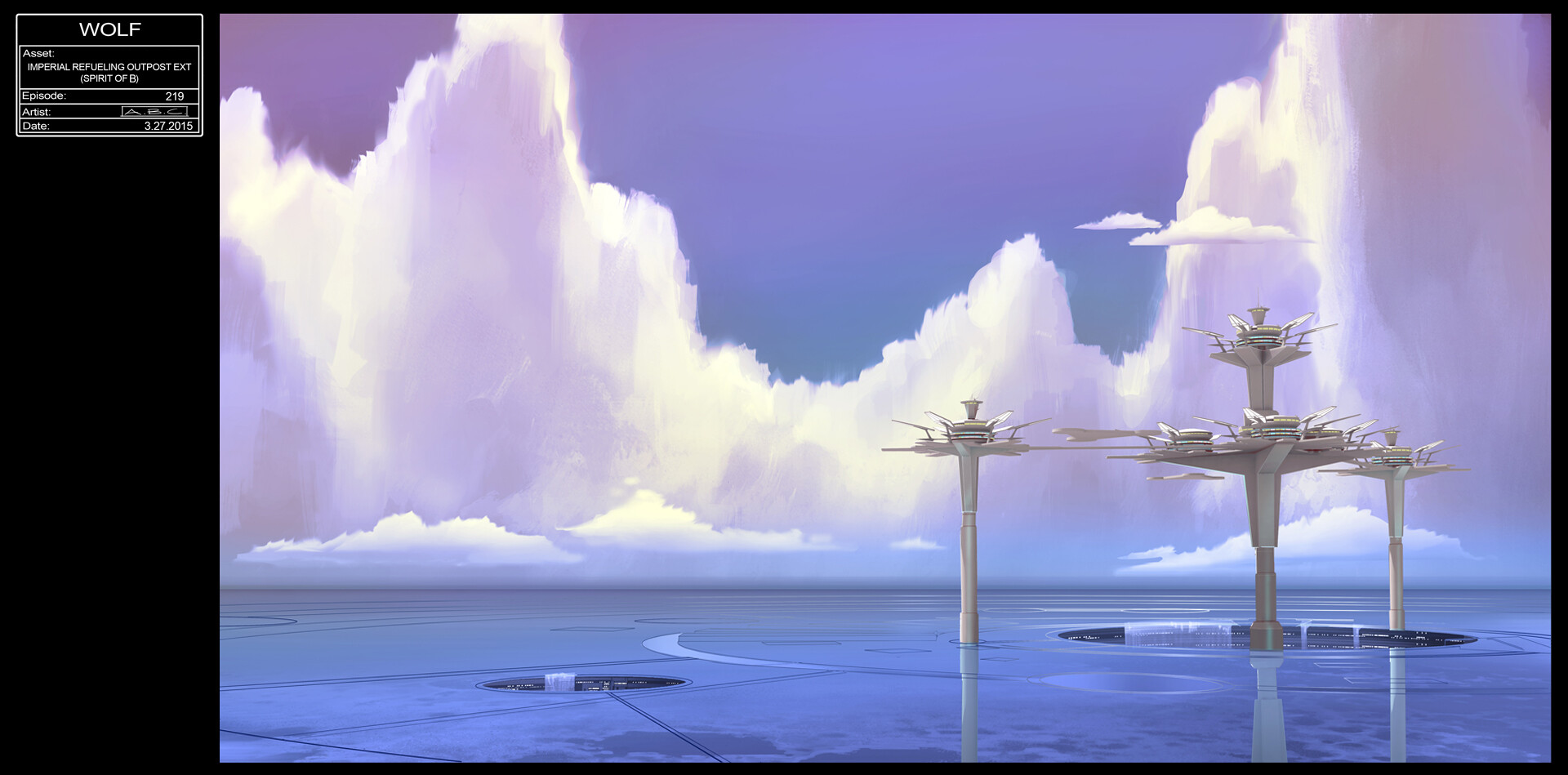
- Intent: To create a naval academy for the Imperial Confederation, a starfighter wing command center, and something for both military and civilian applications.
- Image Credit: Artist
- Canon: N/A
- Permissions:
- HPI Consortium - See Full Permissions
- N&Z Umbrella Corporation - See Permissions
- Links:
- Military Base Name: The Flugplatz Naval Academy - Imperial Military and Civilian Flight Academy | Mon Cala Wing Command
- Classification: Military/Civilian Academy, Naval (Starfighter) Base
- Location: Mon Cala, Dac City (50 miles north) on an island plateau.
- Affiliation: Imperial Confederation | Oversight by Karl Von Strauss | Headmaster: Major Elana Ryvok | Wing Commandant: Tyrek Venn (Both are NPCs)
- Population: [Moderate - Heavy] The Academy hosts 4,500 military cadets and 2,500 civilian students (or s-cadets) in each class. The Wing Command houses a battalion of soldiers at any given time, but can hold up to a regiment if needed.
- Demographics: The Academy and Wing Command are quite diverse, housing anyone who wishes to become a better pilot in the civilian or military field.
- Accessibility: Fifty miles north of Dac City, the academy grounds are surrounded by several turbolaser and ion cannon towers. Academy access is restricted to students and wing command personnel. Students and cadets are not allowed into the wing command sections unless given permission. Guests must register for a pass through the Naval Command Offices in Dac City (graduation is the only exception and is reserved for family members only).
- Description: The Academy is split up into three sections of three towers situated in vertical tunnels. One section is for Military Cadets, another is for Civilian Students and s-cadets, and the third section is for the Wing Command. In the center of the three sections is a much larger tower that serves as the control tower for the Academy. Each tower is held aloft by numerous repulsorlift generators and elevator struts; they can be retracted into the tunnels below and capped with large impervium doors. There are more tunnels below the ground as well.
- Military Section:
- The military section is for those cadets who have joined the academy under a military scholarship or enlisted for the Imperial Navy. There is the central observation tower and main lecture hall that is equipped with an Imyndaða Series Solid State Hologram for interactive lectures. In the same tower is the main hangar that houses the Training TIEs. Normally, the training TIEs are the standard LN model, but are swapped out for bombers or interceptors when instruction requires them to be. The second and third towers are standard classrooms, exercise rooms, and housing for military cadets. The Central Tower also has a small armory that is staffed by military police. All three towers are connected via bridges that extend from each tower. These towers do NOT connect to the main Command Tower, although a shuttle is available if needed.
- Civilian Section:
- The civilian section is for students enrolled in the school's general flying school, which includes freight and other non-military flying. These towers are similar to the Military Section, except that they lead directly to the Freighter Hangar for practical lessons. These towers do NOT connect to the main Command Tower, although a shuttle is available if needed.
- Wing Command:
- The wing command towers hold an entire battalion's worth of soldiers along with a whole starfighter wing (a total of seventy-two starfighters). It too has a central observation tower, and the second and third towers are filled with briefing rooms, barracks, training facilities, one armory per tower, and at the very bottom is a small brig. There is also additional space to fit three more battalions, making it fit an entire regiment and three more starfighter wings. There are also numerous flak cannons and TIE Taurus pods located along the length of the central tower. All three towers are connected via bridges that extend from each tower. This tower DOES connect to the central command tower.
- Command Tower:
- The Command Tower is the main control tower for all flight operations, military and civilian. There are two control rooms situated on top of each other. The military command is on the top floor, with the civilian command underneath it. As the largest tower on the academy grounds, you can see for kilometers in every direction. The offices of both Headmaster Major Elana Ryvok and Wing Commandant Tyrek Venn are in the Command Tower. Additionally, the Command Tower has several smaller hangars that house TIEs that are not in use for classes and the personal crafts of important academy figures and students who have their own personal crafts. These hangars also serve as the practical classrooms for cadets enlisting in the Engineering Corps. There are also numerous flak cannons and TIE Taurus pods located along the length of the Command Tower. Cadets, s-cadets, and students learning air/space traffic control are often seen with a senior member of the command tower under an apprenticeship program when taking practical classes.
- Underground Corvette Training Domes:
- Far underneath the ground on the island plateau where the academy is situated are five training domes housing Lianna II-Class Corvettes on support struts to simulate movement and space-faring travel. They are impeccably well-maintained by the Imperial Corps of Engineering and are serviced after each use. These domes are coated in black paint to simulate space and have sensor nodules everywhere; additionally, the rooms are equipped with the Imyndaða Series Solid State Hologram, for simulating hostile fighters, or other dangerous situations corvette crews might find themselves in. Originally, there was pushback on constructing more than one of these domes, as cadets could go into space to conduct practical drills until Command saw the costs of fixing a commissioned corvette after improper use by said cadets. As such, until cadets have reached a certain number of training hours in the domes, they are barred from practical space exercises.
- Underground Commons:
- The underground commons is just that, a common area for cadets and students to gather after their day's lectures and practical classes. An artificial sun lights up this large domed space. There are several state-sponsored commissaries and restaurants to make sure that the cadets and students are well-fed and well-stocked. There are also several artificial turf fields for various sports activities and a full-sized swimming pool that makes use of water from Dac.
- The Archive:
- The Archive is a vast repository of knowledge at the academy, blending military precision with academic depth. It houses starship engineering manuals, star charts, and holo-recordings of iconic battles and legendary pilots. Cadets can access holorecorded lessons and technical guides on starfighter combat, astrogation, and naval strategy. Historical logs, biographies, and cultural profiles offer insight into the galaxy's political and military history. The Archive also supports civilian pilots with flight operation guides, emergency protocols, and interstellar trade regulations. Artifacts like flight helmets and salvaged components from famous ships can be viewed by cadets and students alike. This state-of-the-art library is the heart of the academy's educational mission, preparing cadets and students for excellence in the stars. There is also a restricted section that contains classified intelligence and experimental tactics for advanced training.
- Freighter Hangar:
- The Freighter Hangar, also known as the Grease Pit, is a hub designed to support the training of civilian students at the academy. The expansive, high-ceilinged facility is equipped with docking bays for a variety of freighters and transport ships. Advanced maintenance stations line the walls, featuring cutting-edge diagnostic tools and repair equipment for hands-on technical training. Brightly lit workspaces and modular training pods allow cadets to practice loading procedures, ship navigation, and emergency protocols in a controlled environment. Interactive holo-terminals provide real-time flight data and cargo simulations, while experienced instructors oversee everything from hyperspace route planning to atmospheric entry maneuvers. A dedicated fuel and resupply depot ensures every ship is ready, emphasizing efficiency and preparedness.
SECURITY
[High - Maximum]
- Normally:
- Campus-Wide NZ SSP-SEPTIMUS Generator
- Retracting Towers with Impervium Doors
- Command Tower and Central Wing Command Tower
- 5 Twin Turbolaser Towers
- 5 Twin Ion Cannon Towers
- 1 Battalion of Stormtroopers
- at least 1 Company of Military Police
- 1 Starfighter Wing (72 starfighters)
- 2 Lianna II-Class Corvette (Training Corvettes)
- Equipped with ion weaponry
- Occasionally: [Due to an important figure or imminent invasion]
- Everything described above
- + 3 Battalions of Stormtroopers
- bringing the total troop count to that of a regiment
- + 3 Starfighter Wings (216 starfighters)
- bringing the total starfighter count to 288
- At least 1 cruiser will hang over the academy
- Additionally, the academy itself is on Mon Cala, which has a large military presence because it is one of the Confederation's main shipyards.
HISTORICAL INFORMATION
The concept of a centralized naval academy took shape in the waning years of the Empire of the Lost, just before its economic collapse. At its height, the Empire commanded a formidable roster of accomplished naval officers and starfighter pilots; yet few, if any, had been trained within its own borders. Instead, they carried with them doctrines, habits, and loyalties shaped by foreign institutions. Recognizing this strategic weakness, Moff Karl von Strauss envisioned an academy that would produce pilots and commanders forged entirely within Imperial doctrine. To that end, he selected Mon Cala, one of the Empire's most fortified worlds and his own seat of power, as the site for a state-of-the-art training facility.
Construction began in the Empire's final year, with ambitious plans already underway. By the time of the collapse, significant progress had been made: the underground infrastructure was largely complete, and the massive vertical tunnels that would house the academy's towers had already been carved into the plateau. However, with the sudden halt of Imperial funding, progress slowed to a crawl. Von Strauss personally diverted a considerable portion of his private wealth to sustain the project, but even his resources could only delay the inevitable. After six additional months, construction ground to a near standstill.
It was not until the rise of the Imperial Confederation and the establishment of the Commission for the Establishment of Civilian Interests (COMECI) that the project found new life. Funding resumed, though at a slower and more bureaucratic pace than before. Faced with delays and shifting political priorities, von Strauss adapted. He brought the military directly into the project, reimagining the facility not just as an academy, but as a dual-purpose installation: a center for both pilot training and active starfighter command. From this evolution, the Flugplatz Naval Academy emerged, no longer merely a school, but a strategic cornerstone of Imperial power, designed to train, house, and deploy the next generation of pilots under a single, unified doctrine.
Nestled on an island plateau fifty miles north of Dac City on Mon Cala, the Flugplatz Naval Academy serves as a dual-purpose institution, blending military precision with civilian innovation. Overseen by Karl Von Strauss and led by Headmaster Major Elana Ryvok and Wing Commandant Tyrek Venn, the academy is a hub for starfighter training and civilian aviation excellence. Its state-of-the-art facilities include retractable towers, underground training domes, and advanced simulators, all protected by heavy defenses such as turbolaser towers, ion cannons, and a campus-wide shield generator. With a population of over 7,000 students, including 4,500 military cadets and 2,500 civilian students, the academy fosters a diverse environment for aspiring pilots and engineers. Civilian students can waive their tuition by joining the Reserve Starfighter Corps as s-cadets, blending military and civilian training to prepare them for both wartime and interstellar trade.
The academy's campus is divided into four main sections: the Military Cadet towers, the Civilian Student towers, the Wing Command towers, and the central Command Tower. Each section serves a specialized purpose, with military cadets focusing on starfighter operations, civilian students honing skills in freighter navigation and logistics, and Wing Command housing a battalion of troops and a starfighter wing. A freighter hangar, known as the Grease Pit, supports civilian training, while underground domes house corvettes for simulated space travel. The Archive, a massive repository of knowledge, blends technical manuals, historical logs, and holographic lessons to support students' academic and practical growth.
Funding for the academy comes from a blend of government allocations, corporate sponsorships, alumni contributions, and partnerships with Mon Cala's shipyards and freight industries. Scholarships such as the Rising Star and Mon Cala Initiative Grant ensure accessibility for talented students from all walks of life. The academy's history is rooted in its strategic location on Mon Cala, a major Imperial shipyard, and its mission to bolster Imperial Authority by training elite pilots, commanders, and engineers. Whether preparing starfighter aces for combat or equipping civilian pilots for trade and exploration, the Flugplatz Naval Academy stands as a testament to Mon Cala's ingenuity and Imperial commitment to excellence in the stars.
Last edited: