

sᴋʏ-ʙᴏʀɴᴇ ᴅᴇɴꜰʀᴀɴᴅɪ




CODEX LORE // SPECIES SUBMISSION
THE DENFRANDI
x
HUMAN ANCESTRY // HIGH-ATMOSPHERE ADAPTATIONS // TALORAAN
Descended from the Humans of Taloraan, the Denfrandi have developed inherited adaptations suited to life among its exposed atmospheric settlements. This record covers their biology and limitations; their tribes, traditions and flotilla life are documented separately.
OUT OF CHARACTER INFORMATION
◇
Intent: To develop the Denfrandi of Taloraan as a Human-descended, near-Human species for Chaos, with defined physical traits, inherited adaptations and limitations. Their communities and traditions are covered in the companion Denfrandi Tribes Codex.
◇
◇
Canon: Denfrandi (Legends)
◇
Permissions: N/A
◇
Links: Taloraan (Legends) | Sleft-chuff / sleft-chuffni | Fleft-wauf (Legends) | Wind Raiders (Legends) | One Sith Taloraan Dominion (OOC planning) | Cloudy with a Chance of Sith (Galactic Alliance intervention, IC) | Every Day a Little Death (First Order dominion, IC) | 902 ABY: Planeshift (Chaos timeline) | The Denfrandi Tribes [Canon] (companion Lore Codex)
GENERAL INFORMATION
◇
Name: Denfrandi
◇
Designation: Sentient.
◇
Origins: Taloraan, Kelavine system, Expansion Region. Their ancestors were Human settlers or castaways who established communities in the gas giant's breathable upper atmosphere.
Denfrandi tradition places an ancient starship disaster at the beginning of their history, though its date and circumstances remain uncertain.
◇
Average Lifespan: Approximately 80–95 standard years, broadly comparable to Humans.
◇
Estimated Population: Planetary. Most Denfrandi live in Taloraan's habitable atmospheric layers, with smaller numbers living or travelling offworld.
◇
Description: The Denfrandi are a Human-descended people whose inherited physiology gives them exceptional endurance and a high tolerance for the hazards of Taloraan's atmosphere. They look much like other Humans, but their bodies handle acceleration, cold, pressure changes and moving air differently.
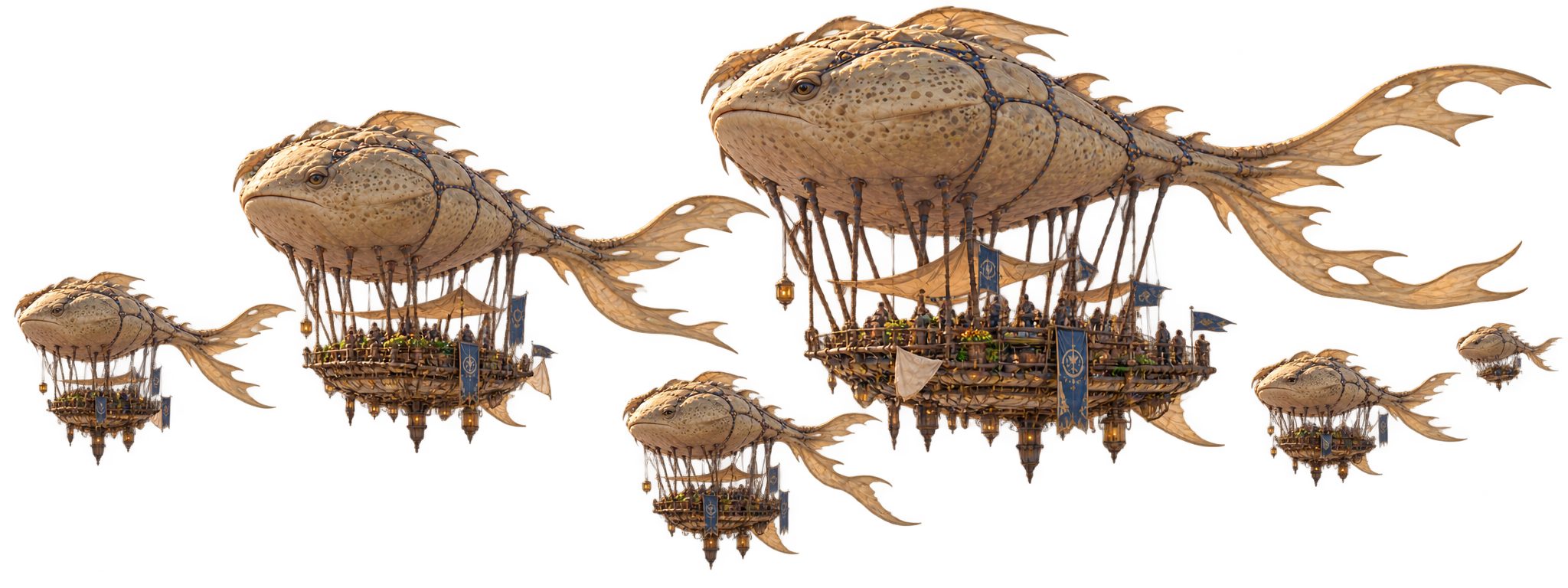
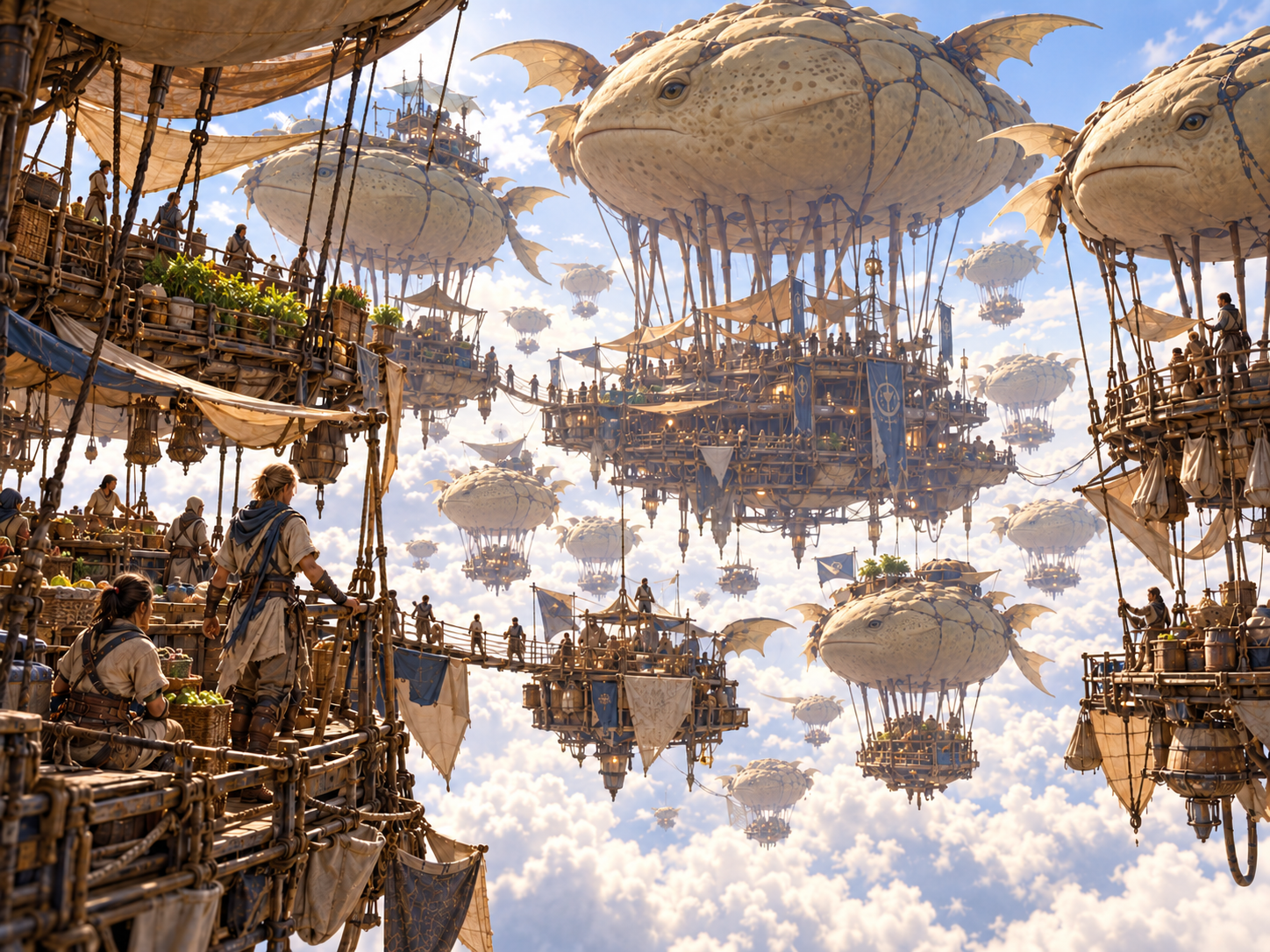
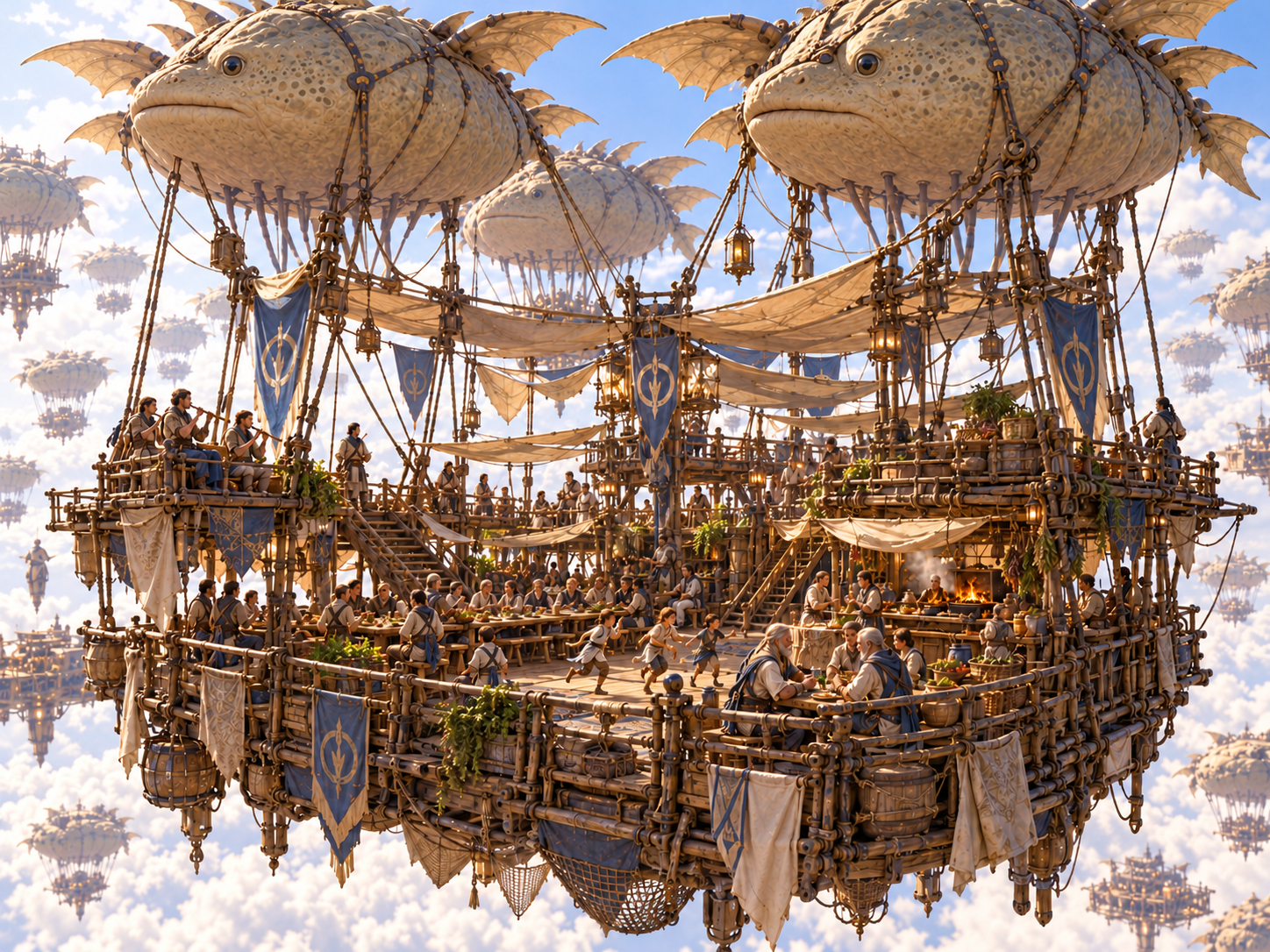
Their traditional homes are gondolas suspended beneath domesticated sleft-chuffs, forming the living airships known as sleft-chuffni. Some Denfrandi now live beyond the flotillas and offworld.
PHYSICAL INFORMATION
◇
Breathes: Type I, oxygen-bearing atmosphere. Denfrandi breathe normally on Human-habitable worlds. Taloraan's deeper, denser atmospheric layers are unsafe without protection.
◇
Average Height of Adults: Approximately 1.7–1.85 metres.
◇
Average Length of Adults: N/A.
◇
Skin color: Within the ordinary Human range, from light and olive tones through tan and deep brown. Those living in the open sky commonly develop pronounced tans and weathered skin.
◇
Hair color: Within the Human range, including black, brown, auburn and blond, with lighter sandy shades seen among some communities.
◇
Distinctions: Denfrandi remain recognisably Human in appearance, growth and reproduction. Sexual dimorphism, maturation and ageing broadly follow Human patterns. Most of their differences are internal, developed over generations in Taloraan's upper atmosphere. The adaptations are inherited independently of True Wind training.
◇ Oxygen transport and endurance: Their lungs and blood absorb, carry and release oxygen with exceptional efficiency, and their muscles use it effectively. This supports prolonged exertion, even in thinner breathable air, with faster recovery afterward.
◇ Acceleration tolerance: Resilient blood vessels and rapid circulatory responses keep blood reaching the brain during heavy acceleration. Their inner ears also cope well with abrupt changes in movement. Denfrandi can remain conscious and coordinated through high-G manoeuvres that would incapacitate many Humans, an advantage in aerial riding and piloting.
◇ Decompression hardiness: Their blood vessels and pressure-regulating tissues withstand abrupt altitude changes and rapid decompression unusually well. Even a very brief exposure to near-vacuum is less likely to incapacitate them immediately, improving their chances of rescue. Prolonged exposure remains dangerous.
◇ Cold tolerance: Their circulation and temperature regulation conserve heat effectively. Denfrandi can work in freezing winds with far less insulation than most Humans would need.
◇ Radiation resistance: Protective pigmentation and robust cellular repair limit damage from ultraviolet light and elevated environmental radiation. Denfrandi can endure exposures that would injure ordinary Humans over the same period.
◇ Atmospheric perception: Specialised pressure and balance receptors let Denfrandi feel changes in air density, turbulence and passing weather fronts. They may also sense air displaced by nearby movement through cloud or darkness. The ability depends on physical airflow, not the Force.
The degree of adaptation varies between individuals. Denfrandi raised offworld retain their inherited abilities, even if they have never learned to navigate Taloraan's skies.
◇
Races: No distinct subspecies or biological races are established. Denfrandi display the same range of individual appearance found among Humans.
◇
Force Sensitivity: Standard. Force sensitivity occurs among Denfrandi, but is not universal. The True Wind and the Blind Sail are cultural traditions; neither grants Force abilities through species membership.
STRENGTHS
◇
Exceptional stamina: Denfrandi possess outstanding physical endurance due to heightened oxygen delivery through their bloodstream. They are capable of incredible exertion when in typical atmospheric conditions, well beyond ordinary Humans. Their superior oxygen use also allows them to recover from intense effort more quickly.
◇
High-G resistance: Denfrandi possess exceptional resistance to acceleration, supported by highly responsive circulatory systems. They can remain conscious and coordinated through high-G manoeuvres that would incapacitate ordinary Humans.
◇
Decompression resilience: Their pressure-adapted bodies withstand abrupt changes in atmospheric pressure far better than those of ordinary Humans. They can survive rapid decompression and extremely brief near-vacuum exposure with a greater chance of recovery.
◇
Extreme cold tolerance: Specialised temperature regulation allows Denfrandi to remain active in freezing conditions that would quickly incapacitate ordinary Humans.
◇
Radiation resistance: Unusually resilient cells and efficient repair mechanisms give Denfrandi substantial resistance to ultraviolet and environmental radiation. They can endure exposure that would seriously harm ordinary Humans.
◇
Reading the air: Their innate sensitivity to atmospheric pressure and moving air lets Denfrandi detect subtle weather changes and nearby disturbances, even when visibility is poor.
WEAKNESSES
◇
Heat intolerance: Sustained high temperatures, especially in humid conditions, can overwhelm Denfrandi temperature regulation. Overheating reduces their endurance and physical performance.
◇
High nutritional and hydration demands: Their demanding metabolism requires a reliable supply of food and water. During shortages, heavy exertion can exhaust them more quickly than their usual stamina would suggest.
◇
Deep-atmosphere and environmental limits: Extremely dense atmospheres, toxic gases and Taloraan's deeper layers remain dangerous without protection. Their resistance to decompression does not allow prolonged survival in vacuum.
◇
Inhaled contaminants: Their efficient gas exchange also makes them vulnerable to inhaled smoke, irritants and toxins. In contaminated air, they may be impaired sooner than ordinary Humans and need suitable breathing equipment.
◇
Technological unfamiliarity: Denfrandi traditionally rely on practical, easily maintained technology rather than advanced machinery. Those raised aboard flotillas may initially lack familiarity with complex computer systems, spacecraft and other sophisticated equipment, requiring time and experience to become proficient.
CULTURE
◇
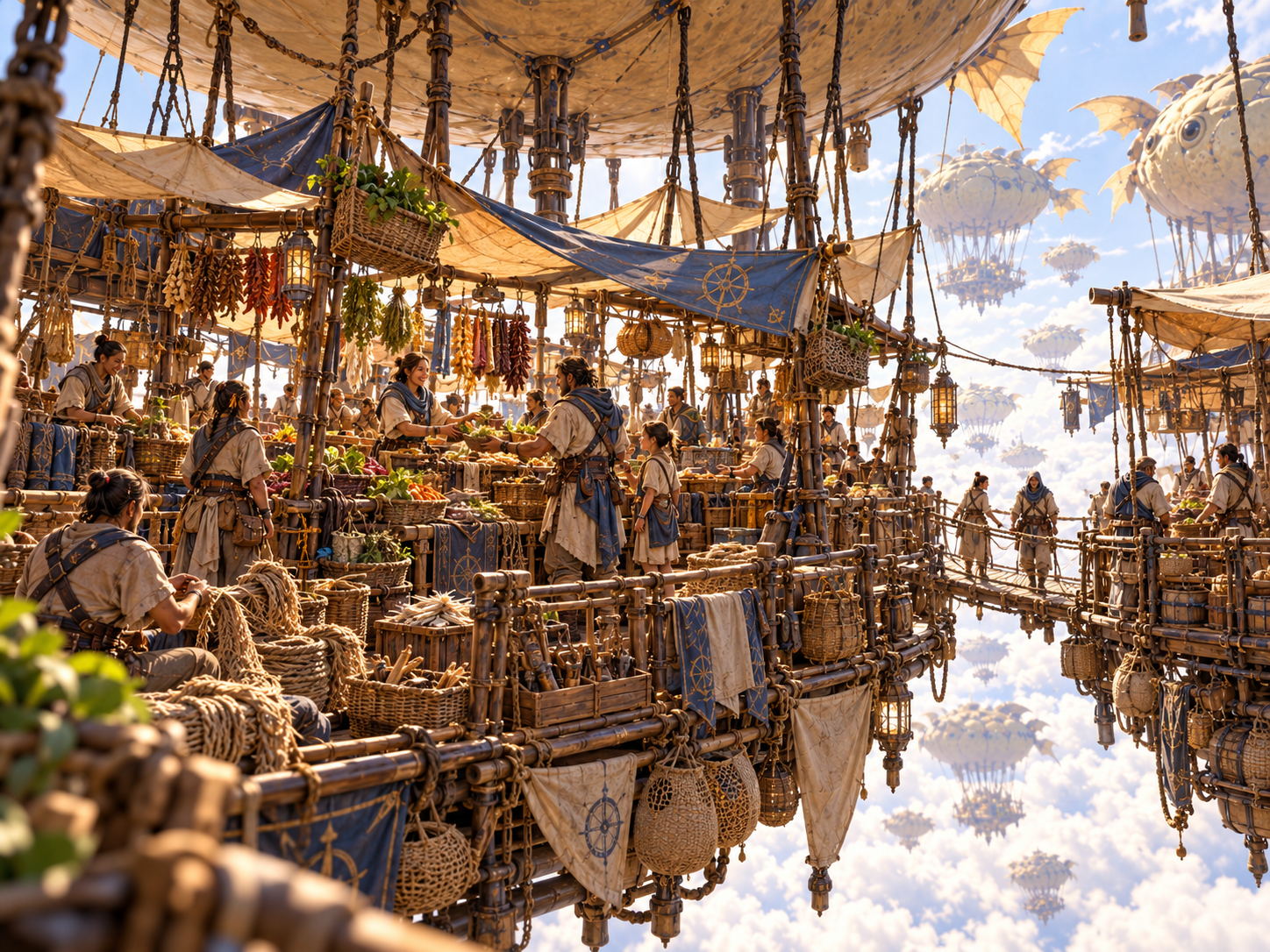
Diet: Omnivorous, with broadly Human nutritional needs and a greater appetite during demanding activity. Traditional flotillas grow grains, leaves and other edible crops in secured planters, keep small livestock where space permits, and preserve foods by drying, smoking and fermentation. Supplies may be supplemented by trade.
Water is collected from rainfall and moisture-bearing cloudbanks, filtered and stored aboard the living airships.
◇
Communication: Spoken Basic, including older regional expressions, with the same capacity for learning other languages as Humans. Skyfaring communities also use horns, whistles, pennants and agreed rope or light signals when wind makes speech difficult.
◇
Technology level: Varies by tribe and household. Many flotillas combine domesticated sleft-chuff transports, ropework, suspended buildings and local agriculture with offworld communicators, medicine, lighting and navigation devices. Other Denfrandi live among more technologically developed settlements.
◇
Religion/Beliefs: The True Wind is a traditional description of awareness that extends beyond the weather. Some Denfrandi believe certain people sense events as disturbances in an unseen current. The tribes have no single explanation of its nature or how it should be used. The Blind Sail trains attention to wind, movement and immediate surroundings. For a Force-sensitive practitioner, the Blind Sail may also develop awareness of the Force. The companion Lore Codex records the wider traditions.
◇
General behavior: Most Denfrandi belong to independent tribes and flotillas travelling the breathable upper atmosphere of Taloraan. Households live and work in suspended gondolas, raising children among neighbours, animal handlers, growers and craftspeople. Many communities prize skilled navigation, mutual aid and hospitality because a damaged harness, lost water or sudden storm affects everyone nearby.
Their wider society includes traders, builders, farmers, musicians, fleft-wauf riders and warriors. Some tribes prefer diplomatic contact; others maintain strong martial traditions, particularly the Gales and Squalls. Formal names usually join one given name to the person's tribe, and marriages between tribes can create compound affiliations. Further details of tribal names, customs and flotilla life appear in the Lore Codex.
HISTORICAL INFORMATION
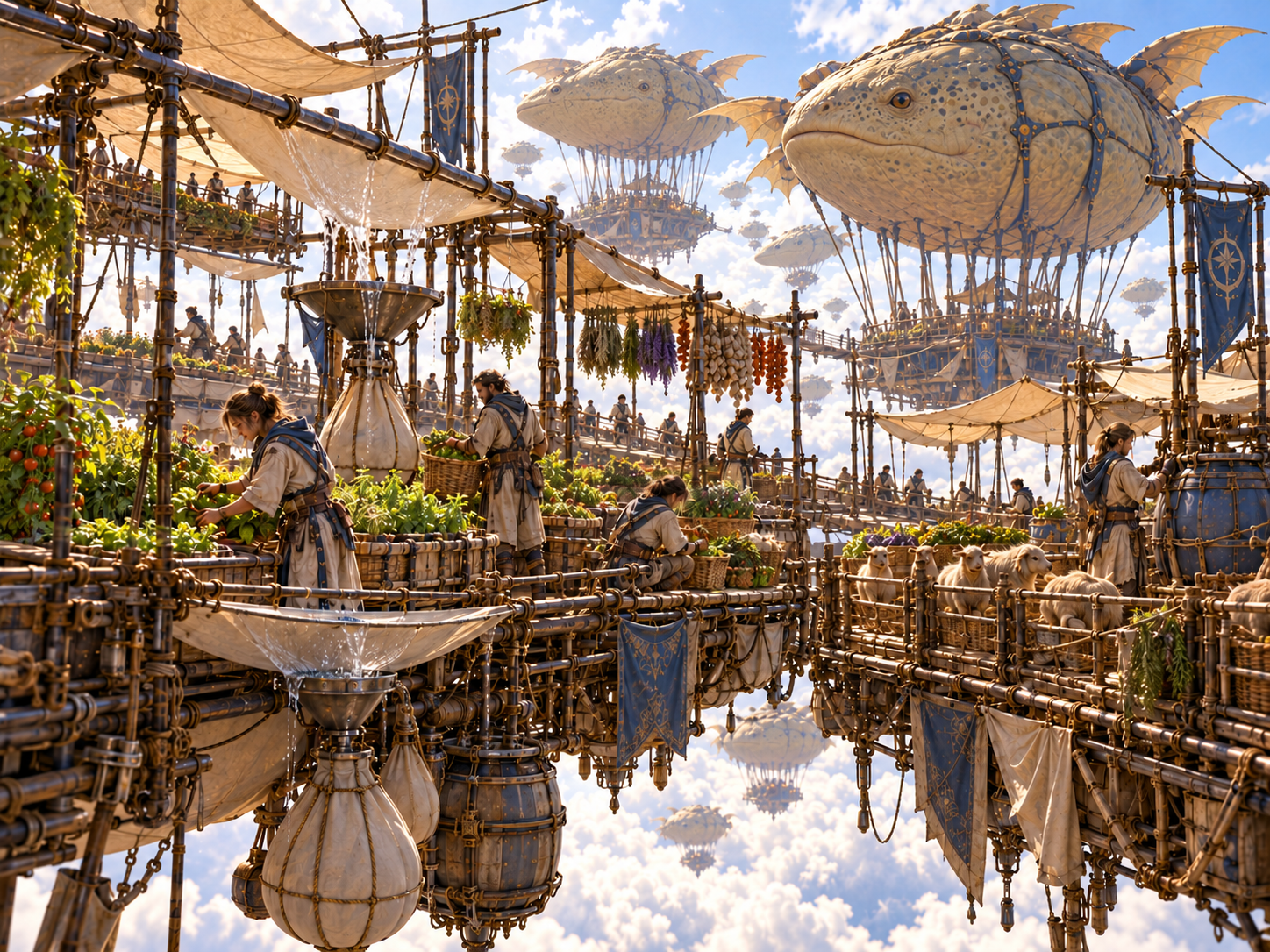
Denfrandi accounts trace their ancestors to Humans who survived a starship disaster in Taloraan's atmosphere. No surviving record confirms when that happened. Long before their encounters with recorded galactic history, they were living aboard gondolas carried by native sleft-chuffs.
Over the long generations spent travelling Taloraan's exposed upper layers, their Human-descended population developed the characteristics now associated with Denfrandi biology. Those better able to endure thin breathable air, repeated climbs and sudden changes in weather were better suited to that life. Their descendants inherited the traits described in this record.
By the era of the Republic and the Galactic Civil War, Denfrandi communities had established their distinctive travelling settlements, with some contact beyond the sky-tribes. Chief Laspevar's assistance to Rebel travellers is one remembered encounter. Trade and travel between settlements also took some Denfrandi beyond their native wind belts.
The Gulag Plague reached Taloraan around 425 ABY and devastated Denfrandi communities. Some isolated flotillas suffered less initial exposure than busy ports, while communities in regular contact with offworld visitors faced severe losses. Their biology did not confer immunity to the disease. The tribes that endured did so largely through isolation, existing food production and the continued care of their living transports. During the Four Hundred Year Darkness, isolated flotillas lost contact with other tribes. Some moved to new routes or took in families whose own communities had disappeared.
With renewed galactic travel in the ninth century ABY, Taloraan again encountered wars and occupation. The One Sith period brought attacks upon Denfrandi settlements, recorded in the later Galactic Alliance intervention. Displaced households lost gondolas and sleft-chuffs, and the Alliance attempted to help those communities rebuild and recover their living transports. Some tribes expanded their use of domesticated fleft-waufs as mounted defenders after these attacks.
Taloraan later entered a public political relationship with the First Order. The tribes continued to manage their own affairs, with differing levels of contact with Taloraan City and offworld powers. In the present Chaos era, Denfrandi are still concentrated in Taloraan's habitable sky, though some live or travel elsewhere. Denfrandi who leave Taloraan carry their inherited abilities with them, although the skills of a skyfarer still have to be learned.
DENFRANDI SPECIES RECORD // OPEN SKY ARCHIVE
FLOATING VILLAGES // SLEFT-CHUFFNI // WIND-CARRIED LIFE