

Grand Vizier



Shannic Wulf
Age: 71
Species: Human
Gender: Female
Height: 1.83 metres (metric required)
Weight: 44kg (metric required)
Force Sensitive: N/A
PHYSICAL DESCRIPTION
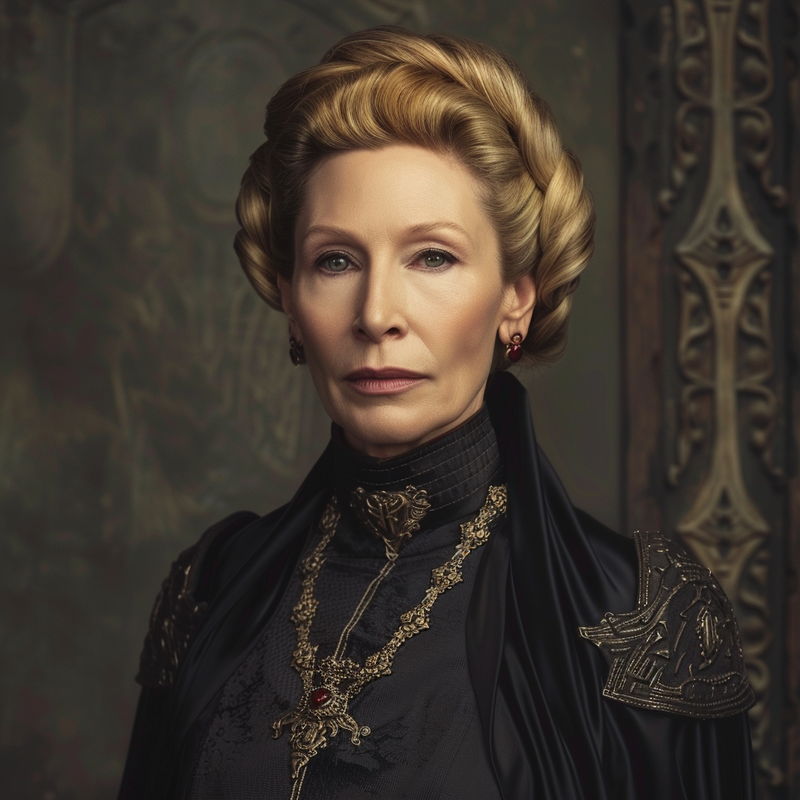
Shannic Wulf was tall and slender, with a composed, authoritative presence. Her features were sharp and pale, marked by age and discipline rather than softness. She wore her hair neatly bound, favoured high-collared black Imperial attire with restrained gold detailing, and carried herself with impeccable posture. Her calm, penetrating gaze and crisp, commanding voice made her authority unmistakable.
INVENTORY
N/A
PERSONALITY AND BELIEFS
Shannic Wulf was calm, controlled, and deliberate in both speech and action. She thought structurally, viewing people, worlds, and events as parts of larger systems to be ordered and directed. Emotion rarely guided her decisions; purpose and stability did.
She held an unshakable belief that order was sacred and that individual freedom was secondary to the survival and strength of the Empire. Loyalty and discipline were virtues in themselves to her, and sacrifice was not tragedy but necessity.
Her greatest fear was not death, but chaos: a galaxy left directionless, fractured by indecision and weakness.
STRENGTHS
Disposition:
Shannic Wulf was a firm, methodical ruler who believed order was sacred and stability outweighed individual freedom. She governed through structure, loyalty, and inevitability rather than charisma or fear. Her deepest conviction was that chaos was the greatest threat to civilisation, and her greatest fear was a galaxy left divided and unguided. She instilled this in both her prized student
 Ellayina L'lerim
and her nephew Harald Wulf.
Ellayina L'lerim
and her nephew Harald Wulf. Strategist:
Shannic Wulf thought in terms of institutions, supply lines, population movement, and generational outcomes rather than immediate victories or emotional satisfaction. She assessed decisions by how they would shape stability decades ahead, favouring policies that strengthened Imperial infrastructure, cultural cohesion, and administrative reach, even when such choices demanded patience, sacrifice, or short-term unrest.
WEAKNESSES
Ideological Rigidity:
Shannic Wulf's absolute belief in order and Imperial doctrine left her inflexible. She struggled to adapt when power structures shifted beyond established systems, underestimating ambition, betrayal, and irrational actors.
Overconfidence in Institutions:
She placed profound trust in hierarchy, law, and procedure, believing systems would endure if properly maintained. This faith blinded her to the personal ambitions of Sith warlords and left her vulnerable to sudden, violent upheaval outside bureaucratic control.
HISTORY
Grand Vizier of the Empire (Deceased)
Shannic Wulf was born on Chandrila into an Imperial-aligned family with deep ties to governance. Her father's early involvement in the New Imperial Order provided her a clear path into service, but it was her own discipline and precision that earned her advancement. She would later serve in The Dark Empire and its successor state, The Galactic Empire. She oversaw the collapse of the Galactic Alliance from the Coreworlds at the height of the Empire's dominion.
Educated within the Imperial administrative core, Wulf specialized in systems management, legal infrastructure, and policy enforcement. She was not a soldier nor an ideologue, but a functionary who believed in the power of order. Under Despot Korvan's leadership, she rose quickly through the ranks, serving as a senior administrator across multiple sectors. When Korvan died, she assumed much of the organizational burden he left behind.
Under Emperor Solipsis, Wulf was appointed Grand Vizier. She became the central authority over the Imperial bureaucracy during the expansion into the Core Worlds. Her work involved large-scale restructuring of governance, coordination of resource networks, and integration of conquered systems. She approached cultural erasure and industrial redirection not as acts of conquest, but as logistical necessities. Imperial culture, in her view, was singular and universal.
Wulf was completely loyal to Solipsis. She did not view him simply as a Sith Lord but as the embodiment of Imperial will. She saw her own role as an extension of his authority. Her leadership was quiet but absolute. Sector governors, military leaders, and civilian ministers relied on her systems to maintain cohesion across thousands of worlds.
When Solipsis disappeared after the Battle of Atrisia, Wulf attempted to preserve the central apparatus of the Empire. She worked to maintain continuity and suppress the power grabs of ambitious Sith and warlords. Her efforts failed. Internal factions fractured the Empire faster than she could stabilize it. She was ultimately betrayed by those she once managed, agents of the Sith.
Wulf was executed during the attempted invasion and sacking of the Imperial capital by Sith-aligned forces. She was killed in the command center without trial or acknowledgement.
Shannic Wulf died as she lived: loyal to the chain of command, committed to the structure of Empire, and unwavering in her belief that order was more important than survival.
Her influence continues to shape how remnants govern themselves. Among Imperial loyalists, she is remembered not as a symbol, but as the architect of a working state.