Sʜᴀᴅᴏᴡ Lᴏʀᴅ




Pollenwyrms
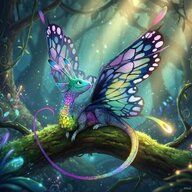
Tiny floral drakes


Out of Character Information
Intent: This submission is meant to establish Pollenwyrms as a small sentient species that can enrich roleplay with charm, movement, and personality without overwhelming a scene. They are intended to function as worldbuilding creatures for gardens, orchards, sanctuaries, ruins, ships, and warm domestic spaces; something clever enough to speak, social enough to matter, and fragile enough to remain balanced. They can serve as atmospheric fauna, recurring local nuisances, strange little companions, or the heart of smaller stories about care, habitat, migration, curiosity, and the life that gathers around cultivated places.
Image Credit: Artwork
Canon: N/A
Permissions: N/A
Links: Relevant references include Veridia and Centerra as flower-rich worlds where Pollenwyrms may be encountered, along with any future debut thread, codex entry, or location submission that establishes them in active roleplay.
At a Glance
Pollenwyrms are minute, whimsical drakes found among flowers, groves, warm ruins, orchards, canopies, and sheltered little wild places. They are sentient, can speak, and often give the impression of clever little spirits rather than grand beasts; bright-eyed, impulsive, distractible, and endlessly alive with motion. Most are no larger than a palm, though the smallest may be scarcely bigger than a hummingbird, and the largest long-tailed morphs may approach the scale of a bantam hen.
Long and slender of body, they resemble tiny fae-dragons more than birds or insects. Their frames may be fine-scaled and sleek, with delicate limbs, expressive tails, narrow muzzles, tiny claws, and translucent butterfly-like or moth-like wings dusted in fragile scales. Some bear long whiskers, soft antennae, trailing crests, or little pollen-catching tufts. They come in dazzling colors: blossom-bright, petal-soft, jewel-toned, or cunningly camouflaged to resemble flowers, leaves, seed clusters, bark, or moss depending on habitat and lineage.
General Information
Name: Pollenwyrms
Designation: Sentient
Origins: Scattered across warm, flower-rich worlds, including places such as Veridia and Centerra; their true first origin is uncertain
Estimated Population: Scattered
Average Lifespan: Potentially indefinite; they appear to show little true aging after maturity, though most perish far earlier due to weather, predators, hunger, transport hazards, and the ordinary dangers of being so very small
Force Sensitivity: Standard
Physical Information
Breathes: Type I atmosphere; highly efficient little lungs let them tolerate thin, lightly oxygenated air better than many creatures of similar size
Average Height: Usually 8–14 cm (3–5.5 in), though the smallest adults may be as little as 5 cm (2 in), while the largest may reach 20 cm (8 in)
Average Length: Usually 15–25 cm (6–10 in) including the tail, though diminutive varieties may be only 10 cm (4 in), while ornate long-tailed morphs may reach 40 cm (16 in)
Body Type: Long, slender, reptilian miniature drakes with delicate limbs, expressive tails, and translucent insect-like wings
Coloration: Vastly varied; floral pinks, violets, golds, pale greens, sapphire blues, petal whites, bark-browns, moss-greens, and iridescent blends
Skin color: Highly varied; their visible scales and hide may appear in blossom-pinks, violets, pale greens, soft creams, golds, bark-browns, mossy shades, cool blues, or iridescent petal-like blends depending on lineage and habitat
Hair color: None; some lineages instead bear soft crests, whisker-fans, pollen tufts, or antenna-like feelers rather than true hair
Races: No formal races are recognized; instead they appear in many local morphs and lineages shaped by habitat, wing form, mimicry, coloration, and climate
Distinctions
Pollenwyrms vary wildly by lineage and habitat, though all remain one interbreeding species. Some are sleek and fine-scaled; some have scale-dusted wings like butterflies; some bear soft antennae, whiskers, cheek-frills, or pollen-catching tufts. Their feet may carry tiny hooked claws or cling-adapted pads suited for bark, petals, stone, glass, or fruit skins. Many possess astonishing camouflage, becoming nearly indistinguishable from blossoms, dead leaves, lichen, bark, seed pods, or sun-struck petals when at rest. Others are not subtle at all, instead wearing bright, showy colors that dazzle the eye in flight.
Offspring may inherit varied combinations of parental traits: wing form, color pattern, scale texture, antennae, whiskers, minor defenses, cling-feet, floral mimicry, display coloration, or other small survival-focused adaptations. These remain minor natural traits rather than overwhelming gifts; Pollenwyrms survive by speed, camouflage, mimicry, agility, and opportunism far more than by force.

Strengths
- Exceptional agility in tight spaces; quick, darting, and difficult to track
- Remarkable camouflage and mimicry among flowers, leaves, bark, and bloom-heavy environments
- Highly expressive vocal range; capable of chirrs, trills, clicks, yips, snarls, birdsong, and learned spoken language
- Minor tool use; may use thorns, twigs, spines, pebbles, petals, or seed shells to pry out prey, bait insects, or gather water and nectar
- Efficient lungs suited to thin-air canopies, cliffs, elevated forests, and mountain gardens
Weaknesses
- Extremely small and physically fragile; easy prey for larger animals and harsh environments
- Strongly heat-seeking; cold, rain, storms, and long exposure can leave them sluggish or drive them into torpor
- Easily distracted by glitter, moving light, shiny objects, reflections, and warmth
- Poor raw strength; cannot carry much and are ill-suited to direct confrontation
- Impulsive, playful, and not especially deep thinkers; clever in practical ways, but not built for grand strategy
Culture
- Diet: Omnivore: Pollenwyrms feed on nectar, blossoms, sweet sap, fruit, berries, insects, grubs, and other tiny prey. A large grasshopper may be a substantial meal. They burn energy quickly and are almost always looking for sweetness, warmth, or movement. If not feeding, they are often at play: chasing one another through flowers, bickering over trinkets, startling at reflections, mobbing some perceived nuisance, or darting after a point of light with all the dignity of a cat who has seen a laser for the first time.
They are generally kind-natured. Larger speaking beings often strike them as wondrous, grand, and nearly godlike, while non-speaking large animals more often register as predators to be avoided. They may squabble, hoard, nip at prey, or grow protective of a nest and its shiny treasures, but they are not a cruel species by nature. - Communication: [ How do they communicate? A spoken language (if so, tell us which), through barks and yips, body language, telepathy, etc.
- Technology level: [ Describe their societal technology level if it differs from Galactic Standard. ]
- Religion/Beliefs: [ If this species has a prominent religion or set of beliefs, describe them here. ]
- General behavior: [ Describe general behaviors such as: family life, values, how they raise their young, how they find mates, how they interact with the world and other species around them. Do they hunt? Do they build? Are they inventors? Are they explorers? Are they nocturnal or diurnal? Do they attend schools? Etc, etc. ]
Communication & Beliefs
Pollenwyrms possess their own language and can also learn spoken tongues. Their voices range from squeaks, clicks, chirrs, chittering, trills, yips, and little snarls to surprisingly clear words. Many delight in mimicry and will happily learn local bird calls, favorite phrases, or sounds associated with food, comfort, and affection.
Their spirituality is shallow, shifting, and deeply instinctive. They are easily impressed, and may fall into reverence for anything bright, powerful, warm, rhythmic, or difficult to understand. Sunlight, moonlight, seasons, glowing lamps, weather, blooming cycles, and beings capable of controlling light or warmth can all gather little superstitions and worshipful habits around them. They are fascinated by flame and glow, yet often terrified of thunderstorms, hard rain, and wildfire.
Technology Level
Pollenwyrms are not a technological civilization in the galactic sense. They show cleverness, memory, imitation, and minor tool use, but they do not build cities, machines, or formal industry of their own. A thorn may become a probe, a twig a lever, a shell a cup, a bright scrap a treasured possession … yet these are acts of practical instinct and play, not engineering tradition. Where they dwell near advanced peoples, they adapt quickly to warm vents, lights, gardens, cargo holds, greenhouses, and ship interiors, learning how to live around technology rather than how to reproduce it.
Habitats & Homes
They prefer warm, bloom-rich places: forests, orchards, gardens, sheltered ruins, cliffside groves, greenhouse-like enclaves, and old trees full of hollows. Most sleep in natural places first … flower cups, bark seams, root hollows, branch forks, warm stone niches, and abandoned little cavities. Where many gather, they may turn these into tiny communities of decorated nests and fussed-over roosts, lining them with moss, petals, fluff, shed feathers, bright seeds, shiny pebbles, bits of shell, glimmering scraps, and anything else that catches the light beautifully.
Their fondness for heat often draws them to warm vents, lamps, pipes, cargo bays, engines, and ship interiors. Because of this, Pollenwyrms can accidentally spread from world to world as tiny stowaways; if carried somewhere warm and flower-rich, their numbers may rise quickly unless local predators keep them in check.
Life Cycle
Pollenwyrms hatch from tiny eggs laid in sheltered nests, hollows, or hidden warm places. Newly hatched young emerge soft, damp, and unsteady, needing a little time to dry, unfurl, puff up, and clean themselves before scampering into motion. Once roused, they become lively, curious, playful little things almost at once.
They are not truly warm-blooded, relying heavily on external warmth to stay active. In cold weather, hunger, prolonged darkness, or exposure, they may become sluggish or enter brief torpor-like sleep until warmed again.
Historical Information
The true cradle of the Pollenwyrms has long since been lost to certainty. No great stone cities bear their names, no empire rose beneath their wings, and no tidy archive preserves their first hatching grounds. Instead, they enter history the way they enter most places: lightly, half-unseen, glimpsed in orchards, temple gardens, overgrown courtyards, hollow trees, warm cliff shrines, and ship holds rich with flowers or fruit. Many worlds possess their own little stories of them, and nearly all of those stories claim the creatures were simply "already there," as though they arrived with the bloom itself.
What can be pieced together suggests an old species that spread not through conquest, but through accident, warmth, and opportunity. Their attraction to heated nooks, cargo spaces, greenhouse transports, orchard freighters, lamp-lit sanctuaries, and sheltered machinery would have made them natural stowaways across centuries of travel. A clutch hidden in packing moss, a roost tucked behind a warm vent, a few bright scavengers lingering in a botanical shipment … such quiet movements would be enough to carry them from one hospitable world to the next. In this way, they became scattered rather than centralized, known in pockets, colonies, and little local populations instead of one dominant homeland.
Because they build lightly and live small, Pollenwyrms leave little behind that survives the centuries. Their history is preserved less in ruins than in habits: the same decorated nests, the same love of warmth and sweetness, the same instinct to gather where flowering life flourishes. Naturalists, gardeners, monks, orchard-keepers, travelers, and children account for most surviving records, often describing them not as beasts, but as tiny speaking presences woven into the character of a place. On worlds such as Veridia and Centerra, they are best understood not as invaders or curiosities, but as part of the living fabric of cultivated wilds … little people of blossom, heat, chatter, and motion, enduring wherever shelter and bloom invite them to stay.
[/div]
Last edited: