

Character




CLAN DYST
Rooted in Tradition. Tempered by Survival.
OUT OF CHARACTER INFORMATION
- Intent: To establish Clan Dyst, an isolated Mandalorian naturalist clan native to Concordia, as a distinct cultural community within Mandalorian society. This submission expands upon the background of Xasin Dyst, establishes her paternal heritage, and provides opportunities for roleplay involving Mandalorian traditions, wilderness survival, environmental stewardship, clan politics, and the relationship between Mandalorian culture and the Force.
- Image Credit: Clan Dyst sigil — Original AI-generated artwork created using ChatGPT image generation tools at my prompting.
- Canon: N/A — Clan Dyst is an original group based upon established Mandalorian culture.
- Permissions: N/A
- Links:
GENERAL INFORMATION
- Name: Clan Dyst
- Classification: Mandalorian Clan; Naturalist Cultural Community
- Origins: Concordia, Mandalore System
- Affiliation: Mandalorian Empire; Mandalorian Clans; Xasin Dyst
- Symbol: A stylized orange tree with angular branches reaching upward and deep roots spreading below, framed by two opposing crescent-shaped forms. The tree represents continuity, family, and the interconnectedness of living things. Its roots symbolize ancestry and responsibility to the land, while its branches represent the generations yet to come. The surrounding crescents represent protection and the enduring strength of Mandalorian tradition. The emblem is commonly displayed against a dark forest-green background.
- Domain: Clan Dyst maintains a secluded ancestral settlement within the remote forested wilderness of Concordia. Their territory encompasses woodland, rocky highlands, streams, and a network of modest settlements connected by trails and concealed access routes.
The clan does not claim sovereignty over Concordia or seek political control over neighboring communities. Its territorial interests concern the preservation and defense of its ancestral lands.
Although Clan Dyst maintains contact with other Mandalorian communities for trade, military obligations, and matters of common interest, its members generally avoid unnecessary involvement in planetary politics.
Outsiders may enter clan territory with permission, particularly traders, travelers, and Mandalorians seeking shelter. Uninvited incursions, resource exploitation, and attempts to establish unauthorized settlements are met with considerably less hospitality.
The clan recognizes the authority of Mandalore while retaining considerable independence in its internal affairs. - Estimated Population: Unique — Approximately 100–150 members, concentrated within a single ancestral community and its surrounding homesteads. A small number live or serve offworld while maintaining their clan identity.
- Demographics: Clan Dyst is predominantly Human and Near-Human, reflecting the composition of its founding families. However, membership is not determined by species or ancestry alone.
Aliens, adopted foundlings, and individuals married into the clan are accepted as full members when they embrace its traditions and responsibilities.
Force-sensitive individuals occur at rates comparable to those among the broader Mandalorian and galactic population. They are neither deliberately bred for nor specifically recruited. - Description: Clan Dyst is a small, fiercely independent Mandalorian clan whose identity is shaped by generations of life within Concordia's wilderness. While retaining the martial traditions, family loyalties, and cultural obligations of the Mando'ade, its members believe that strength is measured not merely through conquest or battle, but through the ability to survive, protect, build, and preserve.
Their naturalist philosophy emphasizes coexistence with the environment, responsible use of resources, and an understanding that every generation inherits obligations to both its ancestors and descendants.
They are hunters, warriors, smiths, trackers, craftspeople, and caretakers of their ancestral lands. Though occasionally mistaken for primitive isolationists or Force-worshipping mystics, Clan Dyst is neither. They are Mandalorians who have chosen a quieter, more deliberate relationship with the world they inhabit.
PHYSICAL INFORMATION
- Distinctions: Clan Dyst possesses no unique biological characteristics. Its members display the normal physical diversity of their respective species. However, their environment and lifestyle have produced recognizable cultural distinctions. Many members develop considerable physical endurance through hiking, climbing, hunting, and working in rugged terrain. Practical strength, surefootedness, and familiarity with wilderness conditions are highly valued.
Their armor frequently incorporates subdued forest greens, charcoal, weathered metallic finishes, and burnt-orange markings. Decorative elements may include stylized branches, roots, leaves, or the clan's tree sigil. Beskar'gam is maintained with the same reverence found throughout Mandalorian culture, although elaborate ornamentation and ostentatious displays of wealth are uncommon.
Clothing favors durable fabrics, layered garments, reinforced boots, and weather-resistant materials. Animal hides and natural fibers may be incorporated when responsibly harvested.
Scars, tattoos, and other personal markings are not mandatory, though some members choose designs commemorating family, significant hunts, or milestones in their lives.
Despite their preference for natural materials and understated aesthetics, Clan Dyst makes full use of modern medicine, communications, weapons, and protective technology. - Force Sensitivity: Standard — Force sensitivity occurs naturally within Clan Dyst at approximately the same rate as among the broader Mandalorian and galactic population. The clan does not actively cultivate Force-sensitive bloodlines or consider such abilities a requirement for membership or leadership. A small number of members have developed spiritual or mystical traditions involving the Force. These individuals may serve as healers, advisers, or teachers, but they do not constitute a separate ruling caste. Most clan members possess no meaningful Force abilities and regard the Force as one aspect of existence rather than the defining principle of their community.
SOCIAL INFORMATION
- Membership: Clan membership is traditionally acquired through birth, adoption, marriage, or formal acceptance into the clan. As with broader Mandalorian culture, blood ancestry is not considered the sole measure of belonging. Foundlings are welcomed and raised as members of the family.
Those seeking admission are expected to demonstrate a willingness to uphold Mandalorian traditions, respect the clan's community, and accept responsibility for protecting its people and ancestral lands.
Prospective adult members generally spend time living and working alongside the clan before being formally accepted. This period is intended to establish mutual trust rather than test arbitrary physical superiority.
Marriage into Clan Dyst is permitted without species restrictions, although prospective spouses are expected to understand the obligations of clan life.
Formal acceptance typically involves an oath before clan elders and representatives of the member's adopted household.
[OOC] Clan Dyst is available for collaborative roleplay involving relatives, foundlings, allies, and prospective members. New characters or familial connections should be discussed with the clan's writer before establishing significant shared history. - Climate: Internally, Clan Dyst is close-knit, practical, and strongly communal. Members are expected to contribute according to their abilities, whether through hunting, engineering, agriculture, medicine, teaching, or military service.
Children are raised with a strong sense of collective responsibility, and elders are respected for their accumulated knowledge rather than merely their age.
Disagreements are not uncommon, particularly between those who favor continued isolation and those who believe the clan should participate more actively in galactic affairs.
Outsiders often perceive the community as reserved or suspicious. However, those who earn its trust generally encounter considerable warmth, loyalty, and hospitality.
Privacy is respected, but complete independence from the community is rarely practical. - Reputation: Clan Dyst is relatively obscure beyond Concordia and the Mandalorian clans. Among those familiar with it, the clan has a reputation for producing capable wilderness scouts, trackers, survivalists, and skilled craftspeople. Its members are considered dependable allies but reluctant participants in political intrigue.
Some Mandalorians regard the clan's environmental concerns and relative isolation as eccentric or unnecessarily restrictive. Others respect its commitment to self-reliance and the preservation of ancestral traditions. Rumors occasionally exaggerate the influence of the clan's mystics, leading outsiders to incorrectly describe Clan Dyst as a Force-oriented sect. Those who mistake the clan's preference for peace and seclusion as an unwillingness to fight seldom make that mistake twice. - Curios: The most recognizable symbol of membership is the Clan Dyst tree sigil, frequently incorporated into armor, banners, tools, and personal belongings.
Many members possess a small handcrafted token fashioned from wood, stone, or metal collected from their ancestral territory. These tokens are often given upon reaching adulthood or formally joining the clan. They are personal reminders of home rather than magical artifacts.
Weapons and tools passed through generations are especially valued. A well-maintained hammer, hunting blade, or piece of beskar may possess greater sentimental importance than an expensive new acquisition. Some members incorporate the clan sigil into their armor in burnt orange, symbolizing their connection to both the clan and its ancestral lands. - Philosophy: Clan Dyst follows the fundamental principles of Mandalorian culture, particularly the Resol'nare, while interpreting its obligations through a naturalist philosophy. Their central belief is that survival and stewardship are inseparable. The land sustains the people, and the people must ensure that the land remains capable of sustaining those who follow them. This philosophy does not reject hunting, mining, industry, or warfare. Instead, it demands consideration of necessity, consequence, and responsibility. Taking resources is acceptable; wasting them is dishonorable. Clearing land for survival is understandable; destroying it through negligence or greed is not. The clan places particular emphasis on five principles:
Responsibility: Every individual is accountable for the consequences of their actions.
Continuity: The living are responsible for preserving what previous generations entrusted to them.
Self-Sufficiency: Dependence upon outside powers should never become so great that the clan cannot survive without them.
Balance: Strength and restraint are complementary virtues. Knowing when not to fight can require as much courage as entering battle.
Kinship: Family extends beyond blood, and the survival of the community depends upon mutual obligation.
These principles coexist with the Resol'nare rather than replacing it. The clan's philosophy is cultural rather than religious. Members may maintain individual spiritual beliefs, including traditional Mandalorian beliefs concerning the Manda. A minority interpret the interconnectedness of life through the Force, but their beliefs are not imposed upon the wider community. - Outward Views: Clan Dyst is cautious toward outside influences but not inherently xenophobic. Other species are judged primarily by their actions, character, and willingness to respect the clan's customs. Technology is considered a tool rather than an enemy of nature. The clan embraces equipment that improves survival, medicine, communication, defense, or responsible resource management. However, it distrusts industrial expansion undertaken without consideration for environmental consequences. The Force is neither universally revered nor feared. Force-sensitive Mandalorians are expected to fulfill the same obligations as everyone else. The clan generally regards Jedi and Sith as external traditions whose political and philosophical conflicts need not dictate Mandalorian identity.
Members may pursue relationships with such organizations, although their choices can create tension with traditionalists. The Mandalorian Empire is recognized as the clan's broader political allegiance. Nevertheless, Clan Dyst prefers to preserve its internal autonomy and may question imperial policies that threaten its ancestral lands or principles. - The Arts: Artistic expression is closely connected to craftsmanship, oral history, and the natural environment. Woodcarving, metal engraving, leatherworking, weaving, and decorative armorwork are common. The clan's tree sigil appears in numerous artistic forms, often accompanied by patterns inspired by roots, branches, and the rugged terrain of Concordia. Traditional Mandalorian songs and stories are passed between generations, particularly during communal meals and seasonal gatherings. Music often features percussion, stringed instruments, and unaccompanied singing. Art is valued for its meaning and craftsmanship rather than its monetary worth. A handmade gift may carry considerable significance. Members are free to pursue other artistic traditions, including modern galactic music, painting, and performance.
- Architecture: Clan Dyst settlements are designed to blend into their surroundings rather than dominate them. Buildings are typically low-profile structures constructed from local stone, responsibly harvested timber, reinforced composites, and salvaged materials. Homes are often built around existing trees and geological formations, minimizing unnecessary disturbance. Larger communal buildings include workshops, gathering halls, storage facilities, medical spaces, and training areas. Many structures incorporate underground chambers or partially recessed foundations to provide insulation and protection from severe weather. Modern environmental controls, water purification systems, and discreet power generation are common. The clan favors renewable energy and efficient recycling where practical, while maintaining conventional backup systems for emergencies.
Defensive positions and concealed shelters are integrated into settlements, reflecting the clan's Mandalorian heritage. The overall appearance is rustic but technologically competent, combining traditional craftsmanship with contemporary engineering. - Habits: Daily life encourages habits associated with self-reliance and environmental awareness. Members frequently inspect equipment, maintain weapons, repair tools, and assess their surroundings. Many instinctively observe changes in weather, animal behavior, or the condition of nearby vegetation. Communal meals and shared work are common, as is informal instruction between generations. Children learn to identify tracks, recognize hazardous plants, and navigate familiar terrain from an early age. Regular weapons practice and physical conditioning remain important, although not every member pursues a military occupation. Quiet reflection is encouraged, but formal meditation is generally a personal choice rather than a communal obligation.
- Lifestyle: Clan Dyst favors a modest, practical lifestyle centered upon family, craftsmanship, and communal responsibility. Personal possessions are valued for usefulness, durability, or sentimental importance rather than prestige. Homes are comfortable but rarely extravagant. The clan maintains gardens, small agricultural plots, workshops, and communal storage facilities. Hunting and foraging supplement cultivated food supplies. Advanced technology is used selectively and maintained carefully to reduce dependence upon frequent offworld replacement. Members may travel, trade, serve in military organizations, or pursue careers beyond Concordia. However, those who depart are generally expected to maintain their familial obligations and contribute to the clan when circumstances permit. Isolation is a preference, not imprisonment.
- Laws: Clan Dyst recognizes the traditional obligations of Mandalorian society while maintaining several internal regulations concerning communal welfare and environmental stewardship.
Protection of Ancestral Lands: Unauthorized destruction, contamination, or exploitation of clan territory is prohibited.
Responsible Harvesting: Hunting, logging, and resource extraction must be conducted according to established community practices intended to prevent unnecessary depletion.
Obligation to the Community: Members are expected to contribute to communal survival according to their abilities and circumstances.
Protection of Foundlings: Children accepted into the clan are entitled to the same protection and opportunities as those born into its families.
Right of Defense: Members may defend themselves, their families, and their territory against credible threats.
Accountability: Disputes and offenses are addressed by clan leadership and respected community representatives, with restitution preferred where practical.
Deliberate betrayal, violence against fellow clan members, and actions that knowingly endanger the community are treated as serious offenses. Exile is possible but considered an extreme punishment. These laws are customary clan regulations and do not supersede the authority of the Mandalorian Empire where imperial law applies. - Customs & Traditions:
- The First Planting: When a child is formally welcomed into the clan, their family plants a tree or another long-lived native plant within the clan's territory. The act symbolizes the child's place among the generations and the responsibility to nurture what will outlive them.
- The Returning: Members who return after extended absences traditionally bring something meaningful from their travels. This may be a useful tool, a new skill, seeds suitable for cultivation, or knowledge that benefits the community. The value lies in what is shared rather than its expense.
- The Keeping of Names: Stories of deceased clan members are preserved through oral histories and family records. Their contributions are remembered during communal gatherings, reinforcing the belief that an individual's influence continues through those they leave behind.
- The Hunter's Obligation: Hunters are expected to make responsible use of animals taken for food or materials. Wasteful killing is considered disrespectful and dishonorable.
- The Forging of Purpose: Upon reaching maturity, members traditionally craft, repair, or meaningfully modify an item representing their chosen responsibilities. This may be a weapon, tool, piece of armor, instrument, or other practical creation.
- The Root Gathering: At designated seasonal gatherings, scattered families return to the principal settlement to exchange news, settle disputes, celebrate achievements, and reaffirm their commitments to the clan.
These traditions are cultural practices rather than Force rituals. Participation does not require spiritual abilities or religious devotion. - Education & Training: Education is primarily communal, combining formal instruction with practical experience. Children receive training in literacy, mathematics, galactic history, Mandalorian culture, languages, and basic technological competence. Wilderness survival is introduced early, including navigation, tracking, first aid, shelter construction, and recognition of environmental hazards. Weapons training and personal defense are considered essential aspects of Mandalorian education. However, members are encouraged to pursue specialties suited to their talents and interests. Engineering, agriculture, medicine, metallurgy, environmental science, and craftsmanship are particularly respected. Young adults may apprentice under experienced members or seek specialized education offworld.
Force-sensitive children are not automatically directed toward mystical instruction. Those displaying abilities may receive guidance from knowledgeable clan members, including its few mystics, or pursue training elsewhere with appropriate familial consideration. Regardless of their abilities, they are expected to learn the same fundamental skills and responsibilities as their peers. - Diet: Clan Dyst maintains a varied diet based upon cultivated produce, responsibly hunted game, gathered foods, and preserved supplies. Meals commonly include roasted meats, root vegetables, grains, mushrooms, seasonal fruits, and hearty stews. Food preservation techniques such as drying, smoking, fermentation, and vacuum sealing are widely practiced. Communal cooking is an important social activity, especially during gatherings and celebrations. There are no universal religious dietary restrictions, although individual families may maintain their own preferences. Wastefulness is strongly discouraged. Edible portions of harvested animals and cultivated produce are used whenever practical. Imported foods are not forbidden, but the clan prefers reliable local sources and maintains substantial emergency reserves.
- Communication: Mando'a and Galactic Basic are the primary spoken languages. Mando'a is commonly used during ceremonies, family gatherings, traditional instruction, and military activities. Basic facilitates trade and communication with outsiders. Modern comlinks, encrypted communications, and holonet systems are available, although the clan limits unnecessary external broadcasting. Members also employ practical hand signals during hunting, scouting, and tactical operations. Oral storytelling remains an important method of preserving cultural knowledge. The clan possesses no universal telepathic network or Force-based communication tradition. Any such abilities belong to individual Force-sensitive members rather than the population as a whole.
Strengths:
- Rooted and Resilient: Generations of wilderness living have produced a community skilled in survival, resource management, tracking, and practical craftsmanship. Their relative self-sufficiency allows them to endure disruptions to trade and supply lines better than many similarly sized settlements.
- Unyielding Kinship: Strong familial relationships, communal responsibility, and traditional Mandalorian martial training make Clan Dyst a cohesive and determined defensive force. Members possess intimate knowledge of their territory and are willing to make considerable sacrifices to protect one another.
Weaknesses:
- The Cost of Isolation: Clan Dyst's limited population, modest industrial capacity, and preference for independence restrict its political influence and access to specialized resources. Prolonged conflict or major technological failures could overwhelm its ability to sustain itself without outside assistance.
- Roots That Bind: The clan's profound attachment to its ancestral territory can make its members inflexible when confronted with relocation, industrial development, or political compromise. Their reluctance to abandon established traditions may create internal divisions and leave them vulnerable to opponents willing to exploit their devotion to home.
HISTORICAL INFORMATION
Origins — A Different Kind of Strength
The origins of Clan Dyst lie among the Mandalorian families who made their homes upon Concordia long before the emergence of the present Mandalorian Empire. Like many Mandalorian clans, the earliest generations of Dyst were shaped by conflict, migration, and the struggle to preserve their identity through periods of political instability. Their ancestors were warriors, hunters, laborers, and craftspeople who gradually established a permanent settlement within Concordia's remote wilderness.
Where other communities sought prosperity through mining, military contracts, or industrial development, the families who would become Clan Dyst found security in the resources and natural defenses of their chosen territory. Their isolation was initially a matter of practicality. Remote settlements offered protection from political upheaval, while the surrounding wilderness provided food, shelter, and opportunities for self-sufficiency.
Over generations, however, necessity developed into philosophy. The clan came to regard its environment not merely as territory to be defended, but as an inheritance entrusted to each generation. This conviction became the foundation of the naturalist traditions that distinguish Clan Dyst from many of its Mandalorian contemporaries.
The Roots Take Hold
As the settlement expanded, the Dyst families developed customs intended to preserve both their Mandalorian heritage and the surrounding environment. Resource harvesting became regulated by communal agreement. Hunting practices emphasized necessity and responsible use. Buildings were constructed to minimize disturbance while remaining defensible against hostile forces. The clan never abandoned modern technology or the warrior traditions of its ancestors. Its members continued to train with blasters, blades, and beskar'gam. Some left Concordia to serve as soldiers, mercenaries, explorers, or specialists before eventually returning home. Others remained to cultivate the land, maintain infrastructure, and raise subsequent generations.
These complementary responsibilities helped establish a society in which the hunter, warrior, farmer, smith, and healer were all considered essential to the clan's survival. The orange tree eventually became the clan's defining emblem. Its roots represented ancestry, its trunk the living community, and its branches the generations still to come. The surrounding crescents recalled the obligation to protect that continuity. The symbol was adopted upon banners, armor, weapons, and tools, becoming a visible expression of the clan's enduring identity.
The Mystics Among Them
Force-sensitive individuals have appeared throughout Clan Dyst's history, as they have among countless other Mandalorian families. Some received formal training beyond Concordia. Others developed their abilities through personal experience or guidance from relatives who possessed similar talents. Over time, a small number of these individuals developed spiritual interpretations of the clan's naturalist philosophy.
They perceived the Force as another expression of the interconnectedness already recognized within their community. Such beliefs were neither universally accepted nor actively suppressed. Clan Dyst did not establish a Force-sensitive priesthood, create a mystical hierarchy, or grant automatic authority to those possessing unusual abilities.
Leadership remained grounded in experience, judgment, service, and the confidence of the community. The clan's mystics were respected for what they could contribute, not revered simply for possessing the Force. Among the more recent practitioners was the father of
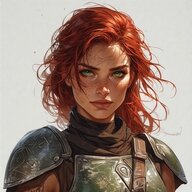
 Xasin Dyst
, whose personal understanding of the Force existed alongside his identity as a Mandalorian and member of the clan. His spiritual practices represented one tradition within Clan Dyst rather than the beliefs of the community as a whole. This distinction would become particularly important as Xasin's own experiences brought her into contact with the wider galaxy.
Xasin Dyst
, whose personal understanding of the Force existed alongside his identity as a Mandalorian and member of the clan. His spiritual practices represented one tradition within Clan Dyst rather than the beliefs of the community as a whole. This distinction would become particularly important as Xasin's own experiences brought her into contact with the wider galaxy.Generations of Upheaval
Concordia's proximity to Mandalore ensured that even its most isolated communities could never entirely escape the consequences of galactic conflict. Wars, political realignments, and the rise and fall of successive Mandalorian powers periodically disrupted trade, travel, and communication throughout the system. Clan Dyst responded to these periods by strengthening its stores, maintaining defensive preparations, and limiting unnecessary exposure to external disputes.
Its warriors occasionally answered calls to defend Mandalorian interests, but the clan rarely sought prominence in the political struggles of larger houses. The devastation inflicted upon Mandalore during the Sith Empire's campaigns reinforced the Dyst belief that even the strongest civilizations could be brought low when their foundations were neglected.
Although their remote settlement did not possess the resources to alter the course of those conflicts, its members contributed where they could while prioritizing the survival of their own community. The clan's longstanding preference for independence became both an advantage and a limitation. Isolation helped preserve its traditions, but also reduced its ability to influence events that would eventually affect all Mandalorians.
The Planeshift and the New Empire
The Planeshift Calamity and the political upheaval surrounding the emergence of the modern Mandalorian Empire marked another turning point in the clan's history. As the ancestral worlds were reclaimed and Mandalore underwent restoration, the scattered Mandalorian clans found themselves presented with new opportunities and obligations.
For Clan Dyst, the Empire's rise offered the promise of greater security and renewed cultural unity. Yet its expanding military, commercial, and industrial ambitions also raised questions about how a small naturalist community would preserve its independence within a growing galactic power. The clan ultimately recognized the Mandalorian Empire as the legitimate political authority of its people.
Its members remained committed to the broader Mandalorian identity and accepted the responsibilities that accompanied that allegiance. However, they did not abandon their preference for local autonomy or their conviction that prosperity should not come at the expense of future generations. Where the Empire sought strength through expansion, industry, and military supremacy, Clan Dyst continued to emphasize endurance, restraint, and stewardship. These perspectives were not necessarily incompatible, but neither were they always comfortable companions.
The Present — Branches Beyond Concordia
In the present era, Clan Dyst remains a small and relatively obscure community within the Mandalorian Empire. Its ancestral settlement continues to function as the center of clan life, supported by generations of accumulated knowledge, carefully maintained infrastructure, and a culture of shared responsibility. Younger members increasingly encounter opportunities beyond Concordia. Military service, trade, exploration, and contact with other Mandalorian communities have begun to challenge assumptions that once went largely unquestioned.
Some believe the clan should contribute more openly to the Empire's ambitions, demonstrating that naturalist values can coexist with technological progress and galactic influence. Others fear that greater involvement will gradually erode the independence and traditions that have sustained their people for generations.
For now, the clan continues much as it has for generations. Its smiths work their forges. Its hunters walk familiar trails. Its children learn the names of trees and the handling of weapons. Its warriors maintain their armor, and its elders preserve the stories of those who came before. The galaxy may change around them, but the people of Clan Dyst remain determined that their roots will endure.
"A tree without roots will fall. A people without purpose will follow."