

Well-Known Viceroy




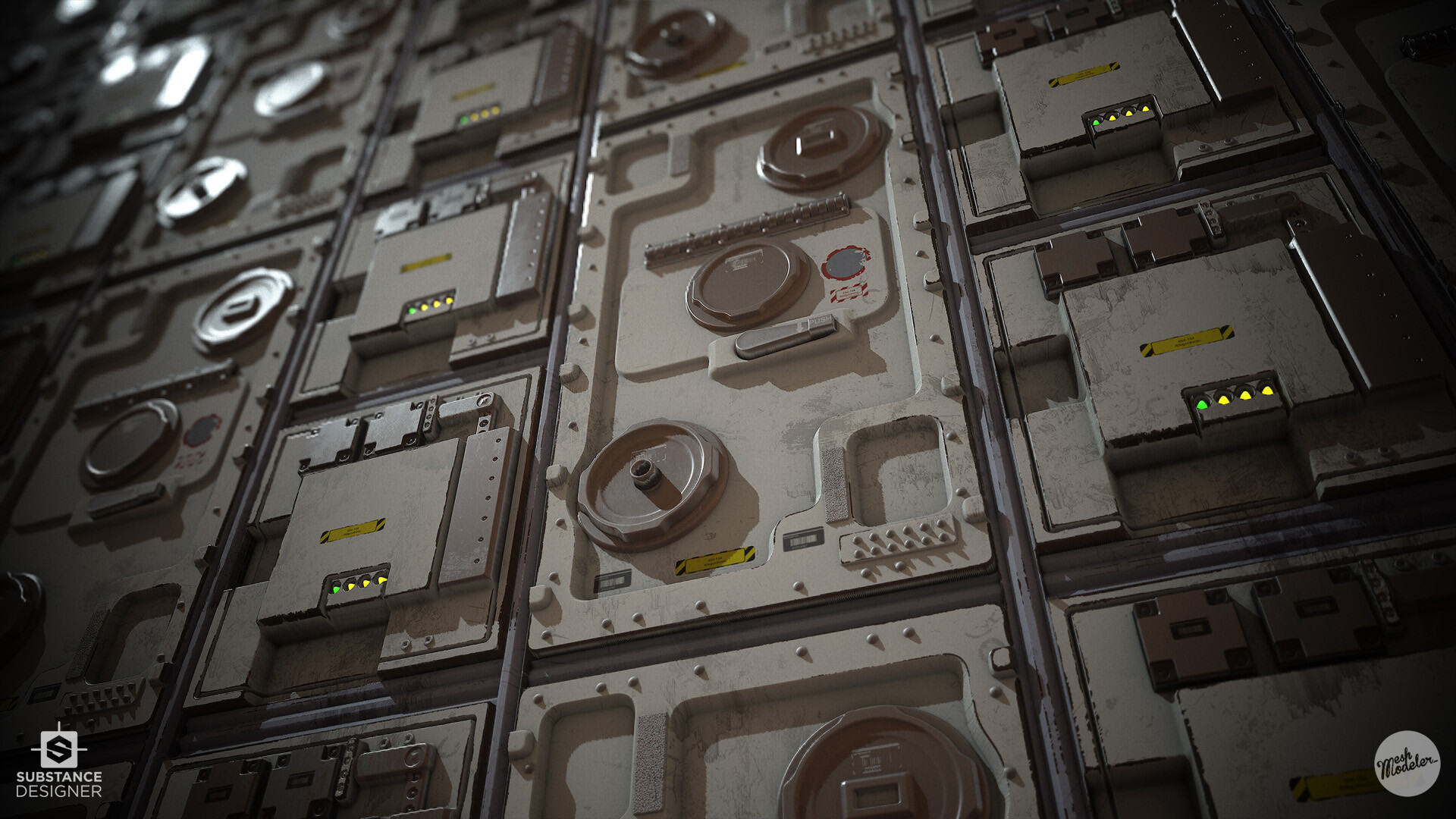
CCEM-class Multi-Functional Module System

- Intent: To create a unified strategic systems module that consolidates navigation, targeting, logistics, reconnaissance, maintenance, and fleet coordination into a single mass-producible architecture.
- Image Source: Artstation - Space Station Storage
- Canon Link: Not Applicable
- Permissions: Not Applicable
- Primary Source: Navigation Computer | Targeting Computer | Universal Computer Interface | HoloNet | Datanet | Syliure-45 Hyperdrive Module | L3-37 Customized Droid

- Manufacturer: The Trade Federation |:| 900 ABY
- Affiliation: The Trade Federation |:| 900 ABY | The Closed Market
- Market Status: Closed-Market
- Model: CCEM-class Multi-Functional Module System
- Modularity: Extensive Modification Program Installed. The module is designed around standardized universal computer interfaces and can be integrated into starfighters, ground vehicles, walkers, gunships, transports, corvettes, frigates, capital ships, stations, and industrial facilities.
- Production: Mass-Produced
- Material: Reinforced Durasteel | Laminanium signal shielding | High-density Processor Matrices | Crystal memory banks and Gabonna Memory Crystal improvements | Universal computer interface arrays | Military-grade communications hardware | combat de-ionizer(s), Ionization Buffer | Myoflex Heat Sinks

- Navigation Core: Provides continuous hyperspace calculation support using integrated navicomputer systems
- Targeting Core: Enhances fire-control accuracy through advanced targeting computation and predictive tracking
- Universal Interface Matrix: Allows seamless integration with virtually any shipboard or vehicular computer system
- Battlenet Coordination Relay: Links multiple units into a shared tactical data network for real-time battlefield awareness
- Sensor Fusion Engine: Combines all incoming sensor data into a unified operational picture.
- Logistics Processing Suite: Tracks supplies, maintenance cycles, and operational readiness across connected assets
- Reconnaissance Analysis Unit: Interprets and distributes scouting and sensor intelligence in real time
- Maintenance Diagnostics Module: Predicts system failures and provides automated repair prioritization data
- HoloNet / Datanet Transceiver: Enables long-range communication and localized mesh networking across fleets
- Autonomous Assistance Kernel: Provides limited automated piloting suggestions and emergency response protocols

- Unified Command Architecture: Replaces multiple independent support modules with a single coordinated system.
- Fleetwide Coordination: Enables real-time synchronization of sensor data, targeting solutions, and tactical updates across all linked assets.
- Operational Efficiency: Reduces crew workload by automating analysis, diagnostics, and battlefield data processing.
- High Compatibility: Designed around standardized interfaces for rapid integration into existing hardware.

- Electronic Warfare Dependency: Performance degrades significantly under heavy jamming or signal disruption.
- No Direct Combat Power: Does not enhance shields, weapons, or propulsion systems directly.
- Infrastructure Reliance: Full capability requires connected fleet assets and functioning data networks.
- Processing Bottlenecks: Performance can degrade in extremely large fleet clusters without dedicated relay vessels.
- Training Requirement: Operators must be trained to interpret and exploit system outputs effectively.

The CCEM-class Multi-Functional Module System is a unified systems coordination module designed to replace multiple specialized support units with a single integrated architecture. Built around existing navicomputer, targeting, and communications technologies, it functions as a centralized battlefield processor that fuses navigation, combat data, logistics, and sensor input into a shared operational picture.
The system's greatest advantage lies in its ability to eliminate informational fragmentation. Rather than each vessel operating on isolated data streams, the Module System ensures that every unit contributes to and benefits from a shared understanding of the battlefield. This significantly improves reaction time, coordination efficiency, and tactical coherence across large formations.
However, the module's effectiveness is inherently tied to the integrity of its communications environment. In contested electronic warfare conditions or regions of heavy signal disruption, its capabilities degrade proportionally, forcing individual vessels to revert to localized processing.
Out Of Character Info
Intent:
Make a new product
Permissions:
N/A
Technical Information
Affiliation:
The Trade Federation
Modular:
Yes
Material:
Reinforced Durasteel | Laminanium signal shielding | High-density Processor Matrices | Crystal memory banks | Universal computer interface arrays | Military-grade communications hardware | combat de-ionizer(s), Ionization Buffer | Myoflex Heat Sinks
Last edited: