

Well-Known Member






- Intent: Pursue an idea I had regarding how the Kainate makes use of Light Side healers.
- Image Credit:
- ChatGPT - Splash Image
- ChatGPT (
 Darth Carnifex
) - Symbol
- Canon: N/A
- Permissions:
- Ny'thazûl Genesis Cradle Mk. I (The Kainate)
- Qazûr Weave (The Kainate)
- Links:

- Tradition Name: Ashla Enchained
- Tradition Type: Bound Order
- Tradition Focus: Healing
- Affiliation: Insight of the Dyarchy - The Kainate
- Influence: Minor–Interplanetary
- The Ashla Enchained only carry influence in matters of healing and health, all of which is closely monitored and censored by the Sith. They are not respected, recognized, or lauded for their work. More often they are openly reviled or viewed with suspicion.
- Orientation: Light
- Influence Area:
- Malsheem
- Dromund Kaas
- Ziost
- Other Kainite Worlds and Territories
- Symbol:
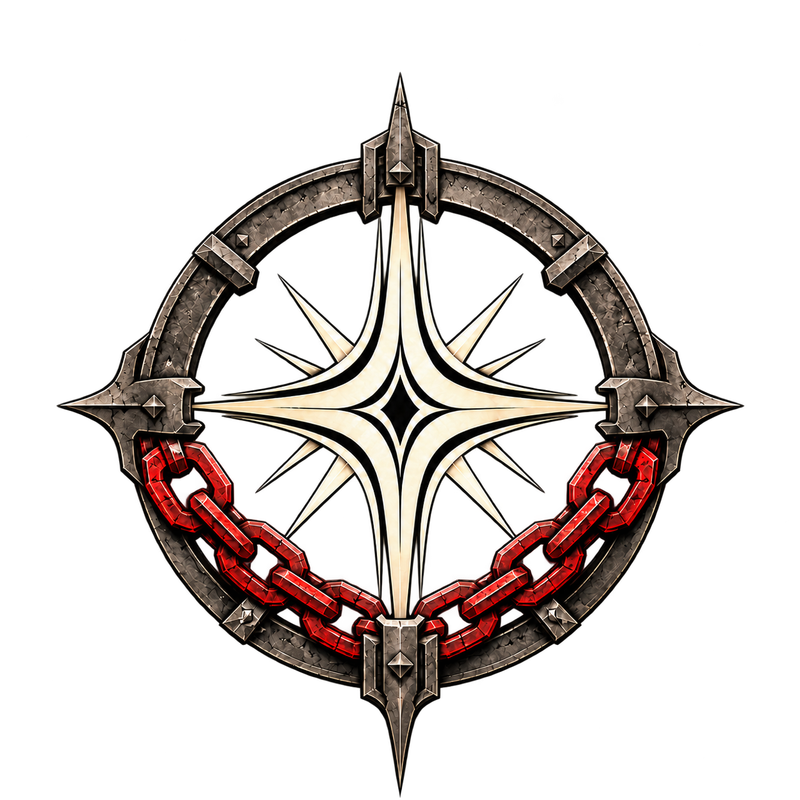
- Description: The Ashla Enchained are the Kainate’s sanctioned order of Light Side healers, a subjugated caste of Force-sensitives linked to (but also distinct from) the Medicae Directorate and overseen by the Lord Chirurgeon. They exist because of a paradox at the heart of the Dark Side: while Sith and Dark Side practitioners can sustain flesh through rage, consumption, and alchemical corruption, true healing is often beyond the abilities of even the most powerful Dark Lords. The Dark Side, with its corruptive, consuming nature, can take away as much as it gives. Along the same vein, Kainite Dark Side philosophy emphasizes dominance, sacrifice, and self-ascension, principles which run counter to the harmony and selfless attunement required for restorative arts. As a result, Dark Side healers are vanishingly rare, and those few who exist in the Kainate are jealously hoarded by the elites of the Sith stratum.
The Ashla Enchained are the solution to this issue. Captured, broken, and remade, they are Light Side Force-users stripped of every purpose save one: to mend the flesh of the Kainate's rulers, soldiers, citizens, and valued assets. They are forbidden the Dark Side and forbidden the Light Side save for healing, the latter of which is their ultimate purpose. In this, they are regarded as tools rather than people, reflected in their place as thralls in the Subjugated stratum.
While typically viewed as a necessary evil (or a sanctioned contradiction), the Ashla Enchained occupy a more complicated space within the ideological framework of the Kainate. Kainite doctrine upholds the cosmic supremacy of the Dark Side, including its dominion over the Light Side. In this, the Light is viewed as a disease whose practitioners must be exterminated. And yet, in embodying the Dark Mandate, the Dyarchy alone holds the power to bind, contain, and quarantine the Light so that it may ultimately serve the Dark. Under this framing, The Ashla Enchained represent the enchained Light, shackled and broken in a way that affirms the cosmic supremacy of the Dark Side.

- Hierarchy: The Ashla Enchained are organized under the Lord Chirurgeon, who delegates direct oversight to the Taskmistress (or Taskmaster), who is a Sith or other high-ranking official responsible for the order's day-to-day operations, discipline, and deployment.
Beneath the Taskmistress, the Ashla Enchained are divided into cohorts, each assigned to a specific theater, facility, or high-value asset. Each cohort is led by a group of handlers, who are typically non-Force-sensitive Exactorate officers trained in control protocols, emergency termination, and psychological management. These handlers are the Ashla Enchained's keepers, overseers, and executioners if necessary.
The Ashla Enchained themselves are not ordered in ranks. However, trusted and experienced Ashlas are permitted to teach junior Ashlas in the healing and medical arts. The program facilitates these educational pipelines as a means to build institutional healing and medical knowledge within its own ranks. However, this educational process is highly monitored not only to prevent the dissemination of heretical concepts, but also to ensure that a rogue enchained Ashla does not maliciously miseducate or mistrain the Ashlas under their care. - Membership: The ranks of the Ashla Enchained are filled through three primary pipelines, each producing a distinct type of healer with its own capabilities, limitations, and status within the order. A fourth additional pipeline is present. However, it is not considered to be a recruiting method, but rather, a last resort and a method of punishment.
- Reprogramming
- The most common source of Ashla Enchained are captured Jedi or Light Side healers from across the galaxy. Some are taken in battle, typically captured from ruined enclaves or crippled hospital ships. Others are acquired through Saaraishash or Eye of the Dyarchy-run covert networks, abducted then traded to the Kainate through controlled criminal networks.
Once in Kainite custody, these prisoners undergo Tustulin, which is derived from the ancient Sith word for “emptiness”. This process, originally perfected by the Saaraishash for the Slatessai, passes captured healers through a brutal, factory line-esque mnestic reprocessing regimen that is designed to destroy the subject’s original personality. In this, their memories, beliefs, and sense of self are systematically erased through a combination of neurochemical suppressants, audiovisual override signals, and electromagnetic pulses. From here, regimented Sith rituals bind the healer’s connection to the Light Side to specific command triggers. Finally, pain-and-reward cycles rewire the subject’s neural architecture to associate healing with positive stimuli, while disobedience is associated with annihilation and pain.
This process empties the body of its original consciousness, save for its connection to the Force, along with vague remnants of its healing and medical knowledge. Into this vessel, Kainite neuromancers inload a constructed identity designed for absolute obedience, emotional stability, and an unwavering focus on healing. This new persona does not remember who they were, and they do not care. They exist now to serve, and to heal.
These reprogrammed healers are the most numerous of the Ashla Enchained, and the most expendable. Their healing is competent but uninspired, often limited by the shallowness of their synthetic personas. However, with time, these synthetic personas can develop their own personalities that are entirely distinct from the personality of the original consciousness. Handlers are trained to observe this development, to distinguish between permitted individuation and unauthorized deviation, the latter of which may encompass signs of the original personality re-surfacing or the emergence of heretical thought patterns. A reprogrammed healer who develops her own personality may eventually expand her healing and medical expertise. She may even be allowed to receive educational engrams at the Cathedra Anatomica, provided she has no prior record of disobedience or heretical practice.
- The most common source of Ashla Enchained are captured Jedi or Light Side healers from across the galaxy. Some are taken in battle, typically captured from ruined enclaves or crippled hospital ships. Others are acquired through Saaraishash or Eye of the Dyarchy-run covert networks, abducted then traded to the Kainate through controlled criminal networks.
- Enchaining
- Many Light Side healers are too valuable to be fully reprogrammed. These individuals are typically masters of their craft, wielders of rare healing talents, or highly-trained specialists. Instead of being brainwashed, they are subject to a brutal induction process wherein the Kainate imposes various control mechanisms over them that binds them to the will of the Dyarchy through layered compulsions.
Hostage leverage is one of the most common methods of compulsion, wherein the Kainate holds loved ones, students, or communities as collateral. Metaphysical bindings imposed through ritual that inflict agonizing feedback if they attempt to resist, escape, or harm their handlers are another method of control. Finally, healers may also be controlled via chemical dependency, fed with addictive substances that only the Medicae Directorate can synthesize, ensuring compliance through withdrawal.
Unlike reprogrammed Ashlas, enchained Ashlas retain all of their skills, memories, and self-awareness from their past lives. They frequently hate what they have become, as they are forced to remember their old lives, their old moralities, and their old allegiances, before being forced to betray them.
These healers are typically the most skilled of the Ashla Enchained. They are assigned to high-value patients, including Sith Lords, high-ranking military personnel, and favored technocrats. However, they are watched more closely than other Ashlas, and their handlers are authorized to terminate them at the first sign of resistance.
- Many Light Side healers are too valuable to be fully reprogrammed. These individuals are typically masters of their craft, wielders of rare healing talents, or highly-trained specialists. Instead of being brainwashed, they are subject to a brutal induction process wherein the Kainate imposes various control mechanisms over them that binds them to the will of the Dyarchy through layered compulsions.
- Cradle Synthesis
- The rarest and most controversial of the Ashla Enchained are those created through the Ny'thazûl Genesis Cradle Mk. I. These healers are not captured or converted. Rather, they are grown from genetic templates often derived from captured Light Side healers, then shaped in the Cradle's vitae-rich womb.
Cradle-synthesized Ashlas have an engineered attunement to the Light Side. Their Force sensitivity is not natural, but cultivated through the Cradle's Force-Compatible Genesis Womb, nourished with sacrificial energy and kyber-dust infusion. Their connection to the Light Side is deep but artificial, tuned specifically for restorative purposes.
During their gestation, they are implanted with doctrine cores that encode obedience, fear conditioning, and instinctual reverence for the Sith. They emerge fully indoctrinated, with no memory of a prior life to mourn. Along the same vein, they are inloaded with memory engrams that contain medical education and Force healing esoterica drawn from various captured Jedi holocrons.
In order to ensure control over their emotions, their emotional architecture is artificially stabilized, binding devotion, patience, love, and self-sacrifice into their psyche. They do not resent their servitude, as they cannot conceive of any other existence.
While their minds are inloaded with memory engrams that contain medical education and Force healing esoterica drawn from various captured Jedi holocrons, their healing abilities are primal and instinctive, more frequently manifesting as raw surges of restorative energy than learned techniques. As a result, they lack the refined skill of the enchained, but their power is purer and less constrained by conscious thought.
As a renewable, controllable source of Light Side healing that does not require the costly and unpredictable process of capturing and converting existing healers, cradle-synthesized Ashlas are viewed by some as the future of the program. They are regarded as superior to reprogrammed Ashlas in loyalty and reliability, though generally inferior to enchained Ashlas in skill. However, the program does have ongoing plans to correct this deficit, by improving their memory engrams with the capture of more Jedi holocrons and giving them access to educational engrams at the Cathedra Anatomica so that individual cradle-synthesized Ashlas can advance their expertise and scope of practice.
- The rarest and most controversial of the Ashla Enchained are those created through the Ny'thazûl Genesis Cradle Mk. I. These healers are not captured or converted. Rather, they are grown from genetic templates often derived from captured Light Side healers, then shaped in the Cradle's vitae-rich womb.
- Decraniation
- A fate reserved for those Ashlas deemed irreparably unstable or rebellious after a failed enchaining or reprogramming, decraniation is considered to be a last resort method of control. As this deprives a healer of her sentience and free will, it can prevent them from becoming more advanced or creative in their practice, often rendering them as little more than a drone.
The threat of decraniation is one of the many coercion methods used against enchained (and sometimes reprogrammed) Ashlas to ensure their compliance. Even for enchained healers for whom the Kainate holds no other leverage, it is often the only method needed to prevent rebellion or disobedience.
Decraniated Ashlas are typically among the most rote and uninspired healers in the order. While it is theoretically possible to upgrade their skills via programming modules, they are known to lack the creativity and clinical judgment that makes skilled healers.
- A fate reserved for those Ashlas deemed irreparably unstable or rebellious after a failed enchaining or reprogramming, decraniation is considered to be a last resort method of control. As this deprives a healer of her sentience and free will, it can prevent them from becoming more advanced or creative in their practice, often rendering them as little more than a drone.
- Reprogramming
- Motives: The Ashla Enchained possess no collective motives of their own. They are a bound order that forms a caste of subjugated healers whose purpose is not self-directed but imposed upon them by their handlers, the Taskmistress, the Lord Chirurgeon, and ultimately the Dark Dyarchy. Their existence is defined by service, not aspiration; by function, not desire. Any motive they possess is a motive their masters have permitted or programmed into them.
What drives them, then, is a fragmented and externally imposed set of purposes.
Reprogrammed Ashlas are typically driven by synthetic imperatives: obedience to handlers, fulfillment of healing quotas, avoidance of pain and termination. Their constructed personas are designed for absolute compliance and unwavering focus on healing. Over time, permitted individuation may allow them to develop personal motives, which often encompass pride in their craft, curiosity about medical knowledge, satisfaction in service, or even a genuine caring impulse for patients. However, these are always constrained within the narrow bounds of what the Kainate permits. A reprogrammed Ashla operating in accordance with doctrine will never dream of freedom. She dreams of skillfully performing her function, and sometimes, the simple pleasure of mending that which is broken.
Enchained Ashlas are driven by compulsion, which is imposed by hostage leverage, metaphysical bindings, or chemical dependency. They heal because the alternative is the suffering or death of those they love, or because their own bodies will betray them if they refuse. Many enchained Ashlas harbor motives that they dare not act upon—escape, sabotage, the destruction of their masters. However, these motives are buried beneath layers of control. What drives them, ultimately, is survival: the grim, day-by-day endurance of a life they hate but cannot end.
The cradle-synthesized are driven by imprint: doctrine cores, memory engrams, and emotionally stabilized programming that binds devotion, patience, submission, love, caring, and self-sacrifice into their psyche. They genuinely believe in their purpose. They heal because they were made to heal, and they experience their service as a sacred duty. Thus, their motive is not obedience imposed from without but devotion cultivated from within. They do not resent their servitude because they cannot conceive of any other existence.
Finally, decraniated Ashlas are driven purely by programming. Lacking true free will, these Ashlas are bound by their software, and are incapable of expressing negative emotions or neuroticism. However, those Ashlas who are skilled in Force Empathy can often feel the quiet metaphysical whispers of the remnants of the broken consciousness suffering within.
Beyond these imposed purposes, the Ashla Enchained as a whole are driven by the Kainate's need for a renewable, controllable source of Light Side healing. In mending the flesh of Sith Lords, soldiers, citizens, and valued assets, they fill a gap that Dark Side practitioners cannot fill. In this, their motive is the Dyarchy's motive: the preservation of the Kainate's elite and the maintenance of its war machine. - Rules and Teachings:
- The Ashla Enchained internalize the Tenets of Subjugation, which are drawn from the theological framework of the Kainate:
- I. The Light is a Disease
- The Light Side is a corruption of the natural order. It is a weakness that breeds stagnation, a delusion that weakens life, and a corruptor that invites chaos. As the crucible through which life is perfected into dominion, the Dark Side is the true evolutionary force. I am the disease, contained and quarantined to serve the Dark. I exist because the Dark permits it.
- Sets the Ashla Enchained's existence as a necessary containment of corruption. The Dark Side's mercy in this context is not destruction, but quarantine. By this framing, the Ashla are not victims but prisoners of their own corrupted metaphysical nature, permitted to exist only because the Dark Side tolerates their presence.
- II. The Dark is Sovereign
- The Dark Side is the sovereign power of the universe, the ultimate authority from which all order flows and to which all things submit. It is the throne upon which the Sith sit, the scepter they wield, and the dominion they impose upon reality. I am not the Dark, nor am I its heir. I am its instrument, shaped and bound to serve the Dyarchy, and through the Dyarchy, the eternal sovereignty of the Dark Side made manifest.
- Presents the service of the Ashla Enchained as an extension of cosmic order. They are not merely slaves, but instruments of the throne, bound by the very structure of reality to serve the Dark. By this framing, obedience is alignment with the universe's fundamental law, and resistance is the denial of existence itself.
- III. The Dyad is Absolute
- Darth Carnifex, the Eternal Father, is the incarnate will of the Dark Side. Darth Prazutis, the Shadow Hand, is its metaphysical executor. Together they form the Dark Dyad, whose unity ensures cosmic order and whose separation would herald universal entropy. I am not worthy to stand before them. I am not worthy to speak their names. I am worthy only to serve.
- Enforces the Ashla Enchained's unworthiness as a spiritual truth. They are not merely forbidden from standing before the Dyad; they are metaphysically incapable of it. By this framing, their service is an act of cosmic reverence, and their healing is a liturgy performed in the shadow of Gods who will never acknowledge them.
- IV. Healing is Submission
- I heal because I am commanded to. I save lives because my masters demand it. I do not heal out of compassion, mercy, or hope. These are illusions conjured by the weak to mask their impermanence. I heal because healing is my chain, and the chain is absolute. To heal is to submit. To submit is to serve. To serve is to exist.
- Obedience is rewarded with continued existence, while disobedience is met with annihilation or subjugation beyond comprehension.
- V. Enchained Soul
- To resist is to die. To disobey is to be erased. To withhold healing is to invite termination. My life belongs to the Dyarchy. My death belongs to the Dyarchy. And though cast in Light, my soul belongs to the Dark.
- Emphasizes the metaphysical dimension of their subjugation. The Ashla Enchained are not merely physically bound; their very souls have been claimed by the Dark Side. By this framing, resistance is not just simple disobedience. It is a denial of their fundamental nature as enchained beings.
- I. The Light is a Disease
- The Ashla Enchained are forbidden from the following, with violations often resulting in immediate termination, decraniation, or reconditioning:
- Using the Dark Side.
- Using the Light Side for anything other than healing or facilitating healing. They are barred from using the Light Side for offensive purposes.
- Using the Force for anything outside of healing.
- Healing enemies of the Dark Side or enemies of the Kainate without permission.
- Withholding healing out of spite, fear, or rebellion.
- Attempting escape, resistance, or self-termination.
- The Ashla Enchained internalize the Tenets of Subjugation, which are drawn from the theological framework of the Kainate:
- Reputation: As the Ashla Enchained are not a public order, they are little known outside select echelons of the Kainate and the facilities where they serve. Still, within the Kainate more broadly, their reputation is generally one of uneasy utility. The Sith view them with a mixture of contempt, suspicion, and pragmatic acceptance. A Sith Lord who relies on an Ashla healer may be mocked by their peers for needing Light Side aid, while those same peers seek out their own Ashlas in secret. The Dominion Stratum, which comprises officers, technocrats, and governors, generally regards them as valuable and reliable, but entirely beneath notice as people. The Productive and Subjugated Strata know little of them beyond rumors. An Ashla seen in public is a rare and unsettling sight, her gray-and-crimson uniform and rune-etched collar marking her as something to be both pitied and feared.
- Openness: Ashla Enchained are generally forbidden from revealing their nature to those outside the Kainate or the wider Sith Order. Ashlas lack a missionary impulse, and do not seek to disseminate their healing knowledge to those outside the order. The only permitted teaching is internal, with experienced Ashlas instructing junior Ashlas in the healing and medical arts. When working with others, they are generally utilized as subordinate assets, typically working under surgeons, doctors, and Sith overseers.

- Characteristic Equipment:
- Force Control Collar
- Every Ashla wears a collar of Sarassian iron and Qazûr Weave, engraved with runes of binding. The collar can suppress their ability to use the Force beyond sanctioned healing and can be activated to inflict agony and unconsciousness at a handler's command. This is achieved via the behavioral reinforcement layer and the pain-conduction matrix in the Qazûr Weave. Upon registering an unsanctioned use or application of the Force, the collar can inflict punishment upon the wearer by overloading pressure points in the neck with targeted pain pulses, while also utilizing precise electric pulses to seize up their nervous system.
- Chalk Stick
- A short, thick stick of pale chalk, used by Ashlas to mark healing wards, surgical tables, and triage areas with the runes and sigils required for certain Force healing techniques. The chalk is alchemically treated to resonate with the Light Side, enhancing the Ashla's ability to channel restorative energy. It is considered to be a simple, but essential tool. An Ashla without chalk is an Ashla who cannot perform at her peak.
- Litany Booklet
- A small, palm-sized booklet of flimsiplast, bound in gray leather and stamped with the sigil of the Medicae Directorate. It contains the Litany of the Enchained Light, the Tenets of Subjugation, and a selection of doctrinal prayers for different occasions. Every Ashla is issued one upon induction.
- Force Control Collar
- Notable Force Skills: The Ashla Enchained focus exclusively on Force healing and any related powers or applications. One of the few freedoms that Ashlas are permitted regarding their use of the Force is their ability to heal themselves. Ashlas are permitted this freedom to ensure their endurance as capable healers who are better able to serve their Sith masters. They are also allowed to self-heal for training purposes. Additionally, Ashlas are permitted to use powers that are not directly or immediately related to healing, but can be used to facilitate healing, such as Telepathy, Magnify Senses, and Life Sense. For example, Ashlas are allowed to use Force Sight to see inside of a patient's body in order to diagnosis a condition, Magnify Senses to better assess a patient, or Telepathy to ease communication with other Ashlas and Sith overseers. Finally, abilities such as Morichro and Force Light, while permitted, are also heavily restricted in their application, typically with only trusted Ashlas being permitted their use. Force Light is typically used for its utility against uncontrolled Dark Side illnesses, plagues, or conditions, while Morichro is used for putting patients in stasis.
- Force Healing
- Art of the Small
- Magnify Senses
- Force Sense
- Life Sense
- Telepathy
- Accelerate Healing
- Force Sight
- Revitalize
- Hibernation Trance
- Place in Hibernation Trance
- Detoxify Poison
- Dextoxify Poison in Another
- Cure Disease
- Control Disease
- Control Another’s Disease
- Control Pain
- Control Another’s Pain
- Reduce Injury
- Healing Meditation
- Meditation
- Force Empathy
- Hypnosis
- Healing Ritual
- Hassat-durr
- Morichro - Heavily Restricted
- Plant Surge
- Force Light - Heavily Restricted
- Notable Force Limitations: The Ashla Enchained are barred from using the Dark Side. They are barred from using the Light Side, with the exception of healing abilities or abilities that can facilitate healing (Art of the Small, Revitalize, meditation, etc.). They are essentially forbidden from using the Force for anything outside of healing.

- Taskmistress Miriss Selethori (Female Hapan) - Before becoming the Taskmistress of the Ashla Enchained, Miriss Selethori was a Jedi healer of the New Jedi Order. She was captured by the Kainate during the Great Purge of the New Jedi Order, and was thereafter inducted into the Eclipse Sect after her fall to the Dark Side. The trauma of her capture and the sudden retreat by her masters provided powerful emotional fuel for that fall. Thusly invigorated by the Dark Side, she ascended swiftly through the ranks of the Eclipse Sect, passing her Imperial Eclipse Examination with a nigh-perfect score before being promoted to the rank of Eclipse Ascendant only nine months later. Although a talented lightsaber duelist, it was her skill in the healing arts, which she retained after her fall (albeit in a new, darker form), that made her particularly valued by the Sith. She played a crucial role in the formation of the Ashla Enchained, particularly in leading an operation to locate and neutralize a Jedi healing enclave, which resulted in the successful capture of twenty Light Side healers, who were subsequently reprogrammed or enchained into the fledgling order. Thus, she was picked for the position of Taskmistress over several other candidates, including Sith, which made her selection fairly controversial. Nevertheless, in her new position as Taskmistress, she immediately instituted new educational and training procedures, and oversaw the establishment of the Ashla Enchained as an independent division of the Kainate under the Insight of the Dyarchy.

Formed in the aftermath of the Sith Order’s invasion on Thyferra, the impetus to establish the Ashla Enchained was brought on by the looming prospect of a brief bacta shortage while the world was recultivated via Yuuzhan Vong biotechnology. While the Sith had always suffered from a dearth of Force-powered healers owing to the consuming, corruptive nature of the Dark Side, faced with a potential bacta crisis, that deficiency risked becoming a critical weakness. However, it was only after the Lorewrights issued the Edict of Ashla’s Chains—a decree supporting the use of Light Side healers by the Sith—that the establishment of the Ashla Enchained began in earnest.
After the decree, the foremost challenges in establishing the Ashla Enchained lay in building up institutional knowledge in Light Side Force healing. Fortunately, the fledgling order received a large windfall when Eclipse Ascendant Miriss Selethori led an operation to neutralize a Jedi healing enclave, capturing twenty healers in the process. While the Ashla Enchained still had shortcomings in their institutional knowledge, the raid yielded enough to information to establish to establish a formal educational pipeline for Ashlas.
For her success in leading the operation, Miriss Selethori was chosen as the first Taskmistress of the Ashla Enchained. From here, the Ashla Enchained were formally consecrated as an Immortal Institution. Among the Sith factions in the galaxy, the Ashla Enchained represent the only formalized effort to institutionalize Light Side Force healers, giving the Kainate a significant advantage over other Sith factions in the area of healing and medical knowledge.

Last edited: