

Well-Known Viceroy




T E M E R U R I A N S


- Intent: To introduce a genetically engineered Human offshoot designed for disciplined service, psychological resilience, and resistance to mental coercion that serve Imperial Factions such as the Tarkin Initiative
- Image Credit: Pinterest Only Source
- Canon: Not Applicable
- Permissions: Not Applicable
- Links: Tarkin Initiative | The Trade Federation |:| 900 ABY | Ailon Nova Guard | Mandalorians | Sun Guard

- Name: Temerurians
- Designation: Sentients
- Origins: Laboratory owned by the The Trade Federation |:| 900 ABY
- Average Lifespan: 70–90 standard years biologically
- Estimated Population: Inter-Planetary
- Description:
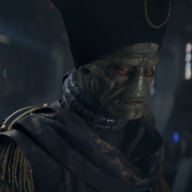
- Temerurians are a laboratory-developed Human sub-population engineered for loyalty, mental stability, and battlefield reliability. While biologically Human, their neurochemistry, stress responses, and social conditioning were deliberately modified to produce individuals who are difficult to intimidate, resistant to psychological manipulation, and highly cooperative within hierarchical command structures.
Their defining trait is their unusual resistance to intrusive mental influence. They are not immune to the Force, interrogation drugs, or emotional pressure, but their altered neural pathways make such methods less reliable and often slower to take effect. This makes them valuable in intelligence, security, and frontline operations where ordinary troops might falter.
Culturally, Temerurians view themselves less as a people and more as a function. Their identity revolves around service, discipline, and usefulness. Those who can no longer contribute physically are often reassigned or quietly exiled, reinforcing a harsh societal emphasis on productivity over sentiment.
- Temerurians are a laboratory-developed Human sub-population engineered for loyalty, mental stability, and battlefield reliability. While biologically Human, their neurochemistry, stress responses, and social conditioning were deliberately modified to produce individuals who are difficult to intimidate, resistant to psychological manipulation, and highly cooperative within hierarchical command structures.

- Breathes: Type I to Type II Atmosphere
- Average Height of Adults: Usually between 1.8 and 2.1 meters
- Average Length of Adults: Not Applicable
- Skin color: Falls within normal Human ranges, though laboratory selection often produces more uniform tones within each generation.
- Hair color: Commonly black, brown, or dark blond, with lighter shades appearing less frequently due to selective breeding stability targets.
- Distinctions:
- Temerurians are outwardly Human but possess subtle engineered refinements. Their bone structure is denser and slightly more impact-resistant, while muscle distribution favors endurance, control, and coordination over sheer bulk. Their nervous systems regulate adrenaline more efficiently, allowing them to remain steady under pressure rather than entering uncontrolled fight-or-flight responses. This neurological stability contributes to their noted resistance to mental intrusion and their exceptional steadiness with precision weapons.
Their reflex conditioning and spatial awareness are particularly pronounced, giving them a reputation for natural aptitude with blades, blasters, and vehicle control systems. While not visibly different at a glance, prolonged observation often reveals their unusually controlled body language, efficient movement patterns, and tendency to conserve motion during physical activity.
Temerurians age similarly to Humans in youth and early adulthood but tend to maintain physical prime longer before declining sharply in later years. Because their culture ties personal worth to capability, visible aging often carries significant social consequences.
- Temerurians are outwardly Human but possess subtle engineered refinements. Their bone structure is denser and slightly more impact-resistant, while muscle distribution favors endurance, control, and coordination over sheer bulk. Their nervous systems regulate adrenaline more efficiently, allowing them to remain steady under pressure rather than entering uncontrolled fight-or-flight responses. This neurological stability contributes to their noted resistance to mental intrusion and their exceptional steadiness with precision weapons.
- Races:
- Because Temerurians were engineered rather than naturally evolved, they do not possess traditional biological races like baseline Humans. Instead, internal divisions emerged through laboratory generation programs and later cultural development.
- Force Sensitivity: Rare

- Resistance to Mental Coercion
Temerurians possess unusually stable neural patterning, making them more resistant to interrogation drugs, intimidation tactics, and Force-based mental influence. While not immune, they are significantly harder to break, distract, or manipulate than baseline Humans. - Exceptional Combat Reliability
Engineered reflex conditioning, emotional regulation, and spatial awareness make Temerurians naturally proficient with weapons and combat systems. They excel with blades, blasters, and vehicle control interfaces, making them highly effective as infantry, security forces, pilots, and disciplined starship crews. - Command Structure Compatibility
Temerurians function extremely well within hierarchical organizations. They show low rates of insubordination, high unit cohesion, and strong adherence to mission objectives even under prolonged stress.

- Rigid Psychological Conditioning
Their engineered stability can also limit adaptability. Temerurians often struggle in situations requiring improvisation outside defined command structures, making them less effective in chaotic, unconventional, or highly political environments. - Cultural Disposability Mindset
Their society's emphasis on usefulness creates internal pressure and reduced long-term morale. Older or injured Temerurians may experience social isolation, lowered self-worth, or voluntary withdrawal from service roles, which can shorten their operational lifespan compared to equally trained Humans. - Limited Force Potential
Their altered neurobiology appears to suppress Force sensitivity in most individuals. While rare exceptions exist, Temerurians are far less likely to produce powerful Force users than baseline Humans.

- Diet:
- Communication:
- Technology Level:
- Religion/Beliefs:
- General Behavior:
They tend to choose partners based on compatibility of function, temperament, and health metrics rather than romantic impulse alone. Many pursue careers tied to security, engineering, navigation, or administration. Temerurians are typically calm in demeanor, slow to anger, and uncomfortable with unnecessary displays of emotion. While not unfriendly, they often appear distant or overly formal to outsiders.

Temerurians were created in a controlled laboratory program operated by the The Trade Federation |:| 900 ABY during the later expansion of its paramilitary and security infrastructure. The initiative was born from repeated operational failures involving unreliable mercenary forces, defecting auxiliaries, and troops vulnerable to bribery, intimidation, or Force manipulation.
Federation strategists sought a solution that combined Human adaptability with engineered psychological reliability. Early prototypes focused primarily on loyalty conditioning, but these attempts proved unstable, producing subjects prone to emotional suppression disorders and unpredictable stress responses.
Subsequent generations shifted toward neurological stability instead of direct behavioral programming. By modifying adrenal regulation, threat processing, and impulse response patterns, the program succeeded in producing individuals who were naturally steady, difficult to panic, and resistant to coercion without requiring heavy-handed indoctrination.
Once viable, Temerurian production expanded into controlled generational batches raised in structured training environments. Over time, these cohorts developed their own internal culture centered on usefulness, discipline, and collective identity.
As their numbers grew, they were distributed across multiple installations and worlds, eventually forming an inter-planetary population embedded within military units, security forces, and administrative systems tied to Imperial-aligned factions such as the Tarkin Initiative.
Though originally intended as tools, Temerurians gradually came to see themselves as a designed people with a clear purpose in maintaining order. Their history is therefore not one of ancient evolution but of deliberate construction, refinement, and deployment a species born not from nature, but from policy, industry, and war.

Last edited: