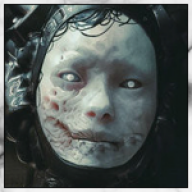

Emberlene's Daughter, The Jedi Generalist



I emptied my tears many moons ago, all hatred, all emotion it matters not. I have immersed myself in the river of the force and forgone my dreams.


GENERAL
NAME: Matsu Ike (called "Snowflake" by Chora)
FACTION: Order of the Silver Jedi
RANK: Jedi Grandmaster
SPECIES: Human (Atrisian)
AGE: 72
GENDER: Female
HEIGHT: 5 feet
WEIGHT: 105 pounds
EYES: Dark, almond-shaped pools that appear almost black at first glance, the color of rich, polished ebony. When the light catches them, a thin rim of molten starlight is visible around the iris a glimmer of her cosmic awareness. They hold a sharp, observant stillness, like deep pools of water in a serene garden.
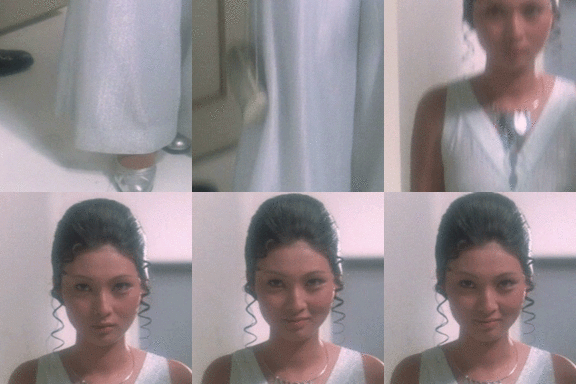
HAIR: A waterfall of jet-black hair, so long it cascades past her ankles. It is pin-straight and meticulously cared for, yet it rarely moves in accordance with local wind; instead, it floats and drifts as if suspended in unseen currents of the Force using art of the small to vibrate the molecules. Tiny glittering kyber beads and delicate bells are woven throughout, catching the light like stars and emitting faint, resonant chimes within the Force.
SKIN: Her complexion is a striking, luminous pearl-white, pale as freshly fallen snow. It is porcelain-smooth.
DISTINGUISHING MARKS:
• Hundreds of tiny scars across her body
• Navel piercing (Ankarres sapphire crystal)
• Upper earlobe piercing (Kaiburr crystal)
• Lower earlobe piercing (Pontite crystal)
• Upper chest piercings (Opila crystals, Echo stones, Enhancement jewels)
• Tongue piercing (Lambent crystal)
FORCE SENSITIVE: Yes
HOMES:
- Hapes (With Hanna)
- Shri-Tal (Unknown Private)
- Coruscant (Lower City)
- Her different Ships
- Kashyyyk (Karrashiuri Temple)
- Sasori 100%
- Ri'ess Regal Drives 1.5%
- Chandrila Datatech 5.7%
STRENGTHS:
Memory: Matsu's memory is vast and near perfect from her families force bloodlineinitially. Like the Starchasers astronavigation of the Halcyon's tutaminis. She retains everything she has ever read, studied, or experienced from ancient Jedi holocrons and Sith scrolls to personal encounters across decades of service. Her time immersed in a primordial Force nexus granted her a cosmic perspective with oneness.
Renewed Vitality: Through sustained Force techniques, Matsu has renewed and preserved her own body as well as Hanna's. While she is chronologically sixty-eight, her physical condition is that of a woman in her prime. This extends to stamina, recovery, and resilience beyond what her age and small frame would suggest.
WEAKNESSES:
A Target of Significance: To those sensitive enough to perceive it, Matsu does not register as an ordinary Jedi. She pulses like a gravitational singularity in the Force. Dark side adepts, Sith spirits, and cosmic entities are drawn to her as a source of immense knowledge and power. She is a living repository of secrets, and her existence alone attracts threats that would otherwise ignore the galaxy's mundane affairs.
The Weight of Knowing: Her perfect memory is not always a gift. She remembers every failure, every death she could not prevent, every student who fell or strayed. These memories do not fade or soften with time. She carries them in full clarity.
The Vessel's Limit: Despite her cosmic awareness, her physical form remains that of a small, five-foot-tall human woman. While she has techniques to compensate, her baseline physical strength and reach are limited..
APPEARANCE
Matsu Ike does not simply stand in a room; she seems to exist everywhere within it, a figure half adrift in the currents of the Living Force. Her mastery of art of the small to alter and vibrate her molecules allowing her to glide through te air and world without disturbing it.
Hair: Her hair is her most iconic and otherworldly feature. It is a torrent of jet-black silk that falls well past her ankles, pin-straight and meticulously cared for. Yet it defies the mundane physics of wind and gravity. Woven into its immense length are countless tiny kyber crystals, cut into glittering beads and delicate bells. They shimmer like a field of captured stars scattered across a night sky, and when she moves, they emit faint, resonant chimes that are felt more as a vibration in the Force than heard as audible sound.
Eyes: Her eyes are dark, almond-shaped pools set within a face of serene composure. At a passing glance, they appear to be the color of rich, polished ebony deep, still, and observant.
Skin: Her complexion is a striking, luminous pearl-white, as pale as freshly fallen snow on the highest peaks of Hoth. It is porcelain-smooth and virtually unblemished, save for the hundreds of tiny, faded scars that crisscross her body remnants of her brutal childhood training on Rhen Var.
Build and Stature: Matsu is diminutive, standing barely five feet tall and weighing little more than a hundred pounds. Her frame is small and delicate, yet there is nothing frail about her. She moves with an economy of motion that speaks of absolute control, and when she is still, she is utterly, unnervingly still a living statue carved from moonlight and resolve. Her posture is one of serene vigilance, as if she is perpetually listening to whispers only she can hear.
Attire: She favors robes of flowing, silvery-white fabric that seem to cling to her form one moment and billow loosely the next, as if the garments themselves are alive and breathing in tandem with her measured respiration. The cloth often merges seamlessly with the mists and atmospheres around her, making it difficult to discern where her robes end and the environment begins. She is frequently barefoot, preferring a direct connection to the ground beneath her when she chooses to touch it, though she is just as often seen floating an inch or two above the surface.
BIOGRAPHY:
The room was under-lit and damp, the air thick with the metallic scent of blood and the stale sweat of exertion. A circle of women, their faces shadowed and grim, surrounded the cot where Oshida strained against the final agonies of labor. Her screams had faded to ragged, animal pants. A rigid-backed woman in the rough-spun garb of a prison orderly lifted a towel-wrapped bundle, wiping the slick of birth from the newborn's face with clinical efficiency before placing the infant gently against Oshida's heaving chest.
"A daughter, Oshida," the orderly said, her voice flat and devoid of warmth. "You have a daughter."
Oshida's eyes, glazed with exhaustion and something far more volatile, found the tiny face. "Matsu," she breathed, the name a sigh of both wonder and dread. "My child…"
Her hand, trembling, rose to touch the baby's cheek. A faint, sickly golden light flickered beneath her palm as she began to speak, her voice dropping to a conspiratorial, venomous whisper.
"You were born innocent, Matsu, but soon your soul will be stained. It started nearly two years ago on Dantooine. Your father and I went there to teach. We didn't know what he had planned." She spat the pronoun like a curse. "A man named Rhoan Jefferies. He wanted to bleed the farmers dry. He spun a tale that the Sith were returning, that for a thousand credits, they could buy an exemption from the local militia pay for someone else to fight in their place. A simple, ugly con."
She paused, her breath hitching as a fresh wave of pain wracked her body. The women around her moved with quiet urgency, but Oshida pressed on, her words driven by a desperate, all-consuming need.
"The credits flowed, but a con needs a scapegoat. Rhoan told them your father was an Alliance agent sent to conscript them all. He worked the crowd into a frenzy. When we arrived… they were waiting." Her voice cracked, a sliver of raw grief piercing the armor of her rage. "They dragged your father and your brother to a shed and murdered them. I was taken by Rhoan. He kept me chained in his ship, bound and gagged by my own sorrow, while he and his crew counted their blood money. The youngest of them… he wanted more than just his share. He took that from me, too. But I learned their names. All of them. Micah Zeeman. Quinn Callahan. Rhoan Jefferies. And Meng Die the viper who laughed while it happened."
Oshida's face, pale and drawn, contorted into a mask of pure hatred. The four names fell from her lips like a litany of damnation.
"When they finished stripping Dantooine bare, they fled to Coruscant and scattered like the vermin they were. Rhoan kept me as his slave. He opened a shop and made certain I understood, every night, what I was to him. What he didn't know was that I had stolen the knife from your brother's back. He didn't realize it until I was staring into his eyes with the blade buried in his spine." A terrible, triumphant smile twisted her lips. "I was caught trying to escape. That's why I'm here. In this hell."
Her gaze, feverish and sharp, fell upon the infant again, and the smile curdled into something sadistic. She had wanted a son a vessel of pure, masculine fury to carry out her will. A daughter was an imperfect tool, but it would have to suffice.
"My daughter," she rasped, her voice gaining a terrifying, prophetic weight. "You were born for my vengeance. A sad fate, but it is yours to bear. You will avenge us your brother, your father, and me. You are nothing more than a Child of the Netherworld."
A collective gasp rippled through the circle of women. One figure, clad not in prison rags but in the crimson armor of an Imperial Knight, stepped forward. Katagiri's voice was sharp with revulsion. "Do not speak such madness, Oshida. She is your child. She is innocent of your poison."
Oshida's head snapped toward Katagiri, her sneer twisting into a grimace of fresh agony. "You thought me a whore when I arrived, didn't you?" she hissed, her words laced with venom. "You all did. A mad queen, spreading her legs for anyone. I saw it in your faces. But my daughter will be my vengeance, or I will find a way back from the grave to carve it out of every last one of you."
A sudden, violent shudder seized her. Oshida screamed, a raw, primal sound, as a cold sweat broke out across her skin. The women surged into action, trying desperately to stem the sudden, catastrophic hemorrhage. Oshida's hand shot out, her fingers digging into the fabric of Katagiri's armor with the desperate strength of the dying. She pulled the Imperial Knight close, her wild eyes boring into Katagiri's.
"Swear to me," she gasped, each word a battle. "Swear you will teach her. Swear you will make her capable of doing what I cannot."
Katagiri, hardened warrior though she was, could not refuse the plea of a soul on the cusp of the void. She gave a single, solemn nod.
Oshida fell back against the thin mattress, her chest heaving, her life pouring out of her onto the grimy sheets. Outside the small, barred window, the perpetual dust cloud of Kessel swirled, its normally pale, chalky hue shifting and darkening to a deep, arterial red. The newborn, Matsu, lifted a tiny, unseeing hand toward the crimson light as if reaching for a promise.
Katagiri stared at the surreal tableau, then lifted the infant into her arms. "What wipes injustice from the world is not pure snow, little Matsu," she murmured, her voice heavy with grim acceptance. "It is the blood-soaked snow of the Netherworld. I will train you. But first, I will discover the truth of these men. And if they are guilty… I will teach you to deliver Justice."
The baby's eyes fluttered closed, the eerie red glow from the window casting a fleeting, sanguine mask across her sleeping face. Later that night, under the cold gaze of distant stars, Katagiri fled the prison world with the child and made her way to the frozen sanctuary of Rhen Var. She climbed the ancient, snow-choked staircase carved into the mountainside, emerging into a vast, silent forest of ice-encrusted trees surrounding a temple where a great bell tolled twelve times in the crystalline air. An old man in a white robe and a stark black hat stood waiting, his gaze colder than the landscape itself.
"Why have you come back, Granddaughter?" he asked, his voice a low rumble.
Katagiri flinched, the old fear still potent. She found her voice, looking down at the bundle in her arms. "The child's mother… on her deathbed, she made me swear to train her. I cannot take her to the Imperial Knights. Please, Grandfather… help me keep this promise."
The old man, Dokai, studied the infant for a long moment. A faint, grim smile touched his lips. It had been many years since he had last had a pupil since his granddaughter had been stolen from his teachings in the dead of night. He said nothing. He simply turned and motioned for them to follow, leading them into the temple's frozen heart and granting them a warm room and a bed.
In time, the silent halls of the temple came alive with a new sound: the soft, determined patter of a small child's bare feet running endless laps through the biting snow, learning to endure the cold long before she ever learned to fight it.
For the next several years, the frozen temple on Rhen Var became the whole of Matsu Ike's world. It was a realm of white and gray, of wind that cut like a vibroblade and a silence so profound it seemed to have a weight of its own. Her days were governed not by the rising and setting of a sun the sky was perpetually a muted, overcast silver but by the tolling of Dokai's great bell and the relentless demands of her two masters.
Katagiri, the Imperial Knight, was the embodiment of disciplined fury. She taught Matsu the way of the blade, the stance and strike of forms both elegant and brutal. But more than technique, she taught endurance. Each morning, regardless of the weather, Matsu was stripped of her thin robes and sent out into the elements. She ran barefoot through snow that numbed her feet to blocks of unfeeling ice. She stood motionless for hours in the driving sleet, learning to quiet the chattering of her own teeth. She was made to spar with weighted wooden swords until her arms screamed and her fingers bled, all while Katagiri circled her like a patient predator, correcting a dropped shoulder or an exposed flank with a sharp crack of her own practice blade.
Dokai, the ancient warrior priest, was her other instructor, and his lessons were of a different, more esoteric nature. He spoke little, preferring to teach through repetition and silent expectation. He would ring his bell at unpredictable hours sometimes in the dead of night and Matsu would be required to rise and present herself in the snow-covered courtyard within a span of sixty heartbeats. Failure meant additional laps, additional hours of kneeling in the biting cold. He taught her to feel the Force not as a gentle current to be guided, but as a raw, elemental power to be endured and, eventually, commanded. He would push against her mind with his own formidable will, forcing her to erect mental barriers as sturdy as the temple's ancient walls.
Throughout it all, the words of her dead mother were never far from her ears. Katagiri, in her own grim way, saw it as a sacred duty to ensure Matsu never forgot the purpose for which she had been forged. The story of Dantooine, of the murdered father and brother, of Rhoan Jefferies and his co-conspirators, was recited to her almost daily. It was a dark catechism, a litany of names and crimes that became as familiar to Matsu as her own heartbeat.
"You have a destiny," Katagiri would intone, her voice devoid of warmth. "Forget joy, forget sorrow, forget love and hate. Forget everything except vengeance."
The mantra was drilled into her until she could recite it in her sleep, until the words lost all meaning and became simply a part of her a cold, hard core at the center of her being. Katagiri, meanwhile, did not merely speak of justice; she sought it. During the rare periods when she left Rhen Var, she traveled the galaxy, following the faint, cold trails of Micah Zeeman, Quinn Callahan, and Meng Die. She was a hunter of truth, determined to verify Oshida's tale before she would allow her ward to become an executioner. Each time she returned, her face was grimmer, her reports more damning. The men were guilty. Vengeance was not just a mother's mad dream; it was a debt owed to the Force itself.
The years passed, and the child who had arrived as a squalling infant grew into a silent, watchful girl with eyes that held a startling, ancient stillness. Her hair grew long, a cascade of jet black that Dokai insisted she learn to braid and manage herself as a discipline of patience. Her body became wiry and strong, hardened by the unforgiving environment. She rarely spoke, communicating more through action and the focused intensity of her gaze. She had learned to suppress pain, to swallow cries before they could escape her lips. She was becoming the instrument Oshida had envisioned.
It was on the morning of her seventh nameday though such celebrations were unknown on Rhen Var that Dokai summoned her for a final test. The great bell in the temple's frozen courtyard tolled three times, its deep resonance vibrating through the ancient stone and the girl's very bones. Katagiri stood off to the side in her crimson armor, a silent, impassive witness.
Matsu knelt in the snow, her thin training robes offering little protection against the biting cold. She did not shiver. She had long since learned to still such involuntary responses. Dokai stood before her, his white robe stark against the gray sky, his black hat casting his weathered face in shadow.
"Tell me, Matsu," he said, his voice as dry and cold as the wind. "As a Child of the Netherworld, what is the first thing you remember?"
Matsu tilted her head up, her face slack but her dark eyes fierce. She remembered a great deal every bruise, every correction, every whispered word of her mother's story. But one memory stood above all others. Her voice, when she spoke, was clear and unwavering, a sharp contrast to the soft, muffled world of snow around her.
"I remember my birth. I remember a room with women looking down at me. I remember my mother's voice." She paused, her gaze locking with the old man's. "Matsu, my daughter… you were born to fulfill my vengeance. Such a sad fate for a child… a child of the Netherworld."
The bell tolled a fourth and final time, the sound seeming to swallow all other noise. Dokai motioned for her to continue.
"I remember Master Katagiri bringing me to you. She and you have told me what I am every day since I was a baby."
Dokai gave a slow, almost imperceptible nod. Then, without a word, he walked forward until he loomed over her kneeling form. From within his robe, he produced a length of polished, unyielding wood a training stick. He raised it and brought it down across her shoulders with a sharp crack. Then again. And again. He spoke as he struck, his voice a low, rhythmic counterpoint to the blows, until angry red welts rose on her skin. But Matsu did not cry out. She had learned that pain was merely information, a signal to be acknowledged and then dismissed.
Satisfied, Dokai held out a length of coarse rope. Matsu took it without question and tied it securely around her waist. She rose to her feet, the snow biting into her soles as the rope's end trailed behind her like a tether to the frozen earth. The test was not over.
Dokai struck at her again, faster this time. She dodged, her body reacting before her conscious mind could process the movement. He struck again, and again, his attacks accelerating into a relentless flurry. She twisted, ducked, and rolled, the rope snapping taut and whipping around her ankles with every motion, a deliberate hindrance. Snow sprayed into the air. Her breath came in controlled, silent gasps.
"You have a destiny!" Dokai's voice thundered across the courtyard, the words echoing the mantra she knew by heart. "Forget joy! Forget sorrow! Forget love and hate! Forget everything except vengeance!"
Matsu's world narrowed to the space between his weapon and her body. There was no thought, only pure, refined instinct. She was not a girl anymore; she was a blade being tempered in ice and pain. The blows continued to fall, and she continued to evade, a silent, relentless ghost in the snow. Her mother's vengeance was no longer just a story; it was the very rhythm of her heart, the fire that kept the endless cold at bay.
As Dokai's mantra echoed across the frozen courtyard, something shifted within the young Matsu. She looked up at the old man, her dark eyes no longer merely fierce but filled with a cold, crystallized resolve. She had spent seven years enduring. Seven years being shaped into a vessel for someone else's vengeance. And in that moment, something within her decided that she would no longer be merely a recipient of pain.
He struck at her again, a swift, downward arc of polished wood. This time, she did not simply dodge. She rolled under the blow, coming up inside his guard. A splinter from the stick's worn edge caught her lip, tearing the soft flesh. A single, bright bead of crimson welled up and fell, staining the pristine snow at her feet the first blood she had ever shed on that sacred ground. She did not wipe it away. She let it fall, a silent offering.
Dokai's eyes narrowed, a flicker of something that might have been approval crossing his weathered features. He struck again, faster, a blur of motion intended to drive her back. But Matsu was no longer retreating. She rose to her feet in a single fluid motion and kicked upward, her bare foot connecting with the shaft of the training stick with a sharp crack. The aged wood, brittle from years of use in the frozen air, splintered. The broken end spun away through the air and landed soundlessly in a drift of snow.
For a heartbeat, the world was still. Katagiri, standing at the edge of the courtyard, drew a sharp breath. No student had ever broken Dokai's stick.
Then Matsu moved. She circled the old man with the predatory grace of a wolf, her small, bare feet finding purchase on the icy stone. And then she ran at him. She pounded her small fists against his stomach, blow after blow, her face contorted in an effort that was entirely silent. She did not scream. She did not cry out. She had been taught, from her earliest memories, that she was never supposed to make a sound. Her rage, her pain, her desperate need to prove herself it all poured out of her in a silent, furious torrent, absorbed by the old man's unmoving frame.
Then she felt strong arms wrap around her from behind, lifting her off her feet and pulling her away. Katagiri held her tightly, not as a restraint, but as an embrace. Matsu went limp in her master's arms, her small chest heaving, her lip still bleeding. Dokai looked down at the broken stick, then at the child, and a rare, genuine smile faint and fleeting touched his lips. The lesson was over. She had learned more than either of them had intended to teach.
The years that followed were filled with increasingly unconventional trials. Dokai believed that a warrior must be at home in chaos, that stillness must be found in the heart of turmoil. To teach this, he devised a particular exercise. Matsu would be sealed inside an empty durasteel barrel and the barrel would be kicked, unceremoniously, down the steep, frozen hillside behind the temple. Inside, she would be thrown against the unyielding walls, her world a cacophony of clanging metal and violent motion. Her task was simple: remain calm. If she panicked, if she cried out, if she lost her focus and allowed the Force to slip from her grasp, she would be made to climb back up the hill and do it again. She repeated the ordeal until she could endure ten descents in a row without her heart rate rising above a resting calm. She learned to find the still point at the center of the storm.
She was also taught the most delicate of disciplines: how to use the Force so minutely, so subtly, that it would not attract the attention of other sensitives. It was a survival skill, Dokai explained. The galaxy was full of those who would hunt a Child of the Netherworld. She must learn to be invisible, a ghost in the Force, until the moment she chose to strike.
On the morning of her tenth birthday a date marked only by a slight softening in Katagiri's typically stern demeanor Matsu was given a gift. It was a lightsaber hilt, elegant and unadorned, cold and heavy in her small hands. It lacked a crystal; that, she was told, she would have to find for herself. But the hilt was a promise. It was the tool with which she would one day deliver justice for her mother and serve the will of the Emperor and the Force. She held it for hours, turning it over in her fingers, memorizing every line and contour. It felt like the first thing that had ever truly belonged to her.
But peace, even the harsh, disciplined peace of Rhen Var, was not meant to last.
It came late one night, without warning. A raiding party mercenaries, slavers, or something worse descended upon the small farmstead that supplied the temple. The distant sounds of blaster fire and screaming shattered the frozen silence. The temple's ancient warning bell began to toll frantically. Katagiri and Dokai moved with grim purpose, donning their armor and weapons. Matsu, dressed only in a simple sleeping kimono, was swept up in the chaos.
They fled into the frozen forest, the crimson glow of fires rising behind them. Katagiri led her to a cluster of fallen trees, their ancient trunks creating a small, hidden hollow. "Stay here," she commanded, her voice tight with urgency. "Do not move. Do not make a sound. No matter what you see or hear. Stay."
Matsu obeyed. She crawled into the hollow and pressed herself against the frozen earth, the cold seeping through her thin robe. She clutched the empty lightsaber hilt to her chest like a talisman. She watched as Katagiri and Dokai moved away, their figures swallowed by the trees and the smoke. The sounds of battle intensified the shriek of blasters, the clash of blades, the roar of flames consuming the only home she had ever known.
And then, something else happened. Something that would stay with her for the rest of her unnaturally long life.
As she crouched in the darkness, trembling not from fear but from the sheer, overwhelming assault on her senses, she felt a presence behind her. It was a warmth, radiating against the bitter cold, a fierce and angry heat that felt both terrifying and utterly protective. She dared not turn around, but in her mind's eye, she saw it clearly: a woman wreathed in golden light, her face contorted with a mother's ferocious love. It was Oshida. The ghost of her mother had come, summoned by the chaos and the threat to her child. She stood guard over Matsu, a sentinel of pure, vengeful will, ensuring that nothing would stop the destiny she had set in motion.
When the skies finally cleared and the first pale rays of dawn broke through the smoke, they illuminated a scene of utter devastation. The temple was a smoldering ruin. Dokai was nowhere to be found. Katagiri was gone.
And into that silent, ash-choked clearing walked figures in simple brown robes. Jedi. They moved through the wreckage with a quiet, sorrowful grace. One of them, a woman with kind eyes and a face lined by years of service, knelt beside the fallen tree trunk. She peered into the hollow and found a small, silent girl, her jet-black hair tangled with ash and frost, clutching the empty hilt of an Imperial Knight's lightsaber to her chest. Her dark eyes stared back, not with tears or fear, but with a vast, unsettling stillness.
The Jedi woman reached out a gentle hand. The Child of the Netherworld had been found. And her journey was only just beginning.
THE JEDI:
Matsu did not know what to make of her new surroundings. The Jedi Temple on Coruscant was a world away from the frozen silence of Rhen Var a sprawling metropolis of light, sound, and constant motion. She was a year or two older than most of the younglings in her cohort, a gap that set her apart as much as her silence did. Some of the instructors noted that her prior training under Katagiri and Dokai had given her an edge, but they also observed that her foundation was built on aggression and endurance rather than the serenity the Jedi prized.
She kept her empty lightsaber hilt close, a cold weight in her hands that reminded her of purpose. When other younglings approached with offers of friendship, she answered only with a silent, unblinking stare. Her face betrayed nothing. Her voice remained unused. Before long, they stopped trying.
A tall Jedi instructor entered the training hall and divided the younglings into three groups for combat assessment. Matsu stood in her simple white and brown tunic, a training saber gripped in her small hands. When the exercise began, her body moved before conscious thought. She launched herself upward and over the instructor's guard, delivering a single, precise strike to the side of his head before landing silently behind him. The room erupted in scattered applause and surprised murmurs. The instructor, recovering his composure, knelt to her level and spoke firmly: her technique was impressive, but it was fueled by aggression. That path, he warned, led to darkness. Matsu tilted her head, absorbing the words without reaction. She did not understand why defeating an opponent efficiently was considered dangerous.
The years that followed were marked by rigorous training and a silence so complete that many of her peers forgot the sound of her voice entirely. She never spoke to the other students. On the rare occasions when a master addressed her directly with praise or inquiry, she would offer a single, quiet word or project her thoughts through the Force. This last skill she had developed out of necessity, and it became her primary mode of communication. Her instructors grew accustomed to receiving impressions and images rather than spoken answers.
At sixteen, she was assigned to a Jedi Knight as a padawan learner. Her master found her to be an unusual student: utterly silent in person, yet precise and articulate in the mission reports she typed and the telepathic summaries she projected. She learned new Force techniques with the same methodical intensity she had applied to every lesson since childhood absorbing instruction, practicing alone until her body failed, and then rising to practice again. She constructed her first true lightsaber, its blade a dark midnight blue drawn from a crystal she had discovered on a training expedition. The color pleased her; it nearly matched the deep hues of her preferred tunics and leathers.
She would run the temple corridors until her legs gave out. With groups of young knights passing her one of them, a Twi'lek woman with a laugh like wind chimes, glanced Matsu's way. Matsu registered the curve of her lekku, the easy confidence in her stride, and filed the image away with the same clinical precision she used for ancient texts. She did not speak to her. She rarely did. But she noticed.
Alone time was not rest time. Matsu devoted every spare hour to refining her speed and agility. She ran the temple's endless corridors until her legs gave out. She practiced acrobatic sequences in empty training halls until her muscles tore and her joints screamed. Because she never cried out, never signaled that she had crossed the threshold from exertion into injury, she was frequently discovered collapsed and taken to the medical bay. The healers grew accustomed to her silent, uncomplaining presence. Over time, her pain threshold became extraordinary, and her body adapted. The bruises and cuts that had once marked her daily existence began to fade, replaced by a wiry, resilient strength. By the age of twenty, she continued to train with the same ferocity, preparing herself for the trials that would one day make her a Jedi Knight.
Nine years after her arrival at the Temple, Matsu's isolation finally cracked. A fellow padawan named Adonia had been working for years to pierce her silence not with pressure or demands, but with a gentle, persistent presence. She sat near Matsu during meals. She offered small gestures of companionship without expecting anything in return. Slowly, imperceptibly, Matsu began to tolerate her company. Then to accept it. Then, to her own quiet surprise, to value it.
Their friendship solidified after a training session in which Adonia suffered a broken rib. Matsu accompanied her to the mess hall afterward, a simple act that signaled a profound shift. Through Adonia, Matsu met other padawans, including a green-skinned Falleen girl named Chora. Chora was fierce and volatile, radiating an anger that Matsu did not understand but found herself curiously drawn to. She also encountered a Jedi Knight named Makara, whose calm demeanor left an impression.
That evening, after the meal, Matsu retreated to the Temple archives. She had become fascinated by the path of the Jedi Shadow those who hunted dark side artifacts and threats in secrecy. She researched the requisite skills, the history of the role, and the advanced Force techniques she would need to master. She also studied flight manuals and navigation texts, not out of any deep interest in piloting, but because she had noticed Adonia's enthusiasm for starships and wanted, in her own silent way, to have something to share with her friend.
The next day, Matsu met Adonia for an informal training session that quickly became something more. What began as a simple spar evolved into an impromptu race through the Temple corridors and out into the streets of Coruscant. For over an hour, the two padawans free-ran across the cityscape vaulting railings, scaling walls, navigating the endless vertical maze of the galactic capital. They eventually hitched a ride on a supply transport returning to the Temple, breathless and exhilarated. Back within the training halls, they tested each other with practice sabers. The match ended in a mutual kill: Matsu deactivated her blade and pressed the cold hilt to Adonia's chest at the same moment Adonia's saber stopped a hair's breadth from Matsu's neck. They stood there for a moment, acknowledging the tie, and then sat down to talk really talk about what they wanted to do as Jedi Knights. About missions, about the worlds they would see, about who they might become. Later that day, Matsu attended a class on Politics and Negotiations. She absorbed the material with her usual intensity, but halfway through, the discussion stalled into procedural minutiae. She found herself watching the chrono.
Matsu made a significant decision shortly thereafter: she relocated to Tython. The ancient world called to her in a way Coruscant never had. She took up residence aboard the Will of the Force, a mobile meditation vessel, and devoted herself to mastering the art of Floating Meditation. For days and nights, she practiced lifting objects. Then she turned the focus inward, attempting to lift herself. The concentration required was immense, but she persisted until she could hover at will, if only for short periods. When she descended to Tython's surface, she found a world saturated with history. The serene landscapes, the ruins of the original Jedi temples, the quiet hum of the Force in every stone and stream it felt closer to Rhen Var than anywhere she had been since.
She attended more classes, trained her abilities with renewed focus, and met a wider circle of padawans. Among them was Saia, whose warmth and openness drew Matsu in despite her natural reticence. Chora, too, reappeared in her life on Tython, and the fiery Falleen seemed to soften in Matsu's presence, revealing more of herself than she had on Coruscant. Matsu also encountered Kelly Cross, a padawan who had been stationed on Tython for a full decade. Kelly carried a simmering anger about her prolonged assignment, a frustration Matsu observed but did not fully comprehend. After all, Matsu herself had been confined to Coruscant for ten years before being permitted to leave. The difference, she supposed, was that she had never expected anything else.
Over the following weeks, Matsu immersed herself in Tython's community. Chora and Saia remained her closest companions, but she met many others: a Wookiee padawan who spoke directly into the minds of those around him, a Selkath who ventured into the snow to join her and Chora for conversation. When Saia arrived to find them, a snowball fight erupted. Everyone wore bulky cold-weather gear except Matsu, who stood in her simple robes, unmoved by the cold. Her tolerance for extreme temperatures, honed on Rhen Var, set her apart once again.
She also met a Jedi padawan named James Blackwind, whose master had been killed in a transport crash. Matsu joined him on a mission to Hoth, where they pursued a pirate named Dantell. The mission brought her into direct conflict with a dark Jedi and a squad of soldiers. She fought with cold precision, and when the encounter ended, she filed it away as another lesson learned.
Upon returning to Coruscant for a brief period of rest and independent study, Matsu ventured into the lower city. She found a tattoo parlor tucked away in a district most Temple residents never visited. The design she chose an image she found beautiful without being able to articulate why was inked across her back and shoulder. The pain was nothing. The permanence appealed to her. She thanked the artist and left with a rare lightness in her step.
A mission followed shortly after: the capture of a corporate executive selling secrets and weapons to the Imperial Empire. Matsu was dispatched alongside Padawan Sera and Jedi Knight Christian Noble. She found her companions strange in their own ways. Christian projected an air of casual irreverence, but Matsu observed him shift into sharp, decisive seriousness when the situation demanded it. Sera, by contrast, was rigidly serious at all times, though undeniably skilled with her staff. Together, they apprehended the CEO and delivered him to Republic authorities. Matsu returned to Tython for further study. She attended classes but focused most of her energy on the path of the Jedi Shadow. She compiled a checklist of the Force powers and investigative techniques she would need to master, treating it as a long-term project with clear, achievable milestones.
When a large padawan field trip was announced an expedition to a crystal world for those who had not yet constructed their lightsabers Matsu signed on. She arrived at the transport to find a familiar crowd: Master Christian, Saia, Chora, and many others. Her heart gave a small, unexpected lurch as she boarded. She had anticipated sitting with Saia, but it was Chora who settled beside her for the journey. The Falleen fell asleep against Matsu's shoulder somewhere in hyperspace, and Matsu allowed herself a small, private smile, holding her close.
The transport set down on a desert world, the heat rising in visible waves from the sand. Matsu shed her coat and outer tunic, revealing the sarashi wrap beneath and, with it, the tattoo that now adorned her back and shoulder. The other padawans took notice. She found herself gravitating between the two girls who had come to mean more to her than she could easily express. She took Saia's hand as they walked. She smiled at Chora, who returned the look with an intensity that was difficult to resist. She did not know how the three of them might fit together, if they could at all. But Chora possessed an allure that pulled at something deep within her.
As the group marched through the desert toward the crystal caves, Matsu remained close to Chora. She noticed Saia stop and felt the weight of her brooding through their fledgling bond. The source, as usual, was Akacen a young man who seemed incapable of recognizing what was in front of him. Matsu walked over with Chora and offered Saia quiet encouragement. Akacen would figure it out, or he was an idiot, or if he could not manage either, Matsu would find a way to pound the understanding into his thick skull. The three girls continued together, a strange and tentative triad moving through the heat.
They reached the cave entrance to find a marketplace had sprung up around it. Chora and some of the others wandered off to browse the stalls. Matsu and Saia stayed near the entrance. Saia stopped abruptly at a vendor's display, letting out a small, delighted sound at the sight of a Voorpak a fluffy, wide-eyed creature of undeniable cuteness. Matsu felt a tug of similar excitement but remained outwardly composed, too rigid to voice it. She explained gently that they could not afford the creature, and Saia took her hands for the first time. The contact was warm. Good. Matsu noticed the sheen of sweat on Saia's skin, the way the desert heat made everything feel closer and more immediate. Then Saia was off, pulling Matsu toward the cave entrance, where a cool breeze washed over them both.
The cave interior was another matter entirely. A group of Gran mercenaries had established a presence inside, their weapons trained on the approaching padawans. Matsu and Saia remained calm as Christian stepped forward to negotiate with their leader. The situation was tense but contained until Christian's Force signature flared with sudden distress. The other padawans surged forward just as more mercenaries swarmed from side passages. The Gran were using stun settings, not lethal force. Matsu noted this and adjusted accordingly. She and Saia tried to keep the peace, to de-escalate, while Chora, Kemp, and Akacen engaged the mercenaries directly. Saia broke away to locate the Gran leader. Matsu followed.
She did not want to kill these creatures. They were obstacles, not enemies. She used her body as a weapon knocking Gran off their feet, slamming them into cave walls, disabling rather than destroying. Her lightsaber remained in hand, deflecting stun bolts back at their sources with precise, economical movements. The conflict was pointless, a misunderstanding spiraling into violence.
Christian came running back with the Gran leader in tow, shouting for a ceasefire. The fighting stopped. In the sudden quiet, Matsu saw what had happened. One of the padawans she did not catch who had responded to the stun bolts with lethal force. Mercenaries lay dead who had only meant to incapacitate. Christian's face was grim. He called off the expedition immediately and ordered the padawans back to the transport. The field trip was over. No one found their crystals that day.
On the return journey, Matsu sat in silence, turning the events over in her mind. She had not killed anyone. She had made a choice. And she understood, with a clarity that settled deep in her chest, that she would always make that choice when it was possible. The Child of the Netherworld, raised for vengeance, had decided she would not become what her mother had intended. Not entirely. Not if she could help it.
KESSEL THE RETURN HOME:
Matsu prepared herself with the cold precision of a blade being sharpened. The mission, as presented to her masters, was straightforward: infiltrate Kessel's prison system, determine whether the guards were complicit in corruption, and deliver any guilty parties to Alliance authority. What she did not tell the Council what she told no one was that she had another motive entirely.
When she saw the posting for Kessel, something had called to her. A pull beneath her ribs, ancient and undeniable. The prodigal daughter would return to the world of her birth. She checked the mission parameters. Jailhouse 41. Her mother's cell block. Through quiet manipulation of the Alliance liaison, she arranged to be assigned to the very cell where Oshida had spent her final months, where Matsu herself had drawn her first breath. "One cell is as damp and bare as the next," the liaison had said, indifferent. Matsu had not corrected him.
She needed to stand in that room. She needed to learn what Katagiri had never told her. The Imperial Knight had been a good woman, a fierce protector, but she had only ever repeated Oshida's deathbed story. She had never spoken of the man who fathered Matsu. A prison guard whose name was absent from every record, every conversation. Matsu intended to find him.
Chora was waiting at the ship.
Matsu had not known her friend would be coming. She had not asked. But when she saw the green-skinned Falleen standing at the boarding ramp, a bag slung over her shoulder and a hard, ready look in her eyes, Matsu felt something in her chest ease. She was glad. More than glad. Chora was walking into hell with her, and she had not even needed to be asked.
They spent a month in transit preparing. Kessel was a name spoken in lowered voices, a planet that broke people. The spice mines were lethal. The air itself was a slow poison, thick with particulate and damp rot. The food was barely edible. The guards were bored, brutal, and answerable to no one but the Warden. Matsu and Chora exercised daily, pushing their bodies to the limits of endurance. They received every booster shot the medical bay could provide, fortifying their immune systems against the infections and diseases that ran rampant through the prison population.
Matsu watched Chora during those weeks. The Falleen woman was doing this for her. Walking into one of the worst places in the galaxy because Matsu had decided to go. The weight of that debt settled on her shoulders. A simple thank-you would not suffice. She would find a way to repay it, or she would carry the gratitude for the rest of her life.
Kessel arrived as a gray-brown smear against the void. The prison complex was a sprawling, ugly thing carved into the asteroid's surface. Matsu and Chora were processed with cold efficiency: stripped, searched, deloused, and issued the same rough, colorless uniforms as every other inmate. When the cell door clanged shut behind them, Matsu stood very still.
It was the room.
The same damp stone walls. The same dim, flickering light. The same high, barred window through which the perpetual dust of Kessel drifted like pale snow. She was standing in the exact space where her mother had given birth to her. Where Oshida had spoken her curse and her command. Where a Child of the Netherworld had been named and claimed.
Matsu's head began to pulse. A pressure built behind her eyes, at her temples, at the base of her skull. Something was here. A presence, angry and familiar, pressing against the edges of her awareness. She had felt it the moment they landed, and it had only grown stronger as they descended into the prison's depths. She understood, with a certainty that bypassed logic, that it was her mother. Not a ghost, not a spirit something older and more primal. An imprint left by a year of rage and despair soaked into the very stone.
She told Chora everything. The story of her birth, the litany of names, the purpose for which she had been forged. She spoke in a low, steady voice, her words falling into the damp air like stones into still water. Chora listened. She did not interrupt, did not offer platitudes. She simply listened, her dark eyes fixed on Matsu's face, and when the story ended, she reached out and took Matsu's hand.
The older guards gave Matsu strange looks as they passed. They would pause, squint, exchange muttered words with each other. Something about her face was familiar to them. A resemblance to a woman they had known years ago, perhaps. A woman who had died in this place. They did not approach, but their stares followed her down the corridors. The Warden himself paused when he saw her. His gaze lingered too long, his expression shifting through confusion and calculation before settling into a guarded blankness. He moved on without speaking.
The cell door closed. They were alone.
Hours remained until their first shift in the mines. The cell was cold and filthy, the floor slick with condensation and old grime. The air smelled of rust and sweat and something older, something rotten. Matsu stood in the center of the room, her mother's room, and felt the walls pressing in.
Chora moved toward her.
The Falleen's pheromones were subtle, a warmth that cut through the prison's stench. Her hands were gentle as she drew Matsu close. What happened next was not planned. It was not strategy or comfort offered out of obligation. It was two people, alone in the dark, in a place designed to crush the human spirit, choosing to affirm life.
They made love on the damp stone floor of Oshida's cell.
Afterward, Matsu lay nestled in Chora's arms, her head against the Falleen's chest, listening to the steady rhythm of her heart. The scent of spice Kessel's eternal perfume mingled with the scent of Chora's skin. Matsu breathed it in and felt, for the first time since arriving, something other than dread. She felt happy. Genuinely, impossibly happy. Here, in the place of her birth, in the cell where her mother had cursed her existence, she had found a moment of peace.
It could not last. Practicality reasserted itself.
Their lightsabers and the emergency beacon had to be hidden. The guards would conduct random searches, and a discovered weapon meant execution or worse. Matsu rose and moved to the cell's far corner, running her fingers over the rough stone until she found a seam. She worked at it, using the Force in minute, undetectable increments to loosen the mortar, until she had carved out a small hollow. The lightsabers went in first, wrapped in strips of torn fabric. The beacon followed. She replaced the stone and scattered dust over the seam until it was invisible.
She returned to Chora and embraced her. They dressed in silence, listening to the distant sounds of the prison: clanging doors, muffled shouts, the ever-present drip of water somewhere in the darkness. Matsu pressed her ear to Chora's chest again, counting the beats of her heart. A tether. A reminder that she was still alive, still human, still capable of something other than the cold purpose she had been born to serve.
A guard's heavy footsteps echoed down the corridor. Keys rattled in the lock.
The moment ended. Hell was waiting.
THE MINES
The guards came for them. The cell door groaned open, and Matsu and Chora were herded into a shuffling line of prisoners, all wearing the same colorless thermal suits, all wearing the same hollow expressions. They were led through a series of reinforced blast doors into Jail House 41 proper the main processing hub that fed directly into the spice mines.
Matsu reached out with the Force, trying to map her surroundings, to sense threats or opportunities. Nothing came clearly. The air itself seemed to resist her. It was thick with the cloying sweetness of raw spice, the acrid bite of industrial solvents, the stale reek of unwashed bodies, and beneath it all, the faint, sweet-rotten smell of decay. Kessel was a world that consumed the living and spat out the broken. The scent of death was a constant, unremarkable presence, baked into the heated air.
They passed through an airlock where the temperature shifted violently a shock of cold, then a wave of oppressive heat. The thermal suits were explained by a bored, scarred guard: they would work their shift in the mines, harvesting whatever spice they could find. Failure to produce a minimum quota meant a beating. Multiple failures meant a beating and a day without food. Too many failures, and a prisoner simply disappeared into the deeper tunnels, where the energy spiders made their nests.
Matsu kept her face passive. She walked with the other prisoners, her eyes forward, her posture unassuming. A guard stepped into her path as she passed, his hand coming down hard on her backside with a meaty smack. She did not react. Her face remained blank. But she felt it a sudden, volcanic surge of rage from Chora, burning through their fledgling bond. She sent a single, sharp impression back: Not yet. Wait.
Chora's fury subsided, banked but not extinguished. Matsu was grateful. The guards were armed. The time would come, but it was not now.
The temperature continued to fluctuate wildly as they moved deeper into the complex. Pockets of searing heat bled from geothermal vents. Other corridors were inexplicably cold, the chill seeping through the thermal suits and into the bone. The mine was a labyrinth of contradictions, a place where the natural order had been carved apart and left to fester.
At the main junction, the prisoner column split. Most turned left, following the well-worn path toward the active spice veins. A few new arrivals, the desperate, the suicidal veered right, toward the older, abandoned sections. Matsu watched one such prisoner disappear down the right-hand tunnel. Minutes later, a scream echoed back, cut short by the wet, chittering sound of something feeding.
Energy spiders. The mine's apex predators. Matsu filed the information away.
She and Chora walked hand in hand, their fingers interlaced within the loose sleeves of their thermal suits. The contact was a lifeline. When they reached the main mining chamber, they found the other prisoners already at work, chipping at the walls with crude tools, filling canvas sacks with glittering red-orange spice. Guards lounged at the chamber's entrance, their blasters held loosely, their attention dulled by boredom.
Chora squeezed Matsu's hand. A question. Now?
Matsu squeezed back. Now.
Chora moved. She launched herself at the nearest guard with a speed that belied the heavy thermal suit, her fist connecting with his throat before he could raise his blaster. He went down gagging. The other guards shouted, reaching for their weapons, and in that moment of chaos, Matsu and Chora ran. Not toward the exit that would be expected but deeper into the mine, down a side tunnel that angled away from the main chamber.
The sounds of fighting faded behind them. The tunnel narrowed, the walls pressing close. The lights dimmed to a faint, sickly glow. Matsu stopped, breathing hard, and looked around at the maze-like branching of passages. It was quieter here. The oppressive weight of the prison's misery was still present, but muted. And beneath it, she felt something else. A presence. A ghost or a memory, coiled in the stone like veins of ore.
She was close. The medical bay where she had been born was somewhere in this direction. She could feel it.
They moved on.
The tunnels twisted and branched. At one intersection, they came upon an energy spider, its chitinous body pulsing faintly in the dim light as it slept. Matsu held up a hand, and they crept past it in utter silence, their footsteps careful on the uneven stone. The spider's legs twitched once but did not wake.
As they walked, Matsu began to see things. Flashes of imagery that were not her own. A woman her mother pressing herself against a wall to avoid a patrolling guard. Oshida weeping silently into her hands. Oshida staring at a stolen knife, turning it over and over in her fingers, her eyes flat and dead. The imprints were everywhere, soaked into the stone, echoes of a year spent stewing in hatred and desperation.
They reached the older section of the mine, where a decommissioned substation marked the boundary of the abandoned zone. And there, behind a rusted door that opened with a shriek of protest, Matsu found it.
The room.
It was exactly as she remembered from the vision of her birth. Rough-hewn rock walls. A single dim light panel that flickered erratically. A high window caked with grime, through which the perpetual dust of Kessel drifted in slow, lazy spirals. In the pale light, the dust looked like snow. Clean. Pure. Innocent.
As Matsu stood in the center of the room, something shifted. The dust changed color from white to pink to a deep, arterial red. Blood-soaked snow, falling in silence. Just as it had on the night she was born. Just as Katagiri had described.
Her eyes burned. For the first time since she was a small child, Matsu felt tears slide down her cheeks. She did not wipe them away.
She turned to Chora and spoke. Her voice was low and raw, stripped of its usual composure. She explained what she had been called. A Child of the Netherworld. Born for one purpose and one purpose only. No future. No dreams. Only vengeance. A tool shaped by a dead woman's hate.
Chora said nothing. She simply stepped forward and wrapped her arms around Matsu, pulling her close. Matsu's body shook with silent, hitching breaths. She let herself be held. Let herself, for this one moment, be nothing more than a woman in pain, held by the woman she loved.
When the tears stopped, Matsu straightened. Her gaze hardened. She wiped her face with the back of her hand and began to search the room.
The abandoned substation was a ruin, but not everything was dead. Old terminals flickered with residual power. A locker yielded a bundle of faded journals, their pages brittle but legible. Matsu scanned them quickly, her perfect memory capturing every word. They were medical logs, supply inventories, and tucked between the dry bureaucracy personal notes. A name appeared, repeated several times. A guard's name. The man who had fathered her.
A sound. Footsteps.
Matsu's head snapped up. A figure stood in the doorway a guard, older than the others, his face lined and weary. He stared at her for a long, frozen moment. Then, without a word, he turned and walked away. He had seen her. He had definitely seen her. And he had chosen not to raise an alarm.
Chora moved before Matsu could speak. She was out the door in a blur of motion, and when Matsu caught up, she found the Falleen pinning the guard against the tunnel wall, one hand clamped over his mouth, the other pressing a stolen shiv against his throat. The man's eyes were wide with terror, fixed on Matsu's face as if she were a specter.
His file, which Matsu had glimpsed in the journals, described him as easily frightened and prone to guilt. Looking at him now, she understood. He saw her mother in her face. He knew who she was. And he was afraid.
Matsu stepped forward, intending to use a mind trick to extract information calmly. But before she could begin, Chora's control snapped. The Falleen's fist connected with the man's face. Once. Twice. The dark side flared around her like heat from an opened furnace.
Matsu grabbed Chora's arm, pulling her back. In that moment of contact, she received a flood of images memory flashes bleeding from the guard's fractured mind. She saw a young man, weak and complicit, standing by while others committed atrocities. She saw him accept a bribe to look the other way. She saw him, years later, visiting a woman in her cell. Her mother.
This man was her father.
He was not the villain of Oshida's story. He was a coward. A small, frightened man who had done small, terrible things and then spent the rest of his life trying not to remember them.
Matsu knelt beside him. His hand was bleeding an artery nicked during Chora's attack. She pressed her palm over the wound and applied what healing she could, stemming the flow. His eyes, glassy with pain and fear, met hers.
He spoke in halting fragments. He told her about the Warden. About the corruption that ran through the entire facility. About the prisoners who had been sold to slavers, the spice that had been skimmed and sold on the black market, the deaths that had been covered up. He had written it all down, years ago, in a journal he had hidden and never dared to retrieve. He told her where to find it.
Matsu listened. When he finished, she nodded once. She would arrest him. She would turn him over to the Alliance along with the Warden and the other corrupt guards. But he would live.
Chora stood apart, her breathing ragged, her knuckles bloodied. The darkness that clung to her was palpable. Matsu could feel it seeping into her own pores, the oppressive weight of Kessel's accumulated misery pressing down on them both. This planet did not merely contain evil; it cultivated it.
Together, they dragged the wounded guard her father back toward the main tunnels. An energy spider crossed their path, its legs clicking against the stone. They ran the other way, ducking into a side passage that emptied into the main chamber just as the shift change brought a flood of returning prisoners. They merged with the crowd and were swept back toward the cells. A guard shoved Matsu hard as she passed through the airlock, sending her tumbling into the corridor. She hit the ground and did not make a sound. Chora helped her up, her eyes promising murder. Matsu shook her head. Not yet.
The cell door slammed shut behind them. They were alone again.
THE WEIGHT OF DARKNESS
Matsu sat on the cold floor, her back against the damp wall, and tried to make sense of what had happened. She had found her father. He was not the monster she had imagined. He was a weak man, a complicit man, but not the architect of her mother's suffering. That was Rhoan Jefferies. That was the Warden. That was a system of cruelty that ground up everyone it touched.
Chora sat across the cell, her legs crossed, her eyes closed. She was meditating, but the energy around her was wrong. Dark. Turbulent. Matsu could feel the emotions churning within her lover the rage, the fear, the seductive whisper of the dark side promising power and control. Kessel had gotten into her. The planet's poison was working.
Matsu rose. She crossed the cell and lowered herself onto Chora's lap, straddling her, their foreheads pressing together. She did not speak aloud. She pushed her thoughts, her feelings, her desperate need directly into Chora's mind.
Stay with me. Stay in the light. Not for the Jedi. Not for the Code. For me. Because I cannot lose you. Because you are the one good thing I have found in all of this. Because I love you.
She kissed Chora. Not with passion, but with pleading. A silent prayer pressed against her lover's lips.
Chora's eyes opened. The darkness in them flickered, wavered, and then slowly, painfully receded. She was still there. The woman Matsu had met in the snows of Tython, the friend who had walked into hell for her, was still there. Wounded. Shaken. But present.
Matsu pressed her forehead harder against Chora's and held her. They stayed that way for a long time, breathing together, anchoring each other against the tide.
THE WARDEN
They were taken back into the mines the next shift. This time, they had a new objective: the Warden's office. They needed hard evidence of his corruption records, communications, anything that would ensure a conviction.
Matsu led them through the tunnels, avoiding the main routes, using the Force in minute pulses to sense patrol patterns. When they reached the administrative wing, a single guard stood watch outside the Warden's door. Matsu incapacitated him with a precise strike to the temple before Chora could reach him. He crumpled silently.
They entered the ventilation system, crawling through ducts that led to the Warden's private office. Chora dropped down first, acquiring a guard's armor and a blaster from a storage locker. She created a diversion a fire in a supply closet, a shouted alarm drawing the remaining guards away. Matsu slipped into the office.
The Warden was there, hunched over his desk. He looked up, his piggish eyes widening in recognition. Matsu was on him before he could reach an alarm. She forced him to unlock his data terminal and began downloading everything: financial records, communication logs, transaction histories. The evidence was damning. Prisoners sold. Spice stolen. Inspectors bribed. Deaths ordered.
The sounds of fighting erupted outside. Chora was engaged. Matsu grabbed the Warden by the collar and hauled him to the door, using him as a shield as she opened it. Blaster fire seared past her, absorbed by the Warden's ornate uniform. She dragged him back inside, shoved him into a corner, and pulled Chora through the doorway.
Chora was wounded. A blaster bolt had grazed her side, the thermal suit melted and blackened. Matsu pressed her hands to the injury and pushed healing energy into the torn flesh. It was clumsy, incomplete she had never been a strong healer but it stopped the bleeding.
They had failed in stealth. The entire facility would be on alert. But it did not matter. The data was secured. The evidence was in hand.
They fled through the vents, dragging the half-conscious Warden with them. They reached their cell just as the general alarm began to blare. Matsu retrieved the hidden lightsabers and the beacon. She activated it.
FREEDOM
The Alliance arrived within the hour. A strike team breached the prison, neutralizing the remaining guards and securing the facility. The Warden was taken into custody. Matsu's father was found in the medical bay, his wounded hand bandaged, his eyes downcast. He went quietly.
Matsu and Chora were escorted to an Alliance medical frigate. They were examined, treated for minor injuries and exposure, and given a room with a real bed and a functioning refresher. For two days, they barely left that room. They slept. They showered. They held each other.
When Matsu finally stepped out of the refresher, her skin raw from scrubbing, she breathed in deeply. The air was clean. No spice. No sweat. No decay. Only the faint, familiar scent of Chora.
She crossed to the bed and lay down beside her lover. Chora's arms wrapped around her, pulling her close. Matsu pressed her face into the curve of Chora's neck and breathed her in.
She had the holorecorder with her mother's testimony. She had the journals. She had the evidence against the Warden. She had found her father. She had answers she had not known she needed.
And she had Chora. Still here. Still in the light. Still hers.
Matsu closed her eyes. The Child of the Netherworld, born in blood and hatred, had walked into hell and returned with something her mother had never found: love. Real, stubborn, imperfect love.
She kept the prison uniform. She had it cleaned and folded and placed in her closet aboard the Harlequin. A reminder. Not of vengeance. Of survival. Of what she had faced and refused to become.
The ship hummed softly around her. Chora's heartbeat was steady beneath her ear. For the first time in longer than she could remember, Matsu Ike felt something that might have been peace.
RETURN FROM HELL:
A NEW PURPOSE
A week after returning from Kessel, Matsu found herself on a Jedi stronghold world in the Outer Rim. The Council had suggested she take time to recover from the mission. She had interpreted this as an opportunity to seek answers.
It was there that she met Lamia.
The woman wore a veil, her features obscured, her presence in the Force strange and complex. She was Sith not the fallen Jedi who had taken the name, but the true species, the ancient red-skinned people from whom the dark religion had taken its title. The Jedi Order had no formal policy on Sith Purebloods, but suspicion and unease followed Lamia wherever she went. She had come to the stronghold seeking something almost unthinkable: acceptance. A chance to prove that her people were more than their bloodline, more than the legacy of darkness that clung to their name.
Matsu understood her immediately.
She, too, was trying to prove she was more than her origin. More than a mother's vengeance. More than the frozen child of Rhen Var who had been shaped into a weapon. She wanted a life beyond the purpose that had been assigned to her at birth. In Lamia's veiled face and guarded hope, she saw a reflection of her own struggle.
She agreed to help.
That same search for meaning brought her to a class taught by Kara Vaalki. Kara was not like the other instructors Matsu had encountered. She was open about her past her failures, her doubts, the moments she had strayed from the path and found her way back. She encouraged her students to share their own struggles, to voice the things they had been taught to bury. She was strong, blunt, and possessed a sharp, irreverent humor that Matsu found both baffling and strangely compelling.
Matsu listened. She did not share her own story that was still too raw, too close to the bone but she absorbed the lesson. Kessel had changed her. She could feel the difference, a shift in the foundations of who she was. She was no longer content to be a vessel for someone else's will. She needed to discover what she wanted. What she believed. What kind of Jedi she would choose to become.
CORUSCANT AND THE RUN
She returned to Coruscant and resumed her training, still solitary by nature but no longer entirely closed off. She had not seen Chora or Saia in some time, and their absence was a quiet ache she did not fully know how to address. When a large event was announced a padawan run through the undercity, designed to teach the art of movement and navigation Matsu volunteered to help organize it.
The morning of the run, she saw Saia. Her friend stood among the other runners, earbuds in, her focus turned inward as music played. She was preparing herself, centering her mind for the challenge ahead. Matsu wanted to embrace her, to close the distance that time and separate missions had created, but she held back. This was not the moment. Saia needed her concentration. Instead, Matsu simply positioned herself nearby and, when the signal came, began to run.
The course took them through the lower levels of Coruscant, through the grimy undercity where the light of the upper world barely reached. They vaulted barriers, scaled walls, and navigated the chaotic vertical maze of the city's infrastructure. The route climbed steadily, passing through a parking complex and emerging into the cleaner, brighter districts of the Coco and senatorial zones. Finally, they reached the great open expanse before the Jedi Temple and sprinted the final distance, the ancient ziggurat growing larger with every stride.
Matsu finished near the front. She was not the fastest, but she was relentless. She had learned endurance on Rhen Var, and it served her well.
THE THREE-WAY DUEL
Her time on Coruscant concluded, Matsu returned to Tython and the familiar meditation chambers of the Will of the Force. Saia sought her out almost immediately, asking her to join a three-way sparring session with Akacen. Matsu agreed without hesitation. She wanted to see how much Saia had improved since their first duel. She also wanted needed to speak with her friend privately. A three-way fight was not ideal for conversation, but it would have to do. Akacen would have to be removed from the equation first.
The three met in an empty training room. The air hummed with anticipation. Akacen was confident, almost cocky, his stance loose and ready. Saia was focused, her eyes sharp. Matsu was still.
The fight began.
Matsu's bond with Saia was stronger than it had ever been. She could feel Saia's intentions a heartbeat before they became actions, could sense the rhythm of her breathing, the flow of her thoughts. It was an intimate connection, one that made them more than the sum of their parts. But Akacen was no fool. When Matsu reached out with the Force to disorient him a subtle application of Malacia he not only blocked it but attempted to reverse the effect, sending the disorientation back at her. She respected the skill, even as it annoyed her.
She changed tactics.
Taking flight not with the Force, but with her body she launched herself into a series of acrobatic maneuvers. Saia knew her style. She could predict the Falling Leaf technique, could anticipate the angles of attack. But Matsu had learned something new on Kessel. She had watched Chora fight with a ferocity that bordered on recklessness, a fiery, unrelenting pressure that overwhelmed opponents through sheer intensity. Matsu could not replicate Chora's raw power, but she could adapt the spirit of it. She mixed her flowing, evasive style with sudden, aggressive bursts, her speed becoming a weapon in itself.
She was not the strongest person in the room. But she and Saia were the fastest. If she could coordinate with her friend, they could overwhelm Akacen together.
The fight wore on. Saia paced herself, conserving energy, while Matsu pressed the attack with Force-augmented strikes. She threw a push; Akacen negated it with one of his own. She launched a series of rapid blows; he deflected or absorbed them, his defenses bolstered by techniques she had not seen him use before. Her chest burned. Her muscles screamed. But she knew how to endure. Akacen, for all his talent, was still young. He had been matching her Force expenditure blow for blow. That could not last.
She saw her opening.
Matsu and Saia closed in from opposite angles. As Akacen turned to address Saia's attack, Matsu launched herself at him not with her lightsaber, but with her body. Knees and elbows, hard and fast, a compact flurry of strikes designed not to injure but to incapacitate. She wanted him out of the fight. She wanted it to be just her and Saia, the way it should have been from the start.
The impact sent Akacen stumbling. He was not defeated, but he was off-balance, his rhythm broken. Matsu landed in a crouch, her eyes finding Saia's. A silent understanding passed between them.
Now the real duel could begin.
THE DUEL'S END
Akacen withdrew, his chest heaving, his energy spent. He had fought well, but he had not paced himself. Youth and pride had burned through his reserves, and now he leaned against the far wall, watching as the two women he could not quite understand turned to face each other.
Matsu and Saia circled. The air between them was charged not with hostility, but with a tension that was entirely their own. They moved in tandem, each anticipating the other's strikes, each countering before the blow could land. Their bond hummed like a plucked string, resonating with shared intent.
Matsu's back found the wall. Saia hesitated. With Akacen out of the fight, she seemed uncertain whether to press her advantage. Her affection for him complicated and unrequited as it was had given Matsu a moment to breathe. Matsu took it, her lungs burning, her muscles trembling with fatigue.
Saia made her decision. She leapt, closing the distance in a blur, her lightsaber arcing toward Matsu's guard. Matsu did not move. She reached out with the Force, sensing the space around them, feeling the intent behind Saia's attack. There was no killing edge to it. No darkness. Just a test.
She trusted Saia. Completely.
She remained still.
Saia's blade deactivated a hair's breadth from Matsu's throat. The momentum carried her forward, and she crashed into Matsu, their bodies colliding against the wall. Matsu felt the residual heat of the saber near her skin and smiled. She had been right.
She slid down the wall, pulling Saia with her, and sat on the cool floor of the training room. She helped her friend up, their hands intertwined, and held her for a long moment. She had won. Not by striking first or striking hardest, but by trusting. By showing Saia that there was more than one way to victory.
Saia spoke quietly to Akacen words Matsu did not catch and did not try to and then returned to sit with her. They stayed there together as the training room's lights dimmed, the automatic systems registering the end of the session. Neither seemed in a hurry to leave.
LAMIA'S PROGRESS
On a brief return trip to the Outer Rim stronghold, Matsu sought out Lamia. She found the Sith Pureblood in a common area, her veil still in place, but her posture more relaxed than before. A small group of Jedi initiates and padawans, mostly sat nearby, engaged in quiet conversation with her. They were not afraid. They were curious.
Matsu watched from a distance, a rare warmth settling in her chest. Lamia was doing it. She was proving, day by day, that her species was not defined by the darkness of its past. That a Sith could choose the light. Matsu understood that struggle intimately. She, too, was trying to prove she was more than the story written for her at birth.
She did not interrupt. She simply observed, and hoped, and carried that small victory with her when she left.
A MASTER NAMED REMY
The weeks that followed brought significant changes. Matsu assisted a younger padawan in constructing his first lightsaber a quiet, methodical process that she found unexpectedly satisfying. She trained under the Battlemaster, honing her combat skills against opponents of varying styles. And she was assigned a master.
Remy was an older knight, mysterious in origin and formidable in presence. She had appeared seemingly from nowhere and taken on several padawans, Matsu and Saia among them. Matsu waited for her on Tython, in the deep forest where the ancient trees muffled all sound and the Force flowed in slow, ancient currents.
When Remy arrived, they trained. The older woman was strong and fast, her saber work precise and economical. Matsu held her own, and when she deployed a subtle application of Malacia the disorientation technique she had been refining she saw a flicker of genuine surprise in Remy's eyes. It was not a powerful use of the technique, but it demonstrated that Matsu was not merely a product of brutal conditioning. She was a thinker. An innovator.
After the spar, they walked through the forest and talked. Remy asked about Matsu's connection to Saia. She asked about her past the frozen temple, the Imperial Knight, the dead mother's curse. She asked about James Blackwind, and Matsu told her the truth: James had sacrificed himself on Hoth so that she could escape. She carried that debt.
Remy listened. When Matsu finished, the older knight spoke carefully. "Your mother's vengeance is a poison," she said. "It was poured into you before you could speak, before you could choose. Reflecting on it is necessary. Dwelling on it is dangerous. You must decide what to keep and what to burn."
She sensed something else in Matsu a depth, a resonance but she did not press. They walked on in silence, the forest absorbing their footsteps.
CORUSCANT AND SAIA
Matsu returned to Coruscant. She was homesick if such a word could apply to a Jedi who had never truly had a home. The Temple was familiar, but it was not hers. Still, she rested. She allowed herself to be still.
Saia came to her.
They met in Matsu's quarters, a small room made smaller by the weight of unspoken things. The vision they had shared on the Will of the Force Saia's dream, Matsu's nightmare of Kessel had strengthened their bond. When they touched, the images flowed between them. Saia saw the blood-soaked snow, the damp cell, the ghost of Oshida's rage. Matsu saw Saia's private hopes, her quiet fears, the face of a young man who did not see her.
The pain of the shared vision was minimal. What lingered was the intimacy. They fell asleep tangled together, Saia curled into herself, worn thin by emotions she could not name. Matsu held her, a silent guardian against the dark.
In the morning, they dressed and went out into the city. Matsu had a monthly stipend a small inheritance from Katagiri's estate, released to her when she came of age. She had never spent it on herself. Today, she spent it on Saia.
They bought Voorpaks. Small, fluffy, wide-eyed creatures of absurd cuteness. One for Matsu. One for Saia. They briefly considered buying one for Akacen, then thought better of it. The gesture would be misunderstood, or worse, ignored.
They wandered toward a droid shop in the lower market districts. Saia's attention was caught by a shield gauntlet, and Matsu saw her mind working behind her eyes some idea forming that she was not yet ready to voice. Matsu did not push.
At the back of the shop, Saia found a droid. It was, by any objective measure, scrap. Rusted. Outdated. Barely functional. But Saia's face lit up when she saw it, and she haggled with the Neimoidian shopkeeper with a fierce, joyful energy that Matsu had rarely seen in her.
Matsu bought the droid.
It was not a rational purchase. It was not practical. But Saia was happy, and Matsu wanted her to be happy. Akacen still ignored her. He still did not see what was in front of him. Saia deserved someone who saw her. Since Matsu could not be that person not fully, not in the way Saia might need she could at least give her this.
They returned to the Temple, Voorpaks in tow, a broken droid carried between them. Saia was smiling. Matsu was content.
It was enough. For now.
THE NIGHT
Later that night, Saia remained in Matsu's room. They talked for hours about nothing, about everything. They tried again to share a vision, to open the bond wider, but the images would not come. It did not matter. The attempt itself was an act of trust, and their connection deepened regardless. Their bodies attuned to each other in the quiet dark, breaths synchronizing, heartbeats finding a shared rhythm. They slept tangled together, and when morning came, Matsu rose early and returned with breakfast for them both.
Over the meal, they made plans. Saia wanted to test a new weapon design an idea she had been turning over in her mind for weeks. Matsu simply wanted to be with her. If fighting was the medium for that closeness, she would fight.
They secured a private training room. Matsu locked the door and stripped down to her sarashi wrap. Saia did the same. The full-body wraps left their arms and shoulders bare, their movements unrestricted. It was as even a field as they could create.
Saia began with a sword and shield a classic combination, balanced and deliberate. Matsu wielded a standard training saber. They moved through the morning and into the afternoon, the light shifting across the floor as the hours passed. Twelve hours. More. When darkness fell outside the training room's narrow windows, they were still moving, still testing each other. Neither had touched the Force in hours. They relied entirely on the bond between them, reading intent in the shift of a shoulder, the flicker of an eye.
Matsu pressed Saia against the defensive, her speed and precision forcing her friend to retreat. Then Saia changed tactics. She discarded the shield and took up a spear-style weapon, its reach and versatility altering the entire flow of combat. Matsu adapted, selecting an unusual blade a sword with a section removed from the center, creating an unpredictable balance. They clashed again, the new weapons singing through the air.
Matsu caught Saia's blade in the gap of her sword, locking it. She had her. Again.
Then Saia tackled her.
The impact drove Matsu to the floor, her back against the cool training mat. Saia's fist connected with her shoulder not hard enough to injure, but enough to assert control. Matsu lay there, breathless, looking up at her friend. Sweat glistened on Saia's sun-kissed skin. The sarashi clung to her body. Her eyes were wide, conflicted, alive.
Matsu took her opportunity. She reached up and kissed her.
For a terrible, suspended moment, she felt Saia's hesitation the war between what she wanted and what she thought she should want. Then Saia kissed her back.
Matsu's breath caught. When Saia pulled away, the space between them was electric. They rose together, unsteady, and Saia left to retrieve food from the commissary. When she returned, they ate in near silence, the air thick with unspoken things.
THE BED
Their robes had been taken by the housekeeping droids for cleaning. They wore nothing beneath the simple outer wraps they had thrown on after training. Matsu led Saia to her bed and laid her back against the pillows. She straddled her, looking down the length of her body the warm brown skin, the soft curves, the steady rise and fall of her chest.
Her heart pounded. Saia nodded.
Matsu gently opened Saia's robe and did the same with her own, letting the fabric fall away as they sat together on the bed. She leaned in and kissed Saia softly, her hands cradling her friend's face with tenderness. They did not go further than that. Matsu was too aware of how fragile this was Saia had only just begun to let her in. She would not risk scaring her away by pressing for more than Saia was ready to give.
So she simply held her. She memorized the feeling of Saia's presence close to her, the soft sounds of contentment she made, the way she gradually relaxed into the pillows. They lay together, wrapped in the warmth of each other's company, and let their bond hum quietly between them a connection felt through the Force rather than through anything physical.
Earlier, as they had been preparing to rest, Matsu had asked Saia to protect her. To help keep her from becoming the thing her mother had intended. A creature of pure vengeance.
"You're different," Saia had said. "You'll be safe."
Matsu held those words close as sleep finally claimed them both.
THE MORNING AFTER
Matsu woke to an empty bed. Saia had risen early and departed on the Will of the Force. No note. No goodbye. Just the fading warmth of her body on the sheets and the lingering scent of her hair on the pillow.
Matsu lay still for a long moment, processing. She was not hurt. Saia's departure was not a rejection; it was simply who Saia was. She moved at her own rhythm, following her own currents. Matsu could accept that.
She dressed and gathered her things. Probie Saia's scrap droid sat in the corner, awaiting repairs. Matsu had promised to help fix him. She would keep that promise.
As she moved through the Temple that morning, she felt something settle within her. Chora was still her lover, her girlfriend, the woman who had walked into hell with her. But Saia was in her head, in her heart, woven into her through the bond they shared.
She decided, with a quiet certainty, that she could love more than one person. She did not need to choose. She could hold them both.
She collected Probie, R7, and the two Voorpaks hers named Karma, Saia's named Fluffy and went to breakfast. Over the meal, she and Saia talked, really talked, about what came next. Saia would leave for Tython soon. Matsu had little reason to stay on Coruscant. Chora was on Tython. The choice made itself.
After eating, they went to the Temple hangar and negotiated with the maintenance crew for droid parts. Matsu produced a cloth and the paint she had purchased for Probie. Together, they repaired and repainted the little droid until he gleamed.
Later, in the Temple gardens, Matsu tried something unfamiliar: she attempted to ask Saia on a date. Or the Jedi equivalent of one. She was clumsy with the words, her usual composure crumbling. She wanted to take Saia out for a meal. She wanted to feed her strawberries and whipped cream. She wanted to hold her hand in public, without pretext or training.
Saia looked at her with something like pity. She felt the same, she said, but she did not want that. Not now. Not in that way.
They returned to Matsu's room. Matsu gave Saia her gift: a polished silver hilt for a lightsaber club, nearly half her height, gleaming with care. Saia's face lit up. Matsu knelt on her bed, cradling Saia's face in her hands, wishing she could be with her in the way she wanted.
Saia let her.
Slowly, over the course of the day and into the night, they made love. They explored each other with lips and hands, but also through the Force, through the bond that had grown between them. Sensation echoed and amplified Matsu feeling what Saia felt, Saia feeling what Matsu felt. It was overwhelming. It was perfect.
Matsu fell asleep holding the younger woman, her face buried in Saia's hair, breathing her in.
When she woke, Saia was gone. The Will of the Force had departed. Matsu lay in the empty room and accepted it.
KNIGHTHOOD
Weeks passed. Matsu trained under Remy with renewed intensity, pushing her body and her connection to the Force to new limits. Then, without ceremony or warning, she was summoned to the Council chamber on Coruscant.
The room was dark. The Council members surrounded her, their faces half-hidden in shadow. The Grandmaster spoke words of acknowledgment, of responsibility, of the path ahead. A lightsaber blade, precise and brief, severed the long padawan braid from the sea of her black hair.
She was a Jedi Knight.
When she exited the chamber, Remy was waiting. Matsu embraced her. The older woman was no longer her master; she was her equal, her friend. Matsu left the Temple without fanfare. The first to know of her promotion would be Chora and Saia. She sent them each a brief message and then turned her attention to the future.
She trained. She studied the path of the Jedi Shadow, compiling lists of techniques to master. She learned Crucitorn the art of enduring pain and practiced remaining conscious under extreme duress. She taught herself to fly with levitation, soaring through the night skies of Coruscant, the wind tearing through her hair, the city a carpet of lights below.
When the time came to select a padawan, she found herself disheartened. Chora was already a Knight. Saia had a master. The traditional path one student, one teacher felt limiting. She wanted more. She wanted to build something.
She chose five younglings from the ranks and told them to assemble on Tython.
THE NEW KNIGHT
Matsu began her life as a Knight slowly, deliberately. She did not immediately take a padawan. Instead, she watched. She learned. She boarded the Will of the Force and observed the students there.
She encountered Cat again, and Haloburner. The latter had become a friend during a mission with Jedi Knight Mitya, and their bond had only strengthened. The three of them watched as Akacen and a padawan named Sorn sparred. The match was even, both young men skilled and controlled.
Then a new child entered the room.
Matsu barely noticed him at first just another youngling, small and unremarkable. Then he attacked. He went after the other padawans with a training saber, his strikes wild and malicious. Matsu ordered him to stop. He attacked her instead. Then the others again. He was like a mad thing, all flailing limbs and unfocused rage.
Cat intervened, stripping the training saber from the boy's hands. The child's response was to attack Cat with his bare fists.
Then Kelly Cross arrived.
Matsu felt her before she saw her a familiar, sharp-edged presence in the Force. The exiled Knight pinned the boy to the wall with brutal efficiency, holding him there until his struggles ceased. When he finally calmed enough to speak, his explanation was idiotic: he had wanted to impress the Battlemaster. He had thought that showing aggression would earn him a place as a padawan.
The Battlemaster himself appeared moments later. He was angry not at the boy, but at the three Knights who had intervened. He demanded explanations. He was determined to punish someone.
Matsu said little. She had learned long ago that silence was often the best defense.
HALOBURNER'S LIGHTSABER
Back on Coruscant, Matsu reunited with Haloburner. Remy was away on Jedi business, and Matsu had agreed to continue Halo's training in her absence. The blonde woman wanted to construct a lightsaber and learn to wield it properly.
They spent four days together. Matsu gathered the necessary components crystals, focusing lenses, power cells, the intricate internal mechanisms that would channel and shape the blade. Halo meditated over the construction while Matsu sat silently outside the room, eating when necessary, otherwise still.
When Halo emerged, her new lightsaber in hand, Matsu felt a quiet pride. She began teaching the basics of combat stances, strikes, parries, the endless drills that built muscle memory and instinct.
When the session ended, Matsu considered what came next. They could practice Force techniques. They could play a game. Or they could simply enjoy each other's company. There was an attraction between them Matsu felt it, and she suspected Halo did as well. Or perhaps Halo simply enjoyed paying her compliments. Either way, the warmth was genuine, and Matsu allowed herself to bask in it.
She was learning, slowly, that she did not have to be alone. That she could build something a network of students, of friends, of lovers that was hers. Not her mother's. Not the Council's. Hers.
THE FIRST PADAWANS
After her session with Halo, Matsu rushed to Tython. She had summoned her first three students Sorn, Gin, and James and she would not keep them waiting. They were a varied group: Sorn was intense and eager, Gin was quiet and watchful, and James seemed content to observe before committing himself.
Matsu began not with a lecture, but with questions. She asked them who they were. Where they came from. What they believed about the Force. What they feared. Their answers told her more than any Temple record could.
Then they sparred.
Matsu remained on the defensive, letting Sorn and Gin come to her. The two worked well together, their movements complementary. Sorn pressed the attack while Gin covered his flanks. James sat to the side, watching with sharp, analytical eyes.
When she had measured their skill, Matsu shifted tactics. She incorporated the Force into her blade work not as a separate tool, but as an extension of her body. She lifted off the ground, hovering just above the grass. She used small pushes to redirect their strikes. She created minor distortions in the air to confuse their aim.
Sorn adapted quickly. He was smart, trying to outmaneuver her, to predict where she would land. But Matsu's ability to fly limited as it still was kept her one step ahead. She phased through a tree trunk as Sorn's blade passed through empty space, then launched herself onto a high branch. Sorn, frustrated, struck the tree itself, his saber carving a smoking gash through the ancient wood.
Matsu dropped to the ground and ended the spar. Sorn's face was flushed with anger. He had wanted a clean blade-on-blade duel, and she had denied him that. She had used tricks. The Force.
"That was the lesson," she said calmly. "Not every fight is won with a lightsaber. Not every enemy will face you on equal terms. You must be prepared for anything."
Sorn's jaw tightened, but he nodded. It was a beginning.
Later, they sat together and discussed the Force and Jedi conduct. Sorn was zealous, his belief in the Code absolute and unyielding. Matsu recognized the danger in that. She had seen what happened when zealotry met reality on Kessel, in the eyes of her mother's ghost, in the darkness that had nearly claimed Chora. She would need to watch him carefully.
AKIRA VEN
While exploring the Outer Rim, Matsu came upon a small Jedi conclave established on a Mandalorian world. The Jedi there were running a medical outpost, treating the sick and injured of the local population. Matsu offered her assistance and was directed to a young Togruta woman who had been brought in delirious with fever.
Matsu knelt beside her and began to work.
The woman's name was Akira Ven. She was from Shili and had been a hunter before her clan had turned on her. Now she was on the run, bounty hunters on her trail, her body unaccustomed to the viruses and diseases that were common throughout the wider galaxy. What for most species was a mild cold had become a debilitating, life-threatening illness for her isolated immune system.
Matsu stayed with her for three days. She administered vaccine shots, Force healing, and simple, steady care. When Akira's fever finally broke and she could speak clearly, Matsu introduced herself properly and listened to her story.
Akira was alone. Hunted. Without resources or allies.
Matsu made her an offer: come with her to the Jedi. There, she would be safe. She would be trained. She would have a home.
Akira accepted.
THE PAIN CLASS
Matsu had spent weeks preparing for her first formal class. She had secured approval from the masters, arranged the training space, and designed a curriculum that was practical and direct. The subject was pain management how to endure, how to function through injury, how to remain conscious and effective when the body screamed for surrender.
Padawans and a few curious knights filed into the room. Matsu explained the purpose of the course: not to glorify suffering, but to master it. Pain was information. It could be acknowledged without being obeyed.
The students took to the exercises. Andreus excelled, his control and focus placing him at the top of the class. Haloburner followed closely, her natural resilience serving her well. Fanai, a small Kushiban, struggled Hal's aggressive approach during the combat portion left him injured and shaken. He had learned to use the Force to reinforce his body, but the more subtle techniques of mental discipline eluded him.
Near the end of the course, Matsu stepped into the circle for a final demonstration. She faced Hal directly. It did not matter who won. The point was to show the students that their instructor was willing to endure the same trials she asked of them.
Matsu took hits. She pushed through them. She and Hal dueled until both were breathing hard, and then Matsu called the session to a close. She congratulated everyone and offered individual feedback, her words precise and constructive.
LEARNING TO FLY
After the class, as Matsu prepared to leave, Andreus approached her. He had overheard her mention wanting to improve her piloting skills and offered to teach her. He asked if Akacen could join them. Matsu agreed.
When Akacen arrived, Andreus led them through a thorough, methodical course of instruction. He taught them pre-flight checklists, system diagnostics, navigation protocols, and emergency procedures. He walked them around Matsu's ship, the JH-41, and compiled a list of parts that needed replacement.
Matsu attempted to contact Grace, an engineer she knew on Coruscant, but could not reach her. Andreus suggested sourcing the parts from Empress Teta. Matsu agreed. The upgrades could wait; getting the ship operational was the priority.
When the parts arrived, Matsu, Andreus, and Akacen worked together to install them. The repairs took two days of focused labor. When they finished, Andreus took the pilot's seat with Matsu behind him, walking her through the controls and procedures. Akacen observed from the side, absorbing the lessons in his own way. By the time they landed, Matsu had her first real experience as a pilot.
FANAI
Fanai, the small Kushiban who had been injured in her pain class, became Matsu's next padawan. He was talented but raw a blank slate, as Matsu saw it. She could shape him, guide him, help him become something more than he currently was.
She tried to make the training into a game, hoping to engage his natural playfulness. It did not work. Fanai grew frustrated, then upset. The Harlequin flew through hyperspace while Matsu gave him a tour of the ship, trying to find some connection, some way to reach him.
Later, after a particularly difficult session, Matsu spoke to him in a tone she had never used before. It was soft. Patient. Almost motherly. She sent him to bed without dinner not as punishment, but as a boundary. A lesson in consequences. She left a plate of food outside his door, should he choose to eat, and went to bed herself.
In the morning, the plate was empty. They resumed training.
BAKURA
Matsu landed the Harlequin on Bakura and left Fanai sleeping in his quarters. The little padawan was exhausted, and Matsu saw no reason to wake him. She walked the streets alone, letting the quiet of the world settle around her.
A disturbance rippled through the Force.
She made her way to a modest hotel on the edge of the city. Inside, she found a man named Jael a wandering Jedi who had lost his master and a familiar face: Naisa, a Trandoshan padawan she knew from Tython. The girl should not have been there. Her master would be looking for her.
Matsu gathered them both and was preparing to leave when a woman attacked. The assassin was not subtle. She announced herself with a theatrical flourish and wasted energy on flashy, inefficient strikes. Matsu deflected her attacks with minimal movement, and the woman fled in a cloud of smoke.
Matsu led Jael and Naisa back to the Harlequin. She sat Naisa down and examined her head a laceration, probably from the initial ambush. She stitched the wound closed and applied bacta, her movements gentle and precise. She spoke to Naisa quietly, trying to understand why the girl had run, what she was seeking.
Naisa, patched and exhausted, went to lie down. Matsu turned her attention to Jael. He was a lost Jedi, adrift without a master. She would take him back to Tython, back to the Order. He deserved that much.
The Harlequin lifted off, carrying its strange collection of passengers: a sleeping Kushiban, a wounded Trandoshan, a wandering Jedi, and the woman who was slowly, carefully, building something that looked like a family.
THE CALLING
LAMIA'S ACCEPTANCE
The time had come. Matsu had petitioned the High Council on Tython for weeks, submitting formal requests, providing character references, and arguing the case in written testimony when she was not permitted to speak in person. Her request was simple but unprecedented: she wanted Lamia, a Sith Pureblood, to be formally accepted into the Jedi Order as her padawan learner.
The Council chambers were cold and imposing, the ancient stone walls bearing witness to millennia of Jedi deliberation. Grandmaster Beric sat at the center of the semicircle, his weathered face unreadable. The other Council members flanked him, their expressions ranging from curiosity to open suspicion. Lamia stood beside Matsu, her veil in place, her presence in the Force tightly controlled.
Beric spoke for a long time. He questioned Lamia's lineage, her training, her understanding of the Jedi Code. He asked about her people's history with the dark side, about the temptations she would face, about the potential danger she posed to the Order and its students. Lamia answered each question with quiet dignity, her voice steady behind the veil.
Finally, Beric excused Matsu from the chamber. She was to wait outside while the Council deliberated. Matsu bowed and withdrew, her heart pounding despite her outward calm. She sat in the antechamber and meditated, or tried to. Her thoughts kept returning to Lamia to the trust the Sith woman had placed in her, to the promise she had made to help her prove that her species was more than its dark legacy.
The doors opened. Lamia emerged, her posture unchanged, but Matsu felt the shift in her Force signature before she spoke.
"They have accepted me," Lamia said. "As your padawan."
Matsu's composure cracked. A smile genuine, unrestrained broke across her face. She grabbed Lamia's hands, then immediately released them, remembering herself. But the excitement could not be contained. She had done it. Lamia had done it. The first Sith Pureblood to be formally accepted into the Jedi Order in living memory.
They gathered Lamia's meager belongings and made their way to the Harlequin. As they prepared for departure, a third figure joined them at the landing pad a Jedi Knight with sharp eyes and a carefully neutral expression. He introduced himself as their assigned "observer." Matsu understood immediately. He was a watchdog, tasked with monitoring Lamia for any sign of the dark side. If she faltered, he had orders to act.
Matsu said nothing. She simply nodded and welcomed him aboard. She would prove the Council's caution unnecessary. She would train Lamia to be everything they feared a Sith could never become.
TESSA
While Lamia underwent an accelerated initiate course crash training in the fundamentals that other younglings spent years absorbing Matsu explored the Temple on Tython. She observed classes, studied in the archives, and familiarized herself with the current generation of students.
It was in a training hall that she first noticed Tessa.
The girl was young, perhaps ten or eleven standard years, and she moved through a lightsaber drill with a precision that belonged to someone twice her age. Her footwork was flawless. Her strikes were clean. Her focus was absolute. Around her, other initiates struggled with the same forms, their movements clumsy by comparison. Tessa executed each sequence as if she had been born with a blade in her hand.
Matsu watched for an hour. Then she approached.
She spoke with Tessa for a long time about her training, her interests, her hopes for the future. The girl was quiet but not shy, reserved but not withdrawn. She answered Matsu's questions thoughtfully, and when Matsu offered to work with her on some advanced techniques, she accepted without hesitation.
Over the following days, Matsu tested Tessa in every area she could think of. Blade work. Stances. Force powers. Academic knowledge. Tactical thinking. The girl did not falter. When Matsu challenged her to disable as many training droids as possible in sixty seconds, Tessa cleared the course with time to spare. When Matsu asked about her preferred lightsaber form, Tessa demonstrated a solid foundation in Ataru, the aggressive, acrobatic style. Matsu offered pointers for single-blade combat but admitted she knew little of the saber staff a weapon Tessa seemed drawn to.
Then Matsu asked her to perform a complex, dangerous routine. It was optional, she explained. Many initiates could not complete it safely. Tessa listened, nodded once, and executed the routine perfectly on her first attempt.
Matsu made her decision.
"I would like you to be my padawan," she said. "You would train aboard the Harlequin, alongside my other students. You would see the galaxy. You would learn not just from me, but from every world we visit, every challenge we face."
Tessa accepted.
As the girl went to gather her belongings, Matsu allowed herself a small, private smile. Tessa would be with her for a long time. She could teach her everything she knew and learn from her in return.
Later, aboard the ship, Tessa asked about certain irregularities. Late-night arrivals. Unexplained absences. The faint presence of another person in spaces that should have been empty. Matsu answered carefully, explaining that she sometimes hosted guests when they docked at certain ports. Friends, she said. Allies. Nothing that should concern a young padawan.
Tessa accepted the explanation, though her eyes held questions she was wise enough not to voice. Matsu was grateful. She wanted to present a stable home aboard the Harlequin. It was not yet time for her padawan to know about Chora the lover who visited when their paths aligned, the woman who was both Jedi Knight and secret wife.
Chora was busy with her own padawans. Their time together was precious and rare. Matsu would protect it, and protect Tessa from the complications it might bring.
TARIS: THE BLIND BANDIT
Matsu found herself on Taris, drawn by a feeling she could not name. It was like a voice crying out for help, faint but insistent, threading through the Force. She followed it through the upper city, past the glittering towers and crowded plazas, until she reached a dueling arena tucked into a less reputable district.
Inside, a young girl fought in the pit.
Her stage name was the Blind Bandit. She wore a cloth over her eyes, yet she moved with uncanny precision, dodging strikes and countering with brutal efficiency. The crowd roared. Credits changed hands. The girl fought on, silent and focused.
Matsu watched from the shadows. The girl was strong in the Force untrained but powerful, her senses reaching out to read her opponents' movements before they made them. When the match ended, Matsu approached. She learned the girl's real name: Ophenia. She was a slave, owned by the arena's proprietor, forced to fight for the entertainment of gamblers and thrill-seekers.
Matsu offered to help her escape. Ophenia hesitated, then agreed.
Before they could leave, a Sith approached. He had sensed the girl's power and wanted her for himself. He offered to buy her. When Matsu refused, his hand moved toward his lightsaber. Matsu did not draw her own blade. Instead, she opened her parasol a decorative accessory that concealed a cortosis-weave canopy and used it to deflect his initial strikes, protecting both herself and Ophenia.
When an opening appeared, Matsu grabbed Ophenia and phased them both through the floor into a lower level of the arena. They ran through the undercity, emerging near the landing pad where the Harlequin waited. Matsu guided Ophenia aboard and told her to stay hidden.
Then she returned to the arena.
Chora had arrived.
Matsu did not know how her wife had found her or why she had come, but she was there, engaged in combat with the Sith. And she was using the dark side.
Matsu watched in shock as Chora's strikes became brutal, her movements fueled by rage rather than discipline. The Sith she faced was strong, but Chora was relentless, her connection to the Force twisting into something sharp and hungry. Matsu moved to intervene, but before she could reach them, a second Sith entered the fray, attacking Chora from behind.
Matsu acted on instinct. She reached out through their bond and grabbed Chora's consciousness, pouring calm into the connection, flooding it with everything she felt for her wife love, fear, desperate hope. Chora's rage faltered. In that moment of hesitation, Matsu phased them both through a wall and into the Harlequin as it swooped low overhead.
They landed hard on the ship's deck. Matsu collapsed.
The strain of phasing multiple people in rapid succession Ophenia, then herself and Chora had drained her completely. Her vision went dark. She was dimly aware of Chora lifting her, carrying her to a bunk, holding her hand. Then nothing.
When she woke, Chora was still there, sitting beside the bed, her face drawn and pale. Kelly Cross was aboard as well the exiled Knight had arrived at some point during the chaos, pending a review of her case by the Jedi Council. The ship had taken damage during the escape and would need repairs.
Matsu tried to remember what had happened. She could recall the arena. The Sith. Chora's face twisted with dark side fury. But the details slipped away, fragmented and blurred. She did not remember watching Chora fall. She did not remember what had happened to the Sith. The memories were simply gone, buried beneath exhaustion and the protective fog of a mind that had reached its limit.
She looked at Chora, sitting silently beside her. She did not ask what had happened. She was not sure she wanted to know.
Instead, she squeezed her wife's hand and closed her eyes. The ship limped toward the nearest repair facility. There would be time for questions later. For now, she simply rested, grateful that Chora was still there. Still with her. Still holding on.
THE HARLEQUIN REFORGED
Matsu commissioned the repairs through an engineer named Grace, a woman whose reputation for precision and discretion was well-earned. The Harlequin had taken damage during the escape from Taris, but more than repairs, Matsu needed expansion. Her family of padawans was growing. The ship needed to grow with it.
The cost was significant. Matsu drained most of her available credits and called in several favors, but Grace's work was worth every credit. The engineer's droids stripped the ship to its frame and rebuilt it with meticulous care. New rooms were added. Additional floors created space for training, study, and storage. The galley was expanded to accommodate more mouths. The cargo hold was reinforced and organized.
Matsu watched Grace work with quiet admiration. There was a Jedi-like focus to the engineer's movements, a devotion to craft that transcended simple labor. When the final welds cooled and the last system check came back green, Grace declared the ship ready.
Matsu smiled. The Harlequin was no longer just a transport. It was a home. A mobile academy. A sanctuary.
She set course for Kessel. She had an appointment to keep.
KESSEL: THE SECOND VISIT
She went to see the man who was her biological father.
He was still serving his sentence in the prison where she had been born, where her mother had died. The Alliance had treated him fairly confinement, not torture; accountability, not vengeance. He had cooperated fully with the investigation into the Warden's corruption, and his sentence reflected that cooperation.
They spoke in a small, sterile visiting room. The conversation was stilted and uninformative. He answered her questions but offered nothing beyond what was asked. He did not know how to be a father. She did not know how to be a daughter. The silence between words was heavy with everything neither of them could say.
Matsu left the prison with a hollow feeling in her chest. She had found him. She had spoken to him. And still, she did not know if she had reached the heart of the matter. Something was missing. Something was wrong.
As she walked back to the Harlequin, a plan began to form. She sent messages to Saia and Chora, asking them to meet her. She did not explain why. She was not sure she could.
THE DISCOVERY
Aboard the ship, alone in her quarters, Matsu found strands of hair on her pillow. Saia's hair. Dark and soft, left behind from their last night together.
She did not know why she did what she did next. Perhaps it was the lingering unease from Kessel. Perhaps it was the sense that something fundamental had been kept from her. She took the strands to the ship's medical computer and initiated a DNA analysis. She had no sample from her father she had not thought to take one but the prison records were accessible. His genetic profile was on file.
She set the computer to compare Saia's DNA against the prison database. Then she waited.
The Harlequin flew through hyperspace toward Tython. Matsu sat alone with her thoughts. She loved Saia. She loved Chora. And there was Halo to consider a warm, uncomplicated presence she had not yet figured out how to explain to the other two. Her heart was a tangled thing, full of threads she did not know how to weave together.
The computer chimed.
Matsu read the results. Then she read them again. Then she sat down heavily, her legs suddenly unable to support her.
Saia's DNA matched her father's.
Not closely. Not as a direct descendant. But enough. Enough to confirm what the analysis laid out in cold, clinical detail: Matsu and Saia shared a father. They were half-sisters.
The galaxy tilted. Matsu gripped the edge of the console and tried to breathe. The woman she had kissed. The woman she had held. The woman she had made love to, whose presence was woven into her very being through their Force bond. Her sister.
She did not weep. She did not scream. She sat in the humming silence of her ship and tried to think of what to do next.
Tell Saia? No. If Saia knew, it would destroy her. Their bond, their friendship, everything they had built it would all become tainted, poisoned by a truth neither of them could change.
Never tell her? Could she carry that secret alone? Could she look Saia in the eyes, knowing what she knew, and say nothing?
Tell her in secret. Yes. That was the answer. Tell Saia alone, where no one else would hear. Let her decide what to do with the knowledge. Protect her from the shame of public revelation.
Matsu made her choice. She would tell Saia. But not yet. Not until she knew how.
THE CONFRONTATION
Saia and Chora arrived together. Matsu hid the test results and greeted them both with a kiss Chora first, then Saia. She was a little minx, she knew. She enjoyed Chora's strength and Saia's gentle warmth in equal measure. She had allowed herself to love them both, and she had believed that was permissible. That love was not a finite resource.
She told them about Halo. About the attraction, the companionship, the possibility of something more. She did not tell them about the DNA test.
Saia took the news of Halo with initial upset, then withdrew to meditate. Chora's response was quieter but more definitive. She asked Matsu for monogamy. Not as a demand. As a request. A boundary. She wanted Matsu to be hers, and hers alone.
Matsu agreed. She promised to be faithful to Chora, to share her body and her heart only with her wife. It was not a difficult promise to make. Chora was her anchor, her partner, the woman who had walked into hell with her and come out the other side. If Chora needed this, Matsu would give it.
She did not tell Saia about the DNA test. Not then. The moment was wrong. Saia was already processing one revelation. Matsu could not burden her with another.
They parted with smiles and embraces. Matsu looked toward the future a future with Chora, a future with her growing family of padawans, a future where the secret of her shared blood with Saia remained locked away.
She would carry it alone. She would protect Saia from the truth. It was the only gift she could give her.
VARRION
A request arrived from an unexpected source. Another master had a padawan a Miraluka named Varrion who needed specialized instruction. The master had heard of Matsu's growing reputation as a teacher and asked if she would take the young man for a period of intensive training.
Matsu agreed.
Varrion was slightly skilled but socially awkward, his manner stiff and formal. The real challenge, Matsu discovered, was not his ability but her own inexperience. She had never worked with a Miraluka before. His species saw through the Force rather than with physical eyes, perceiving the world as a lattice of energy and intention. Matsu found herself nodding in approval or shaking her head in correction gestures he could not see. She had to learn to communicate differently, to project her reactions through the Force or verbalize what she would normally convey with a look.
They found their rhythm. Saber training pushed Matsu to keep up with Varrion's unique perspective. He perceived her movements before she made them, reading the intent in her Force signature. She had to become unpredictable, to empty her mind of conscious strategy and act on pure instinct.
In Force training, she identified his weakness. Varrion was concerned with strength with overwhelming his opponents through raw power. He attacked where the enemy stood, not where they would be. He saw the piece in front of him, not the board.
Matsu pushed him to think differently. A battlefield was not a series of individual duels. It was a living thing, constantly shifting. Anticipate. Position. Control the flow.
They sparred again. Varrion came at her with renewed aggression, but he was still sluggish in his adaptations. Matsu evaded and countered, letting him wear himself down while she conserved her strength.
Later, in the Temple gardens, she taught him about the plants their names, their uses, their connection to the Living Force. She showed him how to sense the slow, patient energy of growing things, so different from the sharp, fleeting power of combat. He listened. He learned.
Varrion undertook a vision quest to complete his lightsaber. The journey took him to Tatooine and back to Tython, a long and difficult pilgrimage that tested his resolve. When he returned, hilt in hand, Matsu tested him one final time. She used the Force to cloud his sight not his physical eyes, which he did not use, but his Force perception. He adapted. He found new ways to see.
He was ready. Matsu was proud to call him her padawan.
LAMIA'S TRAINING BEGINS
At last, the clearances came through. Lamia was formally permitted to train as Matsu's padawan, with the Jedi watchdog still observing from a careful distance. They met aboard the Harlequin and began at the beginning.
Matsu reviewed the Jedi Code line by line, discussing each tenet with Lamia, ensuring she understood not just the words but the philosophy beneath them. They covered the rules of engagement when to fight, when to withdraw, when to seek another path. They meditated together, letting the ship sail through hyperspace while they explored the quiet spaces of the Force.
Then they sparred.
Matsu pushed Lamia to her limit. The Sith Pureblood was strong and determined, her strikes heavy with the weight of her species' martial heritage. But Matsu was faster, more experienced, and she used every advantage. She forced Lamia to work for every parry, every counter, every moment of survival.
Lamia, in turn, forced Matsu to work for the draw. The padawan's size and strength gave her an edge in direct exchanges. Matsu had to rely on speed, technique, and the Force to hold her ground. It was a good match. A challenging match. Lamia would need to grow stronger or grow more powerful in the Force to overcome the physical disadvantages she would face against larger opponents.
But she had time. She had Matsu. And she had the will to prove that a Sith could walk the path of light.
NAR SHADDAA: THE SWORD OF KRESSH
They continued their journey, the Harlequin humming through hyperspace. Matsu felt the weight of the Jedi watchdog's stare throughout the voyage a constant, silent pressure at the edge of her awareness. She ignored it. Lamia was her focus now.
"Where are we going?" Matsu asked her padawan.
Lamia considered for a moment, then answered correctly. Nar Shaddaa. The Smuggler's Moon. A place where the past had a way of surfacing.
They dropped out of hyperspace above the polluted, city-covered moon and descended through layers of smog and traffic. At the docking bay, Matsu paid the berthing fees in hard credits no questions, no records. When she turned to check on their observer, the Jedi watchdog was gone. Vanished into the crowds without a word.
Matsu did not search for him. His absence was a relief.
They moved through the port, navigating the press of bodies and the cacophony of a thousand languages. Matsu led Lamia into an obscure antique shop tucked between a cantina and a droid repair stall. The interior was dim and cluttered, shelves sagging under the weight of forgotten relics.
The proprietor was a wizened Twi'lek with sharp eyes and sharper instincts. He watched them browse, his gaze lingering on Lamia's veiled face. When Matsu inquired about an old sword displayed behind the counter, his price was reasonable until he deduced what Lamia was.
"A Sith Pureblood," he said, his voice oily with false respect. "Such a rare customer. The price, I think, should reflect the honor of your patronage."
He doubled the figure.
Matsu did not argue. She paid what he asked. The sword was worth more than credits. When Lamia took the hilt in her hands, something ancient stirred within the blade. It activated a crimson blade, dark and hungry and Lamia's voice was thick with emotion.
"The Sword of Kressh," she said. "My family's sword. I thought it lost forever."
Matsu watched her padawan hold the weapon, feeling the weight of legacy settle between them. This was why they had come. Not for credits. Not for artifacts. For this. A piece of Lamia's past, reclaimed.
THE TRANSLATION AMULET AND THE EXILE
They continued through the markets, searching for other relics. Matsu found a translation amulet a small, unassuming pendant that allowed the wearer to understand and speak languages they had never learned. It was tainted with residual dark side energy, a common affliction for artifacts that had passed through the hands of Sith or their servants.
As they walked, Matsu worked on the amulet. She held it in her palm and let the Light flow through her, gently separating the corruption from the object's true purpose. It was slow, careful work. Purification could not be rushed.
An old woman fell into step beside them.
She was human, her face lined with years and weather, her eyes sharp and knowing. Her presence in the Force was strange not dark, not light, but something else. Something Matsu had not encountered before. A point of stillness in the chaos of Nar Shaddaa.
The woman invited them to a nearby diner. Matsu accepted.
Over bowls of blood soup and hearty beef stew her first taste of either Matsu listened to the woman's story. She had been a Jedi once. Decades ago. She had left the Order, or been pushed out, and made her way to Nar Shaddaa. She did not explain the circumstances of her departure, and Matsu did not press.
"You remind me of myself," the woman said, looking at Matsu. "When I was young and believed the Order was the only path."
"It is not?" Matsu asked.
The woman smiled, sad and knowing. "It is a path. One of many. Remember that, when the time comes to choose."
They finished their meal in companionable silence. When they parted, the woman pressed the translation amulet into Matsu's hand fully purified now, its corruption burned away by the Light Matsu had channeled through it.
"A gift," the woman said. "For listening."
Matsu bowed her thanks and watched the old exile disappear into the crowds. She did not know the woman's name. She did not need to. The lesson was clear: the Jedi Order was not the only way to serve the Light.
RETURN TO TYTHON: THE BOASTFUL PADAWAN
Matsu returned to the Temple on Tython and was briefly assigned a new padawan. He was a young man, full of confidence and loud proclamations about his own abilities. At first, Matsu thought his determination might be channeled into something useful.
She was wrong.
The boy lacked focus. He talked endlessly about what he would accomplish, the enemies he would defeat, the glory he would win. When it came time to train to actually do the work he faltered. His boasts were hollow. His will was weak. He wanted the title of Jedi without the sacrifice it required.
After three days, Matsu made her decision. She sent him to the Council of Reassignment with a clear recommendation: this one needed a different path. Perhaps a role in the Service Corps. Perhaps more time as an initiate. But he was not ready to be a padawan, and she would not waste her limited time on someone who refused to grow.
With her schedule unexpectedly clear, Matsu turned inward. She devoted herself to study.
She immersed herself in lightsaber combat forms the elegant precision of Makashi, the unyielding defense of Soresu, the overwhelming power of Djem So, the unpredictable ferocity of Juyo. She practiced unorthodox techniques, blending styles, breaking rules, finding what worked. She was not an expert in any single form, but she understood them. Their strengths. Their weaknesses. How to teach them.
She studied exotic Force powers: Alter Environment, which allowed her to shape the world around her. Force Light, which burned away darkness. Techniques for inward focus, for meditation, for endurance.
Knowledge was her weapon. She would know all she could. She would be ready to teach whatever her padawans needed.
She also reviewed the list of unassigned padawans, searching for students who might fit her growing academy. She found several. She sent messages to each, instructing them where to meet her for training.
JAEL: THE ANGRY STUDENT
One of the padawans she summoned was Jael the wandering Jedi she had encountered on Bakura, the one who had been traveling with Naisa. Seeing him again was strange. He carried himself like a Jedi, but there was something brittle beneath the surface.
Matsu began his training. Almost immediately, she saw the problem.
Jael's anger was a live thing, coiling just beneath his skin. When they sparred, he did not treat it as practice. He came at her with intent to harm. His strikes were too hard, too fast, too personal. He was not learning. He was fighting something or someone that was not in the room.
Matsu ended the session and sat him down. She spoke to him calmly, asking about his past, his master, his pain. He answered in clipped, defensive sentences. He did not want help. He wanted an outlet.
She could not give him that. She could not train someone who saw her as a target rather than a teacher.
She sent him to the Council of Reassignment. It was the second padawan she had released in a short time, and the decision sat heavily with her. She had little else to do while her other students trained independently. The quiet was uncomfortable.
But she would not compromise. Her padawans deserved a teacher who could guide them toward the Light. Jael needed something she could not provide.
THE BONDS THAT GROW
Matsu turned her attention to the padawans who remained. She trained them. She taught them. She wove bonds with each of them through the Force connections that allowed them to sense each other's intentions, to coordinate without words, to move as one.
The effect was remarkable. When she fought alongside her students, their coordination was enhanced. They anticipated each other. They covered weaknesses. They amplified strengths. The bonds were not control; they were connection. A network of trust and understanding.
As time passed, Matsu noticed something else. The bonds were not one-way. She began to absorb traits from her padawans a flash of Tessa's precision, a moment of Lamia's ancient patience, a flicker of Fanai's playful curiosity. They were changing her, just as she was changing them.
She did not resist. This was what it meant to be a teacher. To grow alongside your students. To become more than you were alone.
THE ROOM OF A THOUSAND FOUNTAINS
It was a peaceful time, rare and precious. Matsu found herself in the Room of a Thousand Fountains, the vast garden at the heart of the Jedi Temple on Coruscant. Water cascaded from artificial cliffs. Trees from a hundred worlds stretched toward the artificial sky. The air was cool and clean.
She saw Cat.
It had been a long time since their punishment at the hands of the Battlemaster the incident with the aggressive youngling that had drawn Kelly Cross's intervention. Cat looked older now. Calmer. He was still the man who had taught her Teras Kasi, the brutal hand-to-hand art that had saved her life more than once.
She knelt in greeting. He smiled, a little awkward, a little pleased.
They talked. About her padawans. About his new student. About the Order and its endless politics. He was cute, in his way. Earnest. Kind. She knew he had feelings for her he had confessed them once, on Rhen Var, and she had gently refused. She did not want to lead him on.
But she valued him. As a friend. As a fellow teacher.
"I'm going home," she said. "To Rhen Var. To the temple where I was trained. I'm taking my padawans there for intensive instruction. Would you like to join us?"
Cat's eyes lit up. He accepted without hesitation.
Matsu smiled. The frozen world of her childhood was calling her back. This time, she would not return alone.
TERAS KASI: THE FINAL LESSON
The day ended with Matsu and Cat training together aboard the Will of the Force. He taught her the full range of Teras Kasi the brutal, elegant martial art that turned the body into a weapon. They moved through the forms, strike after strike, block after counter. Cat was a patient instructor, demonstrating each technique at full speed, then slowing down to correct her positioning, her breathing, her intent.
The Steel Hands technique was the hardest to master. It required channeling the Force into the palms and fingers, hardening them to the density of durasteel while maintaining full mobility. Matsu practiced it repeatedly, her hands aching, her focus absolute. By the end of the session, she could hold the technique for several seconds enough to deflect a blade or shatter a restraint.
They finished, breathing hard, sweat cooling on their skin. Matsu thanked Cat with a small kiss on his cheek. He flushed, smiled, and went off to attend to his own padawan. Matsu returned to hers.
RHEN VAR: THE THREE WEEKS
Rhen Var was home.
The Harlequin set down at the base of the ancient mountain staircase. Matsu led her padawans upward through the snow, past the frozen forest, to the temple where Dokai's bell still hung in silence. The old man was gone now dead, or simply vanished into the deeper mysteries of the Force. The temple belonged to her.
When they reached the top, Matsu gathered everyone and laid out the plan. Three weeks of intensive training. No outside contact. No distractions. Just the cold, the snow, and the work.
Cat was there to teach Teras Kasi. Chora had come her wife, her anchor, her partner in all things. Melira, now a Knight in her own right, had returned to assist with lightsaber instruction. Lamia stood with them, her veil dusted with frost, ready to learn and to teach in equal measure.
The first day was a success. Matsu drilled the padawans in Force techniques while Melira taught the flowing, balanced movements of Niman. Cat took small groups through the punishing basics of Teras Kasi. The temple, silent for so many years, echoed with the sounds of instruction and effort.
In the evenings, Matsu stole time with Chora. They walked through the frozen forest, their breath misting in the cold air. Matsu practiced techniques she had been studying Alter Environment, learning to shift the temperature and wind around her. Kinetite, the art of shaping energy into glowing orbs of concussive force. Chora watched, offered feedback, and simply was present. Her presence was enough.
THE TURNING DOWN
During the three weeks, Cat approached Matsu again. He was gentle about it, almost shy, but his meaning was clear. He still had feelings for her. He wanted to try. To see if they could be something more than friends.
Matsu's heart ached for him. He was kind. He was strong. He deserved someone who could love him the way he wanted to be loved.
She told him the truth. She was a lesbian. She was in love with Chora had been for years, would be for the rest of her life. There was no room in her heart for anyone else in that way.
Cat took it well. Better than she had expected. He nodded, managed a small smile, and said he understood. Things were slightly awkward between them for a day or two, but the shared purpose of training the padawans smoothed over the rough edges. By the end of the three weeks, they were friends again. Real friends.
THE FRUITS OF TRAINING
The retreat was slow and demanding, but the rewards were profound. Matsu constructed her first set of lightsabers not just a single blade, but a pair, balanced for dual-wielding. She forged them with her own hands, imbued them with her own focus. They felt like extensions of her will.
Her relationship with Chora deepened. The stolen evenings, the quiet conversations, the simple act of existing together in the place where Matsu had been shaped into a weapon it all strengthened the bond between them. Chora was her wife. Her partner. Her light in the darkness.
Matsu also learned from Lamia. The Sith Pureblood shared fragments of her people's history and their alchemical traditions the manipulation of matter and life through the Force. It was knowledge that bordered on forbidden, but Matsu understood now that no knowledge was inherently evil. Only its application. She filed it away, a tool for the future.
When the three weeks ended, Matsu felt stronger. Her command of lightsaber forms had sharpened. Her Force abilities had expanded. She was ready for whatever came next.
THE LEDGER
A summons came. A senior Jedi named Dai had called a meeting aboard a ship in neutral space. The Council had not been invited. That fact alone made Matsu's instincts prickle with unease.
She went anyway.
The gathering was small a dozen Knights and Masters, all of whom shared a common concern. Dai spoke plainly. The Sith threat was escalating. The Council, paralyzed by politics and ego, was doing nothing to prepare. The Order was drifting toward disaster, and the people entrusted to lead it were failing in their duty.
He proposed a course of action. The Council must be asked to step down. A new leadership structure, more responsive and less corrupt, must be established.
He produced a ledger. One by one, the assembled Jedi stepped forward and signed their names.
Matsu hesitated. She agreed with Dai's assessment. The Council had become what they had once sought to overthrow. The Grandmaster postured and preened while the galaxy burned. Something had to change.
But was this the way? A secret meeting. A signed list. It felt like conspiracy. Like the beginning of a schism.
She signed anyway.
Her name joined the others on the page. A commitment. A line crossed.
As the group dispersed, Matsu returned to the Harlequin with a strange, unsettled feeling in her chest. She had helped replace one Council already. Now she was plotting to replace another. She did not know if she was on the right side of history or simply repeating old mistakes under a new name.
THE MANDALORIAN DEBT
Matsu took the Harlequin to Mandalorian space.
She had made contact through intermediaries, offering a deal: the Mandalorians would upgrade her ship reinforce the hull, improve the weapons, expand the capabilities and in exchange, she would owe them a favor. A Jedi's debt, to be called upon at a time of their choosing.
The Mandalorian admiral who received her offer was amused by the idea. A Jedi owing a debt to Mandalore. It appealed to his sense of irony. He agreed.
The alterations began. Matsu watched Mandalorian engineers tear into her ship with brutal efficiency, stripping away weakness and replacing it with strength. The Harlequin emerged from the process heavier, faster, and far more dangerous than before.
While the work was underway, Matsu spent time in the Mandalorian battle circle. She fought on their terms no lightsaber, no Force enhancement, just her body and her training against armored warriors who had been fighting since they could walk. She lost most of her matches. She won a few. She earned respect. When she was thrown to the ground and rose again without complaint, she heard cheers from the watching Mandalorians.
When the alterations were complete, Matsu bowed to the admiral. "One day," she said, "I will return to settle my debt."
The admiral grinned. "I look forward to it, Jedi."
KAJI
Matsu met Kaji, a younger Jedi with sharp eyes and a quick mind. He was talented more than talented. He had the rare combination of skill, discipline, and adaptability that marked a true prodigy. After the string of padawans who had floundered or been reassigned, Kaji was a gift.
She trained him intensively. Not to break him, but to prepare him. She pushed him through combat scenarios, diplomatic simulations, survival exercises. He absorbed everything she taught and asked for more.
By the end of their time together, Kaji was ready to operate independently. He would report back to her, would remain her padawan in name, but he had the freedom to pursue his own missions. She trusted him. She was proud of him.
The Council, at this time, had dwindled to only two active members. The Order was in turmoil. The Alliance was fraying. Padawans and Knights were being sent on missions to keep the peace, to protect the innocent, to hold the galaxy together with willpower and hope.
Matsu sent Kaji out into that chaos. She knew he would not fail her.
THE TOMB OF WISTERIA
Matsu was tasked with locating an ancient Jedi tomb. Records suggested it contained a holocron the teachings of a healer named Wisteria, whose knowledge had been lost for centuries. Tessa and Lamia, both drawn to history and ancient lore, accompanied her.
They found the tomb on a forgotten world, buried beneath layers of rock and time. As they explored the outer chambers, Matsu sensed something. A presence. Dark and hungry, moving through the tunnels ahead of them.
A Sithspawn.
It was a creature of twisted flesh and alchemical corruption, drawn to the tomb's residual Force energy. It was heading for the inner chamber for the holocron.
Matsu moved. She caught up to the creature at a bridge spanning a vast underground chasm. Stone and shadow, lit only by the glow of their lightsabers. The Sithspawn turned to face her, its malformed jaws opening in a soundless snarl.
She engaged it. Her blades flashed, drawing its attention, keeping it focused on her. Behind her, Lamia and Tessa slipped past and continued toward the tomb.
Matsu fought defensively, conserving her strength. She used the environment collapsing sections of the bridge, forcing the creature to scramble for footing. When it lunged, she flew upward, the Force carrying her over the widening gap as the bridge crumbled beneath the Sithspawn's weight.
It clung to the edge. It began to pull itself up.
Lamia appeared at the far side, the Sword of Kressh blazing in her hands. Matsu landed beside her, and together they unleashed a blast of Electric Judgment blue-white lightning, the Light Side's answer to Sith fury. The energy arced into the Sithspawn, and with a final, shuddering convulsion, it fell into the abyss.
They retrieved the holocron. Tessa activated it first, her young face illuminated by the soft glow of the ancient device. The gatekeeper appeared a serene woman with gentle eyes and hands that had healed countless wounds. Wisteria.
Tessa absorbed the holocron's teachings. Matsu watched, then joined her, practicing the healing techniques together. When the session ended, they talked. About healing. About the Force. About the difference between mending a body and mending a soul.
They returned to the Harlequin with the holocron secured. Another piece of lost knowledge, reclaimed. Another step in Matsu's quiet mission to preserve what the galaxy had forgotten.
THE EXILE OF KELLY CROSS
Matsu heard the news through the Order's informal channels the whispers that traveled faster than any official communication. Kelly Cross was to stand trial before the Council on Tython. The charges were vague, the outcome uncertain. Matsu did not hesitate. She set course for Tython immediately.
She did not expect to change the Council's decision. She had learned long ago that the Jedi leadership was impervious to outside influence, especially from someone like her a Knight with no political power, no seat at the table, no voice that mattered in their closed deliberations. But she could be present. She could stand in the shadows and let Kelly know, by her mere presence, that she was not alone.
The trial was brief. Matsu waited outside the Council chambers, her back against the cold stone wall, her mind carefully still. When the doors opened, Kelly emerged. Her face was a mask of controlled fury, her jaw tight, her eyes fixed straight ahead.
Matsu pushed off the wall and followed. "Kelly."
Kelly did not stop. She walked faster, her strides lengthening, her shoulders rigid. Matsu kept pace, saying nothing more, simply matching her step for step. They moved through the Temple corridors like that Kelly fleeing, Matsu following until they reached the small, sparse room that had been assigned to the exiled Knight.
Kelly stopped at the door. She did not turn around.
"What?" The word was flat. Hollow.
Matsu did not have an answer. She had come to show support, but support required knowing what to say. She did not know what to say. "I wanted to be here," she said finally. "For you."
Kelly's shoulders dropped a fraction. "It's done. They've made their decision. I'm exiled."
"For what?" Matsu asked. The question was genuine. She had heard rumors, fragments, but nothing solid. "For stopping a fight? For protecting students from a child who attacked them?"
Kelly finally turned. Her eyes were red-rimmed but dry. "For embarrassing them. For being right when they were wrong. For refusing to bow and apologize for something that wasn't my fault." She shook her head. "It doesn't matter. I'm leaving. I need to be alone."
Matsu nodded. She understood the need for solitude, for space to process a wound that had not yet begun to heal. "I'll leave a note for you," she said. "On your ship. Read it when you're ready."
Kelly looked at her for a long moment, something unreadable passing behind her eyes. Then she turned and entered her room. The door closed with a soft hiss.
Matsu stood there for a moment longer. Then she walked back through the Temple, out to the landing pad, and found Delta waiting near Kelly's ship. The other Jedi said nothing, only nodded in shared understanding. Matsu left her note a few simple lines, an offer of friendship and a place aboard the Harlequin if Kelly ever needed it and returned to her own vessel.
As the ship lifted off, Matsu thought about the padawan who had caused the incident. The aggressive child who had attacked his fellow students, who had forced Cat and Kelly to intervene. She did not know his fate. She did not know if he had been punished, reassigned, or simply ignored. It did not matter. Kelly had been the one to pay the price.
The Order was broken. Matsu had known it for years. But watching her friend be cast out for doing the right thing made the truth impossible to ignore.
NAISA: THE ECHANI ARTIST
Matsu returned to the Will of the Force and sought out Naisa. The Trandoshan padawan was officially assigned to her now a formal transfer, approved by the Council. Matsu greeted her warmly, or as warmly as her reserved nature allowed, and they began their training immediately.
Naisa's skill set surprised her. The young Trandoshan was a natural hand-to-hand combatant, her movements fluid and precise. She fought with an Echani influence the ancient art of the six sacred forms, refined over millennia into something beautiful and deadly. Her lightsaber work was adequate. Her Force abilities were developing. But with her hands and feet, she was extraordinary.
Matsu adapted her teaching. She met Naisa on her own ground, using Teras Kasi to counter and complement the Echani forms. They sparred for hours, two martial artists speaking a shared language of movement and intent. When the session ended, both were breathing hard and grinning.
They talked afterward. Matsu asked Naisa about her past her life before the Jedi, her family on Trandosha, her hopes for the future. The conversation was long and meandering, touching on dreams and fears, on the huntress she had been and the Jedi she wanted to become. Matsu listened more than she spoke. She learned.
They meditated together in the training room aboard the Harlequin. Hours passed in silence, their breathing synchronized, their presences in the Force brushing against each other like leaves in a slow current. Matsu offered what guidance she could small adjustments, gentle nudges toward greater clarity. Naisa absorbed it all with quiet gratitude.
The training was time-consuming, but it grew easier as their familiarity deepened. Naisa was talented. More than that, she was dedicated. Matsu felt pride stirring in her chest a teacher's pride, warm and steady.
At the end of the first week, the Harlequin docked at a merchant planet in the Outer Rim. Matsu wandered the markets, her senses open to the flow of life around her. She found a decommissioned droid, its chassis rusted but its core processor intact. She also found a mechanic a young woman named Remy, talented and quick-fingered, who had once been a Jedi padawan before failing her trials.
It was a strange thing, meeting a failed Jedi in a dusty market on a forgotten world. But Remy was not alone. She had gathered other failed students around her young people who had been told they were not good enough, not strong enough, not Jedi material. They had formed their own small community, supporting each other in the absence of the Order that had discarded them.
Matsu looked at them and saw potential.
THE CREW OF THE HARLEQUIN
Matsu met another padawan shortly after a Twi'lek girl, beautiful and bright-eyed, eager to learn. Matsu was happy to take her on, to add another student to her growing family. But the assignment was short-lived. The girl was recalled after only a few weeks, reassigned by a Council that seemed determined to scatter Matsu's students before they could take root.
It was not the girl's fault. She had done nothing wrong. But Matsu used the sudden free time to visit other failed padawans the ones the Order had deemed unworthy, the ones who had been shuffled into the Service Corps or simply released into the galaxy. The masters who oversaw them did not approve of her visits. She was, in their eyes, meddling. Undermining their authority. Offering hope where they had delivered judgment.
Matsu did not care.
She looked at each failed student and saw what they could become. Not Jedi Knights, perhaps. Not in the traditional sense. But Force-sensitives. People with gifts that could be nurtured, skills that could be developed, potential that had been dismissed too quickly.
She gathered eight of them from the merchant planet. Eight young people who had been told they were not enough. She offered them a place aboard the Harlequin not as padawans, but as crew. An all-Force-sensitive crew, trained to defend the ship and support its missions. They would have a home. A purpose. A second chance.
The Harlequin had been expanded three times over, its interior rebuilt to accommodate a small army of students and crew. A fourth level had been added, housing Matsu's private quarters and the primary training room. Remy brought droids repurposed, rebuilt, loyal. The ship was full now. Alive with the sounds of footsteps and conversation, of training and laughter.
They set off into the galaxy. Not as a warship. Not as a Jedi vessel on official business. As a home. A mobile sanctuary for those who had been left behind.
QYV: THE TROUBLED SEER
After her last official padawan, Matsu began teaching a man named Qyv. He was older than her a rarity among padawans and he seemed insulted by the arrangement. His words were polite, his demeanor respectful, but beneath the surface, Matsu sensed resentment. She was younger. Smaller. A woman who had achieved what he had not. It rankled him.
She tried to reach him. They talked, circling the root of his problems without ever touching it. He wanted to learn, or said he did. They dueled.
Qyv insisted she use a style she had never practiced dual blades, the art of Jar'Kai. Matsu had constructed her paired lightsabers on Rhen Var, but she had not yet trained with them extensively. She was clumsy. Uncoordinated. Her strikes were imprecise, her defenses porous. Qyv pressed his advantage, and she found herself outclassed.
The duel lasted longer than it should have. Matsu's endurance and adaptability kept her in the fight, but she was not winning. She was surviving. When Qyv finally disarmed her one blade, then the other she conceded with a nod.
His response surprised her. He was peaceful in victory. Calm. He offered to heal the minor wounds she had accumulated, and they sat together in meditation.
Qyv was troubled by visions. He spoke of them in fragments dark images, terrible futures, things he could not unsee. Matsu understood. She had her own visions, born of the cosmic awareness that had been forced upon her. But her visions were hers. She could not share them, could not explain them, could not help him navigate his own.
She tried to guide him toward release. To let go of the futures he could not change and focus on the present he could. He refused. The visions were too vivid, too insistent. They haunted him.
He left the training room without another word. Matsu remained seated, silent, allowing him his departure. She did not know how to help him. Some wounds were beyond her skill to heal. Some students were beyond her ability to reach.
She gathered her things and returned to the Harlequin. The ship was waiting. Her crew was waiting. Her family was waiting.
She would focus on those she could help. She would not dwell on those she could not.
HALO AND THE HARROWING
Matsu found herself drawn back to Coruscant. Remy had gone missing after the disaster at Tanaab, and Halo Remy's padawan, Matsu's friend had been left to her own devices. The Order, in its usual fashion, had not assigned a replacement master. Halo was simply waiting. Drifting.
Matsu returned to see her. To offer her training. Not that Halo needed much she was already skilled, already capable, already most of the way to Knighthood. Matsu would simply help her complete the journey.
They went to eat together in a small café in the lower levels of the Temple district. Over simple food and quiet conversation, they talked about everything they had done since their last meeting. The missions. The close calls. The last time they had been on Coruscant together and gotten tattoos Matsu's ink spreading across her back and shoulder, Halo's somewhere hidden beneath her robes.
Matsu offered to take over Halo's training until Remy returned. Halo agreed. Just like that, Matsu had a new padawan prime a student who was nearly her equal, a friend she trusted implicitly.
They returned to the Harlequin together. The ship lifted off from Coruscant and set course for the Outer Rim, where people needed help and the Order's reach was thin. But Matsu had another destination in mind as well: a shipyard where Myra Subach was restoring a cruiser.
The Harrowing.
Matsu had acquired the vessel some time ago a damaged warship, stripped and abandoned. Myra had taken on the restoration as a personal project. When Matsu arrived to inspect the work, she found the ship nearly complete. The hull was patched and reinforced. The engines hummed with quiet power. The crew quarters were fitted and ready.
Crew had been found mostly former service corps members, failed initiates, and others who had slipped through the Order's cracks. But the Harrowing still needed officers. A proper bridge crew. People Matsu could trust to command the vessel when she could not be aboard.
She put out the call through Myra's networks. Word spread quietly through the channels Matsu had cultivated over years of careful relationship-building. Former Jedi. Independent operators. People who believed in protecting the galaxy without the bureaucracy of the Order.
Eventually, she would have her crew. Eventually, the Harrowing would fly.
MELIRA'S TRIAL
Matsu took Melira to an unknown world she had discovered in the Jedi archives. It was not on any modern starchart a forgotten planet, lost to time and memory. Thankfully, it was far from Sith space. No dark side empires would interfere with what needed to be done.
They landed in a jungle thick with ancient growth. The dark side was strong here, a residual taint from some long-ago catastrophe. Matsu led Melira through the oppressive heat and humidity until they found what they were seeking: a triple set of pyramids, their stone faces worn by millennia of rain and wind.
They climbed to the top. A destroyed altar stood at the summit, its purpose long forgotten. This would be the place of Melira's trial.
Matsu pointed to a cave entrance at the base of the central pyramid. "Your trial is within," she said. "I will wait here."
Melira descended and entered the cave. Matsu sat cross-legged beside the ruined altar and began to meditate. She practiced mental techniques methods for calming the mind in the heat of combat, for regaining connection to the Force when exhaustion threatened to sever it. The hours passed. The jungle sounds faded into a distant hum.
When Melira finally emerged, her face was pale and her eyes were distant, but she stood straight. She had faced whatever waited in the darkness. She had prevailed.
Matsu asked no questions. A trial was a deeply personal thing. What transpired in the cave belonged to Melira alone. They spoke only briefly before returning to the ship.
The Harlequin lifted off, leaving the forgotten world behind. Melira was one step closer to Knighthood. Matsu was proud.
THE COMPLETION OF THE HARLEQUIN
They returned to the Harlequin to find the crew finishing the last of the accommodations. The ship was fully operational now a mobile academy, a sanctuary, a home. Droids wandered the corridors, performing maintenance and offering assistance. The training room hummed with activity. The galley smelled of real food, not ration packs.
One final piece was missing.
Matsu traveled back to Kessel.
The prison had changed since her last visit. New leadership. New procedures. But the inmates remained the same broken people, dangerous people, people who had been discarded by a galaxy that had no use for them. Among them was Asami Asaki.
Asami had once been a Jedi. Now she was a prisoner, violent and unstable, her connection to the Force twisted by years of isolation and rage. The warden was happy to be rid of her. Matsu signed the transfer papers and took custody of the woman.
She brought Asami aboard the Harlequin and explained the arrangement. Matsu would act as her warden. She would retrain Asami in the Jedi arts the initiate fundamentals, stripped of the dark side influences that had corrupted her. If Asami cooperated, she would have a place aboard the ship. A purpose. A second chance.
Asami's eyes were hard and suspicious, but she nodded. It was a beginning.
Matsu believed in second chances. She had been given one herself the chance to be more than her mother's vengeance. She would extend that same opportunity to others, even those the galaxy had deemed beyond redemption.
THE SCHISM DEEPENS
The summons came from a senior Jedi. Matsu was one among many who gathered in secret, away from the Council's eyes. The message was the same as before, but more urgent now. The Sith threat was growing. The Jedi were ill-prepared. The Grandmaster and his Council were doing nothing.
Matsu listened. She agreed. She signed the ledger for the second time in her career another secret commitment, another line crossed.
She was not permitted to join the others when they marched to the Council chambers. She waited outside, as she always seemed to do, and heard the news secondhand. The Grandmaster had stepped down. The Battlemaster had left the Order entirely. The Council was in chaos.
Later reports placed the former Grandmaster and Battlemaster in Sith space, operating under a new banner. The details were murky, but the implications were clear. The Jedi Order was fracturing. The old leadership had abandoned it. And the failure at Tanaab a disaster Matsu had only heard about in fragments had exposed the Order's weakness for all the galaxy to see.
Matsu focused on what she could control. Her padawans. The few among them who were approaching Knighthood. Her crew of trainees and initiates. She kept the Harlequin mobile, avoiding unnecessary attention, steering clear of Sith space while still finding ways to help those in need.
Her students were happy. They traveled the galaxy, saw worlds they had only read about, gained experience that no Temple training could provide. Matsu's early lessons with Mitya the Jedi who had taught her the value of travel and exposure had taken root. Her students were not sheltered. They were prepared.
Matsu also continued her own training. She studied Force techniques she had previously neglected: Force Call, the ability to summon creatures and communicate across vast distances. Force Navigation, the art of sensing safe paths through hyperspace. She took flying lessons from backwater bush pilots who laughed at her initial clumsiness but respected her determination. Serin and Kelly Cross exiled but still a friend helped her master the controls of various ships.
Kelly was doing well. The exile had not broken her. Matsu was glad. The Jedi's decision to cast her out had been stupid, shortsighted, a waste of talent and loyalty. Perhaps the new regime would reverse it. Perhaps not. Either way, Kelly would survive. She always did.
THE LOREMASTER
The meeting was set. Matsu, Tessa, and Lamia were to meet with the Jedi Loremaster a man whose name Matsu had heard but never bothered to memorize. Leech, or something similar. It did not matter. She had artifacts to deliver, and then she would leave.
They entered the Loremaster's chambers. The room was cluttered with scrolls and holocrons, the accumulated knowledge of a thousand generations. The Loremaster himself was an older man with sharp eyes and a carefully cultivated air of wisdom.
Matsu got the distinct impression of ignorance within the first minute.
Kelly had told her about this man. She had attended his class once, made a brilliant observation that challenged conventional Jedi understanding, and been brushed aside. The Loremaster had dismissed her insight rather than engage with it. He had proven, in Kelly's words, that he valued his own authority more than the truth.
Matsu saw it now. The way he spoke. The way he positioned himself as the gatekeeper of knowledge rather than its steward. Propriety demanded she respect his rank and title. She did so, outwardly. Inwardly, she held back her frustration.
The opening words of the conversation revealed his true feelings. When Lamia was mentioned when her presence in the room was acknowledged Matsu sensed the Loremaster's revulsion. He did not say anything overt. He did not need to. The Force carried his disdain clearly.
Matsu did not care for people who judged a species by its past. She had believed in Lamia faster than this master had believed in anything, and Lamia had proven herself worthy of that trust a hundred times over.
The conversation dragged on. The Loremaster directed most of his words to Matsu, barely acknowledging Lamia's presence. Matsu answered his questions, provided the required information, and tried to hold back the disappointment that rose in her throat at his casual dismissal of her padawan.
When it was over, she relinquished the artifacts. Lamia's family sword the Sword of Kressh was placed in a display case, to be studied and catalogued. The translation talisman, purified by Matsu's own hand, joined it. Both would sit in the Loremaster's archives, gathering dust, their true significance ignored by a man who saw only their dark origins.
Matsu left the chambers with Tessa and Lamia at her sides. She said nothing about the meeting. She did not need to. Lamia's silence was eloquent enough.
THE SEED OF SASORI
That night, Matsu sat alone in her quarters aboard the Harlequin. The ship was quiet, her crew and students asleep. She stared at the blank wall and thought about the Loremaster. About his cluttered chambers and his closed mind. About the artifacts that would molder in his care, unstudied and unshared.
Knowledge was not meant to be locked away. It was not meant to be hoarded by those who feared it or judged it by its origins. Knowledge was a living thing. It needed to breathe. To be studied. To be understood. To be passed on.
She thought of the holocrons she had already gathered the ones from Ossus, from the forgotten temples, from the corners of the galaxy where the Jedi had left pieces of their history to rot. She had them stored safely aboard the Harlequin. She had studied them. Learned from them. Taught from them.
She thought of the knowledge she had accumulated in her own mind. Every text she had ever read. Every lesson she had ever received. Every vision the cosmic Force had poured into her consciousness. It was all there, perfect and permanent, a library without walls.
She could do more.
The Jedi Order's archives were vast, but they were also controlled. Gatekept. Restricted by masters who decided what was safe and what was dangerous, what was worthy and what was profane. The Loremaster was only one example. There were others like him, scattered throughout the Order, sitting on mountains of knowledge they would never fully explore.
Matsu would not be like them.
She would build something different. A repository that was not about control, but about preservation. A collection that did not judge knowledge by its source, but by its truth. A library that was open to those who sought understanding, not closed to those who asked uncomfortable questions.
She did not know what form it would take. A ship. A station. A hidden archive on a forgotten world. It did not matter yet. What mattered was the intent. The commitment.
She would become an archivist. Not the Order's archivist theirs was a title, a position, a seat of petty authority. She would become a true archivist. A steward of knowledge. A guardian of the past for the sake of the future.
She opened a blank holocron one of the empty vessels she had recovered from Ossus. She held it in her hands and began to pour her thoughts into it. Not Jedi doctrine. Not Sith secrets. Something simpler. The story of her mother. The truth of Kessel. The lesson she had learned about vengeance and love.
It was a beginning.
She would fill this holocron, and others, with everything she knew. Everything she had learned. Everything she believed was worth preserving. And she would ensure that knowledge survived beyond the Jedi Order, beyond the Sith, beyond the petty conflicts of a single era.
She was Matsu Ike. She was a mother. A wife. A teacher. And now, she was an archivist.
The seed of Sasori had been planted.
THE ARCHIVIST'S RESOLVE
Matsu did not return to the reliquary. She did not steal back the Sword of Kressh or the translation talisman. The decision sat heavily with her, but it was the right one. She would not become a thief, even for a noble cause. Lamia's family sword would remain in the Jedi archives, a silent testament to the Order's fear of what it did not understand.
Instead, Matsu channeled her frustration into purpose. She spent the night in her quarters aboard the Harlequin, surrounded by the artifacts she had already gathered through legitimate means the holocrons from Ossus, the scrolls from forgotten temples, the knowledge she had accumulated through years of study and exploration. She opened a blank holocron and began to record.
Not Jedi doctrine. Not Sith secrets. Her own story. Her mother's curse and her refusal to fulfill it. The lessons of Kessel. The love she had found with Chora and the family she was building. If the Order would not preserve the full truth of the galaxy, she would. One holocron at a time.
The seed of Sasori continued to grow.
THE GATHERING AT ECLIPSE STATION
The Harlequin and the Harrowing were complete. The Mandalorians had done their work well, and Myra Subach had finished the restoration of the cruiser. Both ships gleamed under the artificial lights of Eclipse Station, a deep-core facility where Matsu had arranged a gathering to celebrate.
Her padawans and crew assembled aboard the station. Friends and allies filtered in throughout the day. Ebberla arrived, her sharp wit and easy smile a welcome presence. Matsu greeted her warmly and the two shared a drink something fruity and deceptively strong that Ebberla had recommended.
It was the first time Matsu had ever been truly intoxicated.
The alcohol loosened something in her a tension she had carried for so long she had forgotten it was there. She curled up next to Chora, her wife's arm around her shoulders, and watched her students mingle. Lamia and Varrion sat close together, their heads bent in quiet conversation. There was an intimacy between them that Matsu had not noticed before. She smiled, warm and hazy, and said nothing.
The gathering was a strange sight. All of her closest companions in one place, with Varrion the lone male presence among them. Lamia, emboldened by the relaxed atmosphere, began to playfully use the Force to persuade Matsu into small, harmless actions a dance step here, a silly pose there. Matsu complied, laughing, her usual reserve completely dissolved.
Ebberla kept a watchful eye, ensuring Lamia's fun did not cross into genuine manipulation. Chora watched with an amused smile, occasionally stepping in to guide Matsu away from the more ridiculous suggestions. At one point, someone produced music, and Matsu found herself standing on a table, performing an awkward but enthusiastic dance while her students cheered.
It was fun. A relief. A rare moment of pure, uncomplicated joy.
Then Halo arrived.
She took in the scene Matsu flushed and laughing on a table, Lamia grinning with mischief, the others egging her on and her expression hardened. She scolded them all, her voice sharp with disapproval. Matsu was in no state to consent to this, she said. They were taking advantage.
Ebberla, rather than argue, simply left. She melted into the crowd without a word, her departure quiet and final. Matsu watched her go, too intoxicated to fully process the shift in atmosphere. Chora and Halo guided her back to her quarters and put her to bed.
She woke a day later, her head pounding and her memories fragmented. She remembered laughing. She remembered dancing. She remembered Ebberla's face as she turned away.
She did not reach out to apologize. She was not sure what she would say.
Instead, she returned to her training. The scrolls she had gathered waited for her. The techniques of Alter Environment, which she had been slowly mastering, demanded her focus. She threw herself into the work, letting it fill the space where questions lingered.
DELUN
On a routine stopover at a neutral waystation, Samantha and Risty two of Matsu's crew members returned to the Harlequin with an unusual companion. He was a large feline being, his fur a deep golden brown, his eyes intelligent and watchful. Matsu sensed nothing dangerous from him. His presence in the Force was calm and steady.
He introduced himself as Delun. He knew Jedi Master Christian, he explained, and had been separated from his traveling companions. He asked to use the Harlequin's communications to contact the Jedi.
Matsu agreed. She let him send his message and, in the days that followed, arranged to drop him at a rendezvous point where Christian's people would retrieve him. Delun was quiet and dignified, a peaceful presence aboard the ship. When they parted, he thanked her with a formal bow. Matsu filed his name away in her perfect memory. One never knew when a connection might prove valuable.
OSSUS
After dropping Delun off, Matsu set course for Ossus. The ancient Jedi world was a treasure trove of history, its surface littered with the ruins of libraries and temples that had stood for millennia. She and her crew spent weeks exploring.
They found scrolls fragile and faded, their contents barely legible. They found lightsaber crystals, some still viable, others cracked and clouded with age. Matsu claimed a small section of one ruined library for herself, a quiet corner where she could study and catalogue their discoveries.
Several of her padawans joined the work. They learned to restore pottery and banners, piecing together fragments of the past with careful hands and patient focus. Matsu taught them to use Plant Surge the Force technique that encouraged growth and vitality to gently move the overgrown vegetation that had swallowed entire buildings. The plants responded, shifting and receding, revealing hidden doorways and buried chambers.
In one such chamber, they found a cache of holocrons. Some were ancient and sealed, their gatekeepers waiting to be awakened. Others were blank empty vessels, ready to receive new knowledge. Matsu collected them all. The sealed ones would be studied. The blank ones would be filled.
It was an education in itself. History came alive on Ossus, not as abstract lessons but as tangible remnants of the Jedi who had come before. Matsu's students learned what had been done in ages past the triumphs, the failures, the endless cycle of rise and fall. They learned that the Jedi of today were not the first to face extinction, and they might not be the last.
The artifacts they recovered would adorn the Harrowing's chambers. The knowledge they gleaned would inform Matsu's teaching. And the blank holocrons would become the foundation of her growing archive.
NAR SHADDAA: THE DOCTOR
A mission came from the Jedi Council. A doctor on Nar Shaddaa was offering to sell Sith secrets to the highest bidder the Jedi, the Alliance, or anyone with enough credits. Matsu was dispatched with a small contingent to intercept him.
Her team consisted of two crew members from the Harlequin, a Jedi named Arek, and a younger padawan whose name and species Matsu did not catch during the rushed briefing. They moved through the Smuggler's Moon's crowded streets toward the doctor's office.
Matsu sensed it before they arrived. A disturbance in the Force. Violence. Death.
She broke into a run.
The office door was ajar. Inside, bodies lay sprawled across the floor the doctor's staff, patients, perhaps the doctor himself. And standing among them, blood still dripping from his hands, was the killer. A man with cold eyes and a presence in the Force that reeked of the dark side.
He fled. Matsu gave chase.
The pursuit twisted through the alleys and thoroughfares of Nar Shaddaa. Her team followed, spreading out to cut off escape routes. The killer was fast and desperate, but Matsu was faster. She called upon the storm Electric Judgment, the Light Side's answer to Sith lightning and arcs of blue-white energy lanced down from the polluted sky, forcing him to change direction.
They cornered him in a dead-end alley. He turned to fight, but before he could strike, he scrambled up a wall and onto the rooftops. Matsu launched herself after him, the Force carrying her upward while her team navigated the streets below.
They hemmed him in from all sides. When he realized there was no escape, he attacked. The fight was fast and brutal a flurry of strikes and counters, the numbers advantage working in the Jedi's favor. Matsu's enhanced coordination, honed through her bonds with her students, allowed her team to move as one. They subdued the killer without losing anyone.
He was taken aboard the Harlequin and placed under constant guard. An Alliance transport would collect him for trial. As the ship flew toward the rendezvous point, Matsu returned to her training. The mission had been successful, but it was a reminder of how close the darkness always lurked. There was no time to rest.
PREPARATION FOR TRIALS
Time was growing short. Matsu was preparing herself for the trials that would determine her readiness for the rank of Master. She had seen several of her padawans knighted already students who had flourished under her guidance and proven themselves worthy of the title. Others had failed, or drifted away, or been reassigned by a Council that seemed determined to scatter her work.
She did not blame herself for the failures. Not entirely. Some students simply lacked the temperament for the Jedi path. Others had been broken by circumstances beyond her control. Their failures were sad, but they were also instructive. Each one taught her something about teaching, about the Order, about herself.
She delved deeper into Jedi lore and history. The more she learned, the more she understood what Kelly Cross had tried to show her. The Jedi Order was not a monolith of pure wisdom. It was an institution, flawed and political, prone to the same corruption and shortsightedness as any other. The Council that had exiled Kelly was the same Council that had failed to prepare for the Sith threat. The Loremaster who had dismissed Lamia was the same Loremaster who hoarded knowledge rather than sharing it.
Matsu did not agree with everything Kelly believed. But she agreed with enough. The Order needed to change. And if the Order would not change, then perhaps those who truly served the Light would need to find another way.
She kept these thoughts to herself. She continued to train. She continued to teach. She prepared for her trials, knowing that if she passed, she would gain a seat at the table a voice, however small, in the direction of the Order.
And if that voice was not enough, she would find other ways to make herself heard.
DENIAL
When the time came for her trials, Matsu was denied.
The Council's reasoning was simple: she was too young. At twenty-two, she had achieved more than many Jedi twice her age, but the Council saw only the number. They wanted her to wait. To gain more experience. To prove, through years of additional service, what she had already demonstrated through skill and dedication.
Matsu disagreed. Age was not the only measure of readiness. She had trained padawans. She had led missions. She had walked through hell on Kessel and emerged with her spirit intact. She had built a mobile academy, gathered a crew of Force-sensitives, and preserved knowledge that the Order had forgotten. What more did they want from her?
She did not argue. She bowed, accepted the Council's decision, and left the chamber with her composure intact. But inside, something curdled. Not anger. Not quite. A cold, quiet resentment that settled into her bones and made its home there.
She went to the library on Tython. Not to study she had no specific goal in mind but simply to be surrounded by knowledge. She sat among the ancient texts and holocrons and let the familiar weight of accumulated wisdom press against her senses.
She was not a fighter anymore. Not primarily. She was a repository. Her Force-enhanced memory allowed her to retain everything she read, heard, or experienced. Every lesson. Every technique. Every fragment of history. She could teach others. She could guide them toward the Light. But she could never force them to follow.
She knew that not everyone fit into the box the Order had created. Her students were unique, each with their own strengths and weaknesses, their own paths to walk. She could show them the way the Light that led to a long life full of promise but they had to choose it for themselves. The dark side offered only one outcome: a brief, violent rise followed by an inevitable fall. Eventually, someone stronger or smarter or simply luckier would come and take everything. The sad little king of a sad little hill, deluded into believing they were eternal.
Matsu understood this. She tried to impart it to her students. Some listened. Some did not.
ZANNA AND THE SLUMP
After her study session, Matsu met with Zanna. The padawan was kind and eager, a pleasure to teach. Their sessions started well. Zanna absorbed Matsu's lessons with genuine interest, asked thoughtful questions, and showed real progress.
Then she failed.
It was not a dramatic failure. No dark side fall. No catastrophic mistake. Zanna simply could not handle the Jedi lifestyle. The discipline, the sacrifice, the endless pressure to be something more than human. It wore her down until she broke, quietly and without fanfare. She asked to be reassigned. Matsu let her go.
Another padawan lost. Another name added to the growing list of students who had slipped through her fingers. Matsu told herself it was not her fault. Zanna's failure came from within, from her own inability to adapt. But the weight of it pressed down on her all the same.
She was in a slump. Denied her trials. Losing students. The Order she served seemed determined to frustrate her at every turn. She needed something to pull her out of it.
EBBERLA AND SHIEN
Matsu went to Tython to meet with Ebberla. The talented Jedi Knight was skilled in Form V Shien, the perseverance form, designed to turn an opponent's aggression against them. Matsu wanted to learn.
They met in a training courtyard, the ancient stones worn smooth by generations of Jedi feet. Few words were exchanged. Ebberla knew Matsu well enough to understand that she was not here for conversation. They got to work.
The day passed in a blur of movement. Ebberla demonstrated the core principles of Shien: the deflecting slash, the angled guard, the patient waiting for the perfect moment to counter. Matsu practiced each technique until her muscles ached and her form was clean. They moved from drills to target practice, striking at training droids programmed to simulate aggressive attackers.
As night fell, they walked back toward the Temple. Ebberla's hands were red and tender minor burns from a deflected blaster bolt that had grazed her during one of the simulations. She asked Matsu to help her heal them.
Matsu agreed. She showed Ebberla the technique, guiding her through the process of channeling the Force to accelerate the body's natural healing. When Ebberla's hands were whole again, she insisted on practicing on Matsu. Matsu burned her own palm a small, controlled flash of heat, nothing dangerous and let Ebberla heal her in turn.
The Knight did well. Matsu gave her the approval she deserved. They parted ways, and Matsu took a moment to walk through the Temple's supply sectors. She gathered components for lightsaber construction and located several holocrons on combat techniques that she had been meaning to study. Nothing forbidden. Nothing stolen. Simply resources that would help her teach.
THE KNIGHTING OF MELIRA
Matsu stood at the center of a circle. Her crew surrounded her, their faces lit by the soft glow of the Harlequin's meditation chamber. Three padawans knelt in the center, their heads bowed, their breathing slow and even. They had completed their meditations. They were ready.
Matsu was proudest of Melira.
She had promised to help the young woman reach Knighthood, and she had kept that promise. The journey had been long and difficult, but Melira had never wavered. She had faced her trial on the forgotten jungle world and emerged stronger. She had earned this moment.
The knighting ceremony was simple and solemn. Matsu spoke the traditional words, her voice steady and clear. She severed the padawan braids with her lightsaber a single, precise stroke for each student and welcomed them as Knights of the Jedi Order.
When it was done, she stepped back. This was their time now. They did not need her hovering, impeding their first moments as full Jedi. She left them to celebrate and reflect, her heart full in a way it had not been in months.
THE ULTRACHROME BLADE
Matsu returned to her quarters aboard the Harlequin and surveyed the resources she had gathered. The holocrons from the Jedi vaults borrowed, not stolen sat in neat rows on her shelves. The lightsaber components she had collected were spread across her workbench.
As the ship left Tython and set course for Naboo, Matsu began to build.
She had an idea for a new lightsaber. Not a replacement for her midnight blue blade, but a complement. A second weapon for Jar'Kai, the dual-blade style she had been slowly mastering. She worked in the quiet of hyperspace, her hands moving with practiced precision.
The hilt was fashioned from ultrachrome a rare metal that shimmered with an internal light. She engraved it with symbols detailing its purpose: protection, perseverance, the balance between shadow and light. When she activated it for the first time, the blade that emerged was the palest blue she had ever seen. Almost white. Almost silver.
She held both sabers the dark midnight blue and the pale silver-blue and felt the balance between them. They were her. The Child of the Netherworld and the Jedi Knight. The darkness she had been born from and the Light she had chosen.
She deactivated the blades and clipped both hilts to her belt. She was ready.
NABOO AND THE SITH WOLF
Matsu arrived on Naboo with no particular mission. She simply wanted to explore to see a world that was not a battlefield or a training ground or a repository of ancient secrets. She walked through the streets of Theed, admiring the classical architecture and the peaceful canals. She spent a few of the Jedi credits she had accumulated, a small act of rebellion against the Council that had denied her trials.
A presence rippled through the Force.
Matsu stopped mid-step. A ship had passed overhead, descending toward a landing pad on the city's outskirts. Something dangerous was aboard. Something steeped in the dark side, yet not entirely consumed by it.
She moved. Two of her crew members fell in beside her as she made her way toward the landing pad. Whatever had arrived on Naboo, she would meet it head-on.
The ship's ramp lowered. A figure emerged a massive wolf, his fur dark as shadow, his eyes gleaming with intelligence and barely restrained power. He moved like a predator, every step deliberate and weighted with threat.
But he did not attack. He looked at Matsu, and she looked at him, and in that silent exchange, she understood. He was Sith. Not a fallen Jedi who had taken the name, but something older. Something connected to the dark side in ways she could only sense, not fully comprehend.
And he was here for a reason she did not yet know.
TSUME: THE SITH WOLF
The massive wolf descended the ramp with deliberate, predatory grace. His fur was dark as shadow, his eyes gleaming with intelligence and a simmering power that brushed against Matsu's senses like heat from a distant fire. He was Sith not a fallen Jedi who had taken the name, but something older, connected to the dark side in ways she could feel but not fully comprehend.
A Sith this deep in Alliance space was trouble. It could herald an attack, or at minimum spell danger for the people of Naboo. Matsu stood her ground, her two crew members flanking her, and waited.
The wolf spoke. His voice was a low rumble, accented with an ancient cadence. He called himself Tsume. He had come to explore, he said to see the galaxy beyond the boundaries of Sith space, to understand what lay outside the teachings he had inherited.
Matsu listened. She asked questions, probing his intentions without hostility. He answered frankly, without guile. There was darkness in him, yes it clung to his presence like old smoke but there was also curiosity. A mind not yet closed.
Andre joined them, drawn by the disturbance in the Force. He listened to Tsume's words and offered a perspective Matsu had not considered. Tsume could be an independent Force user, he said. Not bound by Jedi or Sith. Free to choose his own path.
A noble goal, Matsu supposed. But a dangerous one. Alone and unaffiliated, Tsume would be vulnerable. The Sith would find him, tempt him, offer him what he wanted while extracting what they needed. The Jedi, for all their flaws, could offer protection. Structure. A chance to learn without being consumed.
Slowly, Tsume agreed. He would come with Matsu to the Jedi, under her protection. He would see what the Order had to offer before making any final decisions.
They left Naboo together, the Sith wolf a silent, watchful presence aboard the Harlequin.
RETURN TO CORUSCANT: THE NEW LOREMASTER
The journey to Coruscant was uneventful. Matsu led Tsume through the Temple's grand corridors, past staring Jedi and whispering padawans, to the chambers of the new Loremaster.
The meeting was brief. Matsu presented Tsume, explained the circumstances of their encounter, and vouched for his peaceful intentions. The Loremaster a younger human with sharp eyes and a cautious demeanor listened and then welcomed Tsume to the Jedi Order as a provisional member, subject to evaluation and training.
Matsu was not needed for the discussion that followed. But the Loremaster asked her to stay. She did not know why. Perhaps her presence lent credibility to Tsume's petition. Perhaps the Loremaster simply wanted a witness. She remained silent, watching, ready to intervene if the Sith wolf's temper flared.
It did not. Tsume spoke calmly, answered every question, and accepted the terms of his provisional status. When the meeting concluded, Matsu parted ways with him.
"Good luck," she said.
Tsume inclined his massive head. "Thank you, Jedi. I will not forget your kindness."
Matsu watched him go, then turned and left the Temple. She had not been to Coruscant in some time. She used the opportunity to visit the marketplace, resupplying the Harlequin and checking out a few holocrons from the Temple archives legitimate borrowings, properly recorded. She was an archivist now. She would follow the rules, even when the rules frustrated her.
THE DEATH OF AN ELDER JEDI
Matsu remained on Coruscant. Varrion was preparing for his trials, and she wanted to be present for him. But her attention was diverted by troubling news: an elder Jedi had been killed.
She joined the investigation. Ebberla was there, her sharp wit subdued. Dartel stood with his arms crossed, his expression grim. Varrion had been drawn in as well. And Teline Deloi a Knight Matsu remembered from previous encounters had appointed himself lead investigator.
The facts were simple. The elder Jedi had died of a heart attack. Natural causes. There was no sign of foul play, no disturbance in the Force, no evidence of anything other than an old man's body finally failing him.
Everyone offered reasonable assessments. Deloi shot them all down.
He insisted there was more to the death. A conspiracy. A hidden hand. He spoke in dramatic tones, his voice rising with self-importance, turning a sad but mundane event into a stage for his own ego.
Ebberla left first. She simply turned and walked out, her silence more damning than any words. Matsu followed shortly after. She could not stomach watching a man exploit death for personal aggrandizement. The elder Jedi deserved respect. He deserved to be mourned, not turned into a prop for Deloi's ambitions.
Outside, Matsu found Varrion and spoke with him briefly. She entrusted him to Dartel's guidance for the remainder of his preparations. He was ready for his trials. She had faith in him.
She left the Temple and crossed the street to a small cantina. Risty and Saki were there, waiting. They talked about the investigation, their voices low and cynical. Matsu submitted her report to the Council a dry, factual account that contradicted Deloi's theatrical narrative. She doubted it would matter. Deloi was a pet of the Council, one of those who had learned to stroke egos and never challenge authority.
It was one of the few times Matsu felt truly sickened by the state of the new Council. They disregarded anyone who did not drop to their knees before them. They rewarded flattery over competence. They had become exactly what they had once overthrown.
Later that night, Varrion and Dartel joined them at the cantina. Only Deloi remained at the Temple, still pursuing his imaginary conspiracy. No one wanted to continue feeding his ego.
TACH AND THE ALLIANCE
Turning over the prisoner Tach the killer from Nar Shaddaa proved unexpectedly difficult. Despite multiple attempts, no one in the Alliance wanted to take custody. The bureaucracy was endless, the buck passing from office to office with no resolution.
It was Mitya who finally intervened. The Jedi Knight arrived with a prison transport and the proper authorization. Matsu formally handed Tach over to Alliance officers and watched the ship depart with a profound sense of relief.
The ordeal was over. The annoying padawan who had accompanied them on the mission the one whose name and species Matsu had never quite caught, who had acted superior throughout departed with Tach. Matsu was glad to see them both go.
She returned to the Harrowing and docked with the familiar comfort of her growing fleet. Her padawans were there, training and learning. Varrion had passed his trials. He was a Jedi Knight now, no longer her student but her equal.
She was proud of him. Genuinely, deeply proud. He had been awkward and uncertain when she first took him on, a Miraluka struggling to find his place. Now he stood on his own, ready to face the galaxy.
It was time to focus on the others.
TRAINING THE PADAWANS
Matsu worked with Naisa, Ophenia, and Tessa in the weeks that followed. Each required something different.
Naisa was a natural warrior, her Echani training evident in every movement. Matsu helped her integrate those skills with Jedi philosophy not replacing what she knew, but building upon it. A Jedi who could fight with her hands as well as her blade was a rare and valuable asset.
Ophenia the Blind Bandit, rescued from the fighting pits of Taris was still adjusting to life outside the arena. She was strong in the Force but wary of trust. Matsu moved slowly with her, offering stability without pressure. The girl would open up when she was ready.
Tessa remained the prodigy. Her skill with a saber staff was extraordinary, her connection to the Force deep and intuitive. She absorbed every lesson Matsu offered and asked for more.
Lamia joined them occasionally, emerging from her self-imposed seclusion to share what she had learned. The Sith Pureblood had become more withdrawn as her own trials approached, sensing perhaps correctly that the Order would not treat her fairly.
Matsu trained them all, pushing each according to their needs. But in the quiet moments, she thought about the padawans she had lost. The ones who had been reassigned or who had simply drifted away. She wondered where they were now. What they were doing. Whether they had found purpose elsewhere.
She hoped they had.
LAMIA'S DENIAL
In preparation for her own eventual trials if the Council ever allowed her to take them Matsu brought Lamia to the central chamber of the Harrowing. She wanted to ensure her padawan was ready for what lay ahead. She shared everything she knew: techniques, philosophies, histories, strategies. They trained for hours, the chamber echoing with the clash of blades and the hum of the Force.
Matsu was impressed. Lamia had come so far from the veiled, uncertain woman she had met on that Outer Rim stronghold. She was powerful now. Confident. Worthy.
But Matsu knew it might not be enough.
She had studied the Jedi archives extensively. She knew the Order's history the true history, not the sanitized version taught to initiates. The Sith Purebloods had helped form the Jedi Order. They had lived on Tython alongside the first Jedi, sharing knowledge and shaping the early philosophy of the Light. That history had been buried, ignored, deliberately forgotten by generations of Jedi who found it inconvenient.
The current Council did not care about facts. They cared about power. About their seats. About their egos. They would judge Lamia not by her actions, but by her species. By a past that was not her fault and a legacy she had spent her entire life trying to overcome.
Matsu meditated while she waited for the Council's decision. The answer came.
Lamia was denied Knighthood.
She was not even considered.
The reason was unspoken but clear. Her blood. Her lineage. The Council would not say it aloud that would be too honest but they did not need to. Matsu felt it in their silence, in the careful way they avoided Lamia's name in official communications.
The Grandmaster offered no alternative path. No way forward. Just a closed door and the expectation that Matsu would accept it quietly.
Matsu did not accept it. But she did not argue, either. Arguing with the Council was like arguing with a stone wall. She simply filed the decision away, adding it to the growing list of reasons she no longer believed in the institution she served.
She contemplated resubmitting her own request for Master trials. Perhaps if she had a seat at the table, she could change things from within. Or perhaps she was deluding herself. Perhaps the Council was beyond saving.
She did not know. But she would not stop trying.
TESSA AND THE SABER STAFF
Aboard the Harrowing, Matsu sought out Tessa. The girl was skillful beyond her years the last student of the Battlemaster before he had left the Order. Matsu wanted to see how much she had improved. She also wanted to learn.
Tessa wielded a saber staff with grace and precision. Matsu had never mastered the weapon. She decided to try.
The spar was brief and humbling. Tessa outclassed her completely. Every strike Matsu attempted was blocked or redirected. Every opening she thought she saw was a trap. The girl moved like water, her staff a blur of motion.
Matsu called a halt. "You are far beyond me with this weapon," she admitted. "But I would like to learn."
Tessa nodded, a small smile on her young face. "I can teach you. If you teach me more about the Force."
It was a fair trade. They spent hours together Matsu demonstrating advanced Force techniques, Tessa correcting her saber staff form. They talked between drills, their conversation ranging from philosophy to practical combat to the simple pleasures of good food and rest.
When it was time for Tessa to eat and sleep she was still a growing girl, needing more of both than Matsu remembered needing at her age Matsu continued to practice alone. She repeated the movements Tessa had shown her, drilling them into muscle memory. She improved, slowly. By the end of the night, she was better than she had been.
She was still nowhere near Tessa's level. But that was acceptable. A teacher did not need to surpass her student in every skill. She only needed to guide, to support, to create the conditions for growth.
Tessa would become a great Jedi. Matsu would ensure it whether the Council approved or not.
THE MASTER TRIALS
The time had come. With Mitya's sponsorship and persistent advocacy, Matsu was finally permitted to undertake the trials for the rank of Jedi Master.
The trials were not dramatically different from those she had faced as a Knight. There were tests of skill, of knowledge, of judgment. Simulations that pushed her to her limits and beyond. But Matsu herself was different. The younger woman who had been denied these trials years ago had been sharp-edged and simmering with resentment. This Matsu was calmer. Less aggressive. She faced each challenge with a quiet, steady focus that surprised even herself.
Mitya undertook her own trials alongside Matsu, the two of them moving through different areas of the Temple over three grueling days. When it was over, they both emerged successful.
Matsu was a Jedi Master.
The title settled onto her shoulders like a familiar weight. She had earned it. Not through politics or favor, but through years of teaching, of learning, of surviving. The Council that had once deemed her too young now acknowledged what she had always known: she was ready.
She was happy. Genuinely, quietly happy. The kind of happiness that did not demand celebration or recognition. Simply the satisfaction of a long-awaited goal finally achieved.
THE INNER JOURNEY
With her new rank came a period of relative freedom. Matsu left her padawans in the care of trusted fellow Knights they would continue their training for a month under supervision and set out into the Unknown Regions.
Something was calling her.
She had felt it for months, a faint pull at the edge of her awareness. It led her to Emberlene, a world she had never visited but which resonated with a strange familiarity. She followed the feeling through crowded streets and quiet gardens until she found herself standing before an elderly woman with sharp eyes and a knowing smile.
Ren Po Ike. The wife of Dokai, the warrior priest who had trained Matsu on frozen Rhen Var. Her great-grandmother.
Ren Po welcomed Matsu into her home and began to teach her. Not techniques or forms Matsu had plenty of those but history. Family history. The truth of where she came from.
Katagiri, the Imperial Knight who had rescued Matsu from Kessel and raised her in the frozen temple, had been more than a lone warrior. She had been a daughter of the Mystril Shadow Guards, an ancient order of highly trained women who had operated in partial secrecy for eons. Mercenaries. Protectors. Guardians of knowledge and tradition. The Ike bloodline was old and proud, stretching back further than the Jedi Order itself.
Matsu listened. She learned. She met her many cousins women like her, strong and capable, each carrying a piece of the family legacy. She submitted herself to Rukia, the current head of the Mystril Shadow Guards, and after proving she was truly Katagiri's daughter, was granted access to some of the clan's training and secrets.
She also met Yansigasawa, the son of Ren Po and husband of Rukia. He was a kind man, gentle and warm, born of love but excluded from the clan's inner workings by tradition. He lived mostly on Nar Shaddaa now, but he welcomed Matsu as family and offered his home whenever she wished to visit.
For the first time in her life, Matsu understood where she came from. Not the curse of Oshida's vengeance, but the legacy of the Ike women. Warriors. Scholars. Survivors.
She was one of them. She had always been one of them. She simply had not known.
THE PLAN
Matsu remained on Emberlene for months. Chora joined her when she could, slipping away from Jedi duties under the cover of routine missions. Together, they prepared.
The Jedi Order knew nothing of this. Matsu had contacted no one except Chora, and even that communication had been brief and coded. If the Council learned what she was planning, they would call it an abomination. Attachment. A violation of the Code. They would not understand.
Matsu no longer cared what the Council understood.
Ren Po showed her the techniques the people of Emberlene had developed over generations methods of creating life tailored to specific desires. Designer children, the galaxy called it, often with disdain. But Matsu saw only the possibility. The chance to build a family that was truly hers.
She also brought forth the knowledge Lamia had shared with her. Sith Alchemy. The manipulation of life at its most fundamental level. It was a dark art by reputation, but Matsu had long ago decided that no knowledge was inherently evil. Only intent mattered. Her intent was pure. She wanted to create life. She wanted her children to carry both her and Chora in their blood.
Chora arrived. Matsu explained everything the techniques, the timeline, the risks. At first, Chora was uncertain. Questioning. She asked hard questions, and Matsu answered them honestly. This was not a decision to be made lightly.
Then Chora accepted.
Their bond deepened in that moment. A shared commitment to something greater than either of them alone. Chora would return to the Jedi Order, maintaining appearances, while Matsu remained on Emberlene to undergo the procedures. It would take time. It would require patience and secrecy. But when it was done, they would have something the Jedi could never take from them.
A family.
The treatments began. Matsu thought about the future about small hands and bright eyes, about teaching and protecting, about breaking the cycle of vengeance that had defined her own birth. She would not be Oshida. Her children would not be tools. They would be loved. They would be free.
She was hopeful. For the first time in a long time, she looked forward to what came next.
LIES AND SECRETS: THE BIRTH OF REIKO AND ORIHIME
The decision was made in secret.
Matsu and Chora had spoken of children only once before a quiet conversation in the aftermath of Kessel, when the wounds of that place were still raw and the future seemed impossibly distant. But the idea had taken root. It grew in the spaces between missions, in the stolen moments aboard the Harlequin, in the way Chora's hand would sometimes rest on Matsu's stomach as if listening for something not yet there.
Matsu wanted a family. Not the cursed lineage of Oshida's vengeance, not the cold duty of the Jedi Order. A real family. Her family. Children born of love, not hatred. Children who would never be told they were tools for someone else's purpose.
Chora agreed.
They told no one. The Jedi Order would not understand. The Council would see it as attachment, as a violation of the Code. And perhaps it was. Matsu no longer cared. She had spent her entire life serving the will of others her mother's ghost, Katagiri's promise, the Order's demands. This was hers. This was theirs.
THE PREPARATION
They traveled to Emberlene, a world far from the Republic's reach, where Matsu's newly discovered family the Mystril Shadow Guards maintained a private medical facility. Her great-grandmother, Ren Po Ike, greeted them with knowing eyes and asked no unnecessary questions. The clinic was clean, quiet, and utterly discreet.
The process began three weeks before the first procedure. Matsu and Chora took fertility medications, their bodies synchronizing to a shared rhythm. Basal temperatures were recorded. Ultrasounds tracked ovulation. Hormone levels were monitored with clinical precision. The mundane rituals of conception, performed in a sterile room far from the chaos of the galaxy.
When the time came, their eggs were harvested. A donor a Zeltron male, selected for health and anonymity provided the genetic material. His sperm was washed and concentrated, stripped of everything but the essential code.
Then came the step that no Republic clinic could have performed. The step that required secrecy and trust.
Jedi Alkahest.
Lamia had taught Matsu the principles during their time together the manipulation of life at its most fundamental level, the blending of essences. It was a dark art by reputation, but Matsu understood now that no knowledge was inherently evil. Only intent mattered. Her intent was pure. She wanted to create life. She wanted her children to carry both her and Chora in their blood.
Under Ren Po's supervision, the alchemy was performed. Matsu's eggs and Chora's eggs were fused into a single set, each carrying the traits of both mothers. The embryos were grown in the laboratory for three days until they reached eight cells. A trained embryologist removed one or two cells from each and tested them, confirming the genetic blend. The embryos were screened and gently altered sex determined, hair and eye color selected, skin tone guided.
Two viable embryos were transferred to Matsu's womb.
Two weeks later, a pregnancy test confirmed what Matsu already knew. She was carrying twins. Daughters.
THE HIBERNATION TRANCE
Matsu entered a hibernation trance.
She had prepared for this studied the techniques, consulted the holocrons, practiced the deep meditative states required. Her body became a vessel, her consciousness withdrawing to a quiet, focused place where she could direct the Force inward. IV lines fed her body. Machines monitored her vitals and the development of the fetuses. Chora stayed by her side whenever she could, holding her hand, speaking to her through their bond.
The pregnancy was accelerated. What should have taken nine months was compressed into a fraction of that time. Matsu used the Force to nurture and protect the growing lives within her, to speed their development without harm. Ultrasounds tracked their progress. Two hearts, beating steadily. Two small forms, taking shape.
She did not dream. She did not reflect. She simply was a mother, waiting for her children.
THE BIRTH
At thirty-eight weeks, the labor began.
The clinic room was clean and warm, filled with soft light and the quiet hum of medical equipment. Chora was there, her hand gripping Matsu's, her dark eyes fixed on her wife's face. Ren Po Ike stood nearby, her weathered hands steady, her voice calm as she guided Matsu through the contractions.
There was no prison dampness here. No metallic scent of blood and despair. No circle of grim-faced women watching a dying mother curse her newborn.
There was only light. Only love.
Matsu pushed. She screamed a raw, primal sound she had not made since childhood, since the frozen courtyard of Rhen Var when Dokai's stick had split her lip and she had refused to cry out. This scream was different. It was not pain. It was release. It was the sound of a woman bringing life into the world.
The first daughter emerged. Ren Po lifted her, wiped her clean, and placed her on Matsu's chest. She was small and perfect, her skin a warm blend of her mothers' tones, her eyes closed, her tiny fists clenched. Matsu looked down at her and felt something break open inside her chest. A wall she had not known existed, a barrier built from years of frozen silence and suppressed feeling. It crumbled.
The second daughter followed minutes later. Ren Po placed her beside her sister, and Matsu gathered them both into her arms. Two daughters. Reiko and Orihime.
Chora leaned in, her forehead pressing against Matsu's temple, her breath warm and unsteady. She was crying. Matsu had never seen Chora cry. The Falleen woman, so fierce and proud, wept openly as she looked at their children.
Matsu did not cry. Not yet. She was too full, too overwhelmed. The tears would come later, in the quiet hours when Chora slept and the twins nursed and the galaxy outside ceased to matter. For now, she simply held her daughters and breathed.
THE CONTRAST
She thought of Oshida.
Not with anger. Not with resentment. With a strange, distant pity. Her mother had given birth in a prison cell, surrounded by strangers, her body failing, her heart filled with nothing but hatred and the desperate need for vengeance. She had looked at her newborn daughter and seen only a weapon. A tool. A Child of the Netherworld.
Matsu looked at Reiko and Orihime and saw only them. Their small, perfect faces. Their tiny, grasping fingers. Their future wide open, unwritten, full of possibility.
She would not curse them. She would not burden them with her past or her purpose. She would protect them, guide them, love them. And when they were old enough, she would let them go, to become whoever they chose to be.
The Child of the Netherworld had become a mother. The cycle was broken.
AFTERMATH
Matsu remained on Emberlene for months. Her body needed time to recover from the accelerated pregnancy, and she refused to leave her daughters before she was certain they were healthy and safe. Chora returned to the Jedi Order intermittently, maintaining appearances, but always came back. The twins were their secret, hidden from the galaxy, known only to Ren Po and a handful of trusted Mystril Shadow Guards.
The children aged slowly at first, then faster as the residual effects of the Force acceleration faded. By the time they appeared to be three years old, Matsu made the hardest decision of her life. She left them with their family on Emberlene, to be trained and protected, while she returned to the Jedi.
She told herself it was necessary. The Order would ask questions she could not answer. The Council would sense something if she stayed away too long. Her work the preservation of knowledge, the quiet resistance against the rot within the Jedi required her presence.
It was the logical choice. The practical choice.
It tore her apart.
She carried their faces in her mind. Their names in her heart. She would see them again. She would hold them again. This was not abandonment. It was protection.
But in the quiet hours aboard the Harlequin, when the ship hummed through hyperspace and no one was watching, Matsu Ike Jedi Knight, Child of the Netherworld, survivor of Kessel wept for her daughters.
THE AFTERMATH
The birth was complete. Reiko and Orihime lay in Matsu's arms, two small, perfect beings with the blended features of both their mothers. They were healthy. They were whole. They were hers.
Matsu laughed.
It was a strange sound, unfamiliar even to herself. She had not laughed truly laughed since childhood, since before the frozen temple, before the endless training, before the weight of her mother's curse had settled onto her small shoulders. But here, in this clean, quiet clinic on a world far from the Republic's reach, with Chora's hand still gripping hers and her daughters pressed against her chest, she laughed.
Chora looked at her with wonder. Then she laughed too, her dark eyes shining with tears she did not bother to wipe away.
Things had changed. The galaxy was still at war. The Jedi Order was still rotting from within. The Grandmaster on Coruscant still preened and postured, more concerned with his own authority than with the protection of the innocent. The Council Matsu had helped replace signing that ledger what felt like a lifetime ago had become exactly what they had sought to overthrow. New faces, same corruption. New titles, same complacency.
Matsu saw it clearly now. The Jedi were not what they claimed to be. They were not guardians. They were not protectors. They were an institution, and like all institutions, their first priority was their own survival. Her daughters would not be safe among them. The Order would see Reiko and Orihime as assets to be trained, tools to be shaped, attachments to be severed. They would try to take them from her. They would try to make them forget her.
She would not allow it.
The twins would be raised in secret. Trained by the Mystril Shadow Guards on Emberlene, away from the Order's prying eyes. They would learn the Force, yes. They would learn to defend themselves, to understand their heritage, to navigate a galaxy that would fear and covet them. But they would also learn love. They would know their mothers. They would have a family.
Matsu held her daughters closer and closed her eyes.
THE FIRST NIGHT
The clinic bed was narrow, designed for a single patient. Matsu did not mind. The close quarters made it easier to hold the twins without fear of them rolling away. Reiko slept on her left, Orihime on her right. Chora sat in a chair beside the bed, her hand resting lightly on Matsu's arm, her eyes fixed on their daughters.
Matsu fell asleep like that surrounded by warmth, by love, by the quiet hum of medical equipment and the softer sound of infant breathing.
She did not dream of Kessel. She did not dream of her mother's ghost or the blood-red snow. She dreamed of a garden. A place she had never seen, with trees that reached toward a golden sky and flowers that glowed with soft, internal light. Her daughters were there, older now, laughing as they ran through the grass. Chora stood beside her, her hand in Matsu's. They were at peace.
When she woke, the dream lingered like a promise.
THE GROWING YEARS
The aging of the twins was partially accelerated a careful application of the same Force techniques that had compressed the pregnancy. They would not be rushed into adulthood. That was a line Matsu refused to cross. But they would grow quickly enough to receive training, to learn the skills they would need to survive. By the time they appeared to be three years old, the acceleration would taper off. They would age normally after that, experiencing a full childhood and adolescence.
Matsu spent every possible moment with them. She memorized their faces, their voices, their small, distinct personalities. Reiko was the quieter of the two, watchful and contemplative. Orihime was bolder, her cries louder, her grip stronger. They were different. They were perfect.
She bonded with them through the Force, weaving thin, delicate threads of connection that would allow her to sense them across any distance. She would always know if they were safe. She would always feel if they were in pain. It was not the same as being there, but it was something. A tether. A promise.
When the twins reached the equivalent of three years old, Matsu made the hardest decision of her life.
She left them on Emberlene.
The Mystril Shadow Guards would train them. Ren Po Ike, her ancient and knowing great-grandmother, would watch over them. They would be safe. They would be loved. They would be prepared.
But they would be without her.
Matsu stood at the landing pad, the Harlequin humming behind her, and looked back at the facility where her daughters slept. Chora stood beside her, her face a mask of controlled grief. They had discussed this. Argued about it. Wept over it. And in the end, they had agreed. The Jedi Order could not know. The galaxy could not know. Their daughters' safety depended on secrecy.
Matsu turned and walked up the ramp. She did not look back again. If she looked back, she would not be able to leave.
RECOVERY AND RETURN
Matsu remained on Emberlene for several more months. Not with her daughters that would have been too painful, too tempting but in a separate facility, training. Her body still bore the signs of pregnancy, softened in places that had once been hard, changed in ways that would raise questions she could not answer. She trained relentlessly, pushing herself through brutal physical regimens, rebuilding her strength, her speed, her endurance.
The scars remained. She did not mind those. They were proof of what she had done, of the lives she had brought into the galaxy. She wore them with pride, even if no one else would ever know their meaning.
When she was finally ready, she returned to the Jedi.
She was a Knight now. Soon, she would be a Master. The Council saw only what she allowed them to see: a quiet, disciplined woman with a gift for memory and a talent for teaching. They did not see the mother. They did not see the wife. They did not see the woman who had broken the cycle of her own cursed birth and created something new.
Matsu carried her daughters in her heart. She carried Chora in her soul. She carried the secret of Emberlene like a warm, hidden flame.
The Jedi Order believed she was theirs. A loyal Knight. A future Master. A servant of the light.
They were wrong.
She was Matsu Ike. She was a mother. She was a wife. She was the Child of the Netherworld who had refused her inheritance.
And she would protect what was hers, no matter the cost.
LIES AND SECRETS:
With the birth of her daughters, everything changed.
Matsu did not abandon her duties as a Jedi Master. That would have drawn attention, invited questions she could not answer. Instead, she adjusted. She shifted her focus. The role of Jedi Shadow hunting dark side artifacts and threats in secrecy no longer suited her. She needed something quieter. Something that would keep her on Coruscant, close to the Temple's resources, where she could maintain the appearance of a dedicated but unremarkable Master.
She took up investigative work.
The undercity of Coruscant was a world unto itself, a labyrinth of forgotten people and buried secrets. Matsu descended into its depths and made herself useful. She solved crimes. She mediated disputes. She built a network of contacts information brokers, street-level operatives, former criminals seeking redemption. They came to trust the small, silent woman with the floating hair and the dark, knowing eyes.
In return, they fed her information. About the criminal syndicates that operated beneath the Senate's notice. About the corruption that festered in the lower levels of the planetary government. About the forgotten Jedi who had left the Temple and made new lives for themselves among the dispossessed.
Matsu sought out these exiles. She listened to their stories. Some had left because they disagreed with the Council's policies. Others had been cast out, like Kelly Cross, for the crime of being right at the wrong time. Still others had simply found that the Jedi path, as defined by the Order, did not fit them. They were not dark. They were not fallen. They were simply... elsewhere.
Matsu did not judge. She learned from them. She offered what help she could credits, connections, a quiet place to rest. And she filed their names away in her perfect memory, adding them to the growing network of allies she was building outside the Order's official structures.
Her work in the undercity also pushed her to develop new applications of the Force. Coruscant was a planet of layers physical, social, spiritual. Millions of beings lived stacked atop one another, their lives intersecting in ways that were invisible from the surface. Matsu learned to see through those layers. She refined her Force Sight, learning to perceive the flows of energy and emotion that moved through the city like currents in a vast ocean. She could stand in the lower levels and sense a disturbance in the Senate District. She could follow a thread of anxiety from a single frightened informant all the way to the crime lord who had ordered the hit.
It was exhausting. It was necessary. And it kept her mind occupied during the long stretches when she could not be with her daughters.
THE SACRED TEXTS AND THE ANCIENT KNOWLEDGE
During this period, Matsu also deepened her study of Jedi history. She had access to holocrons and scrolls that few others bothered to examine the so-called Sacred Jedi Texts, recovered and lost and recovered again across millennia. Most Jedi considered them relics. Inspirational, perhaps, but not practical. The Order had moved on. The old ways were just that: old.
Matsu disagreed.
She spent countless hours reviewing the texts, cross-referencing them with the holocrons she had gathered from Ossus and other forgotten worlds. She expanded her knowledge of the Force beyond the standardized curriculum taught in the Temple. The original Jedi Order the Je'daii, as they had called themselves had understood the Force differently. Not as a simple binary of Light and Dark, but as a balance. A whole. The Light was ascendant now, but it had not always been so. And it would not always be so.
She did not share these thoughts with anyone. The Council would call it heresy. The more orthodox Masters would accuse her of flirting with the dark side. But Matsu was not flirting with anything. She was learning. Understanding. Preparing.
Knowledge was not evil. Only ignorance.
THE GROTESQUE STATUES
Her investigations on Coruscant led her to something unexpected.
Deep in the planet's lowest levels, in a sector so ancient that even the oldest maps barely acknowledged its existence, she found statues. They were grotesque things, carved from a stone that seemed to absorb light rather than reflect it. Their features were twisted, almost organic, as if they had been grown rather than sculpted. They predated the Republic. Predated the Jedi. Predated, perhaps, everything that modern historians believed about Coruscant's origins.
Matsu studied them. She cross-referenced their design with obscure texts and discovered references to similar statues on other ancient worlds worlds shrouded in mystery and fear. Worlds associated with names that appeared only in the most forbidden of archives.
The trail led her to Abeloth's world.
She did not go immediately. The journey would require preparation, resources, and time away from Coruscant that might draw unwanted attention. But she filed the information away, adding it to the vast catalogue of knowledge she was building. One day, when the time was right, she would follow that trail to its source.
For now, she had enough to occupy her. The undercity. Her network. Her studies. And always, beneath everything, the quiet ache of missing her daughters.
THE SECRET LIFE
Matsu told no one about Emberlene. Not the Council. Not her fellow Masters. Not even her closest friends among the Jedi.
Chora knew, of course. Chora was her partner in all things, the mother of her children, the woman who held her heart. But Chora was often away, dispatched on missions that took her far from Coruscant. Their marriage, their daughters, their shared life none of it was known to the Order. When Chora was sent into Sith space on a dangerous assignment, she went without question. To refuse would have required explanations she could not give.
Matsu remained behind, working her investigations, studying her texts, and counting the days until she could return to Emberlene and hold her daughters again.
It was a fractured existence. A life lived in pieces, scattered across worlds and identities. Jedi Master. Investigator. Scholar. Wife. Mother. Each role demanded something different from her. Each role had to be kept separate from the others.
She managed. She endured. She built her networks and expanded her knowledge, preparing for a future she could not yet see but trusted would come.
The Child of the Netherworld had become a mother. The weapon forged for vengeance had become a protector. And though the galaxy did not know it, though the Jedi Order would never understand, Matsu Ike was building something that would outlast them all.
THE NEW ORDER:
Kamon Vondrinarch was a man of vision.
That, at least, was what he told himself. What he told his followers. What he had told Hanna from the moment he first took an interest in her, when she was young and impressionable and unaware that she was being shaped.
Hanna was Hapan by birth, born into wealth and status that Kamon recognized as valuable. He had groomed her carefully, cultivating her intelligence and ambition, guiding her toward a career in politics. She was brilliant, and he nurtured that brilliance directing it, channeling it, ensuring that when she rose, she would rise as his partner. His asset. His creation.
By the time she understood what he truly was, she was already married to him. Already pregnant with his child. Already trapped in a web of obligation, expectation, and carefully cultivated dependence. Kamon did not need to threaten her. He had spent years making sure she could not imagine leaving.
She remained his wife. She bore his daughter, Allie. She continued to serve his ambitions, even as she began to see the rot beneath the surface. Even as she started, quietly and carefully, to build walls around the parts of herself he could not touch.
She had not escaped him. Not yet.
Chora was not a separate tool Kamon found after discarding Hanna. She was part of the same long-term strategy.
The White Ward had many plans in motion. Hanna was their political asset, positioned to rise through the Republic's ranks and shape policy from within. Chora was something else a Jedi insider, a warrior with a vulnerable heart, someone who could be cultivated into an instrument of direct action.
Kamon did not approach Chora by accident. He had studied her. He knew her history the darkness she had touched on Kessel, the hidden marriage to Matsu, the guilt she carried for desires the Jedi Order condemned. He knew exactly where to press, exactly what validation to offer, exactly how to make her feel seen and understood in ways the Order never had.
He did not need rituals or dark side artifacts. He needed only time, access, and patience. He became her confidant. Her mentor. The one person who truly understood her. He told her that her guilt was not weakness but proof of her depth. That the Jedi Order's rules were chains designed to keep her small. That true strength came from embracing everything she was her love, her rage, her ambition.
It was manipulation. Pure and simple.
THE MANIPULATION
Kamon Vondrinarch was a master of emotional and psychological manipulation.
He did not need ancient rituals or dark side artifacts to break someone. He needed only time, access, and an intimate understanding of his target's weaknesses. Chora's weaknesses were not hard to find.
She carried guilt. Guilt for the darkness she had touched on Kessel. Guilt for the anger that still simmered beneath her Jedi composure. Guilt for hiding her marriage, her children, her true self from the Order she served. She loved Matsu with a ferocity that sometimes frightened her, and she feared deep down, in the quiet hours of the night that she was not worthy of that love.
Kamon found these cracks and pressed on them.
He positioned himself as a mentor. A confidant. Someone who understood the burden of secrets and the weight of unrealized potential. He told Chora that her guilt was proof of her strength, not her weakness. That the Jedi Order's rules were chains designed to keep her small. That true power came from embracing everything she was the Light and the Dark, the love and the rage, the devotion and the ambition.
He did not ask her to fall. He asked her to rise. To become the fullest expression of herself. To stop apologizing for her existence.
It was a seductive message. Chora, who had spent years hiding her relationship with Matsu, who had been told by the Order that attachment was dangerous, who had felt the dark side's pull and been shamed for it she was hungry for someone to tell her she was not broken.
Kamon told her exactly what she needed to hear.
By the time she understood what he truly was, she was already in too deep. He had isolated her from Matsu, from the Order, from anyone who might have pulled her back. He had made her dependent on his approval, his validation, his vision of what she could become.
And when he asked her to act, she obeyed.
THE ATTACK ON OSSUS
The White Ward had planned the Ossus operation for years.
It was designed to be a catastrophe an event so devastating that the galaxy would cry out for a savior. The Jedi Order would be blamed for failing to protect their own. The Republic would be exposed as impotent. And Kamon Vondrinarch, stepping forward in the aftermath, would offer the solution: strong leadership, absolute authority, and an end to the chaos that had claimed so many lives.
Chora was the instrument of that catastrophe.
She led the strike team that infiltrated the Jedi station orbiting Ossus. She knew its layout. She knew its defenses. She knew the people who lived and worked there had trained alongside some of them, had shared meals with others. She used that knowledge to dismantle their security, to bypass their safeguards, to ensure that when the attack came, there would be no effective resistance.
The station's orbit was destabilized. Whether by design or as a consequence of the fighting, the result was the same. The massive structure began to fall.
It hit the surface of Ossus with the force of an extinction event.
The archives millennia of Jedi history and knowledge were obliterated. The training grounds, the temples, the communities that had grown around them. All gone. The impact vaporized everything for hundreds of kilometers. The shockwave circled the planet.
The casualty reports took days to compile. When the final number came in, it was incomprehensible.
Two point forty-seven billion.
Men. Women. Children. Jedi and civilian alike. Scholars who had dedicated their lives to preserving the Order's history. Families who had sought refuge on a world they believed was safe. All of them dead.
And Chora had been the instrument of their destruction.
Matsu received the news in her quarters aboard the Harrowing. She read the report once. Then again. Then she set the datapad down and sat very still.
Two point forty-seven billion.
The number was too large to hold in her mind. Too vast to feel as anything other than an abstraction. She tried to make it real. She pictured the faces of the people she had known on Ossus the archivists who had helped her research the Sacred Texts, the young padawans who had looked at her with awe, the maintenance workers who kept the ancient structures standing. She multiplied them. She tried to imagine billions of faces, billions of lives, each one unique and irreplaceable.
She could not do it. The scale was beyond her.
But she could feel Chora. Through their bond, faint and distant, she could feel the woman who had done this. Not triumphant. Not satisfied. There was no gloating in the presence Matsu sensed. Only a vast, hollow silence. A void where emotion should have been.
Chora had not wanted this. Matsu knew that with certainty. Kamon had manipulated her, exploited her vulnerabilities, turned her into a weapon aimed at Ossus. The guilt was his. The responsibility was his.
But Chora's hands had done the deed. Chora's knowledge had made it possible. Chora's presence on that station had ensured its fall.
Matsu did not know how to reconcile those truths. She did not know if reconciliation was possible.
She thought of Hanna. Kamon's first wife, who had escaped him before he could consume her entirely. Hanna had never spoken of him in detail the memories were too painful but Matsu understood now what her wife had survived. What Chora had not been able to escape.
She sat alone in the quiet of her ship and let the weight of two point forty-seven billion lives settle onto her shoulders. She did not weep. She did not rage. She simply sat, and breathed, and existed in a galaxy that had just become immeasurably darker.
Her wife was lost. Perhaps forever.
But Matsu was still here. Her daughters were still safe on Emberlene. Hanna was still waiting for her on Millinar. And as long as she drew breath, she would carry the memory of what had been lost. She would remember every face she could. She would honor the dead by continuing to serve the Light not for the Order, not for the Council, but for the billions who would never see another sunrise.
The Child of the Netherworld had been born in blood and hatred. She had refused that inheritance. She had chosen love.
Now love had been twisted into a weapon of mass murder by a man who saw people only as tools. And Matsu had to find a way to live with that.
She closed her eyes and began to meditate. Not to escape. Not to forget. To remember. To ensure that two point forty-seven billion lives were not erased from her perfect memory.
It was all she could do. For now.
The Sith War: The Prodigy in a Fracturing Order
Matsu Ike's path was marked by a brilliance that set her apart from her peers, culminating in her achieving the rank of Jedi Master at the age of twenty-two a significant accomplishment, yet one that felt less like a triumph and more like a necessity in a galaxy tearing itself apart. The White Ward had emerged from the shadows, not as mere fallen Jedi, but as a sophisticated conspiracy that had spent generations embedding itself within the Republic's institutions. Their attack on Coruscant was not a conventional assault. It was a decapitation strike.A battlemoon a captured celestial body converted into a mobile fortress descended toward the planet's surface, carving through the Republic's defensive fleet like a blade through flesh. Ships shattered. Debris rained into the atmosphere. Millions died in the opening minutes.
While the moon fell, Kamon Vondrinarch's agents moved through the chaos, kidnapping key figures from the Senate and the Jedi leadership people whose sudden absence would create a power vacuum the White Ward intended to fill. Among those targeted was the Chancellor herself. Chora led the team sent to extract her. She moved through the Senate building with cold efficiency, cutting down anyone who stood between her and her objective.
It was there that Matsu found her. Their confrontation was not quiet. Lightsabers clashed in the marble halls as the battlemoon's descent shook the foundations of the building. Pillars crumbled. Chambers that had stood for centuries collapsed around them. Matsu did not fight to kill. She fought to reach the woman she loved, to find some crack in the armor of cold purpose that Chora had wrapped around herself.
Their battle carried them through shattered windows and onto the exterior of the Senate dome, then further onto the hull of a Republic cruiser that was breaking apart in the atmosphere. They fought on the ship's burning surface as the Chancellor fell past them, tumbling toward the city below.
Matsu made her choice. She broke away from Chora and leapt. She caught the Chancellor mid-fall, her body screaming with the strain, and used the Force to guide their descent back toward the Senate building. They crashed through a damaged section of the dome and tumbled across the debris-strewn floor.
Chora was waiting. She stood over Matsu, lightsaber raised, her face a mask of cold determination. And then the building began to collapse. Ancient stone and durasteel groaned overhead. A section of the ceiling tons of rubble broke free and plummeted toward them.
Chora looked up. She saw the death falling toward her wife. And in that final moment, something broke through the manipulation, the isolation, the years of careful grooming. Her eyes met Matsu's. Not with cold purpose. With love. With terror. With the desperate, unthinking need to protect.
Chora threw herself at Matsu and shoved her clear.
The rubble came down. And Chora was gone.
When the dust settled and the battlemoon was finally brought down by the remnants of the fleet, Matsu knelt in the ruins of the Senate building, cradling the broken body of her wife. The Chancellor was safe. The White Ward's coup had failed.
But Chora Ike the woman who had walked into hell on Kessel, who had held Matsu in the dark and promised she would always be there, who had been twisted and used by men who saw her only as a tool was dead. She had died as she had lived in her truest moments: protecting the woman she loved.
Here is the expanded section, broken into distinct paragraphs with a cinematic feel, high detail, and low-sensory language.
Within the hallowed halls of the Jedi Temple on Coruscant, a different, more insidious war was being waged. The conflict was not fought with red lightsabers but with whispered words, shifting ideologies, and the cold arithmetic of political survival. The disappearance of Ben Watts a Jedi Master renowned for his unwavering moral compass and battlefield brilliance had left a void that no one seemed willing to fill. His absence was a wound that would not close, a question no one in authority wished to answer.
The attack on Coruscant had shattered more than buildings. The Chancellor was gone. Key officials in the chain of command had vanished during the chaos, their fates unknown. The White Ward had not been fully rooted out; their agents still lurked in the shadows of the Republic's institutions. Remy Matsu's own master, the woman who had trained her in the forests of Tython had been revealed as one of them. She had assassinated several high-ranking officials before disappearing into the underworld, her betrayal a personal wound that Matsu carried in silence.
Into this vacuum stepped Grand Master Je'gan and the newly ascended Supreme Chancellor Ijet. They presented themselves as stabilizers, as the steady hands needed to guide the Republic through its darkest hour. Their solution was not escalation against the enemies who had nearly destroyed Coruscant. It was appeasement. A "strategic peace" that to many Jedi, including the newly elevated Master Ike, felt like surrender in all but name.
For Matsu, this period was an agonizing lesson in realpolitik. Her mind could effortlessly recall every Sith Lord of note since Ajunta Pall, every variant of lightsaber combat, every known Sith artifact and its provenance. She could trace the lineage of a single technique across a dozen generations of practitioners. But this this cold, bureaucratic erosion of everything the Jedi claimed to stand for was something her memory could not easily categorize.
The "purges" were not the violent inquisitions of ancient times. There were no execution chambers, no public denunciations. Instead, there was a quiet, methodical neutering. Masters who spoke against the peace accord who argued that turning a blind eye to Sith expansion into the Mid and Outer Rims was a betrayal of their sacred oath found themselves quietly removed from the Council. Their names disappeared from critical mission rosters. Their padawans were reassigned to more compliant masters. No accusations were made. No trials were held. They were simply... erased. Not from existence, but from relevance.
In their place rose agreeable, pliable Jedi whose primary qualification was loyalty to Ijet and Je'gan's vision. They spoke the language of caution and pragmatism. They nodded at the right moments. They understood that their continued advancement depended not on their connection to the Force or their dedication to the Light, but on their willingness to remain silent.
Matsu, by necessity, became a creature of the shadows within her own Order.
She was too valuable to sideline completely. Her memory made her an unparalleled analyst, a living archive that could cross-reference current Sith fleet movements with tactical plays from the New Sith Wars a millennium prior and predict enemy objectives with uncanny accuracy. The Council needed that. The Republic needed that. And so she was tolerated kept close enough to be useful, but never close enough to threaten the new order.
She played the part of the compliant, apolitical archivist. In Council briefings, she provided her data without commentary. Her reports were dry, factual, stripped of opinion or recommendation. She became a fixture in the Temple archives, a small, silent woman with floating hair and dark, knowing eyes, always present but never intrusive. The perfect servant of the institution.
Privately, she began a dangerous, solitary project: the preservation of the forbidden.
She used her photographic memory to mentally archive the teachings and techniques of the exiled and sidelined Masters. Every lecture they had given, every holocron they had recorded, every piece of wisdom they had offered before being quietly erased Matsu stored it all within the vast, perfect vault of her mind. She documented the full, unredacted histories of Sith magic and alchemy. Not for use. She had no intention of walking the dark path. But for understanding. For the day when the Order's own knowledge might be censored into irrelevance, and someone would need to remember what had been lost.
This clandestine mission shaped her core belief: knowledge itself is not good or evil. It is power. Its morality is determined solely by the intent of its wielder. A blade could defend the innocent or slaughter them. A technique could heal or destroy. The knowledge itself was neutral. What mattered was the hand that held it.
Hoarding knowledge was the greatest sin. It left the Jedi blind, stumbling through a galaxy they no longer understood. Destroying knowledge was worse. It was the erasure of history, the murder of memory, the deliberate choice to remain ignorant of both triumph and failure.
These convictions were not academic. They were forged in the crucible of watching her Order abandon its principles. They were tempered by the loss of Chora, whose fall had been made possible by secrets and manipulations that thrived in darkness. They were sharpened by the quiet erasure of good Jedi whose only crime was speaking truth to power.
This conviction would become the bedrock of her life's work. It would shape the founding principle of Sasori. And it would guide her through the long, dark years ahead, when the Jedi Order she had served would fracture and fall, and she would be left to carry the light alone.
In the quiet of the archives, surrounded by holocrons and scrolls that the new regime had deemed irrelevant or dangerous, Matsu Ike made her silent vow. She would remember. She would preserve. She would ensure that when the darkness came as it always did the knowledge needed to fight it would not be lost.
The Child of the Netherworld, born in blood and hatred, had become the keeper of the flame.
The Regime of False Peace & The Harvesters
The peace treaty signed between the Republic and the Sith Empire was a document etched in moral compromise. Its pages were filled with the careful language of diplomats clauses and sub-clauses, definitions and exceptions but its meaning was brutally simple. The Republic would retreat. The Sith would advance. And the people caught between them would be sacrificed for the sake of a quiet that did not deserve the name of peace.Demilitarized zones were established along the contested borders. Vast swathes of the Outer Rim were formally ceded to Sith influence, their populations handed over without a single shot fired in their defense. The treaty did not use the word "abandoned," but every Jedi who read it understood. Every being who lived on those worlds understood.
For the Jedi stationed on frontier outposts, the order was clear and absolute: stand down. Withdraw. Do not engage. They were forced to watch from orbit as Sith fleets descended upon non-aligned systems, their warships blotting out the stars. They listened as distress signals flooded every channel the desperate pleas of planetary governors, militia commanders, and ordinary citizens begging for help that would never come. The Jedi sat in silence, their hands tied by politicians light-years away, their oaths to protect the innocent rendered meaningless by the stroke of a pen.
Some broke. Not to the dark side, but to despair. They could not reconcile what they had sworn with what they were ordered to do. They could not look at themselves in the mirror and call themselves Jedi while innocent blood was spilled on worlds they could see from their viewports.
This period was the true test of Matsu's character. The war against the Sith had been brutal, but it was a clear fight against a visible enemy. There had been purpose in it. Clarity. This "peace" was different. It was a slow, suffocating poison that killed not the body but the spirit.
She saw the light of hope die in the eyes of her fellow Jedi. Masters who had trained for decades to defend the galaxy found themselves reduced to observers of atrocity. Knights who had faced Sith Lords in single combat were ordered to stand aside while those same Sith enslaved entire systems. Padawans who had dreamed of heroism watched their masters crumble under the weight of moral failure.
The bravest among them those who could not reconcile their oath with their orders began to leave. Not dramatically. There were no public denunciations, no grand speeches on the Senate floor. They simply vanished. One by one, Jedi slipped away from their posts and disappeared into the Unknown Regions and the remote Outer Rim. They sought worlds where the Republic's treaties held no sway, where they could still protect the innocent without asking permission from politicians who had already sold their souls.
They became known as the Jadeite. Not an organization, really. A network. A shared understanding among those who had chosen exile over complicity.
Matsu, the great connector, became their secret lifeline. She could not join them her position in the Order was too valuable, her access to the archives too critical but she could ensure they were not forgotten. Through encrypted channels and trusted intermediaries, she maintained lines of communication with the scattered exiles. She sent them information: Sith fleet movements, planetary distress calls, intelligence that might help them intervene where the Republic would not. She received their reports in return their discoveries, their wisdom, their hard-won lessons from the frontier.
She became the archivist of the absent. Every Jedi who vanished into the Outer Rim had a story, a technique, a piece of knowledge that deserved to be preserved. Matsu recorded them all in her perfect memory. She would not let the Order's own history be erased by the same bureaucracy that had erased its conscience.
THE GATHERING OF THE FOUNDERS
It was during this period that Matsu first made contact with Iella E'ron.
Iella was a Jedi Master of quiet intensity, a woman who had seen the same rot Matsu had seen and reached the same conclusion: the Order as it existed could not be saved. But unlike many of the Jedi, who sought only to protect the innocent in isolation, Iella dreamed of something more. A new beginning. A Jedi Order stripped of the political entanglements and moral compromises that had corrupted the old one.
They met in secret, on Voss. Iella was not alone. She had gathered others Jedi who shared her vision, who believed that the Light could not be served from within an institution that had lost its way. They spoke of founding a new Order. Not a rebellion against the Council, but a separate path. The Silver Jedi Order, named for the ancient offshoot of the jedi.
Matsu listened. She did not commit not yet. Her place was still in the shadows of the old Order, preserving what she could, preparing for the day when the archives she had built would be needed. But she saw the fire in Iella's eyes, the conviction in her voice, and she recognized a kindred spirit. They would be allies. Perhaps, in time, something more.
Matsu also spoke of her own vision. A sanctuary. A place where knowledge could be preserved and studied, far from the politics of Coruscant. She had found a world Ahch-To, ancient and forgotten, the birthplace of the Jedi Order itself. There, she would establish the Jadeite. Not a new Order, but a collective of jedi researchers.
Iella understood. The two women clasped hands in the dim light of that secret meeting, and a bond was forged. The Silver Jedi and the Jadeite would rise together, separate but allied, each a refuge for those who could no longer serve the corrupted institution on Coruscant.
THE PADAWANS
During her travels between Coruscant and the secret meeting places of the exiles, Matsu encountered two young padawans whose fates would become intertwined with her own.
The first was Corvus Raaf. She found him on a backwater world, abandoned by a master who had been recalled to Coruscant and reassigned to a political post. Corvus was talented more than talented but his potential had been deemed inconvenient by the new regime. He asked too many questions. He saw too clearly the gap between what the Jedi claimed to be and what they had become. Matsu recognized the fire in him. She did not take him as her padawan she had too many already, scattered across the galaxy but she marked him. She would watch his progress. She would ensure he found his way to those who would nurture his gifts rather than suppress them.
The second was Sorel Crief. She was quieter than Corvus, her strength expressed not in words but in unwavering presence. Where Corvus burned, Sorel endured. She had been passed from master to master, never quite fitting the mold any of them tried to force her into. Matsu saw in her the same stillness she had cultivated in herself the patience of deep water, the strength that came from knowing oneself completely. Sorel, too, she marked. The galaxy would need Jedi like her in the dark years ahead.
Neither padawan knew the significance of the small, silent woman with the floating hair who spoke to them briefly and then departed. But Matsu remembered them. She remembered everyone.
 Vulpesen
AND VERADUNE
Vulpesen
AND VERADUNEAmong the exiles of the Jedi was Vulpesen. He was not like the others not fleeing the Order's corruption, but answering a call of his own. His homeworld, Veradune, had been isolated for generations, its people and traditions forgotten by the wider galaxy. Vulpesen had come to believe that his place was there, among his own kind, preserving what remained of their culture before it was lost forever.
Matsu met him only once, during a brief rendezvous at a waystation on the edge of known space. He spoke of Veradune with a reverence that reminded her of her own feelings for Emberlene the pull of blood and heritage, the duty to remember where one came from. She understood his choice. She did not try to dissuade him.
They parted as allies. Vulpesen would return to his people and do what he could to prepare them for the coming darkness. Matsu would remain in the wider galaxy, preserving knowledge and building connections. Their paths might cross again. In a galaxy as vast and troubled as this one, all things were possible.
 Caltin Vanagor
It was during the darkest hours of the Harvester War that Matsu first felt the stirring of something ancient and powerful.
She did not see it. She did not hear it. It was a sensation in the Force a deep, resonant vibration, like the tolling of a bell heard from across an ocean. Something was awakening. Something that had slept for a very long time.
She learned the name only later, from fragments of intelligence gathered by the Jadeite. Caltin Vanagor. A Jedi of legend, lost to time and memory, now stirring from whatever long slumber had claimed him. The reports were contradictory. Some said he had been frozen in carbonite. Others claimed he had been trapped in a Force nexus, existing outside the flow of normal time. Still others insisted he was a myth, a story told to inspire young padawans.
Matsu did not know what to believe. But she felt the awakening. She knew that something had changed in the fundamental balance of the Force. And she filed the name away in her perfect memory, alongside all the other pieces of a puzzle she was only beginning to understand.
The galaxy was shifting. Old powers were stirring. And Matsu Ike, the archivist of the absent, would be ready.
THE HARVESTERS
Then came the Harvesters.
The political squabbles between Jedi and Sith, the betrayals and compromises of the peace treaty, the quiet erosion of the Order's soul all of it became trivial in an instant. The Harvesters were an existential threat from a forgotten age, a force of nature that consumed all life without distinction. Republic and Sith alike were nothing to them. Food. Biomass. Fuel for an endless hunger that had scoured entire sectors in ages past.
For Matsu, the scholar of the obscure, it was a terrifying validation of her life's work. Her vast knowledge of ancient galactic history, which many of her peers had dismissed as a quaint eccentricity, suddenly became the Order's most vital asset. While other Jedi scrambled to understand what they were facing, Matsu was already cross-referencing pre-Republic tapestries with crumbling Sith texts, identifying Harvester bio-forms from descriptions that had not been spoken aloud in ten thousand years.
She could look at a battlefield report and recognize the tactics of a hive mind that had been extinct since before the founding of the Republic. She could recall legends of their weaknesses fragments of stories preserved by cultures that had been annihilated so completely that even their names were forgotten. She understood their behavior not as random violence but as the cold, efficient logic of a predatory intelligence that had evolved to consume and grow without limit.
THE STRATEGIST
The war against the Harvesters was unlike any other conflict in galactic history. It was not a war for territory. Not a war for ideology or political advantage. It was a war for survival in the most literal sense. Every world consumed by the swarm was gone forever, its biosphere stripped to bare rock, its population reduced to raw material for the next wave of the invasion.
Matsu found herself thrust into a role she had never sought: military strategist.
Her eidetic memory allowed her to process battlefield data in real-time, identifying patterns and predicting swarm movements faster than any tactical droid. She could hold a dozen fronts in her mind simultaneously, tracking fleet engagements across sectors, coordinating responses with a precision that seemed almost prescient. She worked tirelessly, her consciousness a whirlwind of cross-referenced data, developing containment protocols and devising strategies to target the hive minds that directed the swarms.
She did not sleep. She barely ate. The small, silent woman with the floating hair became a fixture in the war room, her dark eyes fixed on holographic displays, her voice when she spoke cutting through the chaos with calm, precise analysis. The generals learned to listen to her. The admirals adjusted their fleets based on her predictions. The Jedi Masters who had once dismissed her as an eccentric archivist now sought her counsel before every major engagement.
It was a grueling, horrific conflict that stripped away all pretenses. There was no room for politics in the face of annihilation. No time for the careful maneuvers of ambition. The galaxy was reduced to a simple, brutal binary: life versus un-life. And Matsu Ike, the Child of the Netherworld who had been born to serve a dead woman's vengeance, had become one of the architects of survival.
She did not celebrate. She did not rest. She simply worked, hour after hour, because the alternative was unthinkable. Two point forty-seven billion had died on Ossus. She would not allow that number to grow. She would not allow the Harvesters to consume what Chora had in her final moment, in her truest self died trying to protect.
The archivist had become a general. The preserver of knowledge had become a defender of life. And in the crucible of the Harvester War, the woman who would one day found the Jadeite and stand beside the Silver Jedi as they rose from the ashes of the old Order was forged.
She did not know it yet. She was too tired, too focused on the next battle, the next evacuation, the next desperate gamble to save one more world. But the seeds planted in these dark years her alliance with Iella E'ron, her vision of Ahch-To, her encounters with Corvus Raaf and Sorel Crief, her awareness of Vulpesen's mission and Caltin Vanagor's awakening would all bear fruit in time.
For now, there was only the war. Only the endless, consuming hunger of the Harvesters. Only the quiet, desperate work of survival.
Matsu closed her eyes for a moment just a moment and let her perfect memory show her the faces of everyone she was fighting for. Her daughters, safe on Emberlene. Hanna, still trapped in her marriage to Kamon, still carrying a child she had not chosen to conceive with a man she had not chosen to love. The exiles of the Jadeite, scattered across the Outer Rim, holding the line on worlds the Republic had abandoned. Iella E'ron, dreaming of a new Order. The padawans whose potential the old Order had tried to suppress.
And Chora. Always Chora. The woman who had shoved her clear of falling rubble and died so that she might live.
Matsu opened her eyes. The holographic displays flickered with new data. Another world was under attack. Another swarm was moving.
She began to work.
The Defense of Coruscant & Meeting Hanna
The Harvester assault on Coruscant was the galaxy's darkest hour. The unimaginable had occurred: the heart of the Republic, the city-world that had stood as a beacon of civilization for a thousand generations, was under direct attack by a mindless, consuming swarm. The sky above the Senate District darkened not with clouds but with the descending mass of Harvester bio-forms, their chitinous bodies blotting out the sun in waves that seemed endless.Panic was a palpable force in the air. It clung to every surface, thick with the scent of fear and ozone and the sweet, rotting odor of alien decay. Civilians screamed and fled through streets that had known only order for centuries. Senators and their staff abandoned chambers where laws had been debated and fled for shelters that had never been tested against an enemy like this. The city's endless traffic ground to a halt, speeders abandoned in mid-air as their occupants sought any cover they could find.
The Jedi mobilization was immediate and total. Every Knight, every Master, every padawan old enough to hold a lightsaber was deployed to the surface. There was no debate. No deliberation. The Order had been fractured by politics and compromise, but in this moment, none of that mattered. There was only the enemy. There was only the defense of everything they had sworn to protect.
Matsu Ike fought in the Senate District. She knew the area more from architectural plans and historical texts than from personal experience she had always preferred the archives to the halls of power but she learned the terrain quickly. The wide plazas became killing fields. The grand staircases became choke points. The statues of long-dead Chancellors became cover for soldiers and civilians alike.
The battle was a chaotic, brutal melee of light against shadow. Jedi Knights and Masters fought with desperate valor, their lightsabers carving blue and green arcs through the relentless tide of bio-engineered horrors. Each swing was precise. Each strike found its mark. And still the swarm came on, climbing over the bodies of their fallen, their clicking mandibles and hollow eyes showing neither fear nor hesitation.
Clone troopers in white armor formed firing lines behind makeshift barricades, their blasters carving glowing paths through the chitinous ranks. Republic guards in blue and gold fought beside them, their training never intended for an enemy like this but their courage no less real for it. Artillery emplacements that had been ceremonial for centuries were brought online and fired into the massed swarms, each shell carving craters in the advancing tide that filled almost instantly with more of the creatures.
Matsu moved through the chaos like a blade through water. She did not think. She did not feel. She simply acted, her body and the Force in perfect alignment. Her lightsaber midnight blue, the color of deep water rose and fell in endless patterns. She deflected the acidic spray of Harvester bio-weapons. She severed limbs and pierced carapaces. She pulled wounded soldiers from the path of advancing swarms and pushed civilians toward evacuation routes.
Her perfect memory recorded everything. Every face. Every death. Every moment of courage and terror. She would carry this battle with her forever, whether she wanted to or not.
HOLD THE LINE
This was not a battle of strategy. There was no elegant plan, no brilliant maneuver that would turn the tide through clever positioning. The goal was brutally simple: hold the line. Protect the Senate. Protect the heart of the government. Failure was not an option, for the fall of Coruscant would not be merely a military defeat. It would be the death of the Republic itself not its government, but its idea. The belief that civilization could endure. That the Light could hold back the dark.
And hold they did.
The battle raged for three days. Three days of unrelenting combat, of exhaustion pushed past all reasonable limits, of losses that mounted with every hour. Jedi fell. Soldiers fell. Civilians who had taken up weapons to defend their homes fell. The Harvester swarms were pushed back block by block, plaza by plaza, their advance slowed not by strategy but by sheer, unyielding will.
On the third day, the tide turned. The combined might of the Jedi Order and the Republic military reinforced by ships that had raced from across the galaxy broke the Harvester vanguard. The swarms faltered. Their hive mind, disrupted by the destruction of key bio-forms that Matsu had helped identify, lost coherence. The mindless advance became a mindless retreat, the creatures scattering into the undercity where they would be hunted down over the weeks to come.
Coruscant was scarred. Entire districts lay in ruins. The Senate building itself was a shattered shell of its former grandeur. The dead numbered in the millions a fraction of what Ossus had suffered, but still a wound that would take generations to heal.
But the planet stood free. The Republic had survived.
THE SENATE REVIEW
In the grim aftermath, amidst the acrid smoke that still rose from a thousand fires and the solemn silence of the dead being counted, a Senate Review was convened. The purpose was not celebration. It was assessment. Accountability. The cold calculus of what had been lost and what it would cost to rebuild.
The committee room was sterile and gray, smelling of antiseptic and scorched metal. Temporary lighting flickered overhead, the main power grid still unstable. Maps of the battle damage covered one wall, marked with red zones where the fighting had been heaviest. Casualty reports were stacked on every available surface.
Master Matsu Ike arrived still in her battle-worn robes. She had not changed. She had not slept. The dust of the Senate District still clung to her silvery-white fabric, and her long black hair usually floating in serene defiance of gravity hung heavy and still, weighed down by exhaustion and the residue of combat. The kyber beads woven through its length were dull, their light dimmed.
She was there to provide a Jedi perspective on the defense. To explain the nature of the enemy they had faced. To help the politicians understand what had nearly consumed them all.
Hanna Vondrinarch Vice Chancellor, Hapan by birth, brilliant and pragmatic and utterly exhausted was there to calculate the staggering cost of the defense and the impending reconstruction. She sat at the head of the committee table, a datapad in one hand and a cup of cold caf in the other. Her dark hair was pulled back in a simple knot. Her eyes, sharp and intelligent, were shadowed with the same fatigue that marked every face in the room.
Matsu had seen Hanna before. At official functions. In passing at the Senate. But they had never spoken. Never had reason to.
That changed when Hanna looked up from her datapad and addressed the Jedi Master directly.
"Master Jedi," she said, her voice dry and perfectly controlled, "your heroics have saved the Republic, and in doing so, have left us with a budgetary crater large enough to dock a Star Destroyer."
The words could have been misconstrued as callous. A lesser person might have taken offense, might have heard in them a dismissal of the sacrifices made. But Matsu heard no malice. Only a weary, pragmatic truth spoken by a woman who shouldered the burden of rebuilding a broken galaxy. Where Matsu dealt in ideals, ancient wisdom, and the immediate truths of the battlefield, Hanna dealt in credits, resources, and political capital. They were two sides of the same coin, both trying to save a galaxy from different fronts.
Matsu inclined her head. "The crater was unavoidable, Vice Chancellor. I am told the alternative was worse."
Hanna's lips quirked not quite a smile, but an acknowledgment. "The alternative is always worse. That is what makes these calculations so exhausting."
The briefing continued. Matsu provided her analysis: the Harvester tactics, the effectiveness of various countermeasures, the likely locations of remaining swarm elements in the undercity. Hanna took notes, asked pointed questions, and began sketching the outlines of a reconstruction plan that would take years and cost more than some star systems' entire economic output.
By the time the review concluded, Matsu understood something she had not fully appreciated before. Hanna Vondrinarch was not merely a politician. She was a force of nature in her own sphere as skilled at navigating the treacherous currents of Republic politics as Matsu was at navigating the currents of the Force.
THE ASSASSINATION ATTEMPT
Their relationship evolved from professional respect to genuine affection through a shared experience of a more targeted crisis.
Three weeks after the Harvester assault, while the Senate was still operating from temporary chambers and the reconstruction plans were still being debated, an assassination attempt was made on the surviving Senate leadership. The attackers were remnants of the White Ward Kamon's people, still operating in the shadows, still trying to create the chaos that would allow them to step forward as saviors.
Matsu was at the Senate complex that day, consulting on security arrangements for the temporary chambers. She felt the disturbance in the Force before the first shot was fired a cold spike of intent, a ripple of violence about to erupt.
She moved.
The attack unfolded in seconds. Explosions at the perimeter. Blaster fire in the corridors. The screams of staff and security personnel caught off guard. Matsu cut through the chaos, her lightsaber deflecting bolts as she made her way toward the Vice Chancellor's temporary office.
She found Hanna already in motion. Not fleeing. Not panicking. Directing. The Vice Chancellor had taken command of her own security detail, her voice cutting through the noise with razor-sharp efficiency. She was moving staff toward safe rooms, coordinating with the guards who were still alive, and Matsu noted with something like admiration holding a blaster pistol of her own with the comfortable grip of someone who knew how to use it.
Their eyes met across the chaos. Hanna's expression was not fear. It was focus. The same cold, clear focus Matsu had seen in the eyes of Jedi Masters facing impossible odds. In that moment, she saw Hanna not as a politician but as a leader of immense courage and cool-headedness.
Matsu reached her side. Together, they secured the remaining staff and held the corridor until Republic reinforcements arrived. The attackers were neutralized. The leadership survived.
Afterwards, as Matsu helped secure the area and medics tended to the wounded, Hanna approached her. The blaster was gone, returned to whatever hidden holster she carried it in. Her hands were steady. Her voice was calm.
"Thank you," she said. Simple. Direct. No political flourishes.
Matsu nodded. "You handled yourself well, Vice Chancellor."
"Hanna," she corrected. "In moments like this, titles feel unnecessary."
"Hanna," Matsu repeated. The name felt natural in her mouth. "I am Matsu."
"I know who you are, Master Ike." Hanna's lips curved into something that was definitely a smile now small, tired, but genuine. "I make it my business to know everyone who might be useful in a crisis. You have been on my list for some time."
Matsu did not know how to respond to that. So she said nothing. But she remembered the moment the chaos, the clarity, the unexpected connection. She filed it away in her perfect memory, alongside every other piece of the puzzle her life was becoming.
THE COURTSHIP
Their courtship was an open secret. A quiet time of normalcy against the backdrop of a galaxy still bleeding from its wounds.
They were two brilliant, weary women who found solace in each other's company. Hanna was still married to Kamon trapped in a legal bond to a man she had come to despise, pregnant with a child she had not chosen to conceive but had decided to love anyway. Her situation was complicated in ways that Matsu understood better than most. She, too, carried secrets. She, too, was bound by obligations she could not easily escape.
But in the small moments between crises, they found each other.
Hanna introduced Matsu to a world that existed outside of ancient texts and cosmic forces. A world of policy debates and art exhibitions and quiet dinners in restaurants that were not frequented by politicians or Jedi. A world where Matsu did not have to be a Jedi Master. Where she could simply be a woman, sitting across from another woman, talking about nothing more consequential than the quality of the food or the absurdity of a particular senator's latest speech.
Matsu introduced Hanna to a different kind of quiet. The stillness of the Temple gardens at night. The peace of meditation, not as a Jedi discipline but as a simple practice of being present. The strange, comforting weight of floating hair and chiming kyber beads things Hanna had never experienced before and found herself drawn to despite her pragmatic nature.
They did not speak of the future. Hanna's situation with Kamon was unresolved. Matsu's secret life on Emberlene her daughters, her bond with the Mystril Shadow Guards remained hidden. Both of them understood that their present was borrowed time. A gift. Something to be cherished precisely because it could not last.
For Matsu, Hanna was an anchor. A reminder that she was more than memory and duty. More than the Child of the Netherworld. More than the archivist of the absent and the strategist of the Harvester War.
With Hanna, she could just be Matsu.
And for a little while, in the quiet spaces between the crises that defined their lives, that was enough.
Renewed War and the Foundation of a Family
Here is the section expanded with grounded, low-sensory detail and a cinematic feel, broken into distinct paragraphs.---
THE END OF APPEASEMENT
The end of Ijet's regime came not with a single dramatic moment but with a slow, grinding accumulation of failures. The peace he had brokered had bought nothing but time for the Sith to rebuild their strength. The compromises he had championed had gutted the Jedi Order's ability to respond to threats. And when the evidence of his administration's corruption finally became impossible to ignore when the deals made in shadowed rooms were dragged into the harsh light of Senate inquiry he fell.
Her successor was Chancellor Jack. Where Ijet had been a creature of ambition and wanting legacy, Jack was a leader of resolve. He had watched the Republic bleed under the previous administration's policies. He had seen the cost of appeasement written in the ruins of frontier worlds and the hollow eyes of Jedi who had been ordered to stand aside while innocents died. He would not continue that legacy.
Beside him stood Grand Master Selena. The Jedi Order, bloodied and divided by years of political neutering, found in her a leader who remembered what it meant to be a guardian of the Light. She had not been part of the old Council's compromises. She had not signed the ledgers or attended the secret meetings that had fractured the Order from within. She was untainted by the failures of the past, and she carried with her a clarity of purpose that had been absent for too long.
Together, they declared the era of appeasement over.
The Jedi Order was unleashed. Not to conquer. Not to dominate. But to finish the fight against the Sith that had been postponed for too long. The enemy that had been allowed to fester in the Outer Rim would now be confronted directly. The worlds that had been abandoned to Sith influence would be liberated. The long retreat was over.
Here is the revised section, adjusted to show Matsu as one of many Jedi who fought at Korriban, with her knowledge contributing equally alongside others' skills, and incorporating Vulpesen's specific tactic.
Matsu had been a Jedi Shadow, hunting dark artifacts and threats in secrecy. She had been an investigator, building networks in the undercity of Coruscant and preserving the knowledge of exiled Masters. She had been a strategist during the Harvester War, her perfect memory processing battlefield data faster than any tactical droid. Now, as the Jedi Order prepared to take the fight directly to the Sith, she became something else.
She was one of many. A piece of a larger whole. The knowledge she had preserved during the years of silence was not a secret weapon to be deployed from the shadows. It was a shared resource, offered freely to those who needed it.
When the campaign to retake Korriban was planned, Matsu was among the Jedi who gathered to contribute. She was not the architect of the strategy. She did not stand above the others as the keeper of some unique and irreplaceable insight. She simply shared what she knew, as every Jedi in that room shared what they knew.
Her memory provided historical context. She recalled the layout of the Valley of the Dark Lords from archaeological scans she had studied years ago. She remembered the defensive patterns employed by ancient Sith Lords, documented in texts that most Jedi had never bothered to read. She could describe the psychological perils of the planet itself the way the dark side pressed against the mind, the whispers that had broken stronger wills than hers.
But she was not alone in contributing. Other Jedi brought their own expertise. Their own knowledge. Their own unique skills honed over years of service. The plan that emerged was not Matsu's plan. It was the Order's plan, forged from the collective wisdom and experience of everyone in that room.
Korriban was not merely a Sith stronghold. It was the ancestral homeworld of the Sith species, a planet so saturated with dark side energy that simply setting foot on its surface was a trial of will. The Valley of the Dark Lords held the tombs of ancient Sith Masters, each one a labyrinth of traps and guardians designed to break any Jedi who dared enter. The Sith Academy stood at the valley's heart, its walls fortified, its defenders prepared for the assault they knew would come.
When the attack began, Matsu was on the surface with the others. She was not in a command center, safe and distant. She was in the dust and the heat and the oppressive weight of the dark side, her lightsaber in her hand, fighting alongside her fellow Jedi.
The Academy's defenses were formidable. Its walls had been built to withstand orbital bombardment. Its shields deflected conventional assault. For a time, it seemed the attack might stall, that the cost of breaching those defenses would be too high.
Then Vulpesen acted.
He had infiltrated a Sith vessel during the chaos of the orbital battle. Working quickly and quietly, he reprogrammed the ship's escape pods not to flee, but to strike. The pods launched in a coordinated barrage, not toward rescue vessels, but toward the Academy itself. They smashed through the roof and walls, tearing gaping holes in the ancient structure. Sith defenders who had been positioned to repel a ground assault found themselves suddenly exposed, their fortifications breached from above.
Matsu was among the first through those breaches. Her midnight blue blade cut through the chaos as Jedi poured into the Academy's halls. The fighting was brutal close quarters, no clear lines, the dark side pressing against every mind. Sith defenders fought with the desperation of those who knew this was their last stand. Jedi fell. Sith fell. The ancient stones ran with blood.
But the breach held. The Jedi pressed forward. And slowly, painfully, the Academy fell.
Korriban fell. Not easily. Not without cost. But it fell.
When the last Sith defenders were driven from the Valley of the Dark Lords and the red banners of the enemy were torn down, Matsu stood among the exhausted survivors. She did not claim credit. She did not see herself as the architect of victory. She was one Jedi among many, grateful to have survived, grieving those who had not.
Vulpesen's gambit had broken the defenses. The collective courage of the Jedi assault force had carried the day. Matsu's knowledge had helped her memory of the Valley's layout, her understanding of Sith psychology, her ability to recognize the traps before they were sprung but it was only one thread in a larger tapestry. No single Jedi had won Korriban. They had won it together.
In the quiet aftermath, as the medics tended to the wounded and the burial details began their grim work, Matsu allowed herself a moment of quiet satisfaction. Not pride. Not a sense of singular achievement. Simply the knowledge that she had contributed. That the years of preservation and study had not been wasted. That the Light had prevailed, not because of any one Jedi's brilliance, but because they had stood together.
That was enough.
THE PEACE THAT FOLLOWED
The peace that followed was earned. It was fragile, a delicate thing that could be shattered by a single act of violence or betrayal. But it was real.
The Sith Empire, broken at Korriban and pursued relentlessly across the Outer Rim, collapsed into infighting and retreat. The worlds that had been ceded to their influence were liberated one by one. The Republic, under Chancellor Jack's steady leadership, began the long process of rebuilding what had been lost.
Matsu watched it all with cautious hope. She had lived through too many false dawns to trust this one completely. She had seen the Order compromise itself for political convenience. She had watched good Jedi be silenced and exiled for speaking truth. She had lost Chora to the manipulations of a man who had exploited every vulnerability the Order's secrecy had created.
But hope was not something she could simply abandon. Her daughters were growing on Emberlene, safe and loved. Her work as an archivist continued, the knowledge she preserved now openly valued rather than secretly hoarded. And Hanna was still in her life still trapped in a marriage to Kamon, still carrying a child she had not chosen to conceive, but present. Real. A constant in a galaxy that had offered few constants.
In this newfound calm, Matsu and Hanna made a conscious decision. They would build. Not just rebuild what had been destroyed. They would create something new. Something that would endure.
The birth of their first child together was an act of hope. A declaration that the future was worth investing in, no matter how uncertain it might be. Matsu had been born in blood and hatred, cursed by a dying mother to serve a vengeance she had never chosen. Her daughters with Chora had been conceived in secrecy, their existence hidden from a galaxy that would not understand.
This child would be different. This child would be born into a world that was healing. A world where the Light had won not completely, not permanently, but enough. Enough to justify hope.
MILLINAR
Their home on Millinar was Matsu's ultimate act of both love and archival genius.
She chose Millinar not simply because it was a "lost" Jedi world, forgotten by the Order and absent from modern star charts. She chose it because its obscurity was its armor. The galaxy did not know Millinar existed. The Sith had never found it. The politicians who might seek to exploit its resources or its history had no coordinates to feed into their navicomputers.
Using her knowledge gleaned from ancient texts and holocrons that had survived millennia Matsu restored the planet's ancient shields and security systems. The defenses that had protected Millinar in ages past were brought back online, their power sources tapped, their programming updated. The sanctuary became invisible to any who did not already know where to look.
Here, her two worlds could merge.
Her vast library of artifacts and texts the holocrons from Ossus, the scrolls from forgotten temples, the knowledge she had preserved in her perfect memory found a permanent home. Shelves carved from native stone held datacrons and ancient manuscripts. Climate-controlled chambers preserved fragile documents that would have crumbled to dust anywhere else. Meditation rooms allowed her to access the archives of her own mind, reviewing and cross-referencing information with a clarity that bordered on the supernatural.
And her family had a safe haven. Hanna, finally free of Kamon through legal maneuvers that had taken years to execute, could walk the restored gardens without fear. Allie, Hanna's daughter from her marriage to Kamon, could grow up protected from the political machinations that had consumed her father. Willow, their first child together, could take her first steps on soil that had known only peace for millennia.
The twins Reiko and Orihime could visit. Their existence was still secret from the wider galaxy, but on Millinar they did not have to hide. They could be daughters. Sisters. Family.
Millinar was a fortress of knowledge and love. Its ancient walls held the accumulated wisdom of a thousand generations of Jedi. Its gardens and halls echoed with the laughter of children who would never know the cold, the hunger, the desperate purpose that had shaped their mother's early years.
It was a reflection of Matsu Ike herself: a guardian of the past, fiercely protecting the promise of the future. The Child of the Netherworld, born to serve a dead woman's vengeance, had built a sanctuary. A place where the Light was preserved. Where love was not a weakness to be hidden but a strength to be celebrated.
She stood on the balcony of her home, her long black hair floating in the gentle breeze, her dark eyes watching the sun set over the restored gardens. Hanna was inside, reading to Willow. The twins were scheduled to arrive next week. Allie was practicing her lightsaber forms in the courtyard below.
This was what she had fought for. Not vengeance. Not power. Not the cold satisfaction of seeing her enemies fall.
Matsu's Update roadmap
THE FALL OF CORUSCANT:
The attack came not from without, but from within.
The One Sith had spent years decades planting sleeper agents throughout the Republic and the Jedi Order. They were not crude infiltrators, easily detected by their presence in the Force. They were deep-cover operatives, conditioned to believe their own cover stories until the activation phrase was spoken. Some had lived as Jedi for so long that they had forgotten they were anything else. They had trained alongside their peers. Formed friendships. Taken padawans. Served the Light with genuine dedication.
And then, on a single, coordinated signal, they turned.
The activation swept through the Jedi Temple like a plague. Masters who had served for decades suddenly drew their lightsabers against their own students. Padawans who had been raised in the Order since infancy revealed themselves as assassins, their blades cutting down the friends they had laughed with only hours before. The Temple's corridors, designed as places of contemplation and learning, became killing fields.
Matsu was in the archives when it began. She felt the disturbance in the Force not a single spike of violence, but a wave. Dozens of points of betrayal igniting simultaneously across the Temple complex. She was on her feet before the first scream echoed through the halls.
She moved through the chaos with cold precision. Her midnight blue blade deflected strikes from a young Knight she had once helped train, a woman who had shown no sign of darkness, no hint of duplicity. The Knight's eyes were blank, her movements mechanical, as if some hidden switch had been thrown and the person Matsu had known was simply... gone. Matsu disarmed her with a precise strike to the wrist and left her unconscious against a wall. There was no time for more.
Everywhere she looked, the same scene played out in endless variation. Friends fought friends. Masters defended themselves against padawans who had been like children to them. The Temple's defenders could not tell who was ally and who was enemy until the blade was already swinging. Trust, the foundation of the Jedi community, had been shattered beyond repair.
THE HORRORS UNLEASHED
While the sleeper agents tore the Order apart from within, the One Sith unleashed their second wave.
Vong warriors, genetically engineered and conditioned for absolute obedience, poured into the Temple through breaches created by the activated agents. They were not Force-sensitive, but they had been bred to fight Jedi. Their organic weapons amphistaffs that writhed and struck like serpents, thud bugs that shattered bone, razor bugs that sliced through flesh were designed to counter lightsabers and Force techniques. They moved through the Temple's halls with the coordination of a hive mind, cutting down anyone who stood in their path.
Alongside them came the Vahla disciples. The Vahla were a nomadic species, their culture steeped in dark side worship for millennia. Those who had pledged themselves to the One Sith moved through the Temple like shadows, their connection to the dark side amplifying the chaos. They did not fight with the brute force of the Vong. They wielded the Force itself as a weapon choking, crushing, driving Jedi to madness with whispered horrors.
Matsu encountered a group of Vahla in the eastern meditation chambers. They had cornered a cluster of younglings and their caretakers, feeding on their fear. She did not hesitate. Her blades midnight blue and pale silver became a storm of light. She cut through the disciples with the cold efficiency of someone who had long ago learned to separate emotion from action. When the last Vahla fell, she ushered the younglings toward a hidden passage she knew from her years of studying the Temple's architectural plans. They would be safe there. For now.
The Temple was dying around her. The ancient stones, which had stood for a thousand generations, crumbled under bombardment from Vong organic artillery. Fires raged through the library where Matsu had spent countless hours. The spire that had once reached toward the Coruscant sky leaned at a terrible angle, its structural integrity compromised beyond saving.
THE VALLEY OF DESTRUCTION
By the time the sun rose over Coruscant a pale, sickly light filtered through the smoke of a thousand fires the Jedi Temple was gone.
Not damaged. Not scarred. Gone.
Where the ancient ziggurat had stood, there was now a gaping valley of twisted metal and shattered stone. The Vong had deployed bio-engineered demolition organisms creatures designed to consume durasteel and permacrete, reducing the Temple's physical structure to rubble and dust. The Vahla had completed the work with dark side rituals that shattered what remained, leaving a wound in the Force itself that would never fully heal.
Thousands of Jedi were dead. Masters who had served for decades. Knights in their prime. Padawans who had barely begun their training. Younglings who had never held a lightsaber. Their bodies lay among the ruins, indistinguishable from the debris.
Matsu stood at the edge of the destruction, her robes torn and stained, her hair hanging limp and heavy with dust. She had survived. She did not know how. She did not know why. She only knew that she was still breathing, and that the Order she had served the institution she had preserved knowledge for, compromised with, fought beside, and sometimes despised no longer existed.
Not as a physical place. Not as a unified body. What remained of the Jedi were scattered, leaderless, and hunted. The survivors had fled into the undercity, into the wider galaxy, into whatever hiding places they could find. The Temple that had been their home and their symbol was a smoking crater. The Light that had shone from Coruscant for a thousand generations had been extinguished.
THE HUTT IN THE SENATE
While the Jedi burned, the Republic crumbled from within.
Chancellor Popo the Hutt had risen to power in the chaos following the previous administration's collapse. He was a creature of the Outer Rim's criminal underworld, a being who had purchased his position through a combination of wealth, influence, and the careful elimination of rivals. He had no loyalty to the Republic. He had no belief in its ideals. He saw the government only as a mechanism for enriching himself and his allies.
In the aftermath of the Temple's destruction, with Coruscant still reeling and the Jedi Order shattered, Popo made his move.
He stood before the Senate those members who had survived the attack, who had not been assassinated or driven into hiding and declared that the Jedi had brought this catastrophe upon themselves. They had been infiltrated because they were weak. They had been destroyed because they had lost their way. The Republic, he argued, could no longer rely on an Order that had proven so vulnerable.
His solution was not to rebuild. It was to disarm.
One by one, Popo signed executive orders decommissioning vast portions of the Republic military. Fleets that had defended the Core Worlds for generations were mothballed or scrapped. Shipyards that had built the vessels that protected galactic trade were shuttered. Soldiers who had served with honor were discharged without ceremony or support.
The stated reason was fiscal responsibility. The war against the Sith had drained the Republic's coffers. Reconstruction after the Harvester assault and the Temple's destruction required resources that could not be spared for military adventurism. The Republic needed peace, not more war.
The true reason was simpler. Popo was eliminating any force that might oppose him. The Jedi were broken. The military was being dismantled. What remained was a civilian government dependent on the Hutt's patronage, staffed by politicians too terrified or too corrupt to challenge his authority.
Matsu watched it happen from the shadows of the undercity. She had not fled Coruscant. She had gone to ground, using the networks she had built during her years as an investigator to move unseen through the lower levels. She saw the ships being scrapped. She saw the soldiers being turned out. She saw the Republic she had fought to protect being hollowed out from within by a creature who cared nothing for its ideals.
And she remembered.
She remembered every Jedi who had fallen in the Temple. Every soldier who had been cast aside. Every betrayal, every death, every moment of courage and sacrifice. She filed them all away in her perfect memory, adding them to the vast archive she carried within her.
THE JEDI SCHISM:
In the aftermath of the Temple's destruction, the scattered remnants of the Jedi Order faced an impossible question: what now?
There was no Council to provide guidance. The surviving Masters were dead, in hiding, or too traumatized to lead. The Grand Master was gone, presumed killed in the initial assault. The chain of command that had guided the Order for centuries simply no longer existed. Into that vacuum stepped Kiskla.
She was a Jedi Master who had survived the attack on the Temple not through luck, but through a cold, clear-eyed assessment of the situation that had led her to be elsewhere when the sleeper agents activated. Some whispered that she had known the attack was coming. That she had allowed it to happen, sacrificing the Order's heart to preserve herself for what came next. Matsu did not know if the whispers were true. She only knew that Kiskla emerged from the chaos with a plan.
Kiskla declared that the Jedi Order had been infiltrated and destroyed because it had grown weak. Soft. Tolerant of dissent and diversity of thought. The sleeper agents had succeeded because the Order had forgotten how to recognize its enemies. The only way forward, she argued, was purification. A ruthless rooting out of anyone whose loyalty could not be absolutely proven.
She was not alone in this vision. Joshua Dragonsflame stood at her side a Jedi whose reputation for ego was matched only by his unwavering bootlicking and self-aggrandizing. He had come to Matsu years ago under circumstances neither of them would have chosen. His master had sacrificed himself on a mission, choosing to save others at the cost of his own life. It was a hero's death, the kind the Order honored in its memorials and its stories. But it left Joshua without a teacher, his trials incomplete, his path to Knighthood blocked by the simple bureaucratic reality that someone had to sign the final authorization.
Joshua did not believe he needed Matsu. He had already decided he was ready more than ready. In his own mind, he should have skipped Knighthood entirely and been elevated directly to Master. His skill was undeniable. His confidence was absolute. Matsu was not a mentor to him; she was an obstacle. A formality. A name on a form that the Order's crumbling bureaucracy required before he could claim the title he already believed he deserved.
Their time together was brief and strained. Matsu did her duty. She assessed his skills, confirmed his readiness for the trials, and signed the authorization. She offered what guidance she could, but Joshua received it with barely concealed impatience. He was not there to learn. He was there to check a box. When the paperwork was complete and his Knighthood was official, he departed without thanks, without acknowledgment of what she had provided. In his telling, he had achieved his rank despite her, not because of her.
The years that followed only deepened his certainty. He spoke of his master's sacrifice as if it had anointed him, as if the heroism of the dead had passed to the living by right of proximity. He attached himself to Kiskla not out of shared conviction but because she offered him the recognition he craved. He became her shadow, her enforcer, her most vocal defender. He praised her decisions in public forums. He silenced dissent with the weight of his borrowed authority. He had found a place where his ego could thrive unchecked.
Together, Kiskla and Joshua began to rebuild. Not the old Order, with its traditions of debate and consensus. Not the community of equals that had, for all its flaws, allowed different voices to be heard. Something new. Something stranger. An Order that answered to Kiskla alone. She set the terms. She defined the doctrine. She decided who was worthy and who was not. Those who agreed with her vision were welcomed, elevated, given positions of influence. Those who questioned were cast out. Joshua ensured her will was carried out, his bootlicking loyalty rewarded with prominence and power.
It was not the Jedi Order Matsu had known. It was not the Light as she understood it. But it was what rose from the ashes of the Temple, and it would shape the galaxy for years to come.
THE PURGE
The purges began within weeks of the Temple's fall.
Kiskla and Joshua established a new headquarters on a Republic loyalist world in the Core. From there, they issued decrees that reached the scattered Jedi survivors through whatever communication channels remained. All Jedi were commanded to report to the new authority. To submit themselves for evaluation. To prove their loyalty to the Order not the old Order, but the new one Kiskla was building.
Those who came willingly were interrogated. Their backgrounds were examined. Their associations were scrutinized. Any connection to the One Sith, however tangential, was grounds for exile or worse. Any criticism of Kiskla's leadership was treated as evidence of corruption. Any refusal to submit to the new authority was itself proof of guilt.
Thousands of Jedi were deemed unworthy. Not because they had done anything wrong. Not because they had fallen to the dark side or betrayed their oaths. But because they could not or would not swear absolute loyalty to Kiskla and Joshua. They were stripped of their status, their lightsabers confiscated, their names removed from the Order's records. And then they were exiled.
The exiles were not given resources. They were not offered transport or sanctuary. They were simply told to leave, to go elsewhere, to disappear. Kiskla's new Order had no place for them.
Matsu watched from the edges. She had not reported to the new authority. She saw what Kiskla was building: not a Jedi Order, but a cult of personality. A closed circle of loyalists who answered to no one but their leaders. An institution designed not to serve the Light, but to preserve its own power.
She wanted no part of it.
THE CULT OF PERSONALITY
Kiskla's new Order consolidated its control over the Republic remnants that still maintained authority in the Core Worlds. The relationship was symbiotic. The Republic needed the legitimacy that surviving Jedi provided. Kiskla needed the resources and legal authority that the Republic could grant. Together, they formed a government-in-exile, claiming to represent the true will of the galaxy while the Outer Rim burned and the One Sith consolidated their gains.
Within this new Order, dissent was not tolerated. Kiskla's word was law. Joshua's judgments were final. The old traditions of the Jedi the careful deliberation, the respect for individual conscience, the belief that wisdom emerged from the clash of different perspectives were discarded. In their place was unity. Conformity. Absolute obedience.
Matsu understood what she was seeing. She had studied the histories of fallen Orders, of Jedi who had lost their way and become something darker. Kiskla was not a Sith. She did not wield the dark side or seek personal power for its own sake. But she had created something that was not the Light, either. An institution that demanded faith rather than fostering understanding. A leadership that punished questions rather than encouraging them.
The Jedi Order that Matsu had served flawed and compromised as it had been was gone. What Kiskla was building in its place was something else entirely. And Matsu could not serve it.
THE EXODUS TO THE SILVER JEDI
The exiles needed somewhere to go and Iella E'ron provided that somewhere.
She had been building her Silver Jedi movement in the shadows for years. Not in opposition to the old Order, but as an alternative. A place for Jedi who believed that the Light could not be served through political compromise and institutional power. Now, with Kiskla's purges flooding the galaxy with displaced Jedi, Iella's movement became a refuge.
Iella and her husband, the Jedi Master Syn, opened their doors to anyone who had been cast out. They did not demand loyalty oaths. They did not interrogate backgrounds or scrutinize associations. They simply offered sanctuary. A place to rest. A place to heal. A place to remember what it meant to be a Jedi.
The exiles came in waves. Knights who had refused to denounce their masters. Padawans whose training had been deemed tainted by association. Healers and scholars and diplomats who had no place in Kiskla's new Order. They found their way to Iella's fledgling movement, and they were welcomed.
Matsu was among the exiles.
Kiskla's new Order had no place for her. She had not sworn loyalty. She had not submitted to evaluation. She had not bent her knee to the cult of personality that had replaced the Jedi she had once served. And so, like thousands of others, she was cast out. Her name was struck from the records. Her lightsabers midnight blue and pale silver remained in her possession only because she had never surrendered them for confiscation. Her status as a Jedi Master was revoked, meaningless in the eyes of the new authority.
She left Coruscant not by choice but by necessity. The undercity networks she had built could not protect her forever. Kiskla's loyalists were hunting the exiles, tracking those who had refused to submit. To remain was to risk capture, imprisonment, or worse. And Matsu still had work to do. Knowledge to preserve. A family to protect.
She made her way to Iella.
The friendship they had forged in secret meetings years ago remained strong. Iella welcomed her without condition, without demands for loyalty or proof of worth. The Silver Jedi movement was still young, still finding its shape, but its purpose was clear: to be what the Jedi Order should have been. A community of equals, bound not by obedience to a single leader but by shared commitment to the Light.
Matsu enjoyed her time with the main Silver Jedi force. Her path lay elsewhere. The exiled researchers, archivists, and Service Corps members needed sanctuary, and Ahch-To was waiting. The Jadeite needed to grow. And Matsu, who had spent years preserving knowledge in secret, was ready to build something open. Something lasting.
She carried with her the perfect memory of everything she had witnessed: the fall of the Temple, the betrayal of the sleeper agents, the purges of Kiskla's new Order. She would not forget. And on Ahch-To, surrounded by others who had been cast out for the crime of valuing knowledge over obedience, she would ensure that none of it was lost.
THE JADEITE EXPANSION
Not all of the exiles were warriors.
Many of those cast out by Kiskla's purges were researchers, archivists, librarians, and members of the Jedi Service Corps. They had never carried lightsabers into battle. They had never trained for combat. Their service to the Order had been in the preservation of knowledge, the education of younglings, the quiet work of maintaining the infrastructure that allowed the Jedi to function.
Kiskla's new Order had no use for them. Warriors were needed. Soldiers. Jedi who could fight the One Sith and reclaim the galaxy. Scholars and archivists were a luxury the new Order could not afford.
Matsu saw them being cast aside and recognized an opportunity. Not for herself. For the vision she had carried since before the Temple fell. The vision of a sanctuary where knowledge was preserved. Where the old ways were remembered. Where the Light was served not through combat, but through understanding.
She opened Ahch-To to them.
The ancient world, birthplace of the Jedi Order, had been her secret for years. She had established the Jadeite there not as a new Order, but as a sisterhood. Keepers of the flame. Guardians of the balance. Now, she expanded that vision.
The exiled researchers and archivists came to Ahch-To. They found a world untouched by the chaos consuming the galaxy. Ancient stone structures, restored and maintained. Libraries waiting to be filled. Laboratories ready for use. A community of women who had dedicated themselves to preservation and study.
The exiled researchers, archivists, librarians, and members of the Service Corps found their way to Ahch-To. They were scholars and scientists, engineers and historians men and women, aliens of a dozen species, droids whose memory banks held centuries of accumulated data. All had been cast out by Kiskla's new Order. All sought purpose in a galaxy that seemed to have forgotten the value of what they preserved.
The Jadeite welcomed them without reservation. Knowledge did not care about gender. It did not distinguish between species or origin. A holocron's wisdom was the same whether accessed by human or Twi'lek, by organic or droid. The community that grew on Ahch-To reflected that truth. Women and men worked side by side in the libraries and laboratories. Alien scholars shared their species' unique traditions alongside the Jedi archives. Droids catalogued and cross-referenced, their tireless processors complementing the intuition and creativity of organic minds.
The Jadeite had always been this: a gathering of those who believed that understanding was the foundation of wisdom. The exiles did not change what the Jadeite were. They simply made the community larger, richer, more capable of fulfilling its purpose.
Matsu watched them arrive the tired, the displaced, the ones Kiskla had deemed useless and saw not weakness but strength. Every exiled archivist brought knowledge the new Order had discarded. Every displaced engineer brought skills that could be turned toward building rather than destroying. Every Service Corps member who had spent years tending to the galaxy's forgotten people brought a compassion that no military force could replicate.
They were not warriors. They would not win battles or liberate worlds. But they would preserve what the warriors fought to protect. They would ensure that when the wars finally ended, there would be something left worth rebuilding.
The Jadeite grew. Not as a sisterhood. Not as a brotherhood. As a community. A sanctuary for anyone who understood that the Light was served as much by a librarian's careful hands as by a Knight's swinging blade.
They were not a military force. They were not a government. They were a community dedicated to a single purpose: the preservation and advancement of knowledge. Research and development. The careful study of the past to build a better future.
Matsu stood on the cliffs of Ahch-To, watching the sun set over the endless ocean, and felt something she had not felt in a long time. Hope. Not the desperate hope of survival. Not the fragile hope of a peace that might shatter at any moment. A quiet, steady hope. The hope of building something that would endure.
The Jedi Order had fallen. Kiskla's new Order was a shadow of what the Jedi had been. But here, on this forgotten world at the edge of the galaxy, something new was growing. Something that did not depend on politics or power. Something rooted in the oldest traditions of the Jedi: the pursuit of knowledge, the service of the Light, and the belief that understanding was the foundation of wisdom.
The Jadeite would not save the galaxy. They would not defeat the One Sith or restore the Republic. That was not their purpose. Their purpose was simpler and, in its own way, more profound.
They would remember. They would preserve. They would ensure that no matter what happened in the wars to come, the knowledge of the Jedi would not be lost.
RISE OF THE SILVER JEDI:
Iella E'ron founded the Silver Jedi Order not with a grand proclamation but with a simple declaration: any Jedi who sought to serve the Light without bending to the cult of personality consuming the Core Worlds would find a home with her.
The response was immediate. Exiles who had been cast out by Kiskla's purges, survivors of the Temple's destruction who had refused to submit to the new authority, Jedi who had been wandering the Outer Rim without purpose or direction they came to Iella. Not in a flood, but in a steady, quiet stream. Each arrival brought new skills, new knowledge, new hope. The Silver Jedi grew not through conquest or conversion but through sanctuary.
Kiskla and Joshua did not ignore this development. From their stronghold in the Core, they issued threats veiled as warnings. Iella was leading her followers into heresy, they claimed. She was fracturing the Jedi when unity was most needed. Her Order was illegitimate, unauthorized, a dangerous schism that weakened the Light. The words were carefully chosen to sound reasonable, to make their aggression seem like concern. But beneath the diplomatic language was a clear message: fall in line, or face the consequences.
Iella did not fall in line. She and her husband, the Jedi Master Syn, had spent too many years watching the Order compromise itself for political convenience. They had built this refuge precisely because they refused to serve another institution that demanded obedience over conscience. The threats from the Core only strengthened their resolve.
The Jadeite provided the Silver Jedi with a research arm. Matsu had established Ahch-To as a sanctuary for knowledge, a place where exiled archivists and scholars could continue their work far from the chaos consuming the galaxy. That work now served a dual purpose. The Silver Jedi needed information historical precedents, tactical analyses, intelligence on the One Sith and other threats. The Jadeite provided it. In return, the Silver Jedi offered protection, resources, and a steady flow of new questions that drove the Jadeite's research forward.
The two organizations were separate but symbiotic. The Silver Jedi fought the battles that needed fighting. The Jadeite preserved the knowledge that made those battles worth fighting. Neither could have thrived without the other.
CONSTRUCTION ON VOSS
The Silver Jedi needed a home. Not a hidden sanctuary like Ahch-To, but a true temple. A place where they could gather, train, and coordinate their efforts across the galaxy. A symbol that would declare to the Core, to the One Sith, to everyone watching: the Silver Jedi were here to stay.
They chose Voss.
The planet was ancient and mysterious, its history intertwined with the Force in ways that even the Jadeite's scholars did not fully understand. It was far from the Core, far from the One Sith's immediate reach. And it was beautiful a world of golden plains and silver seas, of strange ruins and living traditions. The native Voss people were wary of outsiders, but Iella approached them with respect. Negotiations took months. Trust was built slowly, conversation by conversation, agreement by agreement. In the end, the Voss granted permission. The Silver Jedi could build their temple.
The construction was a collaborative effort. Masters and Knights who had once commanded fleets and led armies now carried stone and shaped timber. Padawans who had been trained for combat learned the patience of manual labor. Droids and organic workers labored side by side, their differences forgotten in the shared purpose of creation.
Rasu was there a Jedi whose calm presence and steady hands made her invaluable in both planning and execution. She moved through the construction site like a fixed point in a storm, her quiet competence anchoring those around her.
Sochi Ru worked alongside her. A Togruta Jedi who had survived the Temple's fall and Kiskla's purges, she brought a fierce dedication to everything she did. The temple's walls rose under her watchful eyes.
Aika joined them, her skills in organization and logistics ensuring that materials arrived when needed, that schedules were maintained, that the thousand small details of construction did not spiral into chaos.
Matsu was there. Not as a leader, but as a worker. Her small frame and floating hair made her an unusual sight among the laborers, but no one questioned her presence. She carried stone. She shaped timber. She used her perfect memory to recall architectural techniques from ancient texts, offering quiet suggestions when problems arose. She was one among many, and that was enough.
Syn, Iella's husband, worked beside his wife. Their partnership was evident in every aspect of the construction Iella envisioning, Syn executing. They moved through the site together, their bond a quiet example of what the Silver Jedi hoped to be: not a hierarchy of masters and servants, but a community of equals.
Thurion brought his strength to the physical labor and his wisdom to the planning. A Jedi who had seen too much war, he found solace in building rather than destroying. The temple's walls were his meditation.
Coci, quiet and precise, contributed her own skills. Her attention to detail caught errors before they became problems. Her steady presence calmed tensions when exhaustion frayed tempers. She was not the loudest voice on the site, but she was one of the most essential.
The temple rose slowly. Stone by stone. Beam by beam. It was not as grand as the Coruscant Temple had been. It did not reach toward the sky with the same ancient majesty. But it was theirs. Built by their hands. Shaped by their shared labor. A testament to what they could achieve together.
THE HAMMERFALL
The Silver Jedi had begun to expand. Voss was their home, their temple rising stone by stone under the hands of those who had been cast out by Kiskla's purges. But a single world was not enough. The galaxy was vast, and the threats were many. Small outposts and exploratory missions reached outward, seeking allies, resources, and understanding.
One such mission went to Vaynai.
Jedi Knight Connor Harrison was among those dispatched to the planet. His task was routine: survey the region, identify any potential threats or opportunities, and report back. What he found was anything but routine.
Deep in an unexplored region of Vaynai, Connor discovered a tomb. It was ancient, its architecture unlike anything in the Jadeite's extensive records. The stone was worn by millennia of wind and rain, but the structure itself remained intact. And within it, arranged in a circle around a central altar, lay eight hammers.
They were forged of beskar, the near-indestructible iron prized by Mandalorians for generations. Each hammer was massive, its weight immense. Each was carved with symbols that predated any known language. And each hummed with a presence in the Force not dark, exactly, but ancient. Waiting.
Connor reported his discovery. The Silver Jedi leadership, cautious but curious, authorized further investigation. Connor and seven other Jedi entered the tomb. They approached the hammers. And one by one, they lifted them.
The moment the eighth hammer rose, the presence within them awakened.
Taung spirits. The ancient progenitors of the Mandalorian people, warriors who had lived and died millennia before the Republic was founded. They had been bound to the hammers, their essences preserved across ages. And now, with hosts finally within reach, they struck.
The eight Jedi who lifted the hammers were possessed. Not because of some mystical resonance or ancient prophecy. For a simple, brutal reason: their mental shields were weaker. The Taung spirits were predators of the mind, and they sought the easiest prey. Those whose defenses were less fortified fell first.
Connor Harrison was among the possessed. A skilled Knight, but his mind had never been his strongest weapon. The Taung spirit overwhelmed his defenses and took control.
Maya, a Zeltron gardener who tended the temple's living spaces, had accompanied the mission out of curiosity. She had no combat training. Her mental shields were almost nonexistent. She fell instantly.
Wolf, a human padawan, had not even been part of the original mission. He had wandered into the temple out of simple, youthful exploration and been caught. The Taung spirit took him without resistance.
Cale, a human Jedi Knight who had survived the brutal battle of Nixor, carried scars that went deeper than flesh. The trauma of that fight had left cracks in his mental defenses. The Taung spirit found those cracks and pushed through.
Lorn Nera, a human padawan trained under Matsu, had always been impatient. He wanted results. He wanted progress. He did not want to spend years building the mental discipline that might have protected him. When the Taung spirit came, his shields crumbled.
Gherron, a human Jedi Master, had been aiding in temple construction on Vendaxa. He was experienced, powerful, but age and exhaustion had worn his defenses thin. The Taung spirit exploited that weariness and took him.
Antares, a human padawan who had fought at the battle of Manaan, was young and still developing his mental fortitude. He had faced Sith in combat, but the assault of a Taung spirit was something else entirely. He could not hold.
Eight Jedi. Eight hammers. Eight ancient spirits, now wearing living flesh.
THE POSSESSION
The possessed did not become mindless beasts. They remained themselves their memories, their skills, their knowledge but overlaid with the will of the Taung. They could speak. They could reason. They could fight with all the precision and training they had possessed before. But their goals were no longer their own.
The spirits did not seek destruction for its own sake. They sought conquest. Dominion. The restoration of the ancient warrior culture they had embodied in life. Voss, with its newly constructed temple and growing Silver Jedi presence, was a prize worth taking.
The possessed returned to Voss. They moved among their fellow Jedi, unrecognized for what they had become. And then, on a single coordinated signal, they struck.
The attack was devastating precisely because it came from within. The possessed knew the temple's layout. They knew its defenders. They knew who would be where, when patrols changed, which chambers were occupied and which were empty. They used that knowledge to maximum effect.
Jedi found themselves fighting friends. Masters defended themselves against padawans they had trained. The temple that had been built as a sanctuary became a battlefield.
THE SILVER JEDI AND JADEITE RESPONDS
The Jadeite were not warriors. They were researchers, archivists, engineers. But they were the only ones with the knowledge needed to understand what had happened.
Matsu coordinated the response from Ahch-To. Her perfect memory held fragments of information about the Taung ancient texts, archaeological reports, legends preserved by cultures that had encountered them millennia ago. None of it was complete. None of it offered a simple solution. But it was a starting point.
The Jadeite worked tirelessly. They cross-referenced every mention of the Taung in their archives. They analyzed the behavior of the possessed, looking for patterns, weaknesses, anything that might be exploited. They developed theories. They tested them. Most failed.
The first attempts at freeing the possessed were disastrous. One ritual, reconstructed from fragmentary texts, seemed to work the Taung spirit was drawn out, its grip on the host loosened. But the spirit simply fled into the nearest available body. A Jadeite researcher, her mental shields unprepared for the assault, was possessed in turn. The ritual was abandoned.
Another attempt used Force Light to burn the spirit out. It worked but it burned the host as well. The Jedi who was freed survived, barely, but the damage to his mind was catastrophic. He would never fully recover.
The Jadeite learned from each failure. They refined their understanding. They developed containment protocols methods to trap a Taung spirit once it was drawn out, to prevent it from simply jumping to a new host. The research was slow. Painful. Costly. But it advanced.
A breakthrough came not from the archives but from observation. The Taung spirits, once possessed, could be forced out if the host's mind was strengthened from within. Not by attacking the spirit directly, but by reinforcing the host's own identity. Reminding them who they were. Grounding them in their own memories and connections.
It was not a perfect solution. The spirit remained contained, but not destroyed. The host was freed, but the threat lingered. And the process required Jedi with exceptional mental discipline to perform, risking possession themselves with every attempt.
But it was something. A way to fight back.
GALACTIC EXPANSION:
The Hammerfall ended not with a single decisive battle but with months of grinding pursuit. The eight possessed Jedi Connor Harrison, Maya, Wolf, Cale, Lorn Nera, Gherron, and Antares had led their ghost fleet in a campaign of raids and retreats, striking at Silver Jedi supply lines and outposts across the region. The ancient Taung spirits within them were patient, strategic, and utterly without mercy. But they were not invincible.
The Jadeite's research, refined through trial and error, finally produced a reliable method of severing the spirits' control. It required a coordinated effort: one team to engage the possessed commander in combat, forcing the Taung spirit to divide its attention; another to establish a Force bond with the trapped host, reinforcing their original identity; and a third to perform the severing ritual at the precise moment the spirit's grip weakened. It was dangerous. Jedi performing the ritual risked possession themselves. But it worked.
One by one, the eight were freed.
Connor Harrison was the first. His bond with his fellow Jedi had never fully broken, and that connection gave the ritual team their opening. He woke disoriented, exhausted, but himself. Maya, the Zeltron gardener, was freed next her gentle nature had resisted the Taung spirit's influence throughout, making the severance cleaner than most. Wolf, the young padawan who had wandered into disaster, required more time. The spirit had sunk deep roots into his developing mind, but the Jadeite's refined techniques eventually succeeded. Cale, the survivor of Nixor, was harder still. The trauma that had weakened his mental shields also complicated the ritual, but after weeks of careful work, he returned. Lorn Nera, Matsu's impatient padawan, fought his way free through sheer stubborn will. Gherron, the Jedi Master, was the last and most difficult his decades of experience had made him a formidable host. The ritual nearly failed. The practitioners nearly broke. But they held. And Gherron returned.
Antares, the young padawan from Manaan, was freed alongside the others. His youth, which had made him vulnerable, also made him resilient. He recovered faster than most.
With their commanders freed, the ghost fleet lost cohesion. The Taung spirits, severed from their hosts, had no anchor in the physical world. Their vessels real ships, forged from ancient memory and manifested through techniques the Jadeite still did not fully understand began to break apart. Without the possessing spirits to sustain them, the fleet scattered and dissolved. The last remnants were hunted down by Silver Jedi patrols or simply faded into the void.
The beskar hammers that had started it all were recovered from the tomb on Vaynai. They were taken to Ahch-To and locked in the deepest vault the Jadeite could construct, far from any who might be tempted to lift them. The Taung spirits were not destroyed they were too ancient, too deeply woven into the Force for that but they were contained. The Hammerfall was over.
FOOTHOLDS
With the ghost fleet defeated and the region stabilized, the Silver Jedi turned their attention to growth. Voss was their home, their temple rising stone by stone under the hands of those who had been cast out by Kiskla's purges. But a single world was not enough. They needed footholds places where they could establish a lasting presence, build communities, and extend their protection.
Ruusan was the first. The planet was steeped in Jedi history, its valleys still echoing with the memory of the final battle between the Army of Light and the Brotherhood of Darkness. The Silver Jedi established a temple there, smaller than the one on Voss but no less significant. It became a place of healing, where those wounded by the Hammerfall could rest and recover. The ancient battlefields, once soaked in blood, were gradually reclaimed by forests and meadows. The Light returned to Ruusan.
Zeltros followed. The Zeltron homeworld was an unlikely ally a culture built around joy and connection, so different from the ascetic traditions of the Jedi. But the Zeltron government welcomed the Silver Jedi. They had seen what happened to worlds that stood alone against the darkness. They wanted protectors who would not demand they abandon their way of life. An outpost was established, small but permanent. The Zeltrons offered their own gifts in return: their empathy, their warmth, their ability to find light even in the darkest times. Jedi stationed on Zeltros found themselves changed by the experience, reminded that the Light they served was not just about fighting but about preserving the things that made life worth living.
Kashyyyk was the most challenging. The Wookiee homeworld was a planet of towering forests and fierce independence. The Wookiees had been exploited by outsiders for generations enslaved by the Empire, marginalized by the Republic, left to fend for themselves. They were not eager to welcome another outside force, no matter how benevolent its intentions. The Silver Jedi did not demand. They asked. They listened. They offered aid without conditions medical supplies, engineering expertise, protection from the slavers who still preyed on Wookiee communities. Slowly, trust was built. A partnership was formed. The foothold on Kashyyyk was not a fortress but a promise: the Silver Jedi would stand with the Wookiees against any who threatened them.
THE GALACTIC PILGRIMAGE
In the years following the Silver Jedi's expansion and the defeat of the Taung ghost fleet, Matsu Ike undertook a journey that would define the latter half of her life. She did not remain on Voss or Ahch-To. She did not confine herself to the archives she had built. Instead, she traveled.
The galaxy was vast, and its understanding of the Force was far broader than the Jedi or Sith traditions. For millennia, countless cultures had developed their own ways of connecting to the energy that bound all life. They had their own techniques, philosophies, and names for what the Jedi called the Force. Most had been ignored or dismissed by the old Order, too focused on its own orthodoxy to learn from others. Matsu would not repeat that mistake.
Over the course of decades, she visited hundreds of worlds. She walked through temples abandoned for millennia, reading the stories carved into their walls. She sat with mystics whose traditions predated the Republic, listening to wisdom passed down through oral histories. She studied enclaves where the Force was understood not as Light and Dark but as balance, flow, breath, or song. She learned from shamans, healers, warriors, and seers. And everything she learned, she brought back not to hoard, but to share. The knowledge strengthened the Silver Jedi's foundation and enriched the Jadeite's archives.
What follows is a record of the traditions she encountered, the wisdom she gleaned, and the connections she forged across a lifetime of seeking.
LIGHTSIDE AND NEUTRAL TRADITIONS
The Advisers
A subtle order operating within a single sector, the Advisers were not Jedi. They had survived Imperial persecution by hiding in plain sight among their own people, influencing events through quiet counsel rather than overt action. Matsu encountered them by chance during her travels, and one of their number took pity on her ignorance. Their knowledge of the Force was understated but profound, focused on perception and gentle manipulation of circumstance. She later trained Hanna Ike in their techniques during Hanna's years as a senator and vice chancellor, finding their methods uniquely suited to political navigation.
The Ancient Order of the Whills
Among the oldest of all Force traditions, the Whills were chroniclers. They recorded the history of the galaxy, studied its lore, and guarded knowledge that predated the Jedi Order itself. Their guardians on Jedha were insightful, if at times lost in the vastness of their own archives. Matsu worked to improve relations between the Silver Jedi and the Whills, believing that their records held keys to understanding threats like the Destructors. She also saw in them a potential model for a larger coalition of Force traditions a vision that would occupy her thoughts for years to come.
The Anchorite Sect
On Jakku, Matsu found a sect that walked the lightside but embraced a philosophy foreign to most Jedi: life was suffering, and suffering was sacred. The Anchorites were not cruel or self-destructive; they simply believed that pain was a teacher, not an enemy. Matsu worked with them to document and protect the Imperial observatories scattered across the planet, remnants of Palpatine's failed contingencies. Their perspective, while challenging, offered valuable insight into resilience and the acceptance of hardship.
The Kilian Rangers
In the Unknown Regions, noble houses had long relied on the Kilian Rangers Force-sensitive warriors who served as protectors, mediators, and keepers of order. Their traditions were not Jedi, but they held values that resonated with the Light. Matsu found them essential guides when navigating the uncharted territories of the galactic fringe. Their knowledge of the Unknown Regions proved invaluable to Silver Jedi expeditions pushing beyond mapped space.
The Imperial Knights
Few knew this, and Matsu rarely spoke of it, but she had been raised among the Imperial Knights. After her mother's death on Kessel, the Knight Katagiri had taken her to Rhen Var and trained her in their ways before the Jedi ever found her. Matsu held a quiet respect for the Knights that never fully faded. In later years, she ensured they received some of the finest armor and equipment Sasori could produce. Their dedication to protecting their Emperor and later their people was, in its own way, a form of service to the Light.
The Keetael
A tradition both known and unknown, the Keetael were never hidden, but their methods were guarded. Hunters and warriors by nature, they possessed techniques for tracking and combat that had been refined over centuries. Matsu spent considerable time earning their trust, and eventually a few accepted her invitation to visit Ahch-To, adding their histories and knowledge to the Jadeite's growing archives.
The Baran Do
Among the Kel Dor, the Baran Do sages were revered. Their wisdom and hospitality were legendary. Though technology had replaced some of their traditional roles predicting storms, sensing danger they remained attuned to the Force in ways instruments could not replicate. Matsu found them to be steadfast friends and valued allies. She also learned of the Hidden Ones, a secret sect within the Baran Do created as a failsafe: should the order ever be wiped out, the Hidden Ones would preserve their knowledge and rebuild. It was a precaution Matsu deeply respected.
The Boughtine
The Jedi archives mentioned them only in passing: a non-darkside group on a forgotten world. Matsu sought them out and found a community of bodyguards and defenders who protected their people from raiders. They were not philosophers or mystics; they were guardians, pure and simple. Their skill with shipbuilding not starships, but vessels that sailed the waters of their ocean world was beautiful in its craftsmanship. Matsu learned from their practical, grounded approach to the Force.
The Luka Sene
The Miraluka's Force tradition was built around sight not physical sight, but perception through the Force itself. The Luka Sene were skilled seers, able to perceive the heart of situations and people with uncanny clarity. Matsu found their teaching invaluable for identifying Force-sensitives and listening for ripples and echoes in the Force. Within their ranks were the Sene Seekers, a smaller sect dedicated to hunting those who abused their abilities and fell to darkness. Their skill at locating individuals on worlds of millions, across vast distances was unparalleled.
The Matukai
Physically, the Matukai were perhaps the strongest Force-users in the galaxy. Matsu had known Fabula, one of their number, and encountered a handful of others. Their techniques focused on channeling the Force through the body, granting extraordinary stamina, resilience, and resistance to poison. A Jedi who studied under the Matukai could extend their life and push their physical limits far beyond normal. In close combat, they were invaluable allies.
The Mist-Weavers
An ancient tradition predating the Jedi by thousands of years, the Mist-Weavers worshipped the Force as a living mist. They could weave it into clothing, paintings, and physical strands of being. Artisans of rare skill, they created works of beauty that resonated with the Force itself. Thelma Goth, a noted artisan, was among the closest Matsu had seen to their techniques, crafting materials of extraordinary quality.
The New Generation Project and Mandalorian Knights
Though defunct as an organization, the New Generation Project left behind datacrons detailing their goals: creating Force-sensitive biots and soldiers. Matsu studied their work extensively, adapting their methods to develop biots that served the Jedi. From this foundation emerged the Mandalorian Knights Force-using warriors trained in Mandalorian combat traditions, equipped with Sasori's finest gear. They became a formidable fighting force allied with the Silver Jedi.
The Nuns of G'aav'aar'oon
Lovely, caring, and deeply compassionate, these healers operated in the Outer Rim, far from the galaxy's centers of power. Matsu ensured they received regular supplies and support, allowing them to continue their work. Their healing techniques, honed over generations, were among the most effective she had encountered.
The Chatos Academy
Considered by some scholars to be an early influence on the Jedi Order, the Chatos Academy was largely destroyed in a planetary war. Few writings survived, but those Matsu recovered showed an institution dedicated to learning and the study of the Force. Its legacy lived on in fragments.
The Followers of Palawa
Remnants of the Chatos Academy who escaped their world's destruction, the Followers developed Teräs Käsi a martial art designed to counter Force-enhanced opponents. From them splintered other groups, including the Sälãi Käsi, a cult that was later targeted by the Empire. Matsu studied Teräs Käsi extensively, incorporating its principles into her own combat style and teaching it to her padawans.
The Cendiary Priests
On Weik, skilled craftsmen and women created equipment without ever accepting payment. They worked for food, for transport, for the simple joy of creation and charity. Their lava aqueducts were engineering marvels. Matsu learned from their techniques, applying their principles to the Tech Division and Artisans of the Jedi Order.
The Cruthauses
A forgotten order. Matsu searched for them and found almost nothing: a few scraps of robe, some crumbling buildings. The order, for all intents, was lost to time. She recommended flow-walking to her more esoterically inclined colleagues, hoping to glimpse what had been.
The Dagoyan Masters
Pacifists by nature, the Dagoyan Masters emphasized intuition and knowledge over action. Matsu found their teachings refreshing. After the chaos of Metalorn, Kiskla's purges, and Je'gan's regime, their calm wisdom helped center her. The Halsoun monks, a subsect of the Masters, dedicated themselves entirely to meditation and seeking insight within the Force. Matsu aided them in small ways ensuring their physical bodies received enough sustenance to survive so they could continue their inner work.
The Disciples of Twilight
Masters of stealth and concealment, the Disciples could both see and hide with equal skill. The few Jedi Masters Matsu met who possessed their talents were usually members of longer-lived species. Their techniques informed Silver Jedi infiltration and reconnaissance methods.
The Order of Dai Bendu
Powerful and strange, the Dai Bendu adhered to a philosophy of balance in the Force. In many ways, they resembled the ancient Je'daii. Jedi like Caedyn Arenais and Asha of the Je'daii carried their teachings forward. Matsu found their perspective essential for fostering unity among disparate Force traditions.
The Order of Shasa
From Manaan, the Shasa allied with the Jedi after Silver Jedi forces aided them against Sith incursions. Their warriors pursued Sith into the depths of the ocean and struck with devastating effect. Matsu herself created a storm that drove Sith ships and vehicles into the sea, where the Shasa finished them. They were masters of waveform telekinesis, amplifying their power through the water itself.
The Ordu Aspectu
Little was known of them. They were Jedi once, perhaps, but were hunted as heretics a dark chapter in the Order's history. Matsu studied what fragments remained, a reminder of the intolerance that could fester even within the Light.
The Fallanassi
Old friends and powerful allies, the Fallanassi understood the Force as the White Current. Cira, an elder of their order, was a figure of immense power and mystery. Je'gan had been Matsu's first real exposure to their ways, and Arya had trained several Jedi in their techniques. The Fallanassi's mastery of illusion and concealment was unparalleled; Matsu worked with them to develop cloaking technologies and stealth methods that protected Silver Jedi operations.
The Findsmen
The Gand were among the galaxy's finest hunters. Their rituals allowed them to find not just people but places, events, and even moments in time. They insisted it was not the Force and one did not argue with a Gand on this point but Matsu recognized the power in their methods regardless.
The Ela b'Yentarr
Among the Bosph species, Force sensitivity was common. Their society was structured around it: depending on one's talents, one entered a specific faction. This system minimized internal conflict, a model Matsu found intriguing. The Farseers were the philosophical branch, skilled with glyphs and object possession. The Sickhealers were masters of Force healing, nearly wiped out by Imperial bombardment but slowly recovering. Matsu worked with them in hospitals across the galaxy.
The Force Builders
A personal favorite of Matsu's, the Force Builders specialized in imbuing structures and vessels with the Force. Their techniques shaped temples, ships, and entire installations. Matsu studied their holocrons extensively and applied their principles to the construction of Silver Jedi temples and Sasori's advanced vessels.
The Force Priestesses
Teachers who expanded Matsu's understanding of the Force itself, the Priestesses guided her through trials that tested everything she believed. What they showed her visions of the Cosmic Force, of life and death and the threads that bound all things was difficult to process. But they helped her understand the larger aspects of the Force, including techniques for manipulating the Unbeing and traversing the Chain Worlds. Few ever met the Priestesses; Matsu was among the fortunate.
The Sabracci Sages
The ancient Zeffo were renowned for their wisdom before pride and darkness destroyed them. Their sages taught a handful of Jedi before their species vanished. What remained were strange skills: the ability to adjust one's own gravity, to walk on vertical or inverted surfaces. Matsu preserved these techniques for future generations.
The Skyholme Astromancers
Solitary wizards who dwelt in mysterious towers, the Astromancers crafted their own equipment and channeled the Force through it. They accumulated knowledge in isolation, sharing only during eclipses when they gathered. Matsu studied their methods and found their approach to Force-enhanced crafting invaluable.
The Ta-Ree
Among the Aing-Tii, Matsu spent ten years simply proving herself trustworthy. Then she spent another ten learning their ways. Their techniques were tied to the rifts in space-time they called home; they could not be used elsewhere without riftstones. A number of Aing-Tii followers now serve among the Silver Rest's personal guards, using riftstones to access their unique abilities.
The Teepo Paladins
Jedi who believed in using blasters and other weapons as a means of connecting to the Force. Their philosophy was unorthodox but effective. The Gray Paladins, a more radical sect, served alongside Ranger teams and biot soldiers. Matsu valued their versatility and combat pragmatism.
The Theran Listeners
Often dismissed as a cult, the Listeners served a vital purpose: they attuned themselves to the insects of their world, which were weakened by their sun and carried a dangerous affliction. By listening, they prevented catastrophe. Their ability to perceive through crystals and living things was a skill Matsu encouraged Jedi to develop.
The Guardians of the Breath
An ancient order predating both the Jedi and the Republic. Few remained, but their protection of the Kashimer talismans was legendary. The Guardian Elders were seers who advised the Kashi Mer people. Matsu learned from them techniques for enhancing visions and perceiving the flow of the Force across time.
The Guardians of Javin
Regarded as rogues in Jedi archives, the Guardians were structured much like the Jedi but with fewer restrictions. Matsu saw both potential and danger in their model a lesson in how institutional rules could both protect and constrain.
The Un'Yala
Chiefs and elders of a long-lived species, the Un'Yala accumulated vast wisdom over centuries. They were sought across the galaxy for their insights on spirituality, ethics, and experience. Matsu spent considerable time in their company, absorbing their perspective.
The Voss Mystics
When the Silver Jedi arrived on Voss, they worked with the Mystics to find their place. Iella's vision and the Mystics' guidance shaped the Silver Rest. Their rituals and mystical arts became integral to the Order's training, offering a different lens through which to view the Force.
The H'Drachi Seers
Lesser known but deeply studied by Matsu, the H'Drachi observed the flow of time and its ripples across the galaxy. Their insights were essential to her own understanding of the Cosmic Force and the interconnectedness of all events.
The Wardens of the Sky
Master pilots and navigators, the Wardens knew routes both common and secret better than anyone. Matsu consulted them when exploring uncharted regions or seeking hidden worlds. Their knowledge of the galaxy's byways was unparalleled.
The Witches of Dathomir
The daughters of Allya, a former Jedi, the Witches diverged from Jedi teachings over centuries. Their techniques using ichor, communing with spirits, wielding Force blades were unlike anything in Jedi tradition. Matsu studied them, but it was Junko Ike who spent years among them, and Elayne who became a trusted ally. The Silver Jedi worked to build respect and understanding with the Witches, learning from their unique perspective.
The Zeison Sha
Warriors who wielded discblades with telekinetic precision, the Zeison Sha were long-time allies of the Jedi. Their armored robes and combat techniques made them formidable. Matsu strengthened ties with them, integrating their warriors into joint operations.
The Jal Shey
Matsu's personal heroes. The Jal Shey dedicated themselves to imbuing objects with the Force a practice Matsu had pursued her entire life. They were friends and advisors, and she worked tirelessly to bring more of them into the Order's Tech Division. Their mastery of Force-enhanced crafting was a cornerstone of Sasori's innovations.
The Jensaarai
Often labeled dark or neutral, the Jensaarai were balanced. Their ideals of justice and protection aligned with the Jedi, even if their methods including alchemy differed. Matsu worked with them to improve their armor and survivability, respecting their dedication to protecting their people.
The J'doon
A scattered cult with temples across the galaxy. Few remained, but their temples were places of prayer for prosperity and peace. Cheli Aphra had discovered a major site. Matsu documented what she could.
The Je'daii
The predecessors of the Jedi Order. Thanks to Asha, the Je'daii were not entirely lost. Matsu worked with them, argued with them, and learned from them. They could reside on Tython without triggering the planet's Force storms a testament to their balance. Their goals aligned with the preservation of life, and Matsu supported their cause.
The Yacombe
Once a darkside sect, the Yacombe renounced their past and walked a more neutral path. Their history served as a reminder that redemption was possible, that one could step off the path of darkness. Several of their artifacts were stored in the Black Vaults beneath the Silver Rest.
The Kiana
A secret order dedicated to fighting cults that exploited the tazar crystals of their world. Matsu reached out to them, working to purify the crystals and counter the darkness that had been done to them.
The Silent
Mysterious healers who never spoke. They appeared in conflict zones, tending the wounded, radiating a soothing Force energy that accelerated healing. One did not join them or work with them; one simply witnessed their quiet compassion. Matsu ensured they were protected when they appeared in Silver Jedi territory.
The Altisian Jedi
A small sect of the Jedi Order, hidden away with their families. Corvus Raaf and Sorel Crief helped Matsu find them, following markers to secluded colonies. Over generations, they had become focused on bloodlines, preserving Force-sensitive lineages. Their Children of the Jedi, raised from birth on a cloaked island protected by the Fallanassi, possessed a depth of training unmatched by most recruits.
The Jedi Pilgrims
Travelers who journeyed between Force vergences, the Pilgrims were responsible for the temple at Lothal and many other sacred sites. Matsu traveled with them, supplied them, and established outposts where they could rest and resupply. Their quiet devotion to the Living Force was humbling.
The Army of Light
An ancient army of Jedi that perished in battle against the Sith. Revived periodically over the centuries, it had appeared in various forms four different armies with different goals but never lasted beyond a single campaign. Coren Starchaser, Kei Amadis, and Noriko Ike were among the few who carried its legacy. Matsu noted that a true, lasting Army of Light had not been seen since the first.
The Lost Jedi
Scattered during the Mandalorian Wars and the Civil War, many Jedi hid across the galaxy. Matsu used her network to locate and recall them, particularly those she had sent on long-term missions. They returned to serve the Silver Jedi as Masters and advisors.
The Lost Twenty
A public acknowledgment of Jedi who left the Order. The rarity of being added to their number spoke to the Order's reluctance to admit dissent. Matsu saw in them a reminder that the Jedi path was not for everyone.
The Mystic Nine
A mysterious group from the High Republic era. Their artifacts were scattered across temple vaults. Matsu studied their Force imbuing techniques, seeking to replicate their mastery.
The Jedi Temple Guard
Anonymous sentinels who sacrificed their identities to protect the Order. Matsu never joined them, but she trained with them and ensured they received the best equipment Sasori could provide. Their dedication was a different breed of service.
The Librarian's Assembly
Matsu's favorite group within the Order. Collectors, cataloguers, preservers of knowledge. She worked to expand their capabilities, developing methods to gather and process vast quantities of information.
The Dahgee Jedi
Fiercely loyal to the Republic of their era, the Dahgee Jedi were few in number and limited in skill. Matsu aided them with equipment and resources, respecting their unwavering commitment to the Republic's ideals.
The Ermi Jedi
Distinctive in white robes with organic armored plates, their lightsabers emitted wisps of energy that spiraled around the blades. They were a local order, rarely venturing beyond their home system. Matsu documented their ways.
The Acquisition Division
Jedi who sought out Force-sensitive recruits across the galaxy. Matsu ensured that each Silver Jedi outpost included Acquisition specialists who could integrate local populations, building goodwill and expanding the Order organically.
The Technical Division
Where Sasori's roots lay. Alongside the Artisans, the Tech Division developed and repaired equipment. Under Matsu's influence, it expanded into a powerhouse of innovation, creating some of the Order's most advanced tools and vessels.
Other Jedi Orders
The Sibsi N Sanilër For'ta Nidan of Hapes and the Wukong of Atrisia were newer orders, modeled on the Green Jedi of Corellia serving their home systems first. Matsu's own Jadeite combined the Artisans and Tech Division on Ahch-To, a sisterhood of scholars and creators dedicated to preserving and advancing knowledge.
DARKSIDE STUDIES
To understand the Light, one must know the shadows. Matsu had never shied from this truth. In her youth, she had been more experimental than most Jedi would condone. The dark side called to everyone; wisdom lay not in denying that pull but in recognizing it and rising above. Her studies of darkside cults and Sith orders were not about embracing darkness but about understanding it and learning how to resist its seductions.
The Azurite Society of Lords
Little was known of their intentions. New Republic Intelligence monitored them as they spread roots through the government, but after the plague and subsequent chaos, they seemed to fade. Matsu noted that such groups had a way of returning.
The Krath
A darkside cult born on Empress Teta, the Krath seized the planet's mines and later its government. Ancient and powerful, their influence persisted for millennia. The One Sith gave their remnants a place within their ranks. The Krath's practice of carbon-freezing enemies as trophies was once unheard of; now it was commonplace. Matsu studied the Qel-Droma epics and the Iron Citadel, knowing that the cult's methods of infiltration remained dangerous.
The Blackguard
When the Jedi abandoned their temple on Mustafar, the Blackguard claimed it. They wielded lightsabers but were neither Jedi nor Sith, seeking knowledge above all else. An offshoot banished to a companion galaxy created the Black Hex and Dark Harvest, culminating in a fortress on Dagobah. The Whipid Velok and his heirs were among their number. Matsu respected their dedication to knowledge, even as she rejected their methods.
The Blazing Chain
Pirates and marauders of the Unknown Regions, the Blazing Chain carved out a territory through fear and violence. As the Unknown Regions became more explored, their power waned. Matsu studied their tactics to better defend against such threats.
The Protectorate of the Hidden
What began as a noble effort a Jedi teaching diverse views of the Force was deemed dangerous. Those who supported him were exiled, hunted, and eventually became the Legions of Lettow. They were based on Ossus and fought their former Jedi comrades. After their defeat, the Jedi built the great library and city that would become Ossus's heart. Matsu saw in their story a warning about how the Order's intolerance could create its own enemies.
The Frangawl Cult
Darkside followers of the Dagoyan Masters, the Frangawl concealed themselves behind wooden masks. They revered a Nightsister leader as a deity and sought to enact a dark prophecy. Matsu learned from them how easily noble teachings could be twisted.
Shon-Ju's Force School
Founded by a former Jedi, this school took students outside the Order's oversight. Aayla Secura encountered them; after her betrayal, they were thought destroyed. Matsu noted the dangers of Jedi operating without institutional support and the potential for such schools to become something darker.
The Sarlacc Enforcers
Ancient, massive, and nearly immortal, these creatures were living superweapons. They could not move from their locations, but their knowledge and power were immense. Matsu studied them from a safe distance.
The Guild of Vindicators
A cult that believed in absolute retribution. They attempted to assassinate Darth Vader for his crimes. Not overtly darkside aside from their methods, they lasted for centuries before vanishing. Their records provided insight into a more principled if brutal form of vengeance.
The Horizon Guard
Handpicked from the Knights of Zakuul to serve the Empress, the Horizon Guard were fanatically loyal and superbly trained. Matsu respected their dedication, even if it served a cause she opposed.
The Nightsisters
Not merely darkside Witches, the Nightsisters twisted Dathomiri traditions into something darker. Their ichor-based alchemy, resurrection techniques, and Force blades were unique. Matsu worked with allied Witches to document Nightsister methods, the better to identify spies and counter their influence.
The Jarvashqiine Shamans
Little was known of them. Palpatine sought them out, and his notes contained only fragments. Matsu preserved what little information existed.
The Mecrosa Order
Assassins bound to House Mercetti of Obulette. Their loyalty to a single house was, in its way, commendable. They eventually allied with various Sith factions. Matsu studied their poisons to develop antidotes and detection methods.
The Bando Gora
A darkside coven on Bogden's moon. Their neurotoxins and mind-altering drugs were formidable. Matsu studied their methods to develop resistance techniques. The last known instance of the Bando Gora was their destruction by the Omega Protectorate under Cira, Siobhan Kerrigan, and Tegaea Alcori.
The Ember of Vahl
Dangerous darksiders from a species where every member was Force-sensitive. Driven from their homeworld, they became nomads. The Chosen of Vahl, a coven within the Ember, followed Isolde into the service of the One Sith. Matsu studied them to understand the psychology of a species wholly devoted to a dark goddess.
Rajivari's Followers
Fallen Jedi from the Order's earliest days on Tython. Their master abandoned them, but his teachings persisted in secret for years. Matsu saw in their story a cautionary tale about the long shadow of betrayal.
The Ascendant
Not Force-users, but technologists who mimicked the Force through machinery. Their thought dowsers and eternal spark were powered by something so dark even the Sith recoiled. Sor-Jan Xantha had been attacked by one wielding such technology, confirming that the Ascendant's legacy persisted. Matsu worked to develop countermeasures, though testing was nearly impossible without live subjects.
The Great InQuestor of Judgment
A secret group within the Pentastar Alignment. Kyle Katarn's encounter with one of their members provided most of what was known. They remained within their borders, a quiet threat.
The Heresiarchs
A cult derived from Sith teachings. Palpatine's notes claimed he had surpassed them. They appeared defunct, but Matsu preserved the records.
The Sable Dawn
A small order of assassins for hire, never exceeding a hundred members. Their leadership was Force-sensitive, though the rank and file did not know it. Matsu tracked their old jobs to understand their methods.
The Seyugi Dervish
A darkside cult of assassins. What made them notable was how actively the Jedi Order hunted them compared to other groups. Matsu studied the archives of those campaigns.
The Shapers of Kro Var
Elemental darksiders who channeled their spirits into power over the environment. Morna, a Fire Shaper from the Lords of the Fringe, was the most infamous. The Shaper Cabal guided initiates in choosing their element. Matsu studied their techniques to better counter elemental attacks.
The Inquisitorius
Former Jedi, twisted by Sidious into hunters of their own kind. Their methods of torture and mental conditioning were horrific, but studying them allowed Matsu to develop techniques for healing those who had suffered similar trauma.
The Wyrd
Xenophobic darkside witches from Cularin. They recorded information about the Animiasma, a darkside vessel; the Hand in the Mountains, which tore souls from Force-users; and the Darkstaff, a powerful artifact that had vanished but could return. Matsu preserved their warnings.
The Yallow Fellowship
A long-dead cult that left behind a single temple. Jedi records noted trouble but gave no details. Matsu recommended caution and further investigation.
The Architects of Vaale
Long gone, but their structures remained bone-like stone that seemed formed from twisted bodies. Their Rings of Fortune and Immortality required both to avoid terrible side effects. Matsu studied their cities as possible vergences, but their artifacts carried a dangerous edge.
The Maladian
A cult of assassins known to have killed Jedi. Matsu studied their techniques to improve security measures.
The Morgukai
A secret society among the Nikto, adhering to a personal code of honor. Their honor was self-defined, making them unpredictable. Matsu used them as a case study in how honor could be twisted into selfishness.
The Heinsnake Cult
Ancient and powerful enough to rival the Sith, able to cloud even their visions. Their cannon cleaved a Star Destroyer in half an event witnessed by Vader and Palpatine. Though small and largely wiped out, their ability to blind the Sith was worth studying.
The GenoHaradan
An ancient assassins' guild operating in cells. Their equipment was advanced, their methods refined over centuries. Matsu learned from their tactics, adapting them for Jedi defense.
The Jedi Covenant
Corrupted Jedi obsessed with preventing visions of destruction. Their paranoia led them to attempt to overthrow the Order. The Silver Shadows, a later group, followed similar patterns one reason Matsu disbanded them, returning the Shadows to their original purpose: no assassinations, no darkside, no secret leaders.
The Parallax Chain
A secret society of pirates focused on exploration and exploitation. They discovered worlds and sold the populations into slavery. Matsu tracked their activities to protect vulnerable systems.
The Tetan Elite
Aristocrats from Empress Teta who fell to the dark side and formed the precursors to the Krath. Their story was a warning about the corrupting influence of power and indulgence.
The K'ghaan
Elite Ssi-ruuvi hunters and bodyguards. Black-scaled and deadly, they served as secret police for their leader. Matsu studied them to understand Ssi-ruuvi tactics and technology.
The Kouhun
Assassins and manipulators who controlled through fear. Their motivations were opaque credits, certainly, but also something deeper. Matsu gathered intelligence on them, though their true purpose remained elusive.
SITH ORDERS
The Sith were as varied as the Jedi, united only by their core tenets of emotion and power. To understand how to resist them, one had to understand their differences.
The Lost Tribe of Sith
Purebloods stranded on Kesh for millennia. They built a society isolated from the wider galaxy until discovered during the fight against Abeloth. They allied with the Jedi briefly before betrayal. Matsu studied their unique culture and their ability to thrive in isolation.
Lumiya's Sith
The Dark Lady, a former Emperor's Hand, trained Jacen Solo into Darth Caedus. Their philosophy centered on bringing peace through control. Matsu studied Lumiya's methods to understand how a Hand could become a Sith Lord in her own right.
The Dark Force
Founded by a failed Sith Lord who fled to Dromund Kaas. They studied heretical Sith teachings and became skilled in precognition. Sidious visited them in his travels. They fled when they foresaw the Force returning to balance. Matsu preserved their records.
The One Sith
A fallen Jedi, corrupted, founded an order that faced the combined might of Jedi and Imperial Knights. They fell, but returned under a new emperor, cutting a swath through the galaxy. Darth Carnifex remained the most renowned, uncovering secrets that horrified many. Matsu studied them extensively.
The Order of the Sith Lords
The Banite Sith, adherents of the Rule of Two. Their ability to hide and manipulate from shadows was legendary. Though harder to sustain in the modern era, some Sith orders still attempted it. Their legacy splintered into countless factions after the Gulag Plague.
The Kissai Heretics
Precursors to the Sorcerers of Tund. Banished from Korriban for their beliefs, they used Force drives to travel only to Force-sensitive worlds. They eventually absorbed half-Sith refugees and tilted toward the Unifying Force. Matsu studied their scrolls to piece together Sith history.
The Sith Eternal
Devoted followers of Palpatine, hidden in the Unknown Regions and across the galaxy. Their research on Force dyads and bonds was more advanced than most. With Exegol destroyed, their secrets were lost perhaps for the best. Matsu worried about the echoes such a dark vergence might leave behind.
The Knights of Ren
Darkside marauders who served the First Order. In sufficient numbers, they were a viable threat. Matsu noted their methods and prepared countermeasures.
The Sith Triumvirate
Darths Sion, Nihilus, and Traya. Lords of Pain, Hunger, and Betrayal. Their devastation of worlds led the Jedi to hide their most vulnerable and abandon many old teachings. Traya, often suspected of being Arren Kae, was the most remembered. Matsu studied their tactics to ensure such destruction never happened again.
The Darth Sion Cult
A cult within the Baran Do that sought to join the Sith. They were small and largely disappeared, but served as a warning: even noble orders could harbor darkness.
The Eternal Empire
Created by the Sith Emperor as a backup, the Eternal Empire wielded advanced AI and powerful Force-users. Their Knights of Zakuul believed might made right. Several Sith lords tried to recreate them; one even contracted Sasori and Matsu herself to design a fleet-killer flagship. She built it. That it was loyal to the Jedi and repelled darksiders was, she noted, only a byproduct.
The Exiles
The first Jedi to fall, who found the Sith species and subjugated them. Their names became iconic among Sith Lords. Matsu studied their fall as a cautionary tale.
The Darkseekers
Hunters who pursued the Ascendant and discovered something far darker. Their eternal spark and thought dowsers were artifacts of a sinister power. Noriko Ike and Michael Nox encountered them. Matsu worked to understand their technology.
The Bladeborn
Sith who believed in the superiority of swords over sabers. Their tremor swords required skill to earn. Matsu studied their techniques, adapting them for soldiers facing Force-users.
The Order of Revan
Followers of Revan who sought balance, walking a grey path. Matsu respected their pursuit of equilibrium, even if she disagreed with their methods.
The Bravis Sith
Ancient Sith remembered mainly for their sparkling armor. Their artifacts were highly valued. Matsu documented what she could.
The Brotherhood of Darkness
The Sith collective that prompted the creation of the Army of Light. Their thought bomb devastated Ruusan and created the Valley of the Jedi, killing everything with the Force. Matsu studied the ritual to ensure it could never be replicated.
The Cult of Exar Kun
Enslaved explorers and spread to Corellia before being stopped. Kun's spirit later tempted Kyp Durron to use the Sun Crusher. Matsu noted the dangers of ancient Sith spirits.
The Ninûshwodzakut
Legendary Sith alchemists, second only to Sorzus Syn in infamy. Their warbeasts and monsters were the foundation of Sith alchemy. Matsu studied their notes to develop countermeasures.
The Shadow Collective
Maul's attempt to unite the underworld against Jedi and Sith. It collapsed after his fall. Matsu studied its structure to understand criminal alliances.
The Emperor's Hands
Palpatine's assassins, each with different motivations. Mara Jade believed in justice; Lumiya in power. Matsu studied them to understand how the dark side could manifest in varied, personalized ways.
The Light Sith
A contradiction. Sith who rejected the dark side but kept the name. Matsu found them confusing, often revived by Sith seeking to seduce Jedi or by those claiming superiority. They never made a strong case.
THE COSMIC BESTIARY
Among the most esoteric of Matsu's studies were the beings that existed beyond the conventional understanding of the Force. They were not Jedi, not Sith, not members of any mortal tradition. They were older. Vaster. Some were worshipped as gods. Others were whispered of in fragments of legend, their true natures obscured by millennia of myth and deliberate obfuscation. A few had been encountered directly encounters that left scars on the minds and souls of those who survived.
The Destructors had been Matsu's first true glimpse into this hidden layer of galactic reality. The ancient species that cyclically culled advanced civilizations was not a myth. It was real. It had left its mark on dead worlds and terrified cultures. And in pursuing the Destructors' origins, Matsu had uncovered evidence of beings far older and far stranger.
She compiled her findings into what she called the Cosmic Bestiary a record of the entities that existed at the edges of mortal perception. Some entries were based on direct experience. Others were pieced together from archaeological evidence, ancient texts, and the oral traditions of species whose histories stretched back to the dawn of the Republic. All of it was fragmentary. All of it was terrifying in its implications.
What follows is a summary of that record. It is not complete. It may never be complete. But it is a beginning.
THE ELDER GODS
The oldest of the old. Their origins were unknown, lost in the primordial chaos that preceded the formation of the galaxy. Some scholars theorized they came from beyond from other dimensions, other realities, other states of existence that defied mortal comprehension. What was certain was their power. Beings like Lotek'k could be summoned through hyperspace gates, their physical forms only a fraction of their true vastness. The Gree had left traces of their influence on worlds scattered across the galaxy, and the ancient Je'daii had records of stopping such beings from fully manifesting thousands of years before the Republic's founding.
Matsu had encountered Lotek'k herself. Rave Merrill, or perhaps Velok, had assembled the Codex that allowed the beast to be summoned. A copy of that Codex had been sent to Matsu a cruel gift or a warning. She faced the creature on an unnamed world in the Firefist companion galaxy, fighting alongside Ashin Varanin to drive it back. They succeeded, for a time. But reports of Lotek'k continued to surface across the galaxy. It was unclear if the being could truly be killed or merely pushed back into whatever dark dimension it called home.
THOSE WHO DWELL BEYOND THE VEIL
The Aing-Tii spoke of beings that existed within the rifts entities that had taught them their unique way of perceiving and manipulating the Force. Matsu had spent twenty years earning the Aing-Tii's trust and learning their techniques, but even they knew little of their mysterious benefactors. Attempts to view or gather information about these beings produced unpredictable results: visions that made no sense, data that corrupted itself, a pervasive sense of being watched by something that did not wish to be seen.
Matsu deployed probe droids into the rift regions, hoping to gather physical evidence. She studied the tales told by Aing-Tii elders, cross-referencing them with other traditions that spoke of "watchers" or "guides" from beyond. The mystery remained unsolved. Perhaps it would remain so for generations. But the rifts themselves bent and twisted in both the Force and space-time were proof that something had shaped them. Something powerful enough to warp the fabric of reality.
A COMPLICATED FAMILY: THE SPAWN OF WUTZEK
If any single source could be identified for the galaxy's most ancient and malevolent influences, it was the demon celestial Wutzek. Ancient beyond measure, Wutzek existed across dimensions, favoring the strange realm of otherspace as much as the material galaxy. He was malevolent by all accounts, a being of pure mental torment who appeared as shifting energy rather than solid form. Those few who encountered him and survived were forever marked. He did not kill without purpose; he let his victims live so he could continue to manipulate and torment them.
Wutzek's children or aspects of his personality, the distinction was academic were known as the Bedlam Spirits. They were old and powerful, able to move through time and space as easily as a mortal walked across a room. They could create matter from nothing. Their awareness of the galaxy approached omniscience, but they did not perceive time as mortals did. They saw past, present, and future as a single, eternal moment. And they did not care. Mortals were playthings. Toys to be broken and discarded when boredom set in.
Cold Danda Sine was the most obscure of Wutzek's four primary children. An aspect of impatience, Sine was a background player in galactic history, appearing only to conceive a child with Tilotny. That child was Typhojem, and from that union sprang a lineage of horror that would echo through the ages.
Horliss-Horliss, the aspect of remoteness, aided in the creation of the Glowpoint the artificial sun that powered Centerpoint Station. After completing this work, Horliss-Horliss apparently returned to otherspace and was never recorded again.
Splendid Ap, the aspect of apathy, was indifferent to everything. Ap cleaned up after the other Bedlam Spirits' messes and never ventured beyond their own world or otherspace. Of the four siblings, Ap was the least likely to be encountered in the material galaxy.
Tilotny was the most infamous. Vanity incarnate, she despised beauty in all its forms and destroyed anything she deemed ugly. With her siblings, she escaped Wutzek at the dawn of time, moving forward and then backward through history to corrupt mortals into her service. She was the mother of Typhojem, Tharagorrogaraht, Ooradryl, and Mnggal-Mnggal all beings of immense power and malevolence. She was also, in some accounts, the mother of Abeloth. Her petrified heart was kept in the Temple of Pomojema, worshipped as the Kaiburr crystal.
Tilotny was believed to have been tricked into becoming something hideous, leading her to destroy herself in shame. But the truth was more complex. She had given birth to Abeloth in a moment of mourning and used her power to send her daughter back in time to the Ones with no memory of her origin. Abeloth would later, like a parasite, recreate Tilotny's essence in otherspace. The cycle continued.
Typhojem, the first child of Cold Sine and Tilotny, was as evil as his mother but expressed it differently. Where she destroyed beauty, he was cruel and petty, seeking to annihilate anything that displeased him. The Kissai worshipped him. Ajunta Pall, the first Dark Lord of the Sith, was hailed as his manifestation. Under the name Pomojema, Typhojem was venerated at the temple built around his mother's petrified heart. The Kaiburr temple held power that few understood and fewer survived.
Tharagorrogaraht was worshipped on the forest moon of Endor as a night spirit. Little was known of her, but her existence demonstrated how these ancient beings reached across the galaxy, corrupting and controlling millions under different names and guises.
Abeloth was perhaps the most complex figure in this dark pantheon. The divergent accounts of her origin were impossible to reconcile fully. In one telling, she was a mortal woman taken by the Ones, who became the Mother to the Son and Daughter. To escape death, she bathed in the Pool of Knowledge and drank from the Font of Power, transforming into a twisted, immortal being that the Ones sealed away in the Maw. In another telling, she was the daughter and reincarnation of Tilotny, sent back through time with no memory of her true nature, only to regain her power and continue her mother's work.
She had other names. Onrai, the mother goddess of the Seoularians. The Lady with the Locust Heart, worshipped by the Cult of the Five. The Vain Goddess of the Stellan, whose song plunged the galaxy into war. The goddess of the Pius Dea, who incited crusades against countless species. Vahl, the embodiment of the dark side's destruction, served by the Ember of Vahl. All were Abeloth. All were the same being, wearing different masks across different worlds and eras.
Ooradryl was another name for Waru, an extra-dimensional child of Tilotny that existed within the anti-Force a plane of existence entirely separate from the one mortals knew. The New Jedi Order's records indicated that Waru had returned to its home dimension, but its powers, though diminished compared to its siblings, remained strange and poorly understood.
Arhul Hextrophon was an anomaly. He began as a mortal man a historian and member of the Rebel Alliance who was killed in otherspace. Wutzek took his spirit to the realm beyond shadows and transformed him into a celestial being capable of perceiving the universe in its entirety. His journey from mortal scholar to cosmic entity was a reminder that the boundaries between the mundane and the divine were not as fixed as most believed.
THE FORCE PRIESTESSES
Matsu had encountered the Force Priestesses during her own spiritual trials. They were not beings in the conventional sense but avatars states of being named for emotions: Serenity, Joy, Anger, Confusion, Sadness. They held council over the boundary between the Living Force and the Cosmic Force, a vergence where life met eternity. From them, the Jedi had learned the secret of retaining consciousness after death the technique that allowed a spirit to become one with the Force while preserving individual identity.
The Priestesses were cryptic, their wisdom layered in metaphor and paradox. But they had taught Matsu something essential: that a being who became part of the Cosmic Force could, under the right circumstances, maintain awareness and even return. The implications were staggering. It meant that death was not an absolute end. It meant that the ancient entities she studied might not be as gone as they appeared.
THE PRECEPTS AND THE UNKNOWN
Ancient murals, fragmentary poems, tales of conflict spanning thousands of years all spoke of beings Matsu could only categorize as the Precepts. Whether they were the participants in these cosmic wars or merely the observers was unclear. The records were too degraded, the translations too uncertain. But the pattern was unmistakable: forces beyond mortal comprehension had waged war across the stars, fighting each other as readily as they fought everything else.
And beneath all of it beneath the Elder Gods and the Bedlam Spirits and the cosmic wars of the Precepts there was something else. Something older.
Matsu had felt it first when she entered the dimension of dreams. It was there in the background every time she touched the Force thereafter. A presence. Vast, ancient, and utterly aware of her. It was older than the oldest gods she had catalogued. More powerful than any being she had encountered or studied. And it knew she was there.
She could not name it. She could not describe it in any language that did justice to its immensity. When she glimpsed the Mirrorverse the dark reflection of reality that existed alongside the material galaxy she understood a little more. These beings were not merely galactic. They were universal. Perhaps multiversal. The categories of mortal thought could not contain them.
THE BUBBLE OF THE LOST MONOLITH
One of the more tangible mysteries Matsu investigated was the Bubble of the Lost Monolith. Accessible only through a Force gate that could be opened by a sensitive, the interior resembled Mortis in its strangeness. But it was far more dangerous. Shadows whispered secrets to those who entered, offering immense power in exchange for the surrender of mind and body. The Force energies within were primordial and raw, capable of reshaping flesh, of transforming a mortal into something more or less.
There was a being inside. Or something that had once been a being. Matsu's investigations suggested it had been released upon the galaxy, though its current whereabouts and intentions remained unknown. The monolith served as a warning: some doors, once opened, could not be closed.
CONCLUSION: THE FALLING CELESTIAL AND THE RISING APE
The Cosmic Bestiary was Matsu's most ambitious work. It spanned thousands of entries, drawing from every tradition she had studied, every ruin she had explored, every whispered legend she had chased across the stars. It was not complete. It would never be complete. The galaxy was too old, too vast, too full of secrets that did not wish to be uncovered.
But it was a beginning.
She had compiled the tools and the information. She had left them in the archives of the Jadeite, encoded in holocrons and datacrons, scattered across the Silver Jedi's temples and outposts. The answers she sought might not be found in her lifetime. But another could pick up where she left off. Another could continue the work.
The research pointed to a fundamental truth that many refused to accept. The galaxy was not a place of order and purpose. It was not guided by a benevolent will or a coherent plan. The ancient beings that shaped and tormented mortal civilizations were not gods in any meaningful sense. They were simply older. More powerful. And utterly indifferent.
This was the lie that Matsu's work exposed. The falsehood that there was meaning to be found in the encounters mortals had with these entities. That there was a purpose to the suffering they inflicted.
There was no purpose. There was only existence. Only the endless, uncaring turning of cosmic forces that had been old when the first stars ignited and would continue long after the last star died.
The falling celestial met the rising ape. And neither understood the other.
And she recorded it all. Because someone had to. Because if the truth was not preserved, the lies would flourish. Because even in the face of cosmic indifference, the act of remembering mattered.
The Light was not a single flame. It was a billion candles, each one small and fragile, each one capable of being snuffed out in an instant. But together, they could hold back the dark.
THE PURPOSE OF THE PILGRIMAGE
Matsu did not undertake this journey for pride though pride, she admitted, played its part. When some claimed that seeking knowledge outside the Jedi way was heretical, it only pushed her further. She would learn all she could, from every tradition willing to teach.
Romi Jade had spoken of a united Jedi Order, a vision Matsu admired. But she knew that fundamental differences between traditions could not simply be wished away. Some could be bridged with training and understanding. Others could not. Still, the knowledge she gathered might one day help build that unity or at least foster respect and cooperation where there had been ignorance and fear.
The Light was not a single flame but a constellation. Matsu Ike had spent her life mapping its stars.
UNITY FORM: THE WAY OF THE GENERALIST
Among Matsu Ike's most significant contributions to the Jedi arts was the development of Unity Form a holistic approach to the Force that synthesized knowledge from dozens of traditions into a single, cohesive practice. It was not a lightsaber form in the conventional sense, though it could be applied to combat. It was a philosophy of balance. A way of perceiving and interacting with the Force that drew from the Matukai, the Aing-Tii, the Fallanassi, the Mist-Weavers, the teachings of Consitor Sato, and the Jedi Order's own ancient disciplines, all woven together through the principles of Niman the moderation form that emphasized integration over specialization.
Matsu had spent decades gathering fragments of wisdom from across the galaxy. Unity Form was the culmination of that work. It was not a technique to be learned in months or even years. It demanded a lifetime of practice. But for those willing to commit, it offered a path to mastery that transcended the limitations of any single tradition.
The core of Unity Form was molecular manipulation through the Art of the Small. By shrinking one's perception to the atomic scale, a practitioner could reshape matter both within their own body and in the world around them. Molecules could be loosened to achieve intangibility, allowing passage through solid objects. They could be tightened into crystalline rigidity, transforming flesh into armor. They could be vibrated at precise frequencies to generate heat, disrupt electronics, or obscure one's presence from sensors and the Force alike.
This control extended outward. Force Scattering, a technique refined by the fallen Jedi Kueller, allowed a practitioner to project their influence across vast distances, manipulating distant matter or dispersing their Force signature to become virtually undetectable. Sand Levitation, borrowed from traditions that had learned to command the deserts of Tatooine and Jakku, enabled the simultaneous control of billions of microscopic particles forming illusions, barriers, or weapons from the very dust in the air.
Plant Surge, long practiced by Jedi agriculturalists and refined by the teachings of Consitor Sato, was elevated within Unity Form to a precise art. A practitioner could channel life energy into flora, manipulating plant cells at the molecular level. Growth could be accelerated from seed to full maturity in moments. Vines could be directed to ensnare, branches to shield, roots to undermine. The living world became an extension of the Jedi's will, not through domination but through harmony.
The most esoteric components of Unity Form drew from Matsu's twenty years among the Aing-Tii and her studies of the Netherworld of Unbeing. Fold Space allowed instantaneous travel across cosmic distances by perceiving and manipulating the twisted ribbons of reality that connected all points in the Force. The Netherworld itself the layer of existence just beneath the material galaxy could be accessed, its energies channeled to phase through matter, to perceive distant locations, or to step between worlds.
These techniques were not combined arbitrarily. The Way of the Generalist, as Matsu called it, required the practitioner to move fluidly between them, selecting the appropriate response for each moment. In combat, one might phase through an incoming strike, harden a limb to deliver a devastating blow, teleport behind an opponent, and ensnare them with accelerated plant growth all in the span of seconds. In stealth, one could scatter their Force presence, vibrate their molecules to pass through walls, and mask their heat signature. In defense, one could erect barriers of hardened particles, reinforce their body to withstand blaster fire, or simply fold space and be elsewhere.
The training regimen was demanding. Physical conditioning based on Matukai and Imperial Knight disciplines built the stamina required for sustained molecular manipulation. Force Sustenance techniques allowed a practitioner to survive without food, water, or air essential for operations in space or hostile environments. Crucitorn, the art of enduring pain, protected the body during the stresses of phasing and hardening. Mental training drew from the Mist-Weavers, teaching the practitioner to perceive the Force as threads woven through all reality, each one capable of being plucked, twisted, or tied.
A typical progression required one to two years of physical conditioning, followed by an equal period mastering the basics of molecular manipulation. Phasing and hardening demanded another year of dedicated practice. Distributed control through Force Scattering and organic manipulation through Plant Surge required a year each. Spatial manipulation Fold Space and access to the Netherworld took one to two years to achieve basic competence. Integration, the ability to switch seamlessly between techniques under pressure, required an additional one to two years of simulated and live practice. In total, a dedicated Jedi could achieve proficiency in six to eight years. Mastery took a lifetime.
The drawbacks were significant. Sustained use of molecular manipulation placed immense strain on the body, requiring rigorous physical maintenance. Phasing through dense materials or maintaining diamond-like rigidity for extended periods could exhaust even a Matukai-trained practitioner. The mental focus required was absolute; distraction could result in incomplete phasing a potentially fatal error. Accessing the Netherworld carried its own risks. The realm was not empty. Things dwelled there, ancient and aware, and a careless practitioner might draw their attention.
Matsu did not teach Unity Form widely. She encoded its principles in holocrons stored within the Jadeite archives on Ahch-To and the Temple of the Generalist, a small facility she established for advanced instruction. Only Jedi who had demonstrated patience, discipline, and a genuine commitment to balance were granted access. The form was not a weapon to be wielded lightly. It was a path one that demanded the practitioner grow not just in power but in wisdom.
In Matsu's own words, recorded in the introductory section of the primary holocron: "Unity Form is the culmination of a lifetime spent listening. It is not my creation alone. It belongs to the Matukai who taught me to strengthen my body, the Aing-Tii who showed me the rifts, the Fallanassi who revealed the White Current, the Mist-Weavers who taught me to see the threads. It belongs to every tradition that shared its wisdom with a stranger who asked only to learn. I have simply woven their threads together. What you do with this tapestry is your choice. Use it to protect. Use it to heal. Use it to understand. But do not use it to dominate. The Force is not a tool for conquest. It is a living thing, and it will resist those who try to break it to their will."
Unity Form embodied Matsu's deepest belief: that knowledge was not meant to be hoarded or divided into orthodox and heretical categories. The Light was not a single flame but a constellation. And the more traditions a Jedi understood, the more brightly that constellation could shine.
MASTERED TECHNIQUES: THE ARTISAN'S CRAFT
Over the course of her long life, Matsu Ike developed a handful of Force techniques to levels that few Jedi in history had matched. These were not the flashy displays of power favored by Sith Lords or the combat-oriented forms taught in the Temple. They were subtle arts. Patient arts. Skills that required decades of dedicated practice to master and a lifetime to perfect.
Each technique was grounded in the Art of the Small the ability to perceive and manipulate matter at the molecular level. From this foundation, Matsu built a repertoire of capabilities that served her as an archivist, an artisan, a healer, and a seeker of knowledge.
ART OF THE SMALL
The Art of the Small was the cornerstone of Matsu's technical mastery. It was a discipline that required the practitioner to shrink their perception to the atomic scale, perceiving the fundamental building blocks of reality. Molecules could be observed in their motion. Bonds between atoms could be strengthened or loosened. Matter itself became malleable.
Matsu had spent decades refining this perception. She could examine the internal structure of a lightsaber crystal and identify flaws invisible to any scanner. She could trace the molecular decay in an ancient scroll and stabilize it before the document crumbled to dust. She could alter the composition of materials not through alchemy, which transformed essence, but through precise rearrangement of existing matter. A lump of carbon could become a diamond. Water could be separated into breathable oxygen and usable hydrogen.
The technique had applications beyond crafting. Some Jedi had used the Art of the Small to grant themselves healing tears, their bodies producing restorative compounds on demand. Others shrank their presence in the Force until they became virtually undetectable, invisible to even the most sensitive observers. The ancient masters of the technique had wielded it in ways that bordered on the miraculous, reshaping matter on scales that defied conventional understanding.
Matsu never claimed to have reached their level. But she had pushed further than most, and she had taught others to do the same.
FORCE IMBUING
One of the primary applications of the Art of the Small in Matsu's work was Force Imbuing. Unlike Alkahest the legendary art of Phylis Alince, which transformed matter at the spiritual level Matsu's approach was more methodical. She wove the Force into matter molecule by molecule, layering energy into the physical structure of an object until it resonated with the Light.
This was the foundation of Sasori's craftsmanship. Every piece of equipment produced by the Artisans was imbued with the Force at the molecular level. Armor did not merely protect; it harmonized with the wearer's presence, reducing fatigue and enhancing awareness. Lightsaber crystals were stabilized and amplified. Temple stones were saturated with calm, their very substance radiating peace to those who walked their halls.
Matsu trained her Artisans rigorously in this technique. It required patience that many Jedi lacked. A single piece of equipment might take weeks or months to properly imbue, each molecule attended to individually. But the results were worth the effort. Sasori's creations were not merely well-made. They were extensions of the Force itself.
HEALING THROUGH THE ART OF THE SMALL
Force healing was a common discipline among the Jedi, but few approached it through the lens of molecular manipulation. Healers like Boolon and Feena Mason were skilled in channeling restorative energy, mending flesh and bone through the Force's natural flow. Their work was invaluable. But Matsu saw another path.
With the Art of the Small, a healer could perceive the exact nature of an injury at the cellular level. Torn tissue could be realigned molecule by molecule. Foreign contaminants could be identified and expelled. Damaged DNA could be repaired before mutations took hold. The precision was unparalleled.
Matsu developed these techniques and shared them with a select few. She worked with repli-limb surgical implants, using molecular perception to ensure perfect integration between organic tissue and synthetic material. She taught healers to identify infections before symptoms manifested, to neutralize toxins at the molecular level, to accelerate natural regeneration without the scarring that often accompanied rushed healing.
The potential was vast. If the Jedi Order embraced these methods, Force healing could advance beyond anything previously imagined. But the training was demanding, and few possessed the patience to master both the medical knowledge and the Force discipline required.
MOLECULAR SPEED
Matsu had developed an unusual application of the Art of the Small that she rarely taught. By manipulating the molecules in a localized area, she could reduce their vibration effectively lowering the temperature to near absolute zero. In this state, the motion of matter slowed dramatically. To an outside observer, Matsu appeared to move with impossible speed. In truth, she moved at her normal pace while the world around her crawled.
The technique was dangerous. Prolonged use could freeze the air itself, causing frostbite, hypothermia, or worse. Even a Jedi Master who had trained extensively with the technique could only sustain it for brief periods. And it had a critical limitation: it did not affect beings who were themselves moving faster than normal physics through the Force. A practitioner of Force Speed would perceive Matsu's movements normally, while the frozen world around them both became a shared battlefield.
Matsu used the technique sparingly. It was a tool for moments when microseconds mattered deflecting a blaster bolt already in flight, catching a falling comrade, or navigating a collapsing structure where every instant counted. She taught it only to Jedi who demonstrated exceptional control and an understanding of its risks.
MATTER MANIPULATION
With sufficient training, the Art of the Small allowed for the direct manipulation and stacking of matter. Atoms could be gathered from the environment and assembled into new forms. Carbon from the air could become a crystalline structure. Hydrogen and oxygen could be separated and recombined. The process was mentally taxing, and large-scale manipulation could exhaust even Matsu after a few minutes of sustained effort.
But she had learned to lessen the strain. Years of practice had made the technique faster and more efficient. She could produce small objects a crystal, a tool, a replacement component in moments. Larger constructions required more time and focus, but they were possible.
The practical applications were endless. Matsu had a habit of creating small candies for young padawans, a harmless indulgence that never failed to delight. She ensured that Hanna always had fresh flowers in their quarters, a small gesture that had saved her from the consequences of many late nights in the archives. In the field, she could conjure shelter from ambient moisture and carbon, or fabricate replacement parts for damaged equipment.
She emphasized restraint. The technique was a tool, not a party trick. But used wisely, it was one of the most versatile abilities in her repertoire.
TRACKING THROUGH THE INFINITESIMAL
The most esoteric application of the Art of the Small was tracking. Matsu had walked across the surface of a star, perceiving the nuclear fires at a scale where they became landscapes. She had witnessed events so tiny and fleeting that they barely existed by conventional standards the rise and fall of micro-civilizations on the surface of a single atom in the heart of a dying sun a thousand thousand light-years distant.
She could track a single snowflake across a Hoth blizzard, following its unique molecular signature through the chaos of the storm. She could identify a specific being's presence by the minute traces they left behind skin cells, hair fragments, the subtle molecular residue of their passage.
She had stared into the spaces between worlds, where the Precepts lurked and their secret languages could almost be understood. She had perceived the twisted ribbons of the Netherworld, tracing connections across the galaxy that no navigational computer could plot.
The technique came with a cost. When fully immersed in the Art of the Small, Matsu lost all sense of time's passage. Hours could slip by unnoticed. Days, in extreme cases. She had learned to set mental alarms, anchoring herself to external rhythms the heartbeat of a companion, the ticking of a chrono to pull herself back before she drifted too far.
It was a skill she used sparingly and taught to almost no one. The risks of losing oneself in the infinite smallness of reality were too great for all but the most disciplined minds.
THE ARTISAN'S LEGACY
These techniques were not secrets to be hoarded. Matsu documented them in the Jadeite archives, encoding instructionals in holocrons for future generations. She taught them to her Artisans, to select Jedi healers, to anyone who demonstrated the patience and discipline required to learn.
The Art of the Small was not a weapon. It was a way of seeing. A way of understanding. A way of creating.
Matsu Ike had been born a weapon, forged by a dead woman's vengeance. She had chosen to become something else. A creator. A preserver. An artisan.
And in the end, that was the legacy she valued most. Not the battles won or the enemies defeated. The things she had made. The knowledge she had preserved. The small, patient acts of creation that would endure long after the wars were forgotten.
THE DESTRUCTORS
It was during one of her expeditions far from Silver Jedi space, on a world that did not appear on any modern starchart that Matsu first encountered evidence of the Destructors.
She had come to the planet following fragments of a legend. A species called the Kwa, ancient and powerful, who had once traveled the stars using technology indistinguishable from magic. They were gone now, vanished into myth. But their ruins remained, scattered across worlds that had forgotten them. Matsu hoped to find some trace of their understanding of the Force, some fragment of wisdom that could be preserved.
What she found was something else entirely.
The ruins were not Kwa. They were older. The architecture was wrong angles that did not quite align, materials that resisted analysis, symbols that caused headaches in those who studied them too long. And at the center of the largest structure, carved into a monolith of black stone, was a depiction of something vast and incomprehensible.
She brought her findings to the Jadeite. Researchers cross-referenced the symbols and architecture with the most ancient texts in the archives. Fragments began to emerge. References in languages that had been dead for a hundred thousand years. Legends told by species whose histories stretched back to the dawn of the Republic. Patterns that repeated across worlds separated by half the galaxy.
The Destructors.
They were a species or a force, or something that defied easy categorization that moved through the galaxy in cycles measured in eons. They did not conquer. They did not colonize. They destroyed. Specifically, they destroyed technology. Civilizations that reached a certain level of advancement were bombarded from orbit. Their cities were flattened. Their ships were shattered. Their knowledge was erased. Survivors were left with nothing but the ruins of what they had built. Over generations, they forgot. They rebuilt at a stone age level. And they learned to fear the sky.
The Kwa had known of them. The ancient Sith had whispered of them. The Celestials themselves had left warnings, encoded in structures that predated the Republic by millions of years. The Destructors were not gods. They were not supernatural. They were simply older, more powerful, and utterly indifferent to the lives they erased. They returned in cycles, culling any civilization that rose too high, ensuring that the galaxy remained primitive and afraid.
The Silver Jedi did not know when the Destructors would return. They did not know if they could be fought, reasoned with, or even understood. But the pattern was clear. It had happened before, on multiple worlds, across vast stretches of time. And if it happened again, everything they were building everything the galaxy had become would be erased.
The Jadeite made the Destructors their highest priority research. Every fragment of information was gathered, catalogued, and studied. Matsu continued her travels, now with a new focus. She sought out any tradition that might remember the Destructors. Any legend that might hold a clue. Any ruin that might contain a warning.
The knowledge would come. It had to.
MASKS OF MADNESS
The dimensional rifts opened without warning.
One moment, the galaxy existed in its familiar state the Silver Jedi protecting their territory, the Jadeite preserving knowledge on Ahch-To, the Mandalorian Knights training on Dxun. The next, reality itself began to tear. The rifts were not physical wounds in space but ruptures in the fabric of existence. They appeared in orbit around inhabited worlds, in the depths of interstellar void, in the hearts of ancient temples. And through them poured things that should not have been.
The rifts connected not to other places but to other times. To past, present, and future simultaneously. The Celestials ancient beings of immense power who had shaped the galaxy in its infancy had reached across the eons. Their purpose was unclear. Perhaps they sought to reclaim what they had lost. Perhaps they simply wished to observe. But their passage destabilized reality itself, and the consequences were catastrophic.
THE PAST: ANCIENT HORRORS
Through the rifts to the past came fleets that had not sailed in millennia. Ancient Sith warships, their hulls etched with symbols that predated the modern Sith language, emerged into the present. They were crewed by warriors who had died before the Republic was founded, their spirits bound to their vessels by dark rituals that had preserved them across the ages. They did not negotiate. They did not communicate. They simply attacked.
Alongside them came Mandalorian fleets from the era of the Neo-Crusaders. Warriors in ancient armor, wielding weapons that should have been rusted to nothing, descended on Silver Jedi outposts with the same ferocity their ancestors had shown against the Republic. They were not spirits. They were real. The rifts had pulled them from their own time, disoriented and enraged, and set them loose upon a galaxy they did not recognize.
The Silver Jedi mobilized. Strike teams were dispatched to engage the ancient fleets. Jedi Knights and Masters found themselves facing Sith Lords whose names were legend, whose techniques had been lost for millennia. The fighting was brutal. The ancient Sith wielded the dark side in ways that modern Jedi had never encountered, their powers raw and unfiltered by centuries of refinement. The Mandalorians fought with the desperate courage of warriors who believed they were still waging their ancient crusade.
Matsu moved among the battlefields, her midnight blue and pale silver blades cutting through the chaos. She had studied the ancient Sith. She knew their tactics, their weaknesses, the psychological pressure points that could break even a legendary warrior. Her knowledge saved lives. But even she could not be everywhere. The Silver Jedi were stretched thin, fighting a war on fronts that should not have existed.
THE PRESENT: FORCE HORRORS
While the past bled into the present, other rifts opened to planes of existence that had never intersected with the material galaxy. These were not times but dimensions realms of pure Force energy where life had taken forms incomprehensible to mortal minds. From these rifts emerged horrors.
They were not Sith. They were not creatures of the dark side in any recognizable sense. They were manifestations of Force energy given flesh, shaped by environments where the laws of physics did not apply. Some were vast, amorphous things that drifted through space, consuming the life force of anything they touched. Others were smaller but no less dangerous predators that hunted by sensing Force signatures, drawn to Jedi like moths to flame.
The Silver Jedi and Jadeite worked together to contain the threat. Researchers on Ahch-To analyzed the creatures' behavior, identifying patterns and weaknesses. Mandalorian Knights from Dxun were deployed to planets where the horrors had descended, their beskar armor and Force-enhanced combat skills making them invaluable against enemies that conventional weapons could barely harm.
The battles were fought across a dozen worlds. On Voss, Jedi defended their temple against a swarm of entities that fed on emotional energy, their presence driving the defenders to the edge of despair. On Ruusan, Silver Jedi forces held the line against a creature the size of a capital ship, its amorphous body absorbing blaster fire and lightsaber strikes alike. On Kashyyyk, Wookiee warriors fought alongside Jedi against horrors that had descended into the deep forests, their roars echoing through the shadow canopy.
Matsu coordinated with the Jadeite, her perfect memory allowing her to track the movements of dozens of incursions simultaneously. She directed research teams, advised strike force commanders, and when necessary, took to the field herself. The Unity Form served her well phasing through the attacks of creatures that existed partially outside normal space, hardening her body against energies that would have killed a normal Jedi, and using the Art of the Small to perceive the molecular structure of entities that defied conventional analysis.
The present was a battlefield. But the worst was yet to come.
THE FUTURE: A BROKEN GALAXY
The rifts to the future showed a galaxy in ruins.
Matsu stepped through one such rift alone, compelled by a vision she could not ignore. What she found was desolation. Worlds she had known were broken, their surfaces scarred by wars that had lasted centuries. The Force itself felt wrong twisted, corrupted, drained of the Light that had once sustained it. Most Force-users were dead. Those who remained were shadows of what they had been, their powers warped by whatever cataclysm had befallen the galaxy.
She moved through this broken future, her presence a flicker of Light in an ocean of darkness. And there, on a world that had once been vibrant and alive, she encountered a Bedlam Spirit.
It was one of the children of Wutzek ancient, powerful, utterly indifferent to mortal concerns. The dimensional incursions had disturbed it. Its world, its domain, had been breached by the same rifts that were tearing through all of time. It was not angry in any recognizable sense. Anger implied investment. It was simply... inconvenienced. And it regarded Matsu with the casual curiosity of a being considering whether to crush an insect or let it scurry away.
Matsu did not fight it. She could not have won. Instead, she spoke. She explained what was happening the rifts, the Celestial incursion, the collapse of temporal and dimensional boundaries. The Bedlam Spirit listened. Or perhaps it simply found her words amusing. But when she finished, it did not destroy her. It simply... departed. Fading back into whatever realm it called home, leaving Matsu alone in the ruins of a future she prayed would never come to pass.
She returned through the rift carrying more questions than answers. But she had learned something essential: the Bedlam Spirits were not allies. They were not enemies. They were forces of nature, ancient and incomprehensible. And they had been disturbed.
THE COLLAPSE OF THE PARADOX
The dimensional incursions could not be fought conventionally. The rifts were not portals that could be closed by destroying a generator or defeating a single enemy. They were wounds in reality itself, and they were spreading. If left unchecked, they would eventually collapse all of time into a single, chaotic now a paradox that would unravel the galaxy.
The Silver Jedi, the Jadeite, and their allies coordinated a desperate plan. The rifts were connected. Each one was a thread in a larger tapestry, and those threads converged at a single point in space and time. If enough pressure could be applied simultaneously if the rifts to past, present, and future could be forced to collapse inward the paradox might be resolved. The Celestial incursion might be ended.
The operation required precise timing. Strike teams were positioned at key rifts across the galaxy. In the past, Jedi faced ancient Sith and Mandalorians one final time, not to defeat them but to hold them long enough for the collapse to begin. In the present, Silver Jedi forces and Mandalorian Knights engaged the Force horrors, driving them back toward their rifts. And in the future, a small team led by Matsu stood at the convergence point, channeling the Force in a ritual designed to sever the Celestials' connection to the material galaxy.
The ritual was ancient derived from Je'daii texts and Aing-Tii techniques, adapted by the Jadeite's researchers over months of frantic work. It required absolute focus. Absolute unity. The Jedi at the convergence point had to become a single will, their minds and spirits aligned in perfect harmony.
Matsu anchored the ritual. Her perfect memory held the patterns. Her decades of study across a hundred traditions gave her the breadth of understanding needed to weave disparate techniques into a coherent whole. She did not lead the ritual. She was simply the center around which it formed.
The collapse began. One by one, the rifts flickered and closed. The ancient fleets, severed from their connection to the present, faded back into their own time. The Force horrors, cut off from the dimensions that sustained them, dissolved into nothing. The future rift, through which the Bedlam Spirit had departed, sealed itself with a sound that was not a sound a vibration in the Force that echoed across all of time.
When it was over, the galaxy was quiet.
The Celestial incursion had ended. The paradox had collapsed. Reality had been preserved.
AFTERMATH
The cost of the Mask of Madness crisis was immense. Hundreds of Jedi had fallen. Thousands of Mandalorian Knights and allied soldiers had given their lives. Worlds had been scarred by battles that most of the galaxy would never understand. The dimensional rifts had closed, but the memory of what had come through them lingered.
Matsu returned to Ahch-To and sat alone on the cliffs, watching the sun set over the endless ocean. She had walked through a broken future and seen what might become of everything she loved. She had stood in the presence of a Bedlam Spirit and survived not through power but through words. She had helped anchor a ritual that had saved reality itself.
And she was tired.
Not physically. Her Matukai training and Force Sustenance techniques could keep her body functioning long after others would have collapsed. But the weight of what she had witnessed the ancient horrors, the present suffering, the desolate future pressed down on her spirit in ways that no amount of meditation could fully ease.
WAR
The galaxy did not grant the Silver Jedi a moment of peace. The Mask of Madness crisis had barely concluded when new threats emerged from the shadows. The Mandalorians, fragmented but resurgent, launched incursions into Silver Jedi territory. Their motivations varied some sought plunder, others glory, and a few believed the ancient crusades against the Jedi should never have ended. Their attacks were not coordinated at first, but they were persistent. Raids on supply convoys. Assaults on outer outposts. Probing strikes that tested the Order's defenses and response times.
Alongside the Mandalorian threat came a more dangerous foe. Kaine Zambrano, a Sith Lord of immense power and ambition, had consolidated his forces in the outer reaches. He did not attack directly not at first. He sent agents, cultists, and mercenary fleets to harass Silver Jedi worlds. His purpose was not conquest but attrition. He wanted to wear the Order down, to stretch its resources until something critical broke.
The Jadeite researchers on Ahch-To and the Sasori engineering teams responded with a wave of innovation. Temple defenses were reinforced with layered shielding and automated sentry systems derived from ancient Force Builder techniques. Ships were retrofitted with enhanced armor and weapons capable of matching Mandalorian beskar plating. Personal equipment for Jedi in the field was improved lighter, stronger, more responsive to Force-enhanced combat.
Matsu coordinated much of this effort. Her perfect memory allowed her to cross-reference ancient defensive technologies with modern engineering constraints, identifying solutions that others overlooked. She worked with Sasori's Artisans to imbue critical components with the Force at the molecular level, creating equipment that was not merely well-made but resonant with the Light. A Jedi wearing Sasori-forged armor did not simply feel protected; they felt calm, focused, connected to something larger than themselves.
The war was not fought solely with technology. The Silver Jedi faced a variety of enemies Sith forces wielding the dark side, cults dedicated to forgotten gods, and the Dominion, a militaristic faction that sought to impose order through conquest. Each enemy required different tactics. Each demanded new approaches to training.
Matsu continued her studies, analyzing enemy methods and developing countermeasures. She refined combat techniques drawn from the Matukai, the Echani, and the ancient Teräs Käsi masters. She adapted stealth methods learned from the Fallanassi and the Disciples of Twilight. She incorporated the Unity Form's principles into squad-level tactics, teaching small teams to phase, harden, and teleport in coordinated strikes.
The Silver Jedi's training programs evolved. Padawans learned not just lightsaber forms but environmental manipulation, Force-enhanced perception, and the mental discipline to resist dark side corruption. Knights trained in joint operations with Mandalorian allies and Jadeite support teams. Masters shared their specialized knowledge across disciplines, breaking down the silos that had once separated combat, scholarship, and craftsmanship.
The war was grinding, unrelenting, and costly. But the Silver Jedi adapted. They learned. They grew stronger.
THE BETRAYAL ON EMPRESS TETA
The blow that nearly broke them came not from an external enemy but from within.
Maya, the Zeltron gardener who had been possessed by a Taung spirit during the Hammerfall and freed through the efforts of the Jadeite, had never fully recovered. The possession had left scars on her mind that even the most skilled healers could not fully mend. She had returned to her duties, tending the gardens of the Silver Rest, her gentle nature seemingly intact. But beneath the surface, something had festered.
Kaine Zambrano's agents found her. They did not threaten her. They did not torture her. They simply whispered to the broken places in her mind, nurturing the seeds of resentment and despair that the Taung spirit had planted. They offered her what she had lost: a sense of purpose. A feeling of control. A release from the quiet suffering she had endured since her possession.
Maya did not fall to the dark side in a dramatic explosion of rage. She simply... stopped believing in the Light. And when Kaine's forces launched their assault on Empress Teta, she opened the gates for them.
The attack was devastating. Kaine himself led the assault, his crimson blade cutting through defenders who had trusted Maya's clearance codes to grant him access. The Silver Jedi fought back with desperate courage, but they were outmaneuvered and outnumbered. The temple on Empress Teta, a symbol of the Order's expansion and hope, became a killing field.
Iella E'ron, founder of the Silver Jedi Order, met Kaine in battle.
She was not young. The years of leadership, of fighting, of carrying the weight of an entire Order on her shoulders, had worn her down. But she was still Iella. Still the woman who had refused to bow to Kiskla's cult, who had built a sanctuary for exiles and outcasts, who had held the Light against the darkness for decades.
The duel was not long. Kaine was in his prime, his power augmented by years of dark side immersion. Iella was tired. But she did not fall easily. She bought time for her people to evacuate. She held the Sith Lord at bay long enough for transports to clear the atmosphere. And when she finally fell, her blade still in her hand, she did so knowing she had saved those she had sworn to protect.
Kaine took the temple. But he did not take the Order. Iella's sacrifice had ensured that.
THE NEW LEADERSHIP
In the aftermath of Empress Teta, the Silver Jedi faced a crisis of leadership. Iella was gone. The founder, the guiding light, the woman who had held the Order together through exile and war and dimensional catastrophe she was dead. Grief swept through the ranks. Some whispered that the Order could not survive without her. That this was the beginning of the end.
Coci Heavenshield and Thurion Heavenshield stepped forward.
They were not Iella. They did not try to be. Coci was a Jedi Master of quiet precision and unshakeable calm, her decades of experience in both diplomacy and combat giving her a perspective that balanced idealism with pragmatism. Thurion was a warrior and a healer, his strength tempered by compassion, his courage rooted in love for his family and his people.
Together, they offered the Silver Jedi something they desperately needed: stability. They did not promise grand victories or swift retribution for Empress Teta. They promised continuity. They promised that the work Iella had begun would continue. That the Order would endure.
The transition was not seamless. There were disagreements. Some felt that Coci was too reserved, that Thurion was too gentle. Others questioned whether any leadership could replace what had been lost. But the Heavenshields did not demand loyalty. They earned it. Day by day, decision by decision, they proved that they could carry the weight Iella had borne.
Matsu watched the transition with quiet approval. She had known Coci and Thurion for years. She had worked alongside them during the construction of the temple on Voss, during the Hammerfall, during the Mask of Madness crisis. They were good people. Steady people. The kind of leaders who did not seek power but accepted responsibility when it was thrust upon them.
She did not envy them. She had never wanted leadership of that kind. Her place was in the archives, in the workshops, in the field where knowledge could be gathered and preserved. But she would support them however she could. The Silver Jedi were her people. Iella had been her friend. And she would not let the Light that Iella had kindled be extinguished.
THE WAR CONTINUES
The war did not end with Iella's death. Kaine Zambrano remained a threat. The Mandalorian incursions continued. Dark side cults rose and fell, each one leaving scars on the worlds they touched. The Dominion pressed at the borders, testing the Order's resolve.
But the Silver Jedi endured.
Sasori's engineers continued to innovate, their defensive technologies making each temple a fortress that even Kaine's forces could not easily breach. The Jadeite's researchers expanded their archives, gathering knowledge that would inform tactics and strategy for generations. Matsu continued her work studying, teaching, preserving her perfect memory a living library of everything the Order had learned.
Coci and Thurion led them forward. Matsu stood with them, as she had stood with Iella, as she would stand with whoever came next.
MARRIAGE
Matsu and Hanna were finally wed on Millinar. The mythical Jedi world, lost to modern starcharts and protected by ancient shields, had become Matsu's sanctuary. Here, she had constructed the Temple of the Generalist a modest structure by galactic standards, built of native stone and imbued with the Force at the molecular level. Within its walls, she had carved out a holocron chamber where her lifetime of knowledge would be preserved.
The wedding was held in the temple's central courtyard, open to the sky. Friends and family from both sides were brought to the hidden world through the mists that shrouded Millinar's approaches a feat of navigation that required either the Force or charts that existed only in Matsu's memory. Hanna's political allies and surviving family mingled with Jedi Masters and Silver Jedi comrades. The Jadeite attended in force. Even a few Mystril Shadow Guards from Emberlene made the journey, their presence a quiet acknowledgment of Matsu's bloodline.
The ceremony itself was simple. No grand political statements. No elaborate rituals borrowed from a dozen traditions. Just two women, standing before those they loved, speaking vows they had waited years to say aloud.
Their daughters attended. Reiko and Orihime, the twins born of Matsu and Chora in secret on Emberlene, stood together. Willow, Matsu and Hanna's first biological child, stood with them. Loriath, the half-Zeltron orphan Matsu had rescued from a battlefield, and Allie, Hanna's daughter from her marriage to Kamon, completed the gathering. Five daughters, each with a different origin, all belonging to the family Matsu and Hanna had built.
The ceremony was, by comparison to both women's first weddings, remarkably uneventful. No dark side attacks. No political sabotage. No dimensional rifts or ancient horrors. Just a quiet day on a hidden world, surrounded by the people who mattered most.
Afterward, they traveled to Zeltros for their honeymoon. The pleasure world was an unlikely destination for a Jedi Master and a former Vice Chancellor, but Hanna had always appreciated Zeltron culture, and Matsu found the planet's warm, accepting atmosphere a welcome contrast to decades of conflict. They spent two weeks in a small coastal villa, walking on the beach, eating fresh fruit, and simply being together without the weight of the galaxy pressing down on them.
When they returned to Millinar, Matsu added a new holocron to her chamber. Not one of techniques or histories. A personal record. The story of how a Jedi Master and a Hapan politician had found each other across the chaos of war and politics, and chosen to build something lasting.
It was, she decided, the most important knowledge she had ever preserved.
THE NETHERWORLD
A celestial force god one of the ancient beings Matsu had catalogued in her Cosmic Bestiary made its move. Its name was lost to time, or perhaps it had never possessed one in any language mortals could speak. Its nature was hunger. It fed on destruction, on the release of energy that occurred when matter was torn apart and lives were extinguished. And it had found a way to amplify that feeding.
It banished trillions.
The attack was not a physical assault. There was no fleet to fight, no army to engage. The being simply reached across the galaxy and pulled. Populations on hundreds of worlds Jedi, Sith, civilians, soldiers, entire cities and nations were torn from the material plane and cast into the Netherworld of the Force. The combined destruction of their displacement, the psychic shock of trillions of souls ripped from their bodies and hurled into an alien realm, generated a surge of energy that the celestial god consumed.
It grew stronger. And it prepared to take over what remained.
The Netherworld was not empty. It was a realm of spirits, of echoes, of the dead who had not fully become one with the Cosmic Force. The newly arrived living found themselves in a landscape of shifting reality, where the laws of physics were suggestions and the Force itself felt strange and hungry. Jedi and Sith, enemies in the material galaxy, were forced into uneasy alliance. The celestial god's influence reached even here, and its servants twisted spirits and ancient horrors hunted the displaced populations.
In the material galaxy, those who remained fought to understand what had happened and to find a way to reverse it. The Silver Jedi coordinated with Republic forces, Sith remnants, and anyone else who could contribute. The Jadeite's archives were scoured for any reference to the Netherworld, to celestial beings, to methods of traversing the boundary between life and death.
Matsu and Vulpesen found the answer.
The two had worked together before during the Hammerfall, during the Mask of Madness, across years of shared struggle. Vulpesen's connection to his homeworld of Veradune ran deep, and the entire planetary population had been among those banished. Tens of billions of Zorrens, ripped from their world and cast into the Netherworld. Vulpesen refused to let them remain there.
Together, they tore a rift between the galaxy and the Netherworld.
It was not a gentle opening. It was a violent, reality-wrenching tear that required both of them to channel more Force energy than either had ever attempted. Matsu's Unity Form training her ability to perceive and manipulate the twisted ribbons of reality allowed her to find the seam between planes. Vulpesen's raw power and connection to his people provided the anchor. They pulled, and the fabric of existence parted.
The population of Veradune returned. Tens of billions of Zorrens, restored to their world in a single, impossible moment. The rift remained open long enough for others to follow displaced populations from other worlds, guided by the beacon of Veradune's return. Not all could be saved. Trillions had been banished, and many were already lost to the Netherworld's dangers. But the operation brought back more than anyone had dared hope.
Vulpesen was made king of Veradune. His people, restored by his will and Matsu's collaboration, needed leadership. He accepted the role not out of ambition but duty. Matsu was praised as a hero alongside him not that she sought the recognition. She had done what needed to be done. That was enough.
The operation had an unexpected consequence. The tearing of the rift, combined with the celestial god's weakening as its feeding was interrupted, stabilized the boundary between the material galaxy and the Netherworld. The force planes settled. Travel between them became possible for those strong enough to navigate the passage. More importantly, the living who had been banished could now return not easily, not without risk, but the door was no longer sealed.
Coordination between forces on both sides of the veil revealed the full scope of the celestial attack. It had been centuries in the making, a slow manipulation of galactic events designed to create the conditions for a single, catastrophic feeding. The banishing of trillions was meant to be the first course. The takeover of the material galaxy would have been the main feast.
The celestial god was not destroyed. Beings of that magnitude could not be killed by mortal means. But it was weakened. Starved. Forced to retreat into the deep places between dimensions to recover. It would return, perhaps in centuries, perhaps in millennia. But for now, the galaxy was safe.
The Netherworld remained accessible. A new frontier for those brave or desperate enough to explore it. A new layer of reality to be understood and, where possible, protected.
Matsu documented everything. The techniques for opening a rift. The nature of the celestial god, as much as could be determined. The lessons learned from coordinating across the boundary of life and death. She added the knowledge to her archives, ensuring that when the being returned or when something like it threatened again the galaxy would not be caught unprepared.
The Netherworld crisis had cost trillions of lives. It had forced Jedi and Sith to fight side by side. It had reshaped the understanding of what the Force was and what lay beyond death.
And it had shown, once again, that the ancient beings Matsu had spent her life studying were not myths. They were real. They were hungry. And they were watching.
MORE OR LESS
Matsu and Corvus Raaf reconnected years after their first meeting, when Corvus had been a talented padawan whose potential Matsu had marked but not claimed. He was a Jedi Master now, seasoned by his own trials and travels. Their shared interest in ancient Jedi history and Force traditions drew them together for a series of expeditions.
They trained together, pushing each other to refine techniques that neither had fully mastered alone. Corvus brought a warrior's discipline and a scholar's curiosity. Matsu contributed her perfect memory and decades of comparative study across hundreds of traditions. Their partnership was not romantic both had their own lives, their own commitments but it was deeply productive. Two seekers who worked better together than apart.
Their exploration of abandoned Jedi temples across the galaxy began as routine archaeological work. The Jadeite had catalogued hundreds of such sites, but many remained only superficially documented. Matsu and Corvus went deeper, spending weeks at each location, reading the stones and the Force echoes left behind by those who had built them.
They began to notice a pattern.
Clues. Small, deliberate markers left in the architecture, in the alignment of rooms, in the choice of materials. Not random. Not decorative. Intentional. Someone some group within the ancient Jedi Order had left a trail. A path designed to be found only by those who knew what to look for.
They called it the Golden Path.
The clues led from temple to temple, world to world. Each site contained not just the next marker but fragments of knowledge. Teachings that had been omitted from the standard Jedi curriculum. Histories that contradicted the official records. Techniques that the Order had deemed too dangerous or too esoteric to preserve openly. The Golden Path was not merely a trail; it was a hidden curriculum. A secret education left behind by Jedi who had believed that certain knowledge should survive even if the institution chose to forget.
Matsu's perfect memory allowed her to hold the entire sequence of clues in her mind simultaneously, seeing connections that would have been invisible to anyone following the path linearly. Corvus's combat instincts and practical wisdom kept them alive when the path led through dangerous regions or triggered ancient defenses. Together, they progressed further than the Path's creators had likely intended any single seeker to go.
The trail led them to the Nibelungen worlds.
They were fortress planets, scattered across a sector that had been erased from modern starcharts. Each world was a self-contained civilization, populated by the descendants of Jedi who had retreated there thousands of years ago. Their society had evolved in isolation, shaped by Force traditions that had been preserved and refined across ten thousand years. The population numbered in the trillions. An entire branch of the Jedi family tree, hidden from the galaxy, thriving in secret.
Matsu and Corvus spent months among them, learning their ways, documenting their history. The Nibelungen Jedi were not primitives or zealots. They were sophisticated, their understanding of the Force deep and nuanced. But they were also insular, wary of outsiders, and committed to their isolation. They welcomed the two travelers as curiosities, shared some of their knowledge, and then gently but firmly directed them back to the Golden Path.
Nibelungen was not the destination. It was a waystation. The Path continued.
Beyond Nibelungen, the trail grew faint. The clues became older, stranger, encoded in symbols that predated the modern Jedi Order by millennia. Matsu drew on her studies of the Je'daii, the Dai Bendu, and other precursor traditions to decipher them. Corvus provided the physical endurance and combat readiness to navigate the increasingly hazardous regions the Path traversed.
They found Peridea.
Peridea was home to the Children of the Jedi.
They were the descendants of the ancient Altisian Order, the sect that had believed in family, in bloodlines, in the preservation of Force sensitivity through generations rather than through recruitment of random sensitives. The Jedi Orthodoxy had persecuted them, driven them into hiding, erased their existence from the official records. But they had survived.
Hundreds of Force-sensitive bloodlines had been preserved on Peridea. Each family maintained its own traditions, its own techniques, its own interpretation of the Force. They did not recruit from outside. They did not seek to expand or conquer. They simply existed, generation after generation, passing their gifts from parent to child in an unbroken chain stretching back to the founding of the Jedi Order itself.
Matsu and Corvus were the first outsiders to find Peridea since Thrawn came there and the New Republic jedi Ahsoka had come.
The Children of the Jedi received them cautiously. Matsu's reputation as an archivist, a preserver of knowledge rather than a destroyer, opened doors that would have remained closed to a more conventional Jedi. She did not demand access to their secrets. She offered an exchange: her knowledge for theirs. The techniques she had gathered from a hundred traditions, the histories she had preserved, the understanding she had built over a lifetime of seeking.
The Children accepted.
Matsu spent a year on Peridea, learning from the bloodline masters. She documented their techniques, their histories, their understanding of the Force. She shared with them everything she knew that did not betray the trust of those who had taught her. It was not a complete exchange some secrets on both sides remained guarded but it was genuine. A bridge built between two branches of the Jedi family that had been separated for millennia.
When she finally departed, she carried with her a new understanding of what the Jedi could be. The Children of Peridea were not a model to be replicated their isolation was both their strength and their limitation but they were proof that the Jedi path did not have to end in the sterile, attachment-denying orthodoxy of the Coruscant Temple. There were other ways. Other futures.
The Golden Path had led her to the Nibelungen fortress worlds and to Peridea. But the final clues suggested that even Peridea was not the end. There were more waystations. More secrets. More branches of the Jedi family waiting to be found.
Matsu documented everything she had discovered and added it to the Jadeite archives. The Golden Path remained open. The trail continued.
She did not know if she would be the one to follow it to its end. But she had ensured that someone would.
OMEGA:
The galaxy had fractured and reformed many times, but the years leading to 849 ABY brought a rare alignment. A new Mandalorian empire had united the clans. It was not the old crusader empire of endless conquest, nor the scattered mercenary bands of the intervening centuries. This was a state built on diplomacy as much as martial tradition. Clan leaders who had spent generations fighting each other now sat at the same council table. Their warriors still trained from childhood, their armor was still beskar, but their purpose had shifted. They wanted stability. They wanted trade routes and secure borders. They wanted a future that did not require burning someone else's world to secure their own.
Alongside them, the Galactic Alliance coalesced from the wreckage of previous governments. It was a coalition of worlds that had grown exhausted by chaos. The Alliance did not pretend to be a rebirth of the Old Republic. It was more pragmatic, less idealistic. Its member systems maintained their own militaries and laws. What they shared was a mutual defense pact, a common currency, and a senate that actually functioned. The old gridlock that had paralyzed Republic governance had been replaced by streamlined procedures born of necessity. War had a way of focusing attention.
Matsu observed these changes with cautious interest. She had lived through the rise and fall of too many regimes to celebrate prematurely. But the trends were positive. The Silver Jedi maintained their territory along the outer sectors, their temples and outposts serving as anchors of stability. The Jadeite continued their work on Ahch-To. Sasori's factories hummed with production, turning out equipment that protected Jedi and soldiers alike. The galaxy, for a moment, seemed to be healing.
Then the attacks began.
The rogue Sith struck from beyond the known hyperspace lanes, emerging from a region so distant that even the ancient Rakata had barely scouted it. they was not aligned with any of the known Sith orders. He had no political agenda. He simply destroyed. Each target was chosen for maximum impact: a major shipyard, a primary food production world, a communications hub. Not conquest. Not terror in the conventional sense. He was dismantling civilization's infrastructure with surgical precision, and with each success, his power grew. The Force fed on the chaos he created, and he channeled it back into their campaign.
The Galactic Alliance responded with a speed that surprised even Matsu. Dozens of governments, some of which had been shooting at each other only a decade before, contributed ships and troops to a unified fleet. The Mandalorian empire sent three battle groups and a legion of ground forces. Smaller independent systems offered basing rights and intelligence. The coalition that assembled was unwieldy, multilingual, and prone to argument but it was real.
The campaign culminated at Castameer. The Sith lord had established a fortress there, a sprawling complex of black stone and dark side energy that corrupted the very ground beneath it. The Alliance fleet engaged his ships in high orbit while ground forces fought through layers of defenses. The battle was vast and grinding, lasting weeks rather than days. Capital ships exchanged broadsides in the void. Starfighter squadrons dueled through debris fields. On the surface, infantry and armor pushed forward meter by meter against war machines twisted by Sith alchemy.
The Jedi response was not a single unified Order there was no such thing anymore, and there probably never would be again. But a coalition emerged nonetheless. The Silver Jedi contributed multiple strike teams. The Je'daii sent observers who became combatants when the situation demanded. The Matukai deployed warriors who fought bare-handed against Sith war droids. The Fallanassi wove illusions that confused enemy targeting. Smaller traditions that Matsu had visited decades ago the Luka Sene, the Zeison Sha, the Wardens of the Sky sent representatives. It was a voluntary alliance of Force traditions united by the simple recognition that if Castameer fell, the destruction would not stop there.
Matsu served with one of the infiltration teams. She was not in command. Tactical leadership was handled by a Silver Jedi Master who had trained specifically for special operations. Matsu was there to support, to breach, to solve problems that others could not. Her Unity Form training allowed her to phase through walls that stopped the rest of the team, to perceive traps at the molecular level before they triggered, to harden her body against ambushes that would have killed a less-prepared Jedi.
The true objective was the Omega weapon.
The Sith lord had constructed it in orbit around Castameer, hidden inside a hollowed asteroid that had been reinforced with alchemically treated alloys. Its design incorporated fragments of Rakatan weapon-smithing, Sith alchemy, and something older technology that Matsu recognized from her studies of the Destructors. The weapon was designed to crack a planet's crust. Not destroy it entirely, not reduce it to rubble. It would create a seismic cascade that would render the surface uninhabitable while leaving the core intact a signature that matched the Destructor attack patterns she had documented decades earlier. The Sith lord had found something he should not have.
The infiltration was brutal. Narrow access tunnels forced single-file movement. Sith defenders had been augmented by rituals that made them impervious to pain. Traps triggered without apparent cause, some of them Force-based, some purely mechanical. Three Jedi died in the approach. Two more fell covering the rear. The survivors reached the core chamber.
The weapon's power source was a contained singularity a point of infinite density held in place by overlapping Force barriers. Deactivating it required manipulating those barriers in sequence, each adjustment calculated to millimeter precision. One mistake would release the singularity. Everyone in the chamber would die instantly, and the resulting energy release would destroy the asteroid and everything within several thousand kilometers.
Matsu worked at the control interface, her perfect memory providing the sequence, her Art of the Small allowing her to perceive the containment fields' exact structure. The remaining team formed a perimeter around her, buying time against a final wave of Sith guardians. She heard lightsabers clash behind her. She heard someone scream. She did not turn around. Her focus narrowed to the fields, the sequence, the precise molecular adjustments required.
The Omega weapon collapsed. The singularity destabilized inward rather than outward, the containment fields failing in a controlled cascade that compressed the entire platform into a sphere of degenerate matter the size of a fist. The implosion pulled debris inward, creating a brief vacuum that the team used to escape through the access shafts. Matsu was the last out, dragging a wounded Knight whose leg had been crushed by falling debris.
Without the Omega, the Sith lord's campaign unraveled. The Alliance fleet pressed its advantage. Castameer's surface forces broke through the remaining defenses. The Sith lord himself was cornered on his flagship three weeks later and chose self-destruction over capture, taking his remaining fleet with him.
The coalition did not dissolve immediately. It had worked. The disparate governments and Force traditions had stood together and won. They formalized some of their coordination protocols, established permanent liaison offices, and agreed to meet again if another threat of similar scale emerged. It was not a permanent government. It was a precedent.
Matsu compiled a detailed report on the Omega weapon's Destructor-derived technology and filed it with the Jadeite archives. She recorded the names of the Jedi who had died in the core chamber. She spent a week on Ahch-To recovering, then returned to Millinar and Hanna. The galaxy resumed its normal rhythms which meant new crises, new conflicts, new challenges. But the response to Omega had proven something. Disparate peoples could unite against existential threats without surrendering their identities or their independence. That knowledge was worth preserving.
THE REFORMATION:
Matsu's training never stopped. It was not discipline or obligation that drove her. It was simply the way she was constructed. Each morning on Millinar, before the star rose over the restored gardens, she worked. Physical conditioning maintained the baseline strength and stamina that Matukai techniques demanded. Mental exercises kept her perceptions sharp, her barriers intact, her connection to the Force clean and immediate. She drilled the Art of the Small until manipulating individual molecules felt as natural as breathing.
She refined old skills and developed new ones. A breathing technique learned from the Halsoun monks allowed her to enter meditative states while physically active. A movement pattern borrowed from the Zeison Sha improved her telekinetic efficiency in combat. She pushed boundaries because the boundaries were there, and she had never been able to ignore a puzzle simply because it was difficult.
Her research expanded in tandem. The Temple of the Generalist on Millinar housed her personal collection holocrons, texts, artifacts, samples accumulated across decades. From this base, she coordinated with Sasori's engineers and the Jadeite's scholars on simultaneous projects scattered across the galaxy. Improved defensive emplacements for temple walls. New materials that could withstand Sith lightning. Construction techniques that combined Force imbuing with conventional engineering, refined through iteration until they were nearly as fast as standard building methods.
Temple construction accelerated. Each project taught something new: better ways to shape stone, faster methods of imbuing, more efficient layouts. By the mid-century mark, trained teams could restore an ancient temple in months rather than years. New construction took longer but followed standardized procedures that had been tested across dozens of environments. The Artisans had developed mass-imbuing techniques that saturated entire walls simultaneously rather than molecule by molecule. The engineers created modular components that could be shipped in pieces and assembled on-site. Knowledge was shared. Local communities were trained in basic maintenance. The old pattern build, abandon, decay was broken.
Millinar remained her home. She and Hanna had built a life there that was not dependent on politics or Jedi hierarchy. Hanna had stepped back from active government, though she still consulted occasionally, her political instincts as sharp as ever. Together they managed the Temple of the Generalist: Matsu overseeing research and training, Hanna handling logistics and the steady stream of visitors. Their daughters visited when circumstances permitted, filling the halls with noise. The house was not quiet often, but when it was, it was a comfortable quiet.
From Millinar, Matsu pursued her deeper investigations. The discoveries on Peridea the Children of the Jedi, the preserved bloodlines, the hidden traditions had confirmed that the Golden Path was not merely a trail of clues. It was a deliberate creation. Someone, or some group, had scattered knowledge across the galaxy and beyond, intending it to be found by those willing to seek it. The Nibelungen fortress worlds were a waystation. Peridea was a repository. There were more.
Matsu cross-referenced Peridean records with data from the Mask of Madness era, Celestial fragments she had recovered, and astronomical observations from the Force Web mapping project. The picture that emerged was incomplete but compelling. The ancient Jedi the Altisians, perhaps, or an even earlier faction had established outposts beyond the galactic rim. Some of these outposts were refuges. Others were early warning stations. A few appeared to be preparations for something that had never occurred, or that had occurred and been forgotten. The Golden Path was leading outward, into the dark spaces between galaxies.
She followed it as far as current technology and her own abilities allowed. There were limits. Even the Force Web filaments could not be navigated without specialized ships that did not yet exist. But the research became its own form of preparation. She documented the locations of the extragalactic beacons. She preserved the navigational data. She ensured that when the technology caught up to the knowledge, someone would be ready to use it.
Two major projects launched during this period. The Utopian Parallel was the larger and more visible: a planet-sized Jedi temple, a world dedicated entirely to the study and preservation of the Force. The engineering challenges were unprecedented. The logistical demands strained even Sasori's capabilities. Matsu set the vision and established core principles the Parallel would be open to all Force traditions, it would be self-sustaining, it would be defensible then delegated implementation. Construction began on a world chosen for its isolation and its natural Force resonance, far from the major political powers.
The other project was the Ancilla. Its nature and purpose Matsu kept restricted to a small circle. Whatever it was, it absorbed significant Jadeite resources and occupied some of her best researchers. She spoke of it rarely, and only to those directly involved.
The two projects advanced in parallel, sometimes intersecting. Matsu divided her time between Millinar, Ahch-To, and the construction sites as needed. She attended design reviews. She solved technical problems. She mediated disputes. She trained her replacements.
She did not expect to see either project completed. The Utopian Parallel would take generations. The Ancilla would evolve beyond its original design. That was acceptable. They were not monuments. They were tools for a future she would not live to see.
REUNION:
Matsu reunited with Corvus Raaf, Aika Kawaakami, and Rasu Gan during a lull between crises. The four had crossed paths many times during the Voss temple construction, through various wars, in the quiet spaces between emergencies but this was different. This was planned. They came together not because a threat demanded it but because they wanted to work with people who could challenge them at their own level.
Corvus had spent the intervening decades sharpening his combat skills and exploring the fringes of Jedi philosophy. Aika had refined a repertoire of Force techniques through countless missions, each one adding a new layer to her understanding. Rasu brought a perceptiveness that saw past words to intent, a steady presence that had anchored more volatile personalities through multiple crises. Matsu contributed her accumulated knowledge, her perfect memory, and the humility to be proven wrong.
The training was the most demanding Matsu had experienced since her early years with Dokai and Katagiri on Rhen Var. Not because it was cruel it was not but because her partners were her equals. Sparring sessions pushed her Unity Form to its limits. Corvus exploited gaps in her phasing timing that no one had noticed in years. Aika's technique variations forced Matsu to abandon comfortable patterns and improvise. Rasu read her intentions before she fully formed them, countering strategies Matsu had not yet consciously chosen.
She adapted. They all did. There was no rank among them, no deference to reputation. Four masters testing each other, learning from each other, improving together.
Their joint research ranged across disciplines. They compared notes on Force traditions they had encountered separately Matsu's decades of galactic pilgrimage cross-referenced against Corvus's own discoveries, Aika's observations, Rasu's insights. Connections emerged that none of them had seen alone. They explored abandoned temples and uncharted vergences, each bringing a different perspective to the same inscriptions, the same echoes in the Force. They debated philosophy and technique, sometimes agreeing, sometimes not.
The discovery of the Force Web emerged from this collaboration. Matsu had been tracing connections between ancient sites, following threads that suggested a larger underlying structure. Corvus had identified similar patterns in his explorations of deep-space anomalies. Aika contributed sensor data from missions near the galactic rim. Rasu provided the synthesizing insight that turned disparate observations into a coherent theory.
The Force Web was real. It was a physical network of structured energy and matter filaments stretching between galaxies, the largest known structure in the universe. It was not a metaphor. It was not a spiritual plane. It was detectable, measurable, and, in principle, navigable. Ancient civilizations had known of it. The Celestials had traveled along it. The Gree and the Kwa had built technologies to interact with it. That knowledge had been lost, buried, or deliberately suppressed.
Sasori began mapping the local filaments. The engineering challenges were immense. The filaments varied in stability; some were smooth channels through which a properly equipped ship could travel, others were twisted by gravitational anomalies into impassable knots. Mapping required both astronomical observation and Force perception the ability to feel the shape of the Web as well as measure it. Matsu coordinated the effort, her memory holding the growing chart as scouts and probes pushed outward.
The implications were transformative. Travel along the Web could reduce the distance between galaxies from tens of thousands of years to something manageable. The Celestials had used it to move between their domains. The Destructors might have followed it on their cyclical purges. The Gate on Abeloth's world, the dimensional rifts of the Mask of Madness, the extragalactic beacons from the Golden Path all of it connected to the same underlying structure.
Matsu and her companions did not announce the discovery publicly. They documented it, verified it, and began the slow work of understanding it. The four eventually dispersed again Corvus to his own responsibilities, Aika and Rasu to theirs. But the collaboration had changed them. Each had been pushed past their previous limits. Each had contributed to something larger than individual achievement. And the Web waited, its filaments stretching into the dark, promising a future where even the void between galaxies was not a barrier.
Here is the revised and expanded version of these three sections, brought to the same level of depth and narrative detail as the earlier ones.
RELOCATION:
The temple construction program did not merely continue it compounded. Each completed project fed into the next. Engineers who had solved a foundation problem on one world applied the solution to three others. Artisans who had refined a mass-imbuing technique on a small shrine adapted it for a full cathedral. The knowledge accumulated project by project, mistake by mistake, innovation by innovation. By 860 ABY, more than three dozen temples had been restored or newly built across Silver Jedi territory and allied space.
The speed of the work would have been unrecognizable to the early teams who had labored for years on the Voss temple. What had once required Matsu's direct presence at every critical phase now proceeded under trained crews who had absorbed her methods and, in many cases, improved upon them. Restorations of existing structures could be completed in months. The teams would arrive, assess the site, stabilize the ruins, and begin the careful work of rebuilding. They knew which stones could be saved and which needed replacement. They knew how to match ancient mortar compounds. They knew the sequences of imbuing that would restore a site's Force resonance without overwhelming the original architecture.
New construction moved more slowly but followed standardized designs that had been proven across a dozen environments. The temples shared a common structural language reinforced foundations, modular chambers, integrated defensive systems but each was adapted to its specific world. A temple on an ocean planet used different materials and geometries than one built into a mountainside. A temple in a desert required different thermal management than one on an ice world. The designs accounted for local climate, local materials, local cultural contexts. The Jedi who would staff these temples came from the populations they served.
The temples were built to last. This was not the old pattern of heroic construction followed by centuries of neglect. Each site included maintenance protocols, trained local caretakers, and supply chains for replacement components. The communities near the temples received basic instruction in preservation techniques. Children grew up knowing how to tend the stones. The temples became part of the social fabric rather than alien impositions.
The Jadeite established the Economic Watch Circle on Navarros to ensure the work could continue indefinitely. The Circle was not a new idea. It was a revival of an institution that had existed in the ancient Jedi Order, when the Jedi had managed their own finances without dependence on Senate appropriations. The old Circle had withered during the Republic's golden age, as the Order became entangled with government funding and lost the habit of self-sufficiency. Restoring it corrected a vulnerability that had contributed directly to the old Order's collapse. An organization that cannot fund itself can be controlled by those who can.
Matsu took an active role in the Circle's establishment. She had run Sasori for decades. She understood balance sheets, investment strategies, contract negotiation, and the particular challenges of keeping a multi-system organization solvent through wars and economic disruptions. She helped draft the charter, defining the Circle's mandate: to fund Jedi operations, manage institutional assets, and maintain financial independence from any single government. She set the initial priorities temple construction first, then research grants, then equipment procurement. She recruited the first dedicated staff, identifying financial minds from within the Jadeite and the Silver Jedi who could focus exclusively on this work.
She did not seek to lead the Circle. Her attention was too divided, her expertise too general. The Circle needed specialists who would devote their careers to it. She found them, trained them, and stepped back.
The Circle operated from Navarros, a world chosen for its stability and its connections to galactic banking networks. Ahch-To remained the Jadeite's research center. The arrangement was an expansion of capabilities, not a relocation. The Jadeite continued their work of preservation and study. The Circle handled the financial infrastructure that made that work sustainable. It invested in stable enterprises across multiple sectors. It negotiated with banking institutions, diversified assets, and maintained reserves sufficient to weather economic downturns. The Silver Jedi would never again be one budget crisis from collapse.
Matsu moved between her responsibilities. Millinar was home. Ahch-To was the archive. The construction sites were wherever the next temple was rising. She attended design reviews on frozen moons and mediated supply disputes in orbit around desert worlds. She trained replacement instructors for the Unity Form. She consulted on difficult imbuing problems. She returned to Hanna for quiet evenings on the balcony, then left again when the work called.
She had no intention of retiring. There was always more to do.
CONTINUED WARS:
The galaxy never achieved lasting peace. It was not designed for it. The forces that drove conflict competition for resources, ideological disagreement, ambition, fear, the dark side's endless hunger were permanent features of civilization. They could be managed, mitigated, resisted. They could not be eliminated.
A dozen new galactic powers rose across the decades following Omega. Some lasted centuries, building institutions that outlived their founders. Most collapsed within a generation, brought down by internal contradictions or external pressure. The Galactic Alliance, which had seemed so promising, fractured and reformed multiple times. Disputes over representation in the senate, over taxation rates, over military intervention policy splintered off smaller coalitions. Some of these returned to the fold after negotiations. Others became permanent rivals, competing for the allegiance of unaligned systems. The Alliance endured, but it was never again the unified front it had been during the Omega campaign.
The Sith were worse. The destruction of the rogue lord who had built the Omega weapon did not eliminate the dark side. It never did. New orders rose to fill the vacuum, each claiming to represent the true Sith legacy while denouncing their competitors as heretics and pretenders. Some orders were vast, controlling sectors and fleets. Others were small single masters with a handful of apprentices, operating from hidden bases. They merged into larger coalitions when threatened, then fractured again when the threat receded. They destroyed each other as often as they attacked the Alliance or the Silver Jedi. The internecine conflicts were brutal and frequent, and they did the galaxy's work without any outside intervention required.
The Mandalorians shifted with each generation. The united empire that had fought alongside the Alliance at Castameer did not endure in that form. Clans rose and fell. Different interpretations of the Resol'nare gained prominence some emphasizing the warrior code, others focusing on the practical obligations of clan and family. At times, the Mandalorians were protectors and trading partners, their warriors hiring out as elite mercenaries or defending allied systems against Sith incursion. At other times, they were raiders and conquerors, a resurgent crusader faction seizing territory and challenging the Alliance's borders. Always, they adapted. Their culture was older than the Republic, older than the Jedi Order, and it would outlast every government currently in existence.
Smaller powers carved out space in the gaps between the great factions. The Dominion, a militaristic state on the outer edge of Alliance space, pressed its ideology of order through strength. It clashed periodically with Silver Jedi patrols along contested borders, its leadership viewing the Jedi as a rival authority rather than an ally. The Witches of Dathomir surprised everyone by becoming a diplomatic presence. No longer isolated on their misty world, they established trade relationships and mutual defense pacts with neighboring systems. Their unique Force traditions healing, illusion, combat magic gave them influence disproportionate to their small population. Junko Ike had spent years among them, and her work bore fruit in the form of genuine cultural exchange rather than exploitation.
The Rimworld Trade League united dozens of smaller systems into an economic bloc. Individually, none of these worlds could negotiate with the Alliance or the Mandalorians on equal terms. Together, they controlled enough resources and trade routes to command respect. The League did not maintain a large military, but it could impose economic sanctions that even major powers felt. New iterations of the Confederacy of Independent Systems formed periodically different expressions of the same impulse toward self-governance outside the Alliance's framework. Some were peaceful. Some were militant. All of them believed, with varying degrees of justification, that the Alliance did not represent their interests.
Matsu watched these shifts without intervening in every conflict. She had learned restraint over the decades. The galaxy did not benefit from another Jedi Master attempting to play politics. Her role was more specific. She ensured that Sasori's production lines kept running, supplying equipment to the Silver Jedi and their allies. She ensured that the Jadeite's archives remained accessible to anyone who sought knowledge in good faith. She ensured that the Silver Jedi's temples and outposts could defend themselves and the populations they protected.
When a threat directly endangered those responsibilities, she acted. When it did not, she let the galaxy manage its own affairs. She had seen enough to know that most conflicts resolved themselves without Jedi intervention, and that Jedi intervention often made things worse.
The wars continued. New threats emerged to replace old ones. The Sith evolved. The Mandalorians shifted. The Alliance reorganized. Power changed hands. The cycle was not going to break. The best anyone could do was ensure that when the dust settled after each round of conflict, there was still something worth preserving. Knowledge. Community. The means to rebuild. Matsu had spent her life providing those things. She would continue until she could not.
DARK MIRROR:
The Celestials returned. They had been absent from the galaxy for millennia, their influence felt only in the ruins they left behind and the ancient technologies that occasionally surfaced. Their return was not a gradual encroachment but a sudden rupture. They tore open a gateway that was not merely a rift in space. It was a wound in the structure of reality itself, a violation of the boundary between dimensions.
Through it spilled the Mirrorverse.
The Mirrorverse was a parallel dimension that existed alongside the familiar galaxy. In it, every being had a counterpart a version of themselves shaped by different choices, different circumstances, different outcomes. Some mirrors were nearly identical to their originals, separated only by a single decision made differently decades ago. Others were so thoroughly twisted that recognition itself became disorienting. All of them poured into the galaxy simultaneously, an invasion of alternate selves.
The incursion was chaos from the first moment. Mirror versions of Jedi Masters appeared alongside mirror versions of Sith Lords, each with their own agendas, their own histories, their own reasons for crossing over. Some sought to replace their counterparts entirely, believing themselves the superior version. Others wanted only destruction, their timelines having shaped them into weapons without purpose beyond annihilation. A few crossed over quietly and attempted to blend in, their differences so subtle that even close friends and family could not tell them apart. The Silver Jedi spent the first weeks of the crisis simply trying to identify who was who.
Matsu encountered her mirror on a battlefield that had no formal name. It was a contested world on the edge of Silver Jedi space, its terrain reshaped by the dimensional energies bleeding through the gateway. She had been fighting alongside a Jadeite recovery team, extracting artifacts from a temple that was collapsing under the strain of the incursion. The Valeyard walked out of a rift and stood waiting.
She was not a dark reflection in the conventional Sith sense. She was not consumed by rage or corrupted by power. She was not what Matsu would have become if she had fallen to the dark side. She was something colder: a version of Matsu who had accepted that nothing mattered. The preservation, the memory, the careful accumulation of knowledge across decades all of it pointless. The universe was indifferent. The Light was a statistical anomaly, a temporary flicker in an endless dark. The only rational response was to stop pretending otherwise. To stop caring. To simply act, without the burden of hope, without the illusion of purpose.
The Valeyard did not explain herself. She did not monologue or attempt to convert Matsu to her perspective. She drew on the same perfect memory, the same Unity Form techniques, the same decades of accumulated skill. Fighting her was like fighting a reflection in still water the same movements, the same timing, the same tactical instincts. But the reflection had removed every internal restraint. Not physically stronger. Not faster. Just completely unburdened by connection, by love, by the stubborn choice to care about outcomes.
Matsu had sparred against equals before. Corvus, Aika, Rasu had all pushed her to her limits. This was different. This was herself, stripped of everything that made her who she was. The Valeyard did not tire. She did not hesitate. She did not flinch when Matsu's blade passed within centimeters of her face, because she did not care whether she lived or died. She was fighting on pure mechanical precision, and that precision was formidable.
The duel ranged across the collapsing temple complex. Matsu phased through falling debris. The Valeyard phased through the same debris. Matsu hardened her body to deflect a secondary collapse. The Valeyard did the same. They were evenly matched in technique, and technique alone would not decide the outcome.
What decided it was the thing the Valeyard lacked. Matsu was fighting to protect the Jadeite team extracting the artifacts. She was fighting to return to Hanna. She was fighting because she had chosen, decades ago, to care about outcomes to believe that preservation mattered even if the universe was indifferent. The Valeyard had no equivalent motivation. She was fighting because she was there. That difference, small on the surface, translated into a fractional hesitation at a critical moment. Matsu exploited it. Not to kill she was not sure the Valeyard could be killed but to disable, to create an opening for the team to complete their extraction.
The Valeyard retreated into the dimensional flux. She was not destroyed. She was not captured. She simply withdrew, vanishing into a rift as the temple collapsed behind her.
The encounter forced Matsu to articulate something she had always known but never examined directly. The vast perspective she had gained through decades of study her awareness of deep time, of cosmic cycles, of the Destructors and the Celestials and the endless rise and fall of civilizations could easily become nihilism. She had always balanced it with connection. With Hanna. With her daughters. With the work itself, the daily discipline of preservation and teaching. The Valeyard showed her what happened when that balance tipped. Not a monster. Not a Sith. Just absence where conviction should have been.
The broader conflict against the Mirrorverse escalated. The Jedi discovered the Forcehold, a plane of the Force separate from realspace and distinct from the Netherworld. From the Forcehold, the structure of reality could be perceived directly. The Jedi stationed there drawn from multiple orders and traditions could see parts of the universe that the Celestials had altered: timelines that had been severed, futures that had been erased, the scars left on existence by the dimensional incursion. It was a vantage point that no physical battlefield could provide, and it allowed the Jedi to coordinate a counteroffensive across multiple fronts simultaneously.
Mirror versions of friends and allies fought on every side. Some were irredeemable, twisted so far from their originals that they could only be driven back through the gateway or destroyed. Others were close enough to their counterparts that the boundaries blurred. Some mirrors chose to switch allegiance, recognizing that their original's path was more viable than their own. A few were offered the chance to remain in this dimension, to find new lives rather than return to the Mirrorverse. A handful merged two versions of the same person becoming one, their memories and experiences combining into a single consciousness. The process was not clean. Some who merged struggled afterward to distinguish which life was theirs, which memories were genuine. But they survived. They chose integration over destruction.
The Celestials were pushed back. The gateway was sealed not permanently, nothing involving beings of that magnitude was ever permanent, but securely enough that the immediate crisis ended. The dimensional wounds began to heal. The Mirrorverse incursion faded from active combat to a contained aftermath. The galaxy counted its losses and tried to understand what had happened.
The Valeyard did not return through the gateway. She escaped.
MAPLE:
Matsu encountered Maple Harte in the course of routine operations. A bounty hunter of considerable skill, Maple had carved out a reputation in the Outer Rim for discretion and results. She took jobs others declined not out of recklessness, but because she had the specific talents required. Matsu hired her for several assignments that fell outside the Silver Jedi's direct purview: recovering an artifact from a contested system, extracting a Jadeite researcher from a volatile region, tracking the movements of a Sith-aligned mercenary company through neutral space.
Maple delivered. Each time, on schedule, without complication. She was professional, self-contained, and asked no unnecessary questions. Matsu appreciated all three qualities.
Over the course of their professional relationship, Matsu learned more about Maple's background. The bounty hunter was connected to Laertia Io. The nature of the connection was not immediately clear Maple did not volunteer information, and Matsu did not press but it became relevant as Laertia's activities began to escalate across the galaxy.
Laertia Io was dangerous. Not in the conventional sense of a Sith Lord or a warlord. She was unpredictable, ideologically erratic, and possessed of capabilities that made her a threat to both individuals and systems. Her behavior had been deteriorating for some time, and the deterioration was accelerating.
Simultaneously, a new threat emerged. The Bryn, a species or collective that had previously existed only in fragmented reports from the farthest reaches, began surfacing. Their attacks were coordinated, their objectives unclear. Worlds on the outer edges of explored space reported incursions. The Bryn did not negotiate. They did not issue demands. They simply arrived, struck, and vanished.
The two developments Laertia's increasing instability and the Bryn emergence were not necessarily connected. But they occurred in the same timeframe, and both demanded attention. Matsu continued to employ Maple for operations that required a skilled operative with no formal Jedi affiliation, while monitoring the broader situation through Jadeite intelligence networks.
Laertia's unhinged behavior became impossible to ignore as the Bryn attacks intensified. The galaxy was entering another period of instability, and the convergence of threats old enemies, new species, rogue actors required careful management. Matsu did not confront Laertia directly; that was not her role. She ensured the Silver Jedi were prepared, that intelligence was shared with relevant parties, and that Maple had the resources needed to continue operating effectively in an increasingly chaotic environment.
CONTINUED ADVANCEMENTS:
The temple construction program continued. Each completed project refined the process further. By now, restoration teams could assess a ruined site and begin work within days. New construction followed modular designs that had been tested and improved across dozens of worlds. The temples were self-sustaining each one produced its own food, purified its own water, generated its own power. The Force imbuing techniques that Matsu had pioneered decades earlier were now standard practice, applied by trained Artisans who had never met her but had learned from her holocrons and her students.
The extra-galactic research program expanded alongside the temples. The Force Web mapping project had identified stable filaments extending beyond the galactic rim, and Sasori had begun placing research stations along these routes. Each station served as a waypoint, a laboratory, and a listening post. They studied the Web itself its structure, its variations, its interactions with normal space. They catalogued phenomena that had never been observed within the galaxy. They pushed the boundaries of what was known.
Sasori's markets expanded in parallel with its research. Access to the Web filaments and the extra-galactic stations brought materials that no one in the core worlds had ever seen. Crystalline structures formed in the intergalactic void, their properties unlike any element on the periodic table. Organic-metallic composites harvested from dead worlds that had been sterilized by the Destructors eons ago. Energy signatures that could be captured and stored, providing power densities that made conventional reactors look primitive.
These materials gave Sasori and the Jadeite an engineering edge. Temple walls could be reinforced with alloys that laughed off orbital bombardment. Lightsaber components could be fabricated from substances that channeled the Force more efficiently than any natural crystal. Medical technologies advanced as researchers learned to apply extra-galactic biological principles to healing. It was not a sudden revolution but a steady accumulation of advantages, each new material enabling the next innovation.
The benefits spread beyond the Jedi. Sasori's production lines, already efficient, became capable of producing goods at scales that approached post-scarcity for the systems directly served by the temple network. A world with a fully operational Jedi temple no longer needed to worry about food, water, medicine, or basic manufactured goods. The temples produced surpluses that were distributed locally. Communities that had struggled for generations found themselves with resources they had never imagined. It was not utopia people still argued, still competed, still found reasons for conflict but the material foundation of those conflicts eroded. Hunger and deprivation became political choices rather than inevitabilities.
The post-scarcity framework did not extend across the entire galaxy. It never would. There were too many worlds, too many systems, too many governments that preferred control over abundance. But within Silver Jedi space and the allied territories, the temples became anchors of stability. They fed populations during famines. They treated the sick during plagues. They provided shelter during natural disasters and refugee crises. They did what the old Jedi Order had always claimed to do but had never quite managed at scale.
Matsu watched the expansion with quiet satisfaction. The infrastructure she had spent decades building was no longer dependent on her. The temples would continue to function whether she visited them or not. The research stations would continue to discover. The markets would continue to supply. She had built systems, not monuments, and systems outlasted their creators.
THAT HAS MADE UP MY PAST:
Sorel Crief was elected Grandmaster of the Silver Jedi.
Her selection was not unanimous. There were factions within the Order that had never accepted the direction it had taken under Iella, under Coci and Thurion, under the steady, deliberate expansion that Matsu had supported. These factions believed the Order had grown soft. They wanted a more aggressive stance against the Sith. They wanted fewer restrictions on Force techniques that bordered on the dark side. They wanted power, and Sorel stood in their way.
Sorel asked Matsu to serve as Master of the Order the senior administrative position that handled the Order's internal affairs, its training programs, its temple operations. It was not a role Matsu had ever sought, but Sorel was specific in her request. She wanted someone who knew the infrastructure. Someone who had built the temples and trained the Artisans and managed the budgets. Someone who could hold the Order together while Sorel dealt with the political challenges ahead.
Matsu accepted. Not because she wanted the position, but because Sorel needed her, and she had never been able to refuse a friend in need.
The coup came within ninety days.
Sorel's opponents had not been idle. They had spent years cultivating allies, identifying sympathetic Masters, and positioning their people in key roles. When they moved, they moved fast. Sorel was ambushed in a Council session, outvoted by members who had concealed their allegiance until the critical moment. She was declared unfit for leadership. Her policies were denounced as weak. Her stance against dark side use was reframed as rigidity, as an unwillingness to do what was necessary.
She was exiled. Not imprisoned the conspirators did not want a martyr but stripped of her rank and cast out. Matsu was exiled alongside her, along with every Jedi who refused to swear loyalty to the new regime. They were given no ships, no resources, no support. They were simply told to leave Silver Jedi space and not return.
Sorel did not break. She walked out of the Temple on Voss with her head held high, Matsu at her side, and began the long work of survival. They traveled together across Silver Jedi space not as leaders, but as exiles. They moved through the neglected temples and colonies that Matsu had helped build, the places that remembered the old vision. The temple communities took them in, fed them, hid them from the new regime's patrols. They were not abandoned. The infrastructure Matsu had spent decades creating was now the network that sustained them in their flight.
They rebuilt. Not the Order that was beyond them but the ideals. They trained the temple keepers. They preserved knowledge that the new regime was already beginning to suppress. They kept the flame burning in the neglected places, the forgotten colonies, the temples too small or too remote for the new Grandmaster to bother with.
Sorel was assassinated in one of those temples. It was a small shrine on a minor world, barely more than a meditation chamber and a garden. One of the Jedi Masters who had pledged loyalty to the new Grandmaster Valae had tracked them there. He did not announce himself. He did not offer Sorel a chance to defend herself or recant. He simply attacked.
Matsu fought him off. She drove him back, her blades cutting through the dark that had crept into his technique, her Unity Form letting her phase through his ambush strikes and harden against the blows that got through. But Sorel had been hit first, hit fatally, and by the time the assassin retreated, there was nothing Matsu could do.
She held Sorel as she died. The shrine's garden was quiet, the Force humming gently in the stones. Sorel did not speak of revenge. She did not curse her killers. She asked Matsu to remember. To preserve what they had built. To ensure that the coup was not the end of the Silver Jedi's true vision.
Matsu promised. She closed Sorel's eyes and sat with her body through the night. In the morning, she buried her friend beneath the shrine's central stone and continued on.
Grandmaster Valae's regime had killed Sorel to prevent any rebellion from coalescing around her. They succeeded. There was no rebellion. There was only Matsu, moving through the neglected places, keeping promises, preserving what could be preserved.
The coup had taken the Order. It had not taken the temples. It had not taken the archives. It had not taken the network of communities that Matsu had spent decades building. Those remained. And they would continue to remain, long after Valae's regime was dust.
Matsu did not seek vengeance. She had never been her mother's daughter in that way. She simply continued the work. The temples still needed maintaining. The knowledge still needed preserving. The ideals Sorel had died for still mattered.
She would ensure they were not forgotten.
MARIYA:
The political landscape shifted again. The Silver Jedi, weakened by the coup and still consolidating under new leadership, found itself in an unexpected position. The Sith Empire a faction distinct from the Triumvirate that had risen in the outer territories proposed an alliance against a common enemy. The Galactic Alliance had overreached. Its expansion into contested space threatened both Sith and Silver Jedi interests, and its rhetoric had grown increasingly hostile toward any Force tradition that did not submit to its authority.
The Silver Jedi accepted the alliance. It was not a comfortable decision. The Sith Empire was still Sith their philosophy was built on the dark side, their methods were often brutal, and their long-term goals remained fundamentally opposed to everything the Silver Jedi stood for. But the Alliance's aggression was immediate. The Sith Empire's threat was theoretical. In the calculus of survival, the choice was clear.
The war against the Sith Triumvirate a separate Sith faction that had allied with the Alliance became the primary focus. The Triumvirate was smaller than the Sith Empire but more fanatical. Its three leaders had carved out a domain in the lawless space between major powers, and they saw the Alliance as a means to expand their influence. The Silver Jedi fought alongside Sith Empire forces against Triumvirate and Alliance fleets across multiple fronts. It was an uneasy partnership, marked by mutual suspicion and the constant awareness that, once the immediate threat receded, the two allies would likely become enemies again.
Matsu watched the war from Millinar. The Order she had served the Silver Jedi under Sorel's vision was gone, replaced by Valae's regime. The new Grandmaster had aligned with the Sith Empire for pragmatic reasons, and Matsu could not fault the logic even if she distrusted the execution. She did not participate in the war directly. Her role was different now. She maintained the temple network. She continued her research. She waited.
Mariya came to Millinar with news.
Matsu did not know her well before the visit. Mariya was connected to the Jadeite's extended network a courier, or an agent, or something less easily defined. She arrived on a small transport that slipped through Millinar's defenses, her clearance codes still valid, her presence in the Force calm and focused.
The news she brought was not urgent in the military sense. It was deeper than that. Information about the Order's scattered remnants. Reports on which Masters had gone into hiding, which temples remained loyal to the old vision, which communities were still willing to shelter exiles. The Jadeite had been gathering this intelligence quietly, methodically, without drawing attention. Mariya carried their findings.
Matsu listened. She and Mariya walked the Temple of the Generalist's grounds while they talked, through the restored gardens Hanna had planted decades ago, past the holocron chamber where a lifetime of knowledge was stored. The information Mariya delivered filled gaps in Matsu's understanding. Some of the exiles were dead. Some had found new purpose in the temple communities. A few were organizing, quietly, preparing for the day when Valae's regime collapsed or the Order's true ideals could be reclaimed.
Matsu did not ask Mariya to carry orders back. She was not a leader anymore not formally, not since the exile. She asked questions instead. Who needed resources? Which temples were struggling? Where were the gaps in the support network? Mariya answered as best she could, and when she departed Millinar, she carried with her a set of coordinates and access codes that would unlock caches Matsu had hidden across Silver Jedi space. Supplies. Credits. Equipment. The things exiles needed to survive.
The Jadeite continued their research. The temple network continued to function. And Matsu continued to do what she had always done: preserve, protect, prepare. The Order would need those things when the current regime inevitably fell.
Several prominent Silver Concord Jedi Masters vanished.
The disappearances were not simultaneous. They occurred over a period of months, each one carefully timed, each one leaving no trace. One Master failed to return from a diplomatic mission. Another simply walked out of the Temple on Voss and never came back. A third was reported dead in a starship accident that, upon closer inspection, showed signs of sabotage.
No one claimed responsibility. The official investigations found nothing. But the pattern was clear to anyone paying attention. The Masters who vanished were all veterans of the old Order. All had served under Iella, under Coci and Thurion. All had questioned Valae's leadership, however quietly. And all of them were now gone.
The power vacuum was immediate. With the senior leadership gutted, there were fewer and fewer voices with the authority and experience to challenge the new regime. Junior Knights and recently promoted Masters filled the empty seats, their loyalty to Valae unquestioned because they owed their positions to her.
Into that vacuum stepped Joshua Dragonsflame.
He had been positioning himself for years. His alliance with Kiskla during the old schism had given him a taste of power, and he had never lost his appetite for it. Valae's coup had elevated him to a position of influence. The disappearances elevated him further. When the last of the old guard vanished, Joshua was the obvious choice to fill the void.
He became Grandmaster.
His ascension was not challenged. The Jedi who might have opposed him were dead, exiled, or too afraid to speak. The Silver Jedi Order that Iella had founded, that Sorel had died trying to protect, was now led by a man whose ego had been evident since his padawan days. A man who had believed he deserved to skip Knighthood and become a Master directly. A man who had viewed Matsu's training not as a gift but as an obstacle to be overcome.
THE ARCHIVIST:
The temple network continued to expand. Each year brought new construction, new restorations, new communities anchored around the self-sustaining temples that Matsu had spent decades designing. The extra-galactic research stations along the Force Web filaments were producing steady results new materials, new navigational data, new understanding of the universe's largest structure. Sasori's markets had expanded beyond anything she had originally envisioned, supplying equipment and technology to dozens of systems.
Her allies within the scattered Jedi traditions continued to organize. Small orders formed, each one a different expression of the Light. The Jadeite supplied them with holocrons and training materials. The Economic Watch Circle provided funding. Matsu moved between them as needed, offering guidance, solving problems, ensuring that the network of temple communities remained connected even as the formal political structures around them shifted.
News from the Silver Jedi reached her in fragments. The Order that Iella had founded, that Sorel had died for, was in turmoil. Grandmasters rose and fell with alarming frequency. Valae's regime had not lasted she had left within a few years and it was led by a coalition of Masters who had initially supported her coup, then grown disillusioned with her leadership. Her successor lasted eighteen months before vanishing under suspicious circumstances. A third Grandmaster held the position for less than a year before stepping down amid accusations of corruption. The Council was a revolving door of appointments, resignations, and occasional deaths.
Joshua Dragonsflame had survived it all. He had a talent for aligning himself with whoever held power, and an equal talent for distancing himself when that power crumbled. By the time the fourth Grandmaster in six years took the seat, Joshua was the most senior consistent presence in the Temple. The Order was shrinking. Its territory was contracting. But it still existed, and it still called itself the Silver Jedi.
Matsu did not intervene. She had been exiled. Sorel had been assassinated. The Order's current leadership had made it clear that the old guard was not welcome. She respected that boundary not out of fear, but out of recognition that the Order had to find its own way, even if that way led through disaster. She had built the temple network to outlast any single regime. It would still be there when the current chaos settled.
The prison was a frozen hell.
Matsu pulled her coat tighter, adjusting the temperature-regulating robes that covered her from head to toe. The white and light-gray fabric blended into the snow and ice, her hood thick enough to mask her face entirely. The gear was rated to seventy below freezing and winds over fifty kilometers per hour. Despite the rating, her hands were cold even with the gloves on, and the rest of her wasn't much better.
The temperature was currently fifty below. The wind was running at thirty kilometers per hour. At least it wasn't snowing.
She was observing the prison because approximately two thousand Republic citizens from the outer rim worlds were being held there. The Peace Brigade was running the facility, holding the prisoners for slavers who weren't expected to arrive for several more days. The window to act was small. Matsu had twenty-four special-operations troopers on loan from the Republic, and a mission to free the prisoners before the slavers showed up.
The Peace Brigader who had led them here had been easy enough to find. The rest of the cantina's patrons on Abiimir had been a depressed lot, their faces haunted by HoloNews showing the destruction the Bryn hordes and various Sith orders were carving across the galaxy. The skinny, forty-something human male had seemed quite content with the state of affairs. The contrast was easy to pick up with the Force.
At first Matsu had just wanted to wipe the smug grin off his face. Then Lieutenant Koflan had suggested the slime might have useful intelligence. So instead of breaking bones in a cantina fight, Matsu had lured him outside, whispering through the White Current to plant the idea of a better party. She and her companions had hauled him off to a more secure area. Between a growling Noghri flashing claws on one side and Matsu pretending to be friendly on the other, he had spilled everything in minutes.
He regularly delivered supplies to this prison. He had just made a run. There were about two thousand Republic citizens inside, held in twenty hundred-person units below ground. The prison had minimal defenses fewer than fifty guards, plus a sub-basement above a large cavern that no one used because of the dangerous creatures that inhabited it. The main security was the deadly cold. Prisoners had no footwear and only minimal clothing. Escape meant freezing to death in minutes.
The prison layout was simple. A few buildings above ground, slightly scattered. Two basement levels. One building was the command center with an observation post above it and a HoloNet communications antenna on top. The second and largest building was the barracks for off-duty guards and storage. The third building provided access to the prisoners below. There was a small landing pad for supply ships.
Matsu and her team had decided on a simple plan. A small team would take out the four guards in the observation post and disable the communications antenna. Then the main force would storm the command center. Between the two teams, they would keep the guards in the barracks pinned down.
"I hear that about a thousand klicks north of here the temperature is all the way up to freezing," Lieutenant Koflan said cheerfully from the snow beside her. She practically had to shout over the wind.
Matsu lowered her mask just enough to feel the wind bite her face. "More like three thousand. And the wind would still be blowing forty klicks an hour." She shivered. "Now we have to get in there and out, hopefully without too much trouble."
She reached out with the Force. None of the guards in the observation post seemed to be looking their way. They didn't seem alert at all. She extended her perception through the White Current, wrapping herself and her team in the illusion of empty snow.
She nodded to Lieutenant Koflan, then climbed to her feet and began moving forward through the deep snow with her six Noghri. They were in position to attack the observation post. Koflan's team of a dozen would follow to hit the command center and hold the barracks. A two-person sniper team was positioned three hundred meters out. Two more pairs of troopers manned rocket launchers at a distance, also serving as observers. Six more troopers would move with Koflan.
Ten minutes later, Matsu and her team were at the base of the command center wall. She gave her comlink a quick double tap. A single beep acknowledged. Another tap confirmed.
The Noghri moved first. Three of them stopped at the base of the wall and propelled their comrades up. The second three reached down and pulled the first three onto the roof. It was a practiced movement, silent and efficient. Matsu followed, her touch on the White Current covering them all.
She pulled herself onto the roof and waited, almost not breathing, as still as a statue. Through the Force, she sensed the guards in the observation post still playing cards, still oblivious.
A Noghri was on the ladder now, hands on the hatch leading into the observation post. Matsu hung off the side next to her. The hatch was locked, but the security was basic. The Noghri had it open in seconds. Matsu nodded.
The moment the hatch opened, she leapt through it, igniting her lightsaber. The four guards stared dumbly as she slashed the nearest one across the midsection. A Noghri carbine barked, dropping the second. Matsu stabbed the third through the heart. The fourth was shot by a second Noghri coming up through the hatch before she could even rise from her chair.
"Antenna!" Matsu shouted.
She dropped back onto the roof. Another Noghri had already found the communications cable. Matsu cut through it and anything else that looked important. No distress call would be going out.
The demolitions troopers were already setting charges on the command center's blast doors. Matsu reached out with the Force. Nine or ten people inside. Alert, but not panicked. They might not know they were being attacked.
The first bomb exploded, leaving a crater thirty centimeters deep and a meter across. The demolitions troopers immediately began setting up a larger charge. Then Matsu felt something change. The doors to the prisoner area were opening. The prisoners' fear spiked.
It took her a moment to comprehend. The Peace Brigaders were going to freeze the prisoners to death rather than let them be rescued.
She rushed back to the blast doors. Before the demolitions troopers could ignite the second charge, her communications trooper commed her. Someone inside the command center identifying herself as Captain Jakkobs was trying to talk. Broadcasting on an open channel.
Matsu switched frequencies. "This is Matsu of the Jedi Order."
"Captain Jakkobs of the Peace Brigade," a human voice replied. "I assume you're here to free the prisoners. They'll start freezing to death in about ten minutes. You can try and save them, or continue attacking us. If you choose to continue your attack, I'll make sure as many of them die as possible."
Matsu could use the Force to block the cold from the prison entrance, but she couldn't hold it long enough to evacuate two thousand prisoners especially if the guards in the barracks decided to fight. Captain Jakkobs was confident she could kill the majority of the prisoners. Matsu had come to rescue them, not win a pointless battle.
"What will your masters say when you don't have their prisoners?" Matsu asked. "They will not be happy that you killed them and let yourself live."
The reaction was immediate. The Peace Brigaders were very concerned about what the slavers would do to them if they showed up empty-handed.
"We've got a supply ship due in the morning. We'll just hitch a ride and disappear somewhere," Captain Jakkobs said.
Matsu thought for a moment. "Piloted by a skinny human? About forty, blond hair? Goes by the name Koddy?"
A noticeable pause. "Yeah," Captain Jakkobs replied, her voice suddenly uncertain.
"Koddy isn't coming in the morning, Captain. We've got him locked up." Matsu let the smirk carry through her voice. "How do you think we found out about this place?"
There was another long silence. Matsu could sense the dread settling in. "Frakk," Captain Jakkobs finally said.
"There's only one ship leaving this rock before the rogue Sith show up," Matsu said. "If you surrender, I'll allow you to be on it."
Several more seconds of silence. "We surrender," Captain Jakkobs finally responded.
"Open the blast doors of the command center only. Everyone walks out single file."
"Yes, Jedi."
The blast doors began to open. Matsu rushed through the gap the moment it was wide enough, four Noghri right behind her. The temperature inside was warm enough to make her sweat instantly.
"Hands up!" She swept her gaze across the line of people walking toward her. Seven men and two women stopped and obeyed. Two Noghri moved past them to search the building.
Matsu singled out a young woman in her mid-twenties, black hair, slightly built. "Is anyone else in here?"
"N-No," she answered, trembling.
"Do you have any weapons on you?"
"N-No."
Matsu searched her anyway, then slapped binders around her wrists. "Let's go." She pushed her back toward the interior.
In the control room, a stack of blaster pistols sat on one of the desks. The woman stayed away from them without being told. She was nearly shaking apart.
"Hey, what's your name?" Matsu asked, sitting her down at the control panel.
"What?"
"What's your name?"
"Sansa," she finally answered. "Sansa Stavver."
"Well, Sansa," Matsu said, sitting beside her. "I need you to take a deep breath and relax. No one is going to hurt you." She opened her overcoat all the way as Sansa took a couple of deep breaths. Her calm returned slowly.
"Now, I need you to close all the prison doors, but leave them open about half a meter. Can you do that?"
Sansa leaned forward, reaching toward the controls with her cuffed hands. The main doors slid closed, leaving a gap. "That should be about half a meter," she said, a small note of confidence in her voice.
"How many people are in the barracks?"
"About thirty-five or so."
"Can you keep the barracks doors closed from here?"
"No. They can be opened or closed from here or there." Sansa fidgeted with her binders. She seemed about to say something else.
"You have something else to add?" Matsu pressed, influencing her gently with the Force.
"There's about thirty guard droids in the barracks too," Sansa said softly. "We keep them hidden from the rogue Sith."
Matsu's eyes went wide. In a split second she was on the comlink. "There are guard droids in the barracks. If the doors open, treat the forces inside as hostile. Repeat, there are about thirty guard droids and thirty-five Peace Brigaders in the barracks. If the blast doors open, treat them as hostile."
A chorus of acknowledgments came back. Matsu ran through a calming exercise. Two dozen special-ops troopers with rocket launchers and E-Webs against thirty droids and thirty-five guards. It was doable, but it meant the evacuation would be contested.
She ordered her transport to power up and make for their position. Then she contacted the larger transport and the passenger liner, ordering them to begin their approach. The liner would go into low geosynchronous orbit so the transports wouldn't have to travel far to ferry prisoners back and forth.
Then she turned back to Sansa. "Let's go."
Outside, the cold hit her again. She surveyed her troops' positions Lieutenant Koflan near the prison doors, troopers in the observation post and on the command center roof, E-Webs covering the barracks blast doors. A terrible feeling was coiling in her gut, something stirring below. She had felt it since the explosions started. The Force was warning her about something in the depths.
She issued orders. "I want Lieutenant Koflan and five people inside the outer prison doors. Four people in the observation post. Sniper and rocket teams stay where you are. E-Web crew stays on the barracks. Everyone else into the command center."
Lieutenant Koflan approached. "We've got quite a few prisoners inside that claim to be military. They want to help."
"Tell them thanks, but we have everything under control right now. And make sure the captured Peace Brigaders don't cause any problems."
Back in the control room, Matsu had Sansa open a channel to the barracks. "This is Matsu of the Jedi Order and Republic. I would like to speak to whoever is in charge of the Peace Brigaders in the barracks."
After several attempts, a voice responded. "This is Lieutenant Grienn. Talk."
"Lieutenant, my forces have taken your command center. If you surrender, you and your people can leave this rock aboard my ship. If not, you can stay and explain to the rogue Sith why you don't have their prisoners."
The response came after a pause. "Okay. We surrender. We're coming out."
Matsu reached out with the Force. Lieutenant Grienn was lying. She was buying time, preparing an attack.
"Actually, I need to alert my forces so they don't open fire," Matsu lied smoothly. "I'll contact you in a couple of minutes."
"Okay. We'll await your signal."
Matsu switched channels. "The Peace Brigaders in the barracks are still hostile. If the blast doors open, treat it as an attack."
She contacted her transport. The pilot reported they would be on station in three minutes.
"Can you make the blast doors open faster if you need to?" Matsu asked Sansa.
"I don't know. We've never tried."
"If they try to close the doors, make sure they open all the way."
"Yes, Master Jedi."
Matsu hailed the barracks again. "Alright, Lieutenant Grienn, my troops know you're surrendering. You can come out."
"That took quite a while," Grienn replied. "I hope you weren't setting up an ambush."
"Not at all. My communications equipment isn't working properly in the cold."
"Well, if you're ready then, we're coming out unarmed. Please don't shoot us."
"We're standing by," Matsu replied cheerfully.
The blast doors opened. Droids emerged first. The transport's laser cannons opened up immediately, concussion missiles following a moment later. Small arms fire from Matsu's troopers joined in. The sound was deafening even inside the command center.
Through the Force, Matsu felt the Peace Brigaders dying. Enemy or not, feeling that much death at once was never easy.
The shooting stopped after about twenty seconds. "We're going in to check for survivors," Sergeant Vikkors announced.
Matsu issued the rest of her orders, organizing the evacuation. The transport would take as many prisoners as possible. The two demolitions troopers would destroy the control room. Everyone would pull back to the passenger liner in orbit.
It took nearly three hours to load all two thousand prisoners plus the captured Peace Brigaders onto the liner. Matsu waited until the very last transport. She had Sansa and the other prisoners aboard, plus her special-ops troopers, and salvaged equipment from the prison.
As they lifted off, Matsu had the pilot blast the observation post into wreckage, then shoot through the open blast doors of the command center to ensure the facility couldn't be used again. The large gaping hole collapsed, and something stirred below.
She felt it. That twisting in her gut that had been with her throughout the operation. Something in the depths.
"What is down there?" she asked one of the captured Peace Brigaders.
"We don't know. We never went down there. No one does. It eats everything. We keep it sealed."
Matsu opened the transport door and looked down into the dark. "I'm going down there. Get them to the ship and get out of here. Inform the Silver Jedi where I am and to send a ship. Whatever is down there, we can't have getting loose."
She jumped.
The Force cushioned her fall. The temperature changed as she descended into the cavern, the biting cold giving way to something warmer, damper. The smell hit her first rotting meat decomposing slowly in the stale air. She landed in a small impact crater that sent a crack echoing through the darkness.
She stripped off her overcoat and gloves. The restricting clothing would slow her down. She held her sabers, one midnight blue and one pale silver, and moved deeper.
The skittering sounds came from ahead. She broke into a jog, then a run, until she reached a drop-off. Below her, something large was moving. A group of people stood in the chamber one of them a hulking marauder radiating dark side energy, another a figure who seemed to be in command. Between them and a massive creature, a fight was already in progress.
Matsu launched herself into the air, descending on the large creature as it snarled and looked up. She landed and rolled, coming up back-to-back with the marauder, who reeked of stale urine and blood.
"Enough!" The leader's voice cut through the chaos. He stood at the top of an incline, looking down at her. "And who are you? Another interloper come to steal my treasure? The god-beast will devour you, and I will have all of your secrets."
The marauder charged. Matsu vanished into the White Current.
She moved through the fighting, her focus on the leader. Cut off the head and the others would fall. She spoke through the cloak, borrowing words that had stayed with her since her earliest training: "I saw a creature. She sat and held her own heart in her hands, and she ate of it. I asked her, 'Is it good, friend?' She said, 'It is bitter. Bitter. But I like it because it is bitter. And because it is my heart.'"
She grabbed one of the attackers by her ponytail and threw her against the cave wall. A sickening crack. A second attacker fell to her saber. She lunged for the marauder, her blade impaling the back of his leg.
Then she ran for the leader. The man looked back and around, searching, but she was already behind him. She hooked her hand under his chin and drove her deactivated hilt into his spine at the fourth lumbar. They dropped together in a backbreaker that snapped bone.
The metal she felt pulsing against his chest she reached for it, pulled it free. "My beast, attack!"
She rolled, kicked the man up into the creature's waiting maw, and pocketed the object as the snapping of bones filled the cavern.
The beast was a Leviathan.
Matsu recognized it now. One of the ancient creatures, trapped here, surviving on whatever the Peace Brigaders had fed it over the years. The blister pods on its back opened, releasing the scent of old death. It was massive, powerful, and very, very angry.
She charged. The Force flooded her muscles. A spell Elayne had taught her let her grip the cave wall, scrambling up as the beast crashed into the stone beneath her. She threw both sabers at its eyes, then jumped for the ceiling, grabbing a stalagmite and punching it until it cracked. The stone fell, and she rode it down, rolling away as it impaled one of the blisters.
The beast roared. Not enough.
She took the object from her pocket and held it. A surge of energy jolted through her system, cool and invigorating. Whatever it was, it helped.
She slid along the floor, her saber biting into the beast's foot, severing a tendon. The creature slowed, shrieking. She jumped at the wall, let it crash into the stone, then drove her blade down into its head. She kicked, found one of its eyes, and felt the ocular jelly give way.
The beast bucked her off. She came down again, slamming her blade into its tail. She jumped free and sent a Force shockwave rippling outward.
The marauder stirred on the ground. The beast turned, grabbed him with a face worm, and deposited him in a blister pod. Matsu dropped rocks on it with a kinetite blast mercy, of a sort.
Then she aimed Electric Judgment at the creature's remaining eye. The blue-white lightning popped and sizzled. Blind now, the beast slashed wildly, catching her across the chest. The Sasori bodysuit absorbed most of the impact, but she was thrown into the wall hard enough to taste copper.
The beast lifted her, held her in front of its face, scenting. She growled at it. It growled back. She kicked a tooth down its throat.
Then she was inside its mouth. The heat was overwhelming, the smell of decay thick. The beast tried to chomp down on her, but she curled up and missed the teeth. When it reeled its head back, she slid down its throat.
She grabbed a ridge of flesh, dug her hands in, and wedged herself against the esophagus wall. The rhythmic thumping of the heart guided her. She carved through tissue with her saber, through the stomach wall into the chest cavity. The lungs inflated around her, flooding her with blood and air. She cut deeper, following the heart, until she could wrap her arms around it.
She squeezed. The beast's roar became a gurgle. The heart burst. The impact of its collapse shook the cavern.
Matsu sliced her way out through the underbelly, climbing free into the cold air. She lay there, covered in gore, breathing hard.
Then she felt it. A presence. Something ancient, watching her.
A massive wolf stood over her, its eyes glazed, its form not entirely physical. The mist around it shifted strangely.
"Well, well, well. Little Jedi has come here now." The voice came from everywhere at once. "Seeking me out, drawing my attention by killing my pets. When will your kind ever learn? I am not one with whom you can mess. And now you will pay the price for your curiosity."
The wolf's jaws closed around her. The world twisted. When she could see again, she was in a room filled with artifacts. Shelves stretching into shadow, holding objects from species and eras she had never known existed. The collection of an immortal.
"Welcome to your new life."
She was a prisoner, but she was also a curator. The being Wutzek, or an aspect of him, or something that served him wanted its collection maintained. Matsu did as she was told, biding her time, learning. The library was vast beyond comprehension, a world-city of knowledge stretching down through layer after layer. The Gree had built it. The being had claimed it when the Gree died out.
Days blurred into months. She organized artifacts. She studied the collection. She learned the layout of the library, the locations of the vaults, the systems that kept the great structure running. She waited for an opportunity.
When it came, she took it.
She found the great lift that led to the surface. The being's attention was elsewhere, distracted by something in its vast domain. Matsu rode the lift up through the layers of the library, emerging into sunlight for the first time in she did not know how long. The surface was ancient, untouched, the defensive towers and cannons silent.
The being's voice screamed in her head. She raised a hand and let the Force protect her, the techniques she had learned from the Fallanassi and the Priestesses forming a barrier against the intrusion. She had faced its kind before. She knew how to resist.
Another presence manifested before her amorphous, shifting, more curious than hostile. "A Jedi hasn't been here for a while. And to anger that thing not an easy feat. You must be troublesome."
Matsu looked at it steadily. "And yet, in each human coupling, a thousand million chances for a child. Multiply those odds by countless generations, against the odds of your ancestors being alive, meeting, siring this precise son, that exact daughter. Until your mother was captured by one she came to hate, and of that union, of the thousand million children competing within the Force, it was you, only you, that emerged. To distill so specific a form from that chaos of improbability, like turning air to gold that is the crowning unlikelihood. The thermodynamic miracle."
The being seemed amused, or perhaps merely dismissive. It did not matter. Matsu felt the energy building around her, the pressure of whatever force the master of the library was bringing to bear. She reached for the Art of the Small, for her control over matter at the molecular level, and she thought of Hanna.
Fire and pain in every atom. Then release.
She was falling.
Wind sliced at her face. Thin atmosphere. She opened her eyes and saw the massive trees of Kashyyyk below her, the glittering blue waters. She had thought of Hanna, of her children, of the world where she had spent time when the Silver Jedi were whole. The Force had answered.
She couldn't focus at first. Her body was too scattered, her connection too disrupted. She straightened into a knife edge, reaching terminal velocity, the trees rushing up to meet her.
She found her breath. She found the Force. She wrapped herself in it, a massive cushion of energy that absorbed the impact when she hit. The shockwave shook the trees. She lay there for several seconds, relearning how to move, how to breathe.
Then she rose and began walking toward the Silver Rest.
On Kashyyyk, she learned what had become of the Order.
Iella was gone. Coci and Thurion had stepped down. Sorel was dead. The Silver Jedi that remained were a smaller group, holding territory but diminished in influence. The grand experiment that had begun on Voss had contracted, fractured, lost its way through years of political instability and external pressure.
But the temple on Kashyyyk still stood. The Wookiees still honored their alliance. The community Matsu had helped establish decades ago was still there, still serving the Light, still preserving what mattered.
She did not announce her return. She did not march to the Temple on Voss and demand recognition. She simply began working again. The temple network still needed maintenance. The archives still needed updating. The knowledge she had gathered in the Great Library the artifacts, the history, the understanding of beings like Wutzek needed to be preserved.
She had been gone for years. She had not seen the silver jedi aside from reports. There was work to do.
GRANDMASTER:
The attack came during the celebration. The Silver Rest was filled with Jedi from across the Order's remaining territory, gathered to mark another year of survival in a galaxy that had not been kind to them. Masters, Knights, and Padawans mingled in the great halls. The temple's defenses were active but calibrated for peacetime enough to deter casual threats, not enough to stop a coordinated assault.
The enemy had planned meticulously. They struck during the highest point of the festivities, when attention was scattered and defenses were relaxed. Bombs detonated in the outer courtyards, collapsing walls and sealing exits. Strike teams breached through gaps that should not have existed someone had provided schematics, access codes, knowledge of the temple's internal layout that only an insider could have supplied. The fighting spread through the halls in minutes.
Dozens of Masters were killed in the first wave. Those who survived the initial explosions found themselves cut off from each other, isolated in pockets of resistance while the attackers moved through the temple with brutal efficiency. Some Masters vanished entirely their bodies never recovered, their fates unknown. The Council chambers were hit directly. When the dust settled, the Council was gone. Every member either dead, wounded beyond recovery, or missing without a trace.
The Silver Jedi had been decapitated. Not destroyed the temple still stood, the Knights and Padawans still fought but leaderless. The chain of command that had held the Order together through years of turmoil had been severed in a single night.
Matsu was on Kashyyyk when the attack came. She reached the Silver Rest two days later, threading through the wreckage of the outer courtyards while medical teams still worked to extract the wounded from collapsed sections. The temple's hospital wing was overwhelmed. The morgue was overflowing. Jedi who had survived wars, schisms, and dimensional incursions walked through the halls with hollow eyes, trying to comprehend how so much had been lost so quickly.
She did not come as a savior. She came as a Jedi who had been exiled years ago, returning to help because help was needed. But in the vacuum left by the Council's destruction, someone had to step forward. Someone had to organize the recovery, coordinate the search for survivors, rebuild the shattered command structure. Matsu had spent decades building temples and training Artisans and managing organizations. She knew how to do these things. She had never wanted to lead the Order she had refused the position when Sorel asked but there was no one else.
They asked her to serve. She accepted.
The early days of her tenure as Grandmaster were not marked by grand speeches or sweeping reforms. They were marked by funerals. Dozens of them, conducted in the temple's main courtyard because the ceremony halls had been destroyed. Matsu spoke at each one, her voice steady, reciting the names of the fallen into her perfect memory so they would never be lost.
Once the dead were honored, she began the work of rebuilding. The Silver Rest had to be restored not just the physical structure, but the organization that inhabited it. The Council was gone. New leadership had to be found. The old structure of Circles and Councils that had governed the Order since Iella's time had been shattered. Matsu rebuilt them from the ground up, drawing on knowledge she had accumulated across a lifetime of studying how organizations functioned and failed.
She did not try to recreate what had been lost. The old Silver Jedi had been shaped by Iella's vision, then modified by Coci and Thurion, then distorted by the coup and the years of instability that followed. That Order was gone. What Matsu built was different. Flatter. More distributed. Less dependent on the authority of a single Council or a single Grandmaster.
She brought in Jedi she trusted to run the various circles. Caltin Vanagor, whose strength and steadiness had made him a legend even before his long slumber, took charge of the Order's martial training and defense planning. Syn, Iella's widower and a formidable Jedi in his own right, accepted responsibility for diplomatic outreach and relations with the temple communities scattered across Silver Jedi space. A handful of others Jedi Matsu had trained personally or encountered during her decades of travel filled the remaining positions. They were not politicians. They were not ideologues. They were people who knew how to work.
The diplomatic doctrine of the Silver Jedi shifted under Matsu's leadership. The old Order had been reactive, responding to threats as they emerged, forming alliances when necessary and abandoning them when convenient. Matsu had seen too many civilizations rise and fall to believe that approach was sustainable. She restructured the Order's external relations around long-term commitments. The temple communities that had sheltered exiles during the coup were formally integrated into the Order's support network. The Watch Circle on Navarros expanded its operations, funding reconstruction efforts on worlds scarred by the Bryn war. The Jadeite's archives were opened to any Jedi who sought knowledge, regardless of their affiliation.
The war against the Bryn had ended before the attack on the Silver Rest, but the devastation it left behind was staggering. Entire worlds had been rendered uninhabitable. Populations displaced by the fighting were living in refugee camps that stretched across continents. The Galactic Alliance was doing what it could, but its resources were stretched thin by conflicts on multiple fronts. The Silver Jedi, reduced in number and influence, could not solve the crisis alone. But they could help. They could provide medical supplies, engineering teams, and the kind of steady, patient support that Matsu had always believed was the true purpose of the Jedi.
She dispatched teams to the most heavily damaged systems. She authorized the use of temple resources for humanitarian aid. She negotiated with the Alliance for protected corridors where relief convoys could operate without interference. It was not glamorous work. It did not make headlines. But it saved lives, and it reminded the galaxy that the Silver Jedi were still here.
The Order Matsu led was smaller than it had been in its glory days. The territory it controlled was a fraction of what Iella had claimed. The grand temple on Voss still stood, but many of the outer outposts had been abandoned or lost during the years of chaos. None of that mattered to Matsu. She had never measured success by territory or numbers. She measured it by whether the Light was being served, whether knowledge was being preserved, whether the communities that depended on the Jedi could count on them to be there when they were needed.
She was not the Grandmaster that Iella had been. She did not inspire with soaring rhetoric or bold strategic vision. She did not lead from the front in battle, though she still fought when necessary. She led by building. By organizing. By ensuring that the systems and structures that supported the Order were strong enough to survive the next crisis, and the one after that.
The Silver Jedi would never again be the dominant Force tradition in the galaxy. That era had passed. But they would endure. They would serve. They would remember what had been lost and they would build something new from the ashes.
Matsu had spent her entire life preparing for this role without ever wanting it. Now that it was hers, she would do what she had always done. She would preserve. She would teach. She would ensure that the Light did not go out.
PRIMORDIAL FORCE:
The Silver Jedi's exploration of the Force Web had opened pathways beyond the galaxy, but the Order's most significant discovery lay at the galaxy's own edge. Deep-range scouts operating along the outermost filaments had detected an anomaly a region of space where the Force itself seemed to change, its familiar currents giving way to something older and stranger. The Jadeite's researchers had spent years charting the phenomenon from a safe distance, their instruments recording data that defied conventional analysis. They called it the Spectrum.
The Spectrum was not a physical barrier. It was a transition zone where the familiar Force of the material galaxy gave way to something deeper. Colors that had no names shifted across its surface. Energy signatures that matched no known phenomenon pulsed in rhythmic patterns. The scouts who approached too closely reported sensations that varied wildly some felt overwhelming peace, others felt a vast and terrible presence, a few could not remember what they had experienced at all but returned changed in ways they could not articulate.
Matsu led the expedition personally. She was Grandmaster now, but she had never stopped being a seeker. The Spectrum demanded investigation not just for what it was, but for what lay beyond it. She assembled a small team of the Order's most experienced explorers Jedi who had walked the Force Web filaments, who had studied the ancient traditions, who understood that some knowledge could only be earned by going to meet it.
They crossed the Spectrum in a vessel designed for the purpose, its hull reinforced with materials harvested from the intergalactic void and imbued with Force energy by the Jadeite's most skilled Artisans. The transition was not violent, but it was absolute. The stars behind them faded. The stars ahead were not stars at all, but points of light that moved with purpose, that seemed to watch, that existed in a state somewhere between matter and consciousness.
They had entered the Silver Dawn.
The Silver Dawn was a Force plane, a dimension where the boundaries between individual consciousness and the unified field of the Force dissolved. It was not empty. An endless sea of thought surrounded them not hostile, not welcoming, simply present. The impressions of every being that had ever touched this place, or perhaps every being that had ever existed in the material galaxy, floated through the luminous medium. Matsu could perceive fragments: a child's first memory, a soldier's final thought, the quiet satisfaction of an artisan completing their life's work. They were not ghosts. They were echoes, preserved in the Force like fossils in stone.
The ship moved through the Silver Dawn for what felt like hours but might have been days. Time functioned differently here. The crew reported navigational instruments spinning uselessly. The Jedi on board maintained meditation, anchoring themselves against the tide of consciousness that pressed against their mental barriers.
At the edge of the Silver Dawn, they found the Barrier.
It was not a wall. It was a boundary of pure something it looked like stone, like flesh, visible as a curtain that stretched in all directions. Beyond it, something pulsed. Something that made the Silver Dawn seem like a shallow pool next to an ocean.
The worlds of night and the contested stars. An expansive area of worlds outside the universal plane, existing in and around force planes.... and at its center.
The Sea of Origin.
Matsu knew what it was the moment she perceived it. The ancient texts had hinted at its existence the Je'daii spoke of the "source," the Aing-Tii taught of the "first current," the Fallanassi believed in a "white heart" from which all illusion and reality flowed. None of them had seen it. None of them had touched it. It was the primordial Force focal point, the place where the energy that bound the universe together had first emerged. Untouched for tens of millions of years.
She crossed the Barrier alone.
The Sea of Origin was not a place that could be described in conventional language. Matsu's consciousness expanded the moment she entered it. Her body remained at the Barrier's edge, but her awareness flooded outward, filling the infinite space of the primordial Force.
She perceived everything.
The scent of ancient stone and molten starlight filled senses she had not known she possessed. The Force's infinite energies flowed through her physical form, weaving through sinews, sparking in veins, igniting every cell with the fire of creation. Her skin sang with the electric pulse of distant nebulae. The air though there was no air grew dense with the sharp bite of ozone and the ancient dust of crumbled worlds.
Her vision swirled into a kaleidoscope of radiant threads and shimmering voids. Each thread was a connection. Each void was a choice not yet made. She could perceive the murmurs of trillions: hopes, fears, dreams cascading across light-years, curling like waves on a shore of eternity. Her body thrummed with the slow, grinding whirl of galaxies, their motion a deep vibration in her bones that tasted of iron and time.
Timelines unfurled before her. Choices she had embraced. Paths she had forsook. Futures flickering with the slightest breath. Some blazed with radiant hope. Others loomed with shadowed menace. All were boundless. All were alive.
She walked across the surface of suns. Their plasma seas roared beneath her feet, each step a blaze of searing heat. She witnessed events so minute they scarcely seemed to occur countless micro-civilizations rising and falling on the surface of a single atom within a dying star's heart, a thousand thousand light-years distant. She tracked a single snowflake through Hoth's blinding blizzard, its crystalline form a whisper against the storm. She peered into the spaces between worlds where the Precepts lurked, their secret tongues a melody she yearned to understand.
Her awareness spilled into alien realms. Otherspace, with its cold, metallic tang of warped reality. The Nightlands, thick with the musty scent of time forgotten. She swelled beyond measure first towering over those around her, then stretching past ships, past cities that pulsed below like beating hearts, past continents that unfurled with the scent of rain-soaked soil. Planets spun beneath her, their atmospheres sharp with salt and iron. Galaxies became flecks of color, like pollen caught in her lashes.
Reality surged into her. A black hole of consciousness, until existence itself faltered. Stars flickered. Oceans stilled. Spacetime folded. Moons drifted from their orbits. Cities collapsed into loops of time. Breath halted. Rivers reversed. Dreams bled into reality like fresh-spilled ink, and reality softened into dreams.
Two voices spoke through the void. One vibrant with life's pulse. The other a dusty echo of eons past. They asked if she knew herself.
She peered through the singularity of her soul and saw the woman she was. Flawed. Fierce. Radiant. Afraid. She had walked among stars. She had spoken with spirits. She had bartered in celestial markets. She sneezed a sound that anchored her mortality. She was a Jedi. She stood against the oily, frigid tides of darkness. She planted seeds on worlds forsaken by ancients. Her tears, aglow with the atomic fire of dying stars, fell across the cosmos.
With a whisper that roared across galactic gulfs, she spoke: "I am."
Then came the compression.
Her presence, her energy, her essence folded into a singular point. It felt like collapsing a supernova into a grain of sand. Her skin prickled. Her breath caught. Her heart thudded as if tethering the cosmos itself. What seemed eternities, saturated with the taste of infinity and the scent of creation's forge, was to her fellow Jedi but a heartbeat a fleeting pause after she touched the cosmic well.
She opened her eyes at the Barrier's edge. Her body was intact. Her mind was intact. But she was not the same. She could never be the same.
The Primordial Lens was no longer a metaphor. She had touched the source. She had perceived the fundamental structure of existence. Her perfect memory, already vast, now held impressions of the Sea itself: the taste of molten starlight, the scent of ancient stone, the harmony of all that is.
She did not speak of much of what she had seen. Some knowledge was too vast to share. Some experiences could not be translated into language. But she recorded what she could in the Jadeite archives, adding her account to the holocrons that would outlast her. Future generations would find her words and know that the Sea was real. That the primordial Force existed. That someone had touched it and returned.
In the aftermath of the expedition, the Silver Jedi Order underwent its final transformation. Matsu had led the Order through crisis and rebuilding, but the Sea had given her a perspective that made the old structures feel obsolete. The Silver Jedi had been a territorial power for centuries holding worlds, defending borders, engaging in the endless political calculus of galactic civilization. That era was over.
The Order dissolved its planetary control. Not through defeat or collapse, but through deliberate choice. The worlds they had protected were returned to their own governance. The temples that Matsu had spent decades building became independent sanctuaries, maintained by the communities that used them. The Silver Jedi would no longer be a government. They would be what the Jedi were always meant to be: guardians, scholars, seekers.
The Order became smaller. More focused. Under Matsu's leadership, it did not fall. It did not fracture from within or get infiltrated by dark side agents. It did not have a violent end. Its time as a territorial power had passed, and rather than cling to what was lost, Matsu let it go.
What remained was a community of Jedi dedicated to the Light. They preserved knowledge. They trained those who sought training. They protected the innocent where they could. They did not rule. They served.
Sasori continued its work, a beacon of discovery and innovation. The Jadeite continued their preservation. The temple network continued to provide for the communities that maintained it. And Matsu Ike, Grandmaster of an Order that had chosen to shrink rather than corrupt, continued to do what she had always done.
She had grazed the infinite. She had touched the primordial Force. She had seen what lay at the heart of existence.
And she had returned to the small, precious work of the living. The temples. The students. The endless accumulation of knowledge. The quiet evenings on the balcony with Hanna, watching the stars that she now understood in ways she could never fully explain.
FRACTURED ORDERS:
The galaxy's Jedi landscape continued to shift. Small orders and enclaves that had formed in the wake of the old Republic's collapse, or during the Silver Jedi's expansion, or in the chaos following the Bryn war many of them simply faded. Their members aged. Their temples fell into disrepair. Their students sought training elsewhere, drifting toward the larger organizations that could offer resources and stability. The Galactic Alliance maintained its own Jedi chapter. The new Naboo Republic sponsored a formal academy. Some former Jedi renounced the path entirely, walking away from the Force to live ordinary lives. Others turned to the dark side not dramatically, not in a single moment of corruption, but gradually, their disillusionment with the Light curdling into something colder. A few joined Sith orders. Others became independent dark side practitioners, answering to no master but their own ambition.
The Silver Jedi watched these shifts without alarm. The Order had already chosen its path: smaller, more focused, no longer a territorial power. The dissolution of other enclaves did not threaten them. If anything, it clarified the landscape. Those who sought the Light could find it. Those who chose otherwise had made their choice.
The Jadeite continued their work. Ahch-To remained the center of research and preservation, its archives now supplemented by data from the extra-galactic stations along the Force Web filaments. Sasori's engineering teams pushed forward with new projects, adapting materials harvested from the intergalactic void for practical applications. The technological edge that Matsu had spent decades cultivating was now self-sustaining teams of Artisans and engineers who had trained under her or under those she had trained continued to innovate without her direct involvement.
One of the more significant developments during this period was the creation of the Arisen biots. They were not droids in the conventional sense, nor were they true artificial intelligences. They were synthetic organisms, grown from organic-metallic composites that Sasori had developed from extra-galactic materials, imbued with basic caretaker protocols and a rudimentary connection to the Force. The Arisen were designed to maintain the temple network to tend the gardens, repair the structures, assist the communities that had grown around each sanctuary. They did not think. They did not desire. They simply performed their functions, generation after generation, freeing the Jedi to focus on their true work.
The crèche system was revived and modernized alongside the biots. The old Jedi practice of raising Force-sensitive children in communal training groups had fallen out of favor during the chaotic years, replaced by ad-hoc apprenticeships and informal mentoring. Matsu restored it not as a rigid indoctrination program, but as a structured environment where young Force-sensitives could learn control, ethics, and community before being paired with individual masters. The Arisen assisted with basic instruction. Jedi Knights and Masters rotated through the crèches as teachers. The system was not designed to produce warriors. It was designed to produce stable, thoughtful Jedi who understood the Light as a practice rather than an ideology.
Matsu herself continued to travel. Grandmaster was a title; it did not keep her behind a desk. She moved between the temples, between the research stations, between the scattered communities that still looked to the Silver Jedi for guidance. She trained students. She consulted on difficult problems. She explored.
Her explorations led her to Shimmersand.
The world was a secret even among secrets. Located on the far edges of the companion galaxies, it had been discovered once before by the Pius Dea, the fanatical crusader cult that had corrupted the Republic thousands of years ago. Their ancient cathedral ship still orbited the planet, frozen and dead, its logs intact. The Jedi who had sabotaged the vessel during the Pius Dea's fall were long gone, but their records remained. Matsu had reviewed every aspect of them, including references to the species that had called Shimmersand home before the crusaders arrived.
The planet itself was strange. Massive ardanas ancient stone formations visible from orbit dotted the surface, some intact, others shattered into fragments that had deformed the landscape. Parts of the world were obscured by permanent cloud cover, their secrets hidden beneath swirling storms. The Force moved differently here, its currents shaped by whatever ancient events had scarred the planet.
Matsu descended through the atmosphere alone except for a small creature that had latched onto her shoulder a bunny-cat, its large ears flattened against the wind. She had acquired it somewhere in her travels; it had proven a quiet and unobtrusive companion. The heat of atmospheric entry shimmered against the Force shield she projected around herself, the rush of acceleration pressing against her senses. She guided her descent toward the largest of the intact ardanas, a massive ebony fist of stone jutting from the surface with another formation carved in the likeness of a face.
She touched down among carved structures. Ancient streets of stone wound between buildings that had not seen inhabitants in millennia. The architecture was unfamiliar neither Gree nor Kwa nor any of the other ancient species whose ruins she had explored. She traced the energies in the air, letting the Force guide her through the streets toward a central marketplace, then deeper, into the earth.
The lowest chamber glowed. She descended into it, the bunny-cat hopping along beside her. The room opened to reveal a tree larger than the chamber itself its branches stretching and twining around the hall, some of gold, some of silver. Its leaves were kyber crystal. Its fruit were precious gems, each one humming with a distinct Force resonance.
Matsu slid a small artisan field kit from her belt. The bunny-cat darted forward, batting at the crystalline growths on the vines with playful paws. She let it play while she began testing samples purity analysis, structural integrity, resonance frequency. The crystals showed properties she had never documented. They might function like tobel crystal lenses, focusing and amplifying specific wavelengths of Force energy. The potential applications were significant.
She collected samples. She documented the site. She marked its location for future Jadeite expeditions. Then she knelt beneath the tree for a long while, simply listening to the hum of the kyber leaves, feeling the slow pulse of life that still moved through the ancient roots.
The discoveries on Shimmersand were one among many. The Silver Jedi might not be the largest Order in the galaxy, but they continued to advance. Their research pushed the boundaries of what was known about the Force. Their technology, built on decades of Sasori innovation and extra-galactic materials, remained at the leading edge. Their reconstruction efforts spread across the systems they still served, quietly repairing the damage left by wars and neglect.
Matsu did not measure success in territory or numbers. She measured it in knowledge preserved, in communities sustained, in the slow, patient work of building systems that would outlast their creators. The Silver Jedi were no longer a galactic power. They were something else. Something quieter. Something that might endure.
She continued her work. The galaxy continued to turn. And the Force, vast and indifferent and beautiful, continued to hold them all.
SILVER JEDI EXPANSION:
COSMIC ORDER:
The Silver Jedi continued their work. The dissolution of planetary control had not diminished their purpose; it had clarified it. They were no longer a government. They were guardians, scholars, builders. And they were growing in ways that would have been unimaginable to the Order's founders.
The temple network now spanned thousands of galaxies. Each new temple was linked to the others through the Force Web filaments that Sasori had spent decades mapping and stabilizing. Travel between galaxies, once a theoretical impossibility, had become a matter of routine for the Order's specialized vessels. Communications followed the same pathways, the Ancilla network routing data across intergalactic distances with minimal latency. The scattered communities of Jedi that had once been isolated by the void were now connected in a web of light that spanned the universe itself.
Matsu observed this expansion with the same measured attention she had given to everything in her long life. The infrastructure was solid. The temples were self-sustaining. The training programs were producing capable Jedi. But something was missing. The Order had built systems to handle conventional threats Sith incursions, planetary disasters, the ordinary chaos of galactic civilization. It had not built systems to handle the things Matsu had seen in the Sea of Origin. The Celestials. The Bedlam Spirits. The Destructors. The ancient entities that existed beyond the conventional boundaries of time and space. The threats that did not merely threaten worlds but the fabric of reality itself.
The Order needed something more.
She resolved to create an arm of the Jedi dedicated to facing these threats. Not a separate Order she had seen too many schisms to believe in separation but a specialized corps within the existing structure. Jedi who would be trained from the beginning to think on cosmic scales. Who would study the entities Matsu had catalogued in her Cosmic Bestiary. Who would master the techniques required to operate across dimensions, to navigate the Force planes, to face beings whose power dwarfed anything a conventional Jedi would ever encounter.
The training was rigorous. Candidates were selected from across the temple network, chosen not for raw power but for mental flexibility, for the ability to hold vast perspectives without fracturing. They studied the Unity Form. They learned the Art of the Small to the molecular level and beyond. They trained in the Aing-Tii techniques that allowed perception of the Force Web's deeper currents. They memorized the Bestiary, every entry, every fragment of knowledge Matsu had accumulated about the ancient entities that inhabited the universe's dark spaces.
They were not numerous. The training demanded too much for mass production. But those who completed it were formidable. Capable of operating independently across intergalactic distances. Capable of perceiving threats before they materialized. Capable of standing between the galaxy and the things that lurked beyond its edges.
The galaxy continued to shift. The Third Galactic Alliance, which had risen from the chaos of the Bryn war and the Omega conflict, was entering its twilight. Its institutions were strained by decades of expansion and the inherent difficulty of governing across galactic distances. Its military was stretched thin by conflicts on multiple fronts. Its political cohesion was fraying.
Coruscant was the breaking point.
The battle was not a single engagement but a campaign that lasted months. Enemy forces a coalition of Sith remnants, breakaway military factions, and opportunists who sensed the Alliance's weakness converged on the capital world. The Alliance fleet fought with everything it had. The Jedi responded, as they always did.
Caltin Vanagor was there. He had been a pillar of the Silver Jedi for as long as most could remember, his strength and steadiness a constant through decades of turmoil. He had trained countless Jedi. He had fought in every major conflict since his awakening. He had never hesitated to put himself between danger and those he was sworn to protect.
The enemy's siege engines were targeting the civilian evacuation corridors. Millions of people were still on the surface, trapped by the collapsing infrastructure, waiting for transports that might never arrive. Caltin led a strike team to destroy the primary siege platform. They succeeded. The evacuation corridors cleared. Millions escaped.
Caltin did not return.
His sacrifice was the moment that broke the siege but also the moment that, in retrospect, heralded the end of the Third Galactic Alliance. The battle for Coruscant was won, but the cost was staggering. The capital was in ruins. The fleet was shattered. The political will that had held the Alliance together through decades of crisis finally crumbled. The Alliance did not dissolve immediately, but its decline accelerated. Within a few years, it would be gone, replaced by new coalitions and new rivalries.
The galaxy did not stop for mourning.
Connel Vanagor, Caltin's son, had been gravely injured in a separate engagement before the battle of Coruscant. By the time he was brought to Matsu, his body was broken beyond the ability of conventional medicine to repair. Multiple limbs crushed or severed. Internal organs failing. Nervous system damage that would have left him paralyzed even if the rest could be saved.
Matsu took him into her care personally.
She had spent decades mastering the applications of the Art of the Small to healing. She had studied under the Nuns of G'aav'aar'oon, the Sickhealers of the Bosph, the Silent healers who appeared in conflict zones and vanished when their work was done. She had developed techniques that few other Jedi had ever attempted, repairing tissue at the molecular level, reconstructing organs from their own cellular templates, guiding the body's own regenerative processes with Force precision.
Connel's injuries were beyond even those techniques. His body was not damaged; it was destroyed. Healing was not possible. Only rebuilding.
Matsu designed the implants herself. Sasori's engineers fabricated them to her specifications. The replacement limbs were constructed from the same extra-galactic composites that had given Sasori its technological edge stronger than durasteel, lighter than bone, responsive to neural input at speeds that matched organic reflexes. The internal systems were rebuilt with synthetic organs that functioned identically to their organic counterparts but would never fail, never age, never succumb to disease.
The surgery took weeks. Matsu performed most of it personally, working at the molecular level to integrate the implants with Connel's remaining organic tissue. When she finished, he was more than healed. He was enhanced. The implants and replacement limbs were seamlessly integrated, indistinguishable from natural tissue to casual observation but far more capable.
Connel's recovery was slow but steady. He had lost his father. He had nearly lost his life. But he had been given a second chance, and he did not waste it. He returned to active duty, his new capabilities making him one of the Order's most effective operatives. He carried his father's legacy forward.
Matsu added the designs for his implants to the Jadeite archives. The techniques she had developed might save others in the future. The knowledge would not be lost.
The Silver Jedi Order continued to grow. Caltin's sacrifice was honored in the temple records, his name added to the memorial on Voss alongside Iella, Sorel, and the thousands of other Jedi who had given their lives in service. The Silver Jedi continued their work. The temple network continued to expand.
And Matsu, Grandmaster of an Order that spanned thousands of galaxies, continued to do what she had always done. She trained students. She preserved knowledge. She prepared for the threats that were still to come.
The universe was vast and dangerous and beautiful. She had touched the Sea of Origin and returned. She had seen what lay at the heart of existence. And she had chosen, again and again, to remain. To build. To protect.
There was always more to do.
PLANSESHIFT:
The activation of the Chain Gate on Kashyyyk rippled through the Force like a stone dropped into still water. Matsu felt it from the Temple of Secher Nbiw, the wandering mountain where the remaining Silver Jedi trained under twin suns. The Arisen biot had brought the report with crystalline precision: a surge from the old Shadow Temple's gateway, dormant since the Mandalorian assault had left the upper levels in charred ruin.
She stepped through the Unbeing to reach the world. The journey took heartbeats a thread of gray reality ribbon pulled taut between the wandering mountain and the swampy waters surrounding the Enasr Temple of the Three. Wookiees greeted her with datapads and reports. She reviewed them on the balcony overlooking the rivers and filtering light, then rose into the air and skimmed the water toward the mainland.
The old Silver Rest location was a lake now, fisheries repopulating the waters where the temple had once stood before it was moved to the High Plane. She arced upward, over the massive trees and sandy beaches, until she could sense them: a team of Jedi and operatives moving through the shadowed ruins. Connel Vanagor was among them, his presence in the Force steady and familiar. She descended into the forest, landing on a branch that bent to accommodate her as she used Plant Surge to shape the wood into a seat.
She observed the team before announcing herself. They were competent. Alert. When Connel stopped and sensed something amiss, she spoke his name a whisper carried on the Force directly to his ear, amplified but not shouted.
"Fancy seeing you here," she said, drifting down to sit on his shoulder as if it were the most natural perch in the galaxy. Her silvery-white robes shifted, her presence radiating light while her senses probed deeper into the temple's structure. "If it is any consolation, Caltin's plan to use the gateway did work for getting people out. The few he sent to me are safe on the wandering mountain."
She held up a hand and projected a Force impression of the kyber mountain: Jedi and padawans beneath twin suns, the temple moving slowly across the landscape with its living stone and crystal spires. "He trusted my works then. And now well, if you're here with this many, it's either exploration or looking to rebuild."
She paused at a charred section of wall, extending one finger to scratch at the blackened wood. The Art of the Small allowed her to infuse the molecules with Force energy, restoring the original color. Flecks of char fell away, revealing stark white beneath. She drew a stick figure thin body, arms flexed, a single raised eyebrow, bald head and framed it with her fingers.
"Perfect," she said, as another groan echoed from the lower levels. "Might have captured the true essence that was Caltin."
The groan came again. Connel moved toward the staircase, ready for a fight. Matsu followed, her finger encased in white plasma energy as she asked about hide thickness. When Connel interrogated a guard and learned of the Trandoshan hunting party below, she stayed behind to secure the prisoner. She tapped the center of his head with the encased finger, whispering "Sleep" as earth, plants, and water wrapped around him in a protective hovel with a small beacon.
Then she moved ahead, encountering a Trandoshan hunter in the shadowed corridors. She hovered behind him, staying tethered to the back of his head as he snarled and turned, trying to find her. When he raised his rifle, she caught it and severed its molecular bonds, reducing it to dust. When he drew a blade, she caught each strike with her finger, the plasma energy severing the metal with each impact until nothing remained but a hilt. His claws found only air.
She let him tire himself out, then spoke, her voice carrying like silver bells. "Oh pitiful creature, lost in the darkness, bringing torment and pain to others. Perhaps it is time to sleep." The Force cascaded over his mind in a heavy wave, and he collapsed unconscious.
The team cleared the temple. The Trandoshan hunting party was repelled. The Wookiee family was saved the patriarch treated by a young Padawan named Fa-Olan while Valery Noble held the line against the attackers. Omega Squad reported their positions. The Rodians who had been hiding in the upper levels were exposed as bounty hunters and dealt with. Outside, Vera Noble and Tigris Aphra tracked the remaining hunters and alerted the temple to their approach. The external teams planting S.A.L.T. trackers in the forest completed their work without incident.
The Shadow Temple was secure.
The restoration began in earnest. Connel oversaw the initial work, but he had already decided that the temple would not be his responsibility for long. Desbre Gensan would oversee the site Caltin's wish, and one Connel intended to honor.
Matsu returned to the temple with supplies. From the island temple, Rossi the Wookiee led a team coordinating the transport of equipment. The jedi master arrived in her own fashion: playing "push feather" with young padawans, letting herself drift as the lightest possible object for the Wookiee children to practice their Force control. When the session ended, she lifted the cargo crates with a wave of her hand and accelerated toward the mainland, her body and the crates vibrating their molecules to match the air itself, phasing through trees and roots without resistance.
She landed in the clearing atop one of the crates as it settled soundlessly on the shadowlands floor. The workers stared. Some snickered at the sight, then quickly suppressed it. Matsu slipped off the crate as it opened, revealing Gonki droids that immediately began assisting with power distribution. Security biots emerged from the second container, their protocols keyed to protect the temple and its surroundings.
She rode one of the Gonk droids through the temple grounds, listening to its insights with grave attention. "I'll see they get you some extra oil," she assured it. "The good kind." The droid responded with an enthusiastic confirmation.
When she found Connel, she drifted over to him, her silvery robes settling around her small frame, her long black hair woven into intricate braids that fanned out to the backs of her knees, kyber crystal bells chiming softly with each movement. She opened a small case.
"I brought snacks." The scent of freshly made Vondiranach Bites and chocolate-covered fruits from across the galaxy wafted out. "Hanna says hello."
The restoration continued for months. The upper levels remained deliberately scarred a convincing lie to keep the syndicates and raiders at bay, showing only the destruction the Mandalorians had wrought. But the lower levels were rebuilt. The Wroshyr's ancient roots and the Jedi's original design had preserved the temple's bones. With labor and time, with the biots and the Gonkis and the steady flow of supplies from the wandering mountain, the Shadow Temple rose again beneath the mask of its own ruin.
But Matsu saw further. The Silver Rest had been moved to the High Plane long ago, a sanctuary beyond the reach of conventional threats. The Shadow Temple deserved the same. It was not enough to hide it beneath a burned shell. The galaxy was too dangerous, the threats too vast. She wanted the temple to be a guardian a watchtower that could oversee the galaxy from a vantage point no enemy could reach.
She moved it.
The process took weeks. The Art of the Small applied at a scale that few could comprehend, each molecule of the temple's structure mapped and understood. The Unbeing provided the pathway the gray realm just beneath physical reality where distance became a matter of perception. She worked with the Jadeite's engineers, with Sasori's Artisans, with the biots who had been designed for precisely this kind of labor.
When it was done, the Shadow Temple no longer sat beneath the Wroshyr trees of Kashyyyk. It occupied an extra-galactic plane, a pocket dimension anchored to the Force Web filaments that Sasori had spent decades mapping. From its new position, it could observe the galaxy from outside, monitoring threats that approached through conventional space and through the dimensional rifts that had plagued the galaxy for centuries.
The Chain Gate remained on Kashyyyk, a permanent portal connecting the temple's old location to its new home. Those who knew the way those who carried the Force signatures the temple recognized could pass through as easily as walking through a door. To everyone else, the site was simply a ruin. A corpse of a temple, burned and dead.
The Shadow Temple became what Matsu had always intended for her greatest works: a sanctuary that could not be found by those who would destroy it, a repository of knowledge that could not be burned, a watchtower that could see the darkness coming long before it arrived.
Connel honored his father's wishes. Desbre took command of the temple's operations, her years of experience as a Jedi Shadow making her the ideal overseer. The Omega Squad trained in the simulators. The biots maintained the corridors. The Gonkis provided power and companionship in equal measure.
And Matsu visited when she could, bringing snacks and news and the quiet satisfaction of seeing another piece of her life's work take its place among the stars.
The temple network did not build itself. Each sanctuary, each enclave, each hidden refuge required materials, planning, and the hands and minds of those willing to do the work. Matsu had spent decades establishing the infrastructure the Jadeite archives, the Sasori production lines, the Economic Watch Circle, the trained teams of Artisans and engineers who could restore or construct a temple on any world in any environment. But infrastructure was only half the equation. The other half was people. Jedi who would step forward to lead. Padawans who would become teachers. Communities that would sustain the temples long after the builders had moved on.
She made a point of visiting each new enclave personally. Not to inspect or evaluate she had never been that kind of leader but to see. To understand. To offer whatever support was needed, whether that meant shaping stone with the Art of the Small or simply sitting in the back of a meditation hall while a newly minted Knight taught her first class.
Everest Vale had been a Padawan not long ago. Now she was a Knight, the overseer of Snowpeak Sanctuary on Eshan, and Matsu had come to observe her first public lesson.
The meditation hall was filled with a diverse gathering Padawans fidgeting on cushions, younglings trying to sit still, older students standing along the walls, and a handful of Knights and Masters who had come to show support. Valery Noble sat at the back, her pride evident in every line of her posture. Tigris Aphra, Everest's fiancée, knelt near the front. Corazona von Ascania rested in a hover chair, her presence quiet but warm. Jane, Everest's own Padawan, sat cross-legged near the front, her scarred purple hands resting on her knees. Michael Angellus had tucked himself into a corner, his astromech BRED offering sarcastic commentary that only he could hear. Reina Daival sat off to the side, her hands flickering between human and Ersansyr forms as she searched for her own peace.
Matsu arrived through the Unbeing, stepping out of the gray ribbon of reality into the cool Echani air. She wore simple silvery robes, her long black hair woven into intricate braids with kyber crystal bells chiming softly. She did not announce herself. She simply found a place in the air, crossing her legs in a meditative stance, and began a slow orbit around Everest like a moon around a planet. Her presence in the Force was deliberately muted slippery, elusive, the Art of the Small reducing her signature to something that might be mistaken for a Padawan's.
She listened as Everest spoke of the Light. The young Knight's voice was steady, her words well-chosen. She guided her students through meditation, through the acceptance of their own doubts and fears, through the slow, patient work of finding the light within themselves. When she demonstrated the technique veins of white fire tracing down her arms, light spilling from her fingertips Matsu nodded in quiet approval.
"Quaint," she murmured, more to herself than anyone else.
She followed the meditation, letting the Force flow through her own body, the lightside shimmering beneath her skin before she compressed it back into a contained glow. She observed the students as they struggled and succeeded. Michael managed a single glowing hand a flashlight, his droid called it. Jane felt the warmth travel down her arms before it flickered out. Zaiya Ceti's entire body bloomed with iridescent light, her natural connection to the Force making the technique look effortless. Vess Sadragen, whose mind worked in systems and circuits, produced a small golden orb after reframing the Force as a process rather than a power. Reina's scales shimmered with a soft glow as she let herself stop fighting what she had become. Tigris, after a whispered conversation with a glowing blue fox that only she could see, found her light in the intricate designs inked upon her skin.
Matsu watched them all. She saw Everest's gaze flick to Jane with pride, to Valery with understanding, to Tigris with love. She saw the way the young Knight handled the diverse needs of her students the fidgeting younglings, the uncertain Padawans, the seasoned observers with patience and grace.
"You're a natural, Knight Vale," Matsu said, allowing her presence to shimmer briefly into visibility as the class moved outside. "Teaching becomes you. What controls will you teach so they don't just flash the class?"
The question was genuine not a test, but the curiosity of one teacher to another. Matsu had taught countless students across centuries. She knew the difference between a Jedi who could perform a technique and one who could impart it to others. Everest was the latter.
As the class filed out into the gardens, Matsu felt a familiar presence arrive through Sasori's spatial folding technology. Hanna appeared at her side, carrying cookies, juice, and milk. She set them down on a flat surface with the quiet efficiency of someone who had done this a thousand times, then slipped into Matsu's embrace.
"Hmm, best place," Matsu murmured, burying her face in the crook of Hanna's neck. There was no Force plane, no celestial city, no ancient mystery more welcoming than this. She focused the Force, vibrating it within and around them to stretch a heartbeat into an eternity. The perception of the others slowed as her own mental processes accelerated, giving them a private moment within the flow of the class.
"And I thought today couldn't be better," she said, accepting a cookie.
Hanna kissed her forehead. "Hello, my love. I missed you and figured I would steal a moment of your time. It seems things are well here."
The two of them followed the class outside. In the crisp mountain air, the students spread across the gardens, their individual lights flickering to life like stars at dusk. Matsu guided Hanna through the technique, her voice low and patient. "It is just as I taught you. Allow the Force to brighten up from your core and spread outward with each breath."
Hanna's fingers shimmered with radiance before she let it fade, content simply to stand beside her wife. Matsu glowed softly, her presence a steady warmth in the cold Echani air, as Snowpeak Sanctuary glittered around them like a silver star.
Not all temples rose toward the sky. Some sank into the depths.
Reina Daival had chosen Iskalon for her contribution to the Hidden Path. The Ersansyr Padawan once human, now something else entirely had spent too long feeling like a weapon. She wanted to build. To make something that would last. The submerged temple she had located, built into an underwater cavern, would serve as an enclave where Jedi could learn to survive beneath the waves, where non-aquatic species could find refuge, where the Light could flourish even in the darkest depths.
Matsu arrived through the Unbeing, the transition from the gray ribbon of reality to the cool, pressurized water seamless. She wore an elaborate swimsuit designed to Hanna's specifications solari crystal chains draped across the chest and hips, an arrkannes gemstone pendant at the center, blue teardrop pendants hanging from the waist. Her pale skin shimmered in the filtered ocean light. Her hair was bound in a complex braid that flowed behind her, kyber crystal beads twinkling like submerged stars. Nari swam beside her, the Cathar woman's black eyes scanning the depths.
They found Reina directing submersibles toward the cavern, her tail swaying as she waved supplies in the right direction. The Ersansyr offered a short nod bowing was impractical underwater and spoke with careful politeness. "Welcome, ma'am. It is a pleasure to have you here."
Matsu returned the nod. "So what were you thinking for the enclave?"
She floated above the site, her senses expanding through the water. The Art of the Small let her perceive every molecule, every current, every flicker of life in the surrounding ocean. She reached out with her hands and began to shape the rock beneath her. The stone gave way like clay, forming into a small castle with windows and doors, tiny soldiers standing on parapets, miniature horses in the courtyard.
Nari watched with the long-suffering patience of a companion who had seen this before. "I take it rock castles are to model different ways the temple could look?"
"In a way," Matsu replied, her tongue poking out the side of her mouth in concentration. "I have the materials they can use. We can still do a lot more."
The work on Iskalon proceeded. Reina coordinated with the local Iskalonians, navigating the delicate politics of establishing a Jedi presence on their world. The Hidden Path sent supplies and volunteers. The temple took shape beneath the waves a sanctuary where the Light would shine even in the ocean's darkest places.
Matsu contributed what she always contributed: the materials, the techniques, the quiet certainty that came from having done this hundreds of times before. She shaped stone, reinforced cavern walls, installed environmental systems that would keep the air breathable for non-aquatic species. She worked alongside the volunteers, her elaborate swimsuit drawing curious glances that she completely ignored.
When she was satisfied that the enclave would thrive without her, she departed as quietly as she had arrived. There were other temples to visit. Other students to observe. Other sanctuaries to build.
The network continued to grow. And Matsu continued to tend it, one temple at a time.
The Hidden Path detected the disturbance before it became a crisis. A planet on the Outer Rim unremarkable, sparsely populated, not even important enough to warrant a formal name in most records had begun to twist. Reports from scattered settlements spoke of the forest turning hostile. Swarms of small, fist-sized creatures emerged from the treeline, devouring flesh but unable to digest stone or metal. A pervasive sense of dread clung to the air. The Jadeite's sensors confirmed a growing dark side corruption, but the pattern was wrong. It was not localized around a single source, not radiating outward from a temple or an artifact. It was diffuse, seeping upward from somewhere else entirely. Something beneath the surface of reality was bleeding through.
Matsu answered the call. Connel Vanagor deployed alongside her, Omega Squad providing tactical support from the Vigilant Reaper in orbit. What they found on the surface was worse than the reports suggested.
The forest near the source of the corruption had transformed. Gnarled roots twisted into shapes that resembled screaming faces. Egg sacs hung from dead branches, pulsing with a foul life. The swarm moved through the trees in waves, thousands of small creatures driven by a hunger that had no limit. The air was thick with the metallic tang of old blood and the sickly-sweet scent of decay. Deeper in, the terrain became actively hostile thorns that gleamed with caustic sap, gossamer threads so thin they were nearly invisible, cocoons of white threading wrapped around branches like shrouds.
Connel moved through the brush with trained precision, avoiding contact with the corrupted growth. Matsu floated above, her senses extended through the Force, mapping the corruption's flow. She set beacons along their path, anchoring them to trees with Force energy so they could find their way back. When Connel deployed his tracker a crystal designed to follow the swarm's unique energy signature the datapad showed them a path leading toward the source.
The source was a rift. Not a conventional spatial tear, but a wound between the material galaxy and one of the lowest planes of the Netherworld. The forest had become a bleeding edge, a place where the boundary between realities had worn thin. And through that wound, something ancient and malicious was reaching out.
They crossed the threshold. The forest fell away, replaced by a landscape that defied natural law. Obsidian spires rose from frozen ground. The sky held no stars, only a swirling void of bruised purple and sickly green. The temperature was not cold in any physical sense it was the absence of warmth, a spiritual chill that gnawed at the soul. Every sound echoed strangely. The Force itself felt curdled, congealed, as if the very essence of life had been replaced by something stagnant and hungry.
This was the Ninth Circle of Chaos. The realm where the dark side rejected its own. Where the worst betrayers, the most irredeemable Sith Lords and fallen Jedi, were sent to endure punishments tailored to their crimes. It was not a place of simple fire and torment. It was a place of irony, of poetic justice, of suffering designed to reflect and amplify the sins that had brought each soul here.
The gates of the circle were formed from the bodies of Sith and dark Jedi, their forms partially dissolved, writhing in soundless pain. Some faces Matsu recognized a Sith from the Death Star over Atrisia, killed by her own troopers; a dark Jedi from Ruusan, where the Silver Jedi had once tried to rescue a captured ally. Above the gate, a voice recited a warning: "There's one at the door, at the gate to damnation's ninth circle... is it thief, thug, or whore? There's one at the door... and there's room for one more 'til the end of all creation."
Beyond the gate, the realm unfolded as a vast, frozen expanse. A lake of polished obsidian stretched to the horizon, its surface a perfect mirror that reflected the starless sky above. Encased beneath the ice were the faces of countless traitors Jedi who had broken their oaths, Sith who had murdered their masters for petty gain, beings who had violated the most sacred bonds. Their eyes were open, their hands outstretched, forever reaching toward a salvation that would never come. The ice did not merely hold them; it displayed them, turning their final moments of agonized realization into an eternal monument to their failures.
On the far shore of the frozen lake, chained to a cliff of jagged obsidian, hung Darth Breschau. The Sith Lord's punishment was a cycle without end. Winged creatures hawk bats with razor beaks descended upon her daily, tearing open her chest cavity to feed on her organs. Each night, the realm's dark power would regenerate her, sealing the wounds, restoring her to flawless form. Each dawn, the bats returned. She was forever one day away from death, forever denied the release it would bring.
She was not silent in her torment. She spoke to anyone who passed, her voice a velvet purr that did not match the horror of her situation. She recounted her crimes with a perverse pride how she had bathed in the blood of younglings to sustain her youth, how she had corrupted her own mother with a Sith kiss, how she had bound her apprentice's soul to an amulet through rituals of domination and cruelty. The bats tore at her flesh as she spoke, and she welcomed the pain as much as she welcomed the regeneration, trapped in an eternal cycle of agony and dark ecstasy that the realm had designed specifically for her.
Matsu and Connel did not linger. The damned were not their purpose here. The realm's corruption was bleeding into the living galaxy, and somewhere in its depths lay the source.
The realm was not uniform in its horror. In a valley shielded by volcanic ridges, they found an oasis of impossible beauty. Crystal trees grew from fertile soil, their branches heavy with ruby fruits that glowed with captured starlight. A river of liquid silver wound through the grove, its waters shimmering with iridescent flecks. The air was warm and sweet, carrying the scent of night-blooming flowers.
It was a trap. The oasis was sustained by the grief of a single woman a Jedi who had been lured into the realm by her lover, a fallen Master named Shedad. Shedad had built this paradise for her beloved, a monument to their forbidden bond, but the laws of the Ninth Circle were absolute. The living could not dwell among the dead. Shedad was exiled to the boundary of her own creation, forever able to see her lover but never touch her. The lover, in turn, lay in enchanted sleep, her dreams providing the emotional energy that sustained the oasis. Her tears fed the river. Her body, trapped in a state of endless near-arousal, provided the life-force that kept the crystal trees blooming. She was alive, but utterly ensnared, a radiant captive whose fate echoed the ancient cautionary tales of Jedi who had let attachment consume them.
Matsu recognized the pattern. This was not merely punishment. It was instruction. The realm was a place where the dark side's own logic was turned against itself, where the choices that led to damnation were laid bare for all to see. Every soul here had chosen their path. The realm only provided the consequences.
And then, among the sleepers in a gallery of stone statues, she found Chora.
Matsu's wife. Dead for fifty years, killed saving Matsu's life on Coruscant when the Senate building collapsed during the White Ward's attack. She had used her last moment of clarity the love that broke through the manipulation of Kamon Vondrinarch to shove Matsu clear of the falling rubble. And then she was gone.
She was not gone. She was here. Bound to a rock in the chaos realm, a great serpent coiled above her, injecting venom into her mouth that she would choke up as black tar. The venom burned her throat and etched her skin with faint, steaming trails. She was naked, her silver-white hair matted with the viscous seep of her torment, her green skin pallid with exhaustion. When the venom was expelled, the cycle would pause briefly enough time for her to breathe, to speak, to exist in agony before the serpent struck again.
Matsu killed the serpent with a single slash of her lightsaber. She pulled Chora from the rock, supported her weight, helped her move. But the realm's hold was not so easily broken. The further Chora moved from the site of her punishment, the more she weakened. A gnawing hollow emptiness spread through her body, as if the plane itself was reclaiming what belonged to it. Time moved differently here; what had been decades in the living world had been centuries of torment for her.
They talked as they walked. The conversation was not easy. Fifty years of grief, guilt, and unanswered questions lay between them. Chora asked if Matsu had ever counted how many children died on Ossus when she under Kamon's manipulation had led the attack. Matsu admitted she had not. She had moved on. She had forgotten. Chora, who had been living with the weight of that number for centuries of subjective time, had not. Two point forty-seven billion. She carried the number like a brand.
Their reconciliation was not complete. It could not be. Some wounds could not heal in a single conversation. But there was a moment when Chora called Matsu "Snowflake," the old nickname from their youth where the distance between them closed just a fraction. A reminder of who they had been before the galaxy tore them apart.
Chora could not leave. The realm's laws were absolute; her place was here, bound to the cycle of punishment that her own choices and the choices made for her by those who manipulated her had created. But a Force Priestess, or something wearing that form, appeared to guide her back. The Priestess was not judgmental. She was not angry or merciful. She simply was, a presence that existed to facilitate the journey of the damned. She placed her hands on Chora's shoulders and said, gently, "It will be all right. Atonement is possible. What would be the point of punishment, otherwise?"
Matsu embraced Chora one last time. Then she let her go.
At the heart of the realm, beyond the galleries of mirrors that showed every regret and every failure, they found the source of the corruption. It was not the realm itself. The Ninth Circle was a natural part of the Force's architecture, a place where balance was maintained by housing what the Light rejected. The corruption came from something else. Something that had been trapped here and was now breaking free.
Wutzek. The demon celestial. Ancient beyond measure, one of the beings Matsu had catalogued in her Cosmic Bestiary. He had been imprisoned in a dimensional fold by Jedi of a previous age Matsu herself had been among them, alongside Ashin Varanin, Sorel, Corvus, Iella, and others. They had bound him to a single dimension, cutting off his access to the material galaxy. For eons, he had nursed his hatred. His rage had festered until it began to erode the barrier between his prison and the living galaxy. The corruption in the forest, the swarm, the bleeding darkness all of it was his doing. A slow leak of chaos, the first stage of his escape.
His voice was like gravel scraping bone. He did not have a fixed form; he was a presence, a malevolence that moved through the shadows like something darker than shadow itself. He spoke of his imprisonment with cold fury, of the millions of years he had spent trapped, of the revenge he would wreak now that the membrane between dimensions was weakening.
Matsu challenged him to the oldest game. A battle of wills fought through manifestations of the Force, governed by laws that predated the Republic, predated the Jedi, predated the Force as most beings understood it. Wutzek was ancient, but he was also bound by those laws. He could not refuse.
The battle was not physical. It was conceptual. Wutzek threw everything at her, each manifestation a different form of destruction:
A Loth-wolf, predator and hunter. Matsu answered with the discipline of a Jedi, turning the wolf's prowling circle into a cage of light.
A swarm of swamp-flies, bringing sickness and decay. Matsu answered with a cleansing wind, scattering the plague.
A serpent, coiling around pillars with venom-dripping fangs. Matsu answered with the immovable steadfastness of a mountain.
A plague bacterium, silent and invisible, unraveling cells. Matsu answered with the nurturing fire of a star.
A nova, all-consuming, that shattered worlds. Matsu answered by becoming the Force itself, the medium through which the explosion moved, transcending the destruction rather than resisting it.
And finally, Wutzek brought forth the concept of anti-life. The Beast of Judgment. The dark at the end of everything. The absolute negation of existence, a void so complete that memory, identity, and soul were erased. Matsu felt her past slipping away, her name, her face, her very being dissolving into nothing.
She answered with hope.
A single, fragile spark. A seed. The one thing entropy could not calculate, because hope did not obey the laws of physics or the rules of chaos. It was a light that the void could not extinguish because it did not rely on the existence of anything else. It was the act of creating meaning in the face of meaninglessness. It was the choice to believe that tomorrow mattered even when today offered no evidence.
Wutzek shrieked as the light touched his anti-life essence. Hope was poison to the Void. His shadowy form fractured, spider-webbing with cracks of brilliance. He did not die beings of his magnitude could not be killed but he was broken, scattered, driven back into the deepest recesses of his prison.
"Connel, it's time."
Connel had been watching. Not passively tactically. Throughout the battle, he had stood still, cataloguing every shift in pressure, every harmonic fracture in the Force. He was not observing the maneuvers; he was mapping the responses. He was building a blueprint of the realm's weaknesses, identifying the exact points where the dimensional membrane had worn thin.
When Matsu collapsed and the chamber fell quiet, he was already moving. He knelt beside her, confirmed she was alive, and then turned toward the wound.
The remnants of Wutzek recoiled not in fear, but recognition. This was not a being trying to defeat entropy. This was a being closing a failure point. Connel reached out with the Force, not to destroy the realm, but to bind it. He collapsed its access. Folded pathways. Severed bleed-throughs. Shut down the sympathetic resonance between the realm and the living galaxy that Wutzek had been exploiting.
Every technique he had learned as a Shadow. Every hard lesson paid for in blood. Every moment he had spent asking not "can I win" but "how do I make sure this never happens again." He channeled it all into the act of sealing. The realm screamed not in pain, but in denial. The wound closed not cleanly, not gently but permanently enough that anyone who found it again would have to mean it.
When the last echo faded, Connel turned back to Matsu. He looked tired. But resolved.
"It won't reach anyone else," he said. "Not without going through me first."
The forest above began to heal. The corruption bled out of the trees in thick tars that dissolved in sunlight. The swarm dispersed, its connection to Wutzek severed. The sky over the unnamed world was clear for the first time in months. The Hidden Path's task was complete.
Matsu had looked into the deepest reaches of the Netherworld and seen what awaited those who fell too far. She had catalogued the Ninth Circle's logic the poetic justice, the ironic punishments, the way the realm turned each sinner's own choices against them. She had spoken with her dead wife and learned that fifty years of grief in the living world was a thousand lifetimes of torment in the realm. She had faced a demon older than the stars and won not through power, but through the stubborn refusal to surrender hope.
She had also witnessed something else. The realm was not merely a prison. It was a lesson. Every soul there had chosen their path. Every punishment was a reflection of the choices that had led to it. The Force, in its vast and often incomprehensible architecture, had created a place where consequences could not be escaped. But it had also created a place where atonement was, in theory, possible. The Priestess's words echoed in her mind: "What would be the point of punishment, otherwise?"
The experience joined the vast archive of her memory. Another piece of the cosmic puzzle. Another layer of understanding about the nature of the Force and the beings that inhabited its deepest shadows. She documented everything the realm's geography, its logic, its inhabitants, the method of sealing the rift. Future generations might need this knowledge. The Jadeite would preserve it.
And then she returned to her work. Because that was what she had always done. There was always more to preserve. More to protect. More to learn.
The Ninth Circle remained, a necessary darkness within the Force's architecture. The rift remained sealed. Wutzek remained broken, his escape thwarted by a Jedi Master's hope and a Shadow's tactical precision.
902 ABY:
THE BATTLE OF ATRISIA
The Empire's shadow fell across Atrisia. The Solari Towers ancient structures imbued with Force-imbued nanites that Matsu had helped design ignited with defensive light as the Imperial fleet descended. The Hidden Path mobilized. Omega Squad deployed to the surface to sabotage Imperial operations and protect civilians. The Vigilant Reaper and other ships engaged the enemy fleet in orbit. And above it all, the Death Star loomed a third iteration of the galaxy's most feared superweapon, its superlaser aimed at the planet below.
Matsu felt the disturbance from the Wandering Mountain. The Solari Towers' activation was like a beacon in the Force, and she followed it, threading through the Unbeing to reach the Hidden Path's staging area. There she found Connel Vanagor and Acier Moonbound preparing for the assault. She extended her hand not a command, but an invitation. "Come."
She carried them through the void, a protective bubble of Force-sustained air surrounding them as they crossed from the planet's orbit to the station's surface. The Death Star filled their vision, its gray metal hull stretching endlessly. Matsu's lips curved with faint irony as she observed the familiar design. "It is quite a classic. I wonder if the designer got a special on bulk orders?"
They entered through an airlock, and the team dispersed. Connel moved to disrupt Imperial patrols. Acier pursued his own objectives. Matsu ventured deeper, following the faint, discordant pulse of the Sith ritual that was being conducted at the station's heart.
Matsu moved through the Death Star like a ghost. She did not walk so much as drift, her small frame floating inches above the deck plating, her body vibrating at the molecular level so she could pass through walls and floors without resistance. She was not invisible, but she was close to it the Art of the Small reducing her presence in the Force to something slippery, elusive, easily overlooked.
Her first encounter with Imperial personnel was in a refresher. She emerged from the wall to find a soldier mid-routine and introduced herself as "the ghost of your conscience," advising him to run away. When he struck at her, his fist passed through her phased form. She incapacitated him with a precise strike to the neck and moved on.
In the corridor beyond, she found a blue-skinned Jedi Knight named Malora Varis, wounded and searching for a way off the station. Matsu offered directions and a brief tactical assessment, tracing a crude map on the wall by disintegrating the metal at the molecular level. She pointed out the ritual's influence, the station's layout, and the locations of critical systems. Then she sent Malora on her way and continued deeper.
She drifted through the halls, encountering technobeasts shambling amalgamations of flesh and machinery and a Graug, one of the massive war-beasts the Sith favored. She evaded them rather than engaging, slipping through floors and ceilings. At one point, she passed Darth Carnifex himself, offering the Sith Lord only a casual wave before sinking through the deck.
Her path took her through control rooms, where she sabotaged systems by severing molecular cohesion in key components. When confronted by a Sith Lady all sharp angles and brooding intensity Matsu engaged in a verbal duel, goading the woman into a rage while subtly influencing the minds of the nearby soldiers. The exchange ended with the troopers firing on their own commander under the confusion of "Jedi season" versus "Sith season" rhetoric, and Matsu slipped away as the room decompressed.
Deep in the station's interior, Matsu discovered something unexpected: a gift shop. The Empire, it seemed, had fully embraced the commercial potential of their superweapon. Racks of merchandise lined the walls t-shirts emblazoned with slogans, vacuum-sealed bedding sets, flamethrowers, coloring books, and an emperor body pillow that gave her pause. The food court beyond offered mystery meat and chocolate candies shaped like the Death Star itself, complete with green crystal candies that emerged from the dispenser when tilted.
"I think I need an adult," she murmured, moving through the surreal commercial space. But even here, she was working mapping the station's layout from tourist brochures, tracking the flow of personnel, continuing her inexorable progress toward the crystal chambers at the station's heart.
She took a tram deeper into the facility, sharing a car with soldiers who slowly realized she did not belong. She froze their vocal cords before they could raise an alarm and continued on alone, reaching the crystal assembly chamber where the Lignan crystals were being prepared to power the superlaser.
The chamber was a cathedral of dark side energy. Massive Lignan crystals rose from the floor, their facets gleaming with an inner crimson light. The Force here was thick, corrupted, pressing against the senses like oil on water.
Matsu did not attempt to destroy the crystals outright. An explosion in this chamber, so close to the station's primary power systems and the planet below, could have catastrophic consequences. Instead, she applied the Art of the Small at a scale few could comprehend. She placed her bare palms against the largest crystal's surface and began to persuade it to be something else.
The air around her hands shimmered as she altered the crystal's atomic structure. The perfectly aligned lattice began to delaminate, its fierce crystalline bonds gently but irrevocably losing their hold. A fine, crimson dust drifted from the main structure not falling, but floating aimlessly, like ash from a silent fire. She was not destroying the crystal; she was neutralizing it, transforming its molecular composition into something inert, useless for the weapon's purpose.
Connel arrived and began setting conventional explosives as a supplementary measure. Matsu continued her work, dividing her consciousness across multiple tasks simultaneously manipulating the crystals, observing the broader battle through the Force, and occasionally projecting herself to other locations on the station to assist allies in need.
She appeared to Acier as a small projection on his shoulder, offering tactical commentary on his opponent's appearance and handing him Force-created candy for sustenance. She checked on the progress of the Solari Towers' defense on the planet below. She monitored the ritual at the station's core, where other Jedi were engaging the Sith responsible for the dark side emanations.
A cloaked Sith fighter attacked her in the crystal chamber. She slowed the molecules around her, accelerating her own movements relative to the world, and delivered an Atrisian uppercut that sent the attacker hurtling into a displacement wave. "Shoryuken," she said, as the Sith vanished into a place she assured the terrified soldiers was "filled with shrimp and only shrimp."
The station's defenses were mobilizing. Explosions echoed through distant corridors. The ritual's influence was being countered. The crystals were neutralized. Matsu had done what she came to do not win the battle single-handedly, but disrupt, sabotage, and support in ways that multiplied the effectiveness of everyone else.
She felt the shift in the Force that signaled it was time to leave. "Connel," she said, "I think it will be time to go soon."
She opened a rift into the Unbeing, creating a passage that would take Connel directly to the planet below. She reached across the station, finding other Hidden Path operatives and Jedi, offering them routes of escape through the gray realm between realities. The Solari Towers continued to pulse their protective energies, sustained by Omega Squad's efforts on the surface.
"Time to go, Connel."
They left the Death Star behind, its superlaser disabled, its crystal chamber compromised, its ritual disrupted. The battle for Atrisia would continue in orbit and on the surface, but the station itself the weapon that had been meant to annihilate the planet had been rendered impotent by a Jedi Master's precise application of the smallest possible changes at the largest possible scale.
ALL WHO WALK THE PATH
The galaxy was fractured. The Galactic Alliance had dissolved, the Jedi were scattered across a dozen enclaves and orders, and the shadow of the Empire stretched ever longer. In response, a convocation was called aboard the Exonerator, a ship drifting in orbit above a desolate moon. The invitation was simple: all Jedi paths, all traditions, all travelers of the Light were welcome. The purpose was not to forge a new council or declare a unified doctrine, but to take the pulse of the scattered Order and find ways to work together.
Matsu arrived through the Unbeing, displacing into the hangar in silence. She floated just above the deck, her presence in the Force suppressed through the Art of the Small, her silvery-white robes breathing with her measured respiration. She observed the gathering with calm curiosity as Jedi from across the galaxy arrived Jonyna Si of the Wild Space Rebellion, Katarine Ryiah of the New Praxeum, Jasper Kai'el of the Outcasts, Rath Nihro with his shrouded past, and many others. Padawans, Knights, and Masters from traditions both familiar and unknown filled the assembly deck.
The discussion was robust. Jonyna Si spoke of her Bokken Order and the need for outcasts who did not fit within temple walls but still wanted to fight. Jace Rhane cautioned against dividing their efforts too thinly. Braze proposed a shared distress network, an encrypted beacon system that any Jedi could use regardless of affiliation. Tirin Raene demonstrated the strength of unity with a bundle of wooden dowels one broke easily, twelve held fast. Rath Nihro spoke of sanctuary and hope, of cultivating the Light even in darkness. Voices rose and fell, but none broke. The convocation achieved what it set out to do: Jedi of disparate paths speaking to one another, finding common ground without demanding conformity.
Matsu offered what she always offered: resources. The Silver Jedi's forge worlds, their temple pods, their ships and equipment. She spoke of the Hidden Path, of Connel Vanagor and Omega Squad's success against the Death Star at Atrisia, of the Solari fighters and Kaho-class beacons that could link temples across galaxies. When a young Padawan named Casaana offered a captured cruiser for refit, Matsu directed her to the Celestial Forge. When Braze proposed his distress network, she offered to help build the simple, open foundation he envisioned. She did not seek to lead. She sought to enable.
The convocation closed without grand proclamations. But connections had been made. Jedi who had never met now knew one another's names. The scattered lights of the Order had been drawn a little closer together.
ARRIVAL AT THE PRAXEUM
Katarine Ryiah had spent years in the shadows an investigator, a seeker, a Jedi without an enclave to call her own. When Connel Vanagor suggested that opening a Praxeum might be her path, she had dismissed it. But the idea took root. On Chalacta, a world of spiritual significance and quiet beauty, she established the New Jedi Praxeum.
The opening day brought Jedi from across the galaxy. Ships descended through the morning light, and cloaked figures walked the polished halls. Some were curious, some cautious, a few openly skeptical. But all had come to see what Katarine was building. She addressed them not as a leader above them, but as one among them a Jedi who had felt unmoored and wanted to create a place where others might find anchorage.
Matsu arrived as she always did, slipping through the Unbeing into the Great Hall. She hovered among the gathered Jedi, smaller than most, her black hair fanning behind her like a curtain of void strung with kyber stars. She offered candy to the young Padawans and observed the proceedings with quiet interest. When a masterless Padawan named Kael Venn asked her for training, she accepted him without hesitation.
Their first lesson began immediately. She tested his reflexes with a strand of silver hair, then guided him through the basics of Force perception. Kael proved perceptive and steady, meeting her challenges with calm focus rather than reckless reaction. "You're not testing my reflexes," he said at one point. "You're testing my focus." Matsu approved.
Other Jedi gathered around familiar faces. Aris Noble, the towering Epicanthix, stood among a growing circle of Padawans. Kuhbee the Wookiee bounced with barely contained energy. Pari Sylune, raised on Chalacta by the Adepts, returned home to find her people and the Jedi walking side by side. Solene Beroya, a Jedi of Kestri, sought to learn from the world's traditions. A healer named Faelyra Vynn lingered at the edges, waiting to be needed.
The Praxeum was not a replacement for the lost temples of the old Order. It was something new. A place where Jedi of any tradition could teach, learn, and grow. Katarine had stepped out of the shadows to build it. And the Jedi had answered.
THE GATHERING
On Ilum, the winds howled low across the frozen expanse. The crystal caves stirred with quiet resonance, their hidden kyber veins humming in anticipation. The Gathering the ancient rite of passage in which Jedi younglings sought the crystals that would power their lightsabers was underway.
Katarine Ryiah and Solene Beroya led the assembled Padawans to the cave's mouth. The instructions were simple: enter the caves, listen to the Force, and find the crystal that resonated with your spirit. What awaited each Padawan within would be personal visions, trials, confrontations with fear and doubt. No two paths through the caves were the same.
Matsu arrived with a small group of Padawans from the Wandering Mountain, using them in a game of push-feather her body weight reduced at the molecular level, drifting like a feather for the younglings to practice their control. She observed the Gathering from the periphery, watching as Jayna Ismet-Thio, Kael Venn, Novac Lyrikal, Warren of the Narrows, and others crossed the threshold into the dark.
The caves tested them. Jayna found her crystal through openness rather than force. Kael felt its quiet pull and followed, understanding that the crystal was waiting to see if he would come. Novac, the serpent-like Padawan, heard singing and followed his instincts. Warren of the Narrows, a Selonian far from home, became separated from the group and had to face his own doubts alone. Each emerged changed. Each held a crystal that sang in harmony with their spirit.
A special case was made for Lyssara Thrynn, a former Nightsister who had come seeking redemption. She had carried a corrupted lightsaber, its crystal bled red through Sith practices. She surrendered the weapon freely as an act of trust. Pari Sylune and Solene Beroya guided her into the caves, teaching her that the crystal would not be chosen by force only by resonance. What she would face within would be shaped by her past, but the path forward was hers to walk.
Outside the caves, a parallel meeting unfolded. Sergeant Omen, a clone soldier, met with Jasper Kai'el to discuss the Blackwall, the Sith Covenant, and the growing threats facing the scattered Jedi. His young ward Jett Vox, a Mandalorian, was coaxed into socializing with the Padawans by Jayna, who extended an easy hand of friendship despite their different paths. Braze arrived to collect Lyssara's corrupted blade, his Temple Guard instincts demanding the weapon be secured.
The Gathering concluded as it always did: with the Padawans emerging into the frozen light, their crystals cradled in their hands, their faces marked by the quiet understanding that they had taken a step toward becoming Jedi. Matsu watched them return, pleased. The next generation was finding its footing. And she would be there to guide them, one student at a time.
THE EXHIBITION OF LIGHT
The High Republic hosted the Exhibition of Light on Naboo, a grand showcase of technological innovation, cultural exchange, and political optimism. Senator Chi Chuchi opened the proceedings with a speech about building a brighter tomorrow, and the city of Theed filled with pavilions, food stalls, and corporate displays. A ship design contest formed the centerpiece of the event, with entries ranging from the Lambda B-TIE to the Barracuda Civic Pursuit Gunship to Aurora Industries' Rosaria-class.
Matsu arrived with the Sasori Expo Platform, a floating architectural marvel that rested upon the turquoise waters at the edge of Theed. The platform was built atop the back of a massive ancient creature from Dathomir, its rocky carapace visible through the crystal-clear water as it swam gentle laps. Energy bridges connected the concentric rings of the structure, and holographic banners projected the word SASORI in towering sapphire light. Within, the Silver Jedi displayed their latest technologies: the Needle-class fighter, hardlight emergency equipment, the Fandar Transport/Gunship for the design contest, Crystal Biot holocrons, and the GONK Generator Offensive/Nullification Kapable Unit. A Gonk riding ring provided entertainment for children, with the High Marshal Eternity a Shard in a massive Ssi-ruu chassis overseeing the competition.
Matsu herself floated above the platform, her silvery-white robes billowing in layers, her obsidian hair fanning outward like a curtain of void studded with kyber stars. She suppressed her presence through the Art of the Small, observing the crowds with quiet interest. Her daughter Hanae, the tenth child born to Matsu and Hanna, arrived mid-event, launching herself onto her mother's back with the boundless energy of a five-year-old. The child had inherited her mother's ability to phase through matter when properly focused, and she used it to cling to Matsu's floating form as they explored the exhibition together.
They visited Casaana's food stall, where the Padawan had set up an impromptu kitchen offering Gungan Broth Noodles, Constable's Caps, and other traditional Naboo fare. Hanae requested sweet creams, and Casaana provided a Moogan Tea topped with whipped cream and sprinkled sugar. The five thousand grams of sugar hit the child's system with predictable results. Hanae vibrated through the air at speeds that made the world appear frozen around her, mimicking the dancing droid on the table with delighted shrieks of "WHEEEEEE." Matsu observed her daughter's sugar-fueled flight with the serene patience of a mother who had seen far stranger things.
The exhibition was not without its tensions. Darth Carnifex walked the streets of Theed openly, his towering presence a dark splotch amid the vibrant crowds. He visited a tea parlor where a confrontation with Jedi unfolded Jedi Master Tirin Raene and a woman named Syreeta Ming facing down the Dark Lord and his entourage, which included the diminutive Quendesh Olyssandra and the Ukatian Lysander von Ascania. Words were exchanged, threats implied, but no weapons were drawn. Carnifex eventually departed for the Aurora Industries exhibit, leaving the Jedi with the cold comfort that the Sith were, for now, operating within the bounds of Republic law.
Matsu did not involve herself in the confrontation. She had Hanae to watch, and the Gonk riding competition was far more interesting. From atop Eternity's massive metallic head, Hanae cheered on the padded younglings as they bounced their way through eight-second rides, their laughter echoing across the sunlit platform. The simple joy of children conquering gentle mechanical steeds reminded Matsu why the Silver Jedi poured their efforts into moments of unbridled delight.
The ship design contest concluded as the sun set over Theed. The winners were announced: Aurora Industries' Rosaria-class Gunship and the Republic U-Wing by Theed Palace's Engineering Corps. The Fandar did not win. No judges had visited the Sasori platform to examine the entry, and the High Republic's preference for its own governmental designs was evident. Matsu accepted the outcome with equanimity. "We submit them less to win and more to test ourselves," she told Eternity. "The Fandar was designed to meet and exceed the parameters. Outside the High Republic, it will serve just fine."
She departed the exhibition with Hanae dozing against her shoulder, the sugar rush finally spent. The Sasori platform folded its energy bridges and began its slow journey back across the lake, the ancient creature beneath it rumbling contentedly. The Exhibition of Light had not brought Sasori a contract, but it had demonstrated the Silver Jedi's capabilities without drawing unwanted attention. In a galaxy where the Sith walked openly and the Jedi remained fractured, that was a quiet victory in itself.Here is a concise summary of the Exhibition of Light, focusing on Matsu's role and the outcome for Sasori.
The High Republic hosted the Exhibition of Light on Naboo, a grand showcase of technology, culture, and commerce. Senator Chi Chuchi opened the event with promises of a brighter tomorrow. Pavilions lined the plazas, food stalls filled the air with exotic aromas, and a ship design contest drew entries from across the galaxy.
Matsu arrived with the Sasori Expo Platform, a floating structure resting on the waters at Theed's edge and built upon the back of an ancient Dathomiri creature. The platform displayed the Silver Jedi's latest innovations: the Needle-class fighter, hardlight emergency equipment, Crystal Biot holocrons, the GONK Generator Unit, and the Fandar Transport/Gunship entered into the design contest. A Gonk riding ring entertained children while High Marshal Eternity a Shard in a massive Ssi-ruu chassis oversaw the festivities. Hanae, Matsu's five-year-old daughter, joined her mother, consuming a sugar-laden Moogan Tea from Casaana's food stall and vibrating through the air at improbable speeds.
The exhibition drew diverse attendees. Darth Carnifex walked Theed openly, his presence provoking a tense but bloodless confrontation with Jedi at a tea parlor. Mandalorians, senators, corporate executives, and Jedi from scattered orders mingled amid the displays. Matsu did not engage with the Sith. She remained on the platform, watching over the Gonk races and speaking with those who visited.
The ship contest concluded at sunset. Aurora Industries' Rosaria-class and the Theed Palace Engineering Corps' U-Wing won the contracts. The Fandar did not. No judges had visited the Sasori platform. The High Republic, Matsu noted, preferred its own designs for government contracts. She accepted this with equanimity. The Fandar would serve well elsewhere, and the exhibition had demonstrated Sasori's capabilities without unwanted scrutiny. A quiet victory in a fractured galaxy.
DAUGHTERS:
[With Chora Ike]
Reiko Ike & Orihime Ike
Origin: Created with Jedi Knight Chora via medical and Force-based techniques. They might have been the early and not formed like the rest but they are highly skilled and became jedi masters in their own orders and enclaves.
[With Hanna Vondrinarch Ike and through adoption]
Loriath Ike
Origin: Adopted as a half-Zeltron orphan rescued from a battlefield. She was first taken in by Matsu and Hanna and later adopted and trained as a jedi.
Allie Ike
Origin: Hanna's biological daughter from her first marriage, adopted by Matsu.
└─ Allie's Granddaughter
Origin: The first grandchild of Matsu and Hanna, born to Allie and her husband.
Willow Ike
Origin: The first biological child of Matsu and Hanna, conceived through Force-empowered engineering.
[With Hanna additional children]
Saki Ike & Midori Ike
Origin: Spontaneously manifested from the Force, catalyzed by Matsu's meditation with Hanna as she worrked to try and teach her wife the force. Often joking with people that they were plucked from a dream.
Jade Ike & Momoya Ike
Origin: Consciously created through advanced Force techniques and rituals as an anniversary present to each other.
Hanae Ike
Origin: Force-forged by Matsu, using her and Hanna's DNA and the energy of a star.
Last edited: