

Voice of the Black Hand
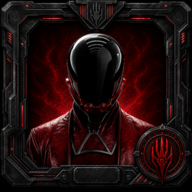




Inquisitorius
"Your faith has blinded you. You have entrenched yourself in the ideological failures of past belief systems. We will open your eyes, my inquisitors will see it done." - Harbinger
The Inquisitorius will be the blade of the state wielded against the masses of force wielders arrayed against them, wielded against all who would stand against them. Their purpose? Hunt them down and either capture or kill them. Its only once a prospective force sensitive is broken down to their very foundations that they can then be molded, through the Dark Side of the Force, to accept the Imperial Truth. Once an individual is prepared to accept such things they are molded in a way best suited to their abilities, trained, conditioned, and equipped with the best gear the Black Hand has to offer them. Finally, they are reborn as siblings.
Purpose: The Inquisitorius exists to identify, pursue, interrogate, contain, convert, or destroy Force-sensitive threats to the Black Hand. Its duties include:
- Hunting Jedi and Jedi-aligned fugitives
- Suppressing rogue Sith and unauthorized dark-side adepts
- Destroying or absorbing rival Force cults
- Recovering forbidden relics, holocrons, and artifacts
- Interrogating Force-sensitive prisoners
- Conducting heresy investigations
- Supporting the Imperial Security Directorate in occult cases
- Commanding Purge Trooper Detachments during anti-Force operations
- Investigating spiritual corruption within Black Hand territory
- Advising military command on hostile Force phenomena
- I. Power Must Serve Order: The Force is not freedom. To the Black Hand, uncontrolled Force-sensitivity is a strategic hazard. A single gifted individual can inspire rebellion, destabilize governments, corrupt armies, mislead populations, or turn a battlefield through will alone. The Jedi claim the Force demands compassion. The Sith claim the Force belongs to the strong. The Inquisitorius rejects both claims as incomplete. Power is not justified by morality or passion. Power is justified by service to order. A Force-user who serves the state is an asset. A Force-user who places personal belief, ambition, prophecy, or conscience above the state is a threat. Threats are corrected.
- II. The Sith Are Not Exempt: The Black Hand is influenced by Sith doctrine, but it is not owned by Sith appetite. The Inquisitorius studies the failures of Sith Empires with particular hatred. Again and again, powerful individuals mistook ambition for destiny and turned Imperial states into feeding grounds for their rivalries. Masters devoured apprentices. Apprentices betrayed masters. Councils fractured. Orders collapsed. Armies died because sorcerers could not kneel. The Black Hand remembers. A Sith may be useful. A Sith may be honored. A Sith may even be necessary. But no Sith stands beyond investigation. The Inquisitorius exists in part to ensure that the Dark Side remains a weapon of the state, not a disease within it.
- III. Heresy Is Insurgency: The Black Hand does not treat spiritual deviation as harmless belief. A rogue doctrine becomes a cell. A forbidden prophecy becomes a banner. A hidden teacher becomes a rival chain of command. A cult becomes a state within the state. The Inquisitorius views heresy as insurgency in religious form. Its task is not only to kill heretics, but to understand how heresy spreads, who protects it, what symbols it uses, and what weakness allowed it to take root. Some heretics are executed. Some are broken. Some are remade into weapons. The method depends on usefulness.
- IV. Fear Opens the Truth: The Inquisitorius does not use fear carelessly. Fear is a key. Properly applied, it opens memory, confession, instinct, betrayal, and revelation. Inquisitors are trained to understand terror as a precise instrument. Pain alone is crude, threat alone is insufficient. True interrogation requires pressure, patience, insight, and the ability to make the subject believe every secret has already been seen. The best Inquisitor doesn't need to ask a question. They make the prisoner answer before the question is spoken.
- Initiate: Force-sensitive recruits undergoing indoctrination, testing, and survival conditioning. Some are volunteers. Some are surrendered by loyal families. Some are taken from conquered worlds. Some are former Jedi, Sith, witches, or cultists judged too useful to kill. An Initiate is not yet a weapon. They are raw material.
- Interrogator: Junior members of the order who have completed initial training but have not yet earned full Inquisitor status. They assist in questioning prisoners, researching cult activity, identifying Force-sensitive signatures, cataloging relics, and supporting senior Inquisitors in the field. Many Interrogators are dangerous. Few are trusted.
- Inquisitor: Fully inducted members of the order. They hunt, interrogate, investigate, duel, recover artifacts, suppress cults, and enforce the Mandate against Force-sensitive threats. Most are Force-sensitive themselves, trained in dark-side techniques, lightsaber combat, interrogation, occult detection, and psychological warfare. They are not Sith apprentices. They are state weapons.
- High Inquisitor: These are senior field operatives and investigators assigned to major threats. High Inquisitors are afforded greater responsibility within the Black Hand. They often lead other inquisitors, command entire detachments of Purge Troopers.
- Lord Inquisitor: Oversee major regions, campaigns, black sites, and specialized branches of the Inquisitorius. They are experienced hunters, interrogators, and commanders trusted with broad authority. A Lord Inquisitor may direct a sector-wide purge, supervise artifact containment, command multiple Inquisitors, or conduct internal investigations against high-ranking officials. They are feared not because they are loud. They are feared because they arrive with permission to end careers, bloodlines, and histories.
- Grand Inquisitor: The very apex of the order, the Grand Inquisitor, supreme commander of the Inquisitorius and final authority over all inquisitorial operations. The Grand Inquisitor defines doctrine, assigns major investigations, authorizes purges, and represents the order before the highest powers of the Black Hand. The title is not ceremonial. It is survival made rank.
- Hunters: The Hunt is the field arm of the Inquisitorius. Its members track Jedi, rogue Force-users, escaped prisoners, cult leaders, and dangerous adepts across worlds, sectors, and warzones. They specialize in pursuit, dueling, battlefield detection, interrogation through pressure, and the use of informant networks. The Hunt is what most outsiders imagine when they hear the word "Inquisitor."
- Tribunal: The Tribunal oversees heresy trials, doctrinal investigations, internal accusations, and the judgment of captured Force-users. Its proceedings are not designed to discover innocence in the gentle sense. They are designed to determine truth, usefulness, corruption, and appropriate correction. A Tribunal may sentence a prisoner to execution, conversion, memory extraction, imprisonment, ritual cleansing, or service. Mercy is rare. Efficiency is not.
- Seekers: Seekers are responsible for the discovery, seizure, study, and containment of Force artifacts. Holocrons, Sith relics, Jedi archives, cursed weapons, living artifacts, ritual sites, prophetic texts, and dangerous technologies fall under its authority.
- Spectres: The Spectres are the clandestine wing of the Inquisitorius. They conduct covert observation, infiltration of Force cults, quiet assassinations, disappearances, false conversions, and long-term spiritual counterintelligence. Some Spectre operatives may pose as acolytes, priests, smugglers, pilgrims, or defectors for years. They are rarely acknowledged. Even within the Inquisitorius, many prefer not to ask where they are.
- Purge Command: Purge Command coordinates Inquisitorial operations with the Imperial Legion's Purge Trooper Detachments that serve the Inquisitorius. Its purpose is simple: when a Force-sensitive target cannot be taken by a single Inquisitor, the battlefield is shaped around the target until escape becomes impossible. Purge Command handles containment perimeters, anti-lightsaber tactics, prisoner transport, suppression fields, sniper overwatch, kill corridors, and coordination with Legion units trained to endure Force-related phenomena.
Training: Inquisitorial training is brutal, but not mindless. An Inquisitor must be more than a duelist. They must be investigator, interrogator, hunter, scholar, executioner, and symbol. Training includes:
- Lightsaber combat
- Anti-Jedi/Sith tactics
- Dark-side discipline
- Interrogation methods
- Force detection
- Mental resistance
- Occult lore
- Sith and Jedi history
- Cult infiltration
- Artifact identification
- Battlefield command
- Psychological warfare
- Controlled exposure to fear, pain, isolation, and temptation
Last edited: