
Star Wars Roleplay: Chaos

Register a free account today to become a member! Once signed in, you'll be able to participate on this site by adding your own topics and posts, as well as connect with other members through your own private inbox!

First Reply Beware When Snow Warms


VVVDHjr.png


"Tattered banners fly."

Tags - OPEN

LE6AcRs.png

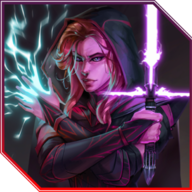
Chandrilan winter was rarely spoken of in galactic record. It was not dramatic enough for holodramas, nor brutal enough to earn a place in military logs. Yet today it was both—cold and unbearable, a white-bitten thing gnawing at the edges of the world. The wind lashed at her coat in sharp, stinging ribbons, but the girl in tyrant's dress moved through it as if the season itself had no claim on her.

She climbed out of the tomb's mouth with the slow, deliberate grace of someone stepping back into a life she wasn't sure she recognized. The stone behind her still carried whispers of what had happened within its dark, airless throat—but there would be time to dissect that later. There were more immediate curiosities clawing at her attention.

Smoke.

Not the thin, grey veils of a hearth or a homestead fire—but thick, roiling pillars of black, rising like wounded giants into the pale sky. They smeared the horizon in oily strokes, too many and too dense to ignore.
Virelia paused, narrowing her eyes as the wind carried the scent of burned metal and blood.

A battlefield. On Chandrila.

The notion felt wrong, almost blasphemous. Chandrila was supposed to be serene, cultured, tediously peaceful. And yet here—strewn across the snowbound fields—lay men and machines in tangled, frozen ruin. Armor plates twisted like broken ribs. Blasters half-buried in drifting white. Snow falling soft as silk onto the slack faces of the dead, as if trying in vain to return them to the innocence they never had.

Perhaps the Empire had finally moved on the world. Perhaps the Alliance—if it even still existed—had come to meet them.
Dominic would know the truth of it; perhaps he fought here himself. Maybe a new age was already unfolding, and Chandrila had simply been the first place to bleed.

But those questions were not what gripped
Virelia now.

What gripped her was the profound wrongness of this sight—this graveyard sprawling across her homeworld like a scar. A world she had always known for gentle winters and political pretensions now lay cracked open before her, its secrets spilling out into the snow. Her mind snapped back to Woostri—the cold bite of salt flooding her lungs, the screams of her men swallowed by the depths, and the moment Jenn Kryze Jenn Kryze butchered her before casting her into the black. She remembered sinking, limbs numb, listening to her heartbeat stutter as she wondered whether she would ever taste a single breath of air again. Since that day,
Virelia had cherished every inhalation with obsessive precision. She counted her days not by victories or failures, but by how many she lived without drowning in darkness.

Brosi had been her last battlefield in service to the Sith Order. Exile came swiftly after. But she still remembered Brent Warnel Brent Warnel —his final stand, his brutal resolve. A great fight. A greater man. In him, as with Reicher Vax Reicher Vax and so many nameless soldiers across the galaxy, she saw a quality that tugged at something buried deep in her: the willingness to die for something higher than themselves.

People whispered about her sentiments toward soldiers, wondering why the Tyrant Queen—so merciless, so calculating—carried such quiet reverence for men who marched into fire under orders not their own. A true Sith, they said, should not waste affection on the expendable.

But the answer was disarmingly simple. There was a part of her, carved from childhood loneliness and the hunger that came after, that envied that devotion. Craved it.

The firekeeper once told her she was a girl who wanted to be chosen. He had been infuriatingly correct.

So when
Virelia watched a soldier fall for a cause, any cause, something inside her clenched. Not with pity, but with desire. She wished—fiercely, painfully—that the cause they died for had been hers. Her vision. Her ideology. Her throne. It didn't matter what ideals they served.

Only that someday, they would serve her.

Virelia lifted her gaze to the sky—an expanse swallowed by snow, smoke, and the dull grey promise of another storm. One day, she told herself, her banners would hang in that sky. Torn, blood-soaked, carried by soldiers who marched willingly into death with her name on their lips. One day she would be cherished, feared, adored—chosen by a galaxy that had never once chosen her back. She would be remembered.

But the last time she had reached for that future, she had done so nakedly. Too openly. Too hungrily. And the galaxy had seen her for exactly what she was: selfish, monstrous, unrepentantly ambitious. None of which offended her in the slightest—yet even she understood those traits made securing power… difficult.

For all her faults,
Virelia was intelligent—dangerously so. Her problem was never her brain; it was application. Vanity tangled her every plan. Pride demanded spectacle. She always wanted the grand gesture, the shining inflection point in history where she could carve her name on the bones of a world.

Saijo had been one such moment. It had succeeded, more or less, but she could admit—quietly, internally—that there had been colder, cleaner, sharper ways to accomplish the same end. But she had needed that display: to stand above a trembling world, to command fire from the heavens, to hold a planet's breath in her hands.

She needed to feel powerful.

To feel the universe hinge on her decisions.

Control.

That was the truth she kept buried beneath layers of poise and predation. Control over her destiny. Control over her narrative. Control carved from a childhood of drowning—on Woostri, in the Jedi, in the expectations of masters, in the silence between breaths.

It was always about control.

So she drew in another breath—slow, deliberate, almost ritualistic—and let her legs fold beneath her. The snow swallowed her weight with a soft crunch as she slumped down beside the smoking carcass of an Imperial APC. Metal hissed faintly at her back, still hot from whatever blast had gutted it. For the first time since she'd stepped out of the tomb, she allowed herself to simply sit. To think.

She was, for once, directionless.

Go back to
Dominic? Throw herself into mercenary work and pray the credits bought clarity? Return to Malachor—if Malachor still remembered her—and see whether anyone waited?

Each path felt muted, washed-out, pale compared to the storm of ambition that normally blazed in her veins. The battlefield before her was a graveyard of purpose—men who had known exactly what they were dying for. And she, the would-be Tyrant Queen, sat in the snow unsure of what she even wanted to live for next.

The truth pressed against her ribs like another blade:

She genuinely didn't know what to do.

Not yet.

But the breath she took now was hers, and that alone was enough to keep her thinking.


pIe9OeK.png


CS3FUG8.png

Chandrilan winter did not care who came. Only that the sky split.

The Kharvoss-class Sith Shuttle dropped through the low clouds like a falling verdict, its obsidian hull carved into dagger lines and banded in arterial red. Faint runic circuits glowed along its flanks in the smoke-hazed light, muted, disciplined, never decorative. Its engines howled against the quiet as it banked over the shattered battlefield. All over were the remnants of burned-out walkers, twisted armor, fallen soldiers half-buried beneath fresh snow.

It circled once, sensors and sorcerous arrays combing the field, then canted toward a single point where a lone figure sat beside the gutted carcass of an Imperial APC. Repulsors roared to life. Snow peeled away in flurries as the shuttle descended, landing struts biting into frozen ground with the finality of a seal impressed on wax.

For a breath, there was only the deep, steady thrum of its engines and the restless hiss of the wind.

Then the ramp lowered with a hydraulic snarl. They emerged like a moving wall of funerary iron.

Twelve figures stepped into the winter light, tall and perfectly uniform. Umbral Aegis warplate wrapped each one in obsidian mass, every curve and plane brutally functional. Crimson runes crawled in restrained patterns across their armor, barely visible under frost and ash, their glow concentrated around a single, unbroken visor-slit where a human face should have been. Upon their breastplates, the sigil of their office burned: a downward-facing crimson spear enclosed within three broken concentric circles.

Authority. Silence. Obedience to the Shadow. The Umbral Guard.

In their hands, they bore Qazûr Execution Pikes, hafts locked in compact configuration for movement, heads dormant but heavy with promise. No banners snapped above them. No herald spoke their names announcing their arrival. Perhaps it was even worse that way, because once these giants emerged from the confines of that shuttle.

They didn't speak at all.

The cohort descended the ramp in perfect step, boots leaving deep impressions in the snow. They did not search or sweep corners. They moved with the certainty of beings who already knew where their target was. The battlefield seemed to contract around their passage, its chaos narrowing slowly to the point where they were headed.

Toward her.

The woman in the tyrant's coat by the wrecked APC became the axis of their march. They stopped several paces from her, the front rank cutting a straight line across the snow, the rear rank a half-step back and offset, forming a subtle crescent. Their pikes came down in unison with a low, resonant thunk, hafts biting into the frozen ground.

Obsidian Guard Stance. Anchored, immovable, turning the open ruin into a kill box without taking a single step forward.

The air grew heavier beyond mere temperature, in pressure, like the weight in a room when a sentence is about to be read. Breath wanted to catch in the throat, choices to slow beneath an invisible hand. Dread didn't come in a screaming rush; It settled like something inevitable, a quiet, suffocating awareness of how this usually ended when the men with the single red eye arrived.

They still didn't speak.

Only when the silence had stretched to a thin, trembling line did the lead figure move. He wore the same Umbral Aegis, the same sigil, but his armor bore additional etched lines on the gorget and vambraces: rank-marks reserved for High Umbral or their chosen spear commanders. His helm turned a fraction, the faintest tilt as if listening to something far away, then settled fully on the woman before him.

When he finally spoke, the sound was not a shout. It was a low, layered resonance, multiple voices ground together into one, as if a small choir had agreed on every word long before it was spoken.

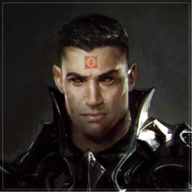
"Serina Calis." The voice said. "Darth Virelia. Former Governor of Polis Massa. Tyrant of Malachor. Debtor to the Dyarchy."

There was no question in the recital. Only confirmation. "You were recorded as unaccounted." The Umbral Guard continued, each syllable precise and unhurried. "The Shadow Hand has amended the ledger." His gauntleted hand lifted, palm outward, not in supplication, not in threat, but in summons. The others didn't so much as twitch. No pikes shifted. No blasters came out. Eleven black helms stared with a single red gaze, silent as sealed tombs.

"The Mortarch remembers what is owed." The leader intoned, voice flattening into something almost ritual. "You will come with us. You will stand before him, and the debt will be accounted." The dread pressure didn't spike. It simply remained, steady, inescapable, an invisible weight that made this moment feel not like the opening of a negotiation, but like the first step into a corridor whose far door had already been locked.

The Umbral Guard didn't advance. They waited, pikes grounded, formation unbroken. The sentence had walked to her. What came next would decide how much of it needed to be carried back. They remained with the absolute certainty of those who knew the outcome before it was even decided.


VVVDHjr.png


"Tattered banners fly."

Tags - Darth Prazutis Darth Prazutis

LE6AcRs.png

How fitting, she thought, that in the ruin of one army came the debt collectors of another.

For all her grand designs, all her ruthless ambition, the Fourth Legion had been the one dream she had pursued with something akin to sincerity. She had wanted it—hungered for it—in a way she rarely admitted even to herself. Nights spent grinding through logistics she barely understood. Cutting deals she hated. Trading away favors and fragments of her political future in the Sith Order just to keep the dream alive. She had mortgaged her ascent to the Dyarchy for that legion.

And exile had never erased that debt. She wasn't naïve enough to pretend otherwise.

The Kainite were not known for forgiveness. Or forgetfulness.

So when the sky tore open and disgorged that obsidian omen—when the air thickened with sorcery and iron and inevitability—it felt like hearing her own funeral bell rung twice: once for the debt she owed, and again for the Force she could no longer touch.

A perfect moment for them to arrive.

She sat in the snow with her back against the burnt husk of an APC, breath slow, deliberate. Her hands did not tremble. But something deep in her chest tightened at the sight of the Umbral Guard arrayed before her.
The works of the Kainite—particularly those of the Shadow Hand—were unlike anything else forged in this galaxy. Even in the brief span she had stood within his shadow, Virelia had felt the difference. Weapons, ships, armies, whole cities shaped like the bones of extinct titans—his creations were an empire carved from craft. Precision. Brutality. Vision. There were few beings she would never dare defy; Prazutis had earned that place easily.

And these twelve iron giants were his handwriting.

There would be no use trying to speak with them. They were not messengers. They were summons. Whatever questions she still carried—she would save for
Darth Prazutis himself, if he chose to answer them rather than grind her into the ledger's margin.

Much could have transpired behind the Blackwall during her exile.

The Tsis'Kaar—did they still laze unchallenged? Had the Emperor held his throne? Had Lirka Ka Lirka Ka finally carved her dominion in Firefist, or burned herself trying? Had Quinn Varanin Quinn Varanin taken her destined Dark Council seat at last? What schemes had Helix Helix spun? What was whispered of her exile—quiet dismissal, or scandal? Had Darth Morta Darth Morta risen or fallen in the Caldera's tides? And Taeli Raaf Taeli Raaf … that patient, scheming crone… what was she brewing now? (Endearingly old, though
Virelia would sooner eat glass than admit it aloud.)

And then the final, most painful question:

What of Polis Massa?

Her world.

Had the Sith gutted it? Occupied it? Forgotten it? Had
ICHNAEA survived without her? Had the people cursed her name—or prayed for her return?


Maybe it was curiosity for her old life. Maybe it was the faint hope—embarrassing, stubborn—that some purpose might still be wrung from the ruins of who she had been. Whatever the truth, the summons of the Umbral Guard stirred something in her she could not deny. If the past had come to collect its debt, then it would also have to reveal its secrets.

Slowly, deliberately, the Tyrant Queen unclasped her cloak. The fabric slid from her shoulders, falling into the snow with a muted whisper. Beneath it, her alchemized armor caught the dead winter light and shone with its unnatural luster—violet undertones rippling like a pulse through obsidian plates, the handiwork of rituals no ordinary smith could replicate.

For a long moment she said nothing. Then she gave a single, quiet nod and stepped forward toward the shuttle.

There would be much to answer for. But there would be just as much to learn.


pIe9OeK.png


CS3FUG8.png

The Umbral Guard did not shift when she rose.

Twelve helms watched her approach with the same unblinking red regard. Only when she crossed the invisible threshold between wreckage and ramp did the formation adjust precisely, wordlessly. The front rank split down the center on some silent cue, pikes lifting just enough to open a narrow corridor of black iron and runes leading up into the shuttle's belly.


As she ascended, two of the rear-rank giants turned in perfect unison and fell in behind her, boots thudding on the ramp. The rest pivoted as one, folding their formation around the path she took. By the time the ramp sealed with a thunderous hiss, Virelia was enclosed in a moving cage of Umbral Aegis and Qazûr steel.

The Kharvoss rose on a growl of repulsors and climbed, leaving Chandrila's scarred snowfields and burned machines to shrink into abstraction below. Inside, the world narrowed to armored silhouettes and the low hum of engines slipping toward orbit.

The Umbral Guard offered no conversation.

They didn't loom or brandish weapons, they simply stood where function placed them. Two at either side of the passenger bay, pikes grounded, two by the hatch, the remaining reinforcing the space around her like load-bearing columns in some traveling tomb. Their presence filled the cabin the way a verdict fills a courtroom, everything else became peripheral.

Comms glyphs pulsed faintly along their gorgets, keyed to Kainate command frequencies. Somewhere along that invisible chain of linkage, through ship, relay, Shadow Mind lattice, their armor feeds stitched this moment into the wider will of the Dyarchy.

He was watching, in the way that mattered.

Only the low thrum of the engines and the muted hiss of the cabin's life-support broke the silence, a machine's heartbeat carrying debtor and collectors alike back toward judgment. Faint glyphs pulsed along gorgets and vambraces, encrypted command-channel sigils that never once needed to flare into open communication. Whatever passed along those links moved beneath ordinary senses, straight into the infrastructure of the Kainate's will.

When the shuttle finally dropped from hyperspace, it did so above a world she knew.

Dromund Kaas.

The planet rolled beneath them like a bruise, storm-wreathed, dark, its atmosphere alive with the shimmer of defense grids and the slow pulse of orbital stations. A world completely drowned in the endless torrent of the dark side of the force. Its presence alive in the hungry arcs of lightning through the blackened clouds, it spidered silently within the clouds as the Kharvoss cut through approach patterns with priority codes that turned other traffic aside. They didn't linger in orbit.

The shuttle knifed down through crackling storm fronts and slammed into the embrace of traffic lanes over New Kaas City, the Sith Citadel rising from the city's heart like a blade driven through a corpse. Its spires vanished into the storm's ceiling away from the jungles seamlessly blended through the titanic continent city, its lower reaches swallowed by the stacked armor of curtain walls and bastions. The mega complex of the citadel was its own world, separated wholly from the hustle and bustle of the city proper.

The Kharvoss descended into one of the Citadel's armored hangars, its repulsors screaming as it bled off speed and settled into a designated berth. Outside, the air was heavy with ozone, machine-oil, and the distant boom of thunder. When the ramp dropped, the first thing that left was intention. The Umbral Guard moved with the same unhurried precision as before, forming a corridor of black iron from shuttle to deck. They didn't gesture or prod. They simply existed in such a way that every vector but the one that led out and forward ceased to be options.

Beyond the hangar, the Citadel waited.

They marched not as an escort, but as a procession. The route wound through corridors of dark stone, black iron, and umbraplast, lumen-strips casting everything in a deep, blood-tinged glow. Sith iconography carved into buttresses and pillars passed by in slow procession. Broken chains, razored crowns, the stylized silhouette of a world beneath the iron dominion of the Sith. It was a world unto its own, as monsters roamed amidst the shadows that seemed to come alive and stare at them.

Everywhere they went, space made way.

Legionaries snapped to rigid attention, eyes fixed ahead as the detachment passed. Administrators and functionaries pressed against walls or ducked through side doors, careful not to cross the Guard's path. A pair of Crownguard at a junction dipped helms in the smallest nod of recognition, then stepped aside without a word.


The men with the single red eye needed no explanation here. After quite some time of travel at last, the architecture widened. The corridor disgorged them into a vast antechamber flanked by statues of ancient Sith, each one double life-size, each one cast in metal so black it seemed to drink the light around it. Beyond, a set of monumental doors stood waiting, their surfaces worked in layered bloodsteel and runed blackstone. Runes crawled across them in concentric circles, their meaning less important than the pressure they exuded.

As the Umbral Guard approached, the doors shuddered and parted on silent mechanisms. The throne room of the Dyarchy yawned open.

It was a cathedral of power and judgement: A hall of soaring vaults and distant, shadow-lost ceiling, its walls ribbed with buttresses and inset balconies where observers could stand unseen. The floor was a polished expanse of dark stone veined with faint crimson, marked only by a wide processional line that led toward the far end of the chamber.

There, upon a raised dais carved from a single monolith of black iron, sat the throne.
Qâzjiin'vraal armored the figure upon the monolith in brutal grace. Overlapping plates of black iron glowing wrapped a frame too massive to be mistaken for anything but what it was: A warlord's bulk refined into architecture. Runes crawled across the armor's surface like brands ready to flare, vein-like channels of dull red light pulsing beneath as though something alive and hateful slumbered just under the metal skin. Trophies hung from his mantle, broken sabers, twisted sigils, fragments of banners, the occasional skull reworked into metal and glass.

And over all of it, the helm. Xûl-Karzaan watched the hall with a single, baleful slit of red light, the carved planes of its faceplate sketched to resemble nothing human. It was an idol's visage, a mask worn by judgment itself. Darth Prazutis didn't rise when they entered. The Umbral Guard advanced to the midpoint of the hall and halted. Formation shifted: Four remained behind, four stepped outward to either side, and four moved forward another few paces before grounding their pikes in unison. The sound carried up into the shadow, a low, resonant thunk that echoed like a heartbeat in a tomb.

They opened a clear, uncompromising line between debtor and throne. No one announced her name. No herald cried titles. Even the High Umbral who had spoken on Chandrila remained silent now, his helm bowed a fraction toward the dais in acknowledgment of the Sovereign's presence. Silence thickened.
Prazutis' attention, which had already been present in the relay-feeds and reports that brought her here, settled fully upon her now. The Force, had she still been able to feel it, would have been a roaring abyss at the far end of the hall, cold and crushing and vast. The event horizon of an endless shadow, even the darkness here seemed to come alive drawn to His presence. Braziers burning with cerulean fire cast haunting shapes across the walls, driven by His malevolence. To Him, she was something else entirely.

He reached.


He remembered the shape of her when last she walked in his shadow. She was hunger wrapped in poise, bright with dark promise, a woman reaching for worlds with bare hands. He expected some echo of that in the currents, a familiar burn, a thread of power He could pluck and trace. What He found was scar. Not emptiness, but absence. A gouged-out place where connection once was, edges cauterized raggedly shut. The ghost-outline of a former presence clung to her like a shadow on old stone. Interesting. No tilt of helm betrayed the thought. No movement broke the stillness. Only the weight of His regard, pinning the space between them into a narrow, inescapable line.

When He spoke, the hall carried His voice outward and back again, giving it the gravity of something the building itself agreed with. "Serina Calis." He said, each syllable landing like a stone dropped into deep water. "Darth Virelia." Her old titles followed, none of them questioned. "Governor of Polis Massa. Would-be mistress of a Legion. Tyrant of Malachor. Exile." One gauntleted hand shifted on the throne's arm, black claws tapping once against worked metal. The sound was small, but it resonated like punctuation.
"When you vanished." Prazutis continued. "There were those who said you had fled your ledger. Others said you were dead. Others that you were simply…removed." A faint current of dark amusement threaded the last word.

"I allowed the entry to remain open." The red slits of Xûl-Karzaan never wavered from her. "Not out of mercy. Out of curiosity. Debtors who disappear have a habit of returning at revealing times." He did not look around at the hall, at the banners, at the weight of His empire wrought in stone and iron. He did not need to. "Now you stand." He said, voice cooling. "Not in the chambers of the Dark Assembly, nor in the seats of your Dark Court, but before my throne. Without your legion, your Court. Without what once bound you to the current."

The Force wound that was her condition remained a splinter at the edge of His senses. Not a flaw to pity. A condition to account for. "The Kainate does not misplace its assets." He went on. "It records debts. It adjusts ledgers. It repurposes what can be repurposed...and breaks what cannot." The last word dropped heavy, leaving no doubt about capability or will. "And you, Tyrant Queen." He said "Were once expensive." The hall fell quiet again. The distant thunder outside might as well have been artillery. Here, the only sound was the muted hum of the Citadel's systems and the slow, steady burn of rune-light along his armor.

Finally, He inclined His helm by the barest fraction. Not a bow. A concession that she existed, in this instant, as something more than a line in an account. "You walked onto my shuttle of your own will." Prazutis said. "You stand in my hall with your armor bared and your past behind you." A beat. "So tell me, Serina Calis." The Shadow Hand murmured, his tone dropping to something almost conversational and all the more dangerous for it. "What do you believe remains between us?" He did not rise. He didn’t call for chains. He waited, seated upon the throne she had once tried to orbit, and left the next words to her.


Last edited:


VVVDHjr.png


"Tattered banners fly."

Tags - Darth Prazutis Darth Prazutis

LE6AcRs.png

The flight itself was nothing. A straight line through void and silence. No turbulence, no chance for fate or folly to intervene. The Kainites did not allow happenstance—not when a ledger hung open, not when a debtor was finally within reach. Whether that meant she still had value, or whether Prazutis merely wished to make an example, she could not yet say.

Either possibility felt equally plausible.

The sensation of being watched never left her—not once. It pressed against her skin like cold stone, a presence threaded through the Umbral Guard. It was not paranoia. The Mortarch would be a fool not to keep a dozen eyes—his own or his agents'—fixed on her every breath now that she stood within his grasp again.

How was she to repay a debt in her condition? Her armor meant nothing to him. Her Force connection was unable to be tapped, an ugly cauterized absence where might had once lived. She commanded no legion, no Court, no network that hadn't rotted in her absence. And even if he tried to break her, chain her, reshape her—she would die first. Worse: she would stay dead. The strange curse of her existence, the dark mechanics woven through her soul, made resurrection or enthrallment nearly impossible.

There was very little left for him to use. Very little left of her, in truth.

So she sat in the iron womb of the shuttle and let the inevitability settle. A bitter pill, sharp enough to cut on the way down. How she despised the idea of bending to another's will again. If the Kaggath had been honored, if tradition had held, if the Sith had recognized the rightful Empress she intended to become… none of this spiral would have happened.

But free will had ruined everything. It always did.

She detested it with a passion that eclipsed most of her other vices. Perhaps that alone made her a poor Sith by some standards—their Code spoke of breaking chains, not tightening them around others. But she had never claimed to be a saint of their philosophy. She had never wanted freedom.

She had wanted dominion.

Chains were not things to shatter. They were instruments. Tools. An architecture of control to lace around throats and nations alike.

She had wanted to rule a galaxy that obeyed because she commanded. Now she was being delivered to a ruler she could not command. The irony was exquisite and poisonous.

Was this what it felt like to bleed out in the snow? To recognize—far too late—that all ambition and fury eventually dissolved into the same cold earth? She wondered if soldiers felt this clarity in their last moments: fighting, choking on their own breath, clinging to purpose as the warmth drained from them… and then the snow began to heat beneath their bodies.

She intended to stay cold.

Grim fatalism would not serve her here, not in a citadel built by a man who could crush worlds like fruit. She pushed the thought down, buried it beneath habit and discipline. Self-pity was useless. The galaxy didn't care whether she lived or died; it never had. Her warnings, her insights, her ruthless industriousness—none of it had mattered to the incompetent sluggards who crowned themselves kings and queens and emperors. They didn't listen. They didn't deserve her clarity.

So she gave up on the notion of being heard.

Instead, her mind returned to that imagined field of snow—to the frozen breath, the fading warmth, the solemn acceptance of the cold. She finally embraced it.

The cold was honest. The cold did not lie. The cold did not pretend to reward effort or virtue. The cold demanded nothing of her except endurance. So she would worship the cold, let it harden her again.
The procession ended as all such things in the Dyarchy did—abruptly, with finality, as if the world itself had been commanded to halt.

Silence settled for a single, suspended heartbeat. Then
Darth Prazutis spoke.

Once, the journey into this citadel had filled her with awe. His world had been a thing of legend, a monument to total dominion crafted by a mind that saw galaxies as raw material. She had breathed in its power like incense. But awe belonged to the girl she used to be.

Now, six violet eyes burned in the gloom, unblinking, expressionless, inhaling shallow, steady breaths. What little softness had survived her exile had been scraped away. What remained stared into the abyss with the patience of a creature already halfway consumed by it.

His first words were names. Titles. Histories. Fragments of identity she had once held like talismans. Fragments that mattered.

But hearing them spoken in the Mortarch's voice felt like being held over a pit and shown her own reflection. A ledger read back to its debtor. A recounting of the person she had been before the Force was torn from her, before exile carved hollow spaces inside her.

Had she fled her ledger? Had she died?

There were no answers she could give without lying. Something in her had died—quietly, without ceremony. The youthful, eager Virelia who had once believed she could charm or conquer or manipulate herself into destiny had dissolved, leaving something newer, colder, painfully honest in her place.

The abyss kept speaking. Darkness intertwined with mastery. Reason woven with threat. She was alone—truly alone. Her Court absent. Her allies nonexistent. A creature who had never understood friendship now had none to imagine.

She had been expensive, he said.

What did that make them now? Debt without value? Or value without purpose?


Prazutis' words burrowed under her armor, not as cruelty, but as clarity. They cut like a scalpel, not a blade. They reminded her of pages she had long stopped turning in her own story. What was she now, standing here stripped of Force, of Court, of certainty?

What exactly had she become?

"
I would not presume to define what stands between us, Dyarch." Her voice carried evenly across the hall, neither bowed nor defiant—simply honest, stripped bare of ornament. "Much has transpired since our last meeting. More still I have yet to understand in myself."

There was no lie to offer. If he wished her dead, she would be—quickly, cleanly, without even the dignity of struggle.

"
In truth," she continued, "I find myself with much to contemplate and very little with which to act. I have no means to repay my debt. No way to touch the Force as I once did. So what fate remains?" Her six eyes did not waver. She did not shift her stance. "Exile? Traitor? Corruptor? What becomes of a woman who stands here with nothing left to wield?"

Stillness wrapped itself around her. She stared forward, unblinking, a statue carved from violet light and cold breath.

"
My soul persists when it should not," she admitted. "By every measure, I should have died a hundred times already. Something aberrant in me refuses to concede." Her tone did not rise, did not falter. "The universe has made repeated attempts at correction… yet I seem just slippery enough to evade its judgment—though never enough to prosper from the escape."

The smallest twitch at the corner of her lips could have been humor, or bitterness. A razor's-edge between the two.

"
I suppose I was always in debt," she said at last. "Long before Polis Massa or the Fourth Legion. Perhaps I owed the Dark itself for keeping me alive… and only now does it call for its accounting."


pIe9OeK.png


Last edited:

CS3FUG8.png

The throne room didn't answer her.

It tightened.

The air itself seemed to draw in, as if the Citadel were inhaling through a single lung. The lumen-strips along the upper vaults dimmed by imperceptible degrees, shadows lengthening not toward the walls, but toward the dais. Runes set into the floor and pillars woke in sullen ember-light, as though the hall's veins had begun to glow from within. Braziers casting unholy shapes shriveled. The Umbral Guard didn't so much as move. Pikes remained grounded. Visors remained fixed. But there was a subtle shift in the geometry of them, as if the entire phalanx had settled more firmly into the bones of the room, living pylons bracing for something heavy being lowered into place.

On the throne, the Mortarch sat utterly still. Qâzjiin'vraal might as well have been carved into the black iron of the dais. Only the slow pulse of dull crimson beneath his armor's skin betrayed any sign of life, a patient heartbeat echoing in the metal. Xûl-Karzaan's eyes burned in the gloom, a razor-thin smear of light in an unmoving mask. The Sghadow Hand watched her closely, allowing the words she'd just spoken about debt, about aberrant survival, about owing the Dark, spread through the room like ink in water. Let them settle, soak, stain.

When he spoke, it was without ceremony. No rise from the throne. No gesture. Just a voice. "'Perhaps I owed the Dark.'" Prazutis repeated quietly, each syllable turned over like a coin under His tongue. "'And only now does it call for its accounting.'" The way he echoed her phrasing made it sound suddenly smaller. Not stupid. Just…incomplete. "You make it poetic." He said. "Comforting, almost." His tone was not mocking; it was dissecting. "A girl alone in the snow, haunted by a cosmic tally, imagining herself as the plaything of an indifferent universe." The faintest tilt of helm sent his gaze dragging across her, then the hall. "It makes your suffering feel…grand. Your survival, aberrant. Your presence here…inevitable."

He let the word linger.

Lightning rolled somewhere distant outside, a distant rumbling of the ebuillent storm echoing enough within the cavernous citadel it might've been a separate storm entirely, held in a place large enough to have its own weather cycle. "I know something of ledgers." The Mortarch went on, voice still low. "Of debts. Of annihilation." He did not raise it, but the acoustics of the room carried each word like it had weight. "Entire civilizations have tried to frame their end as 'owed to the Dark.' As if an abstraction reached out and snuffed them." A faint thread of amusement bled into His tone. "They liked that story. It made them feel important, even in extinction." His claws tapped once, gentle, against the throne's arm. "Reality is uglier." He said. "The Dark is not an accountant. It is hunger. It does not remember you. It does not care that you live, or that you refuse to die. It cannot be owed."

A small, precise pause.

"But I can." The temperature in the hall seemed to slip a fraction. "You are not standing before some faceless cosmic force, Serina Calis." He murmured. "You are standing in front of the being who designed campaigns that wiped cultures from star charts. Who drew borders in blood around worlds and called it administration. Who remembers the faces of planetary governors from eighty years ago and the tones of their voices when they begged." The molten orbs burning within the eyes of the helm didn't blink. It never blinked. "You are not a soul lost in a blizzard of indifferent chance." Prazutis said, softer still. "You are an entry in my ledger. And I am very particular about those." The walls didn't move, but the room felt smaller.


"You speak as though there is nothing left worth taking." He continued, "And so nothing left worth bothering with. As though you are doing me a kind of mercy by presenting yourself as exhausted, emptied…a curiosity of survival and little more." The helm shifted a fraction, the slightest cant that read as skepticism more than any expression might have. "If that were true." He spoke. "You would not be here." The words dropped like stones in a well.


"If you were truly null value." He went on. "You would still be in that snow. Or under it. I do not bring debris into my throne room."


VVVDHjr.png


"Tattered banners fly."

Tags - Darth Prazutis Darth Prazutis

LE6AcRs.png

It was—unexpectedly—invigorating.

To hear a being of such monolithic will dismantle the poetry of fate, to have her illusions stripped clean by someone who had crushed civilizations with logistics alone… there was a kind of pride in that. A steadiness. If
Prazutis bothered to speak so plainly, then she was not debris. She was being assessed.

Usefulness was far more dangerous than irrelevance.

But to what end he meant to shape her—that was the needle she felt pressing under her ribs. He could take anything he wished, and the manner of that taking mattered. Her body was not what it once was. Her spirit even less so. She inhaled—slow, measured—anchoring herself in the simple rhythm of breath before she answered.

"
I do not believe the universe to be indifferent," she said at last, her gaze lowering to study the slow articulation of her gauntleted fingers, flexing once, twice. "But belief is a luxury with no place here."

Fear did not come.

The Citadel's crushing weight, its bleeding shadows, its drowning gravity—these things had terrified her once, back when she could feel the Dark as a living ocean. Back when nightmares clawed at her consciousness and tore at her soul in rituals that had reshaped her into this sharpened thing.

Now?
Awe, yes. Might, certainly.

Fear?
No.

Prazutis was more than a master of the Dark. He was its author. Its architect. The way he folded shadow and hunger into command commanded respect in a way nothing else did. So Virelia would not lie.

Her eyes lifted again, unblinking.

"
I hope I do not speak out of turn," she said, her voice smoothing into something almost mechanical in its steadiness. "But I offer only truth. Anything else would be an insult. And a penalty I have no wish to incur."

She straightened—aligning herself as though presenting a blade for inspection.

"
Ask what you will of me," she said, each word measured, exact. "I will honor my debt as far as I am able. And if I cannot meet the demand now, I will find a way to do so in time."

There was nothing else to add. Her fate in this hall depended entirely on the next breath he chose to take.

In a strange, almost embarrassing corner of her mind, she hoped he understood the truth of her position—that she had no resources to offer today. But time, given to her, she could make herself into something again. Something of value. Something worth the attention he had shown.

She stood very still.

She knew, with a clarity carved from experience, that his request might be something she would rather die than accept. The Dyarchy did not ask lightly. It did not bargain in half-measures.

But she also hoped—quietly, fiercely—that it would not come to that.


pIe9OeK.png


Users who are viewing this thread

Top Bottom